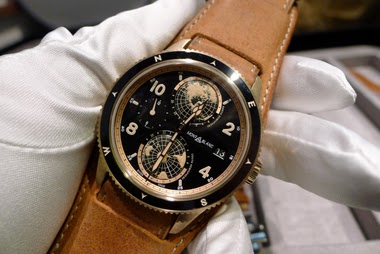
Manufacture
SJX delves into Montblanc's Villeret collection, highlighting the impressive in-house production of nearly all movement components, including the hairspring, which is hand-bent to form a Philips curve. He prompts a discussion on the significance of such traditional processes and materials, particularly questioning whether an in-house hairspring truly matters to a potential buyer, distinguishing this from the broader debate on in-house movements.


The Montblanc Villeret collection, made by the former Minerva company, is clearly an impressive range of watches. The aesthetics of the line will elicit different reactions, but the level of finish and construction in the movement is excellent. Components are nearly all made in-house, including bridges and plates. The hairspring is also made in-house and then bent by hand to form a Philips curve.
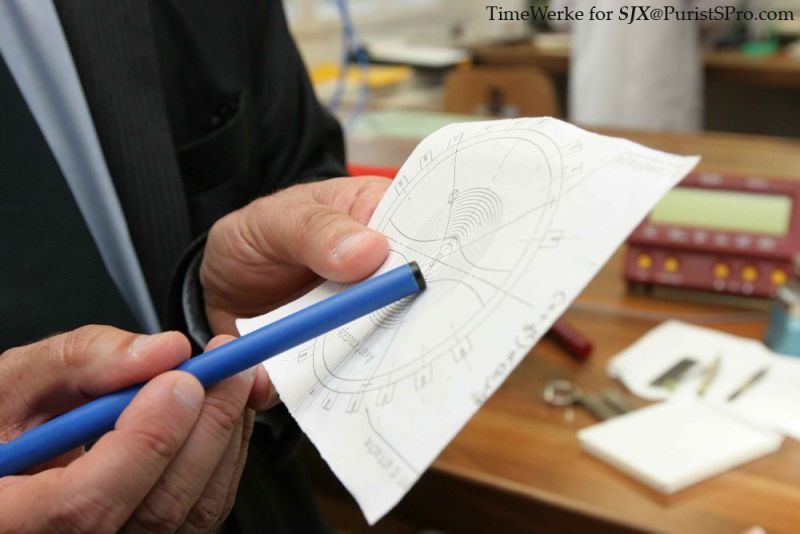
The photos below show the machine that draws out and stretches the metal that will eventually be formed into the hairspring. When it is fed in the wire is 0.67 mm in diameter, but it emerges a mere 0.05 mm.
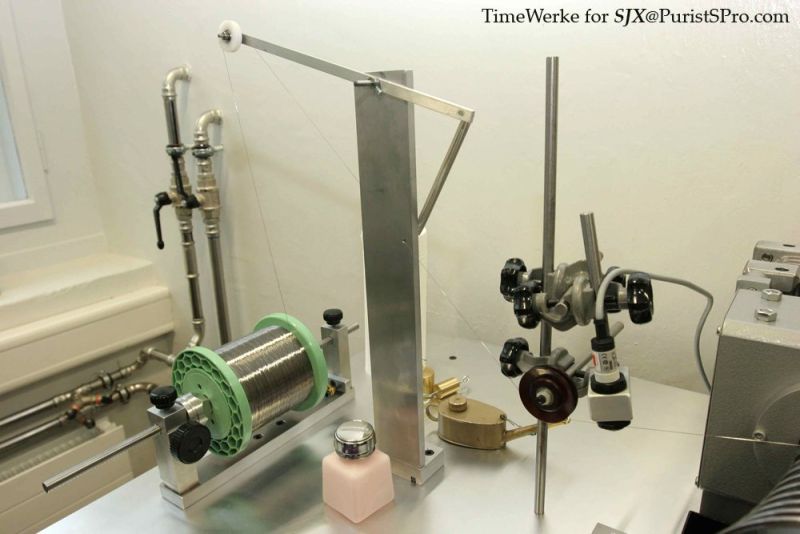
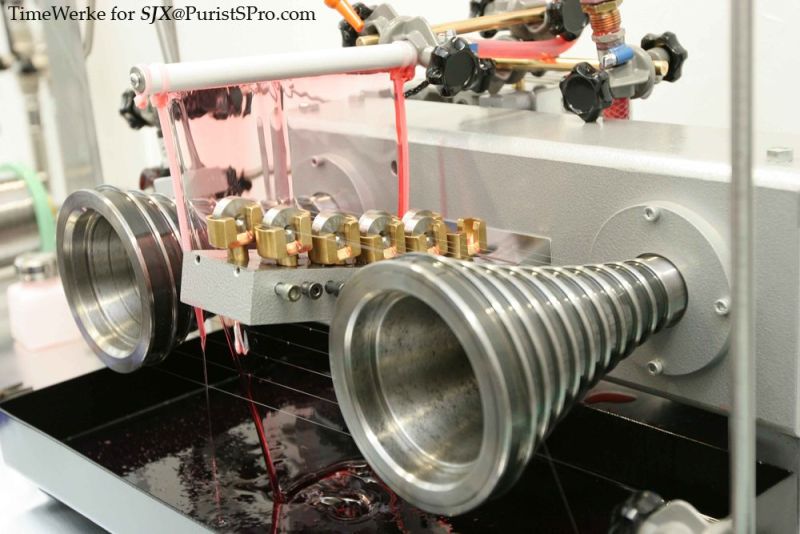
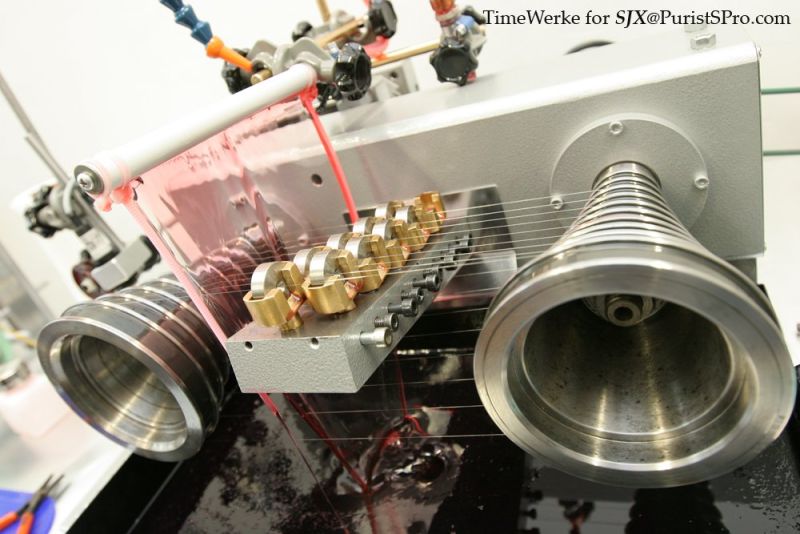
So this made in-house. The processes and resulting watches are classical in nature, Montblanc is clearly proud (and aware it is good PR) to use century old equipment as noted in the press release. Other companies are also proud of their proprietary hairsprings, like those made by Lange and used in its Double Split amongst others.
But some questions come to mind.
1. Are such traditional processes and materials important?
2. The hairspring is an important component of the movement, maybe it's the "heart" of the watch - but does an in-house hairspring matter to a potential buyer?
Note that I did not ask if an in-house movement in itself matters - that's a horse that has been beaten to death and then some.
What do you think?
- SJX
This message has been edited by SJX on 2008-10-27 09:46:37 This message has been edited by MTF on 2008-10-27 10:59:45 This message has been edited by AnthonyTsai on 2008-10-31 16:20:07. . . the more so for long-term owners, as there will be little question of parts availability in the distant future should a hairspring have to be replaced . . . cordially, Art
With sufficient technical competence, there will always be someone who can form a Breguet overcoil by hand, even if billion-dollar brand Montblanc is long gone (who thought any of the investment banks would disappear?). Perhaps that's a line Montblanc should include in its advertising too. "A Montblanc Villeret can always be fixed, even by the next generation." - SJX
The important properties of a hairspring are its elasticity, module of expansion and resistance to being magnetised. We know that the materials used by Nivarox are good, but also that they are made exclusively for Nivarox. What is the metal they are feeding in to this machine? Of course Nivarox is not the only material which will work, but I want my watches to have a known material I can trust. This is the determining component in any watch. I think that is more important than having the springs
Hmmm... Traditional hi-tech-alloy balance spring, tempered and annealed in a traditional oxygen-free hi-tech oven to prevent scaling... The problem I have with "tradition" is that it's far too selective, such as a "traditional" hand-made balance spring with a state-of-the-art balance, or a photogenic antique press producing components that will be finished on modern lapping machines and drilled using CNC. imho, the haute horlogerie is in the design and then in the finishing, assembly, adjusting
I think previous contributors to this thread have all made wonderful points so allow mine to be a little bit sharp. Your question around the "so what?" is very valid as I don't see any true value added to the end user. The value of in-house hairspring production as put forward by Montblanc is only internal. In fact, Mr Schmiedt's own comments clearly indicates that the benefits are to Montblanc and not to the end user. Here's a few other snippets that I found rather interesting: "Its properties
I have the impression that 'we' are moving to the next level of demands. In the past years, an 'in-house' movement (by whatever definition) was considered first a holy grail, a couple of years later a must for a watch company to be accepted as a haute horlogerie manufacturer. Now, as this discussion clearly demonstrates, 'in-house' production has to offer benefits to the customer as well. Interestingly, the focus of appreciation has shifted from manufacturers perceived as being independent (to s
This thread is active on the Montblanc forum with 13 replies. Share your knowledge with fellow collectors.
Join the Discussion →