Reference Guide
Jrwong23 (aka watchthebin) provides an insightful overview of the Montblanc Nicolas Rieussec collection, highlighting its significance as the brand's first in-house movement. This post is crucial for understanding Montblanc's strategic direction in horology, particularly its homage to historical watchmaking while establishing its own distinct identity. The author delves into the evolution of the Rieussec line, emphasizing the design refinements and technical innovations that have captivated collectors since its 2008 debut.


We have discussed this a few times on PuristSPro. Amongst the various Montblanc watch collections, from the Star collection to the Timewalkers and the new Heritage Spirit or Heritage Chrononometrie collections and all the way to the Villeret collection, the Nicolas Rieussec collection is arguably the most iconic line in Montblanc’s watch catalogue.
Montblanc's first in-house movement, a monopusher chronograph designed and manufactured from scratch in their Le Locle manufacture and released in SIHH 2008, was launched in the Nicolas Rieussec collection. Several versions have been released since the first manual movement, an automatic, an open-worked home-time minor complication and the Rising Hour version. See Mike Ting’s post here for a quick history of the Nicolas Rieussec collection, including some Limited Edition versions:
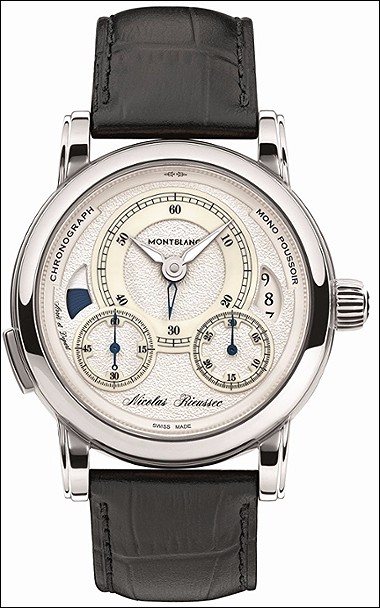
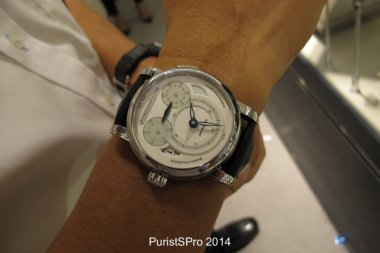
In SIHH 2014, Montblanc introduced the limited editions Homage to Nicolas Rieussec, a version of the Nicolas Rieussec, which got many collectors excited. The key positive feedback was the much cleaner dial design, beautiful grained dial, and the chronograph bridge design being much closer to the original chronograph (first patented chronograph) invented by Nicolas Rieussec; as well as the fun and “magical” superluminova for the hour indices coming alive in the dark (including a superluminova horse for the special edition series).
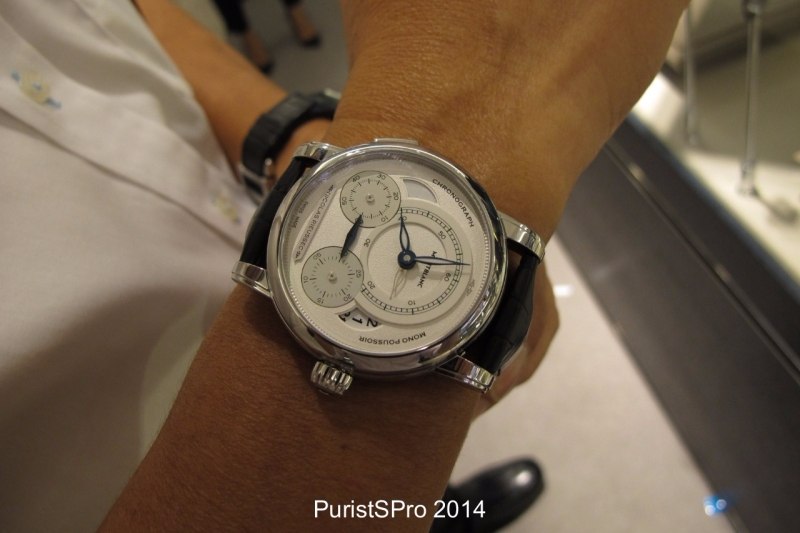
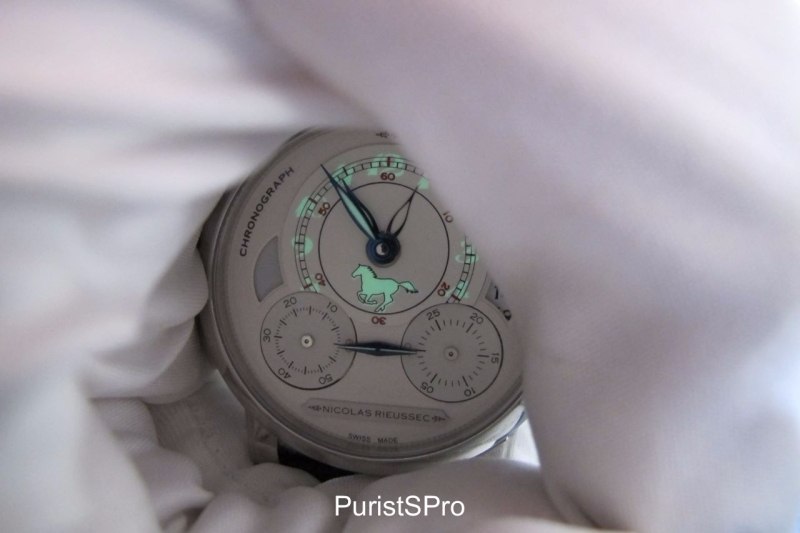
For 2015, Montblanc introduced a second version of the Limited Edition Homage to Nicolas Rieussec watch with a different dial design and the same calibre MB R200, which is the automatic Nicolas Rieussec movement with a dual time function and the iconic monopusher chronograph function. Here is the official picture from Montblanc of the Homage to Nicolas Rieussec II.
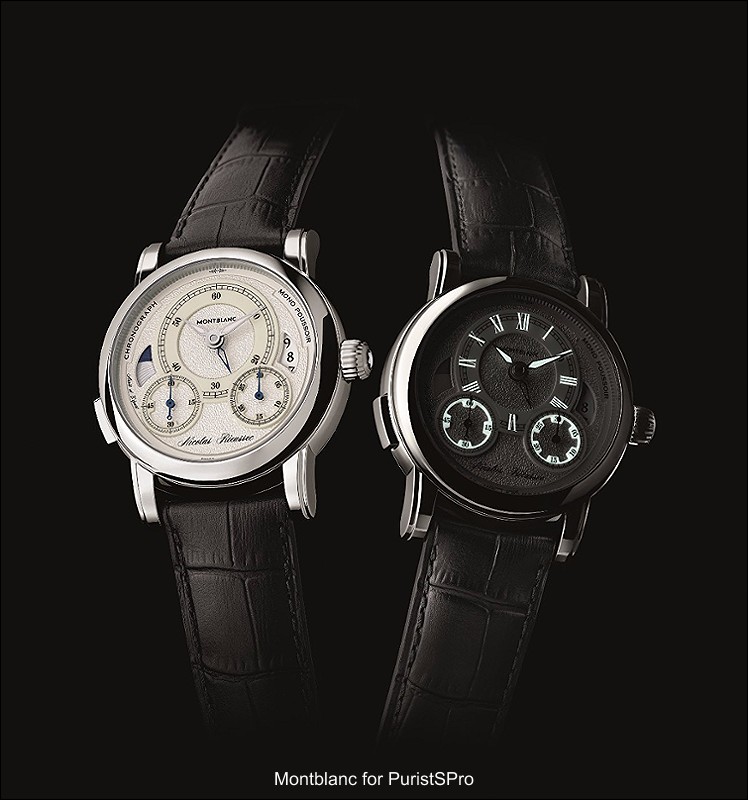
Notice some changes from version I? I will cover more details of the product design in Part 2 of my post.
For Part One, I wish to take us back in time, to learn a bit more on the history of Nicolas Rieussec’s inking chronographs.
Going back in time - Nicolas Rieussec’s inking chronographs
The seminal influence of the respected watchmaker, Nicolas Rieussec, is widely acknowledged today. Montblanc has paid tribute to this great watchmaker and inventor by naming one of its most important watch collections after him.
What was Rieussec’s famous achievement? Nicolas Rieussec created the first timepiece capable of inscribing the duration of an elapsed time-period onto two rotating enameled discs indicating 60 seconds and 30 minutes back in 1821. This was later patented with the French Academy of Science in 1822 under the name of “chronograph”. This mechanical marvel was literally designed to write the time, as indicated by the Greek roots from which the new term was coined (i.e. chronos, meaning “time”, and the verb graphein meaning “to write”).
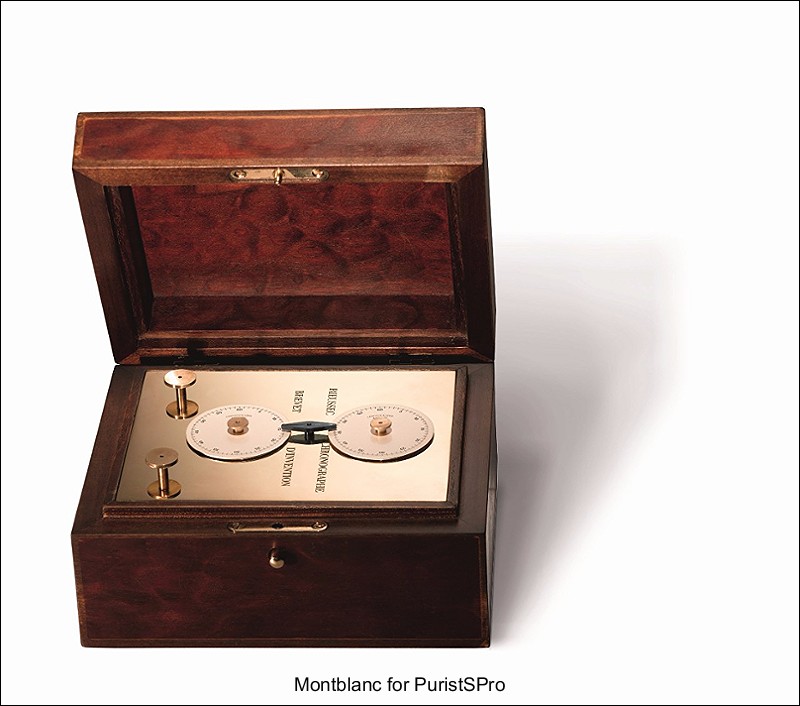
The original time writer in 1821
Nicolas Rieussec did not rest on his laurels after this invention in 1821. He constantly continued to reflect on the most accurate way to record timing information and never ceased to innovate. In 1822, whilst his first “inking chronograph” was patented, he created a device that featured a rotating ring dial in white enamel with a 60 seconds graduation subdivided into 5 seconds intervals as well as a 10 minutes totaliser.
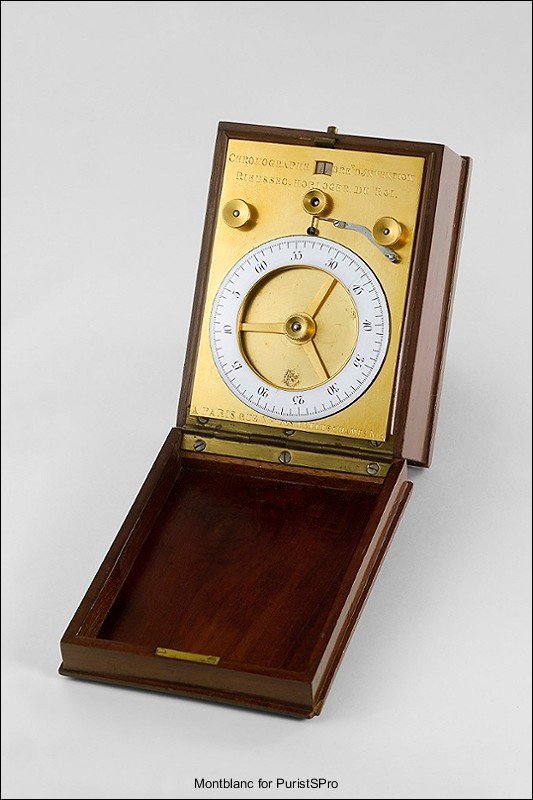
Nicolas Rieussec's invention in 1822.
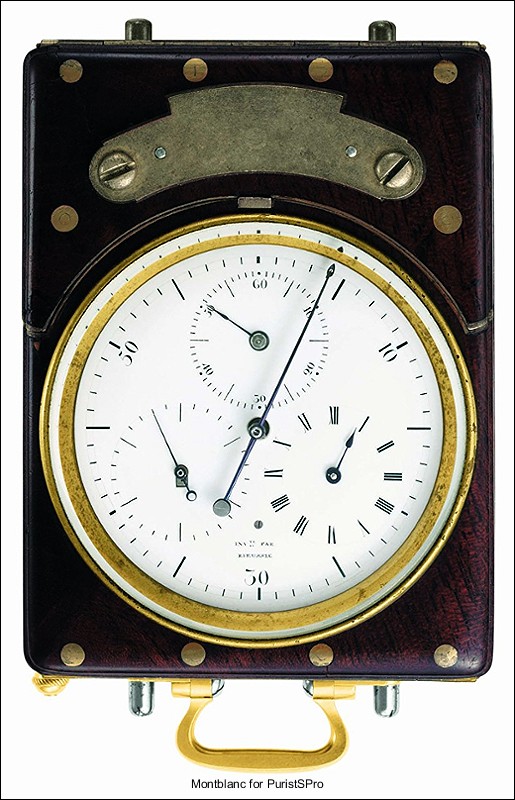
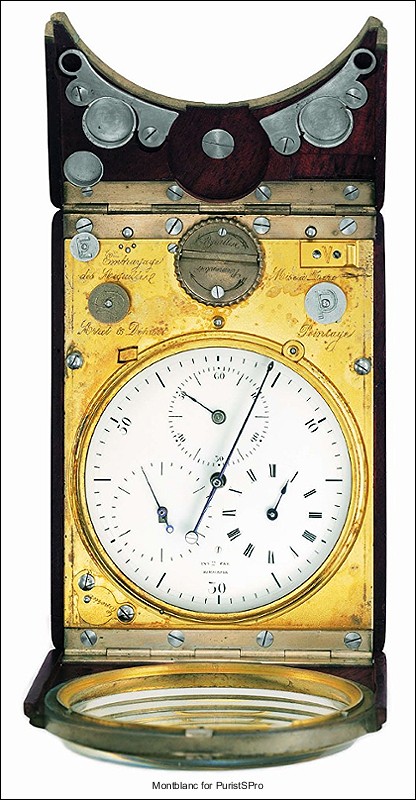
In 1825, Rieussec again developed an improved version of his newly patented chronograph from 1821. With this new model, he abandoned the use of a rotating graduated enameled disc in favour of a long, slender central second’s hand (called the Diablotine or “little devil”) which would rotate to follow a minute-circle displayed around the dial. The tip of this hand, loaded with a drop of ink, was made up of an ingenious mechanism to enable users to deposit a tiny drop of ink on the surface to mark the elapsed time whenever they wished. This got us closer to the modern chronographs we know today with rotating chronograph hands instead of rotating discs.
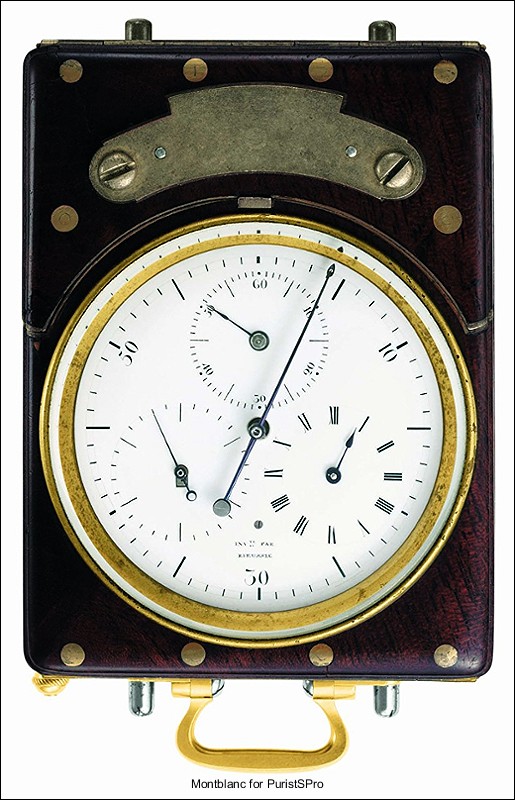
Rieussec Improved Chronograph version in 1825
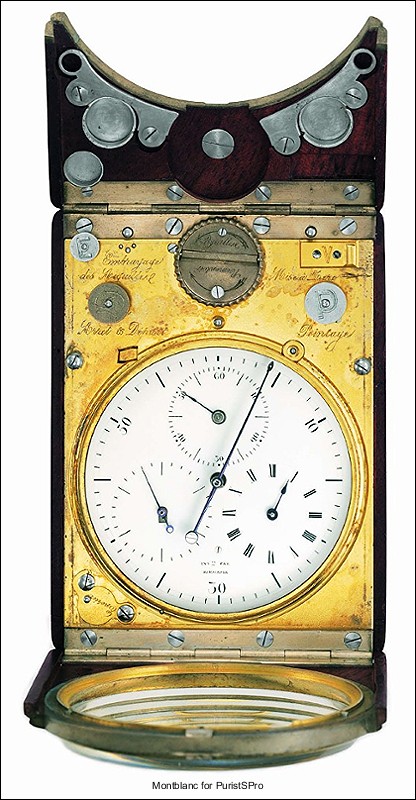
Rieussec Chronograph Variant in 1825
Operating in the same way as a calligraphic pen, this new device featured 1/5 of a second, 60 minutes and a 12 hours sub-dial.
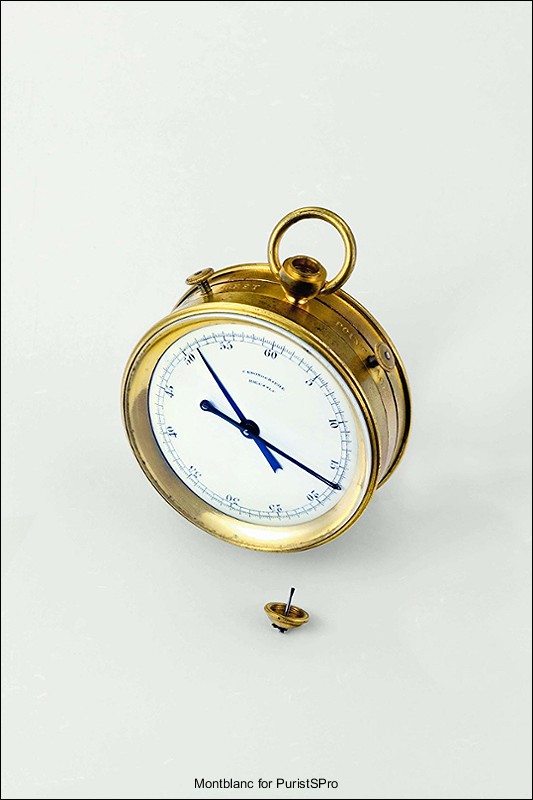
Since 1845, Rieussec further developed the inking chronographs with rotating hands by creating pocket chronographs (like pocket watches) which were smaller and therefore more easily wearable and portable to bring along for horse racing (and other racing) events.
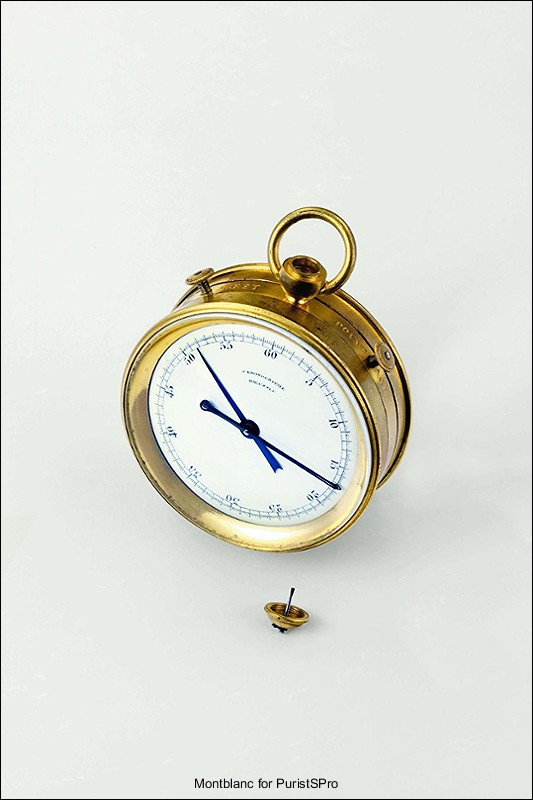
An example of Rieussec pocket chronograph since 1845
I learned more details about the various versions of the Nicholas Rieussec chronograph and the evolution of the chronograph in general. In modern times, we also see watches evolve in both technology and design/functionality. From the first version of the Homage to Nicolas Rieussec launched in 2014, we see a homage to the chronograph from Nicolas Rieussec with the rotating discs and the blued chronograph bridge. This new Homage to Nicolas Rieussec II takes inspiration from the 1825 version of Nicolas Rieussec’s chronograph, with rotating hands instead of discs. Montblanc is now evolving the modern Nicolas Rieussec chronographs by paying tribute to the historical chronographs from Nicolas Rieussec.; pretty cool idea from Montblanc.
In the next instalment, we will explore more details on this new watch. Stay tuned.
The Montblanc Nicolas Rieussec Monopusher Chronograph, featuring the in-house caliber MBR200, represents a significant horological offering from Montblanc. This model pays homage to Nicolas Rieussec, the inventor of the chronograph, by incorporating his original ink-dropping time-recording mechanism into its dial design with rotating discs for elapsed seconds and minutes.
The MBR200 is an automatic monopusher chronograph movement, distinguished by its column-wheel mechanism and vertical clutch. It operates at 28,800 vibrations per hour (4 Hz) and offers a substantial power reserve. The movement is visible through a sapphire caseback, showcasing traditional finishing techniques such as Côtes de Genève and circular graining.
This reference is notable for its blend of historical inspiration and modern watchmaking, positioning Montblanc as a serious contender in the manufacture space. Its unique dial layout and sophisticated movement appeal to collectors seeking distinctive chronographs with in-house capabilities.
Good to learn more about history behind the Homage to NR, which I do think is very nice. PS: I suspect its your passion in watch horology; astonishing how you continues to churn out these fantastic posts despite your busy schedules. Superhuman effort indeed, Bravo, my friend! Cheers, Ken
Glad you like the post. It\'s about time management my friend Thank you for your kind words and glad you enjoyed my post. It means a lot to me Cheers Robin
Thanks for the educational diversion as I sit resting for a few moments in Vladimir. MB seems to be making a mark everywhere as I travel - here\'s the Russian boutique in GUM department store, Red Square. Cazalea
Indeed Montblanc is everywhere! I see them all over Shanghai last week too I am seeing more and more Montblanc watches in the wild too. I believe they are growing this category well Cheers Robin
Part 2 will come soon Cheers Robin
This thread is active on the Montblanc forum with 14 replies. Share your knowledge with fellow collectors.
Join the Discussion →