Complications
jrwong23 (aka watchthebin) introduces the Montblanc Heritage Chronometrie Collection, highlighting Montblanc's renewed focus on classical watchmaking and precision. He explains how the collection draws inspiration from Minerva's rich heritage in chronometric functions, aiming to preserve and strengthen this legacy. This post serves as an essential primer for understanding Montblanc's strategic direction in 2015 and its commitment to high-precision timekeeping.


Since 2014, Montblanc adopted a new slogan and philosophy “Sharing the Passion for Fine Watchmaking”. With that came a few key changes from my observation. Firstly, Montblanc went back to the classics and produced a successful new line called the Heritage Spirit collection (previously called Meisterstuck Heritage collection) with fine watchmaking codes and complications at accessible prices. Secondly, the innovations at Montblanc Villeret and LeLocle manufactures were synergized and shared and this in turn produced some timepieces that are of great value to collectors, such as bringing the calibre 13.21 into the Heritage Spirit Pulsograph, which is priced more attractively than the Montblanc Villeret Pulsograph with the black or white enamel dial.
Montblanc continues to share the passion for fine watchmaking in 2015, with the introduction of yet another classical collection, the Heritage Chronometrie collection. For this new collection, other than abiding by the codes of fine watchmaking and having very classical and timeless design elements, Montblanc also sought inspiration from its Minerva roots, i.e. to achieve the paramount goal of precision. Precision has always been the goal of watchmaking, synonymous with the French word “chronométrie”, i.e. highly accurate time measurement. And precision, has always been at the core of the heritage of Minerva, a heritage Montblanc is intent to preserve and strengthen. Hence, the Heritage Chronometrie Collection is created, as an expression of this fine watchmaking heritage from Minerva.
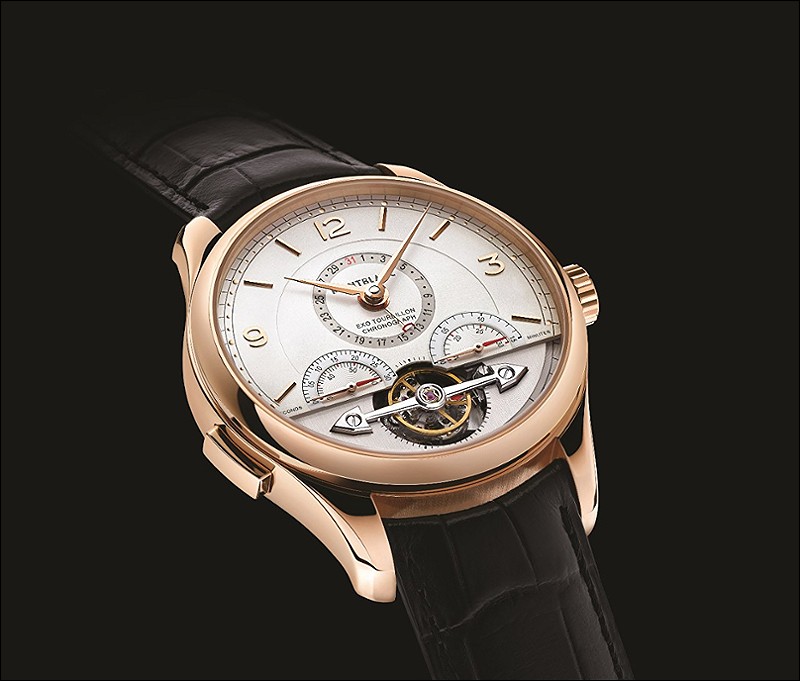
The flagship of the Heritage Chronometrie collection, the Montblanc Heritage Chronometrie ExoTourbillon Minute Chronograph
Heritage of Chronometric Precision
The tradition of fine watchmaking as practiced by the venerable Minerva Manufacture since 1858 has been continued and responsibly cultivated by Montblanc under its own roof. In the 157 years of the history of Minerva, it has managed to set itself apart as a specialist in one key area of watchmaking, namely chronometric functions, notably in chronographs and stopwatches.
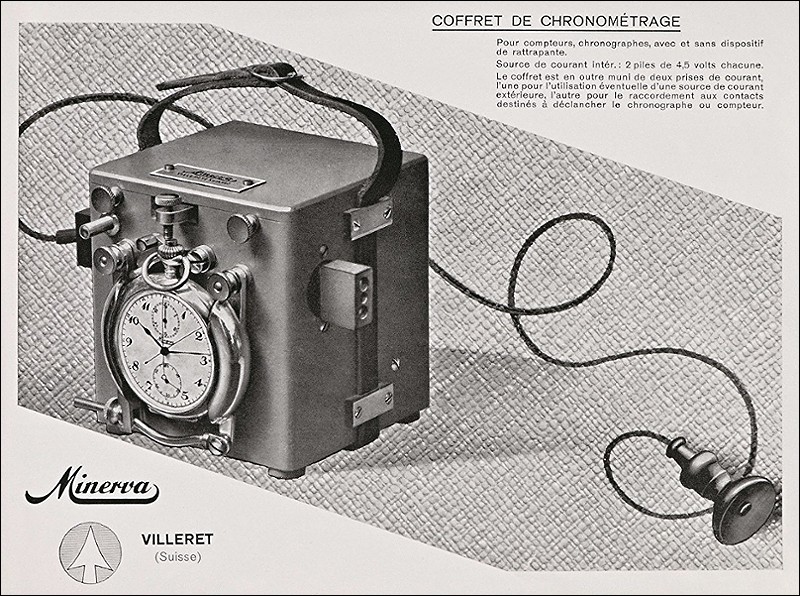
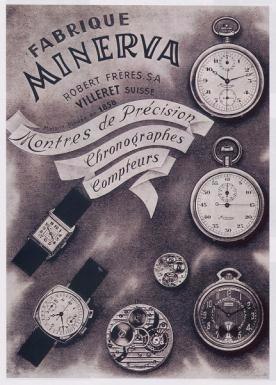
To be such an expert in precision timekeeping, Minerva needed to be able to manage the different frequencies starting from 1/5th, 1/10th up to 1/100th of a second. Minerva’s dedication to precisely measure time intervals up to 1/100th of a second and of course, the associated mastery of the various frequencies motivated Minerva to set itself apart at a very early date as a leading expert in the manufacture of its own balances and hairsprings. This heritage and pride of Minerva inspires Montblanc to develop the movements (either in-house movements or in-house complications, which I will explain more in a subsequent post) for the Heritage Chronometrie Collection.
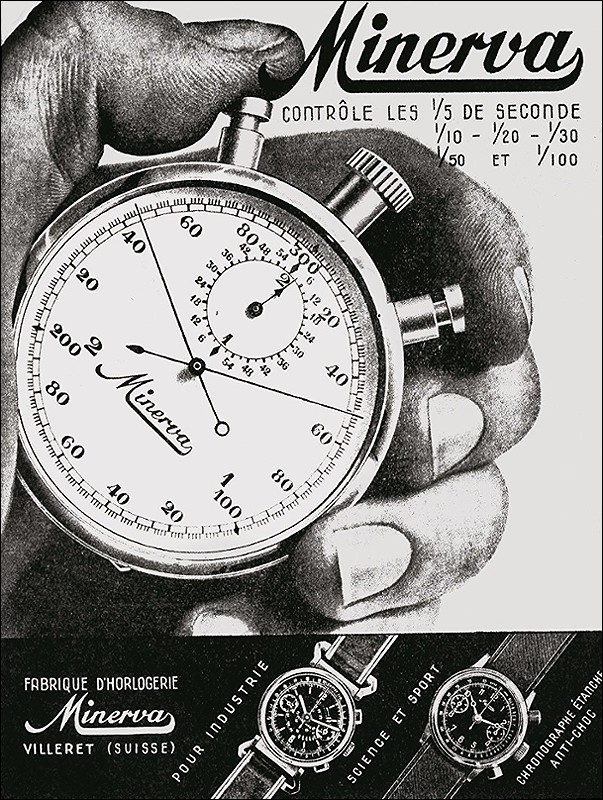
Heritage of fine watchmaking
Now I must admit, I am quite a young watch collector and I only started in late 2012. Hence, unlike many of you more experienced PuristS, I only knew about the great history and achievements of Minerva through Montblanc. However, there is always a watch I read about, a certain Minerva watch that seems like it had achieved a cult status, i.e. the Minerva Pythagore.
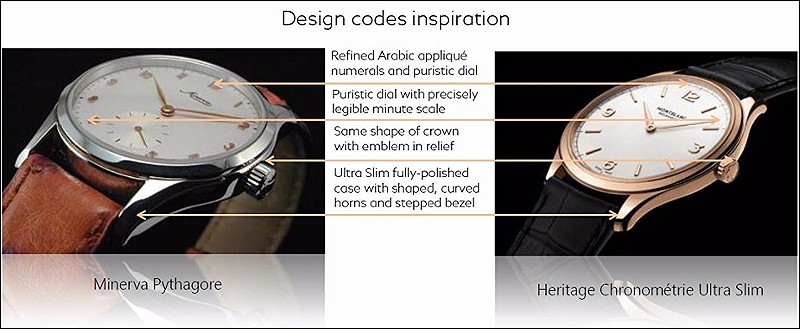
Montblanc could tap on Minerva not just for technical and chronometrie inspiration, but also for inspirations in design elements. In 1948, Minerva introduced the Minerva Pythagore, which is now considered an iconic and legendary watch by collectors. The Pythagore is the perfect example of a truly fine timepiece, with its simple classic elegance and essential functionality, without any pretence. It wasn’t even considered haute horology with exceptional movement finishing but it retains classical fine watchmaking codes with honest pricing.
The new Heritage Chronometrie line is very much inspired by the Minerva Pythagore. The illustration below shows how the design elements of the Pythagore is inspired onto the Heritage Chronometrie Ultra Slim (a watch I tried on last week and love it!).
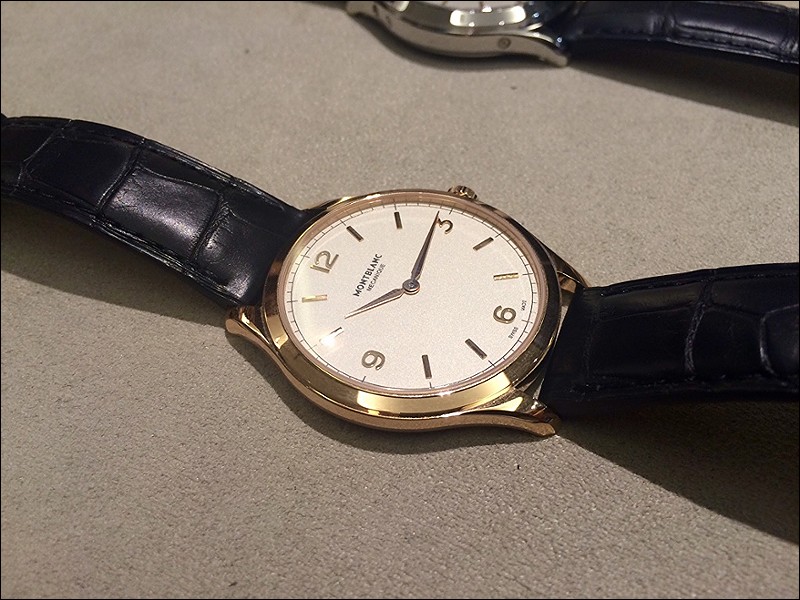
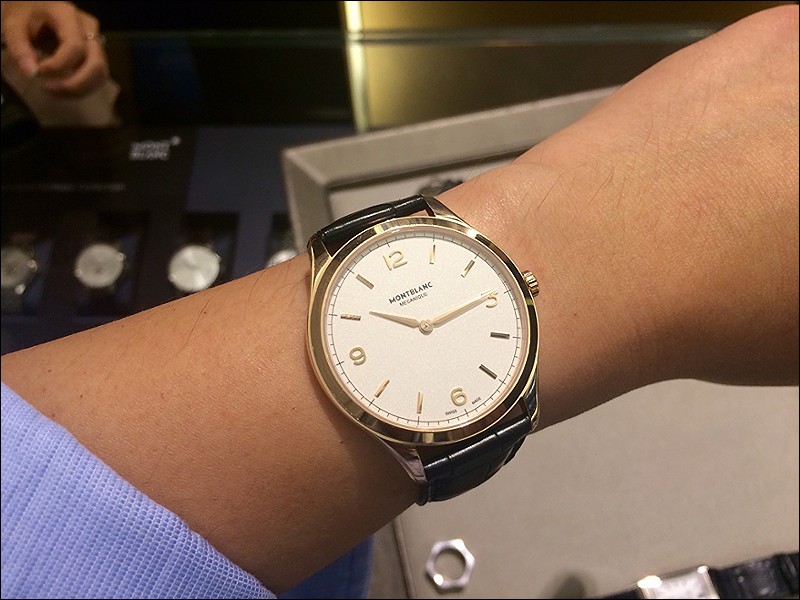
Here are 2 live pictures of the Heritage Chronometrie Ultra Slim, a manual wind, 38mm simple classic watch in red gold.
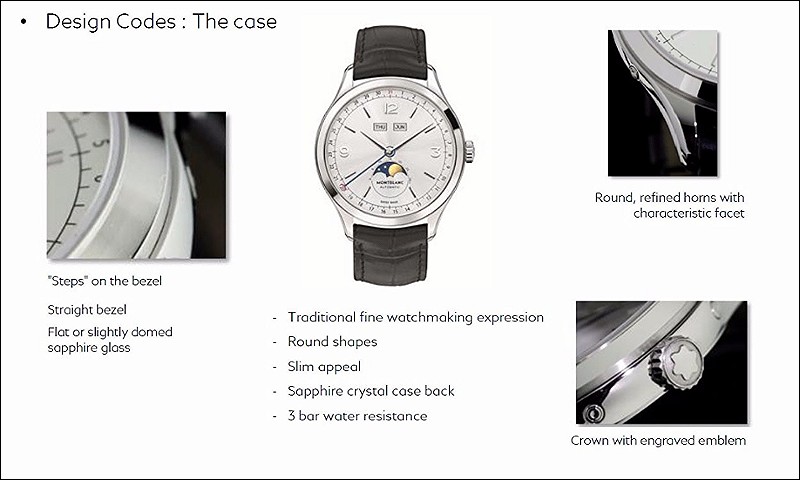
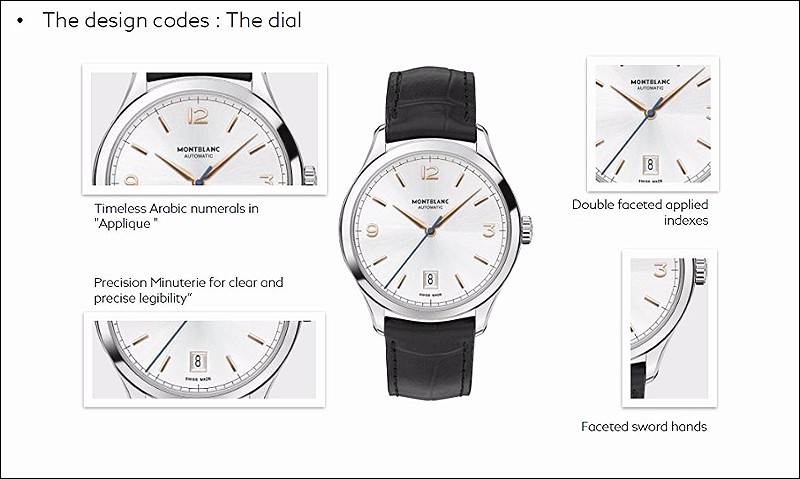
And below we have 2 illustrations provided by Montblanc on the design codes of the case and the dial of the new Heritage Chronometrie collection. I am a fan of applied indices and these double faceted applied indices do make a watch look and feel that it’s a high end watch.



The Rolex Bubble Back, reference 1858, represents an early example of Rolex's self-winding waterproof wristwatches. This reference is part of the broader Bubble Back family, characterized by its distinctive domed case back designed to accommodate the thicker automatic movement of the era. It showcases Rolex's foundational efforts in developing robust and reliable automatic timepieces for everyday wear, laying groundwork for future Oyster Perpetual models.
This particular reference features an 18k white gold case, measuring 38mm in diameter. It is fitted with a sapphire crystal, protecting a silver dial. The watch is powered by an automatic movement, specifically the Boucheron 1858 caliber, offering a power reserve of 42 hours. The fixed bezel and leather strap complete the watch's classic presentation.
For collectors, the reference 1858 holds interest as an early and relatively rare iteration within the Bubble Back series, especially in white gold. Its larger case size for the period also makes it appealing to modern tastes. The presence of a date complication adds to its functionality, distinguishing it from simpler time-only Bubble Back models and highlighting Rolex's early integration of practical features.
Robin, Thanks for the report about Montblanc Heritage Chronometrie Collection. In fact, it looks like more parts in a series are planned. I have a question about the Heritage Chronometrie Ultra Slim. How do they ascertain its chronometry if there is no seconds hand? I believe that C.O.S.C. does it optically nowadays with automated digital photography of the seconds hand position every 24 hours precisely. This gives the daily gain / loss seconds to calculate the "daily rate". Regards, MTF
There is no mention in the official literature of a chronometer rating for any of the new Chronometrie Collection. Its a matter of semantics, chronometry vs chronometer, with the former referring to "the science of the precise measurement of time" according to the Societe Suisse de Chronometrie, while the latter is a trademarked performance standard of Controle Officiel Suisse des Chronometres. I believe their philosophy was expressed by Monsieur Cabiddu when we visited the Villeret atiliers in
For the entire Heritage Chronometrie line is done as part of the 500 hours Montblanc Laboratory test. More details in Part 2 of my post Cheers Robin
Always a pleasure to meet Mr Cabbidu and learn from the master! Yes there are 5 Tests for the 500 hour Montblanc Laboratory test and all models of the Heritage Chronometrie collection will go thru these tests. One of them is indeed the 80 hour continuous accuracy control. I am not sure if a timing cert will be issued or not. I have seen an example of the 500 hour cert for a Nicolas Rieussec watch and I don\'t recall seeing a timing cert. I also don\'t remember my Montblanc Villeret coming with a
We await part 2 of your report. Still, it is a technical challenge to test chronometry over a 24 hours epoch if there is no seconds hand...? Acoustic sensors just calculate extrapolated timing parameters based on pallet fork oscillation tic tacs over a few seconds running. Regards, MTF
Yes it\'s only using acoustic testing. I will give more details based on what I know on part 2. If you have more questions let me know and I can check with Montblanc for more details Cheers robin
This thread is active on the Montblanc forum with 11 replies. Share your knowledge with fellow collectors.
Join the Discussion →