Montblanc ExoTourbillon Chronographe Design
Complications

Montblanc ExoTourbillon Chronographe Design

By Kong · Oct 6, 2010 · 13 replies
Kong
WPS member · Montblanc forum
13 replies4777 views0 photos
f š• in šŸ’¬ āœ‰ šŸ”—

Kong's insightful post offers a rare glimpse into the creative and technical minds behind Montblanc's Villeret 1858 Collection, specifically focusing on the ExoTourbillon Chronographe. By introducing designer Anais Hamel and watchmaker Julien Miribel, Kong humanizes the intricate process of haute horlogerie, providing context for the innovation and craftsmanship that define Montblanc's high-end pieces. This article is invaluable for understanding the blend of artistry and engineering at the Institut Minerva de Recherche en Haute Horlogerie.

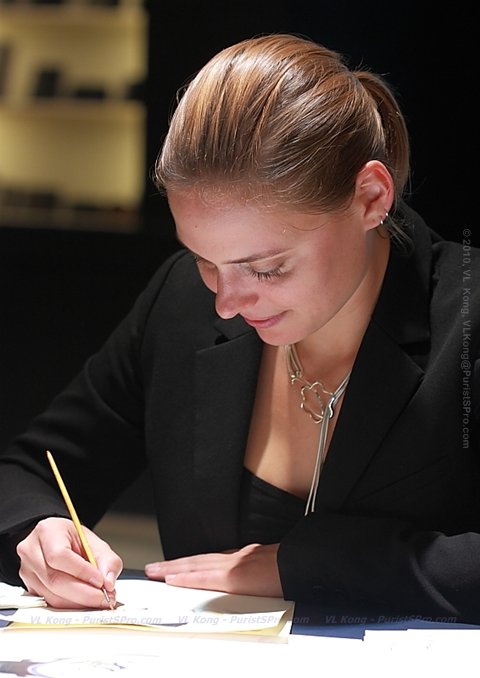
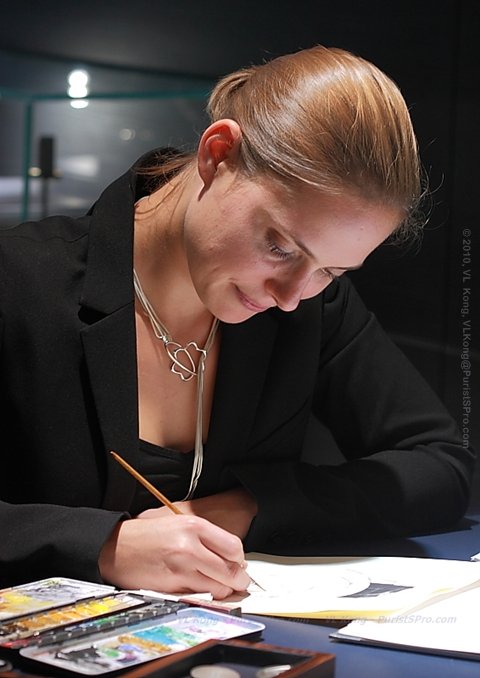
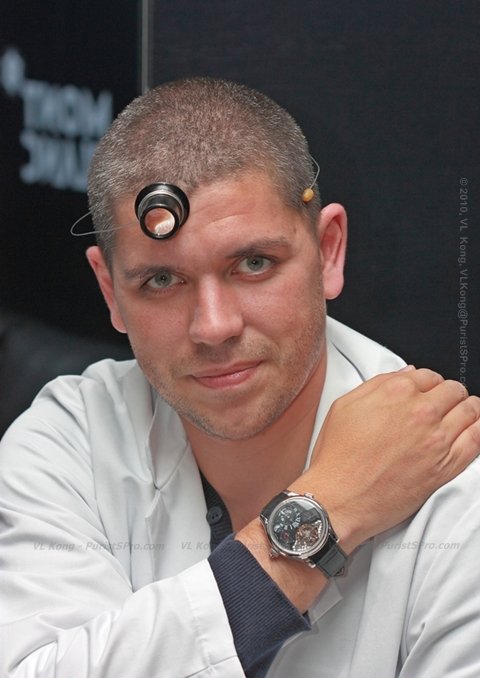
Continued from the next day after the official opening of the Montblanc Flagship Boutique at the Mandarin Gallery, got an opportunity to take several pictures of two of the people from the elite team at the Institut Minerva de Recherche en Haute Horlogerie who contribute to the form and function of the Montblanc Collection Villeret 1858 -Ā  designer Anais Hamel andĀ  watchmaker Julien Miribel.

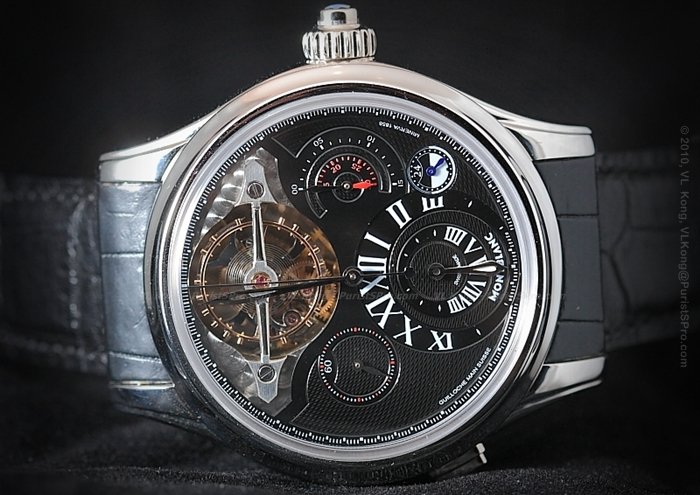
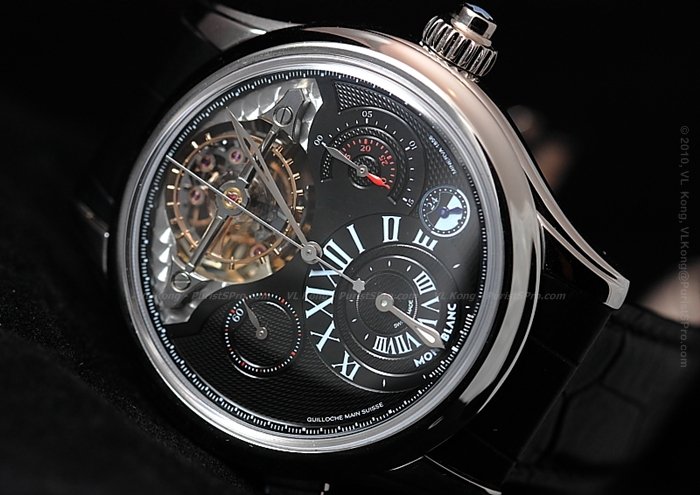
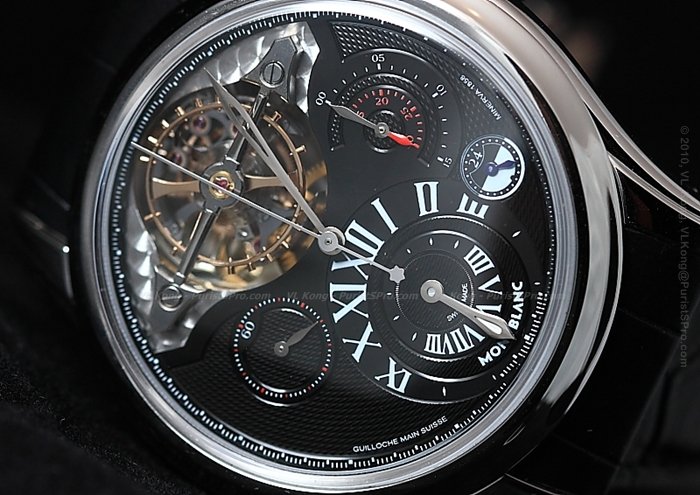
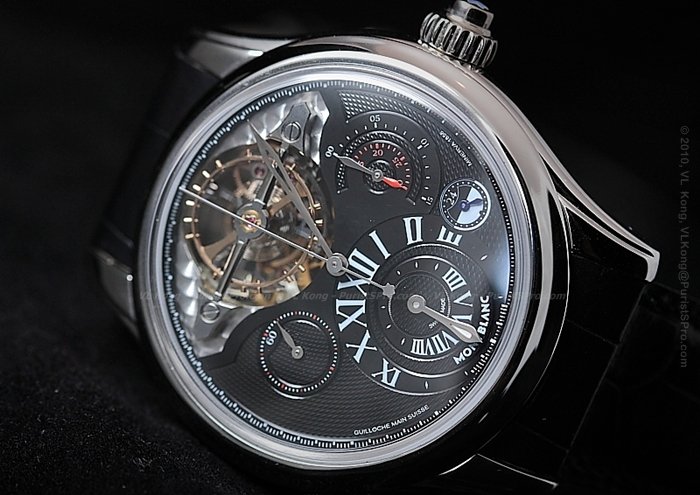
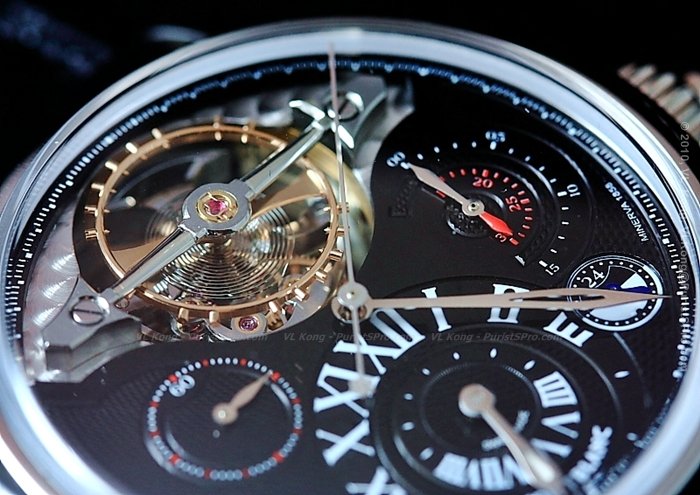
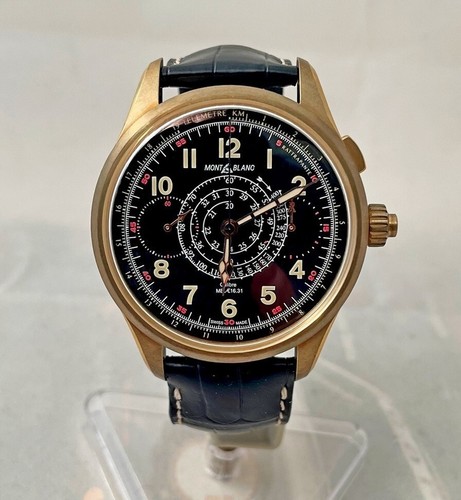
After which, some pictures of the first watch in Montblanc’s Villeret 1858 Collection
, combining two of the admired horological complications -Ā  the chronograph and the tourbillon, the newĀ  ExoTourbillon Chronographe (a semi-completed piece assembled for the special opening occasion which to be returned with Julien in a few hours time).

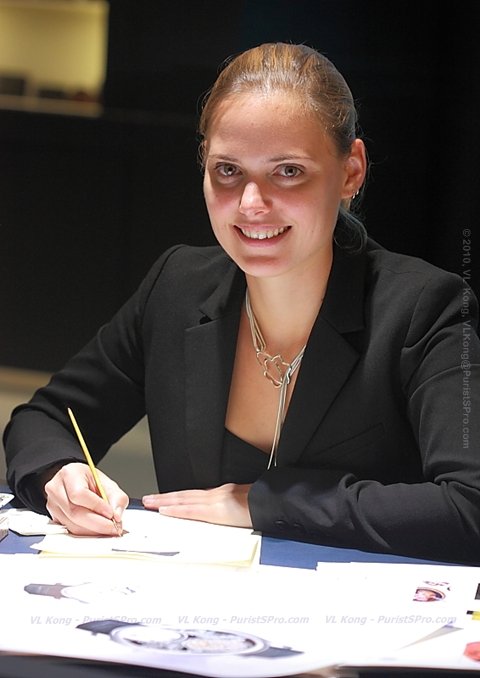
Starting with the FORM, the aesthetic, the creative ...


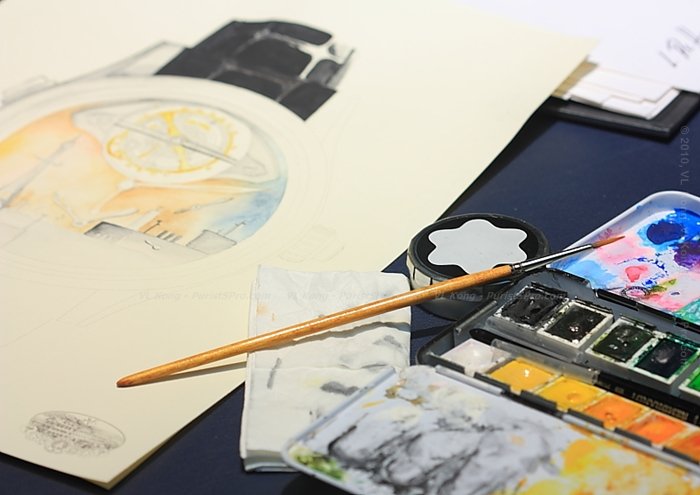
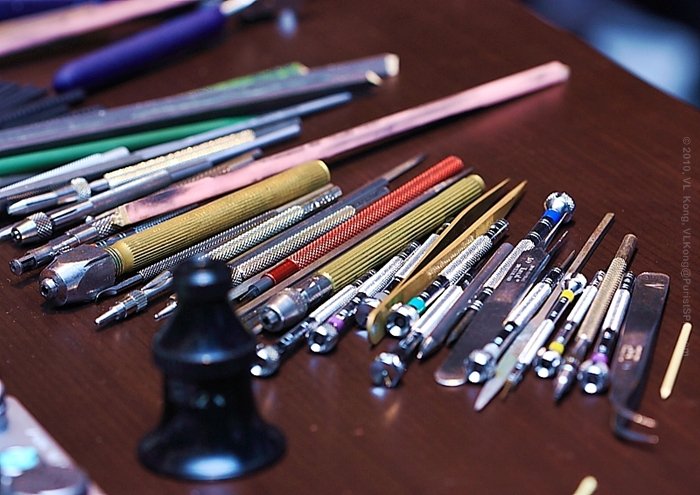
The tools for the artist-designer ...


the swatches for the clients to choose their colours ...


Anais Hamel
One of the talented designers of the Institut Minerva de Recherche en Haute Horlogerie


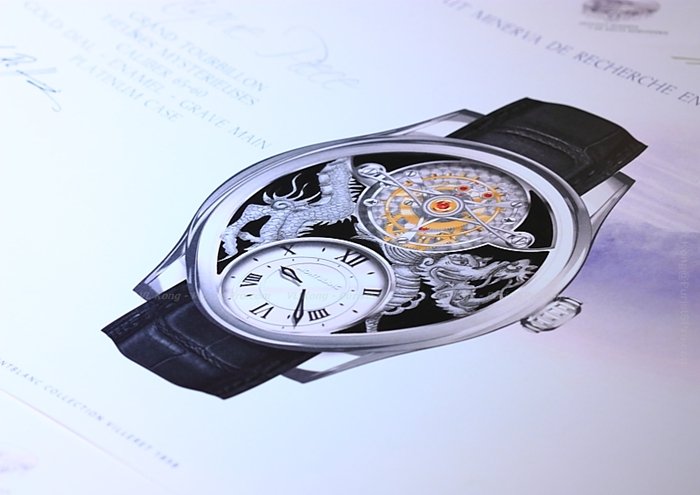
One of the designs for the Grand Tourbillon Heures Mysterieuses ... with a Dragon


Another of her creative work for the ExoTourbillon ...


Sweet !


Next, the functionĀ  ....


the precision tools ...


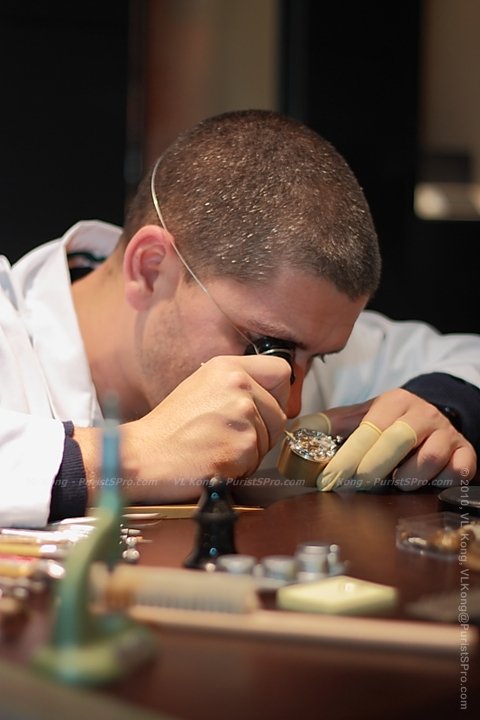
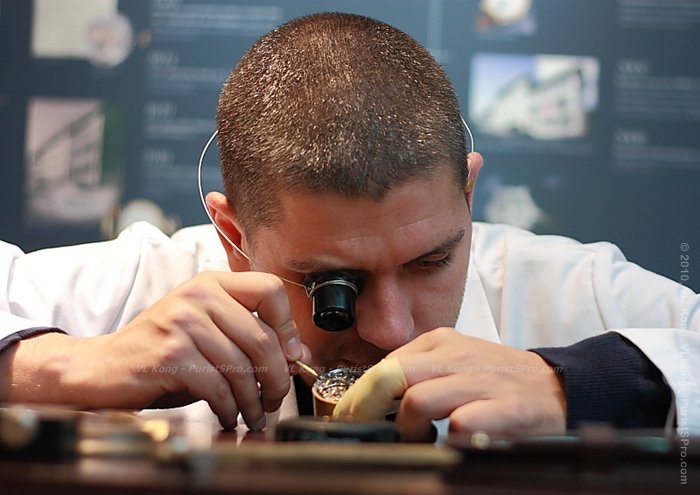
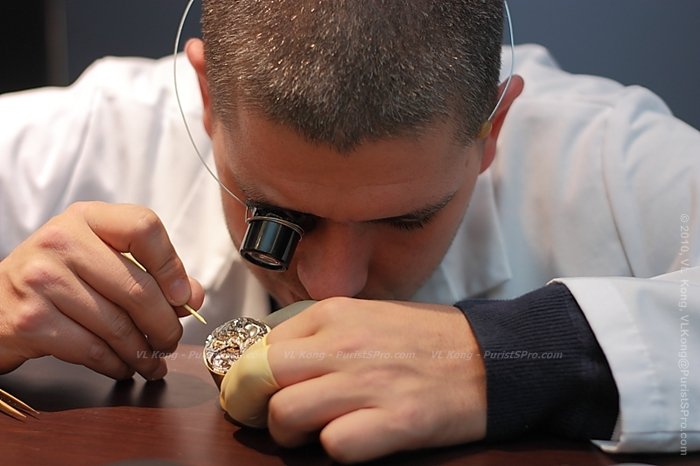
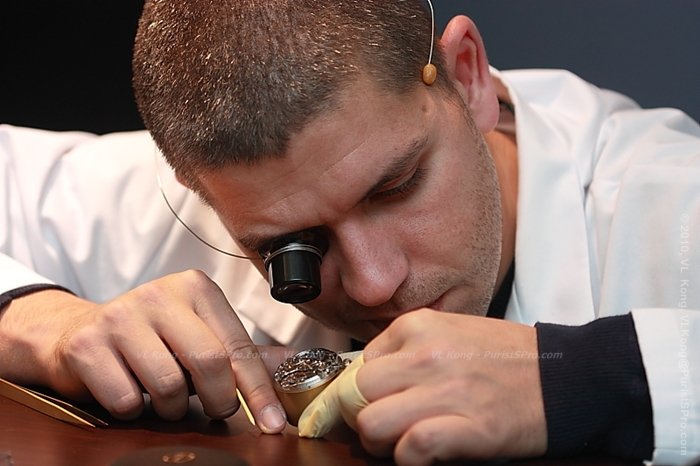
Julien Miribel, a trained watchmaker and restorer, and worked for MuseĆ© International de l’Horlogerie,
mainly restoring pocket watches with ā€œrepetition minutesā€ from the 18th century.
He joined Minerva S.A in 2001 responsible for prototyping and assembly.

After the acquisition and forming of the Institut Minerva de Recherche en Haute Horlogerie in 2007,
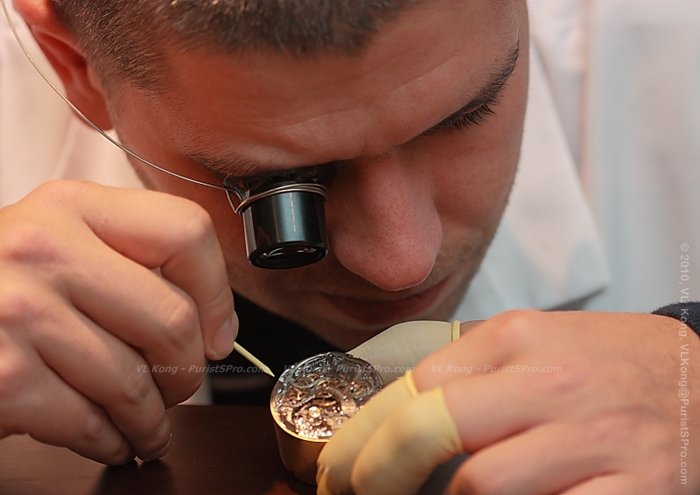
Julien heads the Prototyping Department and responsible for all prototyping activities of new complications and
the total assembly of unique, high complicated movements.


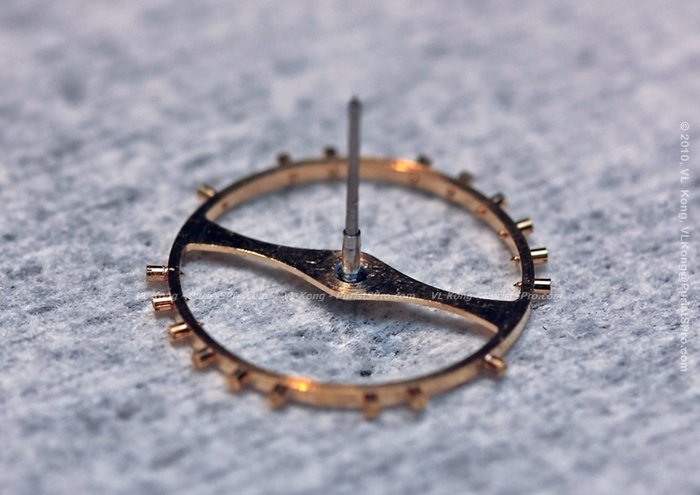
Showing me the large Ƙ 14.5 mm balance wheel of the ExoTourbillon Chronographe


For another dial variation and initial prototype pics,
please click here.
For the specifications, please click here.Ā 


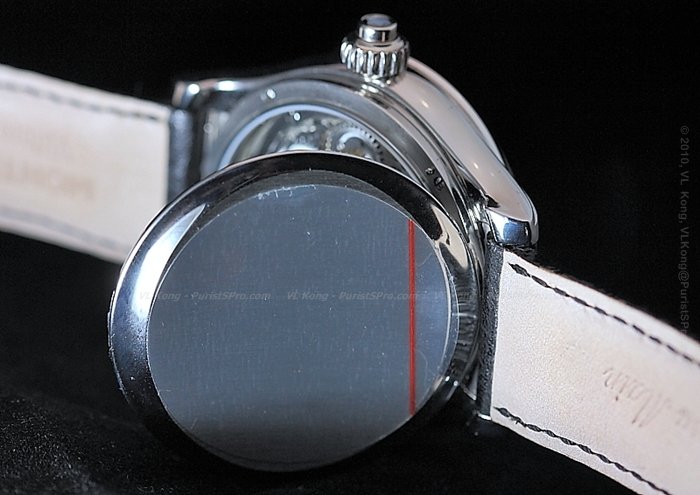
Now, a semi-finished ExoTourbillon Chronographe, so the finishing and aesthetic may change.
This piece here is for display during the official opening of the flagship boutique and at the same
time, its a proof to prospects, the mechanism works!

So this piece could be considered as a pre-production piece ....


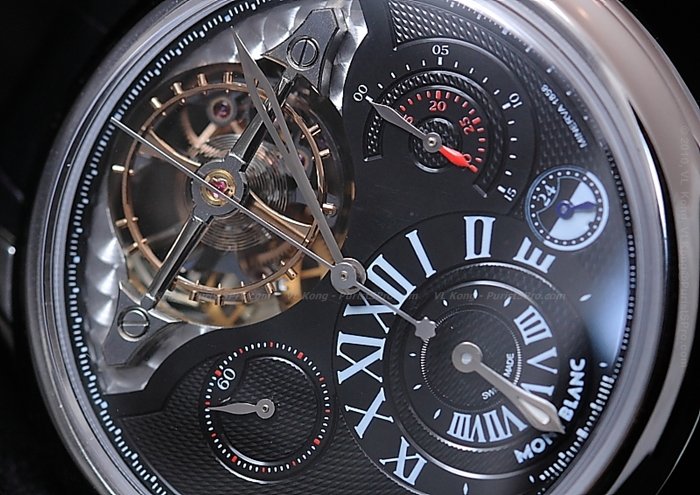
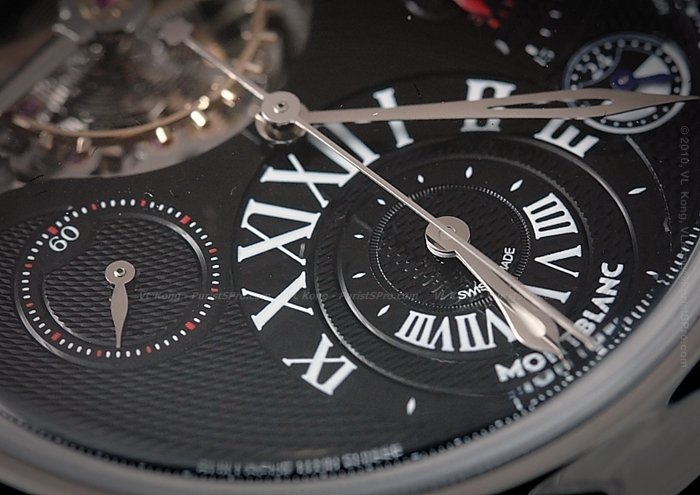
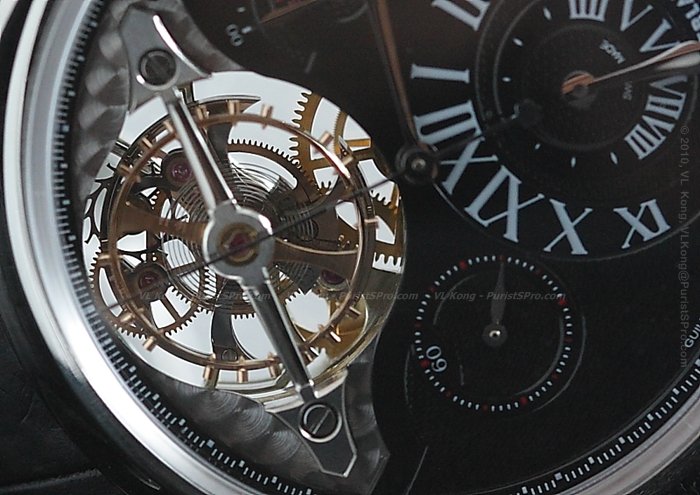
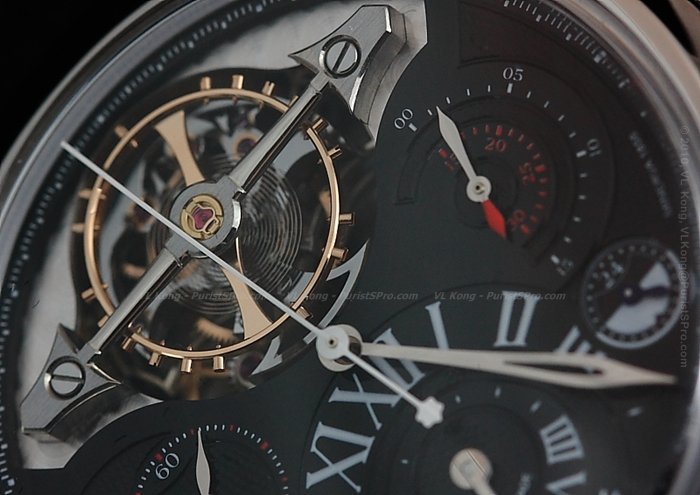
The Hours for the first and second time zone are shown at 6H (apologies, both hands coincided in pics),
The Minute is obviously the hand from the centre of the dial,
small-second indicated by subdial at 9H,
Day/Night indicator with 24-hour display between 4H and the 5H, which is quite challenging to read,


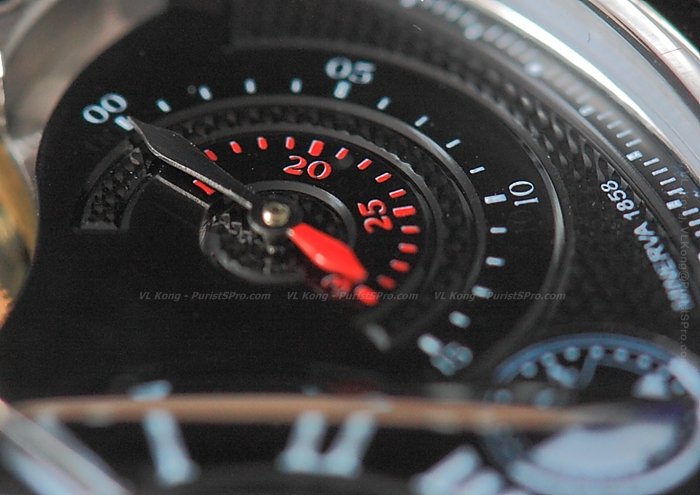
For the mono-pusher chronograph,Ā  the 30-minute counter is by the subdial at 3H,
whereas the chronograph second-hand is slender hand with the Montblanc siglet.

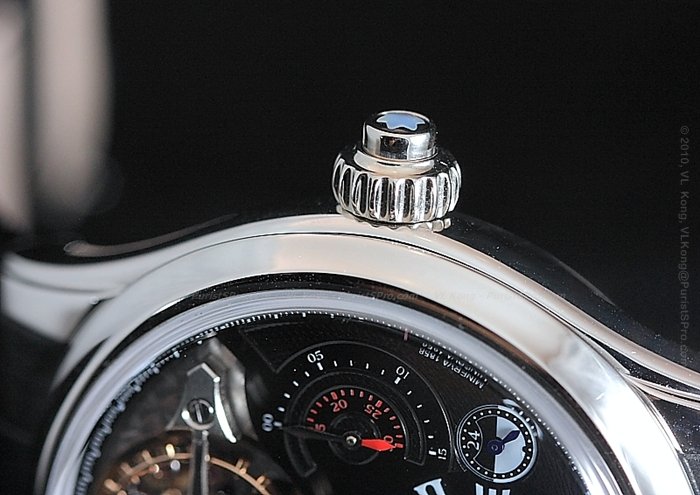
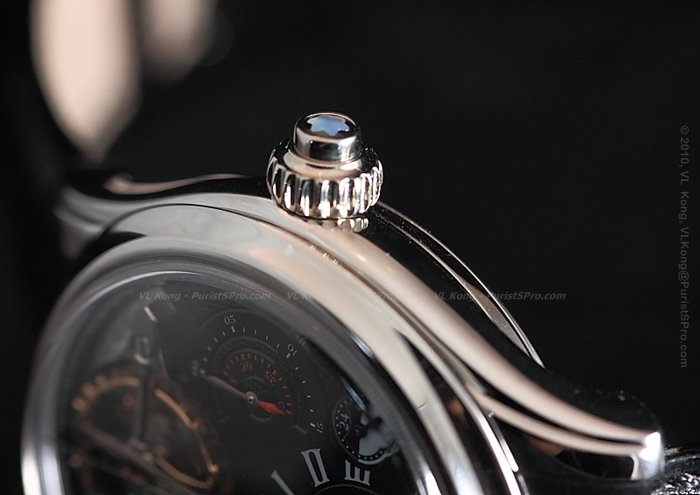
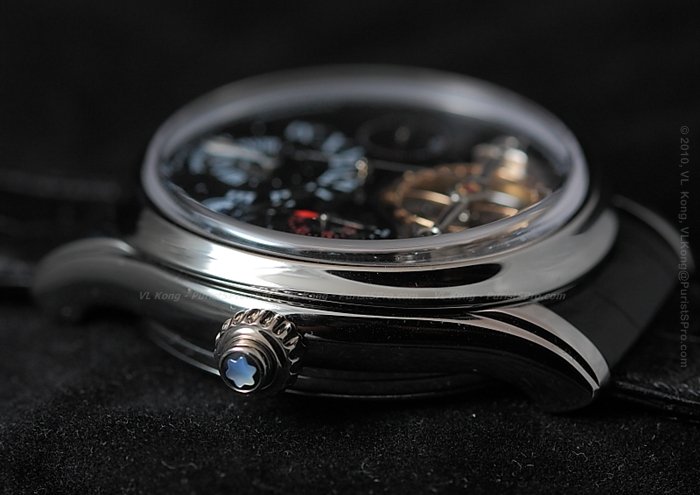
Pusher at 8H is the quickset for the local timezone.


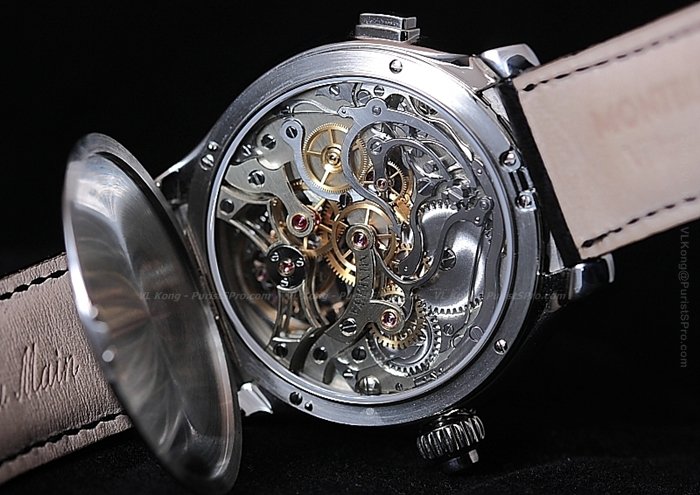
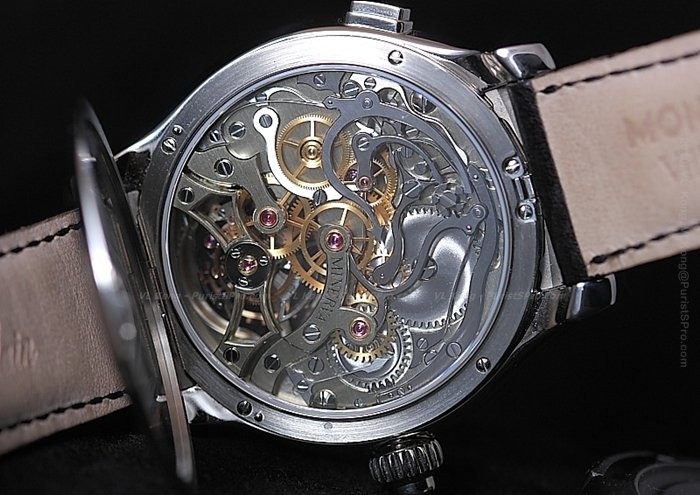
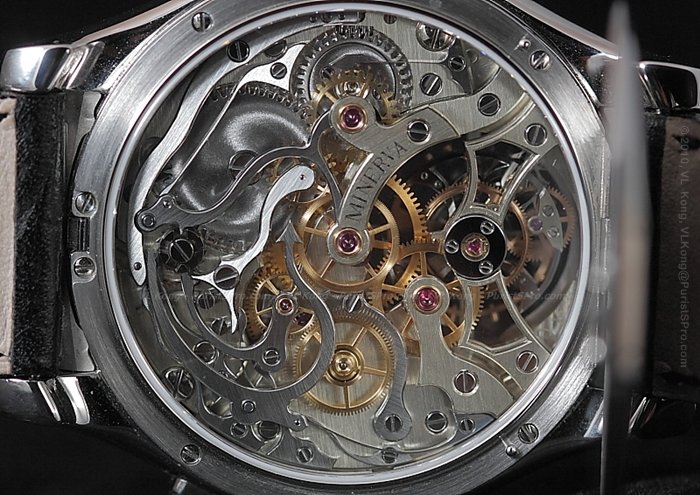
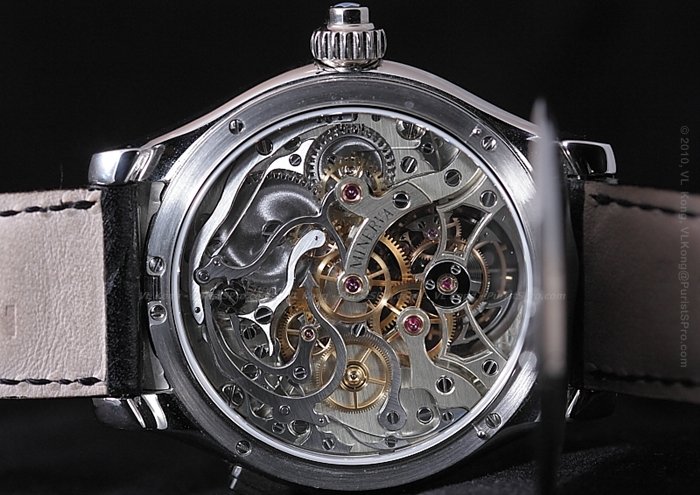
The semi-finished movement, actually it looks good.

Believed the column wheel has already black-polished.


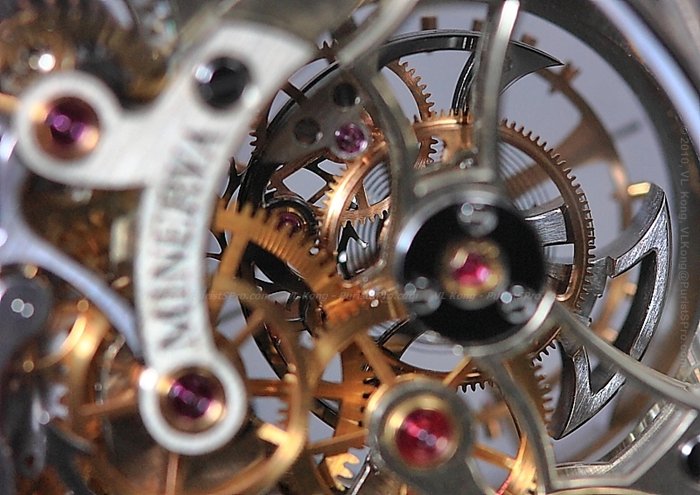
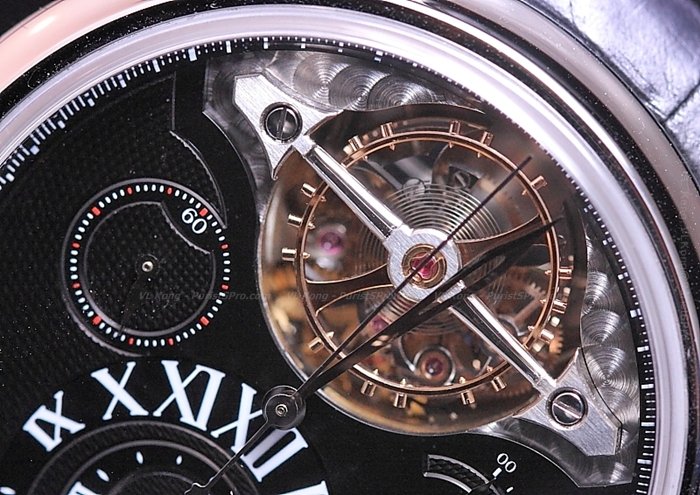
Please take note the finishing of theĀ  tourbillon bridge is not complete!


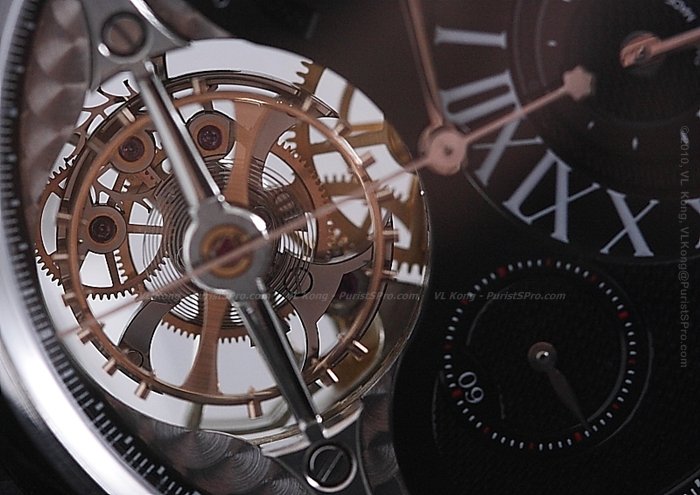
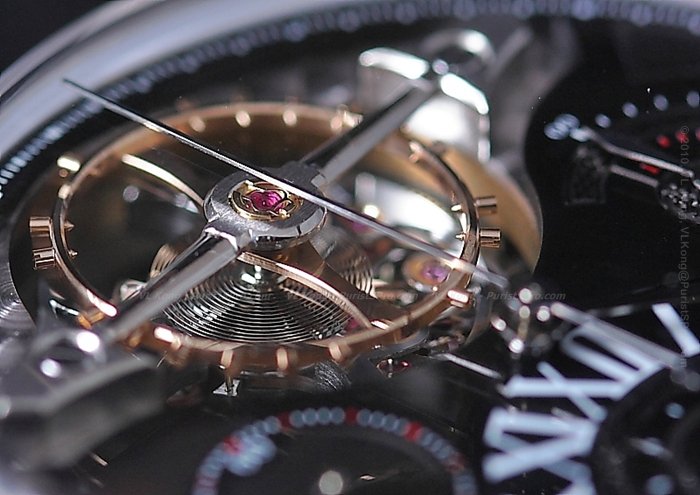
The word Greek prefix exo, meaning outside, the above view, clearly illustrate the balance wheel is
outside of the tourbillon cage.

As the balance wheel is outside, the tourbillon cage is extremely light, thus required 30% lesser energy to turn, and would increase the
power reserve too.Ā 
In addition, accuracy should be improved too, since the balance wheel is outside of the cage, it is not
affected by the inertia of the cage thus it oscillates with higher precision.

An interesting point which was shared, as the balance wheel could be separated from the cage, the size of the
balance wheel could be increased and could be use to implement
unexplore aesthetic design with this crtical functional component.


A picture of Julien with one of his favouritesĀ  smile


We all look forward to see various finished pieces soon!


Thanks Montblanc Singapore for arranging the meetup.


Kong


About the Montblanc 1858 Collection Ref. 1858

The Rolex Bubble Back, reference 1858, represents an early example of Rolex's self-winding waterproof wristwatches. This reference is part of the broader Bubble Back family, characterized by its distinctive domed case back designed to accommodate the thicker automatic movement of the era. It showcases Rolex's foundational efforts in developing robust and reliable automatic timepieces for everyday wear, laying groundwork for future Oyster Perpetual models.

This particular reference features an 18k white gold case, measuring 38mm in diameter. It is fitted with a sapphire crystal, protecting a silver dial. The watch is powered by an automatic movement, specifically the Boucheron 1858 caliber, offering a power reserve of 42 hours. The fixed bezel and leather strap complete the watch's classic presentation.

For collectors, the reference 1858 holds interest as an early and relatively rare iteration within the Bubble Back series, especially in white gold. Its larger case size for the period also makes it appealing to modern tastes. The presence of a date complication adds to its functionality, distinguishing it from simpler time-only Bubble Back models and highlighting Rolex's early integration of practical features.

Specifications

Caliber
Boucheron 1858
Case
18k white gold
Diameter
38mm
Dial
Silver
Crystal
Sapphire

Key Points from the Discussion

Advertisement
The Discussion
AA
aaronm
Oct 6, 2010

One thing I'm struggling to figure out. If the stud of the hairspring is attached to the tourbillon cage, won't the momentum of the cage still be imparted to the balance, through the spring? A

VM
VMM
Oct 6, 2010

Beautiful review of a beautiful watch. Wonderful movement, aesthetically and technically. Love it. Would change some things on the dial but that's all. Thank you. Vte

MT
MTF
Oct 7, 2010

the day after the party.....so I could not make it to see the watchmaker and designer Thanks for showing whom....er....what... I missed. Regards, MTF

MI
MiniCooper
Oct 7, 2010

designs as pretty as she is.... Cheers

DO
DonCorson
Oct 7, 2010

The big advantage is that the cage itself is much lighter so less energy is needed to turn the cage, and more can be used to keep a good amplitude on the balance. I think that this type of tourbillon, I would call it half-flying, also has advantages in shock resistance as one end of the balance wheel is pivoted in a bridge fixed directly to the plate. (as opposed to pivoting in the cage which is pivoted in a brige on the plate) And of course there is no cage to block the view of the balance, hai

AA
aaronm
Oct 7, 2010

to get into beat! the top and pivot of the balance are experiencing different amounts of friction and the top also sees different amounts of friction on the tick versus the tock. A

Advertisement

Continue the conversation

This thread is active on the Montblanc forum with 13 replies. Share your knowledge with fellow collectors.

Join the Discussion →