Innovation
Mkt33 delves into the evolution of Montblanc's TimeWriter project, focusing on the Chronographe Bi-Fréquence 1000 and its roots in the Time Aeon collaboration. This article provides a behind-the-scenes look at how Montblanc, through the Institut Minerva, supports independent watchmakers and pushes the boundaries of horological innovation.


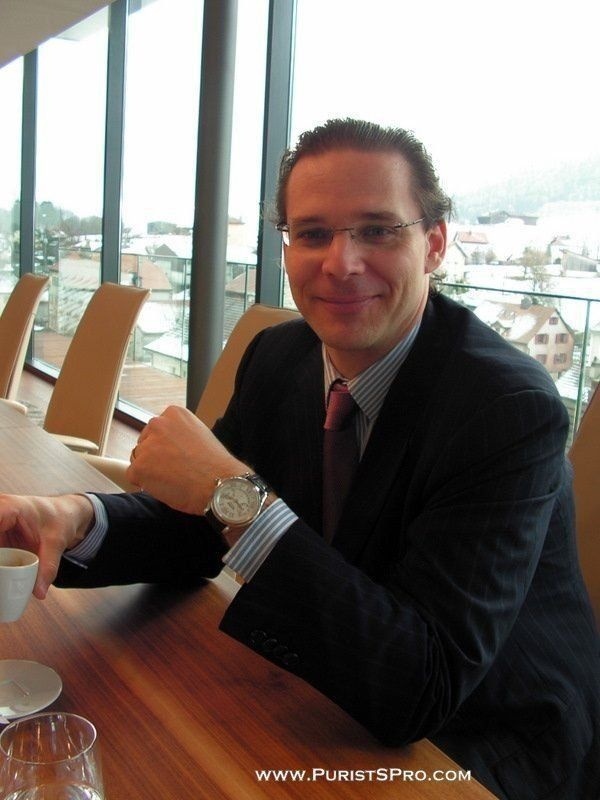
I recently had an opportunity to Ask Mr. Alexander Schmiedt about the evolution of the Timewriter project especially the new Chronographe Bifrequence 1000.
Let's take a quick historical review of the TimeWriter project. It all started with the Time Aeon collaboration in 2005. The founding partners of this Time Aeon group consisted of a well respected, time tested member (Dufour), an inspiring and creative mind (Halter), and three experienced but relatively new independent watchmakers (Kari Voutilainen, Robert Greubel and Stephen Forsey). This small group's stated objectives were to share the knowledge and skills of master watchmakers for future generations.
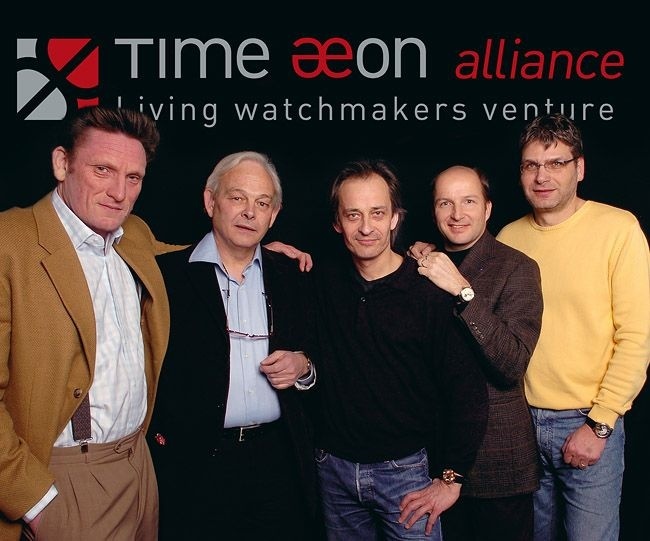
However in 2008 this small group realized that despite their own individual successes they could not fulfill their mission without help so Time Aeon formed a foundation with corporate entities as their new partners.
When Montblanc acquired Minerva and started the Institut de Recherche, they also joined this new Time Aeon foundation to fulfill their historical mission of preserving the Villeret watchmaking tradition.
The TimeWriter project is an offshoot of this collaboration.
" Montblanc created the “TimeWriter” concept, under which the company wants to introduce projects with independent creators that have great ideas and plan to establish themselves as independent watchmakers. It is foreseen to present a project every two years. A complex industry such as watchmaking demands investments that are very often much too costly for young entrepreneurs to finance on their own, so through the help of Montblanc the Institut Minerva also contributes, both materially and intellectually, toward helping these ambitious individuals start their own business"
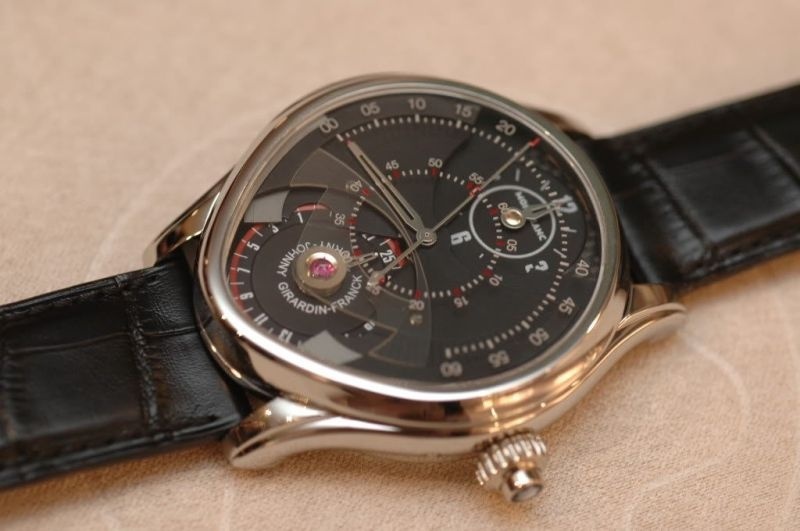
Of course we saw the debut of the Timewriter 1 in 2010 with the Metamorphosis by Johnny Girardin and Franck Orny.
This year we see the debut of the second project in the Timewriter Project : The Chronographe Bi-Frequence 1,000.
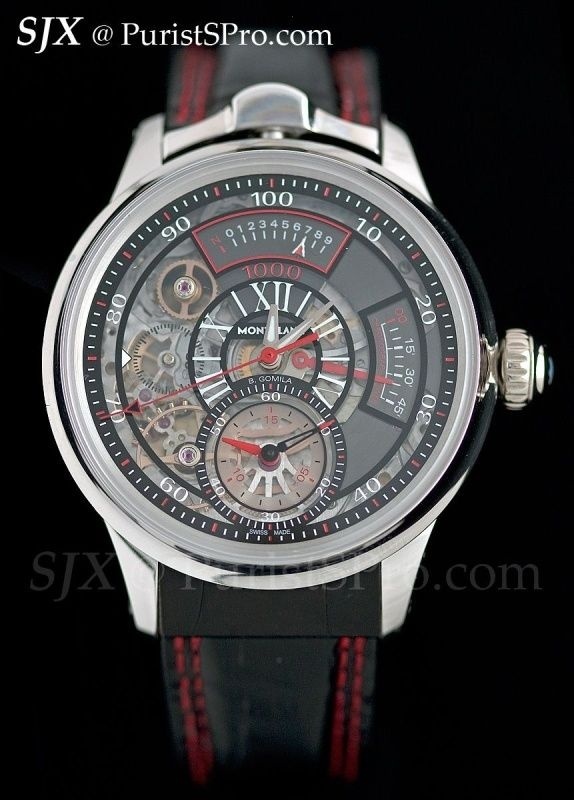
Recently I had an opportunity to ask Mr. Schmiedt (text in blue) a little about the evolution of this project and what really happens behind close doors at the Minerva Institute.
1. Whose idea was the TW2 project, where there any other projects on the table for discussion?
The idea came jointly from a discussion between Montblanc and Bartomeu Gomila. We have been thinking on making a wristwatch chronograph out from Minervas 100th of a second Stop watch- which the company basically produced without interruption since 1936- since quite a while.
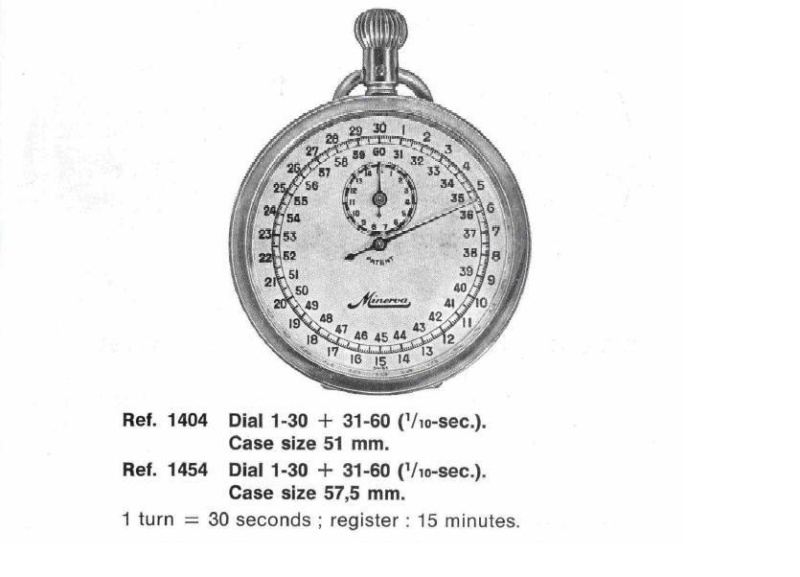
But we did not “just” want to transfer the over 80 years of experience from the stop watch to the wristwatch. We wanted to go a step further. The idea of going to the 1.000th of a second came along. But out of the experience of Minerva of industrially producing the 100th second stopwatches, we knew about the challenges of going from 100 to 1.000. The main challenges were:
-Precision: if you want to measure 1.000th of a second, you better make sure you can do this precisely
-Wear out: if you are into high- or even very high- frequencies, friction and wear can become a serious problem
-Readibility: indicating 3 decimal places of a second is pretty tricky if you want that people can easily read this
-Usability: assure that the chronographe can function over a sufficient time frame- thus you need to assure a satisfactory power reserve
From the experience with the 100th second stopwatch, we knew that the straight forward way by just increasing the frequency by 10 to 3.6 mio vibrations/ hour would not work from our perspective.
With this approach, none of the 4 above challenges seemed to be manageable for us. Jointly with Mr. Cabiddu we discussed this challenge with Bartomeu, who at this time had already established himself as an independent restaurator in Spain, but who was occasionally cooperating with Montblanc to introduce the technical intricacies of the Villeret collection to collectors in Spain.
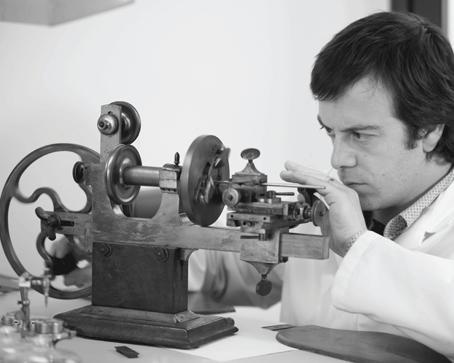
He spent a month in spring 2010 in Villeret to learn about how the traditional horlogerie is practiced there- and during this period the idea took shape.
And I dare to say that the idea to solve the challenge was as easy as it was congenial: the inspiration came from Barto who remembered that when he was a boy, he was playing with a wheel and a whip. He noticed that when you give regular impulses to the wheel, you can have the wheel turn in almost any speed you want. What was great fun for the boy at the time, became now the idea for going from 100 to 1000- without changing the frequency of the movement! Subsequently, we started the TW2 project with Barto in summer 2010. At this time, we also had other proposals at the table. But honestly, the decision was not difficult at all. While some of them were more interesting than others, none of them was as exciting as the Chronographe Bi-Frequence, which really fullfils the objectives we have set for a TW project: bridge the tradition and innovation with a unique, exiting and never done before solution.
<
2. Beside Mr. Cabiddu and Mr. Gomila, how many other people were involved in this project. Was the TW2 a "full time" project for the staff?
The entire Villeret team was more or less involved. The project was piloted by Mr. Cabiddu and Barto- but both worked very close with our developers, designers, component production department. The TW2 was surely an immensely important project for the staff, however, not the only one that we have managed in Villeret over this period. Barto spent over 12 months in Villeret since 2010 to acutally build himself the prototype of the first piece.
3. Please shed some light behind the prototype phase. How did the villeret team approach this project? Were there several teams working on different aspects of the watch at once? The engineering and physics behind the watch is amazing, who was responsible for the mechanical design of the watch? How long did it take to get to a functional prototype?
There was one movement constructor- Alain- dedicated to the project. He had previously worked already on the base construction- a wristwatch chronograph which could measure the 100th of a second- and now started to attack very closely with Cabiddu and Barto to go from 100 to 1.000. First step was to verify whether the idea of the “boy with the wheel” would work in theory- means on the screen. Once that was proven, the team set out to see whether it would also function in real life The first thing we did was a first prototype with lower frequency to test the system of "mobile du milieme", once this was finshed and tested, we contacted a company specialized in electronic precision measurement to develop a device that could help us check this high frequency, because until today there was no machine that was able to test it. At the same time we did the second proto with the right frequency, then we tested it with the specially developed measurement tool and we found out that our system was really good. The next step was to test and check the "mobil du milieme", for this purpose we used a strobe light system with which we could check that our "mobile du milieme" was in the correct place in each thousand of a second.
4 . Were there some interesting challenges that were not predicted? How were these solved?
We found some challenges, of course, but these are the most exiciting things in watchmaking. I'll tell you about the three main ones:
How to read the time ? We wanted a time indication that is fast and easy to read, intuitive and does not require any complicated calculations for the user of the chronograph. To solve this problem we indicate all the mesures on one axis of the watch, bottom up andfrom largest to smallest. You start to read the cronograph at 6 o'clock. Here we find the minutes and the seconds at the same axis, we continue tofind in thecenter the hundredths of a second, and then in 12 o'clock we have a sectorial indication for the thousandths of a second on a dashboard. With this system the thousandths are easy and precise to read because when you stop the chronograph, the indicator jumps exactly to the thousandths of a second.
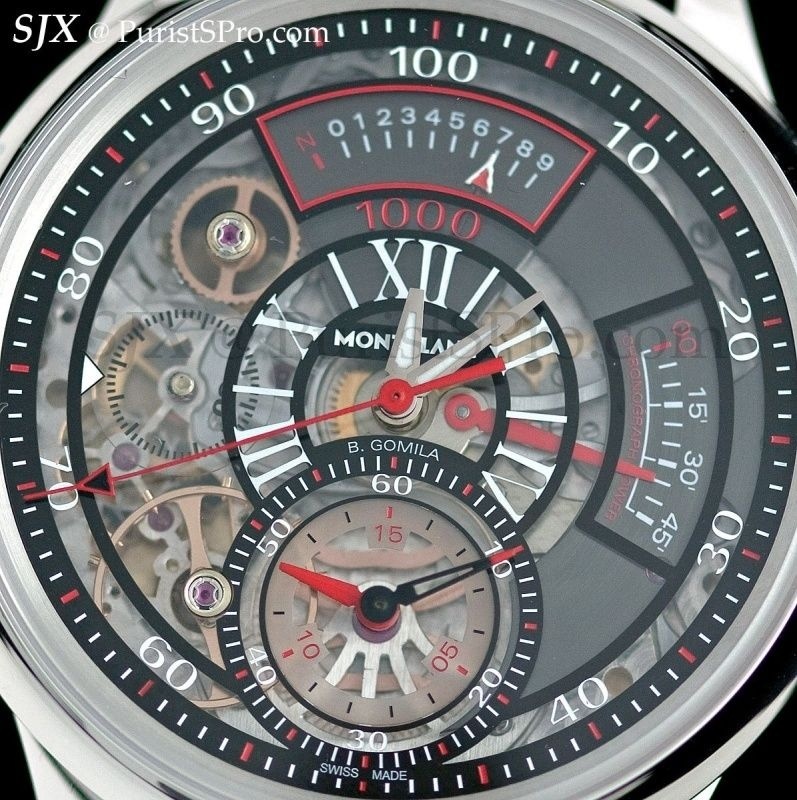
The power reserve: The first thing that comes to your mind when deciding to do a cronograph capable of measuring the thousandths of a second is increasing the frequency, but this would make you lose a lot of power, so we developed a system where we converted the jumping movements of the wheels (100th of a second rhythm) into a homogeneous movement, with it we succeeded in mesuring the thousandths of a second using the lower frequency. The fact that we actually manage to measure the 1.000th of a second with “only” a frequency of 50hz allows us to have a power reserve 45 minutes for the chronograph.
Precision: For measuring the thousandths of a second you need precision, the problem we found was that with a normal way, the hairspring we needed to get a good frequency was too hard and short, and therefore we were loosing a lot in precision. We found the solution in a classical- yet innovative way: we devoloped a system with double flat hairsprings, so each hairspring was longer and thinner, surprisingly the force of this system was the same but the system is actually far more flexible, and so we achieved a better isochronism and thus more precision.
5. Are all the parts of TW2 produced at Villeret?
The movement and its components is- like all other watches of the Collection Villeret- produced 95% in house. Except for some very generic components like the rubies and some basic screws and wheels, everything is produced inhouse. Everything what is “habillage”- dial, case, hands etc- is designed in Villeret, but finally produced by external suppliers. However, even the case for the first prototype was build completely in house in Villeret. The series cases will come from an outside supplier
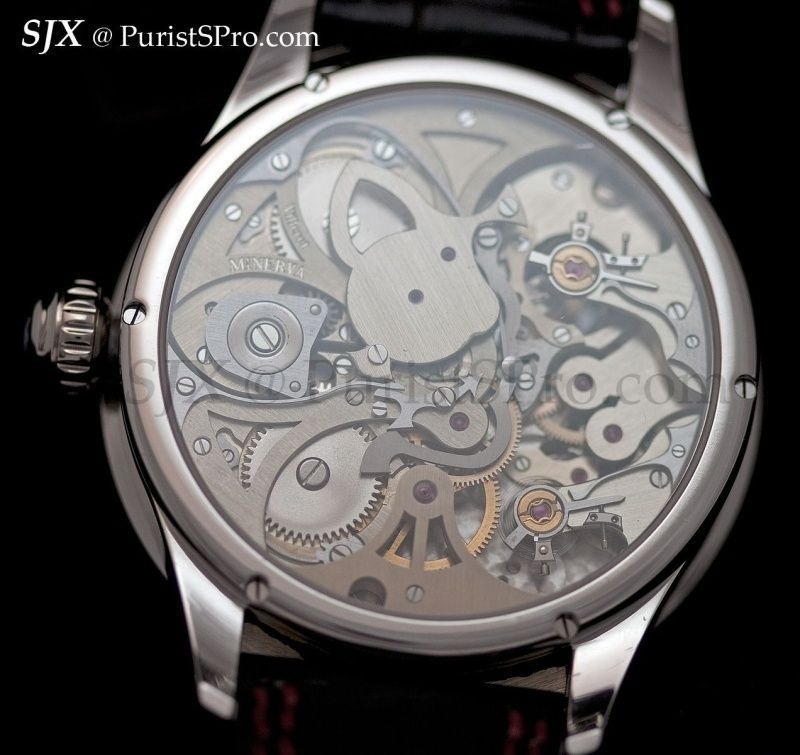
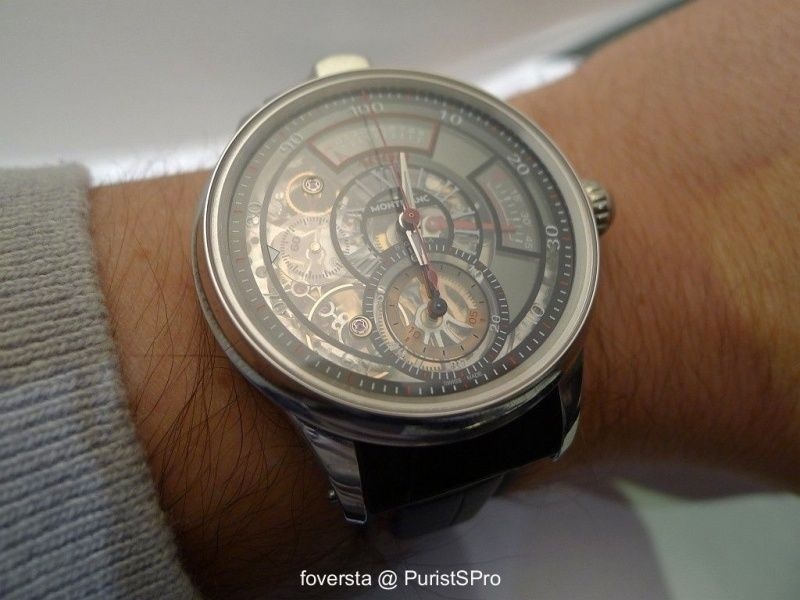
I'm glad that they went to the trouble of verifying the accuracy of the 1/1000 indication, rather then just loudly asserting it (looking at NOBODY right now). A
Thank you for this most interesting information. I didn't know that this project was so involved. Furthermore, I was not aware that the Institut Minerva was so involved in the Time Aeon. Thank you for this detailed information!
This is a very innovative timepiece. Is there any particular reason that the movement is not decorated? I am rather surprised to see the name of an important contributor - Gomila on the dial. In that case, I think Mr. Cabiddu's name should appear on all Villeret pieces as well. Regards Ling
final production pieces will be finished to Villeret high standards. As you can see this will take a lot of time to complete. I think having only Gomila's name on the dial shows Montblanc's integrity to the TimeAeon/Timewriter concept. The idea is to promote and highlight new and relatively unknown watchmakers to help sustain tradition watchmaking. So although I am sure Cabiddu was heavily involved, it makes sense to only have Gomila's name on the dial. Like Roger Smith's first pieces that had o
which show that if you get your objectives right you can achieve a lot in a very elegant way. Its also clear that Minerva/MB fosters out-of-the-box thinking when it comes to both selecting aspiring watchmakers and implementing creative ideas. I like what I see and read... Cheers, Magnus
This thread is active on the Montblanc forum with 5 replies. Share your knowledge with fellow collectors.
Join the Discussion →