
Reference Guide
In this insightful review, crown comfort shares an in-depth look at the Girard-Perregaux Laureato 8010, a reference that continues to captivate collectors. His detailed observations on the dial, case, and integrated bracelet offer a valuable perspective on why this model maintains its allure years after its release. This article serves as an excellent resource for both seasoned enthusiasts and new collectors exploring the enduring appeal of the Laureato line.


Friends,
It has been a few weeks I had the pleasure to enjoy the Laureato 8010, so it is time to follow up with a more detailed report.
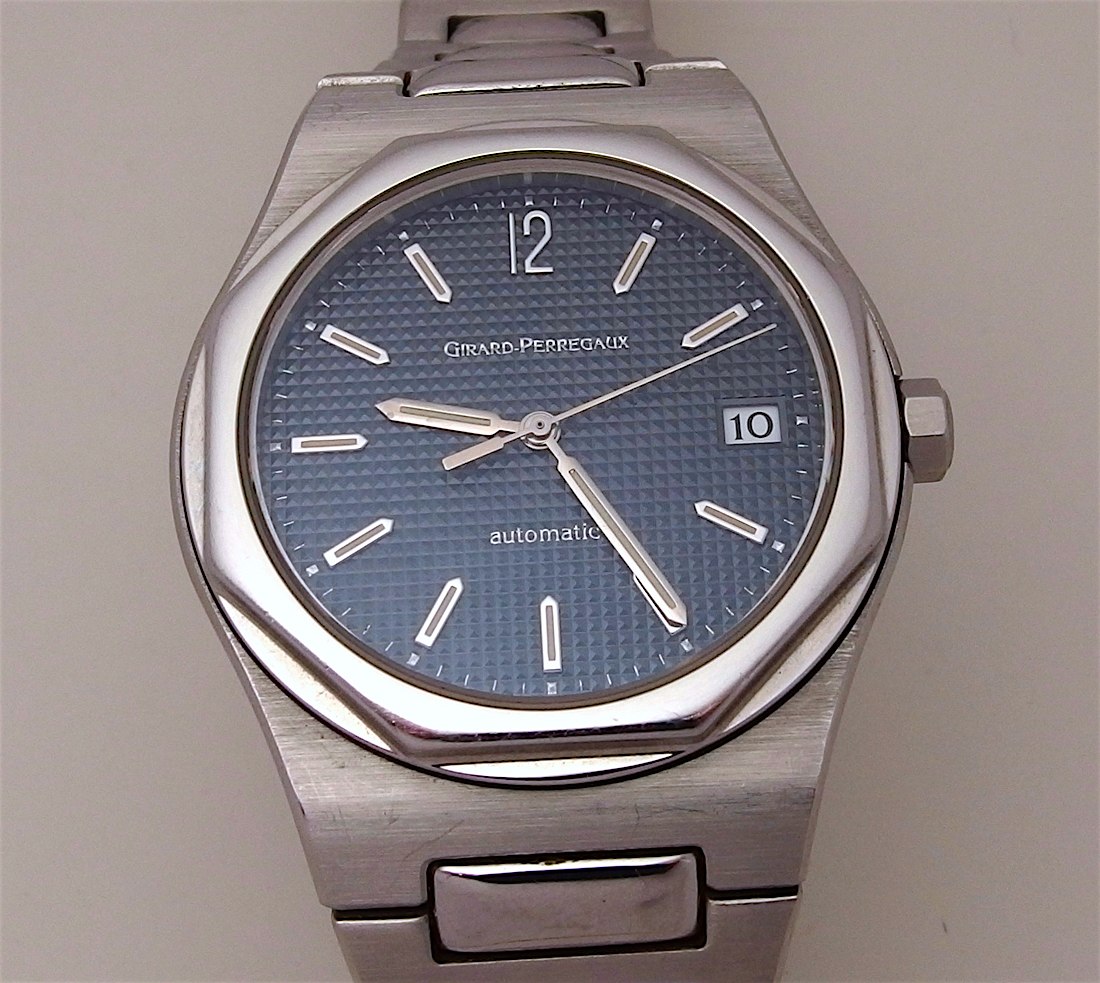
First of all, I can say that from the early excitement and admiration from the early honeymoon days, nothing has faded. I’m still deeply drawn towards that watch for many reasons, but let’s take one step at a time.
The Dial:
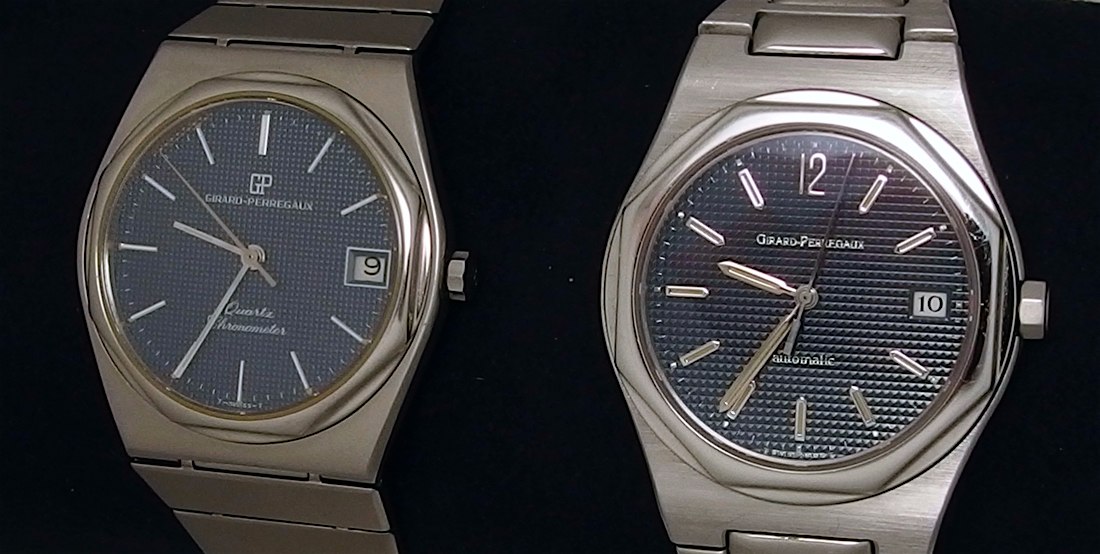
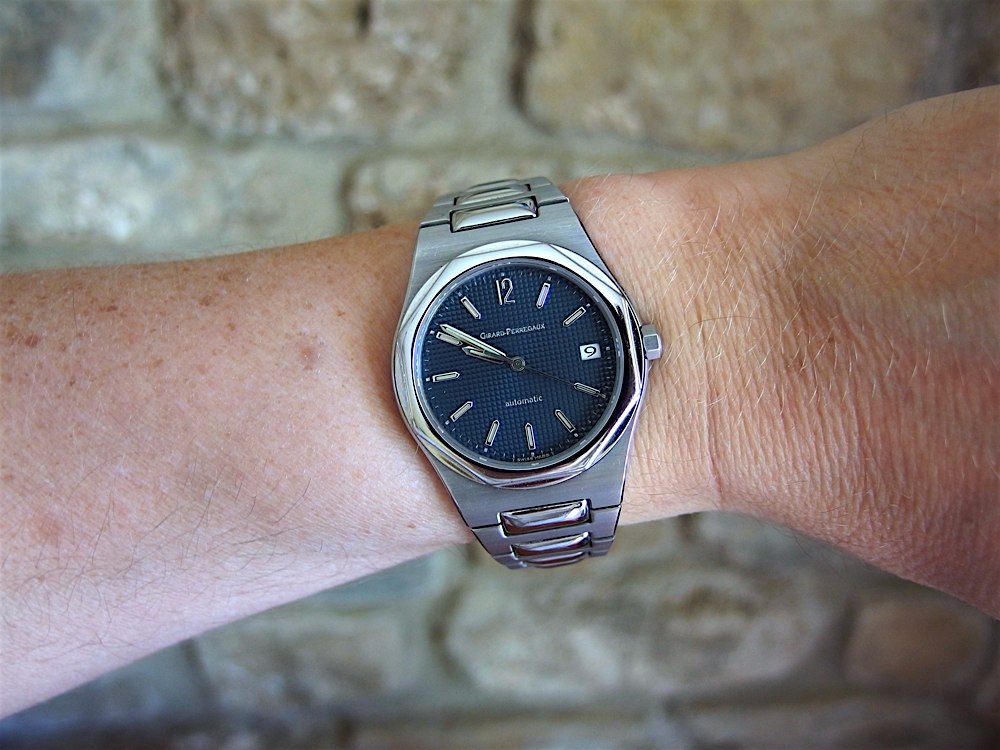
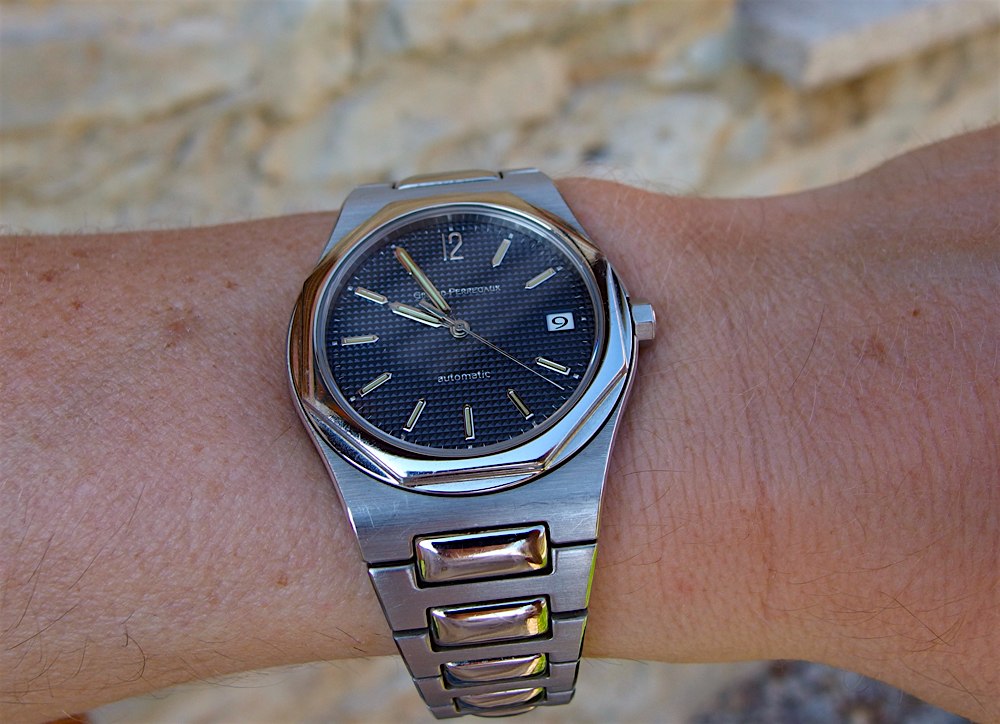
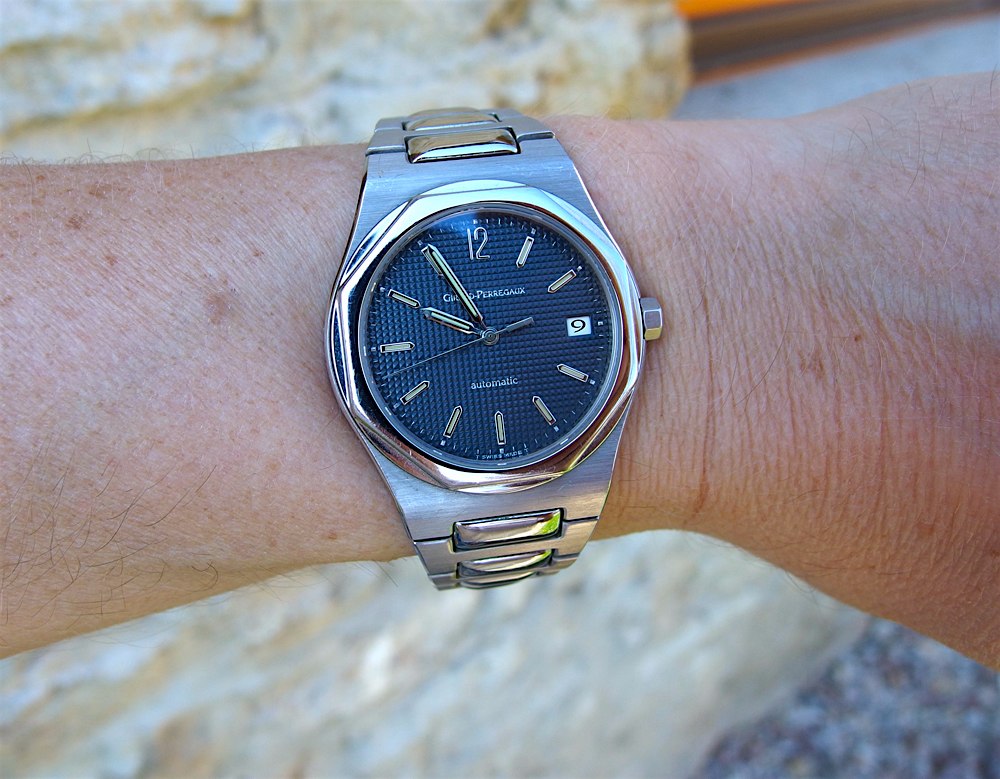
For me one of the most importart parts on any watch and the Laureato 8010 with its very fine Clois de Paris pattern dial is very much to my taste. It gives that special reflection of light and makes the colour change. The dial colour is actually blue, but not a deep strong blue, more like a colder greyish blue.
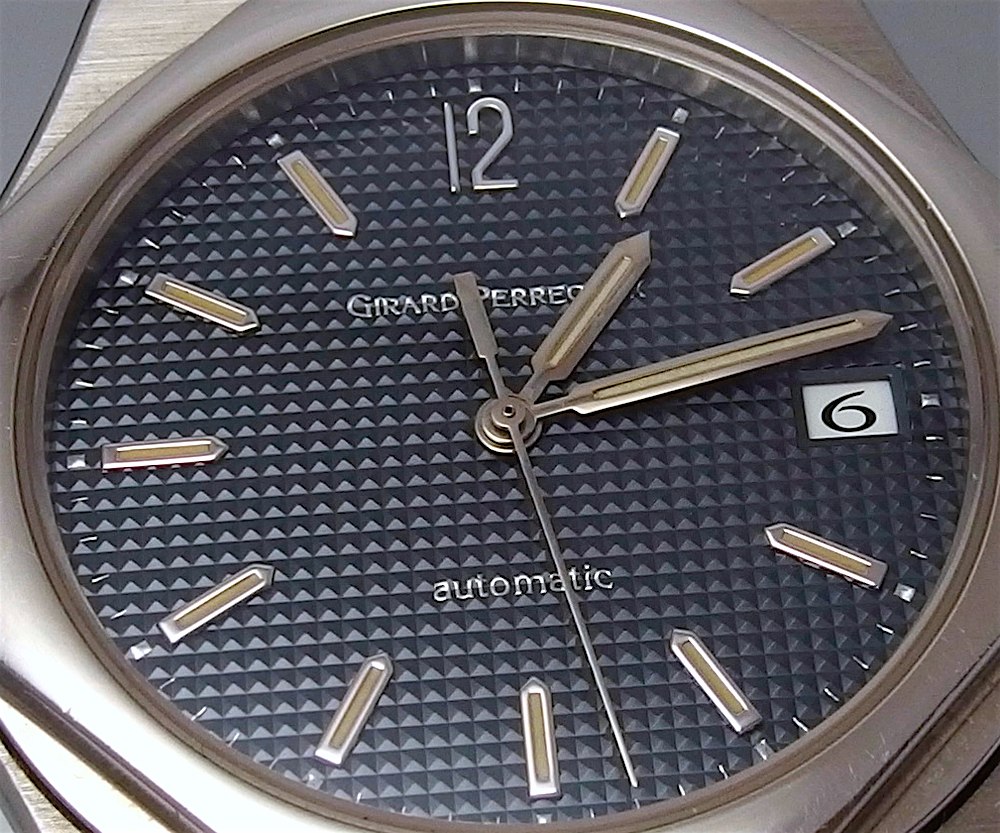
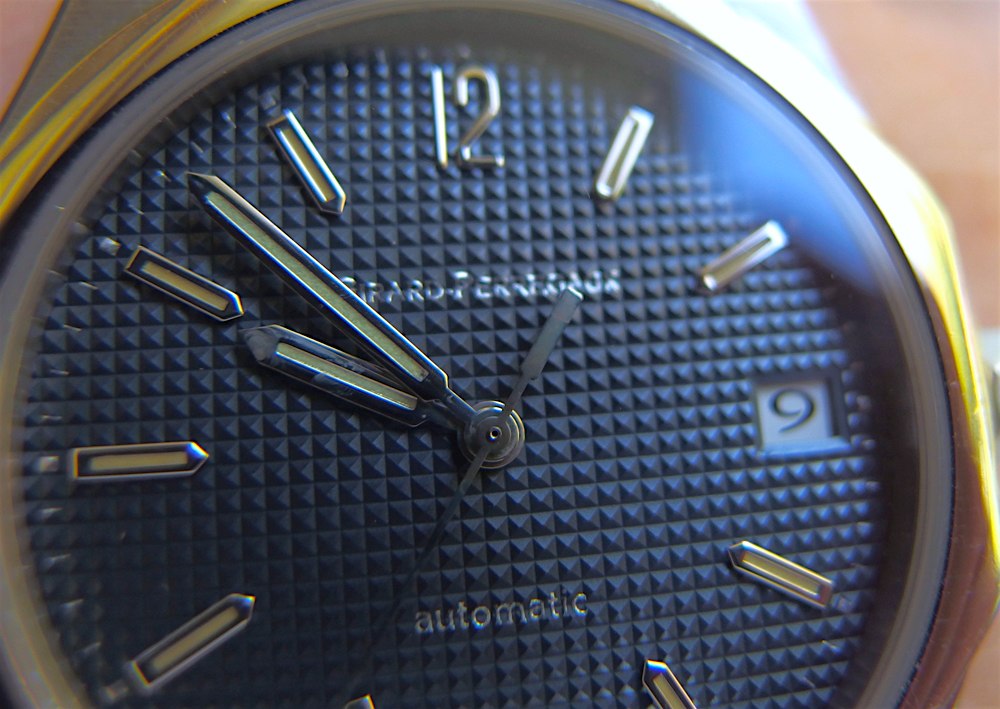
The layout is very classic for a bracelet sports watch. You have applied indices with tritium lume inside. At 12 there is an applied “12” with beautifully shaped numerals. Very discreet printing, you have in white printing “Girard-Perregaux” in the upper half and “automatic” in the lower half. No “Laureato” on the dial, but it is engraved on the case back. At 3 o’clock you have the date window with a white date disc. In this model, it is true to its predecessor genes and for me not a problem. The date window is nicely cut, with a larger frame cutting the Clois de Paris and a smaller frame then cutting the dial. Matching straight hands with lume complete the harmonious design.
The Case:
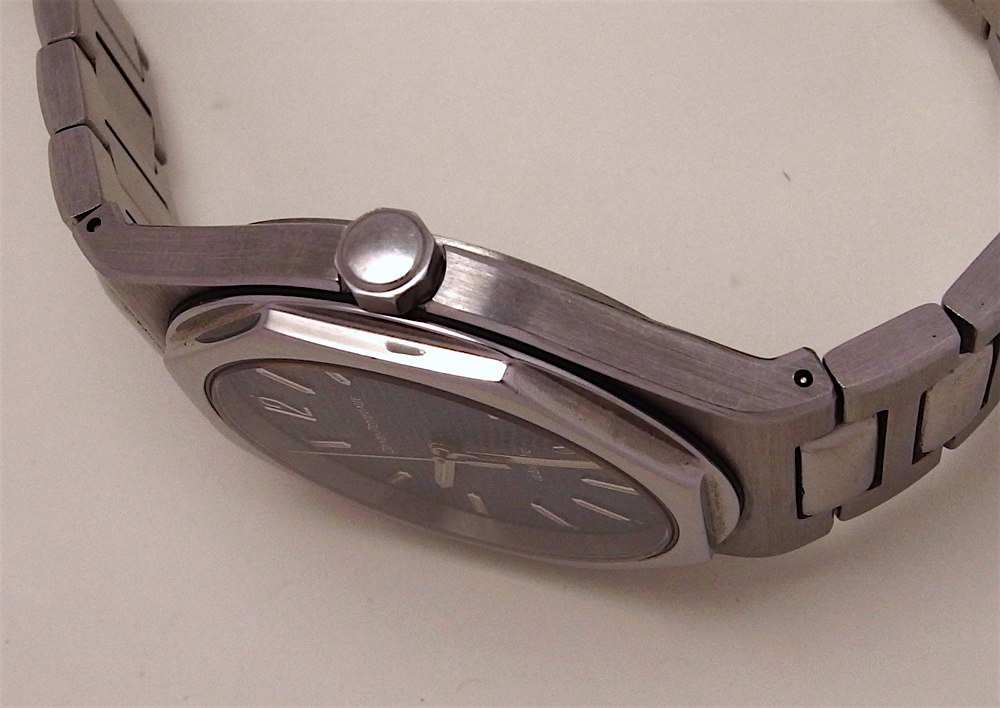
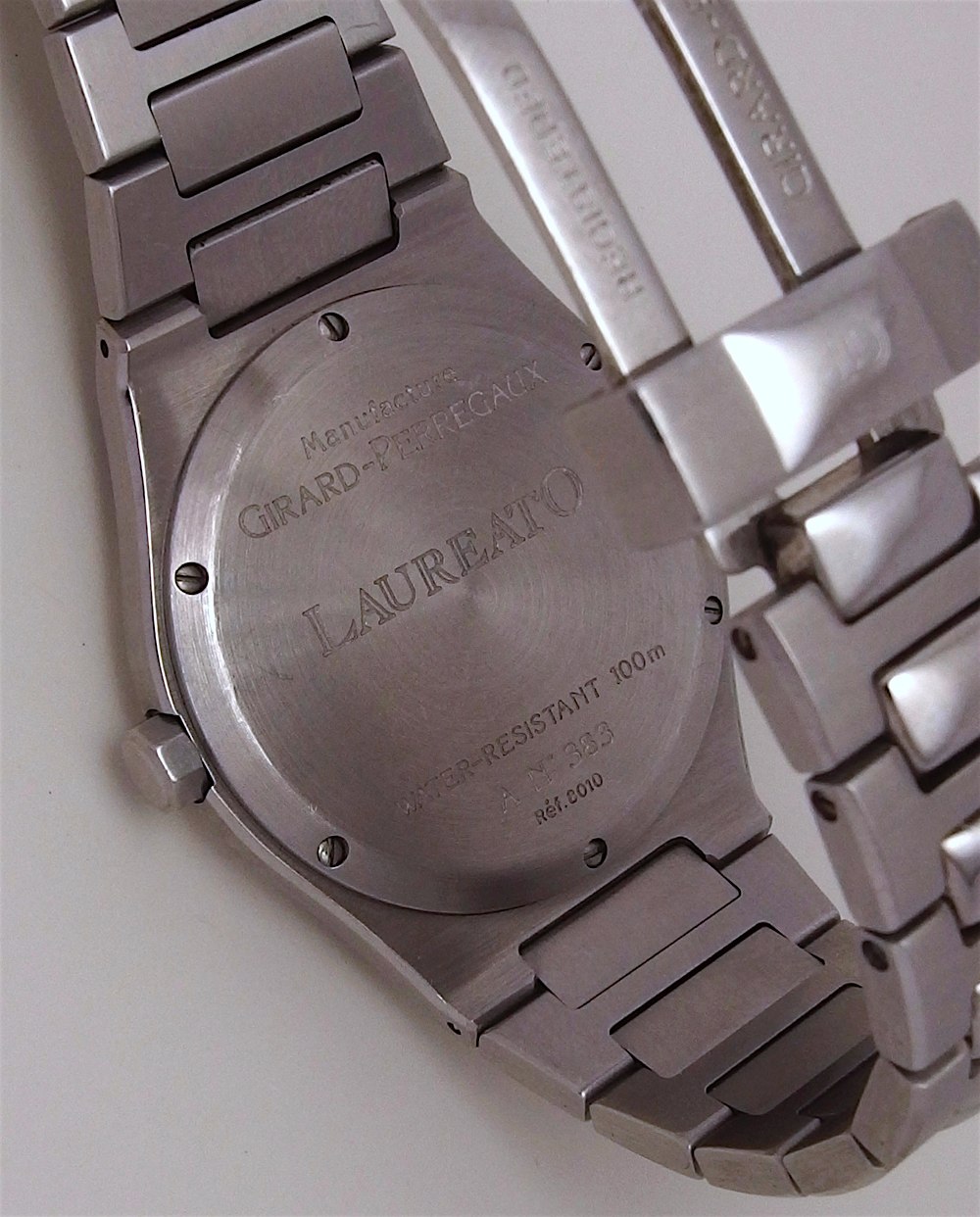
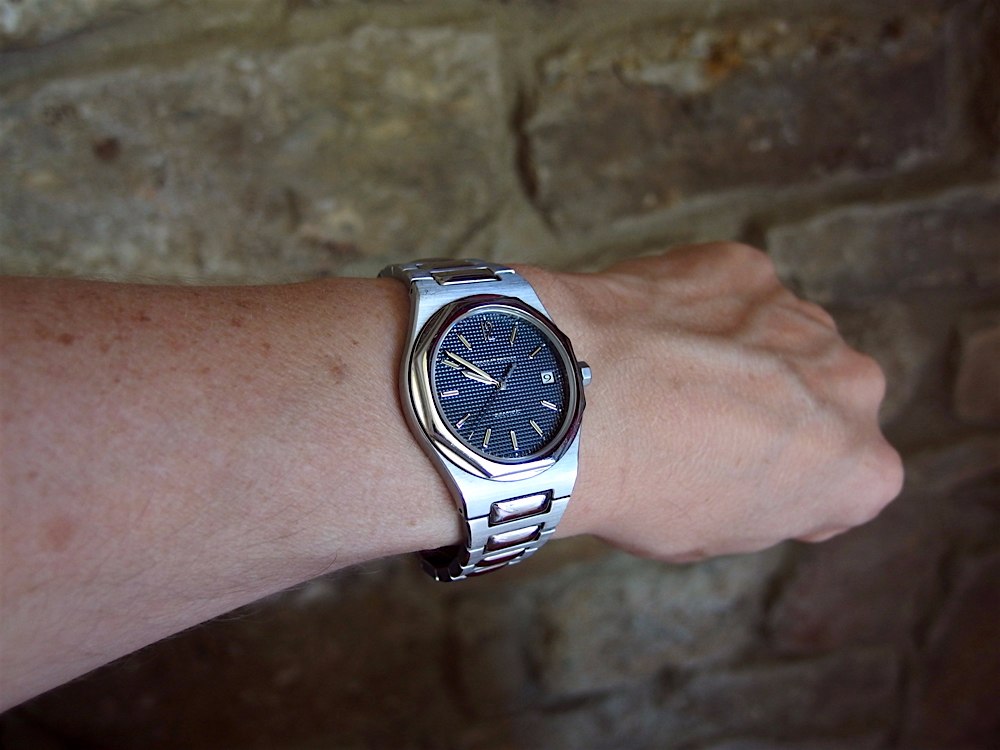
At 36mm you would consider it relatively small by today’s standards, but not in my view. The relatively thin and polished octagonal bezel interacts very well with the dial and the satin finished case, giving it enough wrist presence without being big and clunky. Solid case back and its overall thinness makes this watch look very integrated with the wrist. Very much also like the octagonal screw-in crown.
The Bracelet:
Ok, so this is a bracelet watch. It is integrated with the design as well as mechanically with the case. I guess one could try to fit a custom strap, but it will destroy the look of the watch. I normally prefer leather straps for many reasons, but the Laureato 8010 only works with the bracelet. The quality and finishing is superb, although the relatively pronounced, cushioned polished links may not be high fashion anymore. And with the bracelet is my first minor complaint. It is realitvely stiff and does not flexibly bend inwards so on a small wrist it is not easy finding a comfortable set-up. I had to try out moving links from the upper to the lower part of the bracelet and vice versa before finding an acceptably comfortable setting. The Folding clasp is single-sided and relatively long and determines how the watch sits on the wrist, hence one needs to play around before it fits well. The security clasp on the bracelet opens sideways, no issues, but I’m always afraid that it may break and there would be a big lever on a small part if not handled carefully.
The Movement:
While I did not open the watch, we know it houses the ultra-thin inhouse GP Caliber 3100 and the Laureato was one of the first models that were fitted the inhouse caliber. It works flawlessly and accurately, so no need to worry about it. As mentioned before, the overall thinness of the watch is one of its best features.
How does it compare:
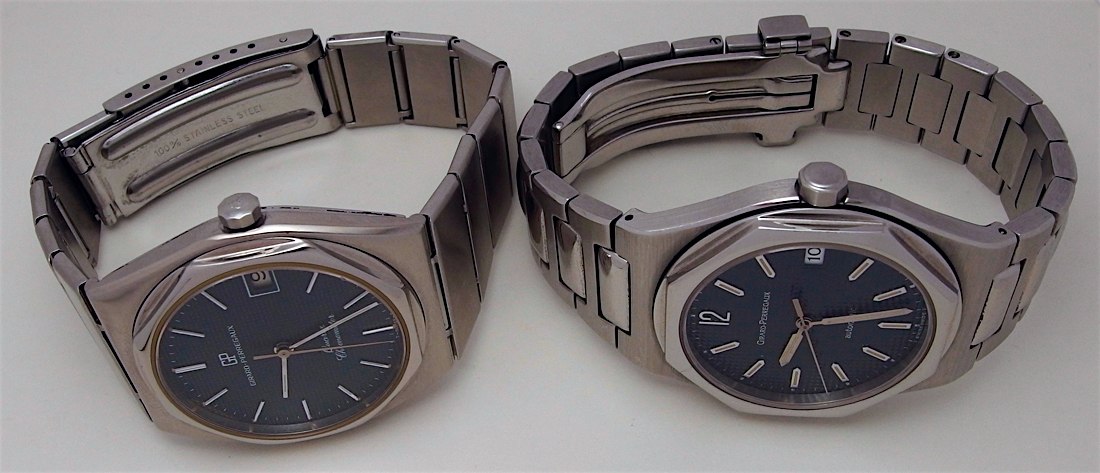
Let’s look fist at the different generations of the Laureato, starting with the original release from 1975 (Ref 4266) and the current anniversary edition (Ref 81000). Now in fairness, there was also a Laureato Evo3, 40th anniversary Quartz (Ref 80188) but that was limited to 40 pieces. When comparing it with the 4266 from 1975 the dial and case design is very much a slight evolution only, very much original re-incarnation. What is immediately apparent is the thicker and stiffer bracelet and the changed design with the inner polished links. However, overall, they can be easily identified as coming from the same family. Biggest difference of course is the switch from Quartz to inhouse automatic movement.
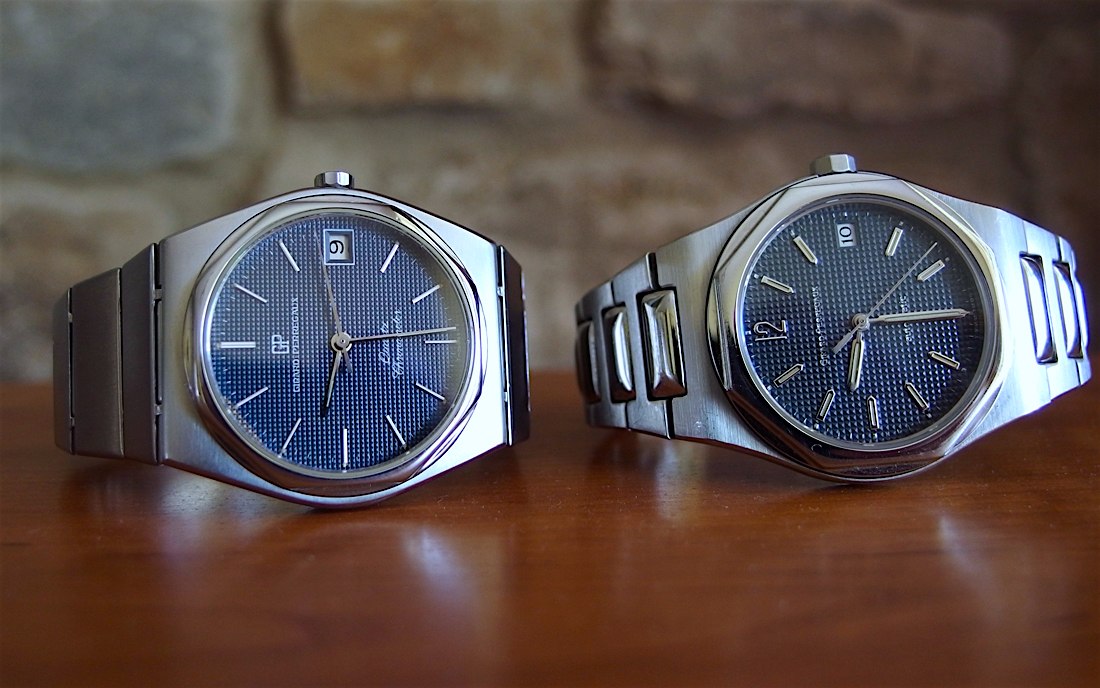
Comparing it with the new Laureato, I have to refrain to photos only as I have not yet been able to handle the new Laureato. From what I have seen I really like how the new bracelet has evolved, being more modern, having the better closing mechanism and how it still integrates very well with the larger case. For the dial, I find the hands a little bit too thick when compared with the 8010 and the cutting of the date window does not have that double-frame as in the 8010. I also suspect that the blue is bit more pronounced towards the blue and away from grey, but I need to confirm that in real. The added printing (1791, Laureato) is okay with me. On the other hand, the case back beauty contest clearly goes to the 8010. Another point that speaks for the 8010 is the screw-in crown and the 100m water resistance, which many have complained about for the new Laureato, which is only 30m. So only subtle differences, but for me the new Laureato remains a very desirable target even with the 8010 in my collection.
What about the other obvious comparison with the Royal Oak, Nautilus and Overseas? I think most closely in looks comes the Royal Oak, due to the octagonal bezel, but on the Laureato the bezel is much less pronounced. To me just a matter of taste what one would prefer. I still remain of the opinion that all of those implementations have exceeded in the design and that they are not mere copies of each other but rather all have their own characteristics.
Conclusion:
I really love this watch. In the sun it provides so much play with light and always gives you a good quality feeling when on the wrist. The blue/grey dial is amazing and in combination with the steel case and bracelet hard to beat in terms of looks. I would have wished for a slightly more flexible bracelet and a better closing mechanism, but I can easily live with it as it is. So here are some final wristshots
The Girard-Perregaux Vintage 1994, reference 8010, is a notable entry in the brand's "Vintage" line from the 1990s, distinguished by its rectangular case design that evokes historical watch aesthetics. This model was introduced in 1994, predating the Vintage 1996 chronograph, and represents an early expression of Girard-Perregaux's strategy to reinterpret classic forms for a contemporary audience. It stands as a foundational piece within the broader Vintage collection, showcasing the brand's commitment to its heritage during a period of significant horological revival.
The reference 8010 typically features a case crafted from stainless steel, measuring 32mm in width and 47mm in length, providing a distinctive wrist presence. It is powered by an automatic mechanical movement, often visible through a sapphire crystal case back, and is protected by a sapphire crystal on the dial side. The movement provides a power reserve of approximately 46 hours, ensuring reliable timekeeping. Water resistance is generally rated to 30 meters, suitable for everyday wear.
This reference appeals to collectors interested in Girard-Perregaux's output from the 1990s, particularly those who appreciate watches with a strong vintage aesthetic and a rectangular form factor. It offers a more understated alternative to some of the brand's sportier or more complicated offerings from the same era. The Vintage 1994, reference 8010, represents a key period in the brand's modern history, highlighting its ability to blend traditional design with contemporary manufacturing.
Still confused
Still thinking and do have a piece on hold with a seriously special number )) Let\'s see how it works out .. Best,
This thread is active on the Girard Perregaux forum with 25 replies. Share your knowledge with fellow collectors.
Join the Discussion →


