Breguet certainly is one of these magic names of the watch industry. We all have these old ads in mind, featuring some famous clients of the brand, such as Napoleon, Marie Antoinette, Churchill, just to name a few.
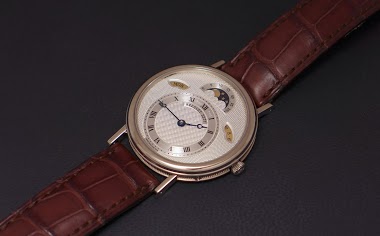
We are many to have some models in mind, like the Type XX, or the Triple Date ref 3330 / 3337, without forgetting the Tradition.
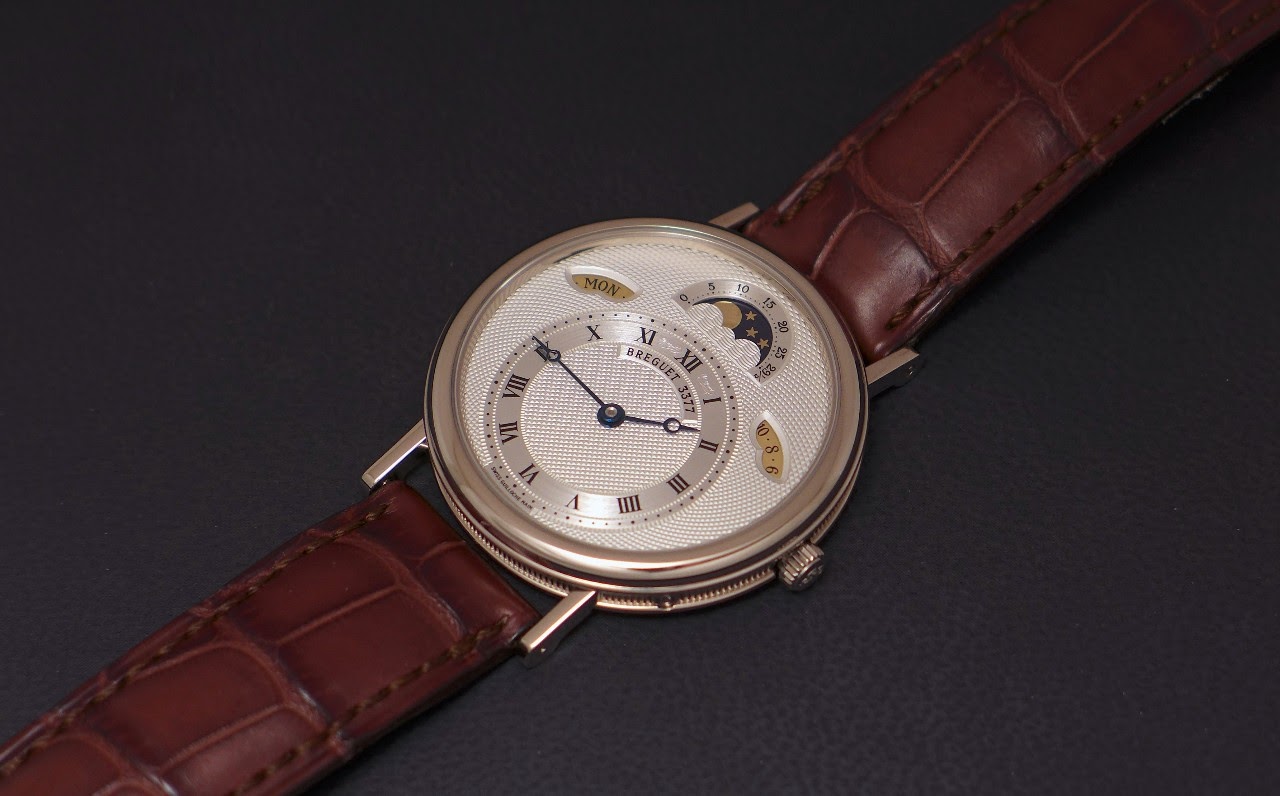
The 3330:
We know that Abraham-Louis Breguet was the inventor of the Tourbillon as soon as 1801, and that this is one of the oldest name of the watch universe.
Still, and this is the first paradox, Breguet is a discrete brand, with not much communication on their creations. How many of us had the opportunity to visit the Manufacture, too?
6 months ago, I was offered to visit the Manufacture in the Joux Valley, and, as you can imagine, my answer was quick: YES, as I wanted to know more about this brand, to discover its universe, well, in a few words, what really is Breguet in the horological spectrum.
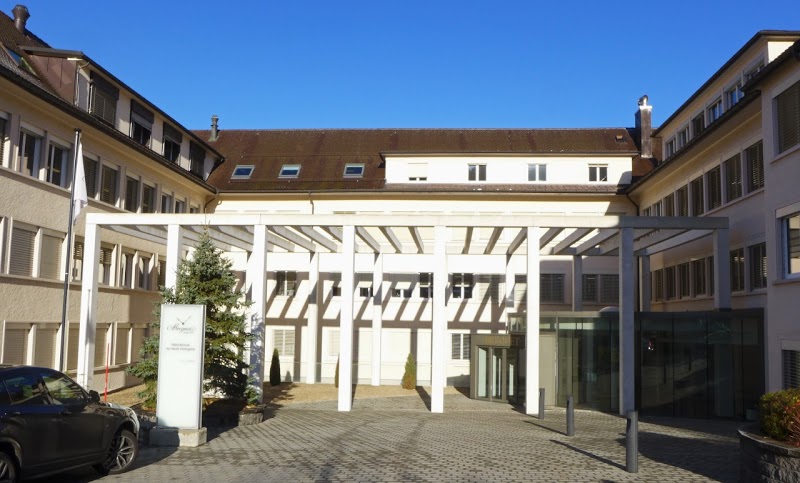
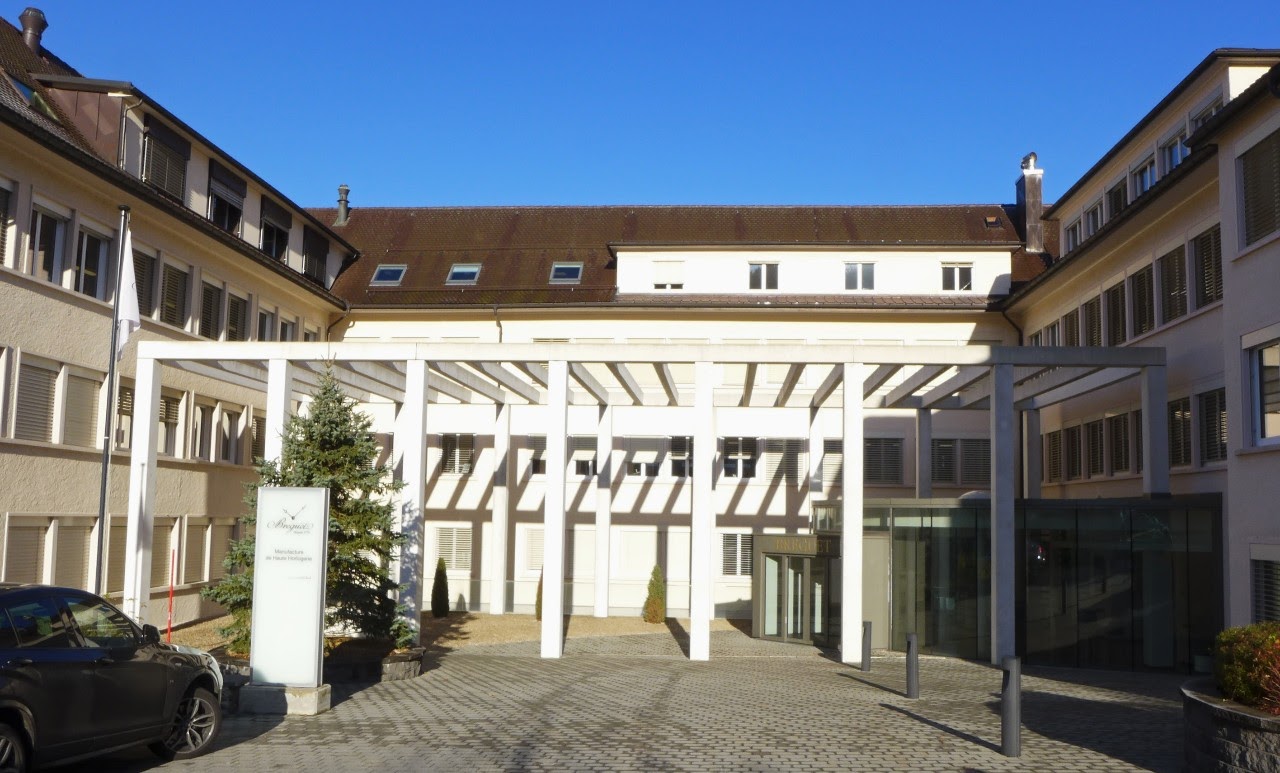
6 months after, I am here, in front of the door discretely bearing the signature of the manufacture.
I knew I wouldn't have enough of my 7 or 8 hours to entirely visit the three buildings composing the Manufacture, so we decided, with my contact, to discover the essence of Breguet. Which I will share with you, here, as a nice " avant gout " before a second visit.
I first had an introduction about the manufacture and how it works. The process is divided in 4 times:
1/ The cutting of the plates and parts of the movement, the machining and the surfacing. Then, the beveling, the engraving and the guillochage.
2/ The assembly of the movement, oiling and escapement control.
3/ The assembly of the watch.
4/ Putting the strap or the bracelet and the packaging of the watch.
We decided to focus on the decoration and finishings of the movements and dials, ( stage 1 ), to pay a visit to the enamelers and to the restoration and complications workshops.
Then, we ended the visit with a photo session of some models.
-> THE DECORATION AND FINISHINGS:
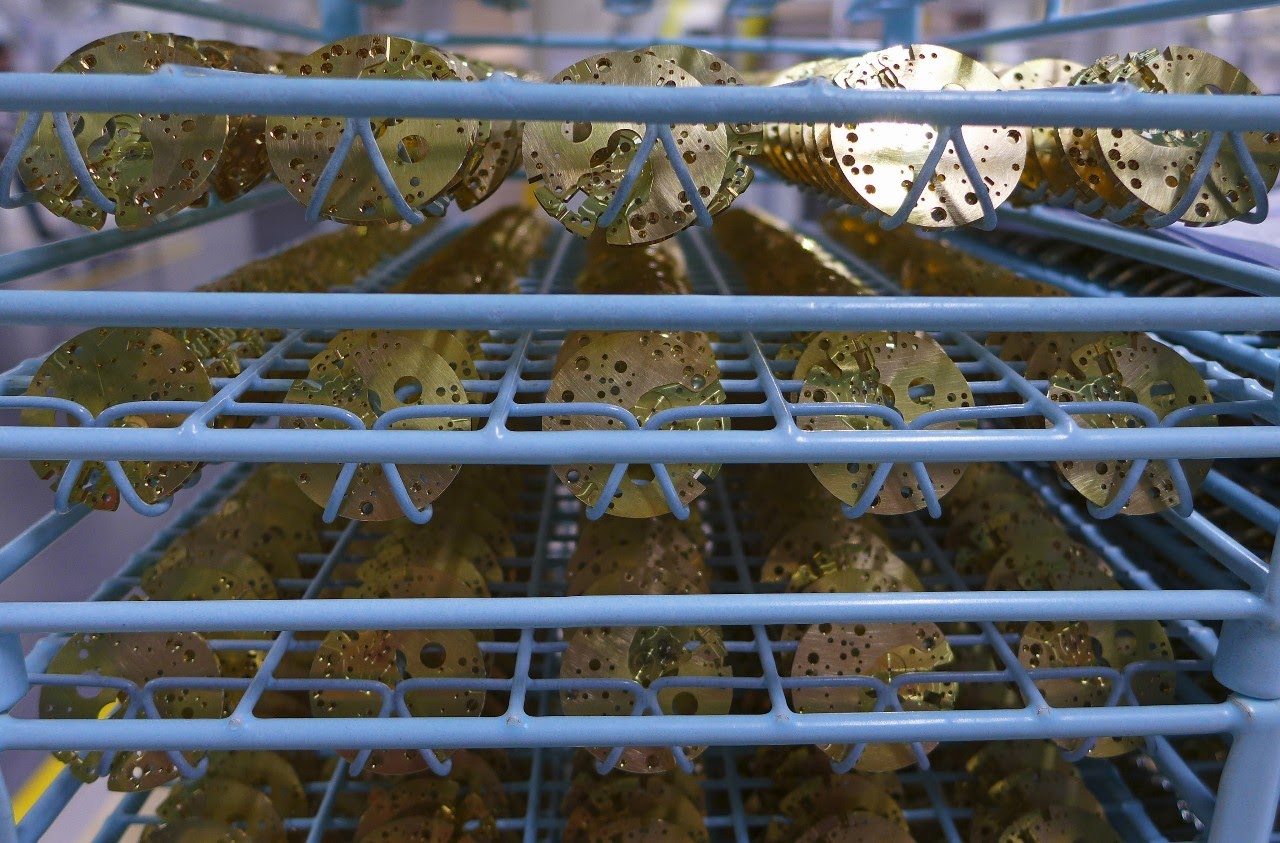
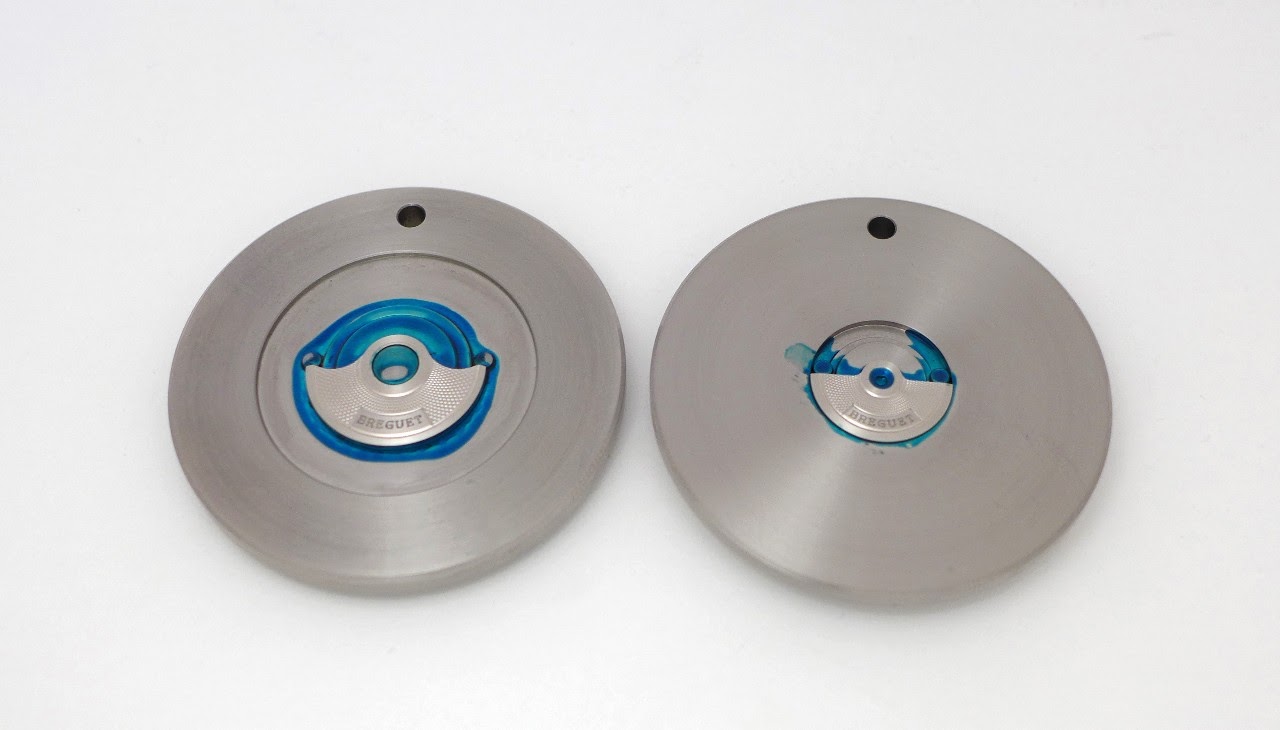
From the round pieces of metal, which received the first treatments ( cutting, machining and surfacing made by machine ) to look like this:
You start the decoration and finishings process, by hand, with classic tools for the guillochage, engraving and beveling.
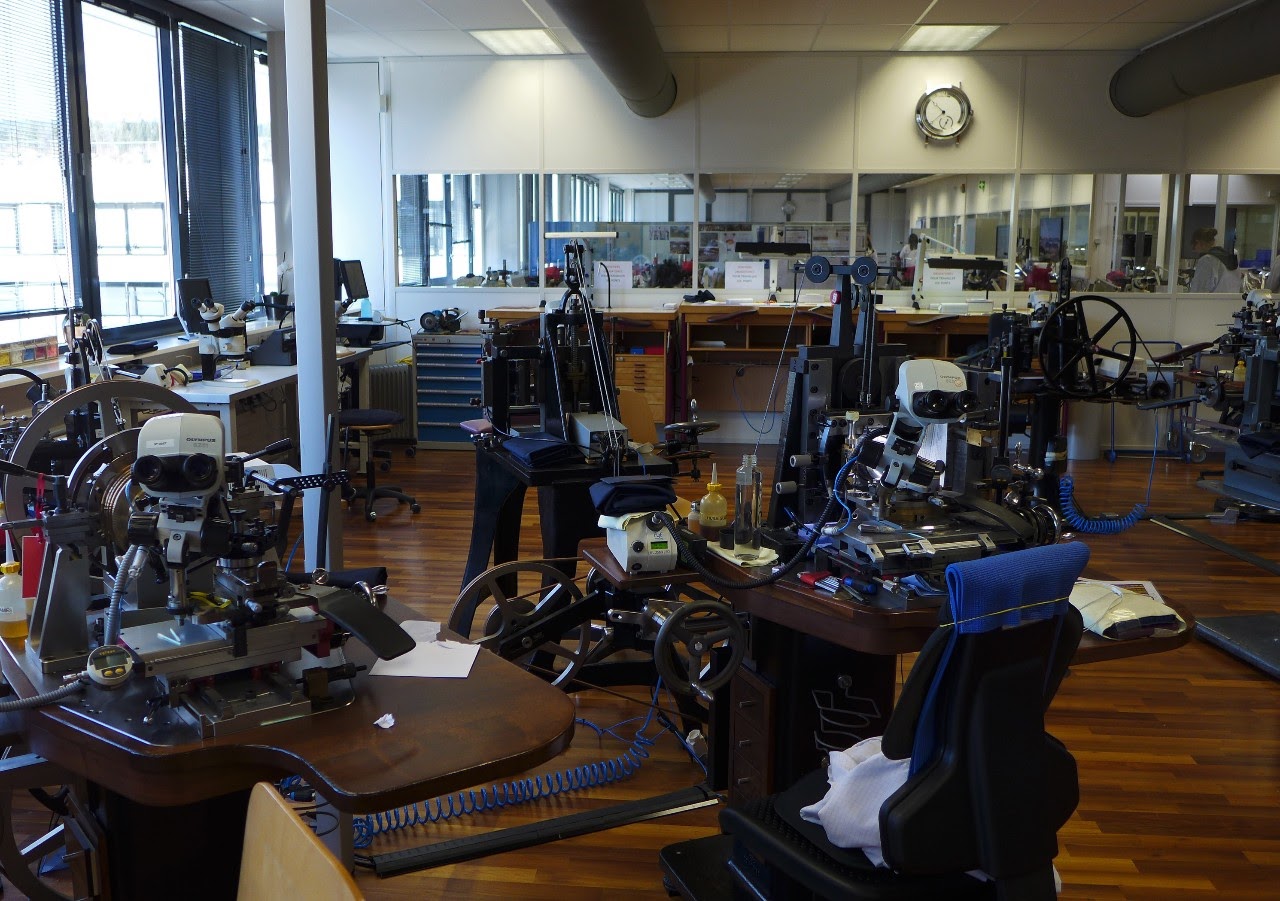
Here is the old rose-engine machine for the circular guilloché decoration, which I tested.
The engravings are made with some small metallic tips, while, for the bevelings, a lime and boxwood are used, which I tried... In vain.
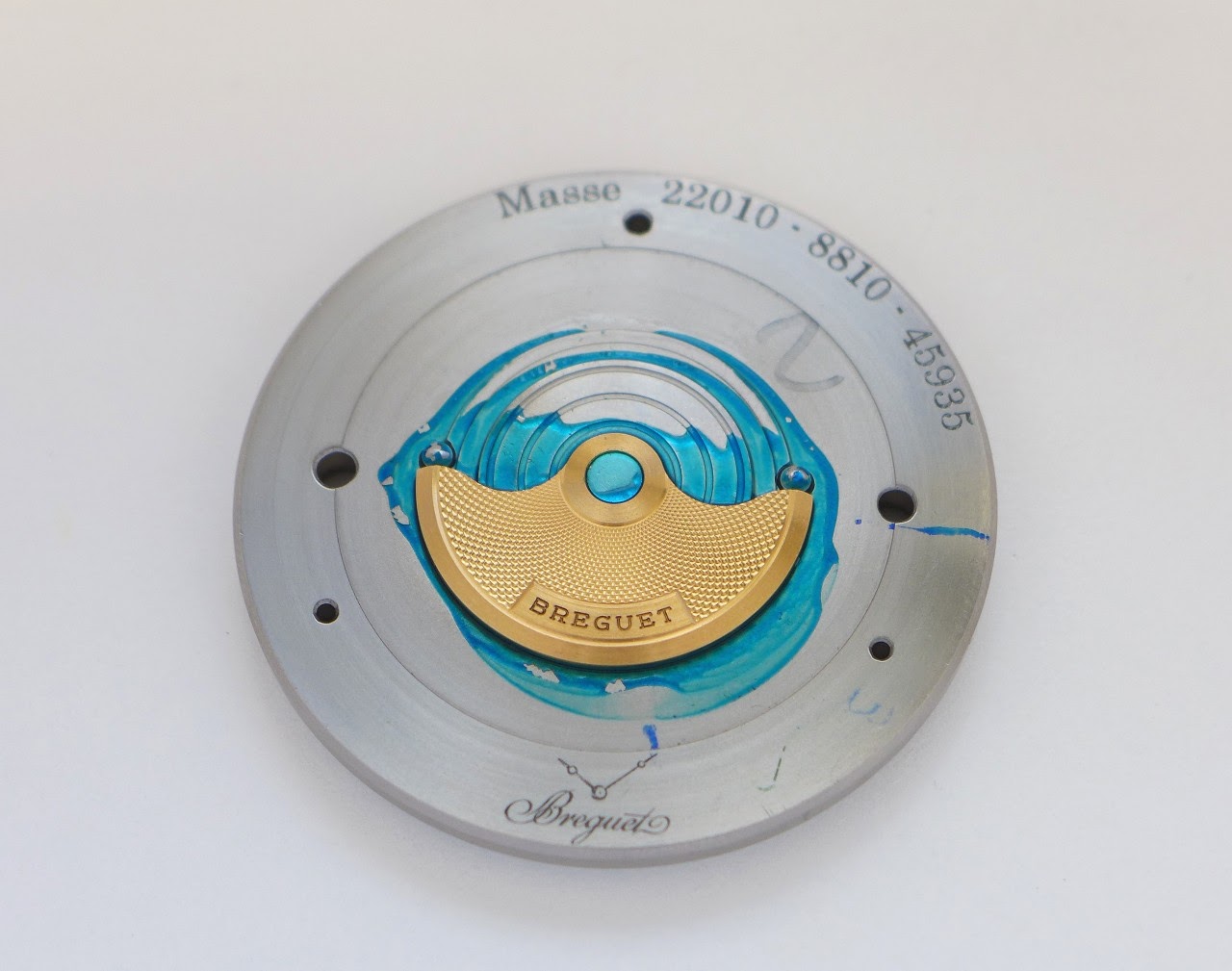
At the end, you have something like this:
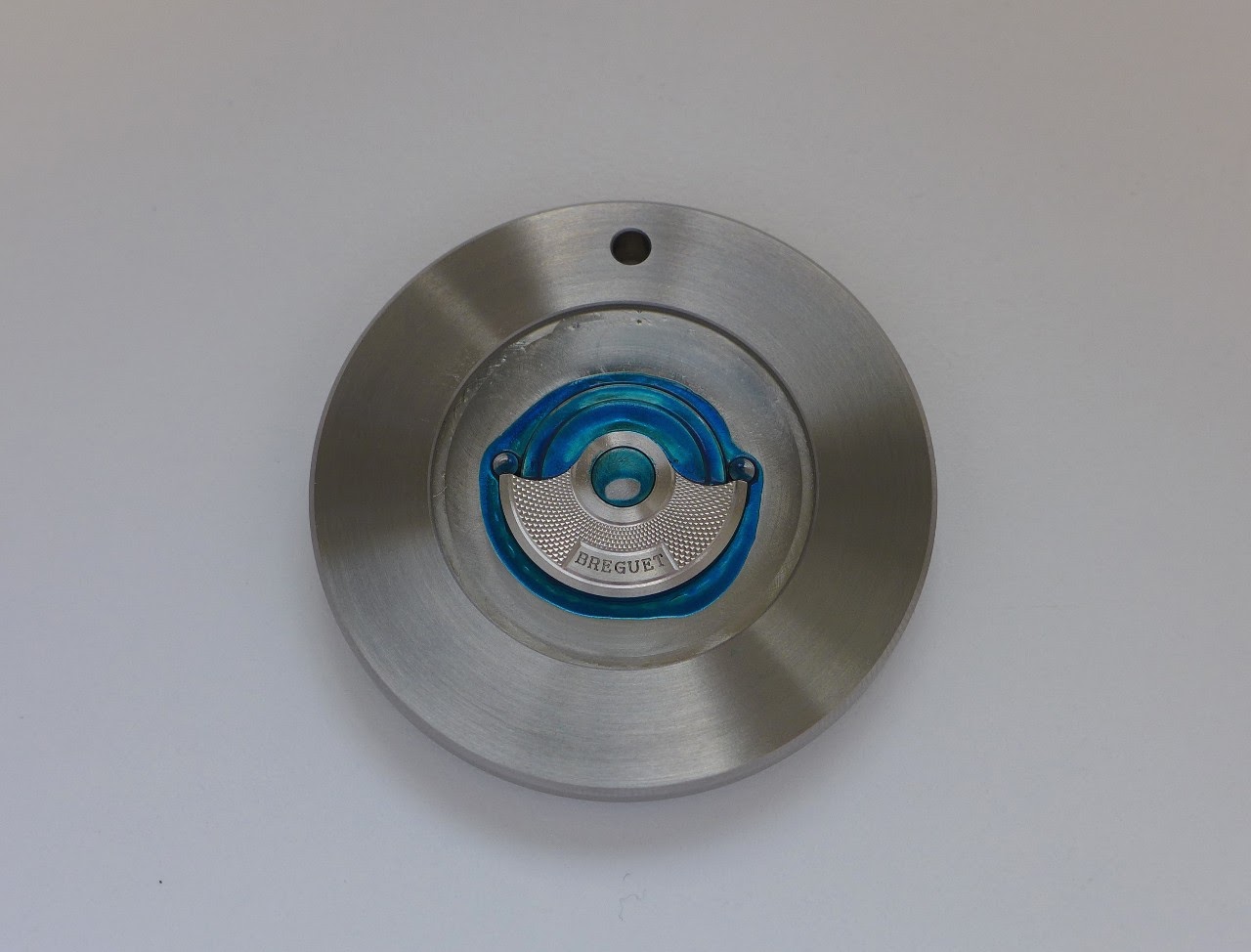
Here, some rotors:
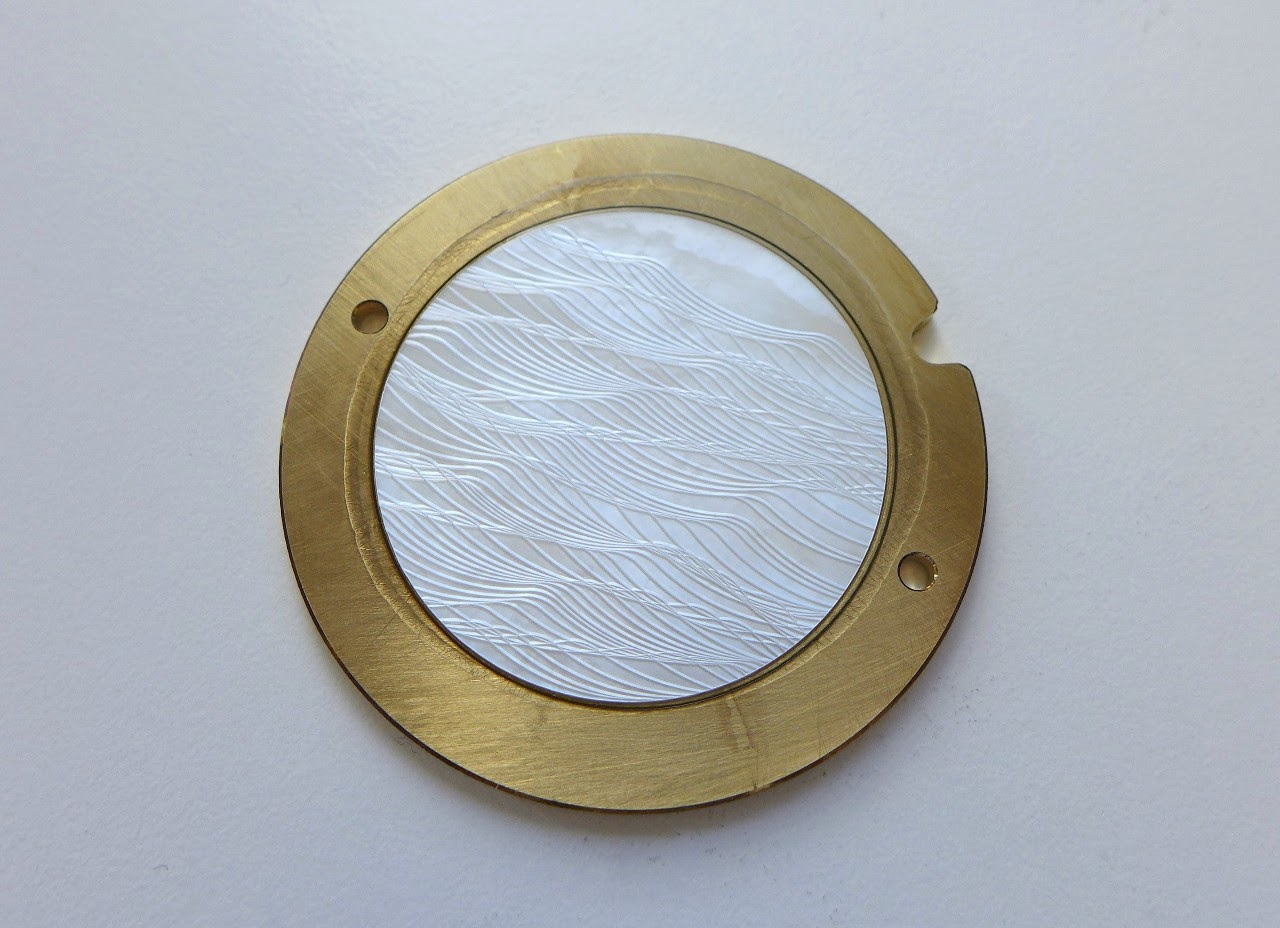
Of course the dials are also decorated here. You well know the guillochages of Breguet dials, you less know this kind of guillochage, on a mother of pearl dial.
The care of the details is of a high level, here.
-> THE COMPLICATIONS and RESTORATION WORKSHOPS
Decoration, finishings are one important thing, but movements are everything. It is not a secret that Breguet had, for a long time, used movements from the Vallée de Joux, including Lemania. If my memory serves me well, I even think they used some Peseux 260 calibres for their manual winding vintage chronometers, and Valjoux for the Type XX.
For those who want to know more about that part of Breguet history, here are some informations coming from the Manufacture:
" In the mid-nineteenth century, the firm used ébauches from the Vallée
de Joux, and later on, from the 1920s, Breguet
commissioned the firm of Victorin Piguet at Le
Sentier to make its most prestigious pieces, induding
perpétuelle and tourbillon wat
with many complications. And finally, in 1976, the
Breguet workshops moved to premises in the
Vallée de Joux, situated initially at Le Brassus and
Le Sentier, and later, from the summer of 1994,
in a very large restored building on the shores of
the Lac de Joux, in the village of L’Abbaye. The
L’Abbaye building now houses Breguet’s administrative
headquarters, while the factory is housed in
large modern buildings in the village of L’Orient,
constructed on the former Nouvelle Lémania site
between 2001 and 2014. "
In 1992, Breguet bought Nouvelle Lemania, Breguet being bought in its turn by the Swatch Group in 1999.
Some more detailed informations about that important moment of Breguet life:
" In the early 1990s, the Groupe Horloger Breguet was formed,
a small group comprising three watchmaking firms belonging Nouvelle Lémania, specialists in movements and
complications of the highest quality, the components manufacturer
Valdar, and Breguet. In effect, Nouvelle
Lémania increasingly became the Breguet factory, as – while also
supplying other clients such as Omega and Patek Philippe – it
supplied all the movements finished by Breguet for an increasing
proportion of its models. In 1995, rationalization and the introduction of production line processes by Nouvelle Lémania
bore fruit in the form of the new Type XX chronograph, inspired
by the aeronautical designs of the preceding decades. "
Speaking with the watchmakers is always an exciting experience, and it is no exception with the Breguet watchmakers.
I could speak with some in charge of the current production, and others who are in charge of the restoration.
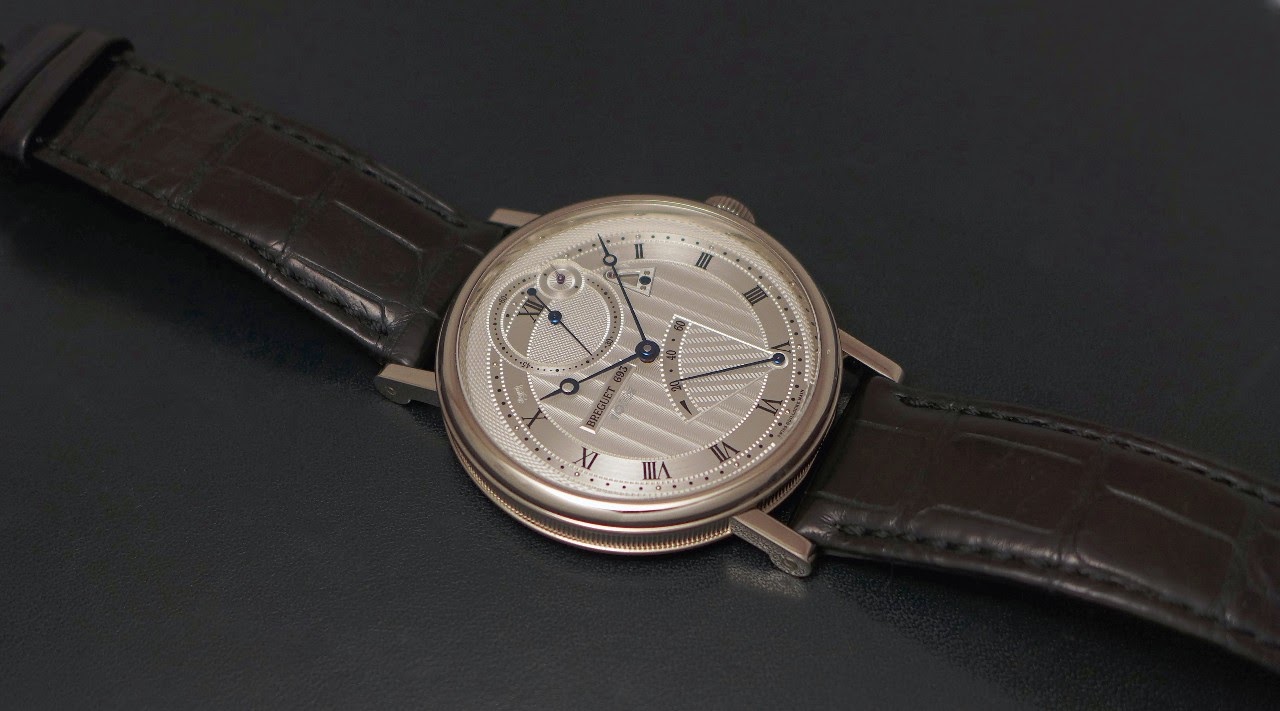
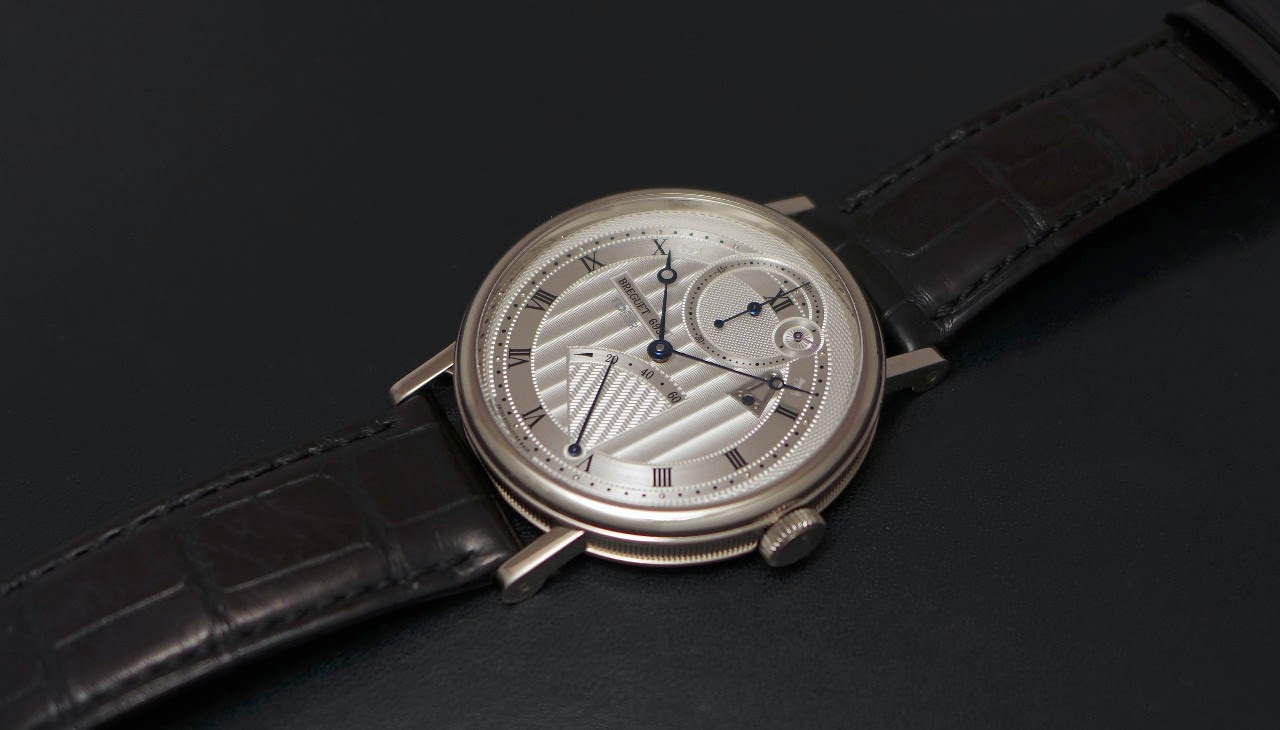
There is one watch I wanted to know better, the 7727 Classique Chronométrie 10 HZ, unveiled in 2012, and I had the pleasure to discuss that timepiece with one of the watchmakers.
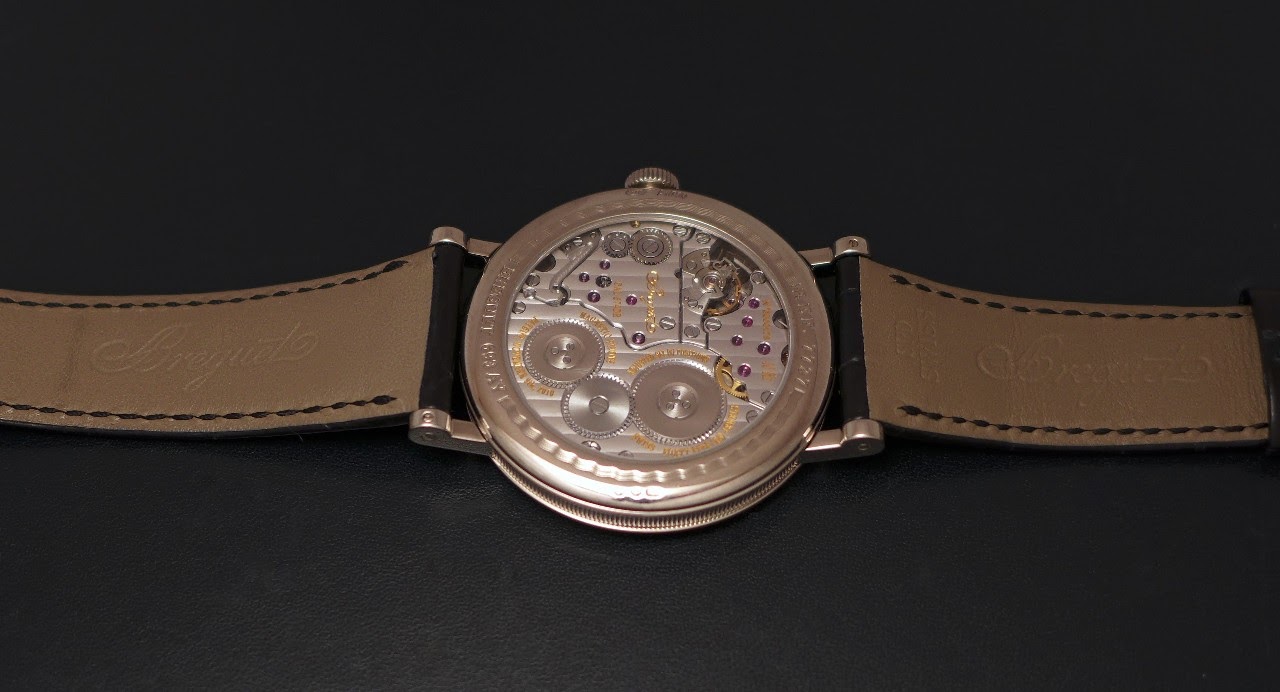
The " Chronométrie 10 HZ " is a very interesting and representative Breguet with its different guillochages for the dial, the hands, of course, its fluted side case and its typical lugs.
That is for the tradition, the aesthetic DNA of the brand.
The movement looks classic in terms of decoration and finishings, too. BUT... The concept is original and very interesting. To serve the purpose of chronometry -non COSCED-,these innovations bring the reference 7727’s average rate to -1/+3 seconds a day, well within the COSC chronometer standard of -4/+6 seconds a day. More importantly, the difference in rate between the six positions has been brought down to -2/+4 seconds a day (maximum wind ).
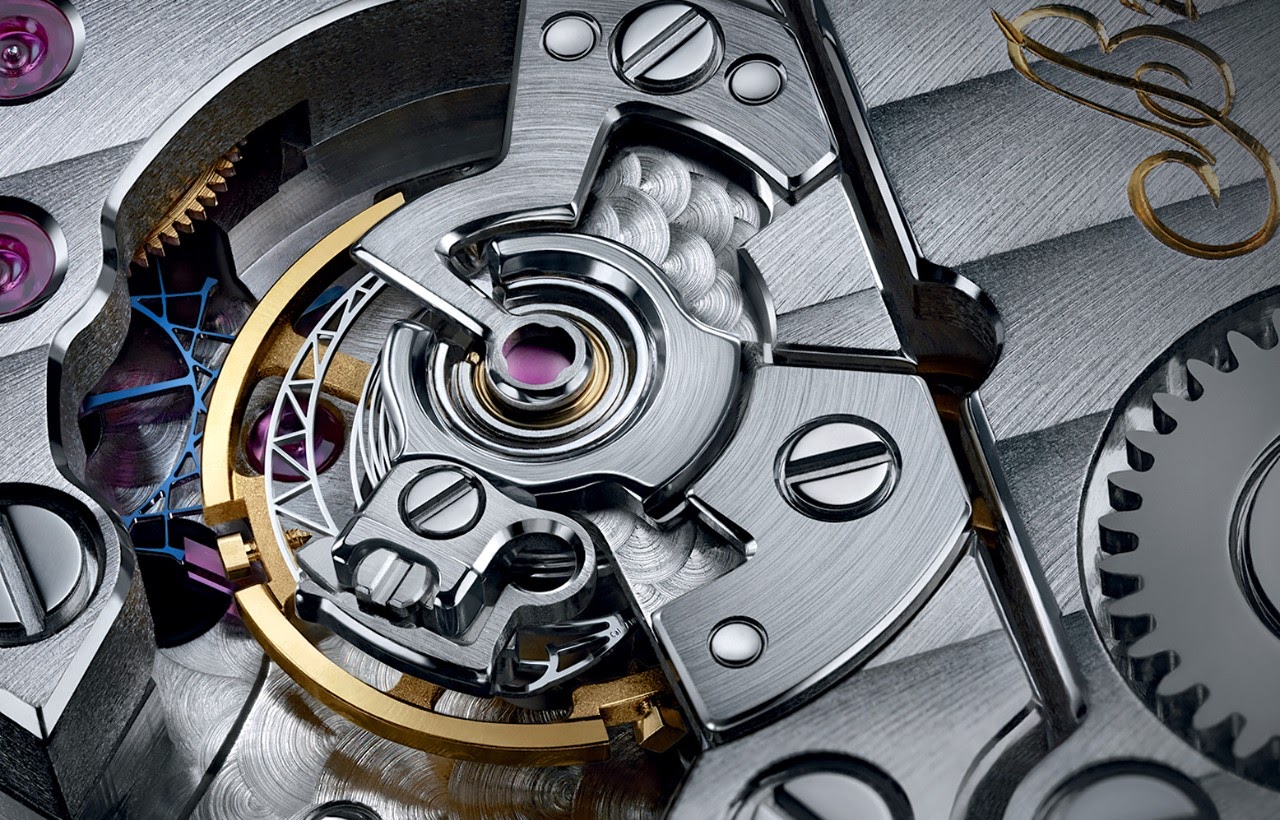
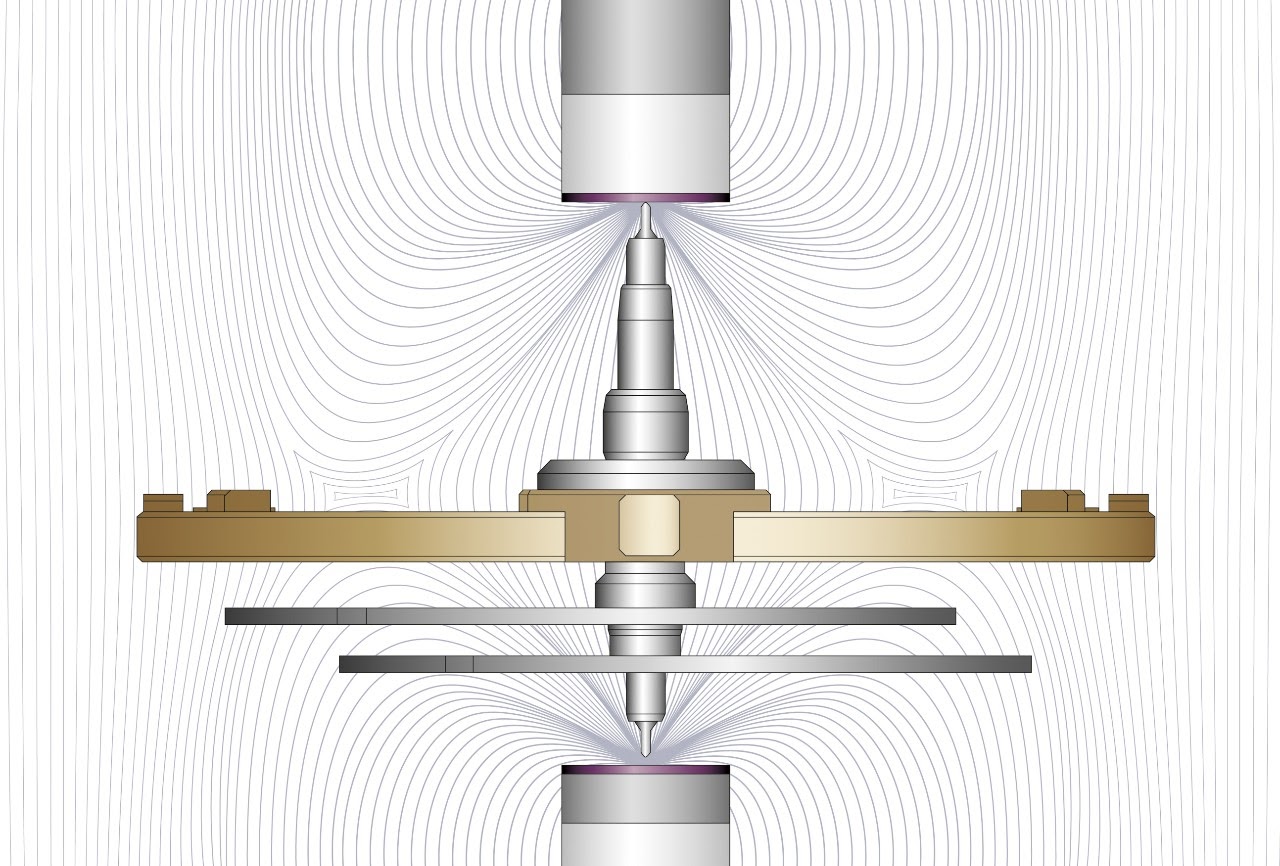
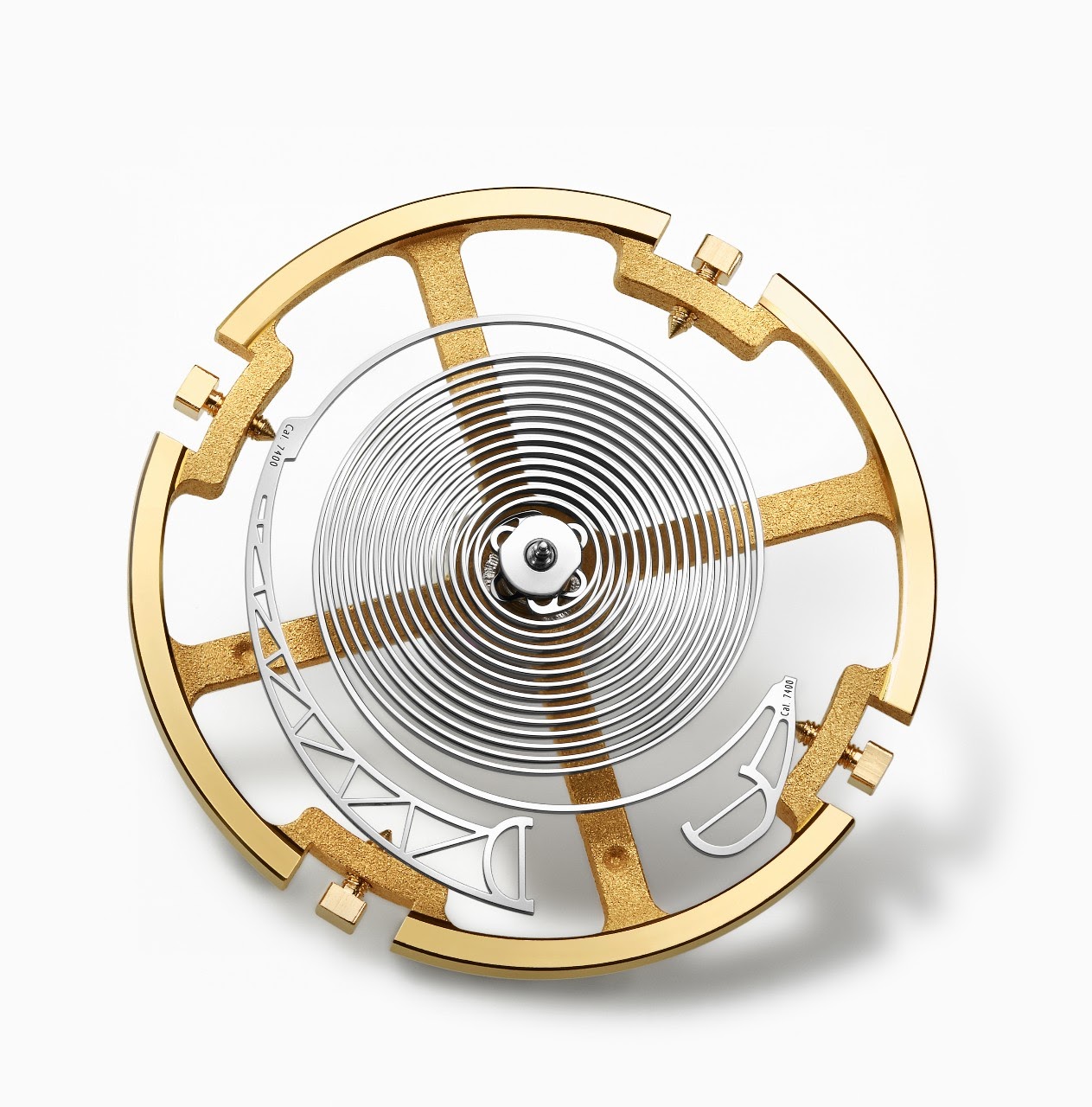
This movement, the Cal 574DR, beats at... 72, 000 vibrations per hour, has a silicon escapement with 2 hairsprings, and... A magnetic pivot with two magnets, under and above the balance wheel. The magnet has a stronger power on the dial side than on the back side.
Here is the technical drawing:
The purpose of this technical innovation is to protect the balance wheel from the shocks, acting like a shock absorber, offering more regularity in the oscillations, whatever the position of the watch and the shocks of life, hence a better accuracy.
From one side of the spectrum to another, I had an interesting conversation with the watchmakers of the Restoration workshop, who had two surprises for me.
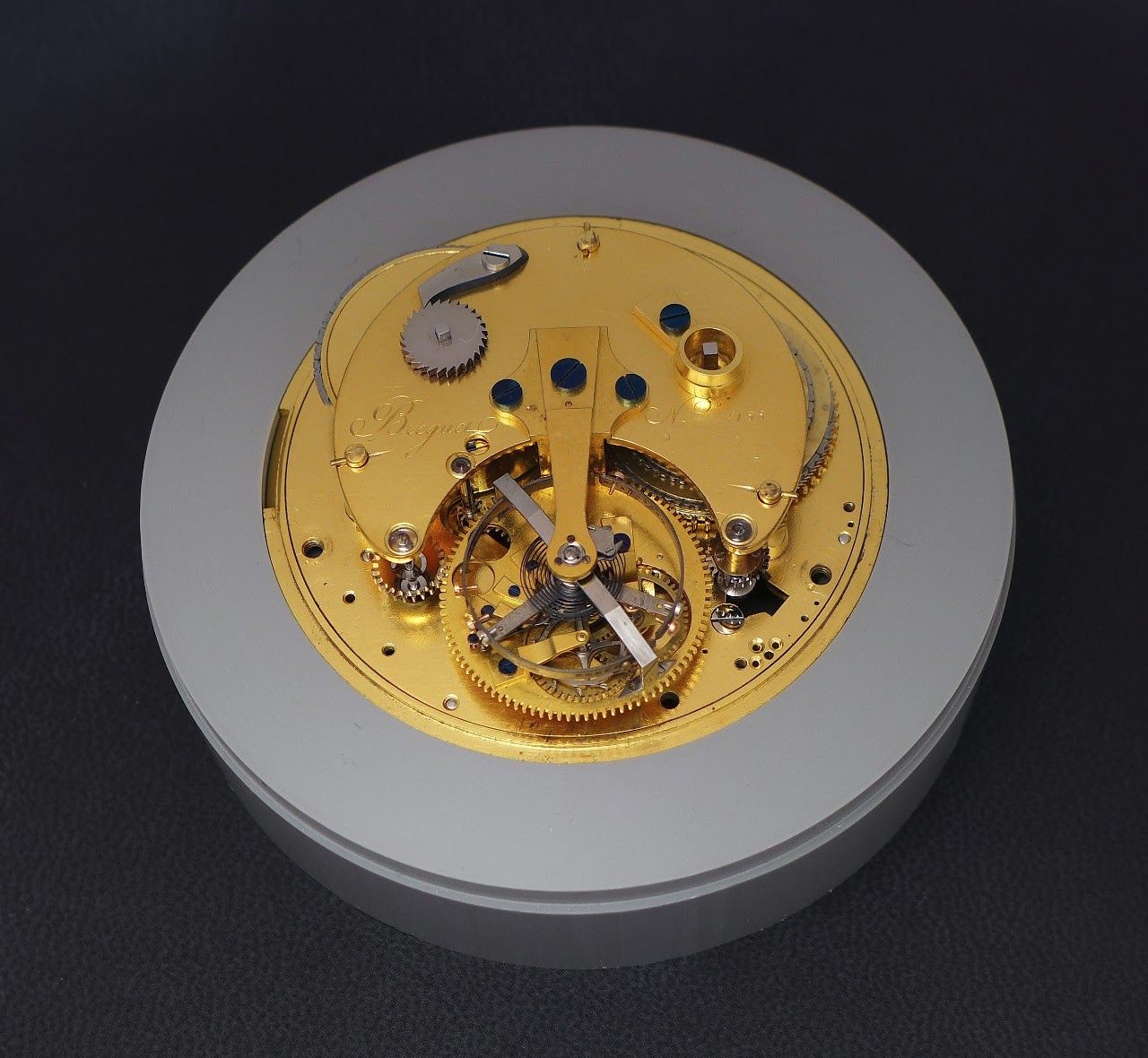
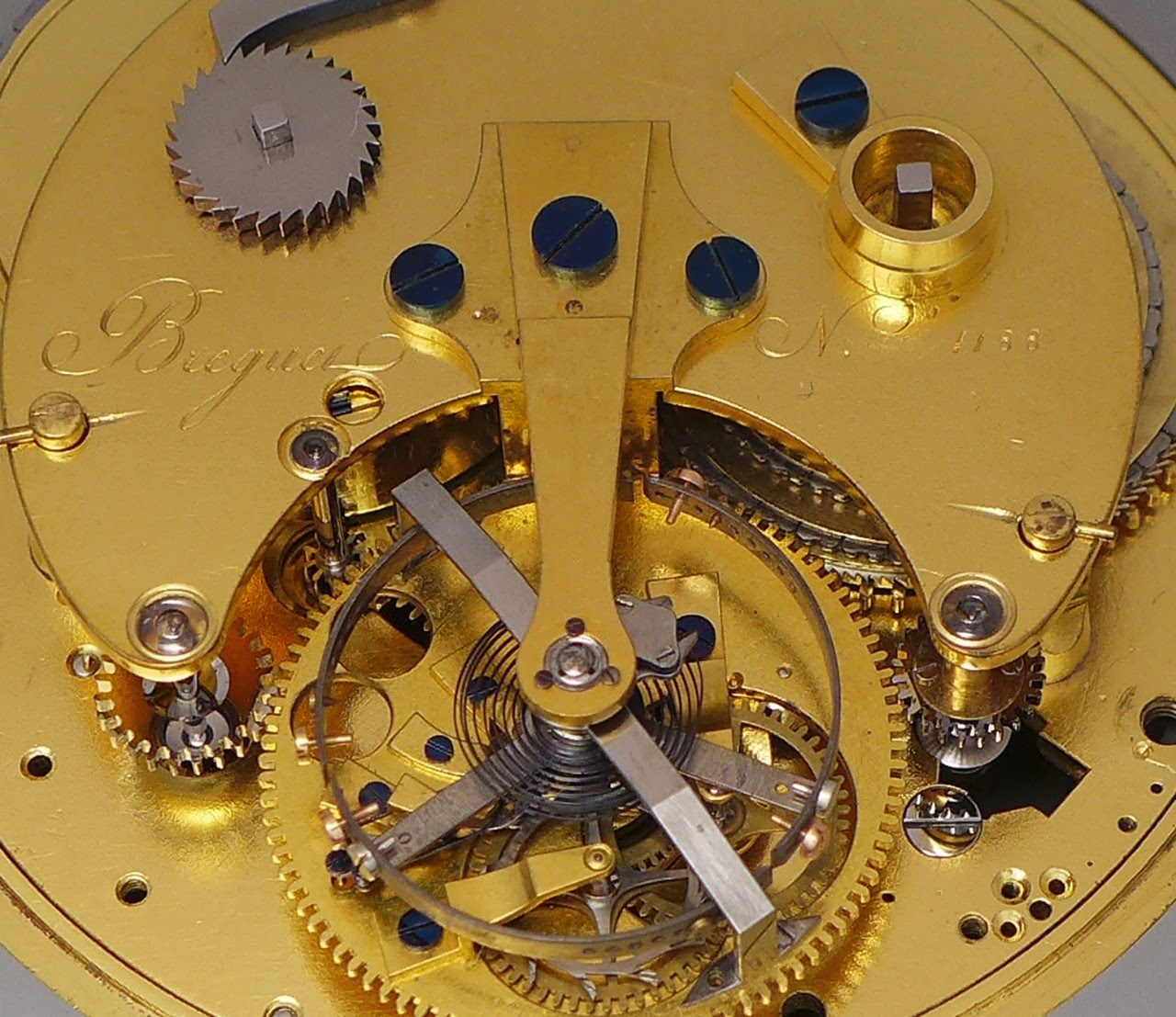
The first surprise, an early tourbillon, from... 1808, which belonged to one very prestigious spanish client, Don Antonio de Bourbon, Infante of Spain.
They were working on it, so I could take some photos of this historical marvel.
The aesthetics will certainly speak loud to you... We are indeed very far from the concept of the " Chronométrie 10 HZ " here, but both are so Breguet.
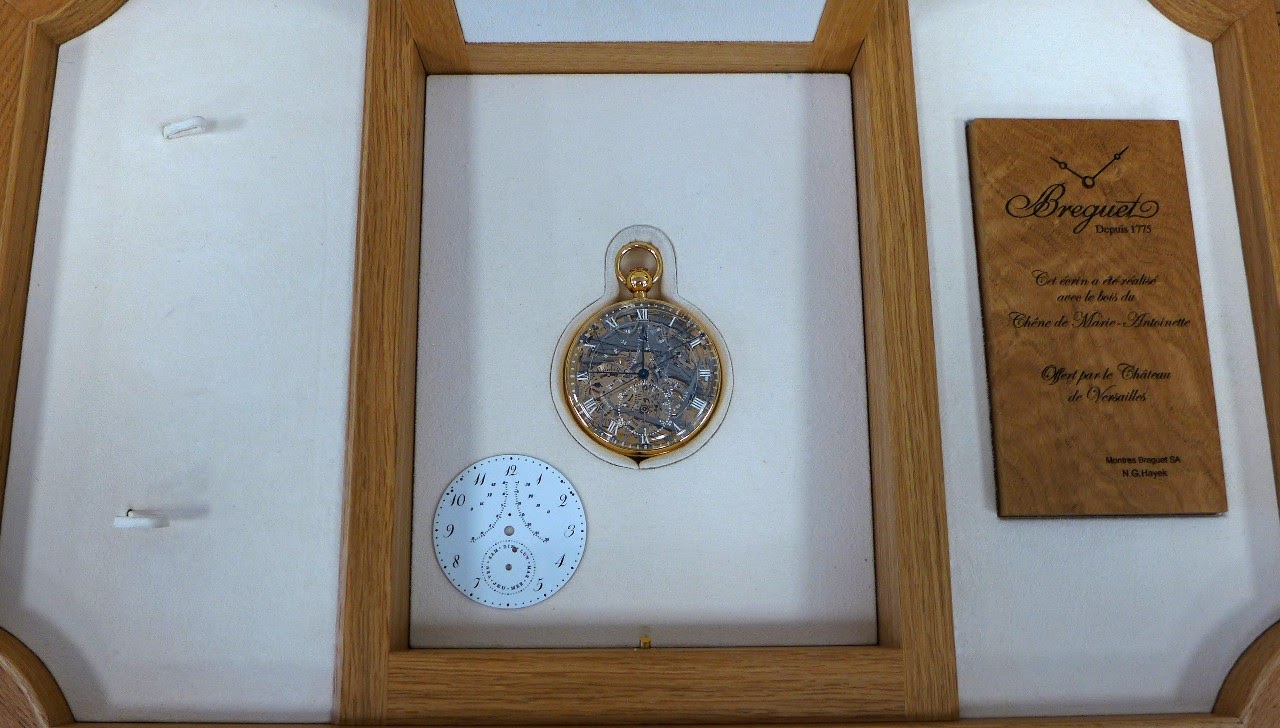
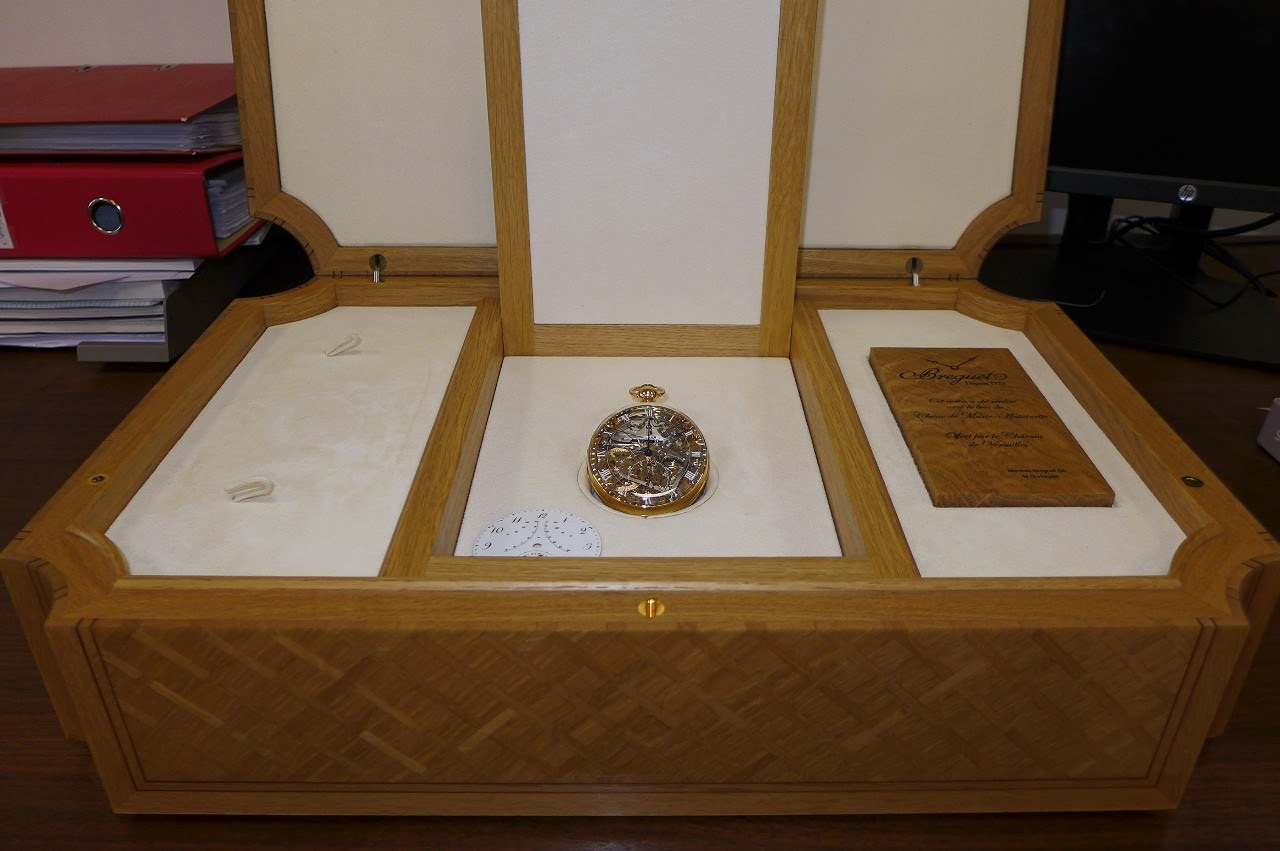
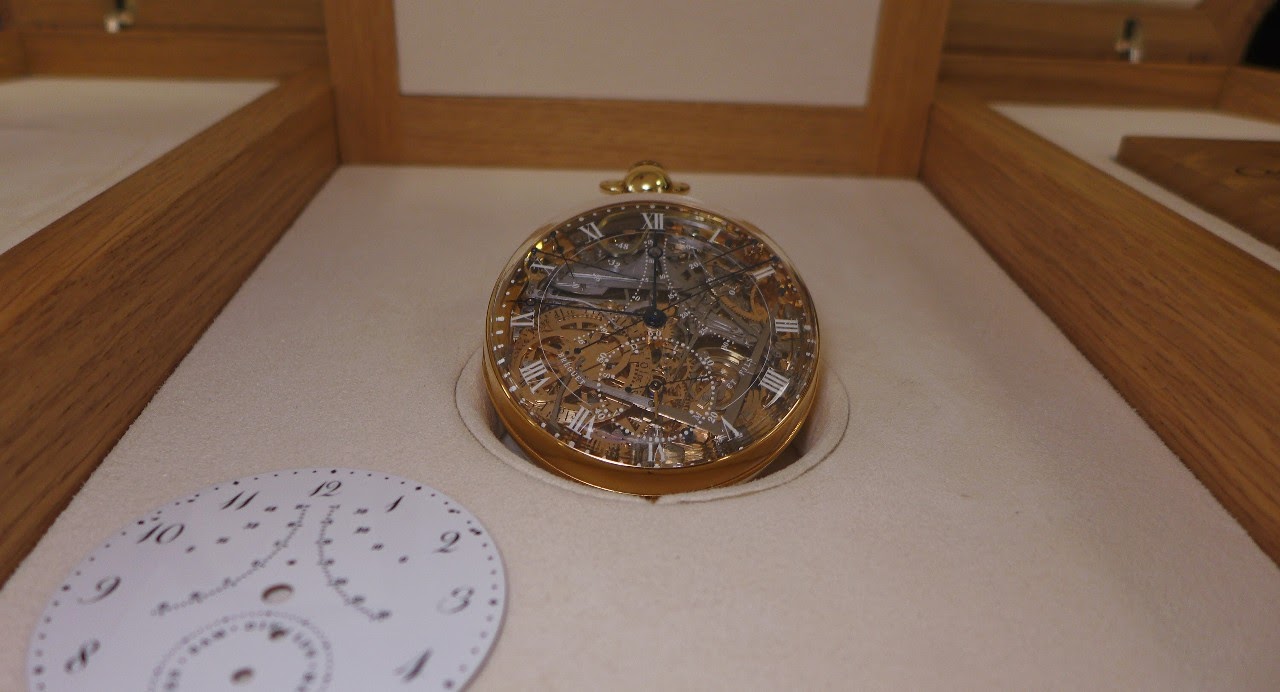
The second surprise was enormous... They showed me a copy of the " Marie Antoinette " pocket watch!
The box is one of the biggest I've ever seen, made with Marie Antoinette's oak, a gift from Versailles Castel.
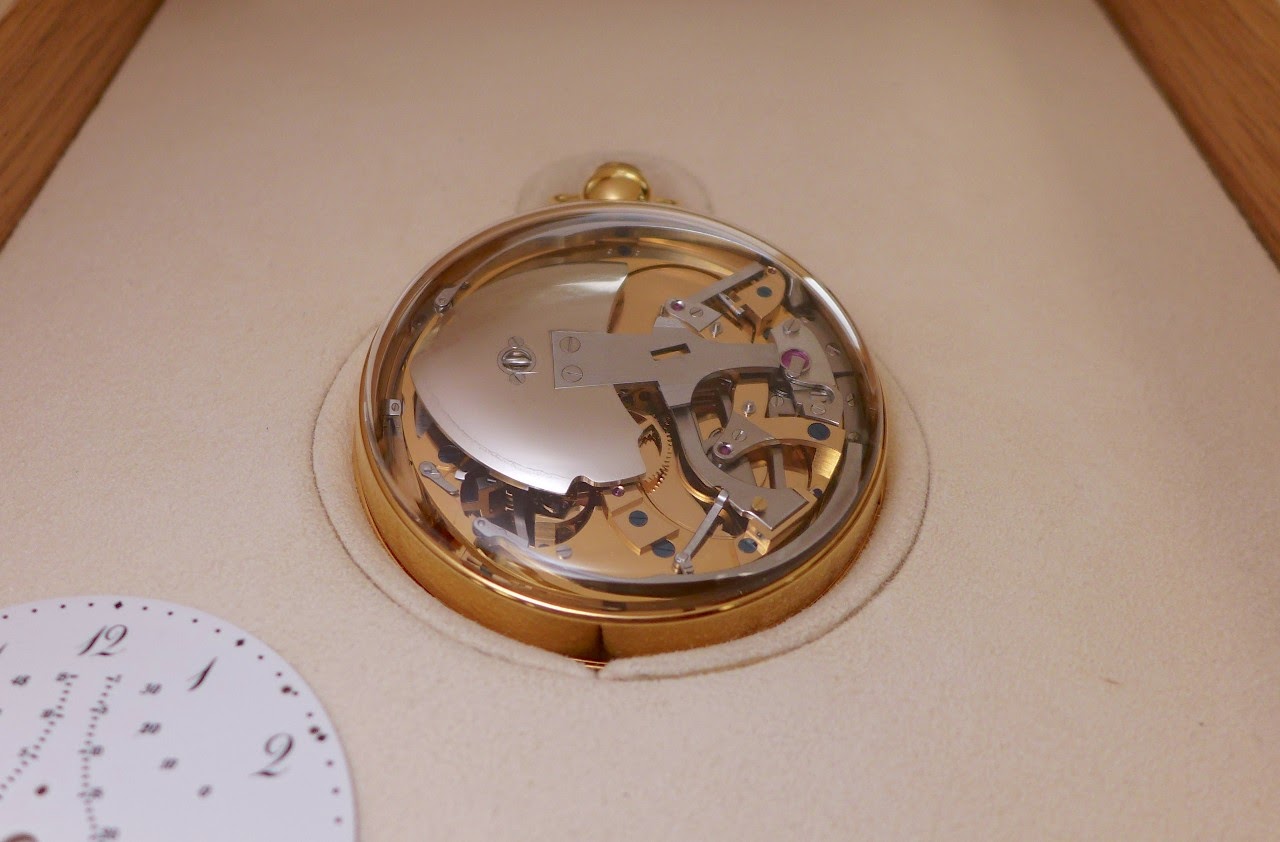
But of course, the most important part of this package is the watch. What a watch!
And, surprise on the backside, the original rotor, reminding us that Breguet was one of the first to make automatic movements, since... 1780!
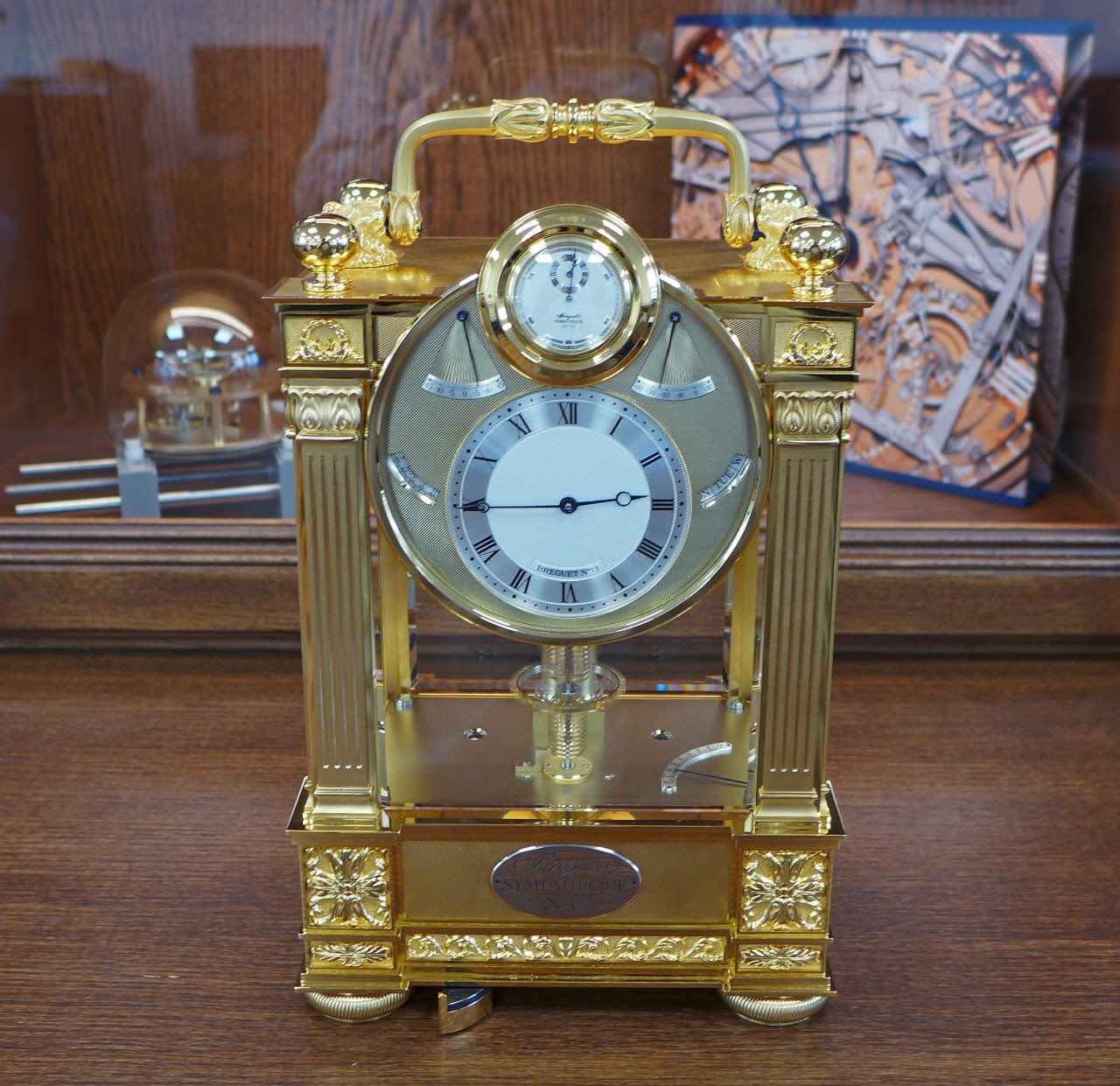
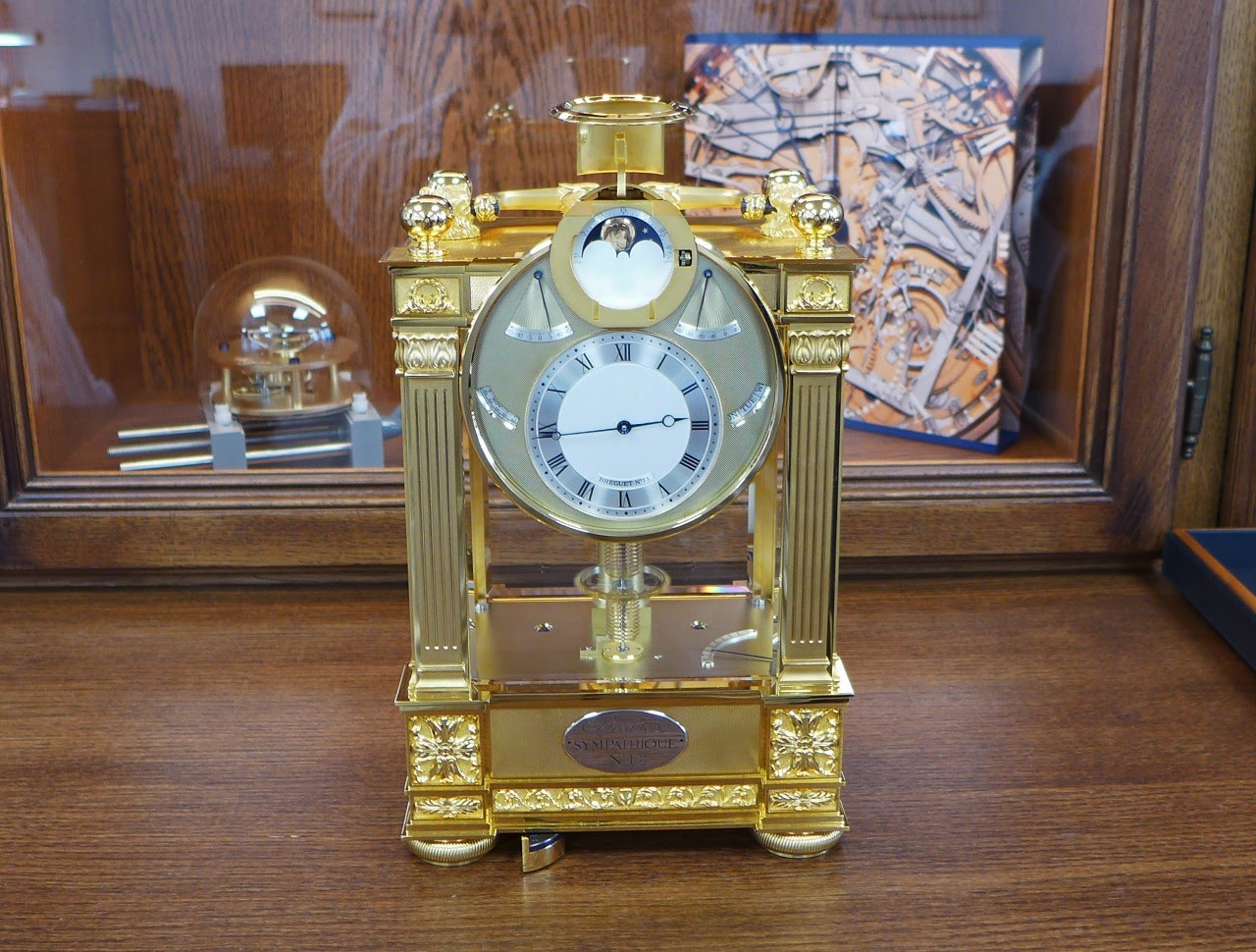
As a superb bonus, I could also see a " sympathique " clock, which basically coordinates the wrist watch on the top ( a minute repeater, here, or a tourbillon wristwatch ) with the clock, and rewinds it. Here is a specimen from the early 90's, with...
And without the wristwatch:
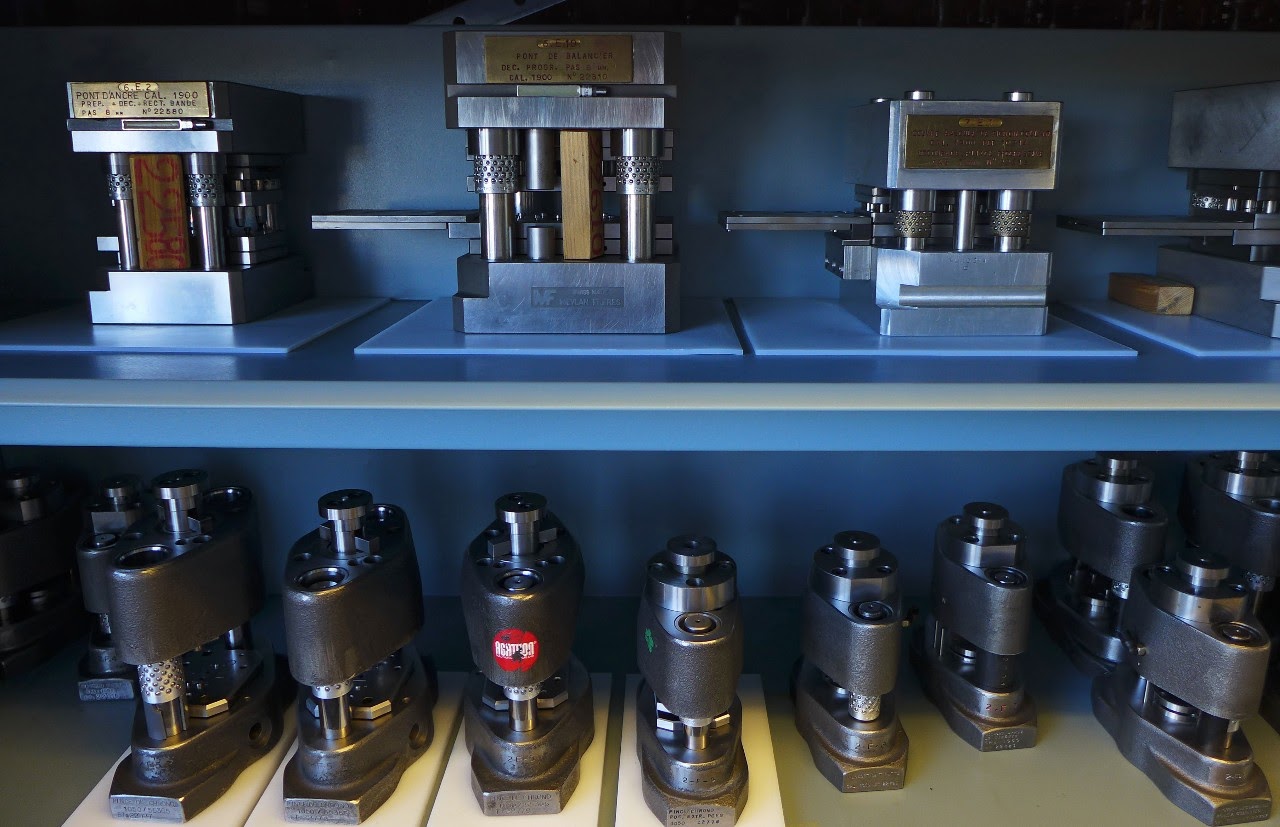
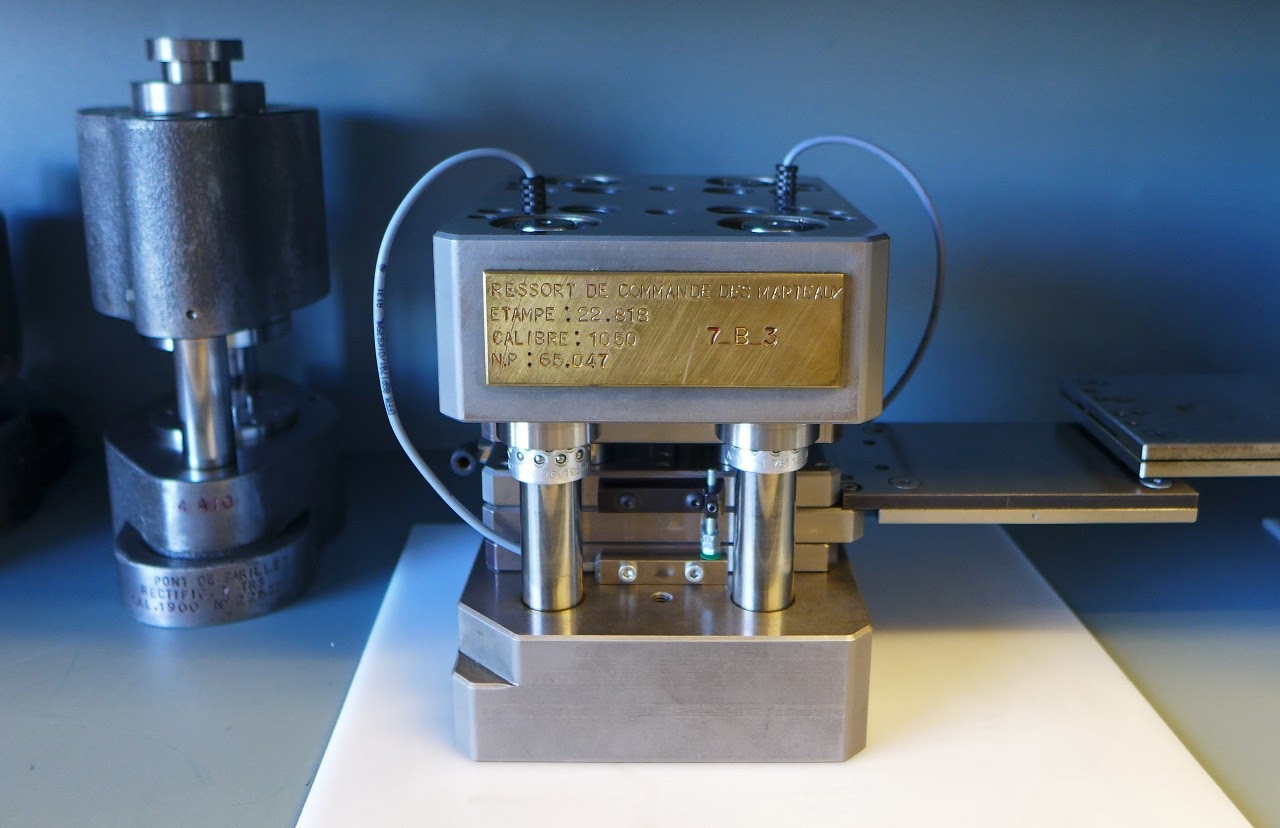
They told me, at Breguet, that they can make every part for an old movement. They have the tools and the archives. They showed me some old books with some technical drawings, documents and my guide drove me to the place where all the swages are stocked, not less than 3000 swages are present in this secure stock, the heritage that comes with Lemania factory.
Here are some pictures of swages, for old balance and anchor bridges, chronograph pliers, and hammers springs.
-> THE ENAMEL WORKSHOP:
As a big fan of enamel dials, I was very interested to see this workshop. I met three master enamelers working on some dials. They explained to me the process, the choice of a gold dial, then the work with the powder, the firing time, the temperature of the horn, and the way they clean the dial, they finish it by diving it in the water to destress it.
Of course, they make these dials in house, cloisonné, champlevé, grand feu, miniatures they use and master all the technics of fine enameling for the small series.
An anecdote showing how personal making an enamel dial can be: They told me that they could recognize who made the enamel dial among them, each dial having its own characteristic.
I quite know one thing or two about enamel dials, but I didn't know they fired them one by one.
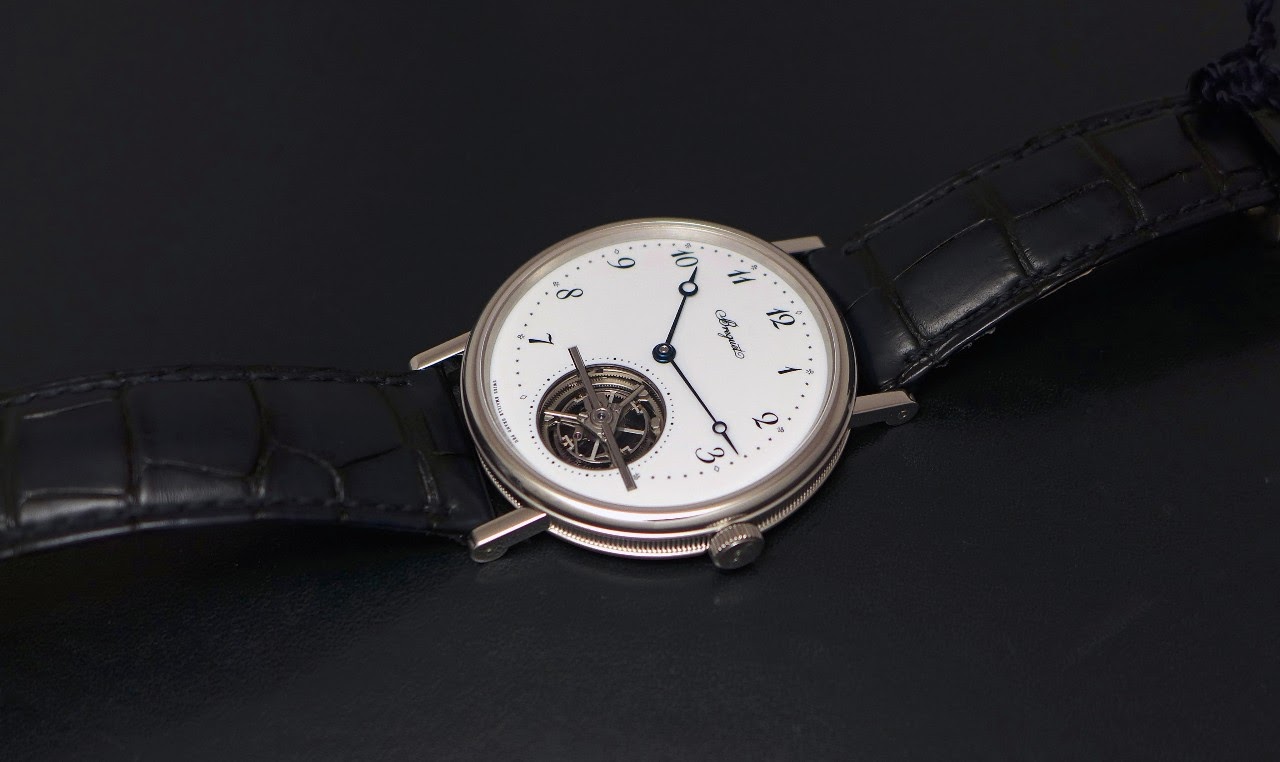
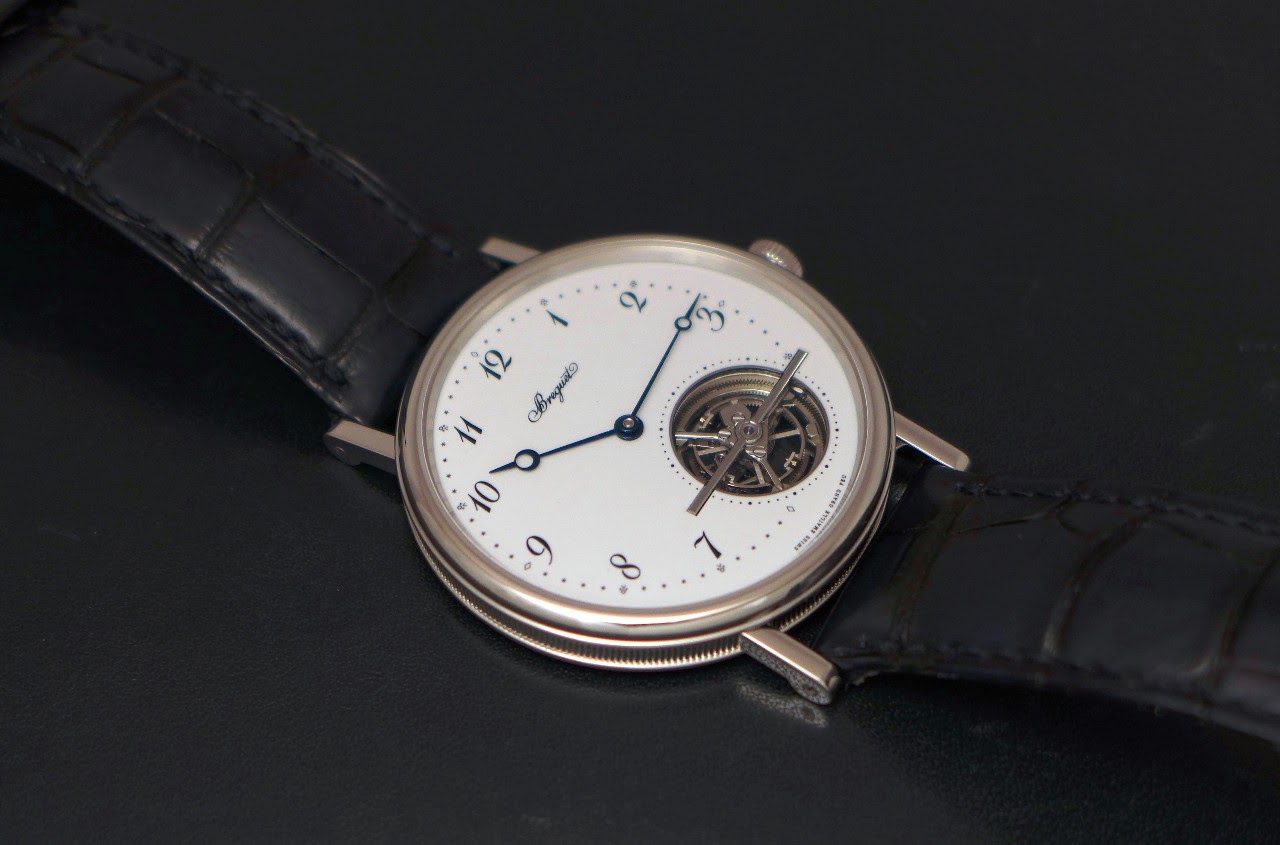
Here is an enamel grand feu dial they made, installed in the ref 5367 in platinum, with its 42 mm big, 7 mm high case, and its automatic movement.
To end, I could shoot some marvels, and as we are at Breguet, some tourbillons.
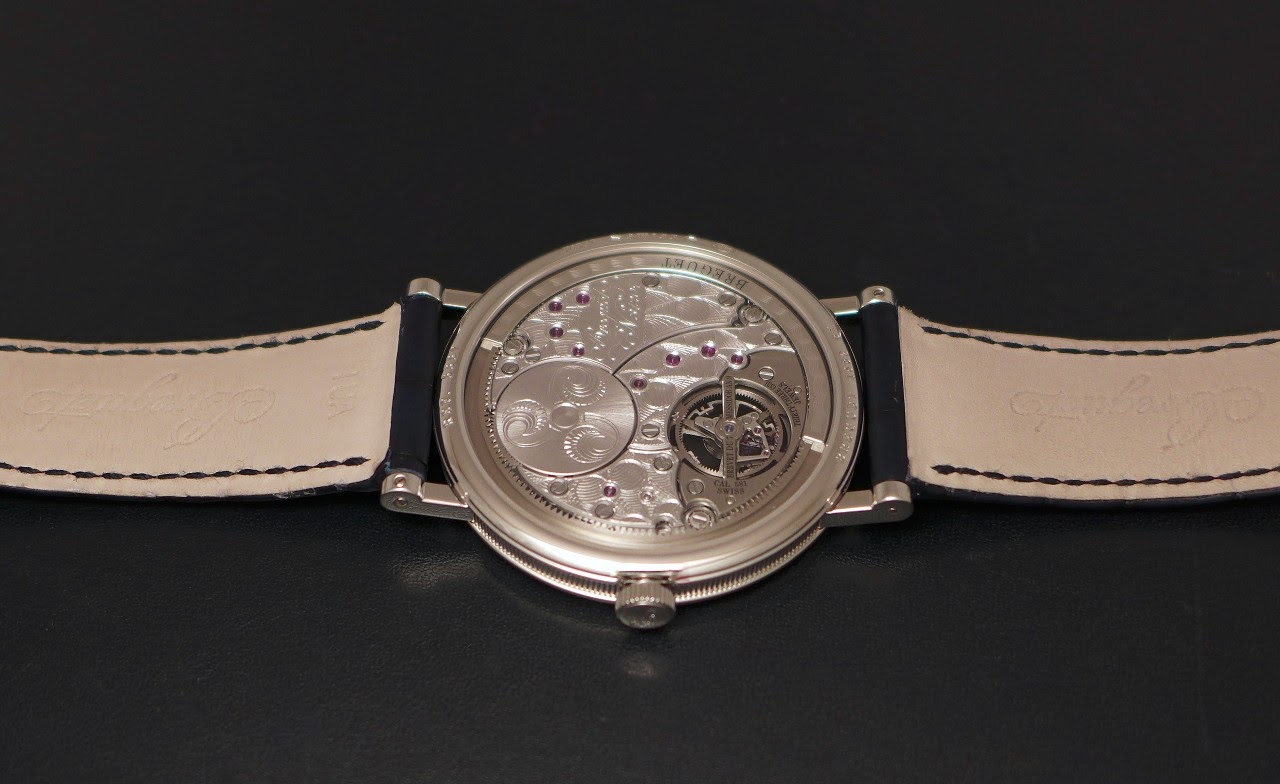
My favorite, the Messidor, ref 5335 in white gold:
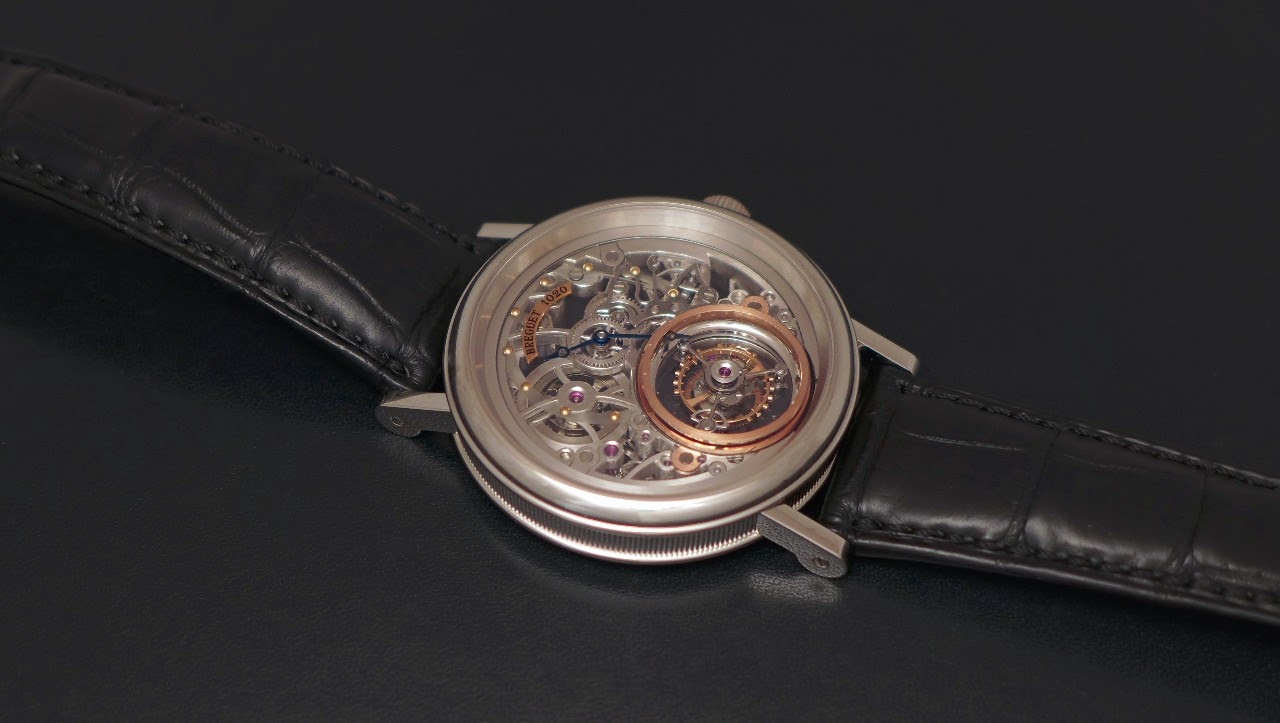
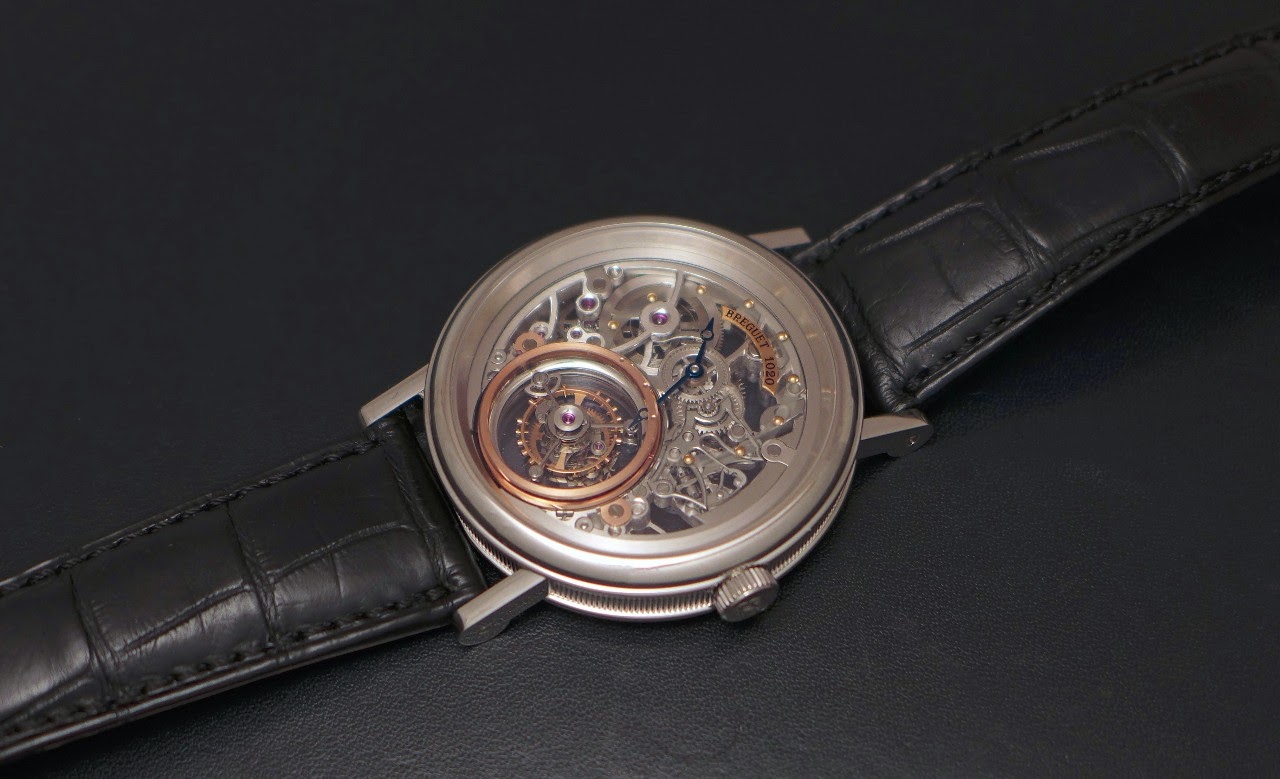
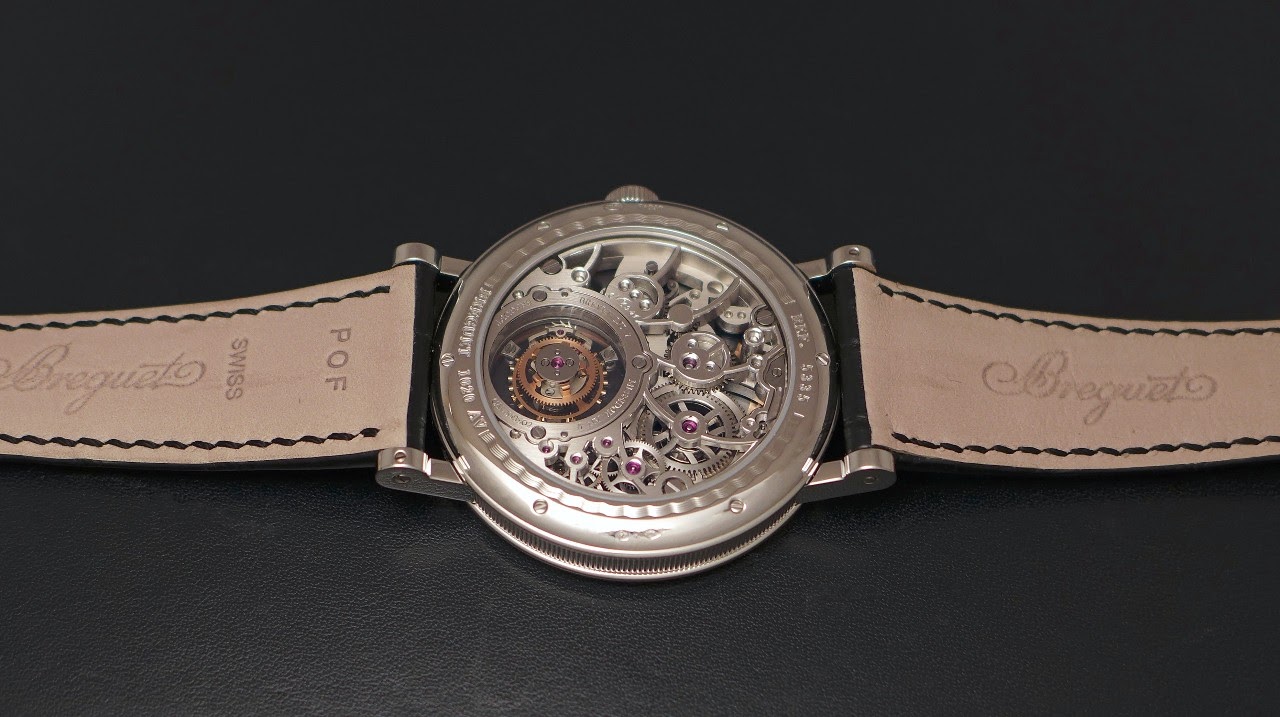
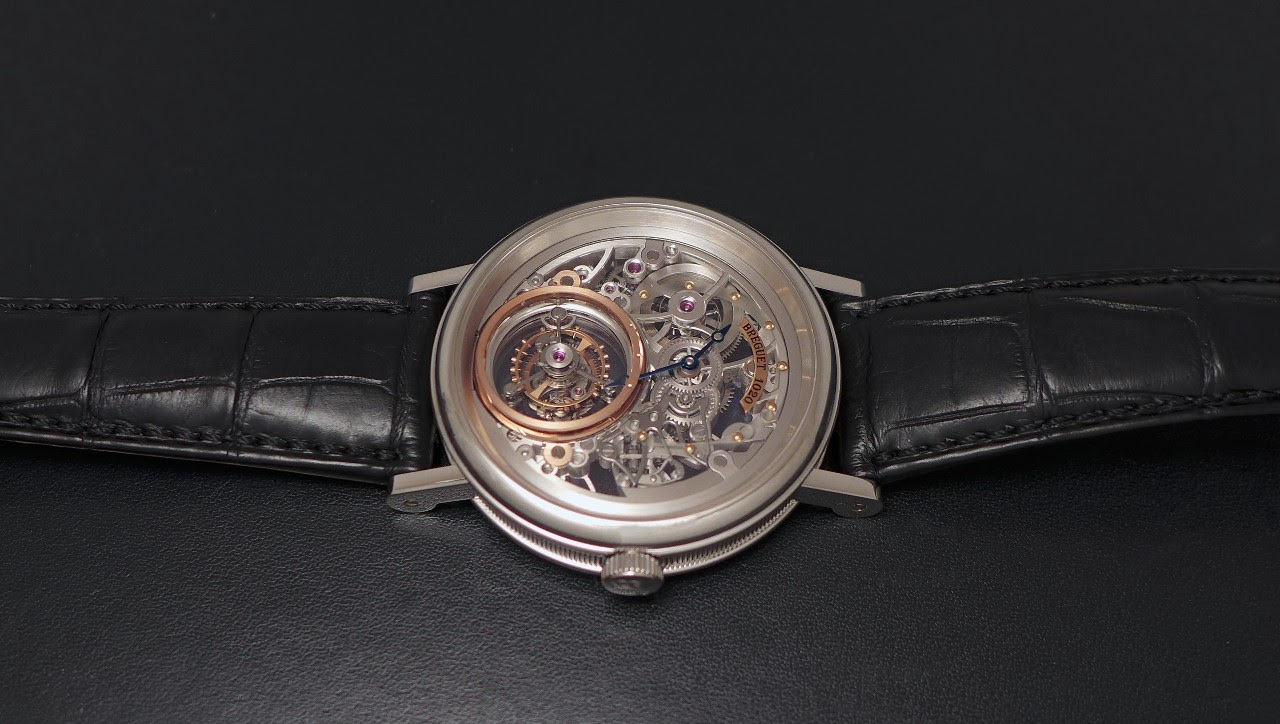
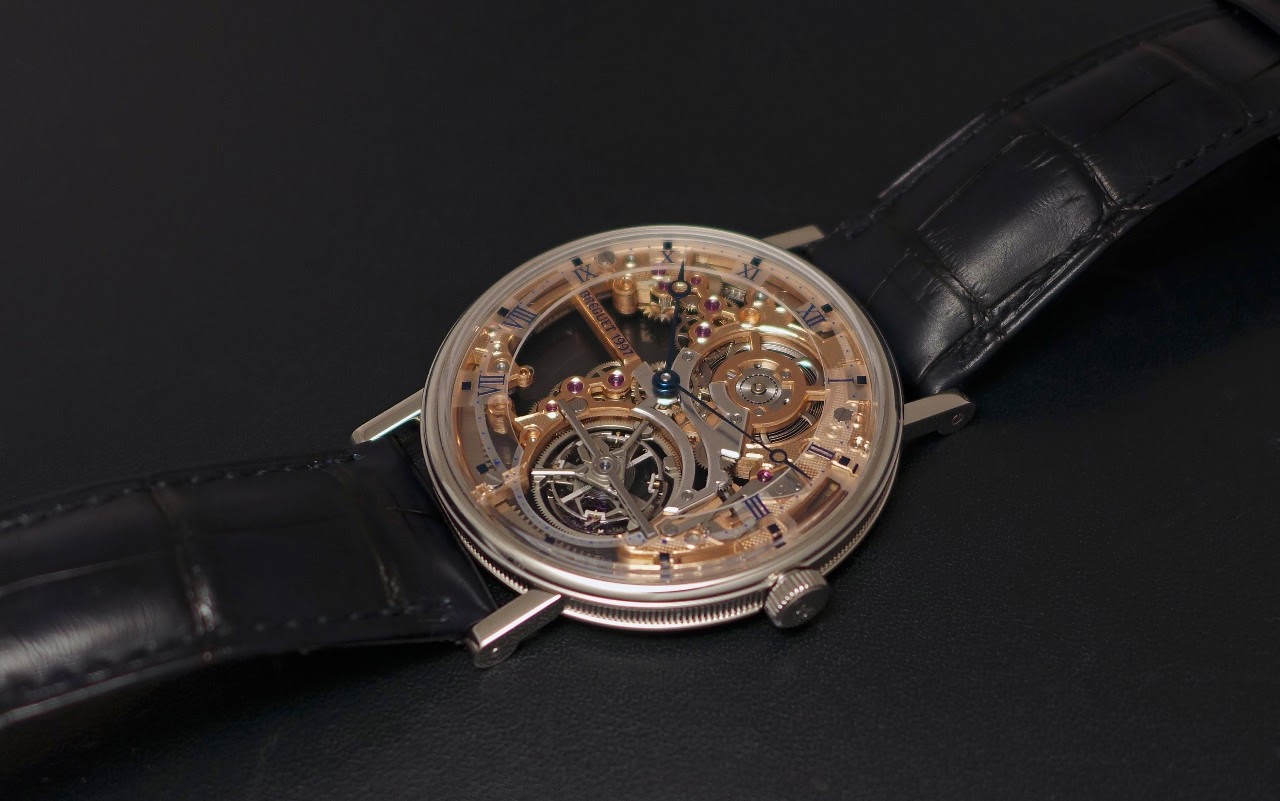
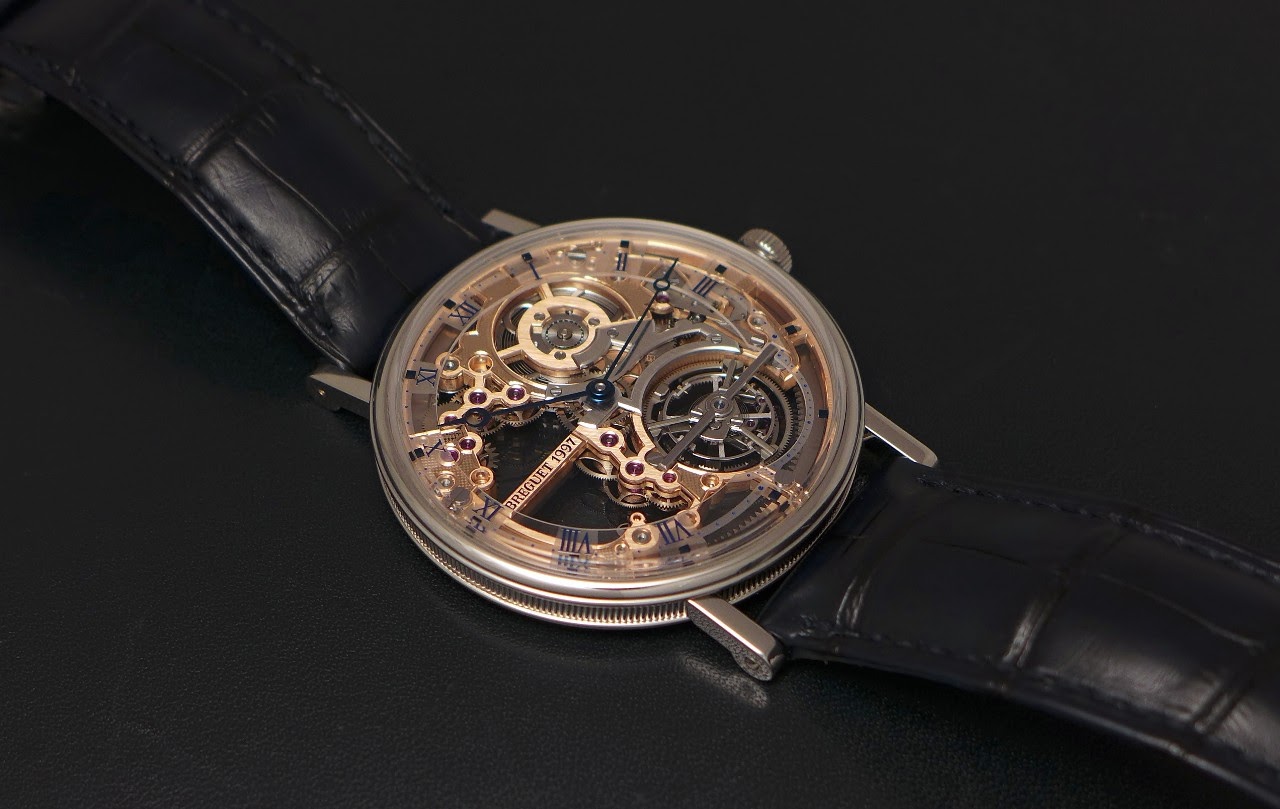
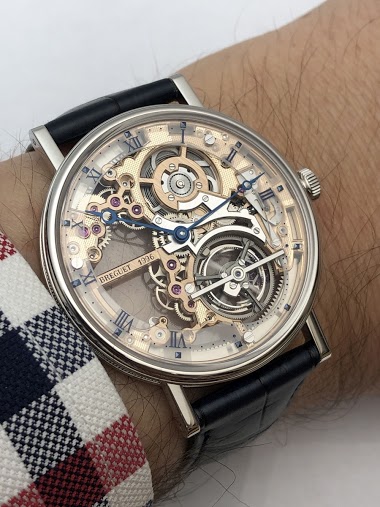
And the Classique Extra Thin Tourbillon open worked, ref 5395 in platinum.
I will post two other watches which caught all my attention a bit later. But I can already tell you that I liked a lot what I saw, at the manufacture, the spirit of these artists, their passion and pride, too. I would like to thank my dear contact at the Manufacture and all the Breguet team for her friendship and their warm welcome.
Looking forward to reading your comments and thoughts,
Best.
Nicolas