Kong
[Moderator]
7855

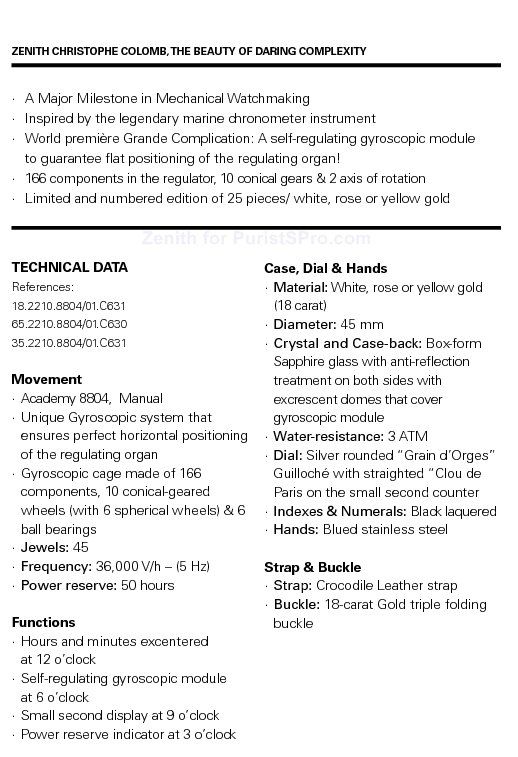
ZENITH Christophe Colomb, The Beauty of Daring Complexity
With
this highly sophisticated model christened in tribute to Christopher
Columbus, the bold 15th century explorer who was the first to tackle the
ocean head on rather than following coastlines, Manufacture ZENITH
proudly presents one of the great modern-day horological accomplishments
stemming from over five years of intense development.
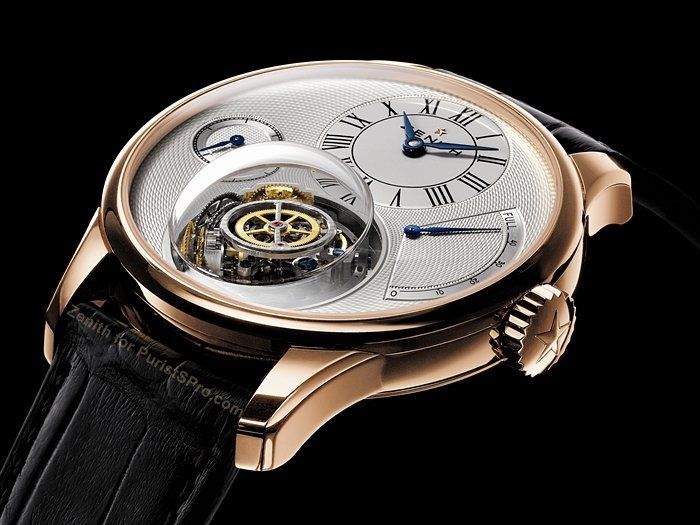
The decision to name this watch after Christopher Columbus relates to the very nature of this ultra-complex model which addresses one of the key issues that faced this adventurous seafarer and still haunts the contemporary watch industry to this day: how to achieve precision measurements with instruments that are subjected to constant motion that is detrimental to their accuracy.
However, this name is not merely a tribute to one of the greatest maritime adventurers of all time; it also points to a historical heritage, as Zenith produced a Lépine chronometer movement at the beginning of the 20th century whose escapement was already known as the “Echappement Colomb” (Columbus Escapement).
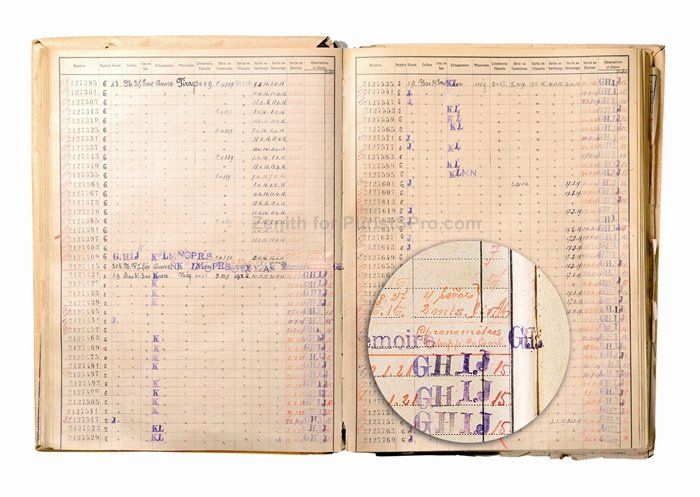
Zenith manufacturing book mentioning the “Echappement Colomb” (Columbus Escapement)
This 20½‘’’ NVI chronometer was awarded three First Prizes by the Neuchâtel Observatory and an “Especially Good Class A Certificate” from the Kew Observatory, Teddington.
Maintaining precision against all odds
A century or so after Christopher Colombus’ bold feats, maritime navigation was to be considerably improved by the development of a shipboard compass featuring a “Cardan suspension” on gimbals, a type of universal joint in a shaft that enables it to rotate when out of alignment. This system proved particularly useful in keeping the instrument so vital to survival at sea upright even when a ship was pitching and rolling on the waves. While 16th century mathematician Girolamo Cardano after whom the joint is named did not claim its invention, he described it in detail and apparently drew inspiration from a sedan chair made for the Emperor Charles V and featuring an ingenious system cancelling out the slope of the terrain so as to ensure that the sovereign’s chair would remain flat and stable even if a bearer were to stumble!
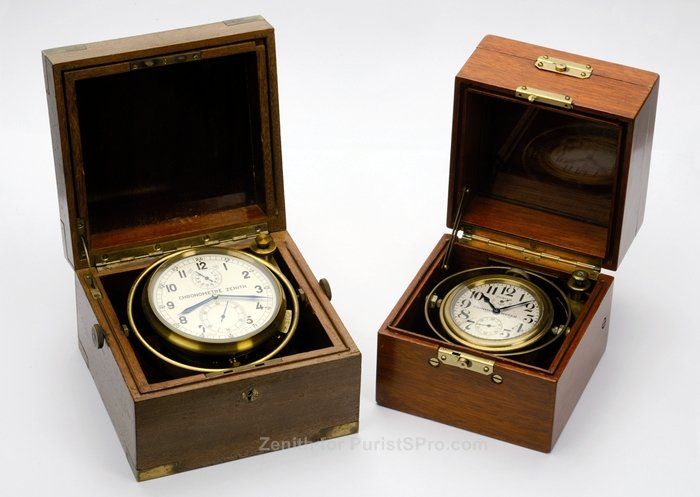
Marine Zenith Chronograph
Subsequently used to equip marine chronometers, this Cardan suspension system has now inspired the Manufacture ZENITH movement design engineers in seeking to compensate for the effects of gravity on the precision of a wristwatch. While the tourbillon was specifically designed for this purpose in respect to vertically-carried pocket-watches, wristwatches move through constantly varying positions and thus required an entirely different approach.
Given the well-known fact that keeping the regulating organ in a horizontal position generates the best possible amplitude of the balance and thus considerably enhances timing precision, Manufacture ZENITH decided to ensure that the regulating organ and the escapement were indeed permanently kept in this position.
This was of course easier said than done however, especially when one considers the numerous challenges of keeping a wristwatch flat in various daily or sporting activities such as driving, golfing, or skippering a boat. Applying this to a movement beating at the exceptionally high rate of 10 vibrations per second further complicated matters, which does much to explain why a full five years of development have gone into presenting one of the major recent accomplishments in the watch industry.
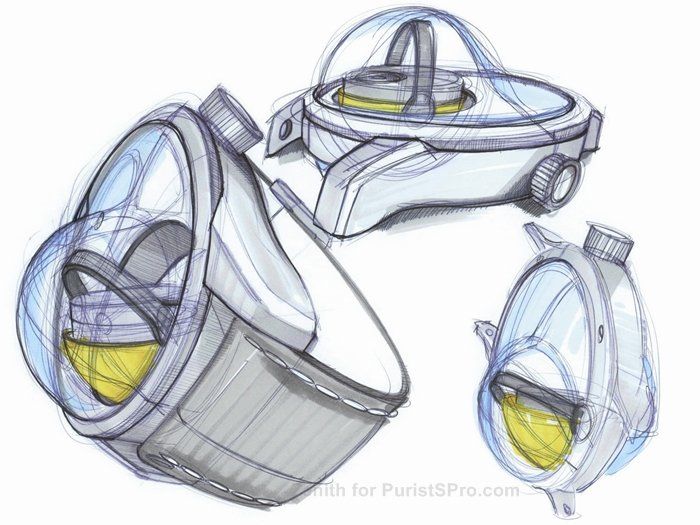
Sketch of the Zenith Christophe Colomb
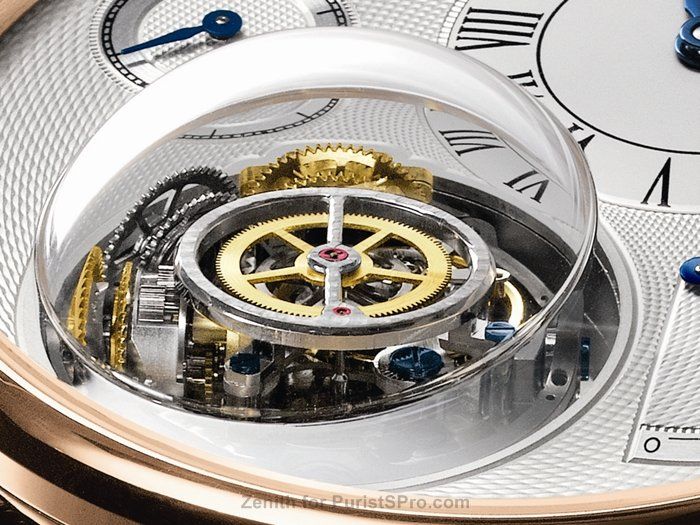
Even the numbers give an idea of the sheer complexity of the task, since this daring complication comprises 166 components, while a tourbillon has approximately 66. The result is the first wristworn timepiece in which the rate is completely independent of its wearers’ movements.
A noble exterior to house a prestigious mechanism
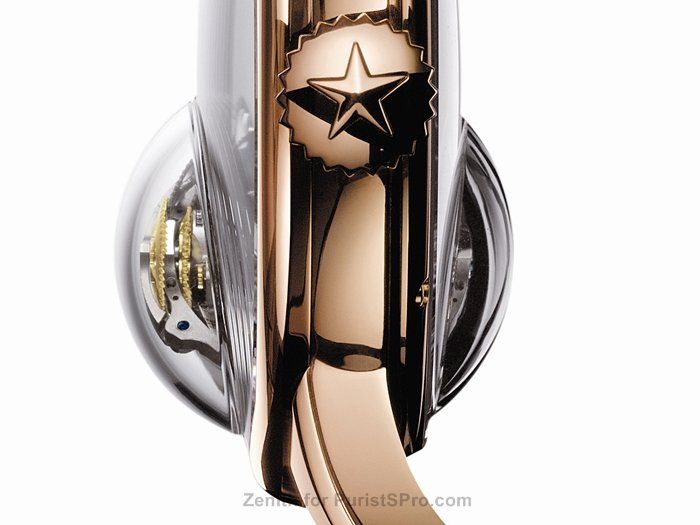
The hand-wound 45-jewel, 36,000 VpH Academy 8804 manual winding movement with 50-hour power reserve, features a unique gyroscopic system ensuring perfect horizontal positioning of the regulating organ. This system consists in a cage composed of 166 parts, 10 conical-geared wheels (with 6 spherical wheels) and 6 ball bearings.
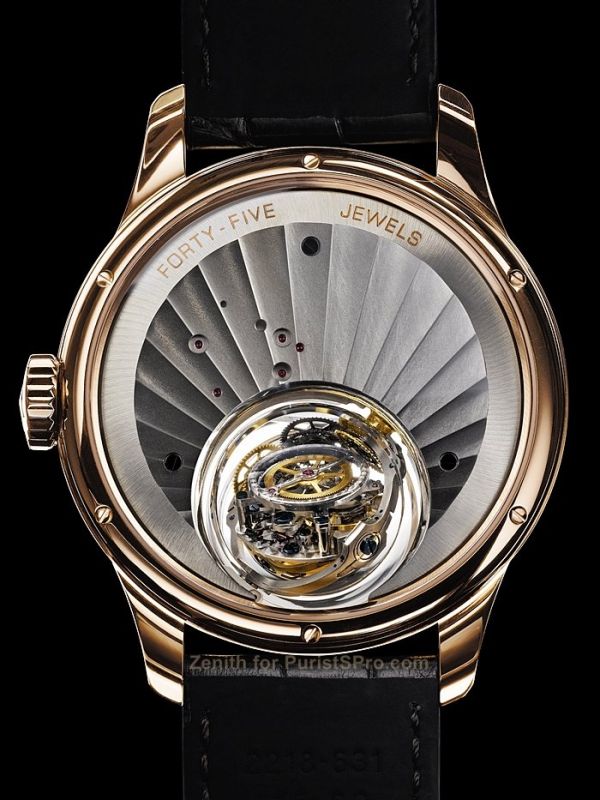
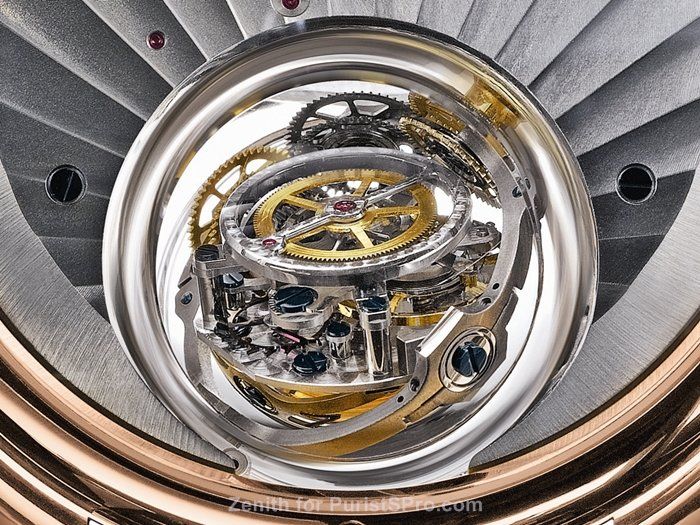
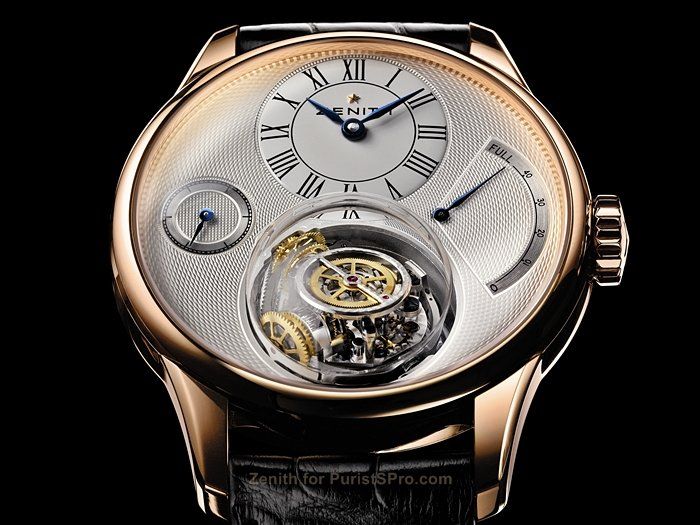
A shared will to explore uncharted territory
When intrepid navigator Christopher Columbus set his course westwards in an attempt to reach Cathay (China) – rather than eastwards like everyone else at the time – little could he have imagined that his voyage would lead him to the unexpected and epoch-making discovery of the New World. The watchmakers and movement design-engineers of the Manufacture ZENITH undoubtedly sense a feeling of affinity with this determination to do things their own way, and their tireless exploration has led to a discovery also destined in its own way and quite literally to change the very face of time.
This message has been edited by Kong on 2010-10-07 07:27:31 This message has been edited by Kong on 2010-12-17 06:06:11
Locked
login to reply