
foversta
[PuristSPro Moderator]
20814

SIHH 2012: Montblanc
Montblanc had a very busy SIHH this year with interesting novelties in
each pillar of its catalogue from the entry-level Star collection to the
exclusive Villeret watches. This offer highlights the Montblanc
strategy which goal is to be present in each segment of the market
hoping that the high-end image of the Villeret collection would have a
positive impact on the others. But I noticed that the will to improve
the horological contents was not focussed only on the Rieussec and
Villeret collections because the TimeWalker one took also advantage of
this ambition. It was for me a kind of surprise, something I didn't
understand before.
I was positively surprised by what
I saw during the presentation and I propose you to browse these
novelties starting with the entry-level.
A) Star Classic
Automatic
We already know the Star Large
(36mm), Star Date (39mm) and Star XL Automatic (40mm) which
are watches with central second hand and a date window located in
different positions: 6 o'clock, 4h30, 3h.
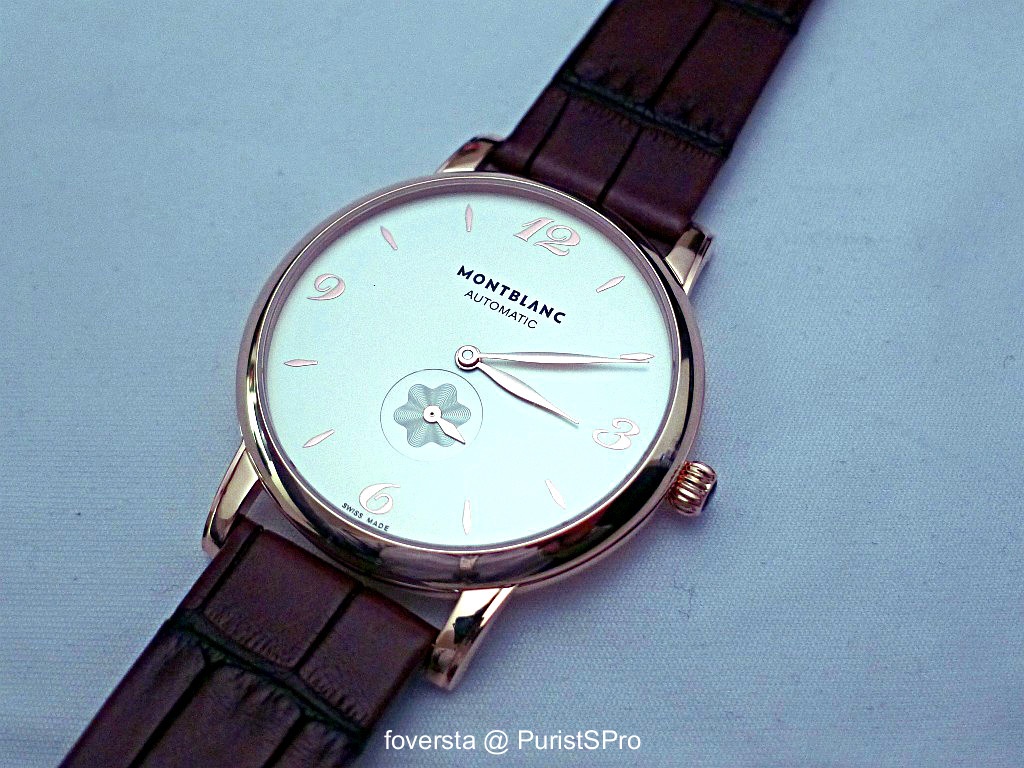
The new Star Classic
Automatic is a key watch for Montblanc, maybe the most important of all
these novelties because its mission is to become a
best-seller.
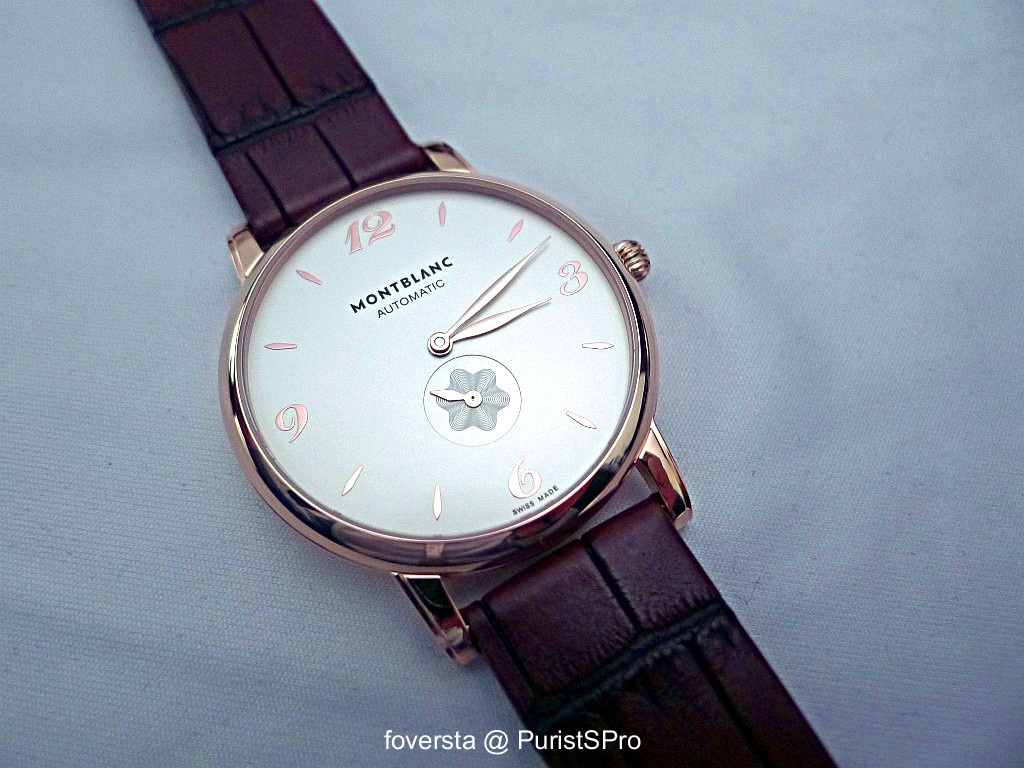
In order to enhance the elegance of the
Star collection, Montblanc took the decision to propose a simple watch
with a small second hand located at 6 o'clock and with a pure dial,
without any date window. The Montblanc star is located on the subdial to
give a subtle decorative touch in this very simple and refined design.
The applied indexes and figures bring a qualitative finishing and I
really like the shape of the hands.
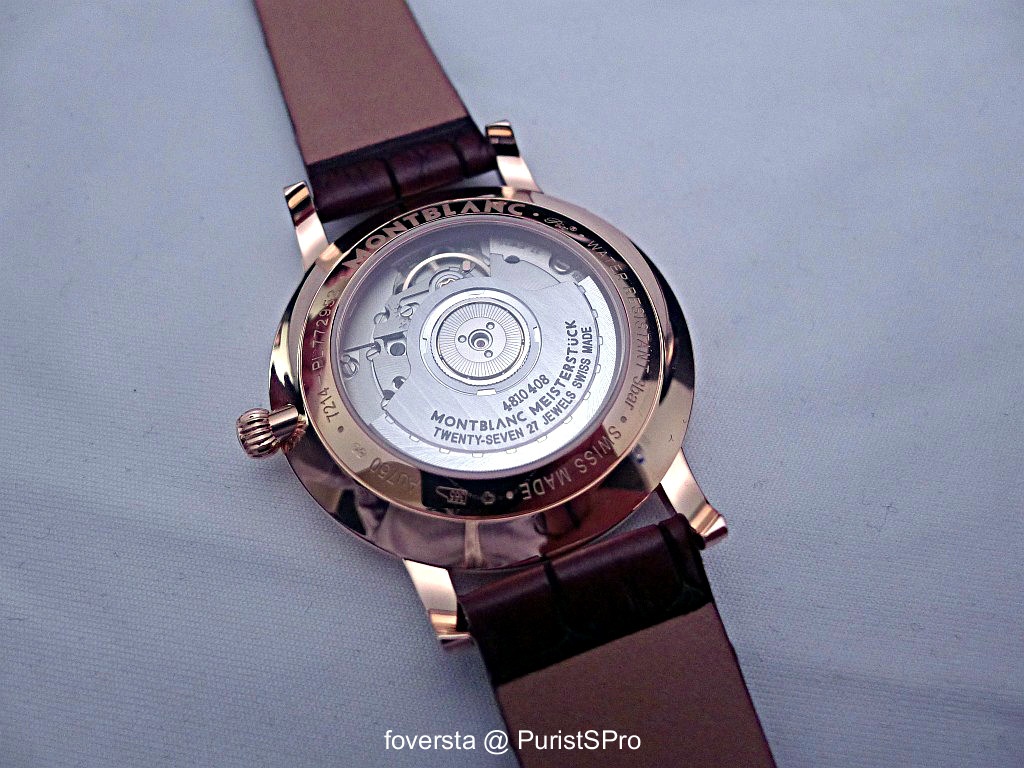
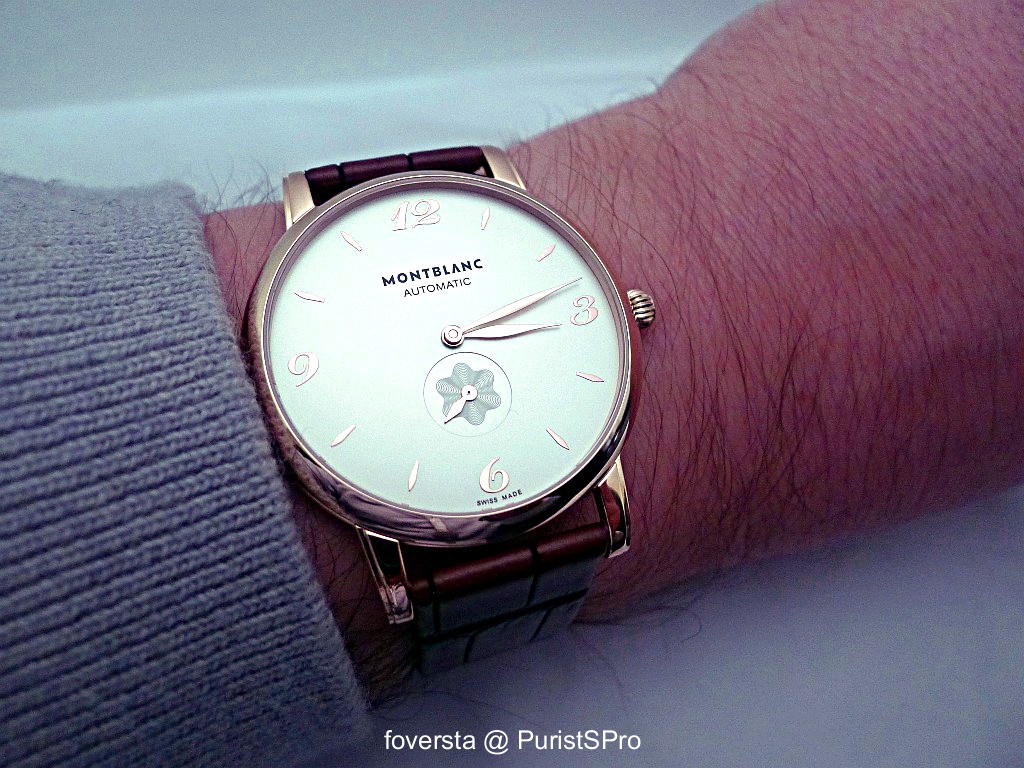
Case diameter is
39mm (with a height of 8,9mm). This is the max limit for the movement,
the 4810/408 which is, if I'm not wrong, an ETA 2895. If you look at the
dial you will notice that the subdial is too close to the center of the
watch which gives a sensation of unbalanced lay-out. When I wore the
watch, this sensation was softened by the purety of the design and the
overall elegance. But it is something you have to take into
account.
Case is available in Steel, PG, YG and also in two
tones.
I consider this Star Classic Automatic as a
worthy addition to the Star catalogue and I can imagine the targetted
clients: people who want to buy their first "nice watch". I think it can
achieve this objective.
Due to the dial design, I would be
happy to see a handwind version of it.
B) TimeWalker ChronoVoyager
UTC
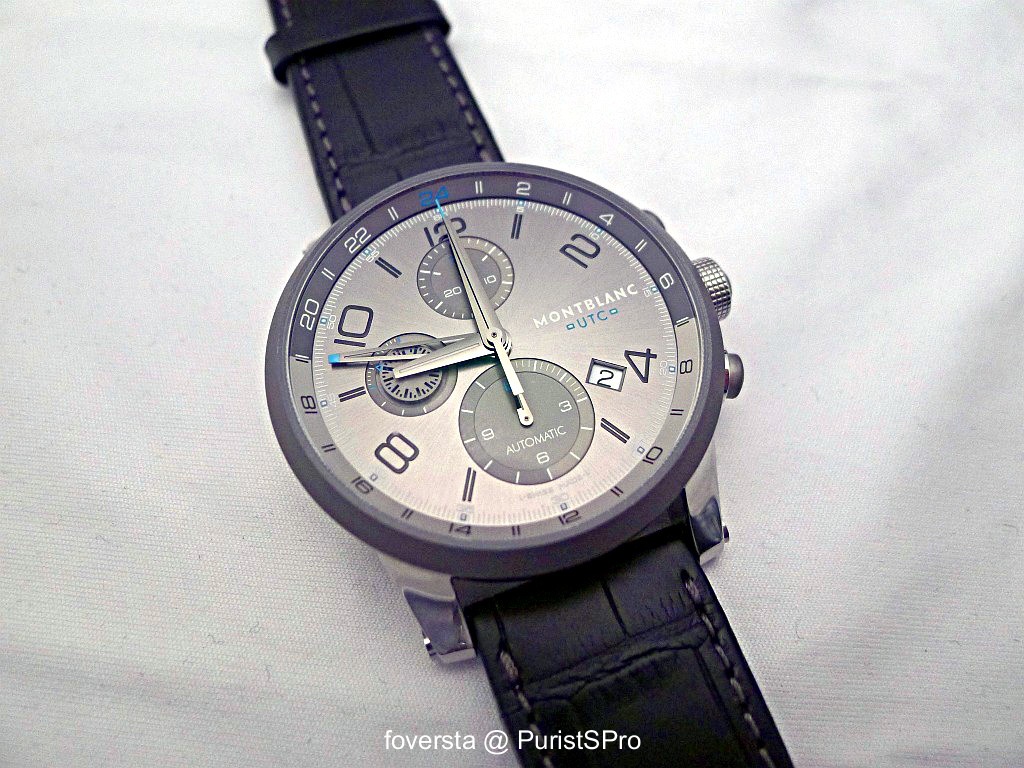
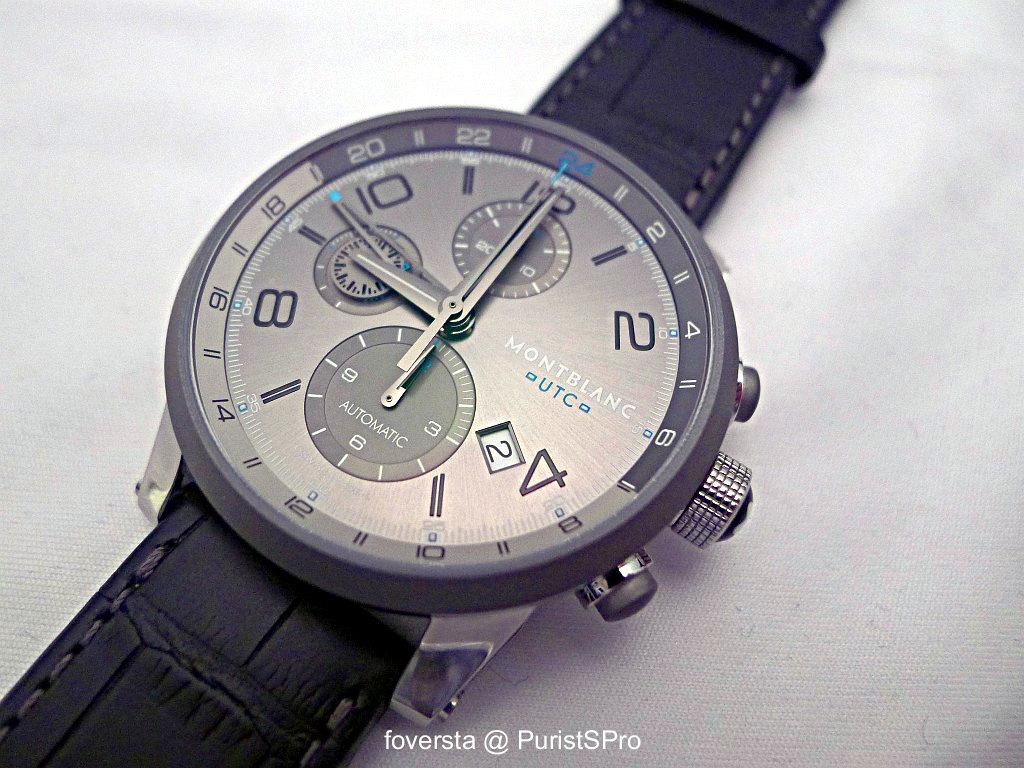
This TimeWalker can be seen as a
gathering of the complications of the TimeWalker GMT and Chronograph.
Even if we recognize the typical hands and figures of the TimeWalker
collection (without forgetting the crown), this ChronoVoyager UTC is
more refined esthetically speaking. I like the harmony of colours, this
grey atmosphere works pretty well. The second timezone function is
displayed through a hollowed hand with a blue end. It is discreet and
visible at the same time. Bottom subdial is dedicated to the 12 hours
counter while the minute counters is on top of the dial. Colours of the
second hand of the chronograph is blue too which can be a bit confusing
with the second timezone function but it preserves the soft design.
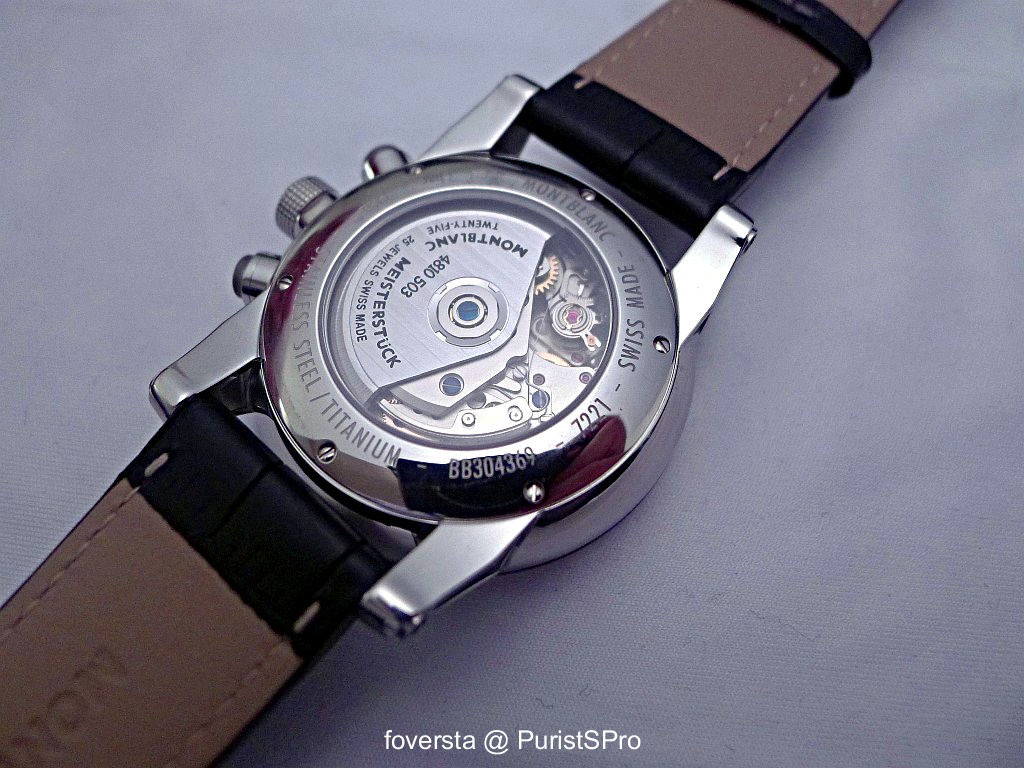
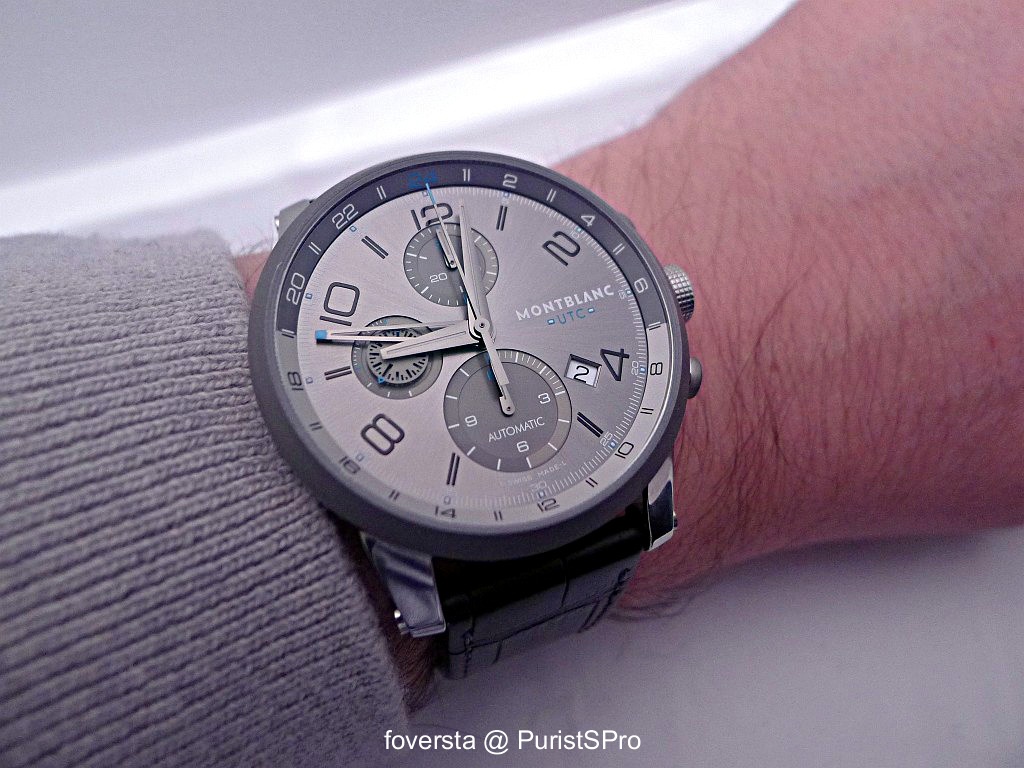
The flange tries to reduce the feeling of size. Case
diamter is 43mm which is too big for the movement (base 7750) as we can
see it with the position of the date window. It is a pity because with a
few mm less, the watch would appeared as more balanced and nicer.
Please note that the case is rather thick
(14,8mm).
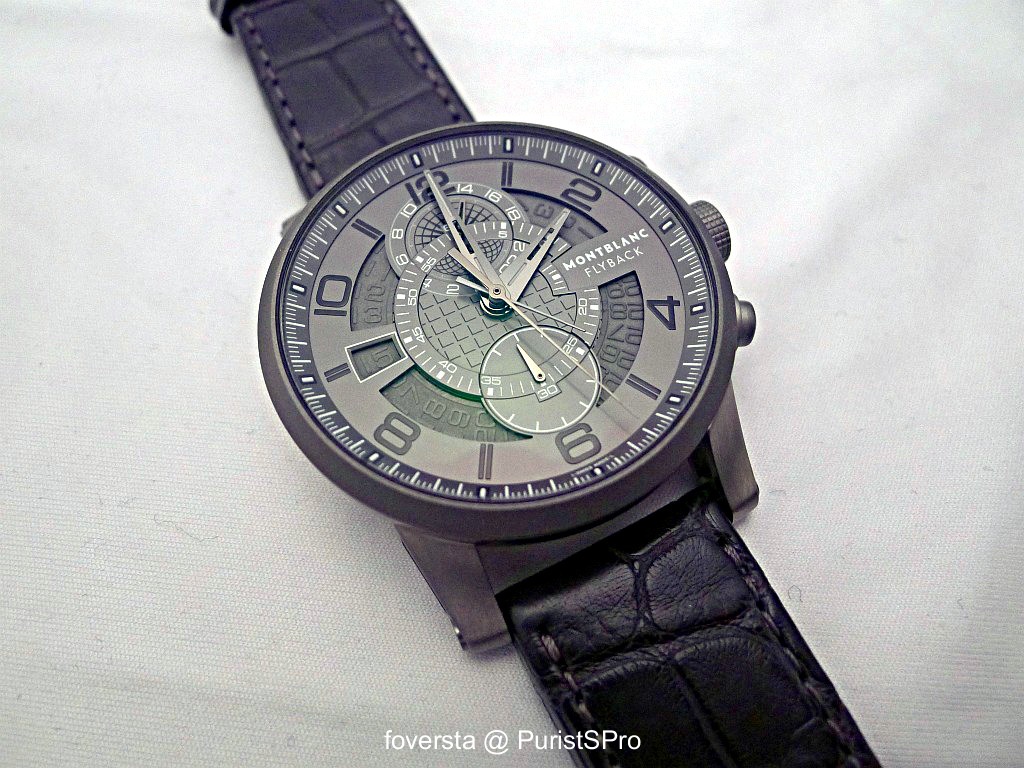
C) TimeWalker TwinFly
Chronograph GreyTech
We stay in the same
collection with a watch following the same purpose: to combine a
chronograph with a second timezone indicator. But if I felt a small
disappointment with the ChronoVoyager UTC, I was totally convinced by
the TwinFly Chronograph GreyTech.
They obviously
share a lot of comon points like the colours context and the usual
features of the TimeWalker collection. But actually, everything is
different inside the watch and in its philosophy.
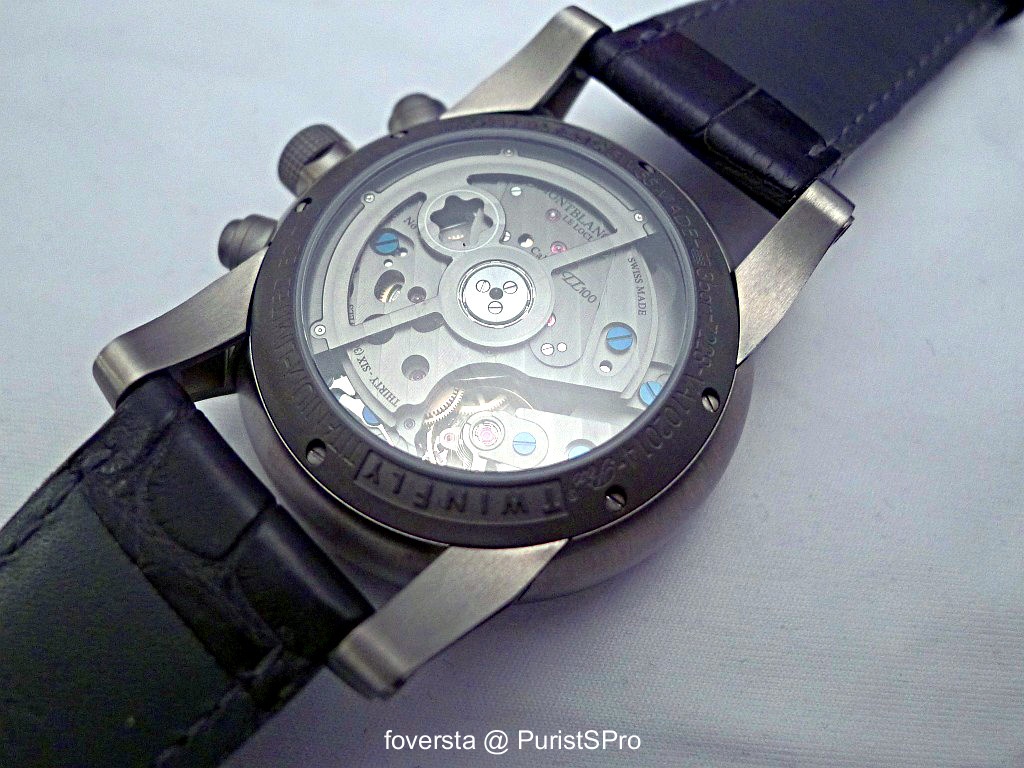
The TwinFly
Chronograph GreyTech is much more ambitious using the in-house movement
MB LL100. I appreciate to see it outside the Rieussec collection, in a
totally opposite style.
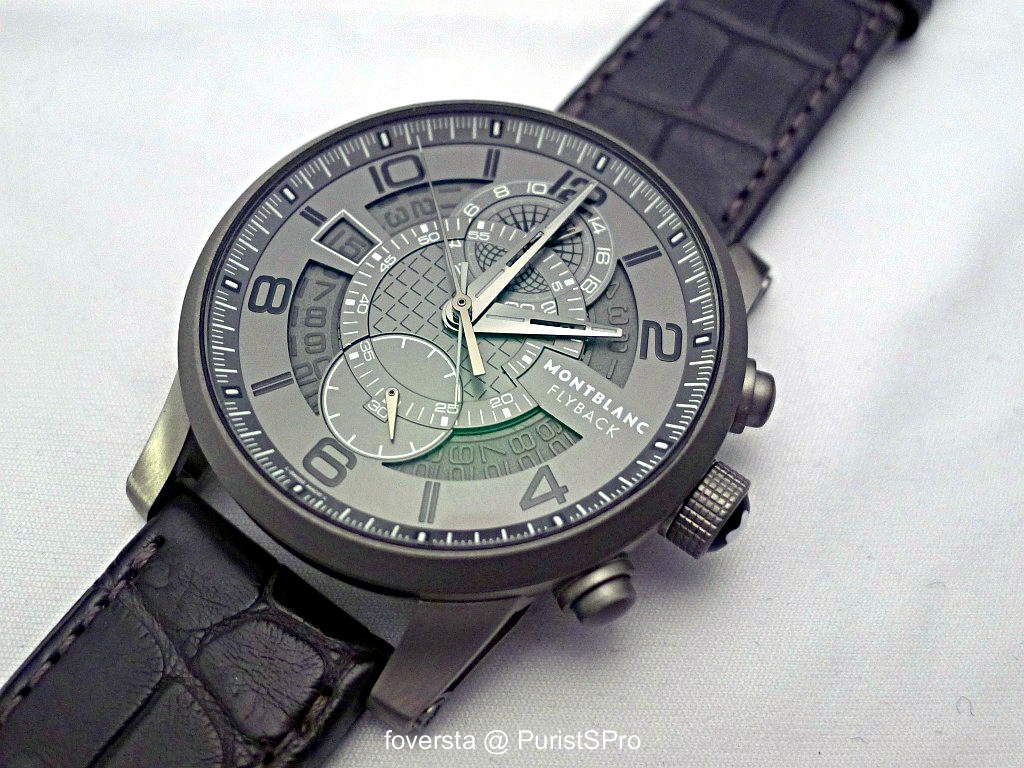
I like the way all the functions are
linked together on the dial and the way the date (located on the left
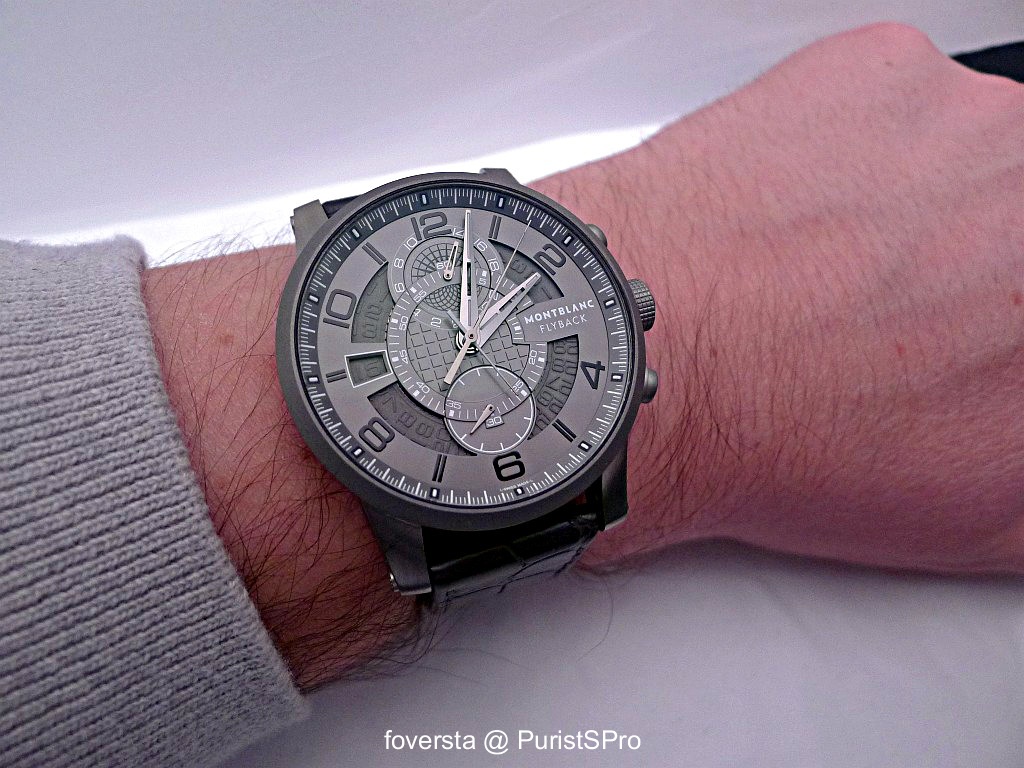
size) is displayed. The consequence is that the watch, despite a similar
case diameter than the ChronoVoyager UTC looks much more
balanced.
Functions are not exactly the same: the
chronograph has a flyback feature and the bottom subdial is this time
dedicated to the second timezone display (24h). But the clever point is
how the minutes of the chronograph are displayed thanks to a central
subdial. This subdial is much larger than the "classic" minutes
subdials. Of course, this unusual dial lay-out requires a few minutes to
really get used with it but I find it well done.
Movement is
visible thanks to the see-through caseback. Due to its thickness, the
satin-finished and bead-blasted titanium case is rather thick with a
height of 15mm.
In my point of view, this TwinFly
Chronograph GreyTech is the most interesting Montblanc novelty of the
year because it gives the proof that the in-house movements can be used
outside the Rieussec collection and with a more "contemporary"
design.
D) Nicolas Rieussec Chronograph Open
Hometime
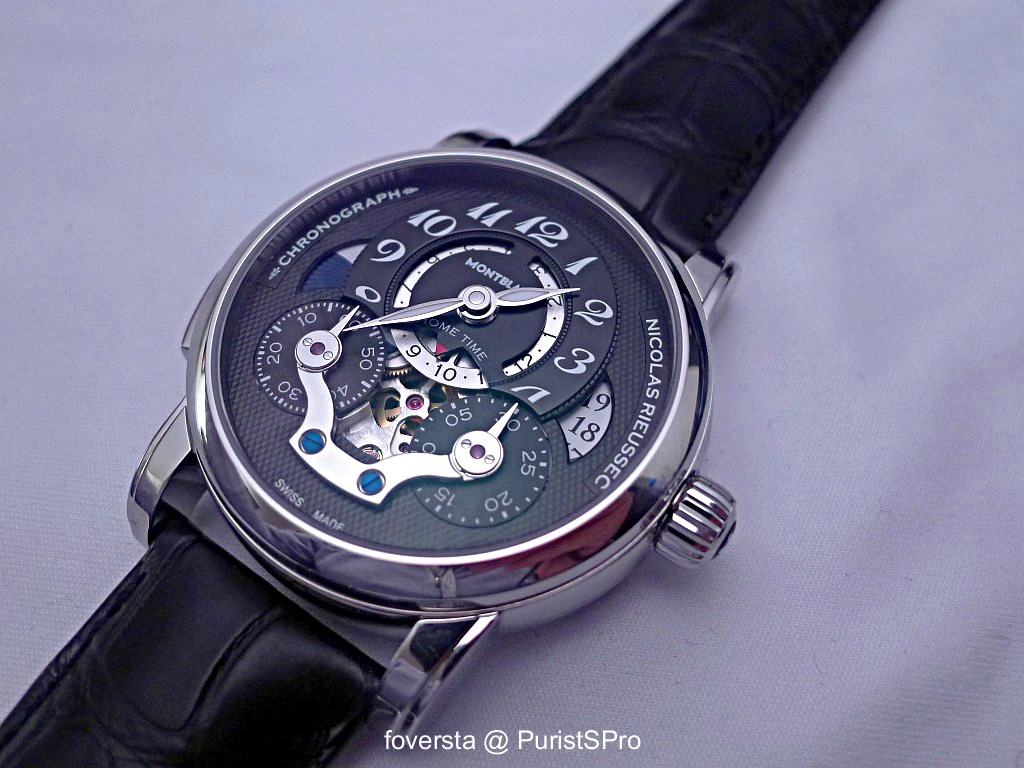
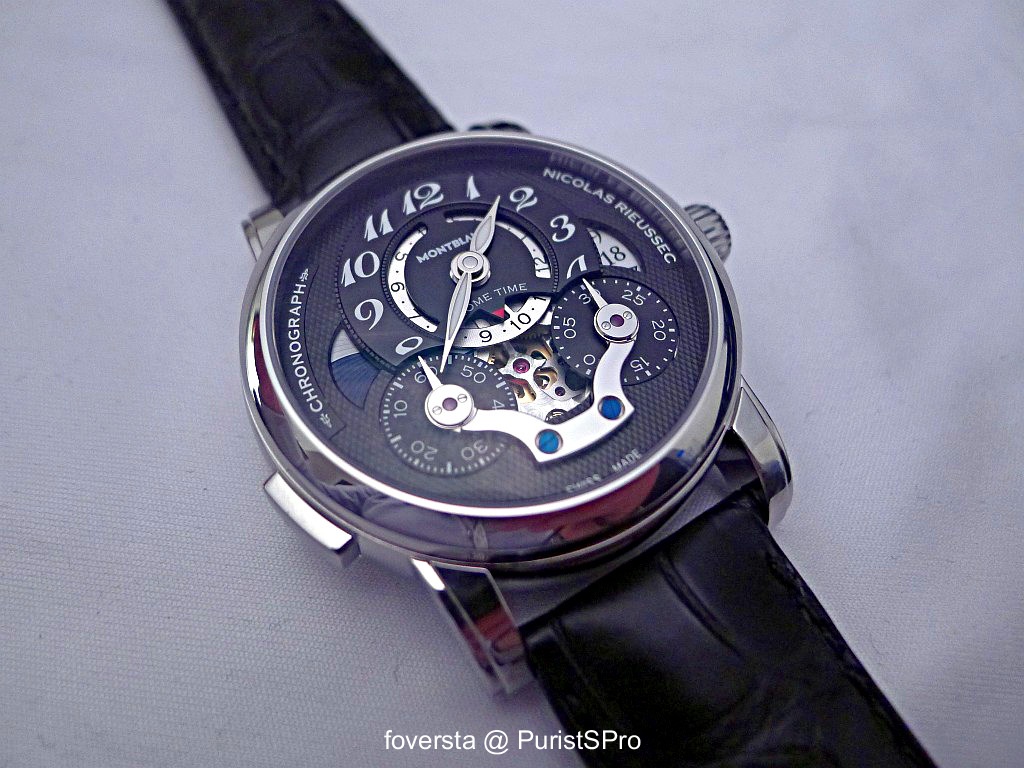
Again, with this Nicolas
Rieussec watch, Montblanc proposes us a watch with the chronograph and
second timezone combo. I will not come back to the chronograph display
which is totally similar to all the Nicolas Rieussec timepieces.
Montblanc used the same method to display the second timezone thanks to a
fixed mark and a 12 hours wheel which rotates on top of the dial. In
order to complete the complication, a night/day display was located on
the left size window while the right size is dedicated to the
date.
The whole dial, due to its openings and the
large number of data available is a bit confusing for my taste and I
prefer the TwinFly Chronograph GreyTech approach. Anyway, the Rieussec
is a watch which gives more enjoyable details like the feeling of depth,
the different layers, the nice finishings.
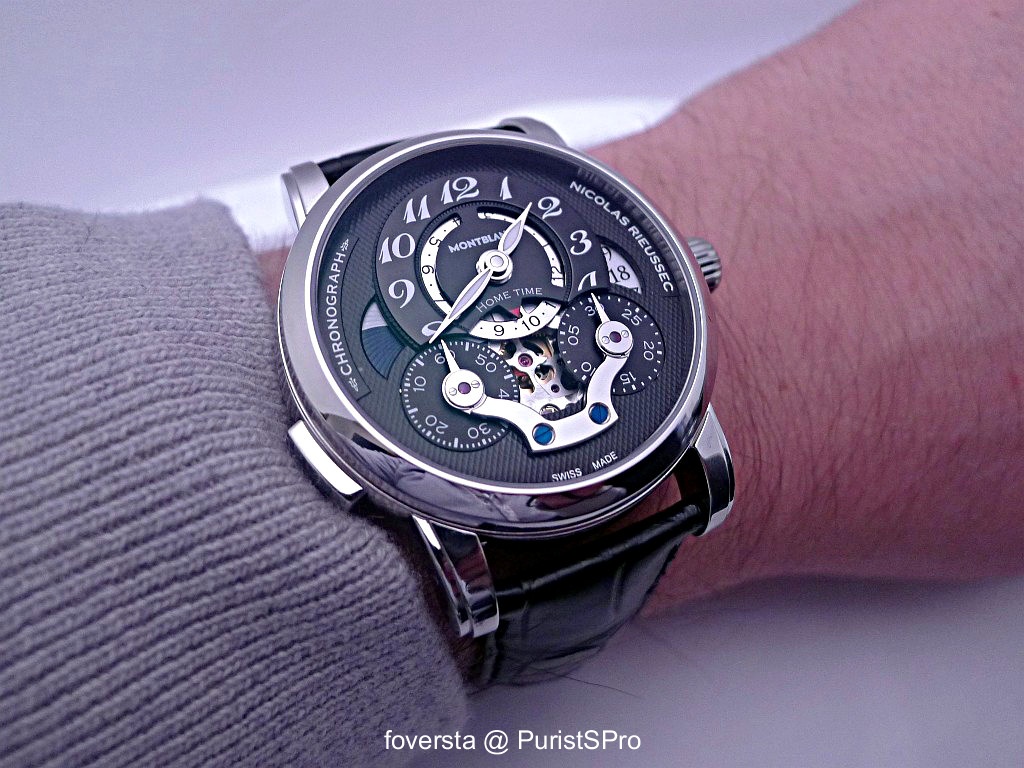
Case diameter is
43mm with a thickness of 15mm.
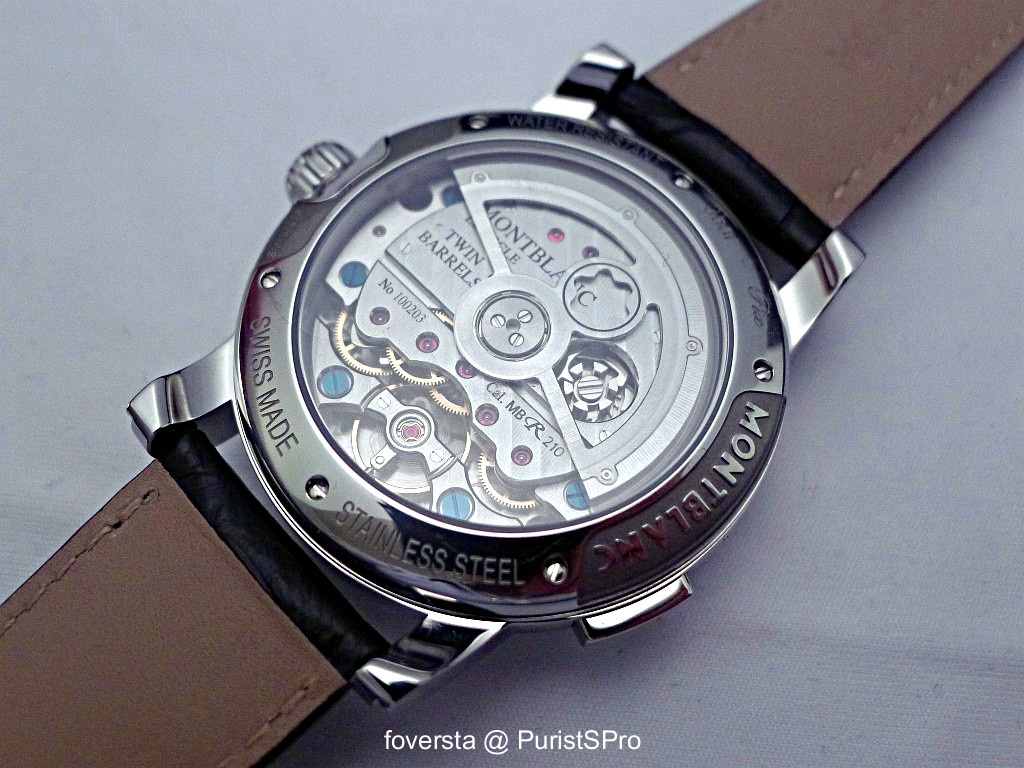
The movement is the MB
R210 with a power reserve of 72 hours and a 4hz frequency. The
monopusher is located at 8 o'clock which is always surprising the first
time.
It is a well-made watch but I don't understand what the
dial openings bring here. The dial is already too busy for this kind of
approach and I don't think it is a timeless style.
Anyway, on
an overall basis, this Rieussec is a well-done
watch.
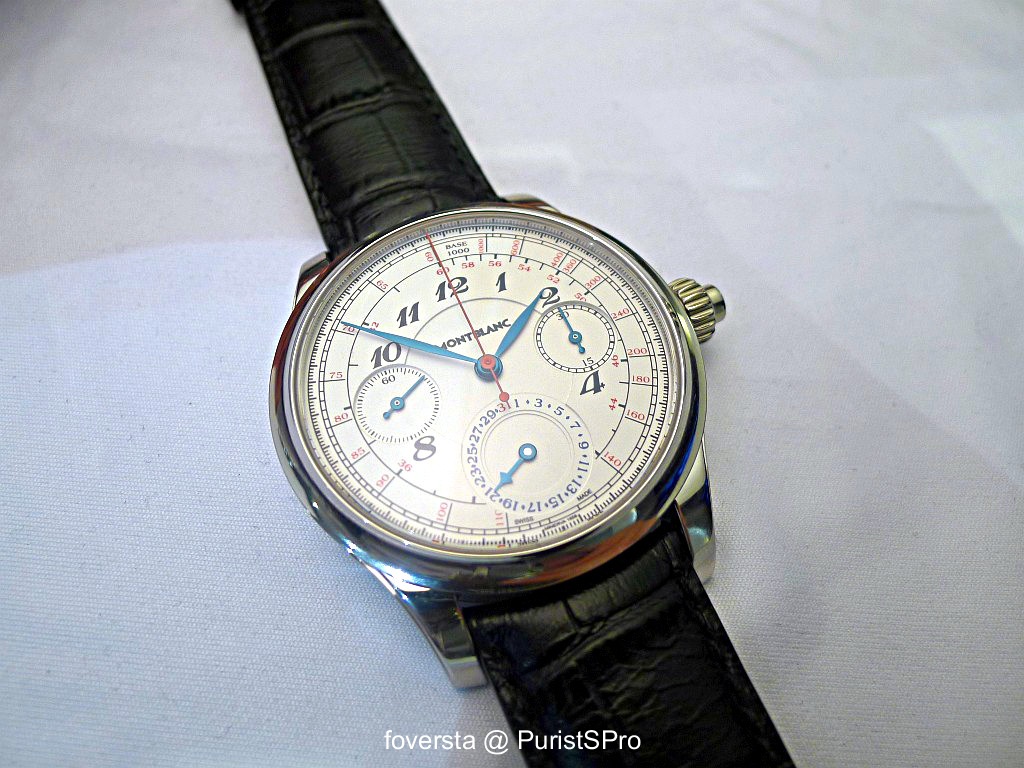
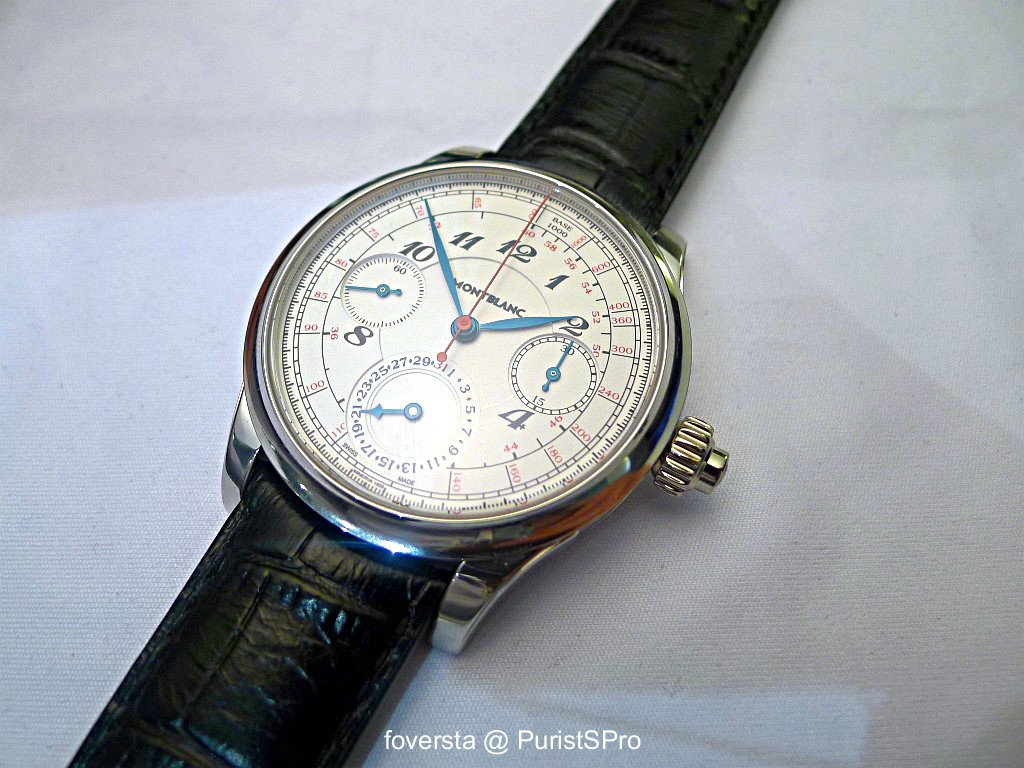
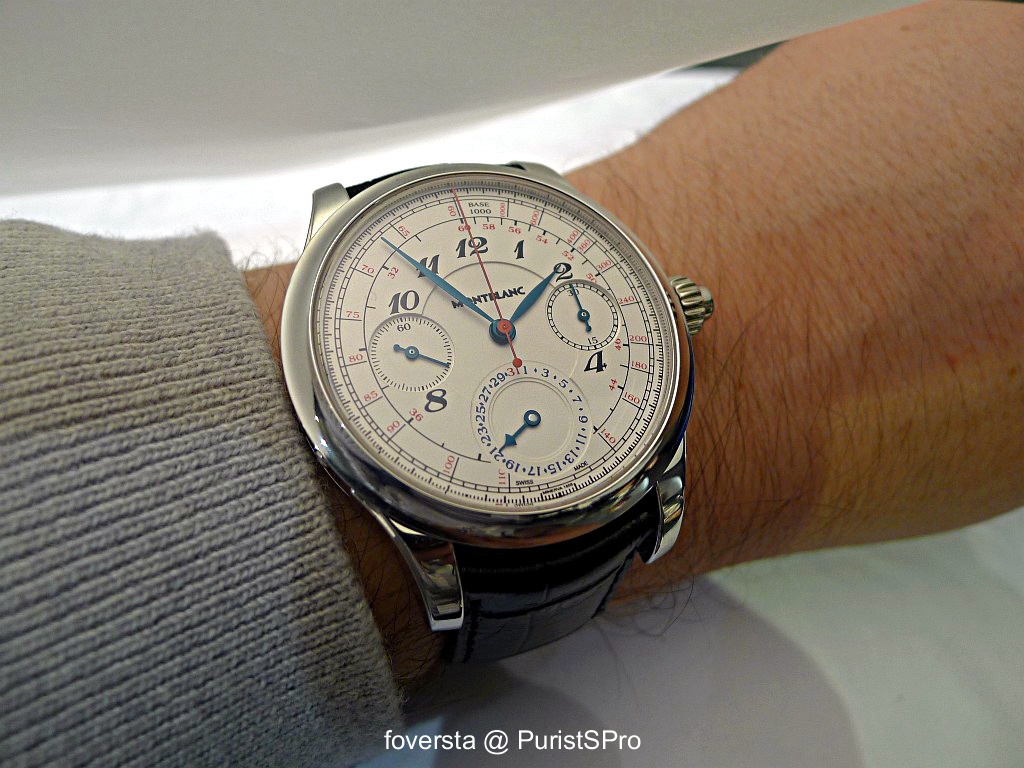
E) Vintage Tachydate
Let's go
to the Villeret collection now.
I have to confess
that I don't like chronographs with date display except when date is a
part of the design like the Datograph. So I was a bit worried when I
knew that Montblanc would unveiled a chronograph with date. It was for
me a relief: the way the Villeret did it is well made even I still
prefer the original chronograph without date, its elegance, its balanced
dial.
The date display adds a sort of technical
feeling to the dial and the shape of the date hand creates a good
contrast when compared with the other ones. The double scale tachymeter
is gorgeous too and fills the dial without being too present. A great
designer achievement.
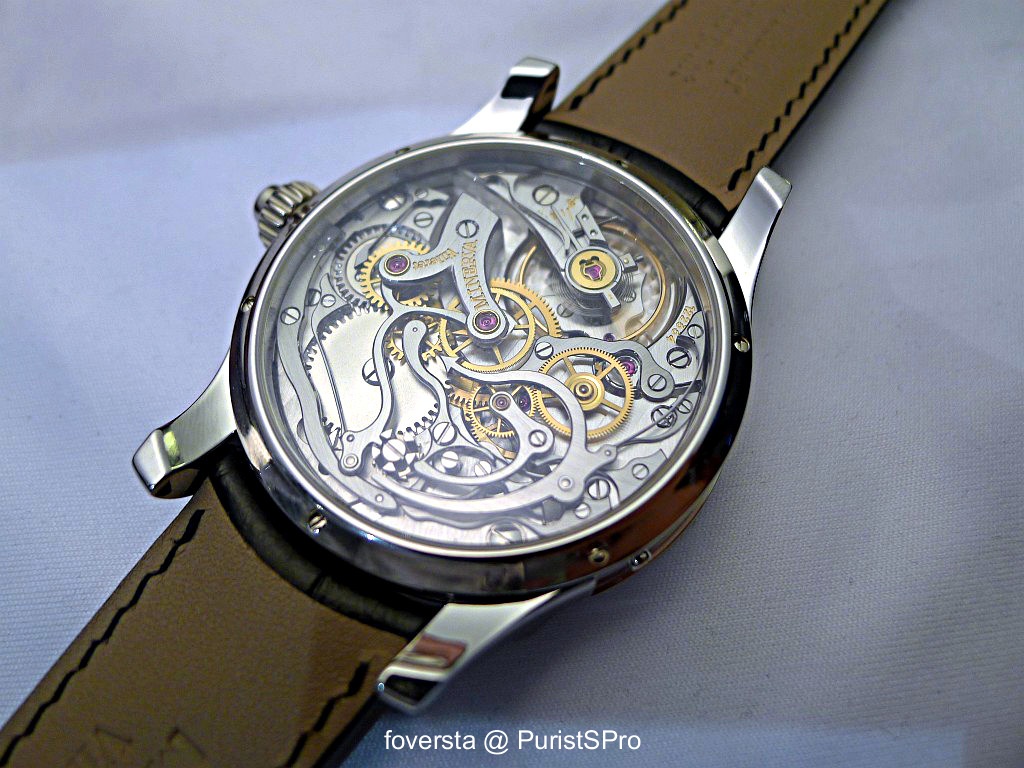
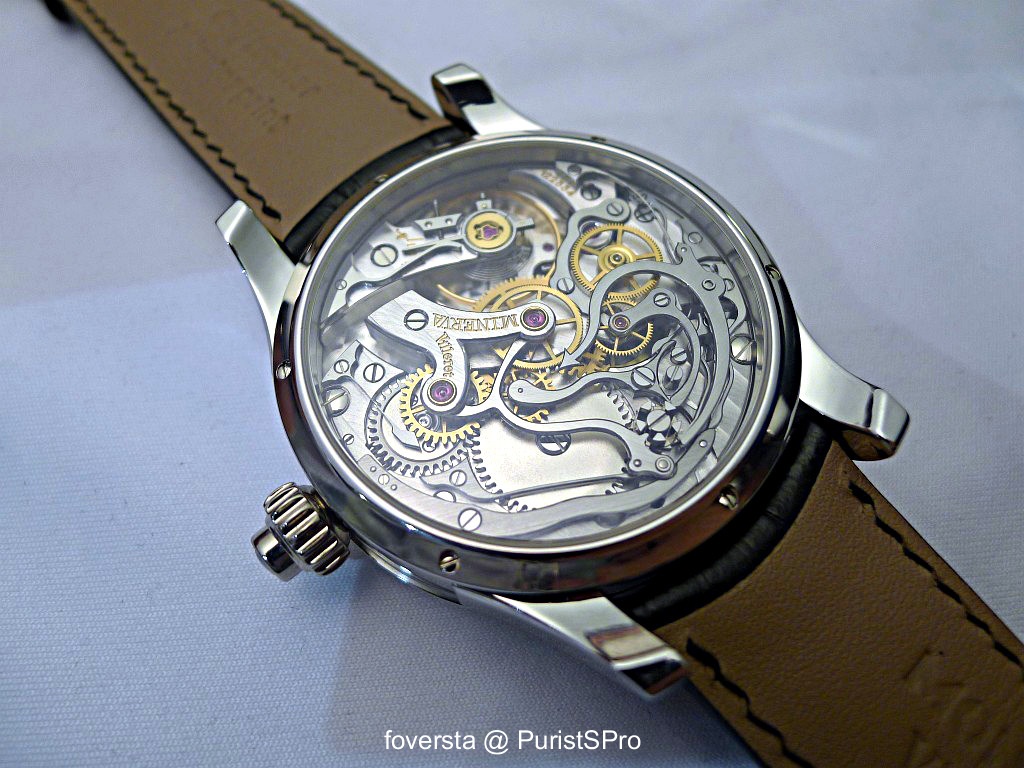
Monopusher movement MB M16.32
is gorgeous as expected... I am a true fan of this kind of movement,
very large (38,3mm) with a low frequency (2,5hz) and a big balance wheel
(14,3mm!). When you look at it, you have the feeling to observe these
big engines from the past.
The Vintage Tachydate is a
superb watch... on its both sides. It is available in red or white
gold.
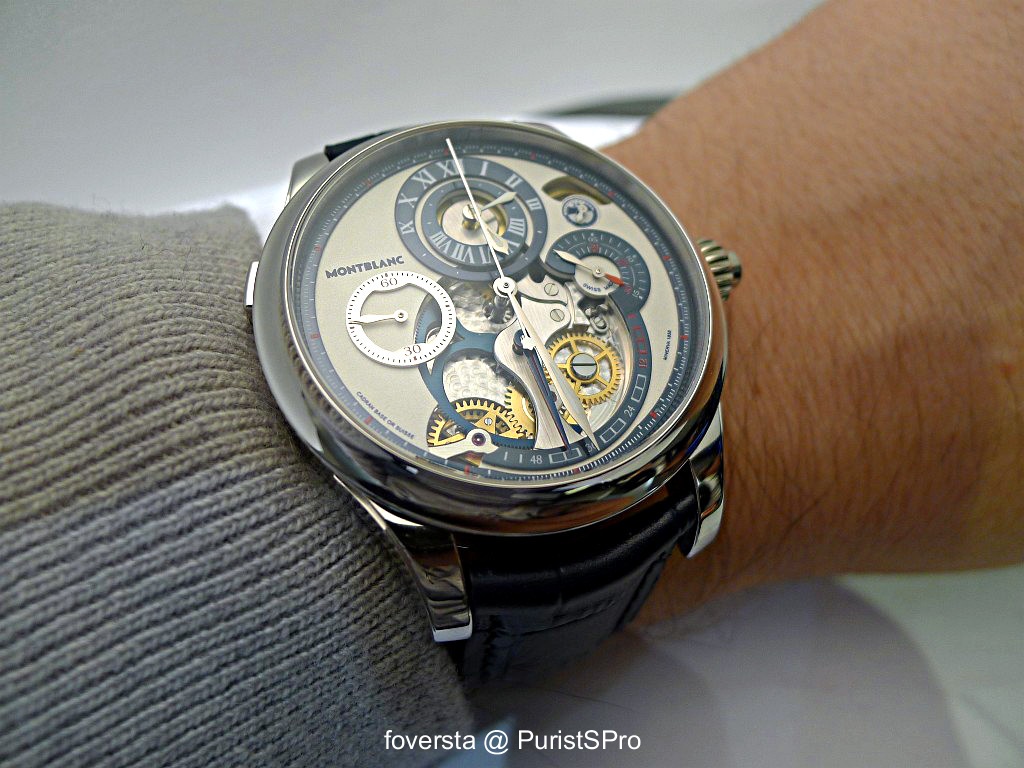
F) Chronographe Régulateur
Nautique
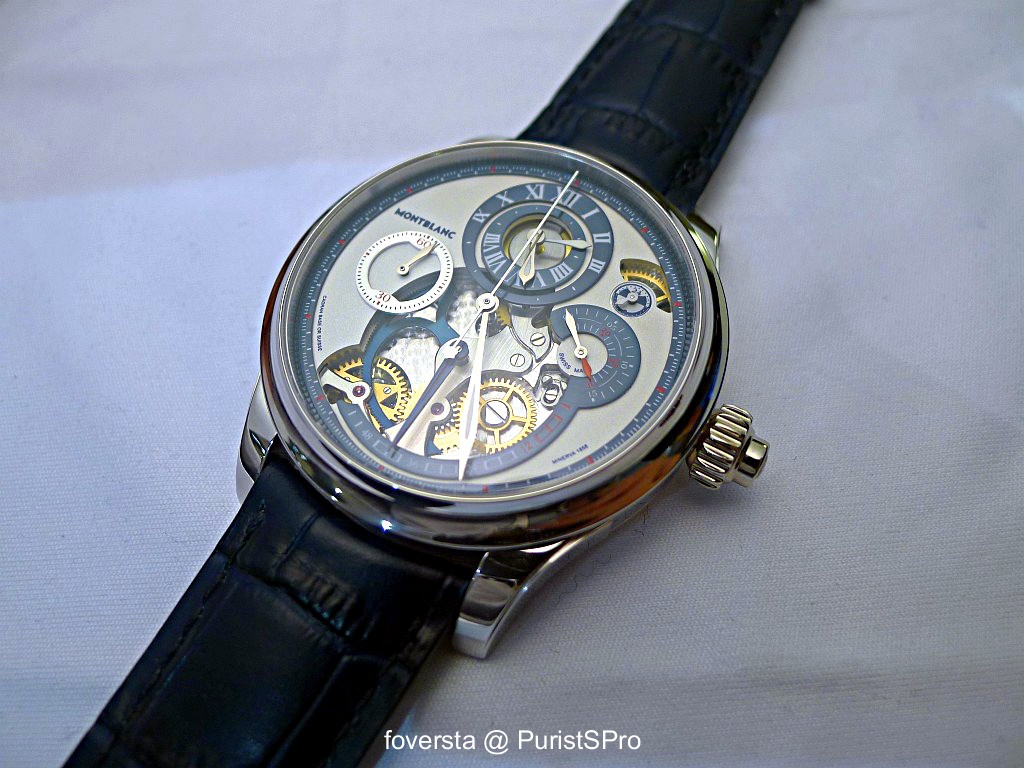
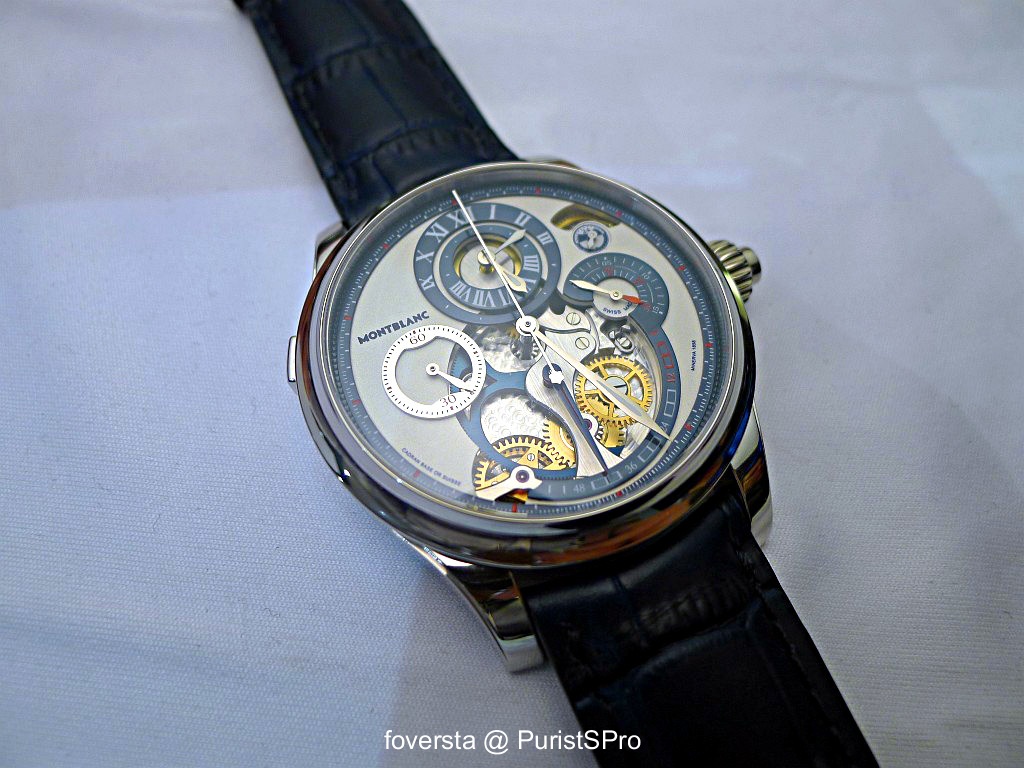
Let's take again the
chronograph & second timezone display combo, we add
complications like the combined power reserve/winding zone indicator: we
get the impressive Régulateur Nautique.
The most
difficult point in my point of view is the gathering on the same subdial
of the two hours hands: local and home times. It confuses me quite
often because I tend to read the top subdial as a classic hours/minutes
display. You have to understand that I don't like regulators even if the
Villeret team did a strong technical work with this
one.
I would like to do a similar comment than with
the Rieussec: the dial openings bring confusion in a quite busy initial
context. It is a pity because some details and functions were nicely
created like the power reserve/winding zone indicator. The funny point
is that it is the less useful function (the permanent second hand) which
is the easiest to read.
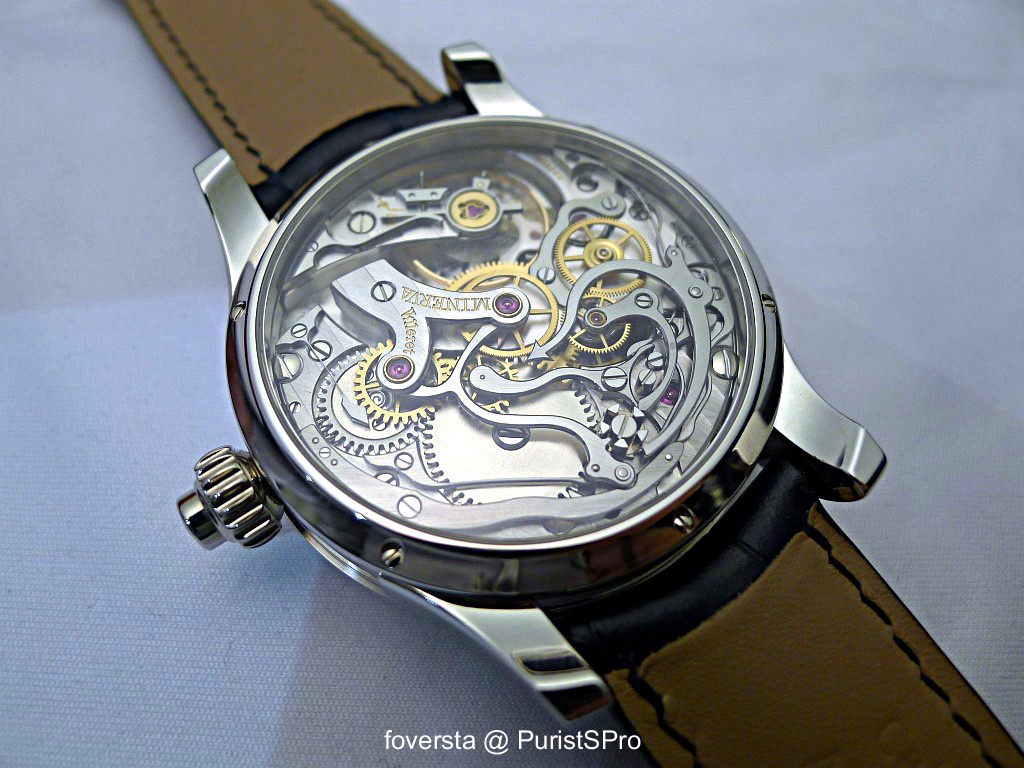
Movement MB M16.30 is, once
again, stunning and fills totally the cases even when they are very
large: this is something I love with Villeret
watches.
The Régulateur Nautique, thanks to its
unusual dial lay-out and the blue scales and rings is a very original
watch in a classic context.
G) Time Writer II
Bi-Fréquence
The name of this superlative watch may
sound complicated but at least it clearly explains what's going
on.
The Time Writer II was one of the biggest
surprises at the SIHH. It belongs to the category of the watches which
explore the territory of high frequencies but to do so, the Villeret
team stayed within the limits of the classic art of watchmaking. It is
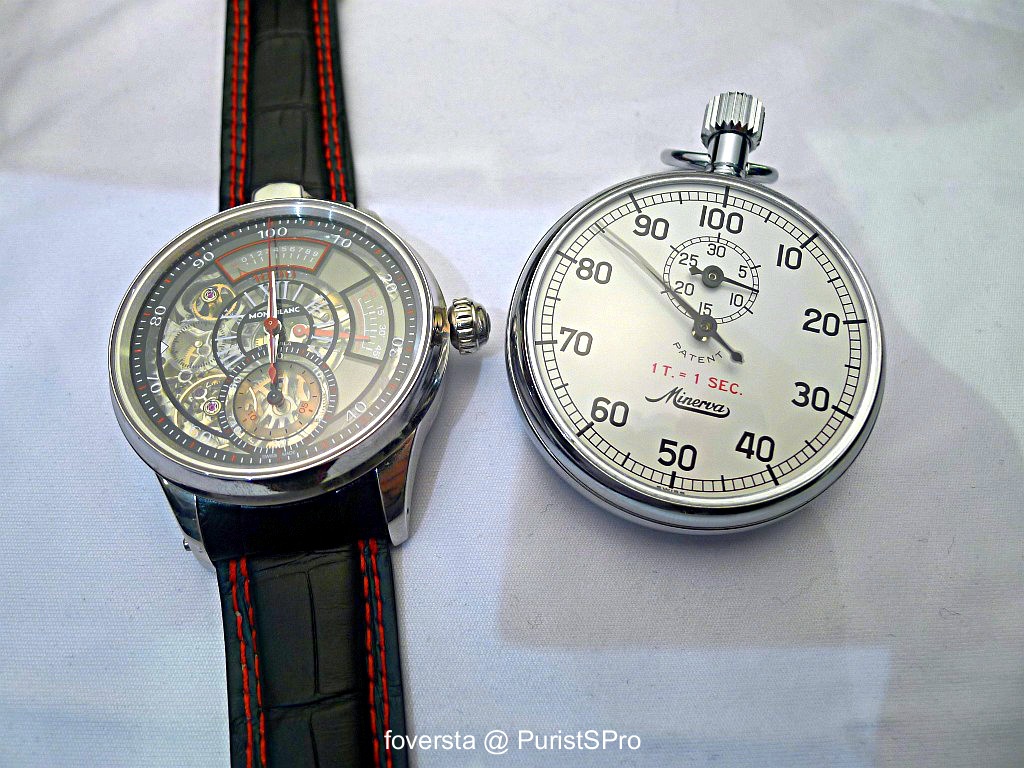
something I highly respect. The inspiration of this watch was found in
an old Minerva pocket chronograph which gave the ability to measure the
1/100th of second.
The Minerva pocket
watch and its central hand which does a full revolution per
second:
The Time Writter II is
based on the concept of two regulator organs. One dedicated to the time
display with a frequency of 2,5hz. One dedicated to the chronograph
which raises the frequency of 50 hz!
The Time Writer
II comes from Bartomeu Gomila's mind, a young spanish watchmaker who was
graduated at WOSTEP.
I had the chance to handle the
prototype of this watch while Bartomeu Gomila was explaining me its main
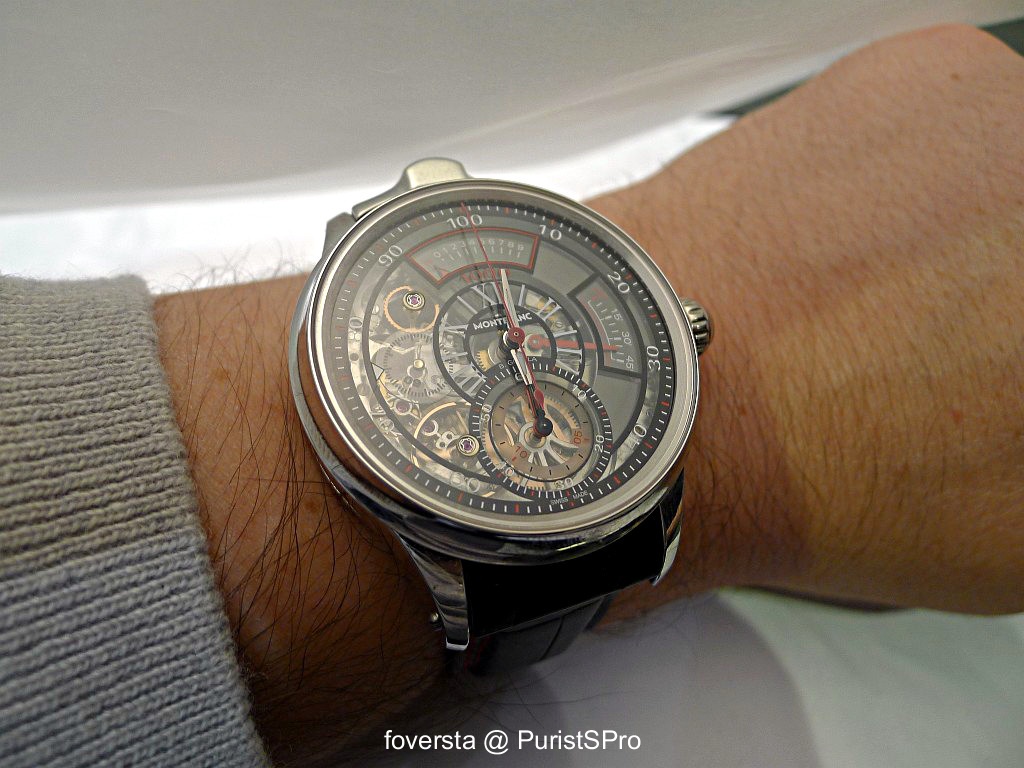
features. First of all, the watch is big (diameter of 47mm) which can
be easily understood due to the presence of the two regulating organs.
Chronograph pusher is located on top of the case, between the lugs. When
you press it, thanks to the see-through dial, you can see the huge
difference of speed between the two balance
wheels.
The
Time Writer II at work:
When you stop the
chronograph, the tiny hand of the upper window moves and stops to
display the 1/1000th of second!
Question is: how a
50hz watch is able to display a measured time with a 1/1000th of second
scale? Honestly, we find ourselves in the same situation than with the
Centigraphe. Anyway, I was really impressed by the behaviour of the
chronograph.
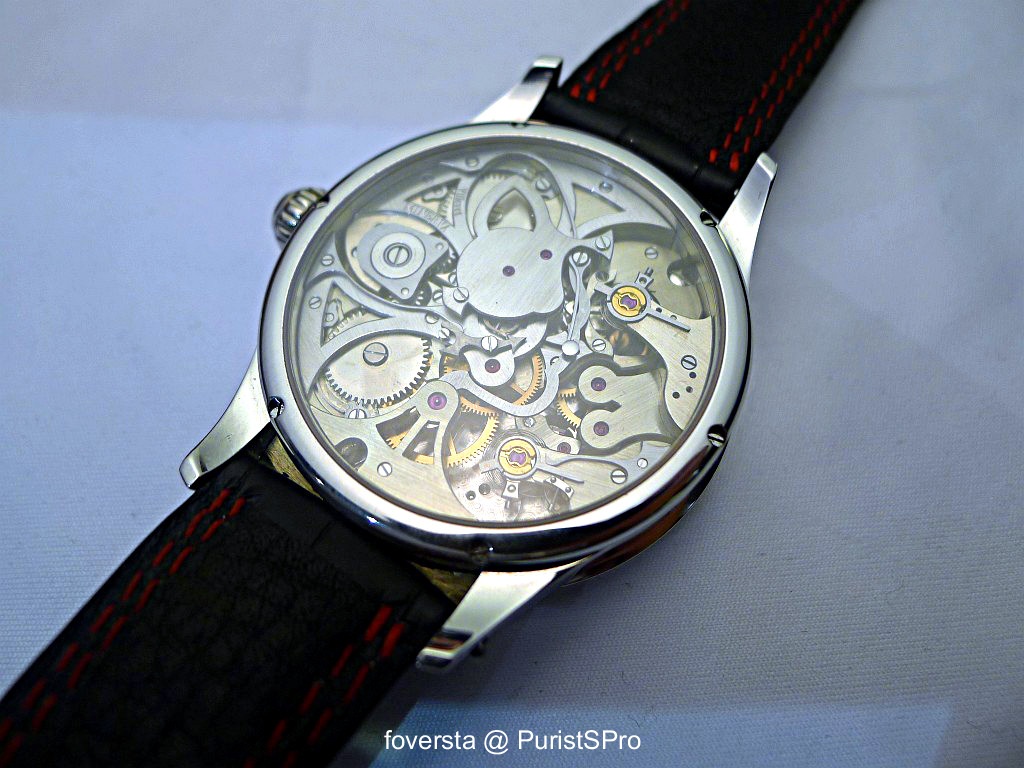
The Time Writer II prototype was not
finished, all the mechanism dedicated to the time display was not put in
place. The movement was not finished either, so please consider that
its picture is published just to give you an idea of its architecture
and not of the final result.
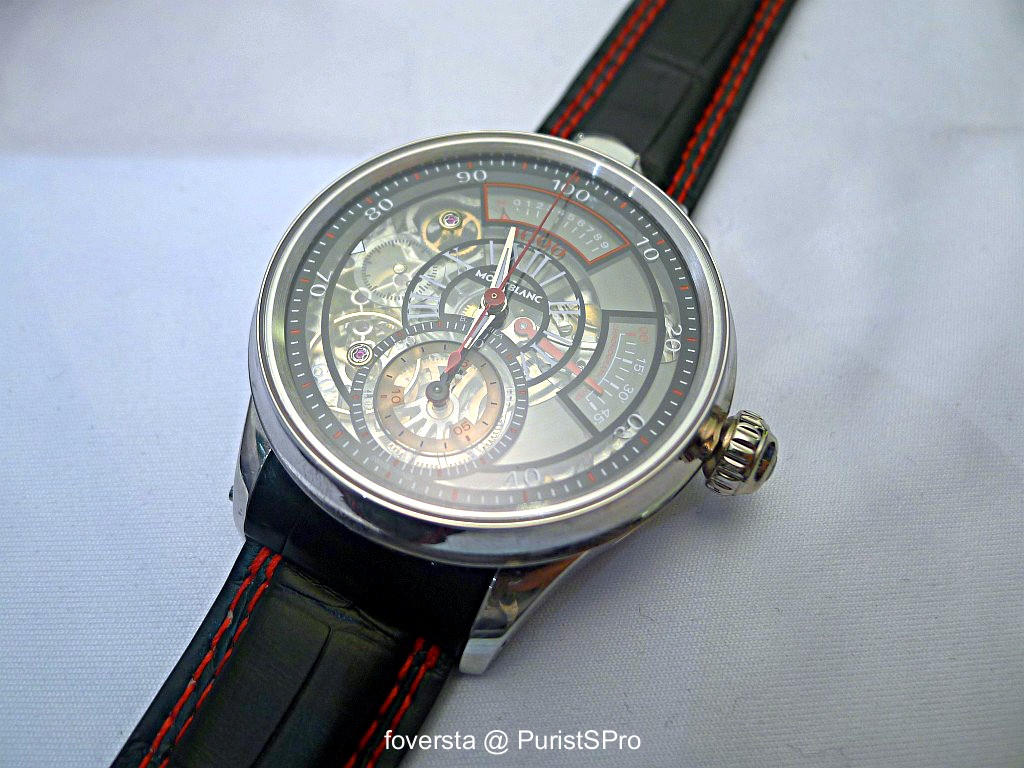
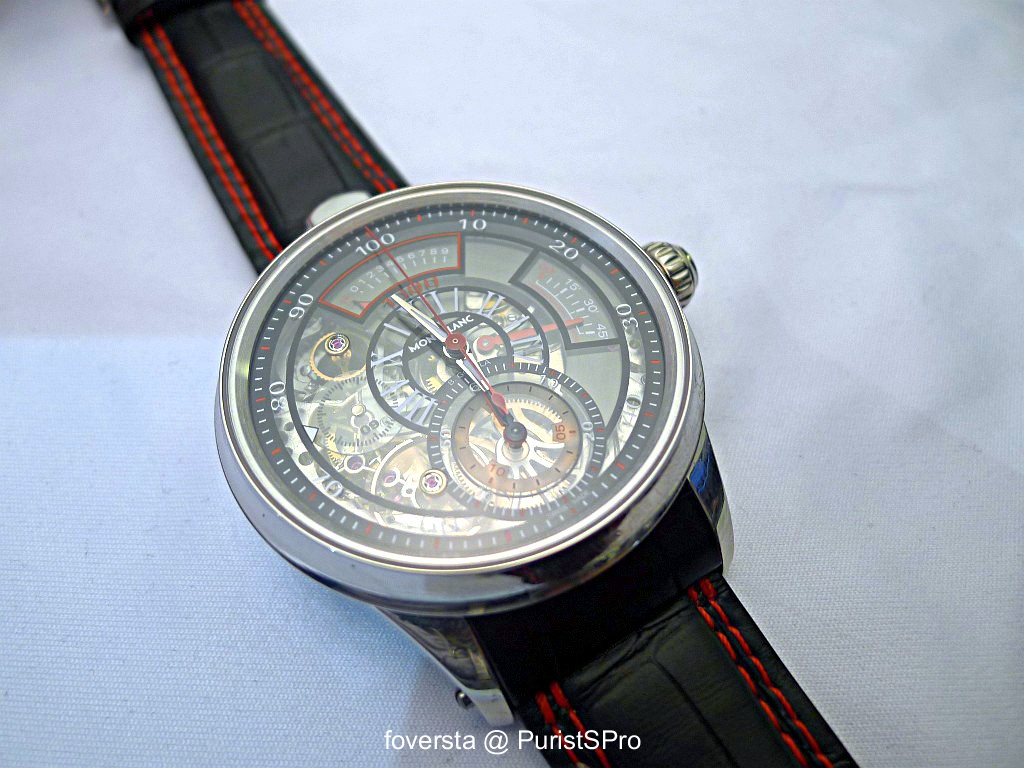
The movement is far from being finished
but the chronograph function was
working:
The Time Writer II and the pocket watch which inspired
it:
As you can see it, from the Star Classic
Automatic to the Time Writer II, Montblanc presented us a wide range of
novelties with some very convincing ones. The second timezone display is
the key complication of the year and it is a trend we can observe with
other brands.
I would like to thank a lot the
Montblanc team for the warm welcome during the
SIHH.
Fr.Xavier