
Marcus Hanke
[PuristSPro Moderator]
11295

Baselworld 2013: Chopard
Chopard at Baselworld 2013
presented by Marcus Hanke
presented by Marcus Hanke
Fifty years ago, in 1963, Karl Scheufele III acquired the jewellery and watch manufacturer Chopard. To celebrate this anniversary, Chopard will present several novelties at a special event later this year. This is why the presentation at the Basel fair was somewhat limited, with only a few new watches. Of those, I was shown only the gentlemen’s timepieces.
Since years, my Baselworld visits at the Chopard booth are always characterised by lack of space and time, which is of course more than compensated by the friendliness of Chopard’s staff. My problem is that this year, I dispensed with using my small light tent and decided to take my pictures very quickly “au nature” instead; a bad decision, as I noticed only when checking the pictures on the computer screen. Therefore, I apologise for the lousy quality of the pictures, and promise better ones for the next year.
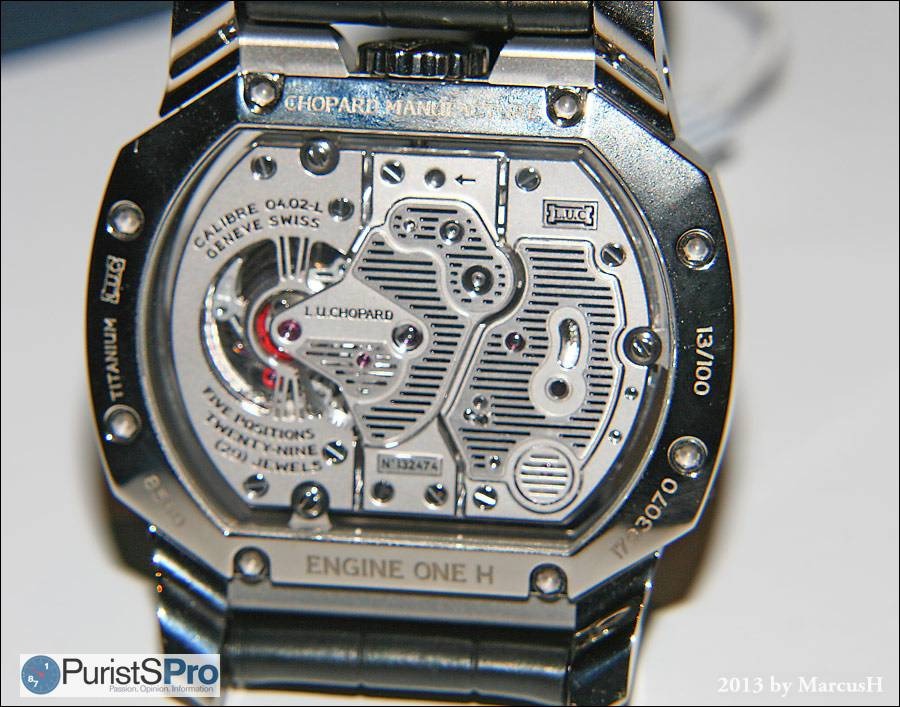
The first watch I was shown is the Engine One Tourbillon. Oha, this name appears familiar to me, and, lo and behold! an “Engine One” had been presented already two years ago, in 2011. A quick comparison immediately reveals a substantial change: the whole movement has been rotated by 90 degrees, so the indications of the power reserve and the tourbillon are now at 9 and 3, instead of 12 and 6. The crown is a bit hidden, between the lugs at 12.
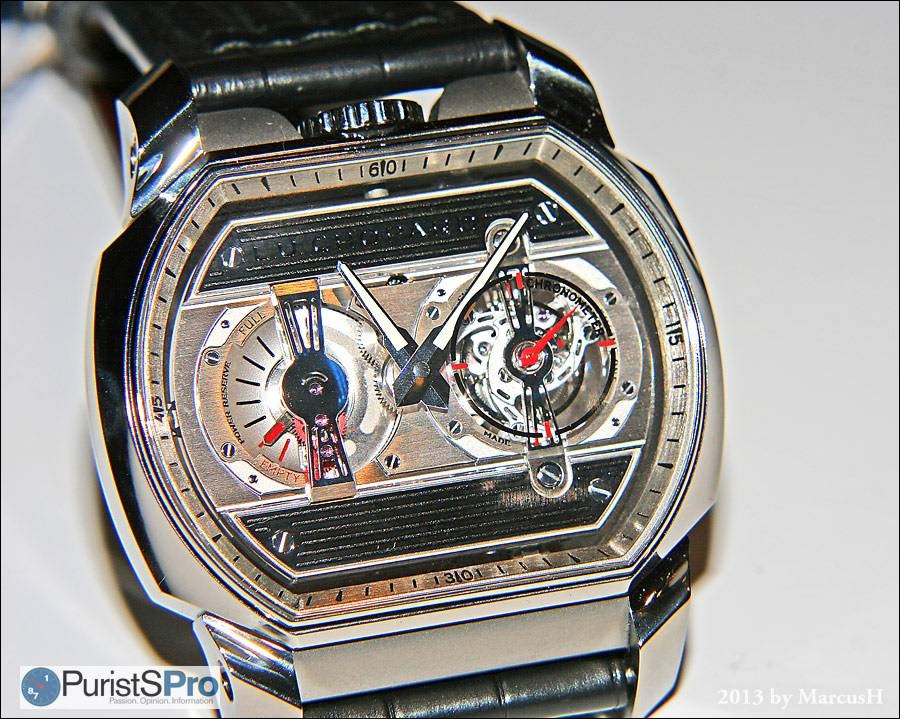
For comparison, here is the 2011 version:

Additionally, the case has been slightly redesigned and the markers formerly printed onto the crystal have been deleted. Altogether, the new version better expresses the characteristics of a car engine, and I think it is the slightly better Engine One, but apparently not yet an Engine Two, otherwise Chopard would have chosen the latter designation. I know some people favouring the original layout (coincidentally owners of this version), and others preferring the new one (coincidentally contemplating buying one).
Chopard’s tight connection with the motorsports is well-known since many years already, with the Mille Miglia watches being the most iconic results. A new chapter is started with the launch of the new Superfast collection, though. These three watches are not only new designs, but are also unique by being all equipped with movements produced in Chopard’s new facility at Fleurier.
Generally, the Superfast watches leave me a bit clueless: I mean, how much car racing can a small and luxurious brand like Chopard support? Since literally dozens of watch brands are eagerly pressing into the connection with the prestigious field of motorsports, isn’t there the danger that Chopard’s true tradition gets lost in a maze of speedometer-type displays, Allen screws, cylinder head designs? And what about the Mille Miglia series? Since decades the Mille Miglia watches are an introduction into the world of Chopard, due to their unique design, but more so due to their attractive prices, resulting from the use of ETA movements. However, back then the Chopard L.U.C. movements were so expensive because of their hand finish and the Geneva seal. Now, with the industrially produced Fleurier movements, a less costly, yet also in-house alternative can be offered. Consequently, I would not be astonished to see the Mille Miglia series being merged with the Superfast in the future.
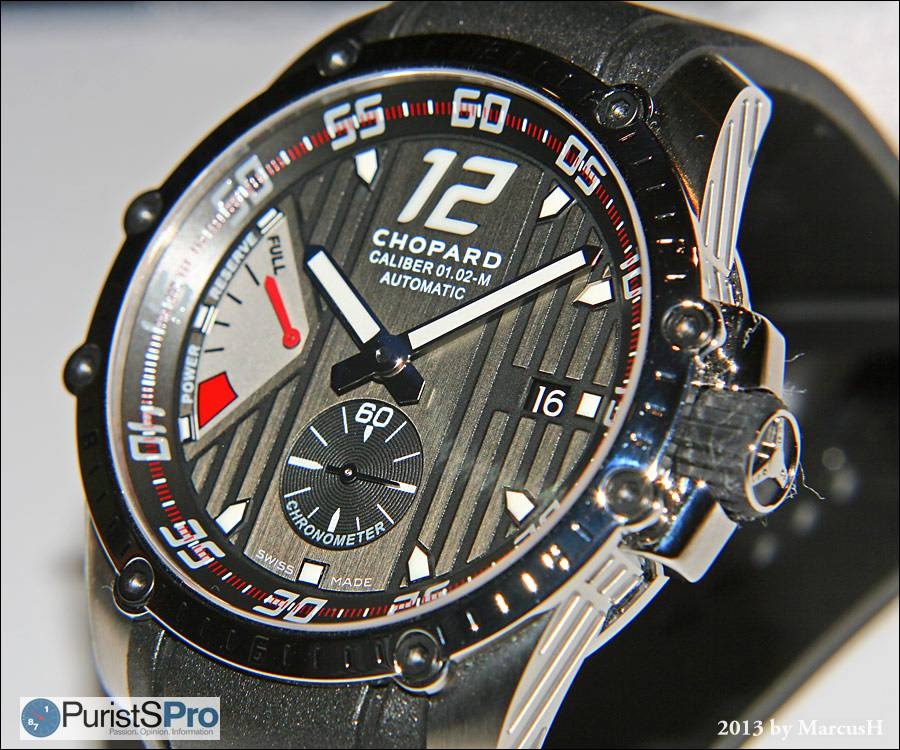
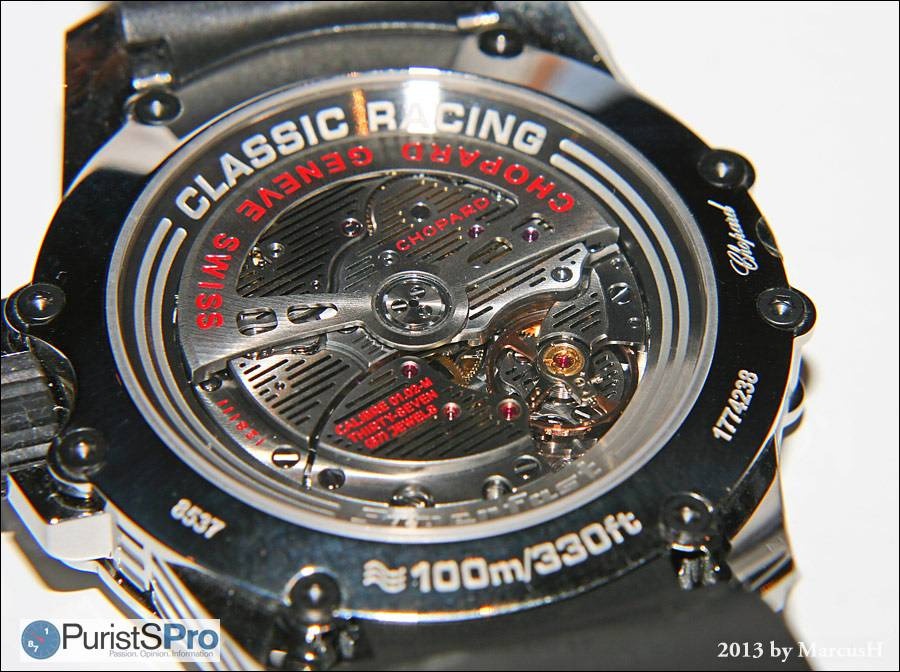
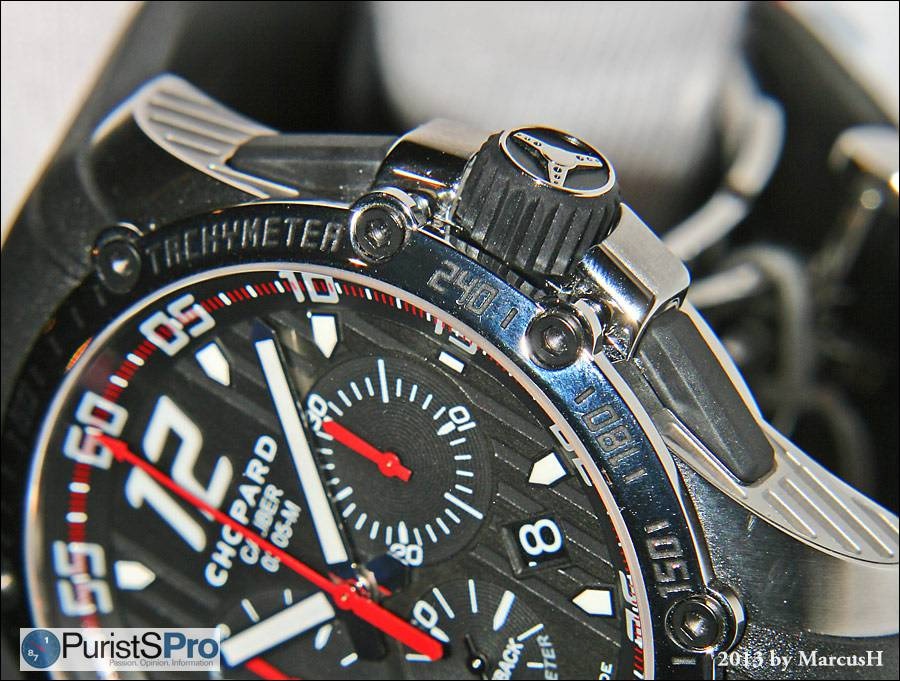
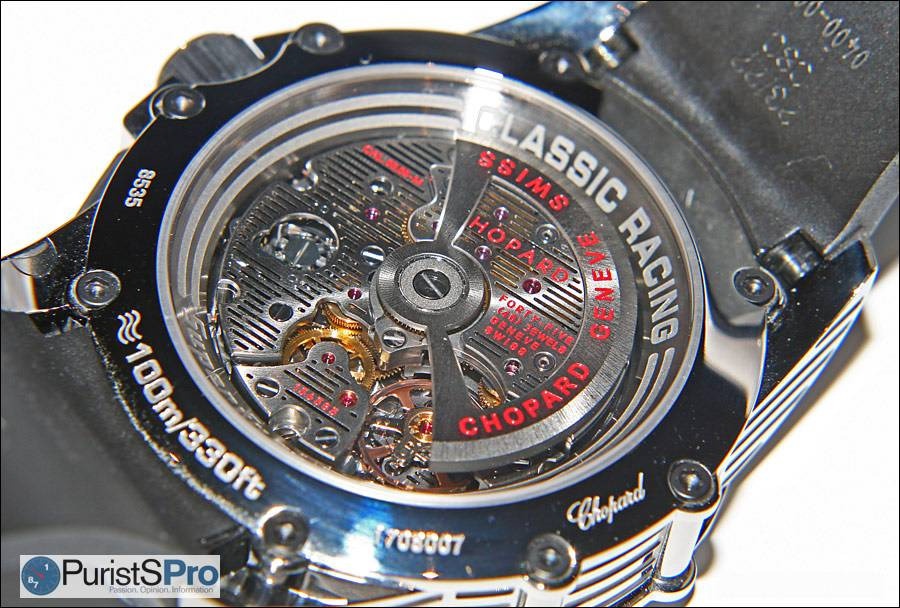
But let me present the new watches to you: We start with the Superfast Automatic, a 41mm diameter watch with date at 6, powered by the self-winding Chopard Calibre 01.01-M with 60 hours of power reserve. Typical for the entire Superfast series is the bold design, consisting of black dials with embossed vertical stripes on the dial, speedy-looking numerals on the dial and rehaut, and especially the horizontal “cooling vent” lines milled into the movement bridges, which permit a - rather obstructed, though - view into the innards of the movements. These lines are also hinted on the case sides. With the Allen screw heads on the bezel, however, the racing theme has been overdone, in my opinion. Without them, the watches would look much better. Unlike Frankenstein’s monster, watches only rarely become more interesting by exaggerated screw heads on their bodies.
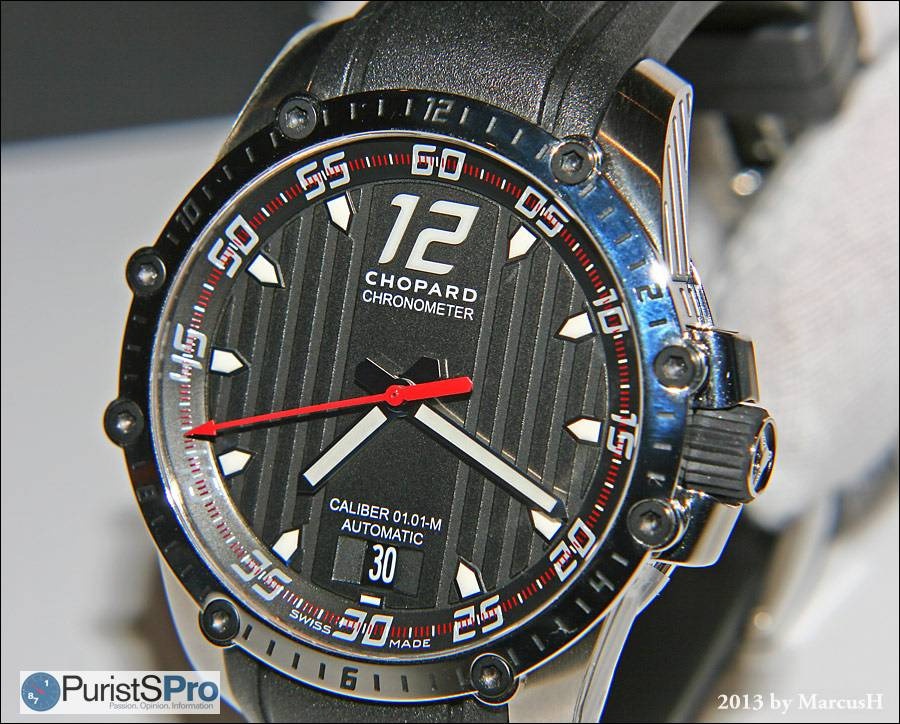
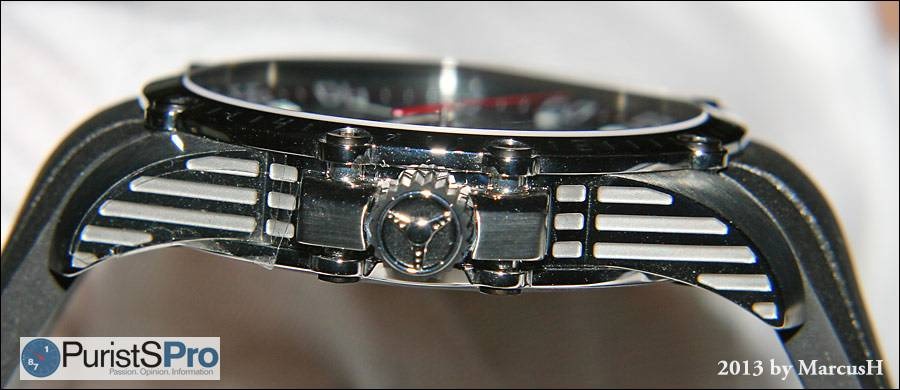
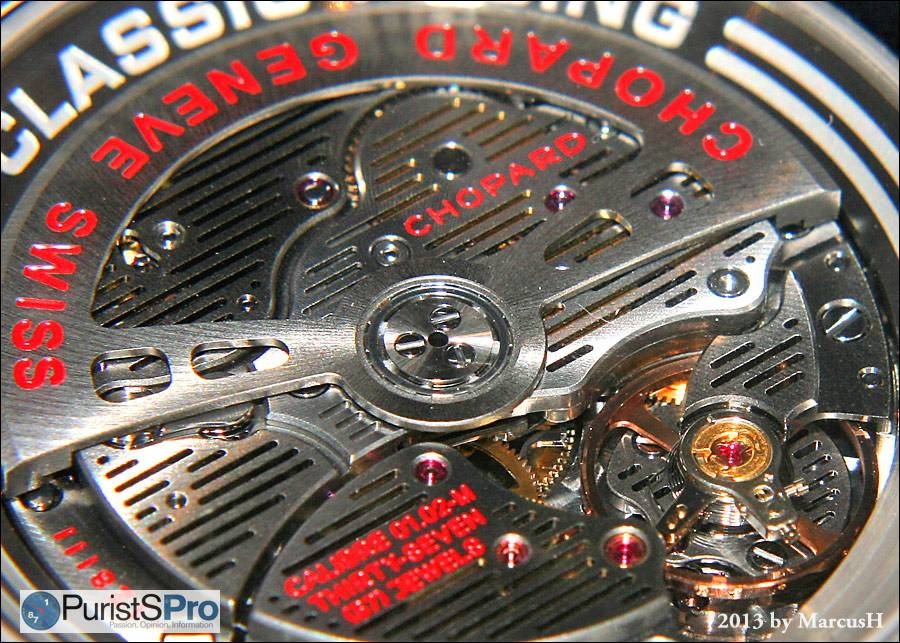
The next Superfast timepiece is the substantially larger (45mm) Superfast Power Control, adding a power reserve indication at 9 to the date window, which has been relocated to 3. The movement is the cal. 01.02-M.
Technically most interesting member of the family is without doubt the massive Superfast Chrono (45mm), featuring the self-winding chronograph cal. 03.05-M movement.
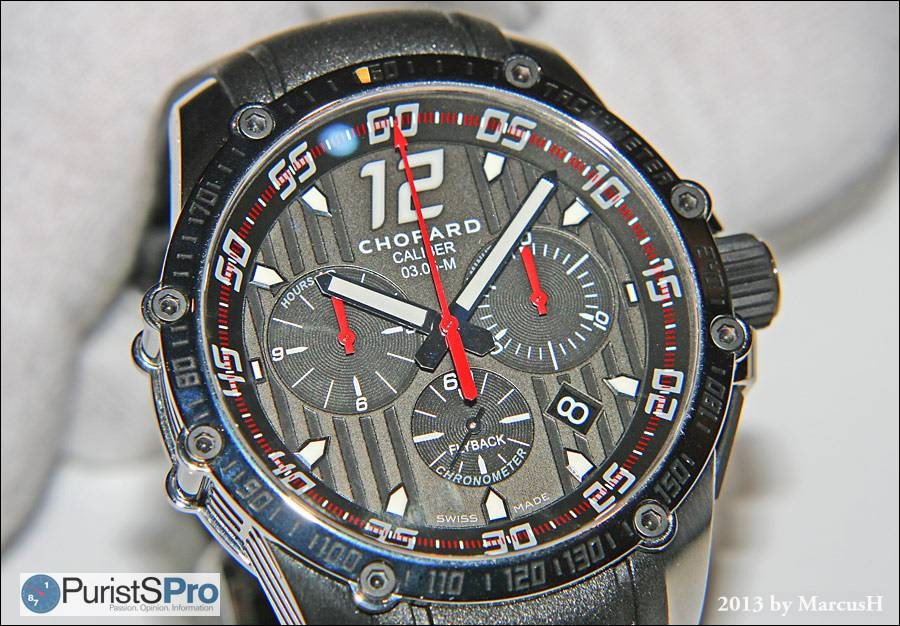
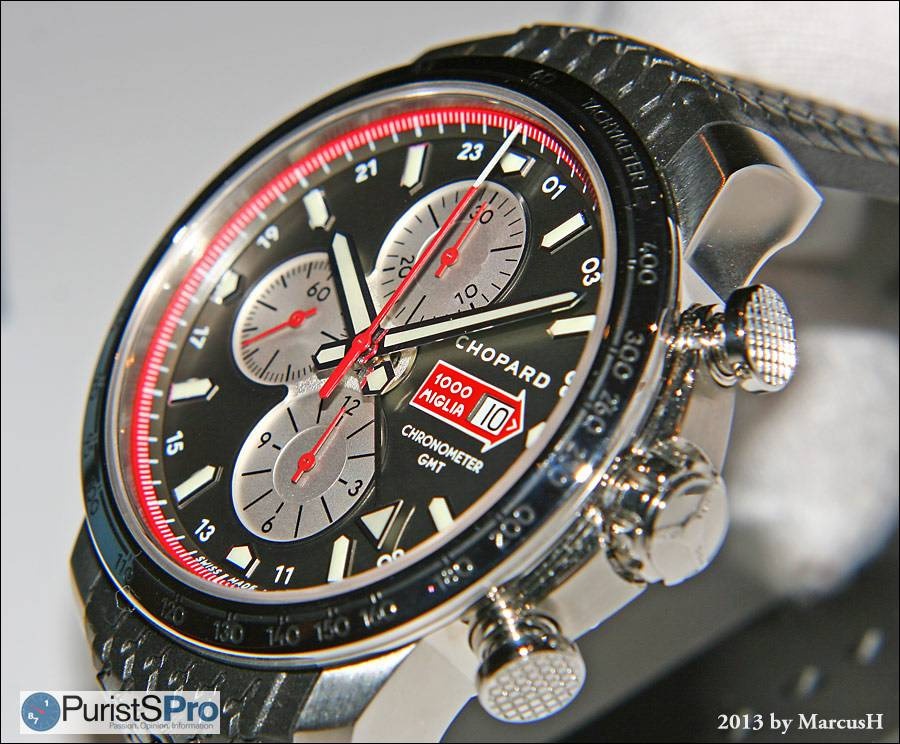
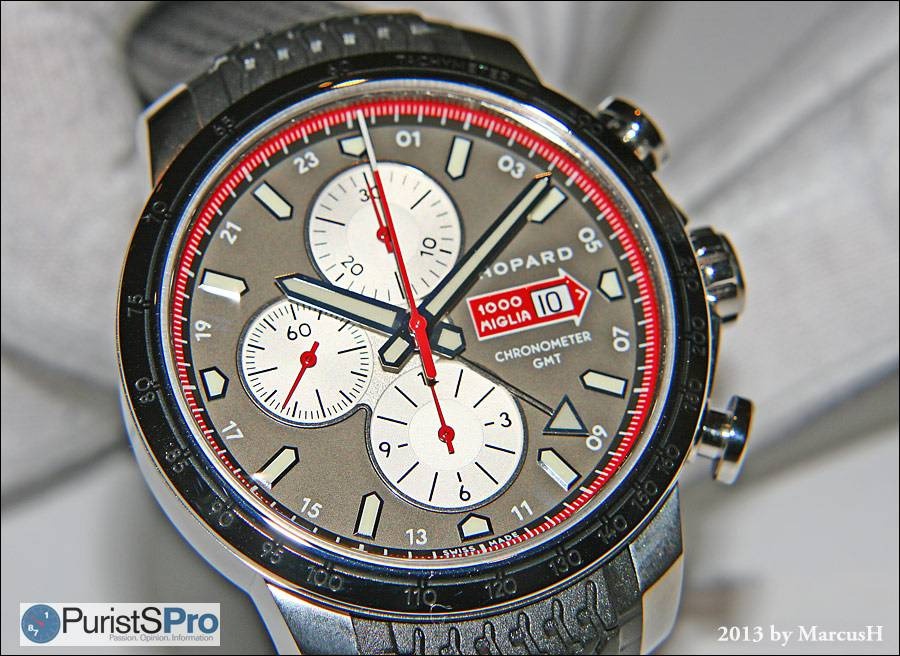
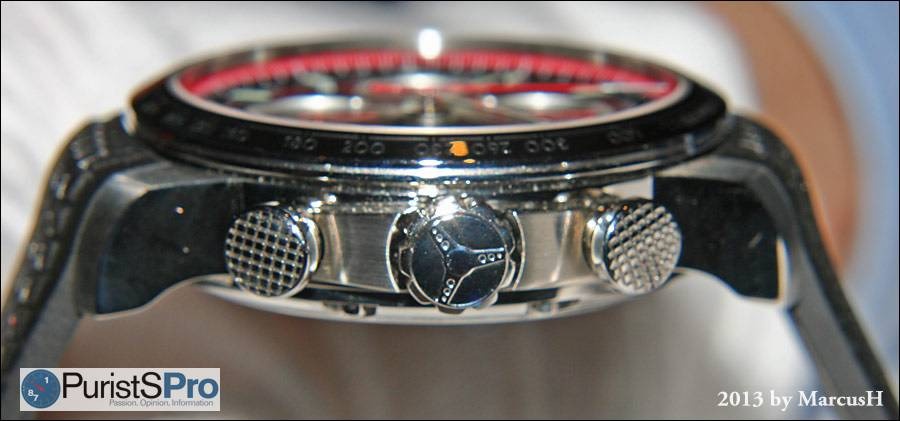
As already hinted, there is a new Mille Miglia chronograph, equipped with the ETA/Valjoux 7754 with a second time zone (24 hours hand). Over the last years, I was not entirely happy with the design development of the Mille Miglia series. They had increasingly moved towards where the Superfast series is now: every design element became big and bold, with oversized numerals and dial printing. This most recent chronograph, however, marks a return to the older Mille Miglia watches, with more classical outlines. It is still a large watch, but a simple trick makes it more comfortable to wear on the wrist: While the bezel has a diameter of 44mm, the case itself is less than 43mm wide. I consider it highly attractive.
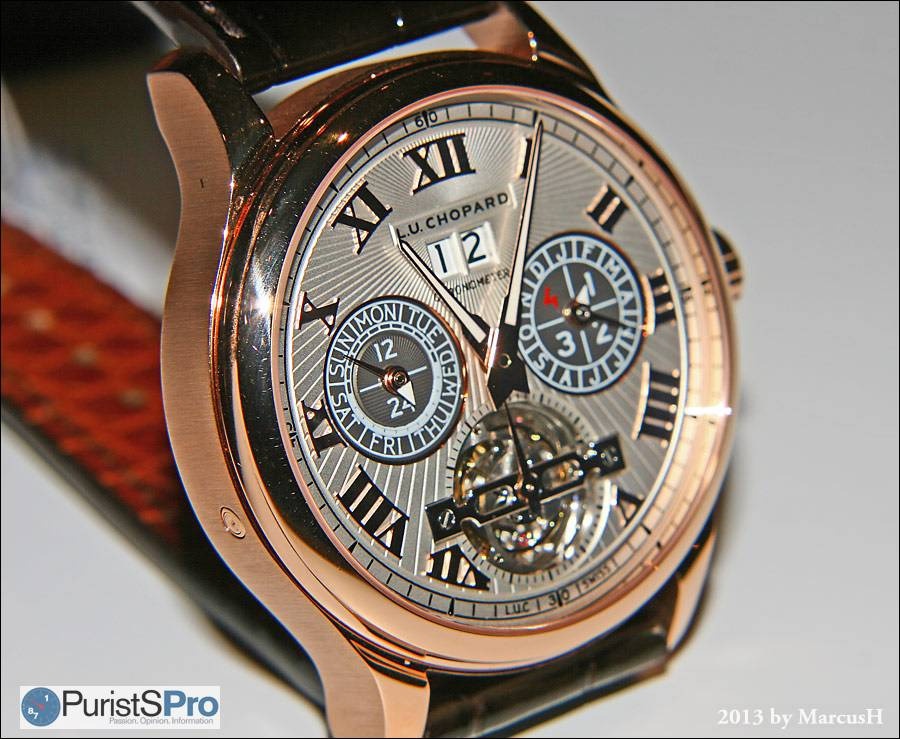
Last, but not least, Chopard’s horological highlight of this year’s Baselworld is the L.U.C. Perpetual Tourbillon. At first sight, it looks like the exact twin of the famous L.U.C. 150, the “All in one”, launched in 2010. When turning the watch around, though, one notices the missing astronomical indications and instead enjoys a great view on the meticulously finished manual winding cal. 02.15-L movement.
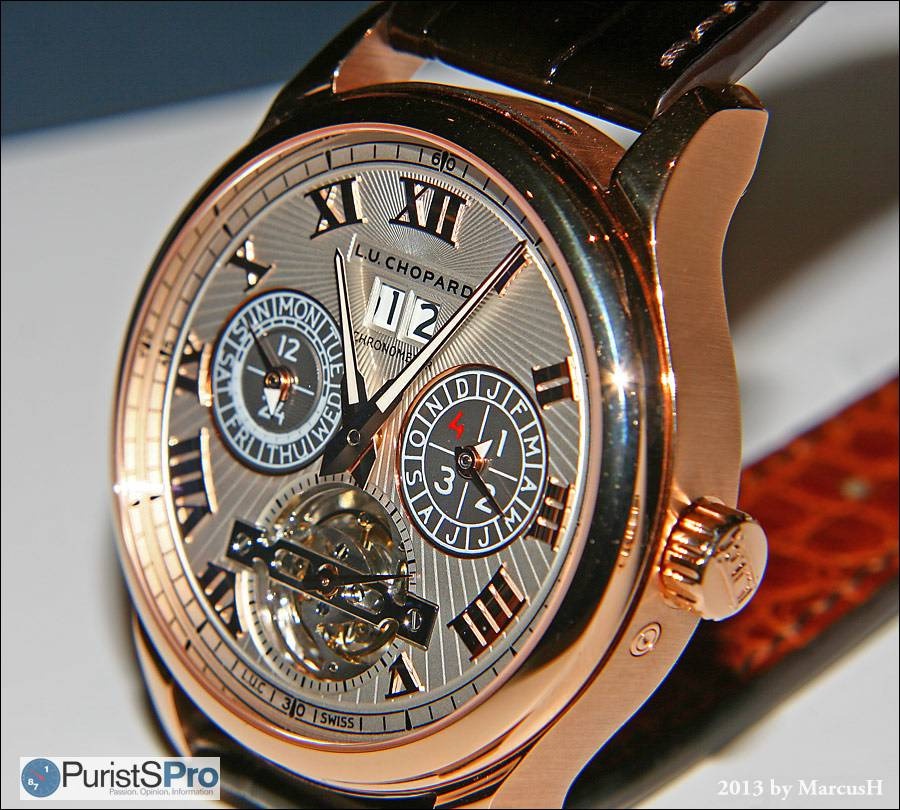
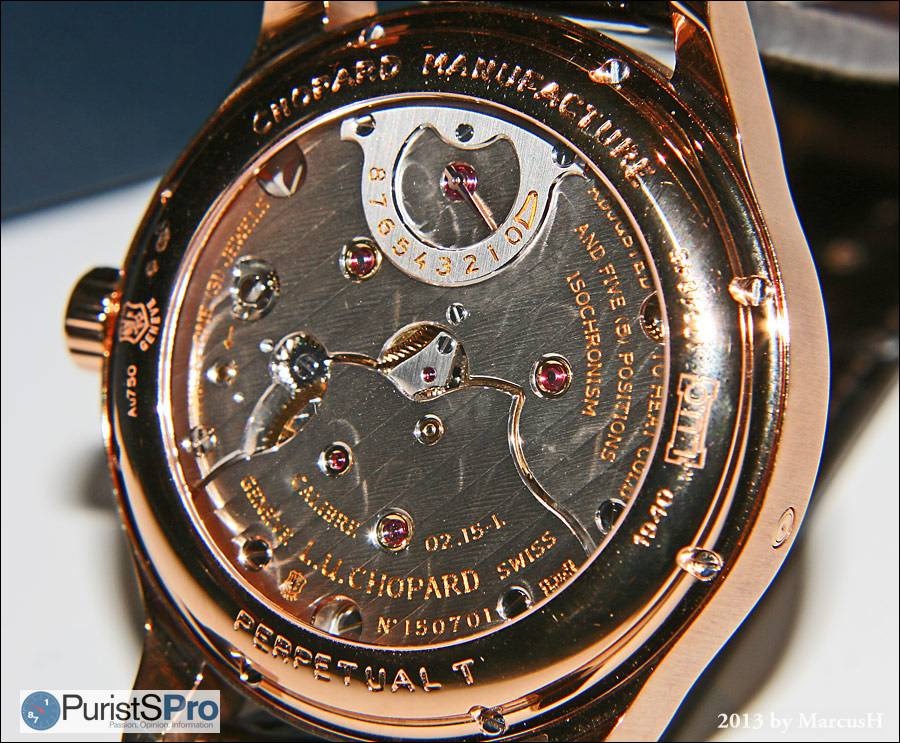
Its four mainspring barrels permit a long power reserve of nine days. As is typical for the perpetual calendars of Chopard, the dial is very legible, mostly due to the large date at 12. The weekday indication could be improved, though, since the abbreviations of the days are so large that they nearly meet each other, so there is no clear distinction. One should not forget that most people able and wanting to pay the price for such a marvel normally have problems reading small details at close distances.
The most notable change from the 150’s dial, however, is the use of luminous material on the uniquely shaped hands, which adds a great plus to the everyday wearing comfort.
The L.U.C. Perpetual T deserves acclaim. Some fifteen years ago, the presentation of such a watch would have been celebrated as absolute highlight of the whole fair. Unfortunately, the watch world has been spoilt by the fact that modern production technologies have reduced the formerly master discipline of horology, the tourbillon, to a mere CNC programming issue. The resulting inflation of the market with tourbillons, often bearing brand names that had never been noticed before (and not infrequently never been seen again), has all but ruined the tourbillon’s prestige. That it is still very difficult to apply a truly perfect finish to the tourbillon components, and more so, to adjust the system to a daily rate permitting it to pass the COSC chronometer tests, is now often overlooked. Chopard’s tourbillons belong to the finest ones ever made in series, and together with its perpetual calendar, that also is one of the best available, this watch is justifiably a highlight of the fair.
Here is a video I shot from some of the novelties:
This message has been edited by Marcus Hanke on 2013-07-07 06:33:02