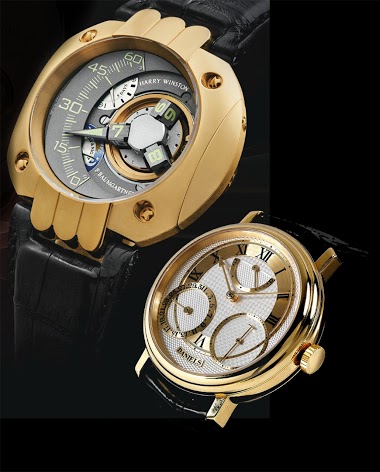
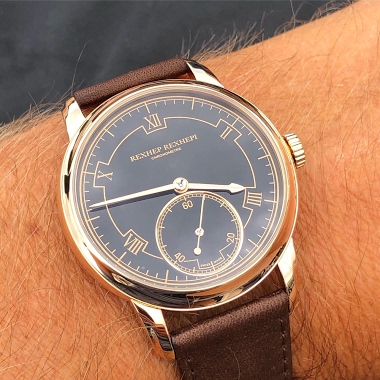
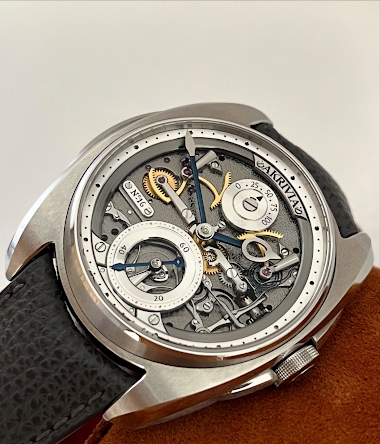
Ichiran's latest post delves into a fascinating horological niche: the visible keyless works. This often-hidden mechanism, crucial for winding and setting a watch, is celebrated by Ichiran as a pinnacle of aesthetic and mechanical integration. His personal collection showcases how master watchmakers transform this functional component into a captivating display of artistry, inviting fellow collectors to appreciate this intricate detail.

When you say "visible keyless works mechanism" what does that mean?
but appreciate your comments. Early pocket watches used a separate key to wind the mainspring to set the time. Modern watches use a system of gears and levers that allows the user to wind the watch and set the time using the crown (the knob on the side) without needing a separate key [from Google haha]. π
it requires strong will power. π Some amazing pieces... Thanks for sharing, Michael.
Cyril Brivet-Naudot's Eccentricity Pic from SJX
It's only 2 at the moment but I'm working hard to bump it up π
I was just thinking the other day, looking at pictures of a Roger Smith like your first one, that the keyless works are the final frontier of mechanical watch aesthetics. What I mean is, the keyless works is harder to make beautiful than the plates, bridges, gears, balance wheel, etc. So even as there has been more and more exposing of movements, and thus more and more concern with the aesthetic aspects of those movement parts, the keyless works are usually still hidden. Only a watchmaker truly
This thread is active on the Horological Meandering forum with 22 replies. Share your knowledge with fellow collectors.
Join the Discussion →