Reference Guide
Patrick_y, a respected voice in the WatchProSite community, offers an exclusive look inside Bulgari's Le Sentier manufacture, the heart of their high-end movement production. This second installment of his factory tour series provides invaluable insights into the craftsmanship behind the Bulgari Octo Finissimo Automatic, a timepiece he champions as a top contender in its price segment. His detailed account, enriched by personal observations and technical discussions, illuminates the dedication Bulgari has invested in haute horology.




I truly believe the Bulgari Octo Finissimo Automatic Timepiece is tone of the best timepieces in existence today and my top pick for anyone considering a watch around 10,000 Euros. It has got a sporty modernity with a classic look that will stand the test of time. The design is inspired by a 1970s Genta design, sporty, with an integrated bracelet, but now fitted with an elegant slim movement. In Part I we explored the factory in Saignelégier, where the dials and cases were painstakingly crafted. In Part II, I will show you the sights at Le Sentier where the movements are made in the original Gerald Genta & Daniel Roth manufactory which has been further expanded by Bulgari. Bulgari creates all of the high-end movements here in Le Sentier.
Here is a link to Part I:
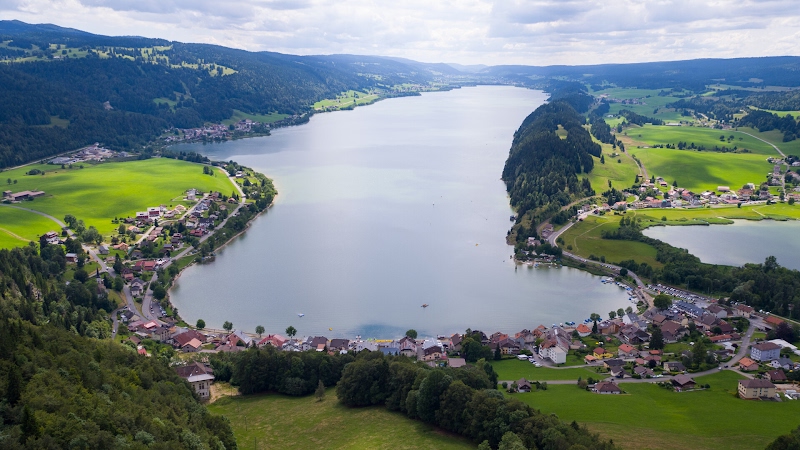
The Vallée de Joux a serene and peaceful place, where watchmakers assemble watches in the countryside, far away from the bustle of the city. I have personally eaten fish from this very lake. Delicious! Photo Credit; Vallée De Joux 360 Commerce Website.
A SENSE OF PLACE
Le Sentier is located in the Vallée de Joux which is a powerhouse in the Swiss Watch industry; just about every high-end brand has a presence here (Vacheron Constantin and Patek Philippe both have offices here). The Vallée de Joux is also sometimes referred to as the cradle of Swiss Watchmaking - history suggests that a couple hundred years ago the brutal winters led many people to create clocks and watches to pass the time indoors. Some brands - like Jaeger-LeCoultre, Blancpain, Audemars Piguet, and many more have operations in the Vallée de Joux. The Vallée de Joux is a small valley with multiple villages within it - the villages that are most familiar to you are Le Sentier and Le Brassus - two adjacent villages. A small operation that goes by the name Philippe Dufour is also based in Le Sentier very close to Bulgari.
The Vallée is a peaceful and rural place where time slows and people are more relaxed. Bordering France, some watch company employees technically live in France and not Switzerland. Photo Credit: Vallée De Joux 360 Commerce website.
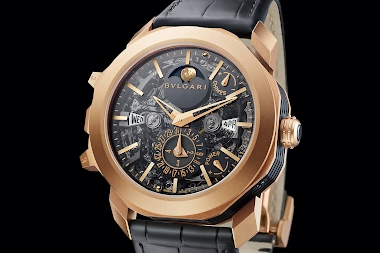
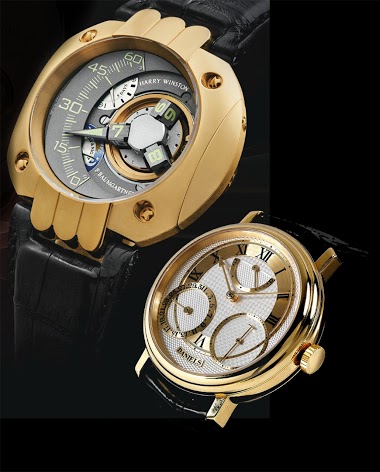
This is a Bulgari Octo Grand Sonnerie. Photo Credit: Bulgari
The Vallée de Joux is a significant 90 minute drive from Geneva in the Canton of Vaud. Since it is outside of the Canton of Geneva, none of the watches produced here can qualify for the Geneva Seal. Despite this, watches from the Vallée de Joux often represent the pinnacle of watchmaking in the world. The Bulgari factory in Le Sentier is where the "special" Bulgari movements are made; such as the ultra-slim calibers, perpetual calendars, tourbillons, two different minute repeater calibers, and three different calibers of Grand Sonneries - many with four gongs! A quick reminder: Bulgari has a total of three watch factories; in addition to the factory that produced cases, dials, and bracelets in Saignelégier which we explored in Part I, Bulgari has two movement factories; one for standard movements in Neuchatel and one for high horology movements in Le Sentier. Today we're exploring the Le Sentier factory.
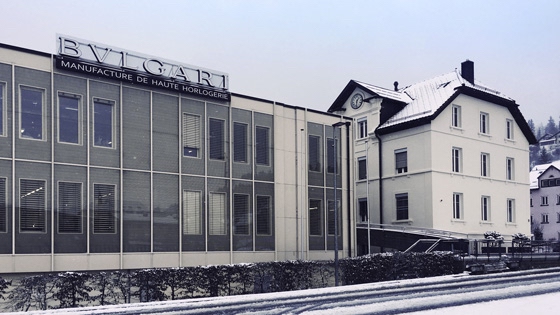
Photo by FHS. Shows both the new structure and the historic structure of the Bulgari Le Sentier factory.
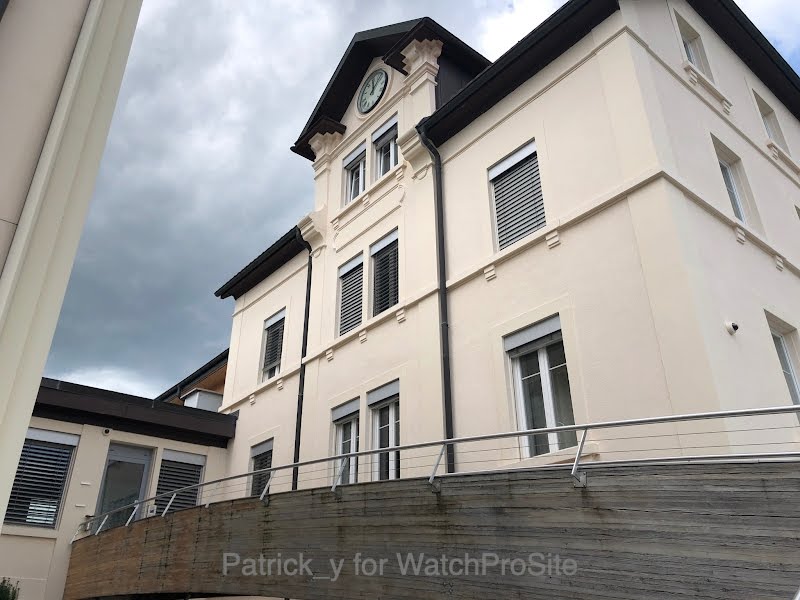
Bulgari and I welcome you! Let's enter the magical world of Bulgari's Le Sentier factory. This bridge brings you to the center of the factory - the centerpoint that connects the historic structure with the new modern structure. Photo by the author.
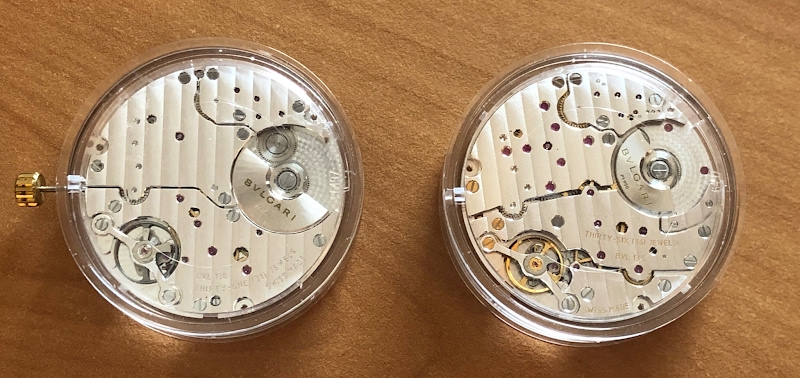
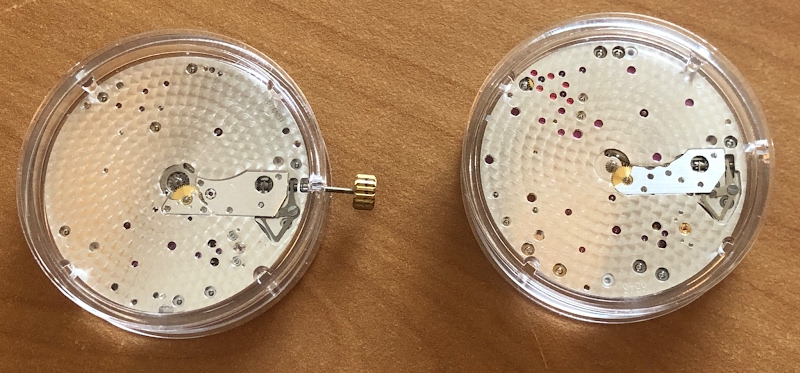
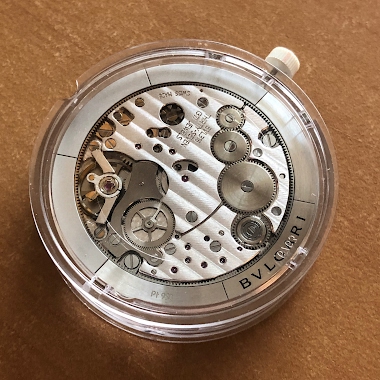
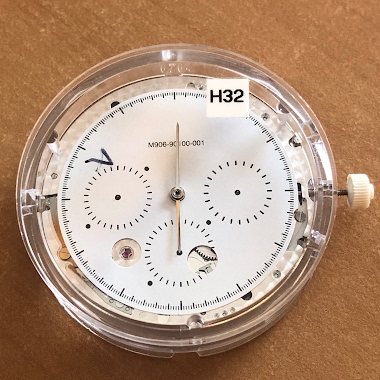
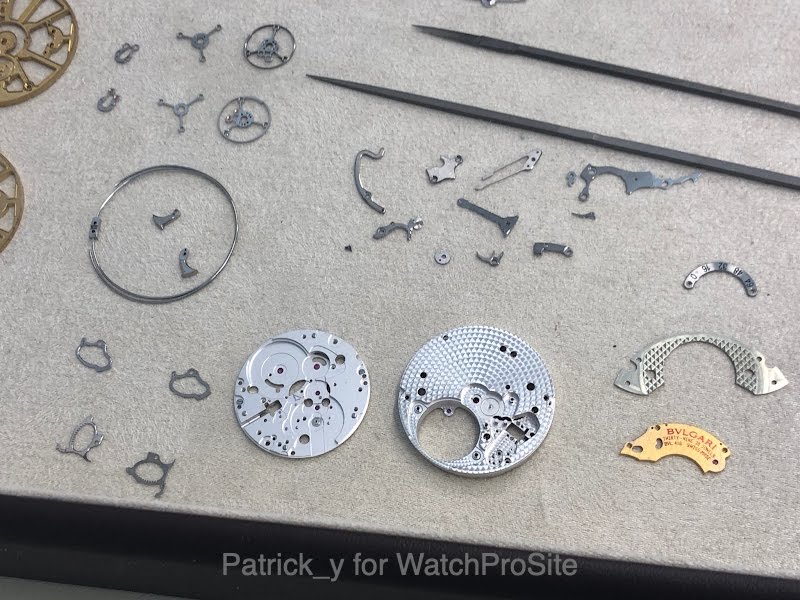
The BVL 138 movement. V2 is on the left, while V1 is on the right. Top photo shows the movement backside. Bottom photo shows movement dial-side. Notice V1 has a lot more jewels. Which one do you like more? Photos by the author.
THE BVL 138 MOVEMENT
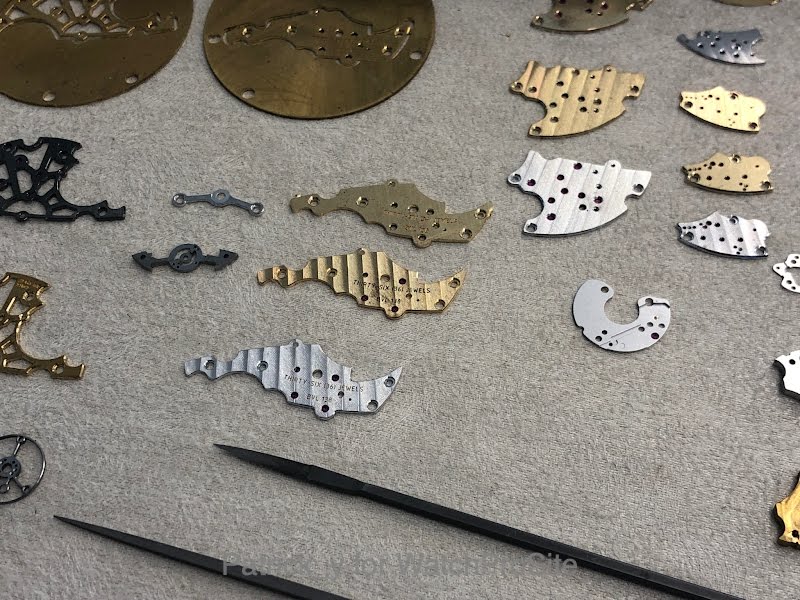
Many of our eagle-eyed readers noticed that Bulgari changed the BVL 138 movement and did so quietly. The original movement was an aesthetically pleasing movement with nice yellow gold lettering contrasting on rhodium bridges, a high jewel count of 36 jewels, a total of four major plates covering the movement and seven interior angles that look like they need some extra human attention for anglgage detail. The latest movement has a more modern look to it; 31 jewels, no gold lettering, a total of three plates covering the movement, and only two interior angles that look like they need extra attention. Many of our eagle-eyed readers wondered; was Bulgari trying to cut costs on the movement? Was there a reduction in finishing standards? What was going on?
I spoke with the head of watch movement design. He leads an eight person team of five individuals in the technical office and three more persons in the laboratory - naturally he knows everything about the movement. He assured me that the movement is finished to the same technical requirement, the same control criteria, and that only the aesthetic requirements have changed. For instance, the change away from gold letters to rhodium letters was purely an aesthetic choice, coming from Fabrizio Buonmassa Stigliani, the design lead for Bulgari Timepieces who preferred a tone-on-tone look.
The reduction in interior angles were because they weren't needed anymore; in one case the jewel that was between two interior angles was completely eliminated. In another case a pair of interior angles were not a possibility because two plates were integrated into one larger plate so the separation line of those two plates completely went away. I kept calling the new movement a "redesign" and I kept on getting resistance for using this world. Bulgari looks at it as an evolution, or an optimization. Not an entire redesign.
The department head tells me from a raw materials standpoint, the new version doesn't cost less to produce. It does take slightly less time to adjust V2 compared to V1 and it takes significantly less time to do the main assembly. "Aha! It does reduce costs," I exclaimed. "But the optimization was about improving performance - some areas have actual increased costs and complexity too," countered the movement expert. He explains in detail; "for instance look at the winding system..." Bulgari had some complaints from multiple users that the winding system didn't fully wind the watch sometimes. I've personally experienced this - I had an active day walking over 20,000 steps and yet when I put the watch down at night, the watch stopped at 3AM in the middle of my sleep. The movement expert explained to me that the winding system in V1 had a slightly smaller platinum winding rotor and 7 ball bearings. For V2 Bulgari increased the size of the platinum rotor (more platinum, slightly higher costs) and put in 22 tiny ball bearings (significantly greater costs). The ball bearings absorb more shock too, so movement shocks are better absorbed and transferred into energy for the mainspring.
Here's a quick list of all the major changes:
1. Fewer jewels: V1 had 36 jewels, V2 has 31. Many of the jewels that were eliminated were "spacer jewels" that are employed to keep two plates apart, not the traditional jewels with pinions or pivots in them. V2 has fewer of these spacer jewels because Bulgari's watchmakers were able to adjust the manufacturing process in a way that eliminated the need to work with these spacer jewels. Benefit: Bulgari benefits by investing more upfront, but will save costs in the long term as this improved method is easier to manufacture, reduces costs in the long run, should be easier to service, and lowers the risk of contact and friction within the movement. Consumers however see less jewels and consumers have been incorrectly programed that higher jewel counts equal to a more accurate movement.
2. Balance Wheel Size Increase: The V1 movement has a 4 arm balance wheel that is 8mm in diameter. V2 is now a 2-arm design with an 8.7mm diameter. Larger balance wheels equal greater inertial (or the potential to have the same inertia with lower mass). This translates to greater shock resistance and higher accuracy. This benefits mainly the consumer as accuracy performance is increased, although Bulgari benefits as well as this system allows their watchmakers to make fine adjustments more easily and further optimizes the amplitudes between the horizontal and vertical positions.
3. Winding System: V2 benefits with a significant performance increase in winding system due to a larger platinum rotor and 3x as many ball bearings. This improvement
has significant costs to Bulgari, much more assembly time is now required for the winding system (putting in 22 tiny ball bearings into a jigsaw puzzle is much harder
than putting in seven larger ball bearings), plus significantly higher material costs. This is definitely a big win for the consumer at a large cost to Bulgari, but the consumer cannot aesthetically appreciate these improvements since they're not visible to the consumer. The higher ball bearing count increases the shock resistance which translates to an even lower need for a bridge to cover the winding rotor - which is never my first choice from an aesthetic standpoint - but earlier micro-rotor movements from the 1970s required these bridges.
4. Barrel: A closed barrel in V2 helps with movement stability. The closed barrel allowed Bulgari to remove the support jewels from the clearance/shake and greatly contributes to the stability of the transmission of the barrel.
5. Interior Angle Reduction: Many consumers will assume that the significant reduction of interior angles means easier anglgage work. And while this is true, the reason behind this interior angle reduction is really due to the new plate design. In V1 there were four large plates and one tiny plate; and V2 only has three large plates; so this interior angle reduction comes naturally. Some of the reasoning for the reduction in plates has to do with the improved winding system that took a high priority in this optimization. Eagle-eyed consumers will be quick to draw assumptions that Bulgari is deliberately reducing costs - but the rationale for this reduction in interior angles is reasonable. Furthermore, Bulgari was also able to add rigidity to the movement with the lower plate count and further add rigidity by adding another fixing screw for the bridge. The added rigidity improves movement accuracy.
6. Colors: the text of V2 is in rhodium whereas in V1 it's in gold. The balance wheel of V2 has a ruthenium look whereas the smaller balance wheel in V1 is plated in gold. These were all aesthetic choices.
I definitely tried my best to get a thorough understanding of the new movement. After my extensive questions, I definitely believe that Bulgari has truly optimized the BVL 138 V2 movement for performance and customer satisfaction. The new BVL 138 will benefit consumers more than Bulgari's own production line. I'm really looking forward to my next Bulgari Octo Finissimo with the new movement inside!
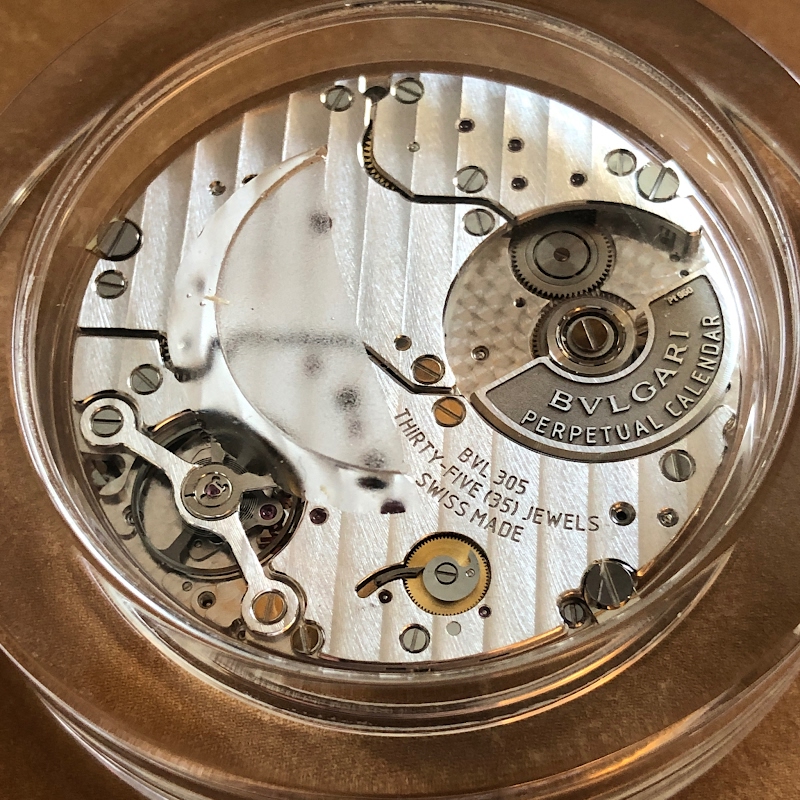
The BVL 138 benefits from improvements from the winding system and other technological enhancements that were developed in the perpetual calendar movement. Some will notice that there are a lot of similarities between the new BVL 138 and the Perpetual Calendar movement!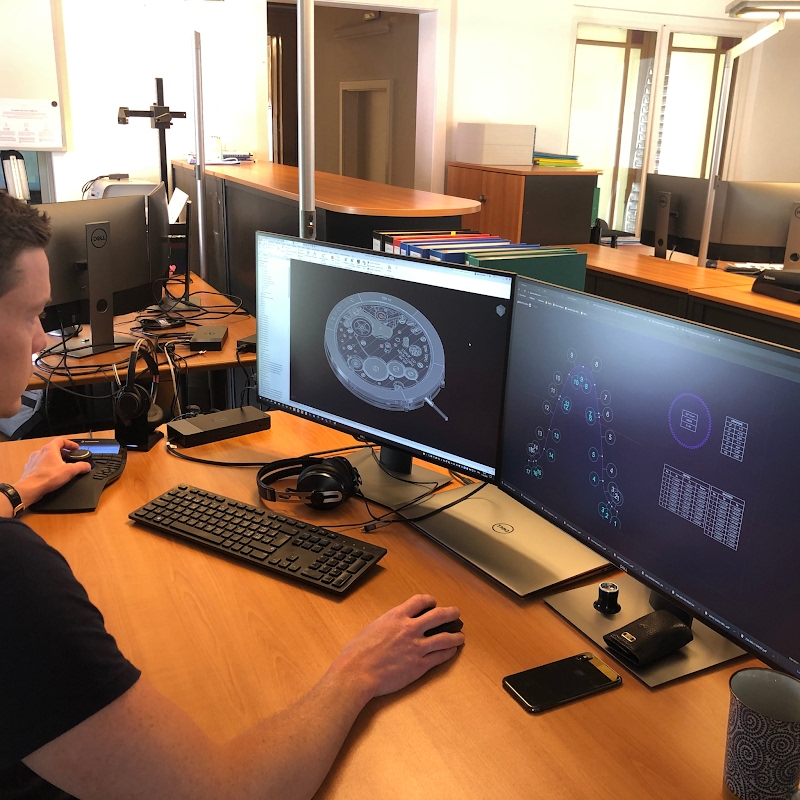
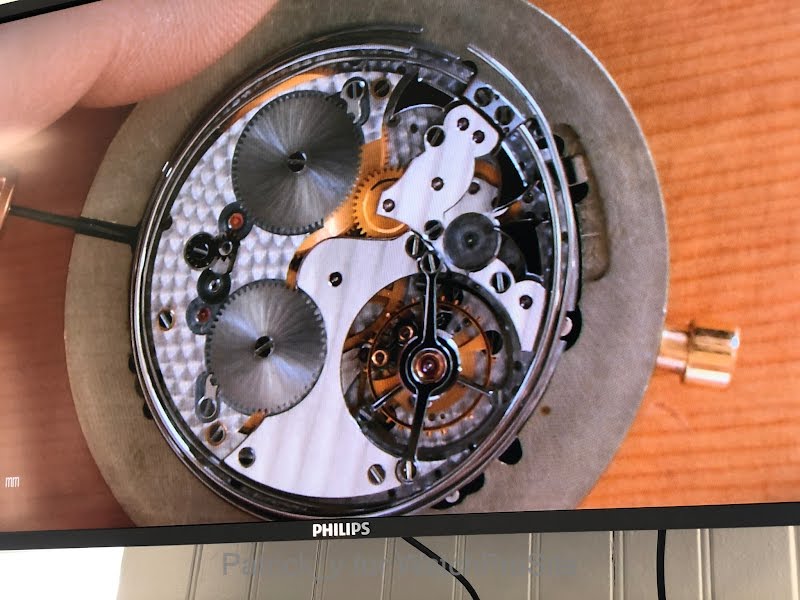
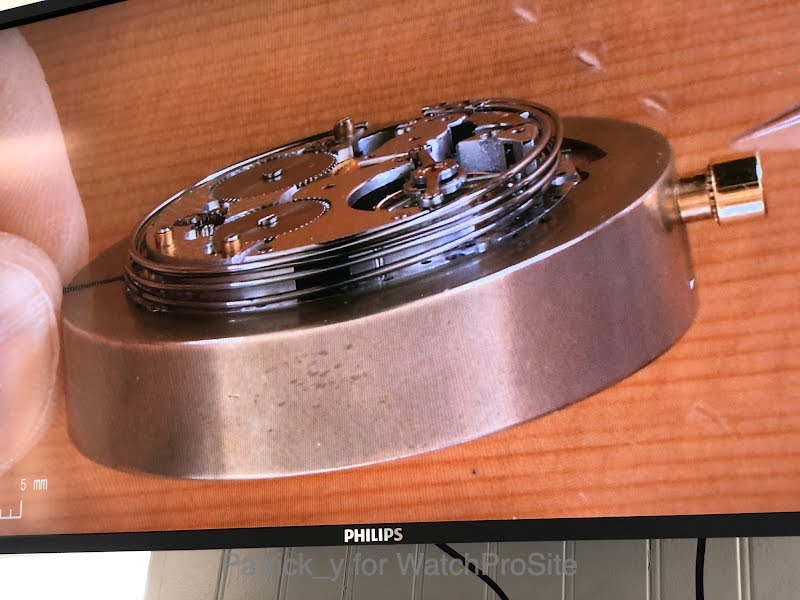
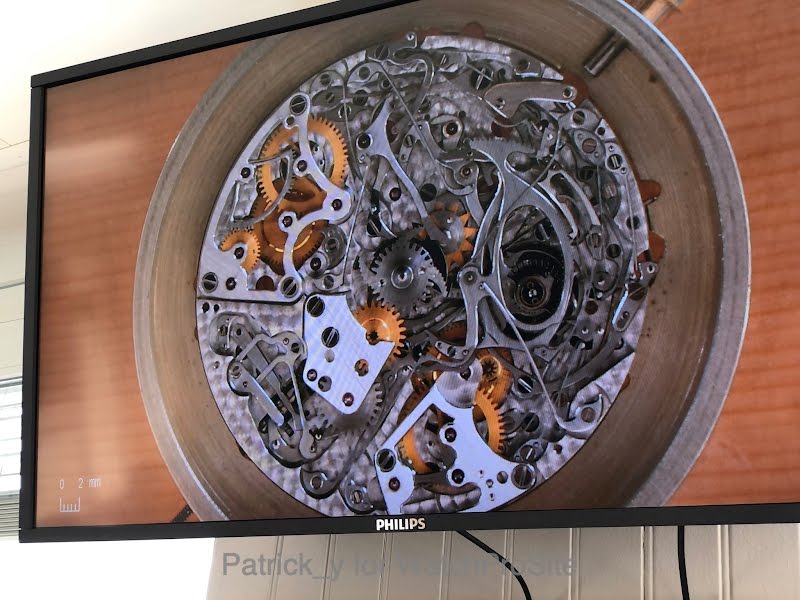
Here a Bulgari employee is showing me the new chronograph movement on the computer. The left screen shows the movement, the right screen shows the profile of one of the gears.
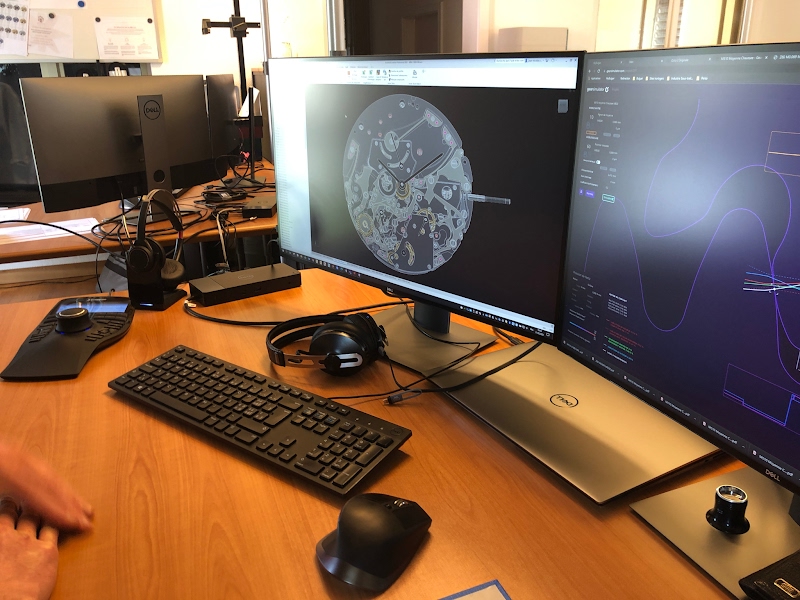
The same employee is now explaining to me details about the chronograph movement. The right screen shows details about the gear teeth meeting each other.
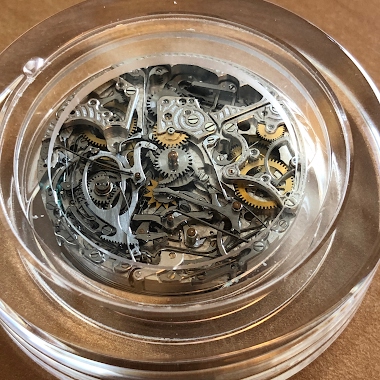
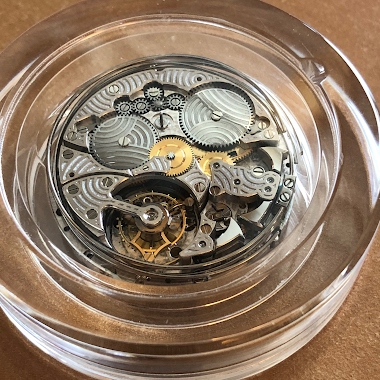
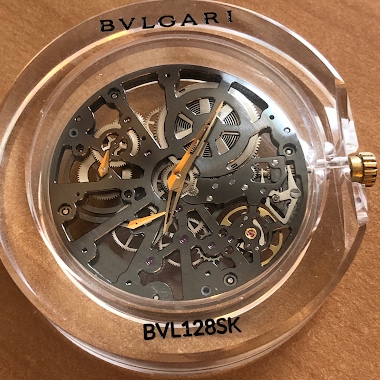
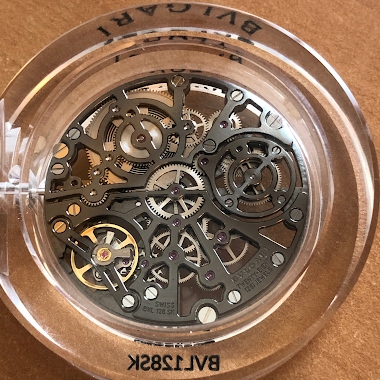
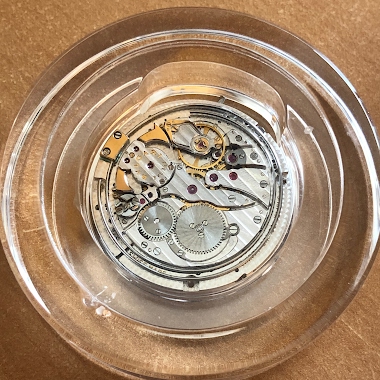
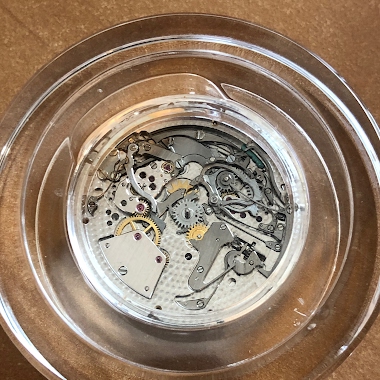
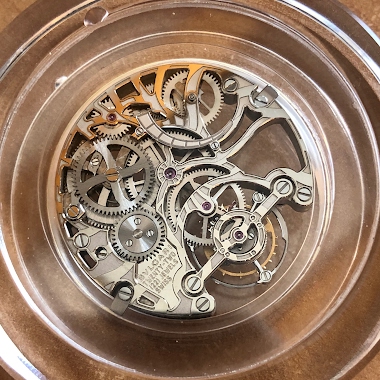
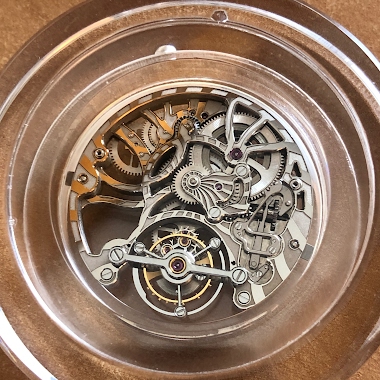
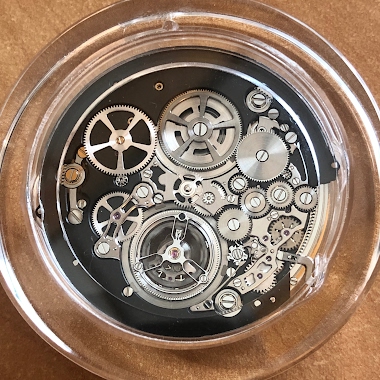
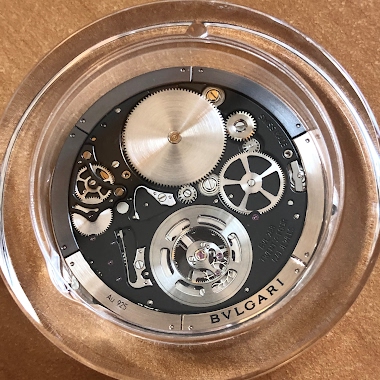
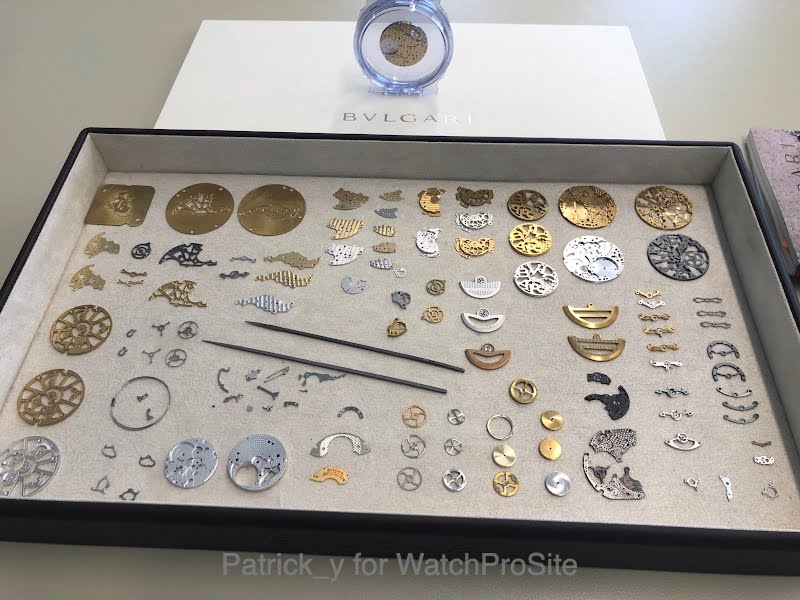
While we're here and chatting with the people who make the movements, let's take a look at some of the amazing movements currently in production here at Bulgari Le Sentier!
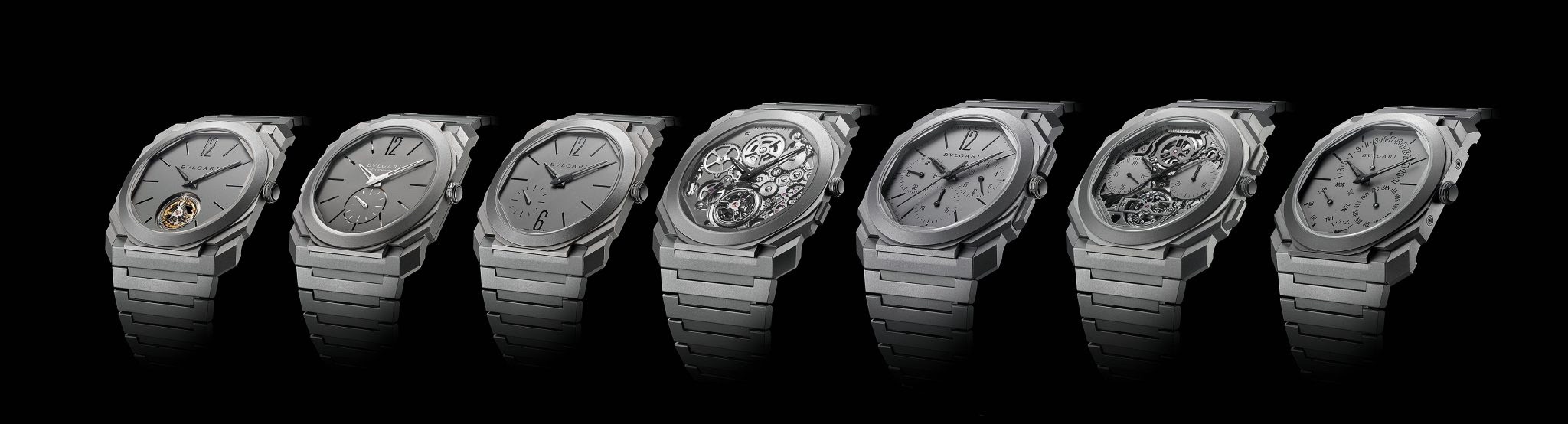
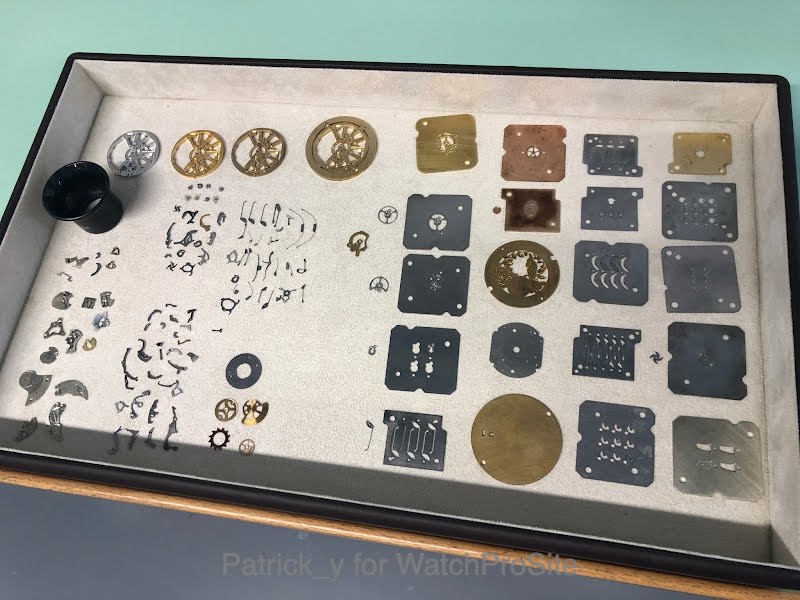
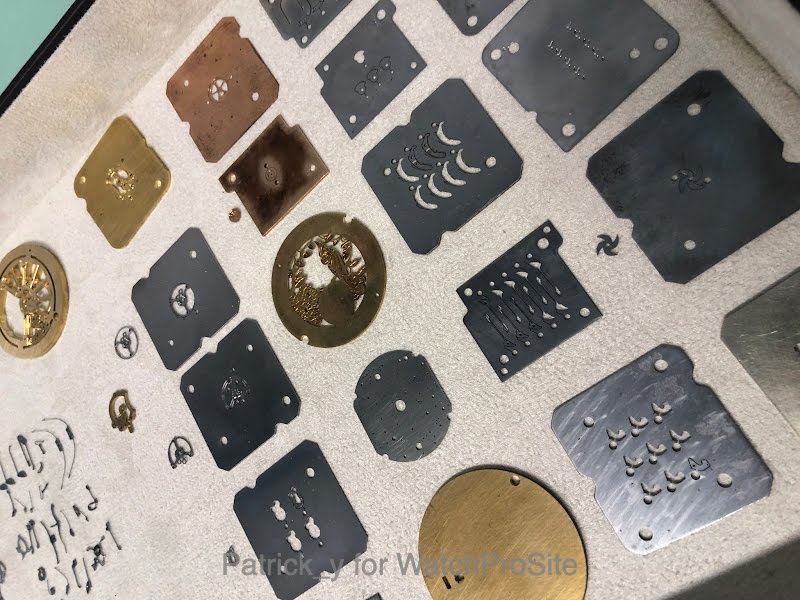
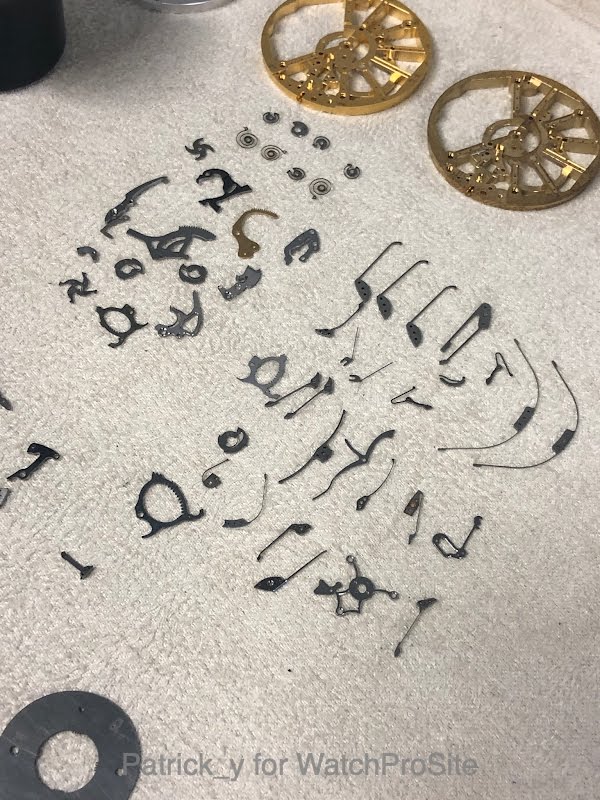
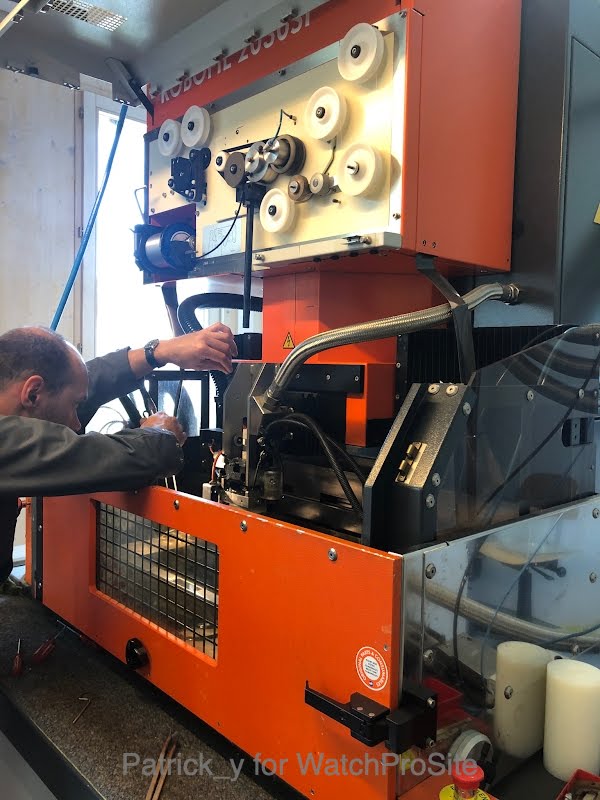
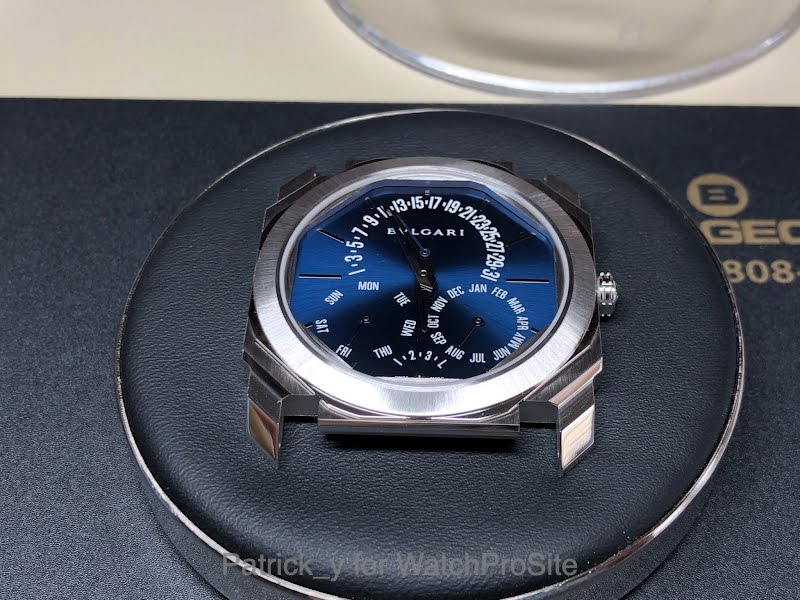
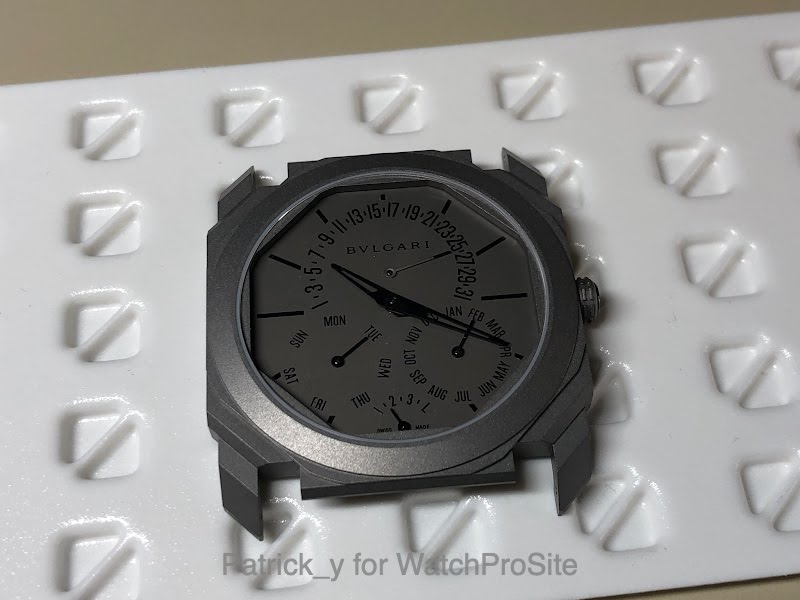
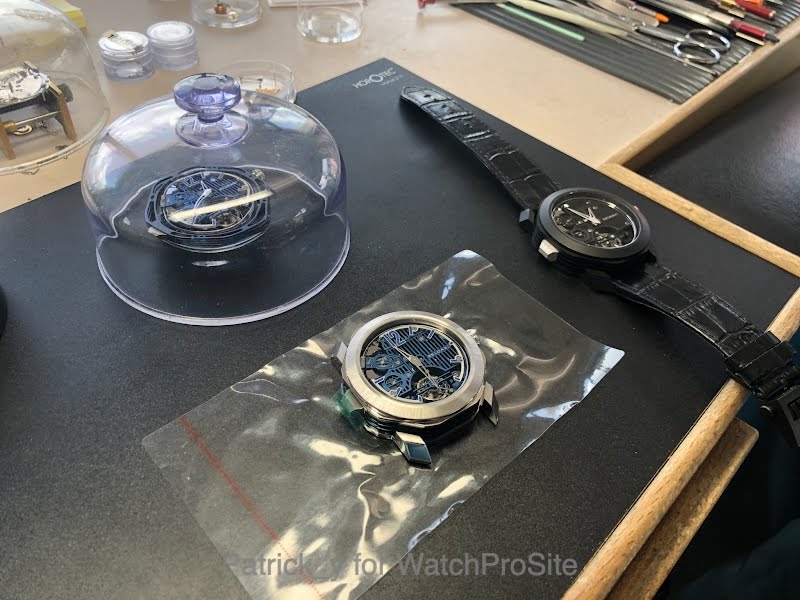
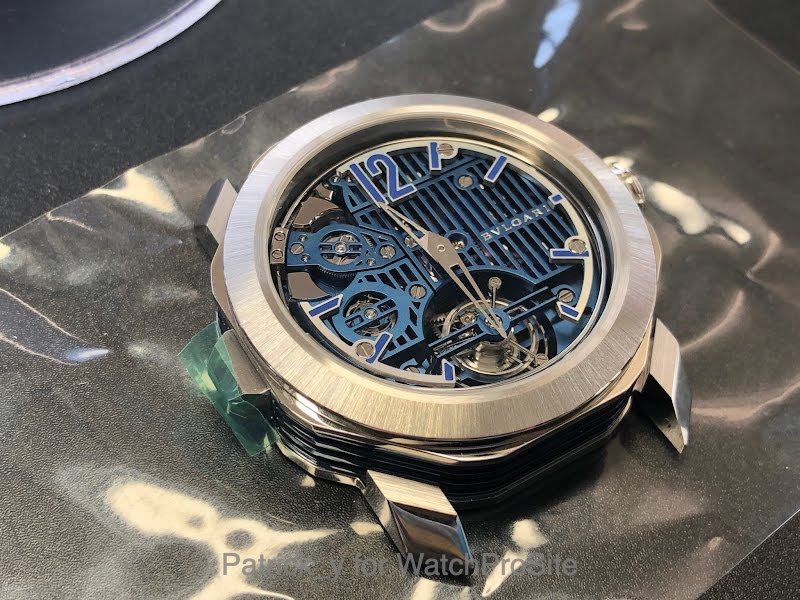
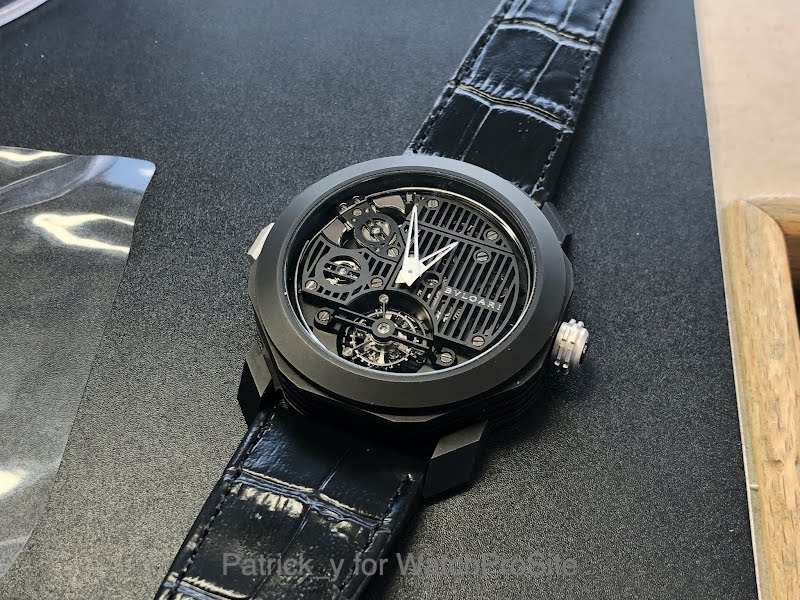
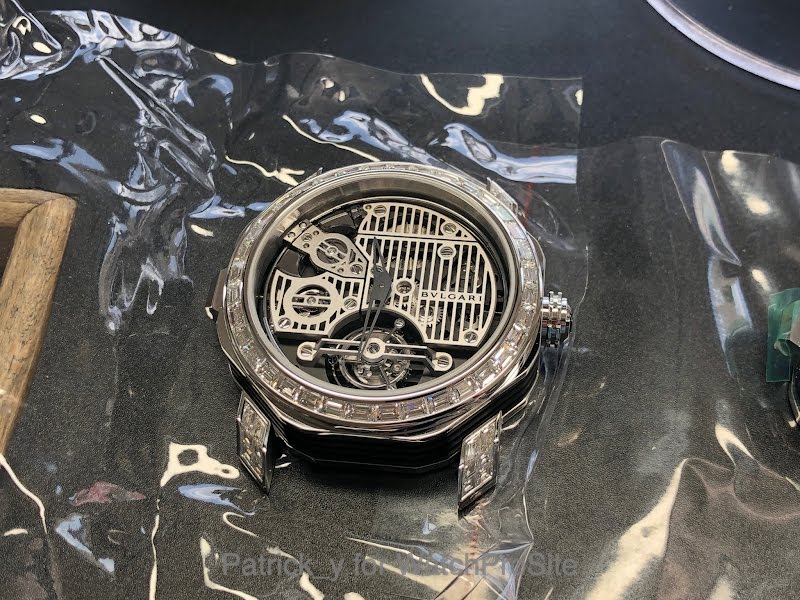
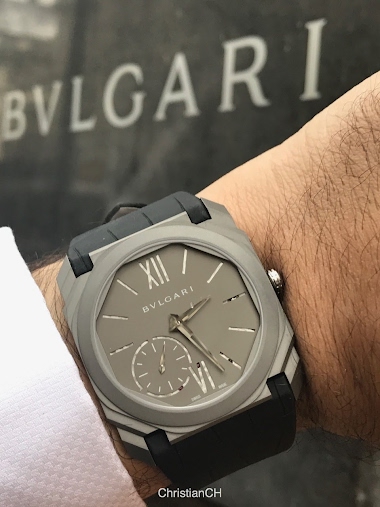
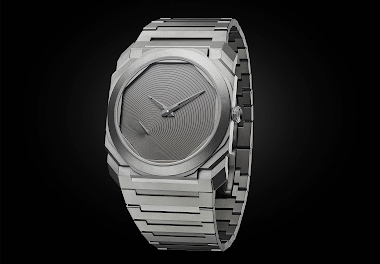
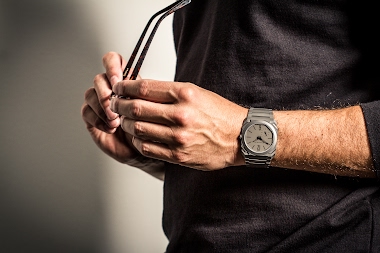
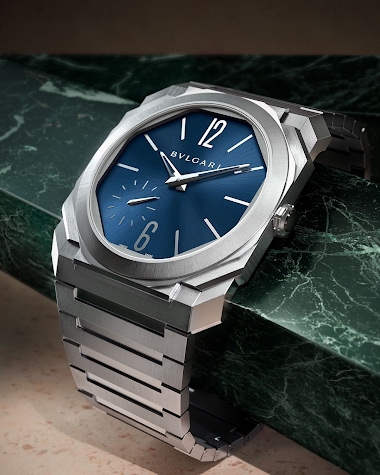
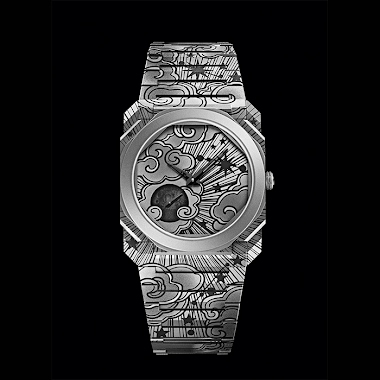
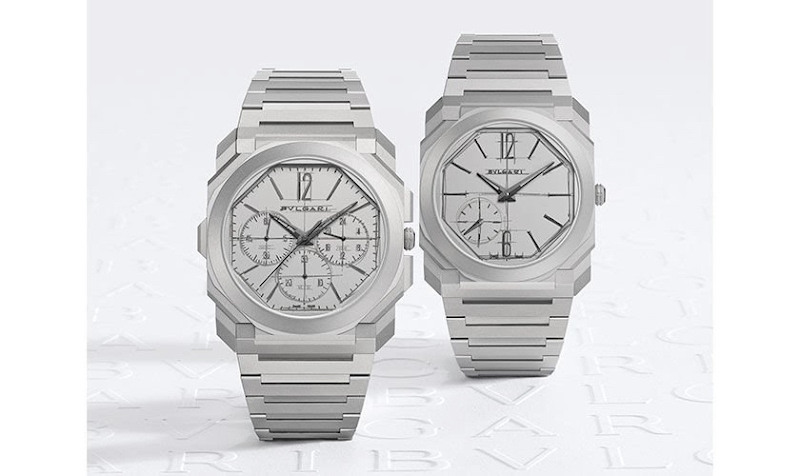

That case is indubitably highly attractive and iconic. I have a preference for the simpler, more minimalist iterations since I feel the overall design needs to be left to take 'precedence' visually speaking, but they are all excellent timepieces. Hugely appreciate your effort in delivering this post for our reading pleasure. Cheers, Filip
I agree. The minimalist dials are very attractive to my eyes. I personally recommend everyone to consider the stainless steel version with either the blue, black, or silver face. The simpler versions do let the very interesting case design speak louder. Although the Tadao Ando model dial does go together quite well in my eyes.
You must be tired from the research and writing. I'm tired just imagining being on that tour. I need one of those watches! Cazalea
Yes! Very tired. Thank you for your kind words. The tour lasted three days and yet I feel I only scratched the surface. There were still a whole bunch of technical questions I ran out of time to ask. Writing and editing this took a long timespan. But I really enjoyed it and I really like the watch! I hope you try one on someday!
What a tour. I sincerely thank you for your time and effort to create this post!
Thank you for reading! There's a lot of coverage on this watch in various magazines and I wanted to see where I could stand out a bit. It turned out to be a big challenge! But eventually I was able to get it done!
This thread is active on the Horological Meandering forum with 66 replies. Share your knowledge with fellow collectors.
Join the Discussion →