Vintage
Tick Talk's comprehensive article delves into the often-overlooked Vacheron Constantin sub-second automatic calibers, tracing their evolution from the brand's first automatic in 1951. This detailed historical account provides crucial context for understanding V&C's early forays into automatic movements and their relationship with movement suppliers like Jaeger-LeCoultre, making it an essential read for vintage Vacheron Constantin enthusiasts.


History of V&C Automatics
V&C’s first automatic wrist watch was introduced in 1951, the 12-ligne bumper-winding caliber 477 with central seconds. Like all of their calibers since 1938, it was based upon a rough-finished ebauche from their movement supplier Jaeger LeCoultre.
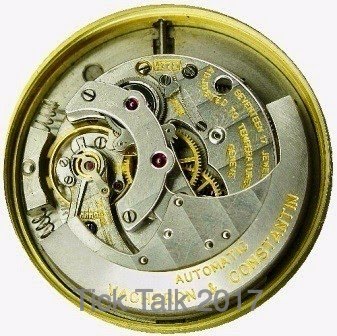
Their first rotor-winding calibers appeared in 1954. Based on movements developed exclusively for V&C, caliber 498 featured subsidiary seconds at 6 o’clock while caliber 499 had central seconds. Both were bi-directional winding. They were 0.75mm thinner than the 477 bumpers, with rotors running on four hidden steel bearings located close to the center pivot.
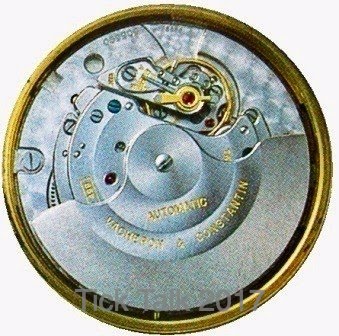
Further evolution of the automatic led to the caliber 1019 in 1956 with central seconds; replacing the 498/499 after only two years in production.
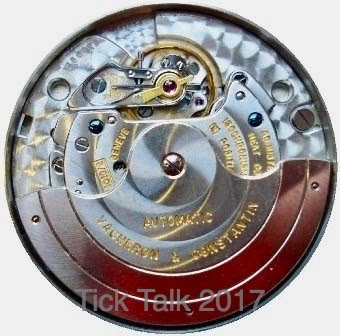
The 1019 was followed by a new design in 1959, the familiar caliber 107X family. Calibers 1070 and 1071, like the 498/499, featured sub-seconds and central seconds respectively. Their distinctive guilloche gold-segment rotors displayed four ruby rollers. While the diameter remained the same as the 498/499, the overall height increased by 0.10mm.
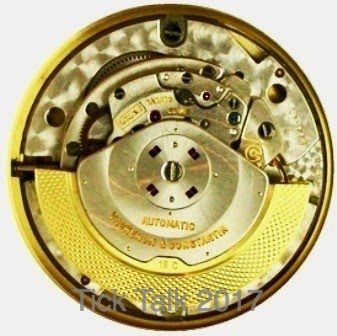
Sub-Seconds Automatics
I have yet to come across a watch with the caliber 1070 sub-seconds automatic, either personally or from searching the internet. Inquiries with other collectors has also failed to uncover anything tangible. However, the caliber does appear in V&C’s parts catalog from the period. If anyone can provide images, I would be most grateful.
The caliber 498 is somewhat less enigmatic. Still, over the years I’ve only seen pictures of a handful with this movement, the best documented being a Ref. 4958 featured in Antiquorum’s Quarter Millennium of Vacheron Constantin catalog from 2005, when they effusively stated; “The beauty and simplicity of this model make it one of the most sought-after of all the creations of Vacheron Constantin.” In view of their scarcity, I suspect that many are simply unaware of both the reference and the caliber.

Reference 4958
Although my collecting interests have continued to move backwards in time and pocket watches now dominate the cabinet, the sub-second automatics represent an interesting chapter in the history of V&C so acquiring one has been on my to-do list for a decade. I am now pleased to share the successful conclusion of that quest, the Ref. 4958 Automatic from 1955.

Antiquorum benefited from close co-operation with VC’s Heritage Department for the Quarter Millennium sale and every piece included a Certificate of Authenticity from the Manufacture. For this reason, I tend to give the lot notes more credibility. They revealed that the Ref. 4958 was introduced in 1954 as V&C’s response to the Patek Ref. 2526 launched in ‘53. Only 34 examples, all with pink gold screw-down cases, were produced with the sub-seconds caliber 498 in that first year. Two others, still Ref. 4958, were provided with the central seconds caliber 1071.
For 1955, V&C’s Bicentennial year, availability of the caliber 498 was divided between the Ref. 4958 with screw-down pink gold case, and the Ref. 4956 with snapback cases in both yellow and pink gold. The style of the 4958 and 4956 also differed in the shape of their lugs, the former continuing with its gracefully tapered and concave profile while the latter offered a triangular form. Dial designs often varied within a single model reference and these are no exception. What was consistent for 1955 was a change in the AUTOMATIC script from linear to curved, conforming with the arc of the seconds sub-dial.

First Impressions
Focusing on my newly acquired Ref. 4958, I immediately found a few things striking about the case construction. Firstly, it has a healthy 36mm width (not including crown) which I find suitable for dress watches even today. Lug to lug, the piece measures a substantial 44mm, which illustrates most effectively the vintage reliance on lug size and style to establish a watch’s presence.

The lug width is a very modern 19mm and immediately launched a hunt for a strap with proper 19-14 vintage taper to compliment a period buckle waiting in the spares box.


Having possessed more than a few V&C’s with 107X automatic movements, I was struck by the effect of the slightly thinner 498 on the case profile (in fact, it wasn’t until the introduction of the ultra-flat caliber 1120 that a thinner automatic was offered by V&C). With only one tenth of a millimetre difference in movement height, the Ref. 4958 case is a full millimetre thinner than most models with the non-date caliber 1071. Visually, its slimness is noticeable.

My attention next turned to the unrestored dial, where V&C showcased their skill with metal. A champlevé technique was used to remove material, filled with enamel and fired, leaving raised lettering and seconds hash marks. An embossing process introduced fine dots as minute markers. The dial was then galvanized in matt silver and protected under clear lacquer. Finally, solid gold Arabic numerals were applied at 3, 9 and 12; filled in with baton markers at five minute intervals. The crowning touch, a gold Maltese Cross, was placed at high noon. (Edit: see zhixi.jim.zhou’s excellent post below for a detailed description of the champlevé process)
Pink gold baton hands and a domed winding crown appear original, as does the acrylic crystal which has some age-related spider-webbing when viewed from the side. Thankfully, it doesn’t show in these photos.

A Horb Ball safely opened the case back to reveal the heart of the watch, a P498 full-rotor automatic movement. Although lacking the bling of its successor’s gold rotor with visible ruby bearings, the movement demonstrates a variety of high-end finishes. The baseplate is decorated with perlage and the movement plates with Côtes Circulares. Snailing is also apparent on the rotor weight. Letters engraved into the plates are highlighted in gold, and rhodium plating is applied for corrosion protection.

The 12-ligne movement has 21 jewels, was adjusted to temperatures, and winds in one direction only; the 1019 introduced bidirectional winding, which was continued with the 1070/1071. A Parechoc shock absorbing spring is evident on the balance wheel jewel, and a swan-neck fine regulator adjusts a hairspring with Breguet overcoil.
The movement is clean and kept precise time over 24 hours, so I suspect a service occurred within the past several years; some errant scratches from an ill-fitting case wrench suggest it was not at the hands of a Vacheron & Constantin dealer. There are no service marks inside the case back, however, the poinçon de maître identifies the case maker as Cédex of Le Locle.

On the wrist, the watch dial shifts from amber to silver depending on the angle of the light. The pink gold is similarly more or less obvious under different viewing conditions. The massive rotor makes its presence known with a whirring noise when the wrist is flicked, along with a physical sense of the weight moving around its orbit. This wasn’t unfamiliar, I’d noticed the same with caliber 107X watches.
The watch was acquired with an original Certificate of Origin, and the efficient people at VC’s Heritage Department completed its provenance with an Extract from the Archives.
Conclusion
While tastes in vintage timepieces change (gawd, even quartz is now in the mix), the rarity and beauty of a few special models will always appeal to the collector. The Ref. 4958 sub-seconds Automatic, I humbly submit, should be considered as one of those few.
Best Regards, Tick Talk © 2017

Enlightening and educational post. Indeed this should be added to the pantheon of true collectors’ pieces. Wonderful read. Julian
I hoped to entertain as well as inform
Your new timepiece is really stunning (shape, style, dial... everything in fact!). Even the word “automatic” is perfectly integrated and not disturbing at all (some today’s brands should learn from the past). If 34 of this model were made in 1954, do you know how many were made in 1955? Thanks again for this very interesting thread. Best wishes Alkiro
The numbers for 1954 were provided by Antiquorum. V&C introduced several new models in 1955 to celebrate their bicentennial, which must have occupied the design and production teams a good deal. They also split their supply of the cal. 498 between two references. The snap-back 4956 was available in two metals and is somewhat easier to find, so my guess is that more of these were produced. In view of this, it may be that the same or even less of the 4958 were made in 1955 but that is only conject
You should send him a PM with your question. Best wishes Alkiro
Alex is a great friend and resource on things VC. My experience from The Hour Lounge was that VC wouldn't answer such questions but perhaps I should reach out to the Heritage Dept and see if that policy has changed.
617 Breguet listings are live on the eBay market and 169 collector listings on the WatchProSite marketplace.
This thread is active on the Vacheron Constantin forum with 40 replies. Share your knowledge with fellow collectors.
Join the Discussion →