Tutima Glashütte Flyback Pilot Chronograph WW2
Vintage

Tutima Glashütte Flyback Pilot Chronograph WW2

By passetemps · Mar 11, 2014 · 16 replies
passetemps
WPS member · Horological Meandering forum
16 replies8301 views11 photos
f 𝕏 in 💬 🔗

Passetemps provides a detailed overview of the Tutima Glashütte Flyback Pilot Chronograph from WW2, emphasizing its historical and horological significance. He argues for its overlooked importance as a pioneering tool watch, highlighting its unique features and role in aerial combat.

FACTS: 

Column wheel integrated hand wound flyback chronograph movement. 
Manufacture caliber UROFA 59 (based on UROFA 58 Glashütte manufacture caliber). 
18,000 bph. 

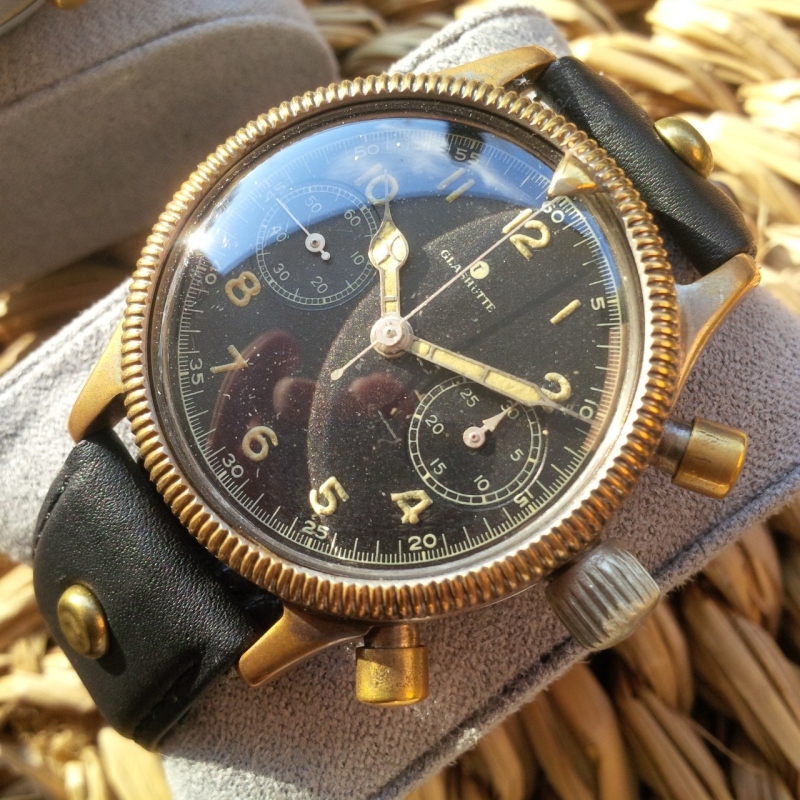
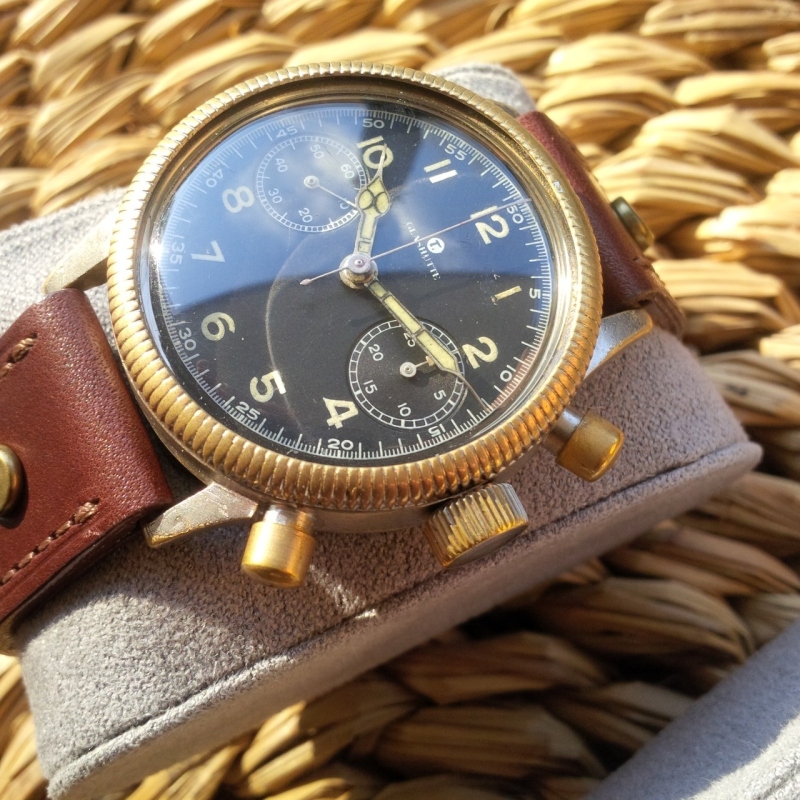
39mm nickeled brass case (hence the beautiful and varied patina, as steel was reserved for armaments). 
Fixed lugs, 20mm width. 
Stainless steel caseback (nickeled brass caseback on earlier units). 
Antimagnetic and waterproof case. 
Domed plexiglass. 
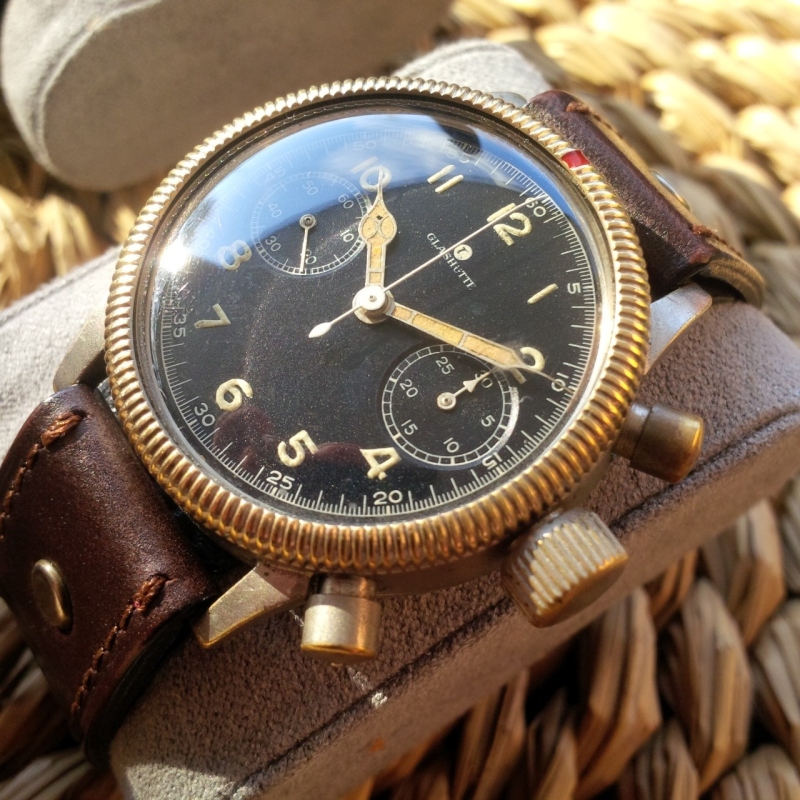
Rotating bezel with a red mark (an arrow on earlier units). 
Radioactive luminescent hands and numerals. 

Specially and secretely developed under government contract for the Luftwaffe (itself created in 1936) between 1938 and 1940 as a strategic project, so as not to depend on foreign (Swiss) equipment or components. 
Handmade in Glashütte, Germany, from 1940 to 1945 (the manufacture was then dismantled by the Soviet army and the equipment taken to Moscow). 
Less than 18,000 units produced (number 200000 to 218000 approx.; same 6 digit number on case back and movement). 

Designed for and used by bomber-fighter and fighter pilots as flight instruments. 
The German pilots were the only contenders of WW2 equipped with a chronograph (let alone a manufacture flyback chronograph). 

Very few examples remain in good original condition, as most were lost in battle or right after the war, and most of the remaining ones have been either dismantled or terribly “frankenwatched” since the war. 

Developed in collaboration/competition with the HANHART hand chronograph manufacture. HANHART made a beautiful, robust, one-pusher chronograph in 1939, then created in 1942 its own – 41mm - version of the TUTIMA-GLASHÜTTE Flyback Fliegerchronograph. It fell in the French occupation zone after the war, where production continued for a while with a different styling (SteveMcQueen famously owned one of those postwar units, and is portrayed wearing it in some famous photos), until the HANHART Fliegerchronograph was simply used by the French Army as the model for the Type XX chronographs, developed by Bréguet and other producers during the 1950s and up to our days). 

Very reliable and very robust, this tool watch was actually used in aerial combat during the entire duration of WW2 (more extensively and intensively than any other mechanical watch before and after it, at a time when the pilots and their missions depended on their watches). 

These watches heavy with History still tick at chronometer precision today, three quarters of a century after their production, and the column wheel operation is as soft as butter. 

In my opinion, this watch has been ignored by all the big Swiss brands who claim to have some military heritage too, but it is extremely important: horologically, historically, artistically. 

In my very humble opinion, it is the most important: 
- pilot chronograph, 
- early integrated flyback chronograph, 
- early tool watch, with lume, rotating bezel, antimagnetic case, waterproof and inherent robustness, 
- manufacture military watch projected, designed and made purposefully for an army (while at war, incidentally), 
- wristwatch to have taken an active part in History. 

Needless to add, i personally LOVE this watch. One has to feel it on the wrist and operate the flyback chronograph to feel the balanced style, the elegant simplicity, the human craftmanship and the utilitarian perfection. 

I hope this has been somewhat informative. 

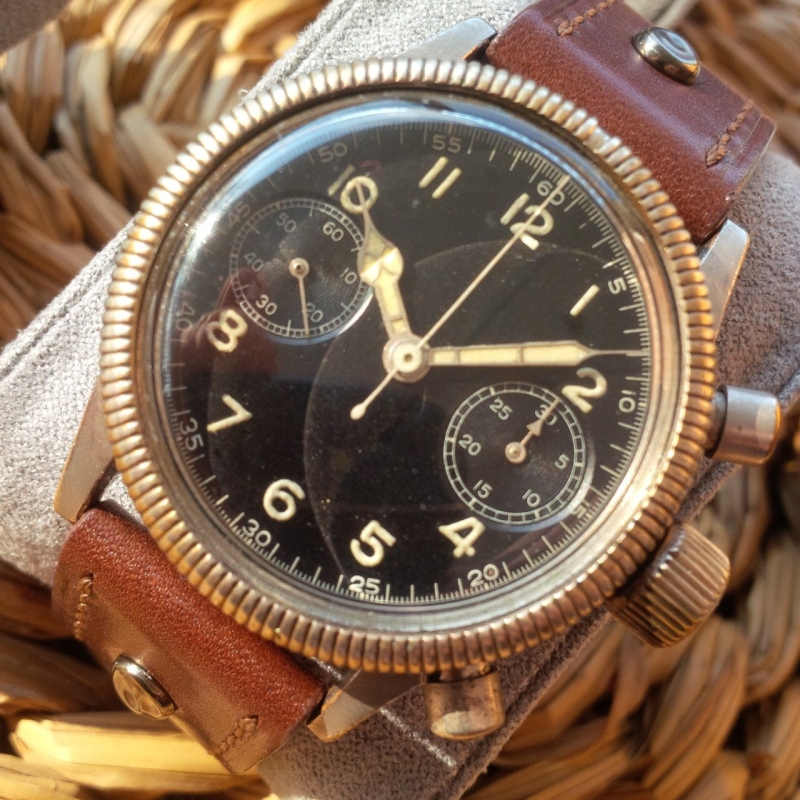
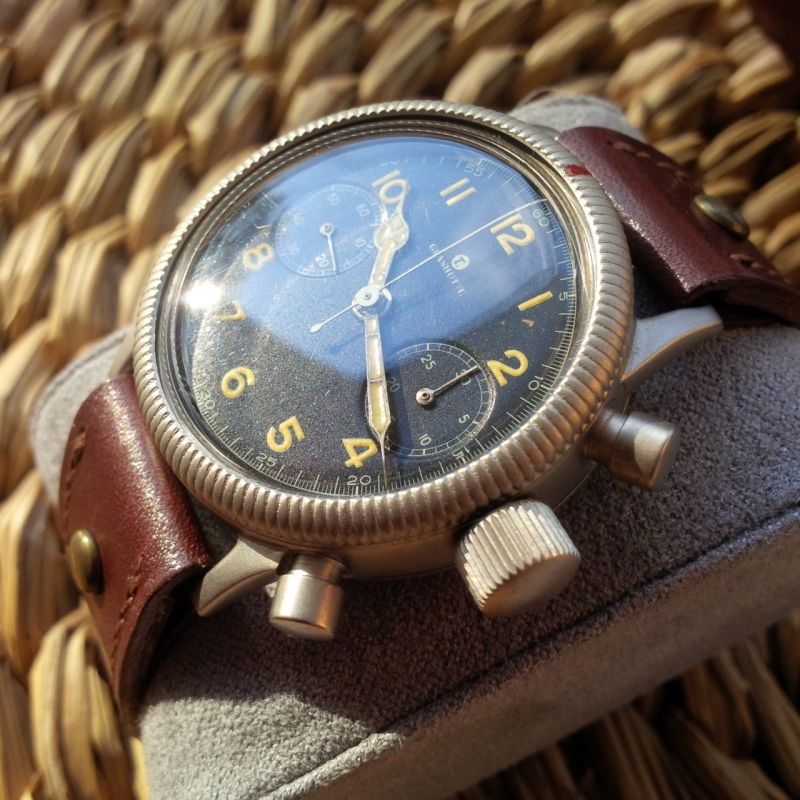
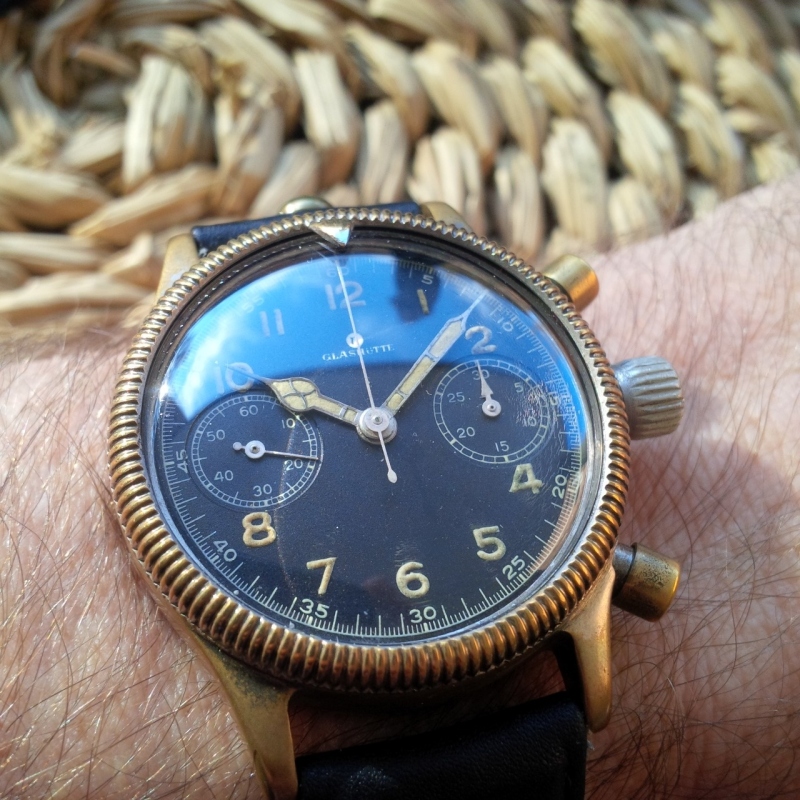
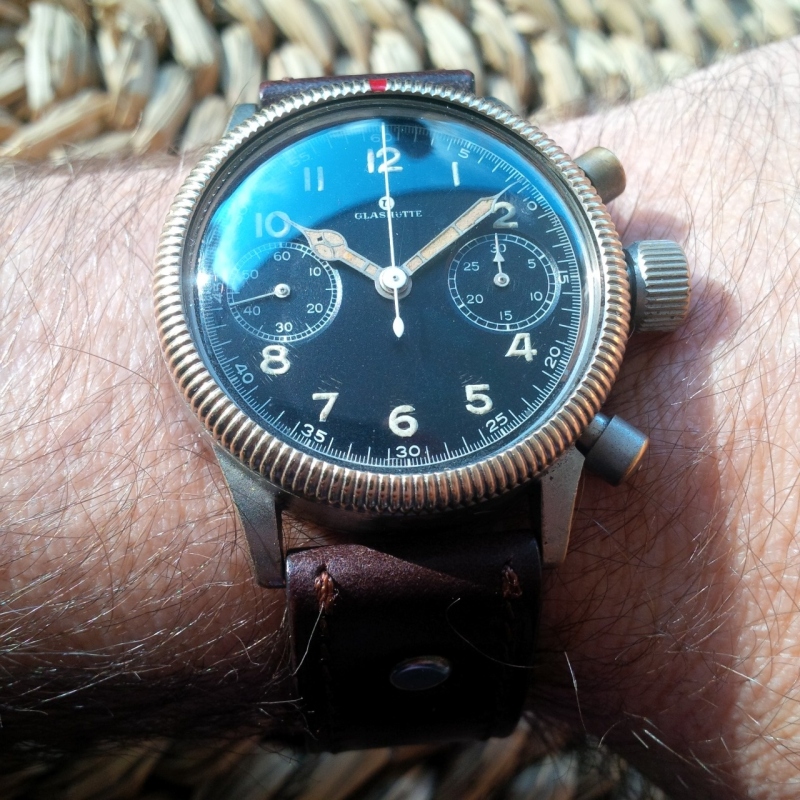
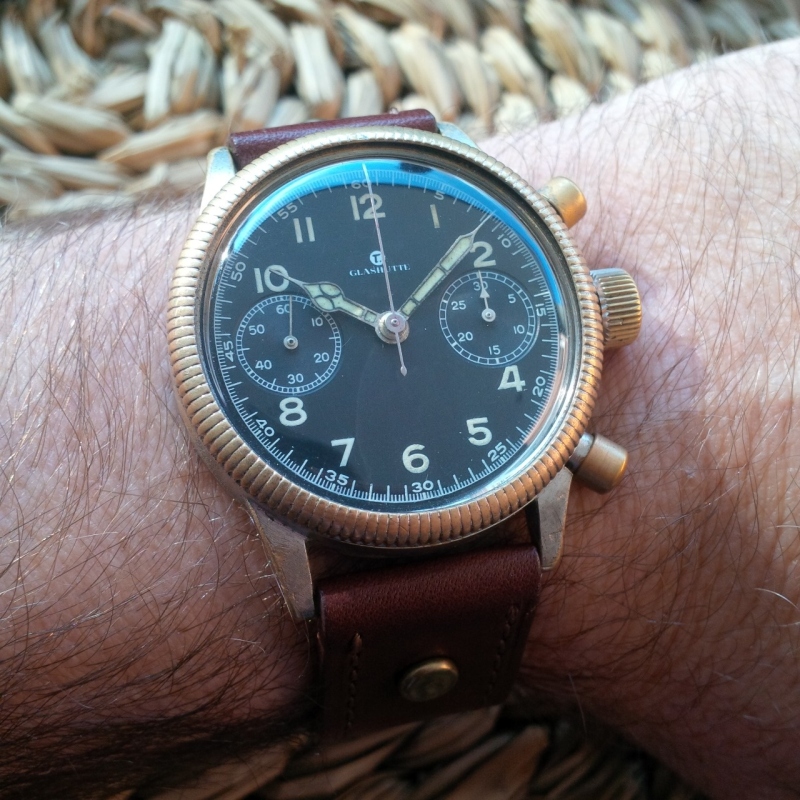
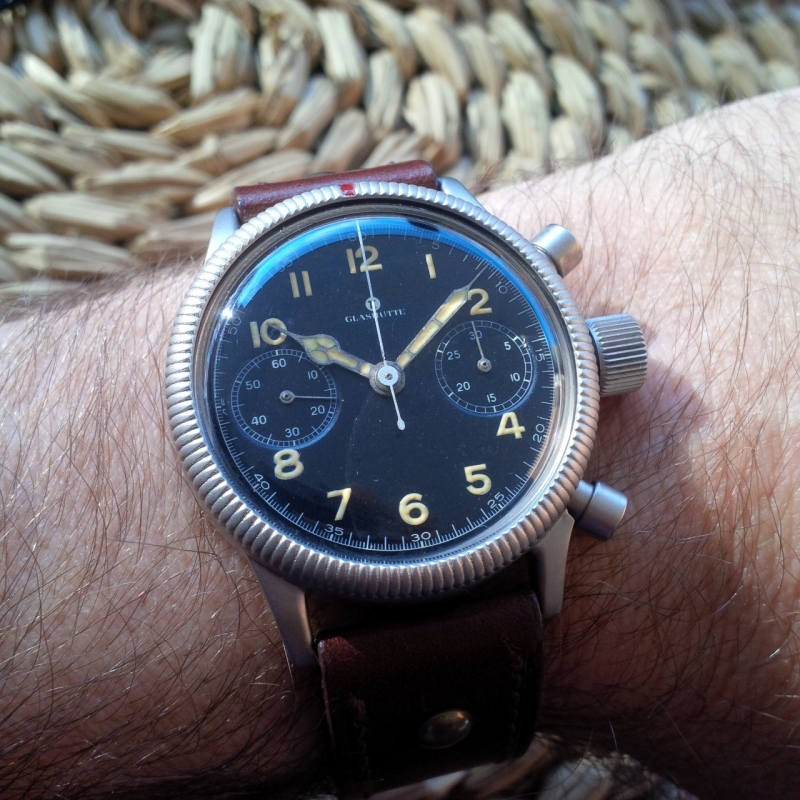
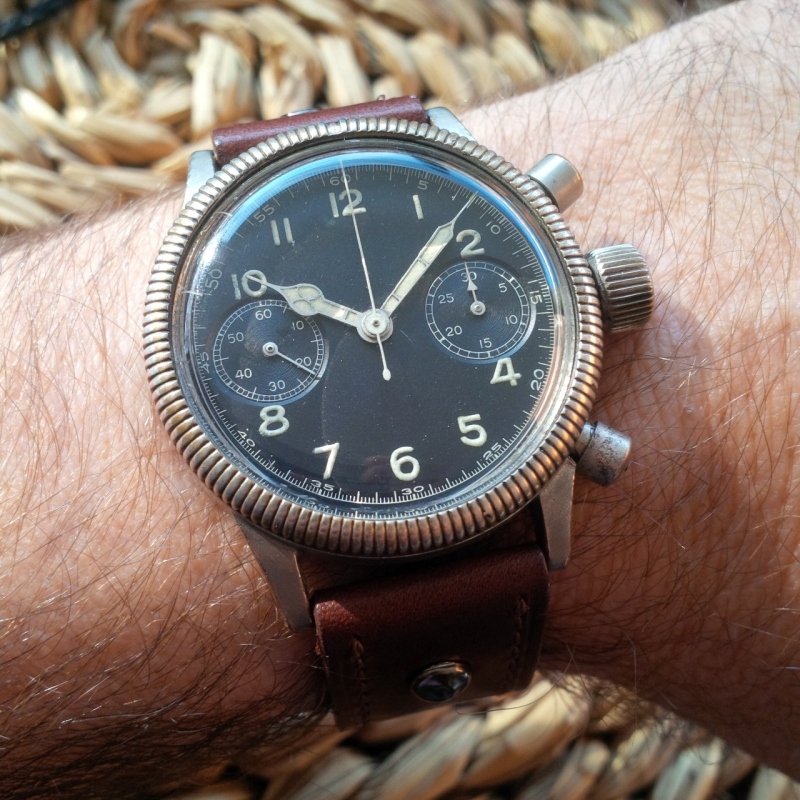
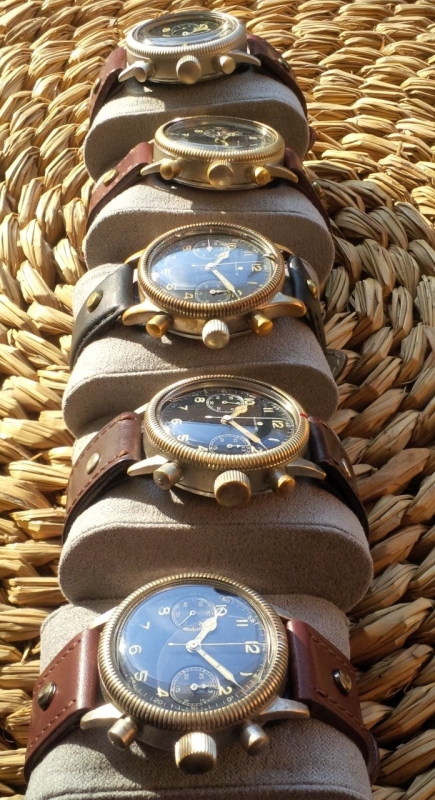
Here are photos of some examples from my collection. 

Frank


This message has been edited by passetemps on 2014-03-11 07:48:14

Key Points from the Discussion

Advertisement
The Discussion
PA
passetemps
Mar 11, 2014

...of one of the earliest units manufactured (the 607th). The movements were gold plated in order to add extra resistance to corrosion:

PA
passetemps
Mar 11, 2014

One produced by the end of 1942 (at the turning point of the war). A tool watch is a tool watch:

ZA
ZachBush
Mar 11, 2014

On a daily basis I wear a Hamilton Pioneer Chronograph. While I own other watches, I work in a lab environment and the use of a chronograph comes in extremely handy. My work is also very much hands-on and I needed a tool watch that I could beat up and not feel bad about. However after seeing your pictures I'm not sure of if I should appreciate the heritage and history of the design of my timepiece or if I should look at in the same way I would view $50 replica Rolex. You're fortunate to a number

PA
passetemps
Mar 11, 2014

Meant to avoid fatal mistakes by the pilots in the darkness of their cockpits (together with the originally red color of the reset pusher) the assymetry is an essential element of these watches, a detail that is part of the original DNA of a true Flieger Chronograph. This detail, present as well (although in the opposite way) in the Hanhart, was abandoned in the subsequent Type XX.

SU
SuitbertW
Mar 11, 2014

Hello, Frank, stunning collection ! Thanks a lot for sharing !!! Your love is more than obvious and personally I'm with you - it's a true beauty and certainly a true testimonial of this time. I happen to like amost all chronographs of this pioneering period and tecnically the first 40 years of the 20th. century are a real treat. I'm not sure if it's just your enthusiasm for this watch - but IMVHO in certain parts your statements are historically incorrect and certainly a bit exaggerating. Just a

SP
Spellbound
Mar 11, 2014

I love the focus you put into building your collection. I know most would be against a full restoration, but since you have 5, as an idea, why not send one in to a good watchmaker for a full restoration. It would be great to see one in its former splendid glory. Thanks for posting and bringing to our attention these historically significant timepieces. Dean

Advertisement

Continue the conversation

This thread is active on the Horological Meandering forum with 16 replies. Share your knowledge with fellow collectors.

Join the Discussion →