Vintage
Matthewking provides a detailed historical overview of Seiko's inaugural GMT watch, the World Time 6217, launched to commemorate the 1964 Tokyo Olympics. His post meticulously chronicles the watch's design, movement, and variations, offering valuable insights for collectors interested in the origins of Seiko's GMT and World Time complications.


In 1964, to commemorate the Tokyo Olympics of that year, the official timekeeper Suwa Seiko launched its first World Time watch - "know the time everywhere on earth, instantly" read the advertising campaigns. The watch bore an Olympic flame motif on its caseback and spawned a Seiko tradition of GMT and World Time complications that has continued to today.
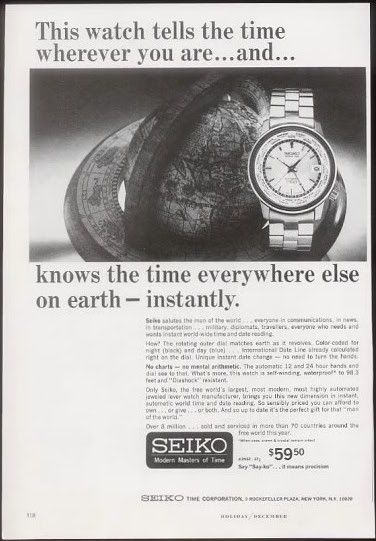
This post will focus primarily on Seiko's first generations World Time, the 6217-7000 (MASWT), while also pointing out slight iterations of subsequent models and productions runs. Photographs will accompany descriptions wherever possible.
Seiko's first World Time is a beautiful watch and a practical watch, made in stainless steel with a 37mm diameter. Twenty-four timezones represented by cities throughout the world are depicted on a bi-directional rotating inner bezel, which is accompanied by a day/night indicator bezel, and distinctive auto-setting GMT hand. It originally came in two variations, released during the calendar year of 1964: one variant with a silver dial, black/blue day/night indicator, white rotating 24hr timezone bezel, and black GMT hand; and one with a gray dial, silver/brown day/night indicator, black rotating 24hr timezone bezel, and tawny GMT hand.
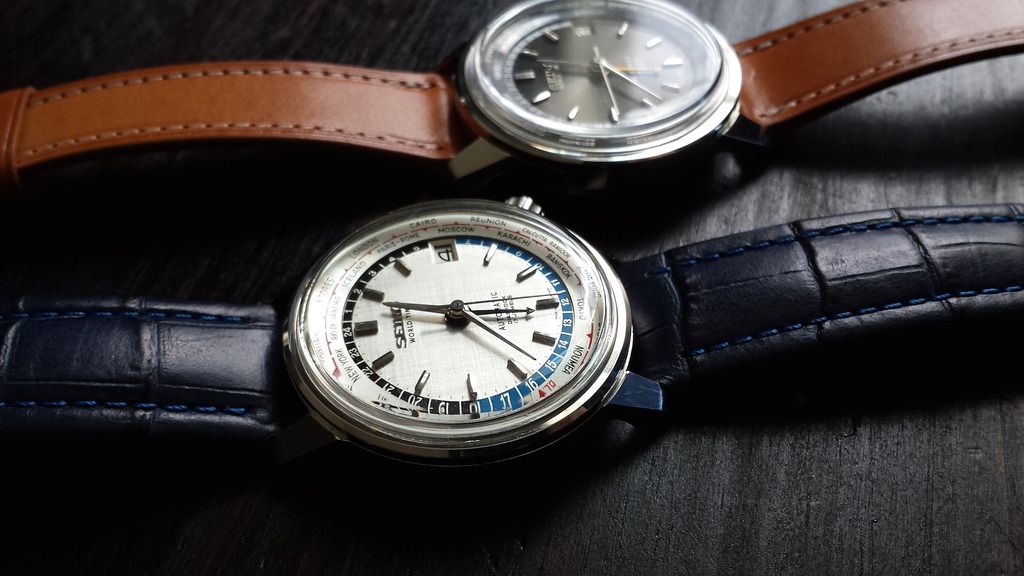
Seiko World Time 6217-7000, silver dial and gray dial, "A series"
MASWT stood for Matic Self-date World Time and was powered by the fully automatic 17 jewel cal 6217A. This complication (similar to the Rolex GMT introduced in '54 where the 4th hand is calibrated to the hour hand) birthed the now famous 6217-8000 (62MAS) used in Seiko's first Diver's watch, a line that took the company to new heights and remains a staple for Seiko.
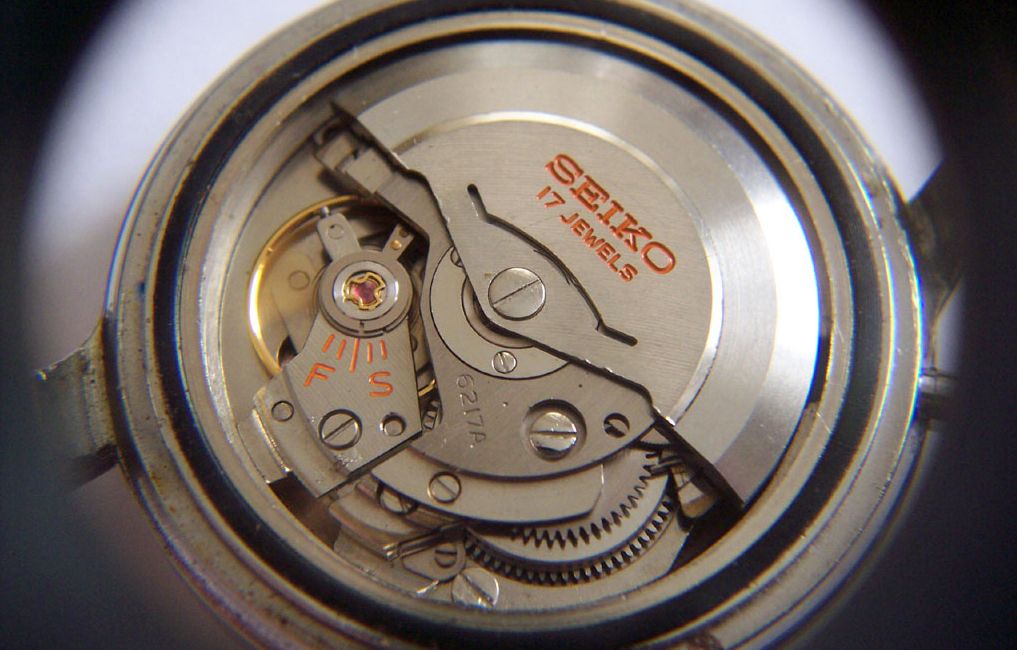 6217A, thanks for the photo Rich, The Watch Spot
Finding the silver dial version in mint, all original condition has become quite difficult, while finding a NOS gray dial variant is a significant challenge. Adding to the difficulty in locating these watches in good condition is the fact that in the early 1960s, Seiko embossed their casebacks rather than stamping them. For the 6217-7000, this meant that the unique caseback bearing the Olympic flame is highly susceptible to wearing down.
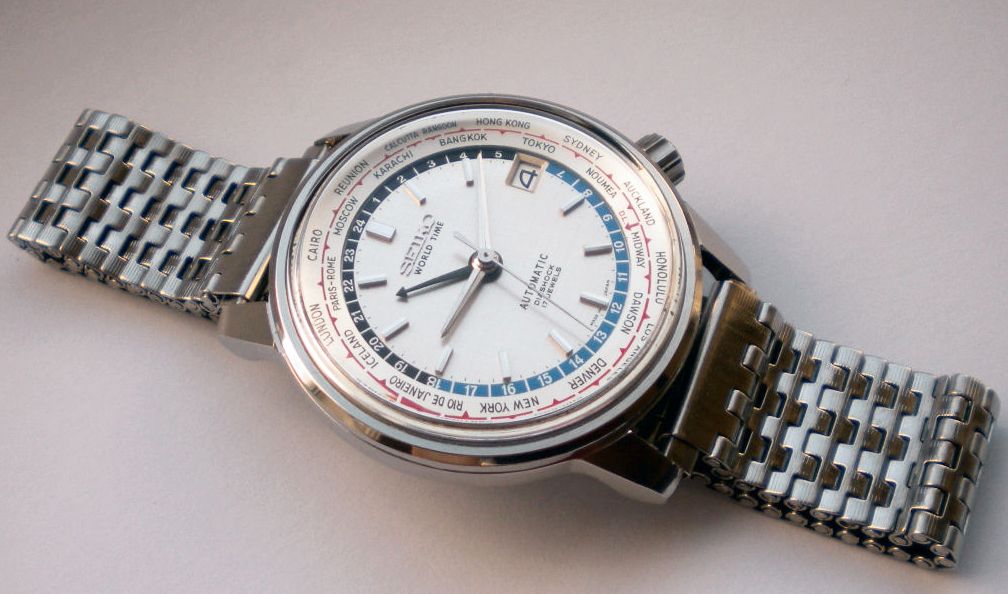 Silver dialed version of Seiko World Time 6217-7000 from 1964
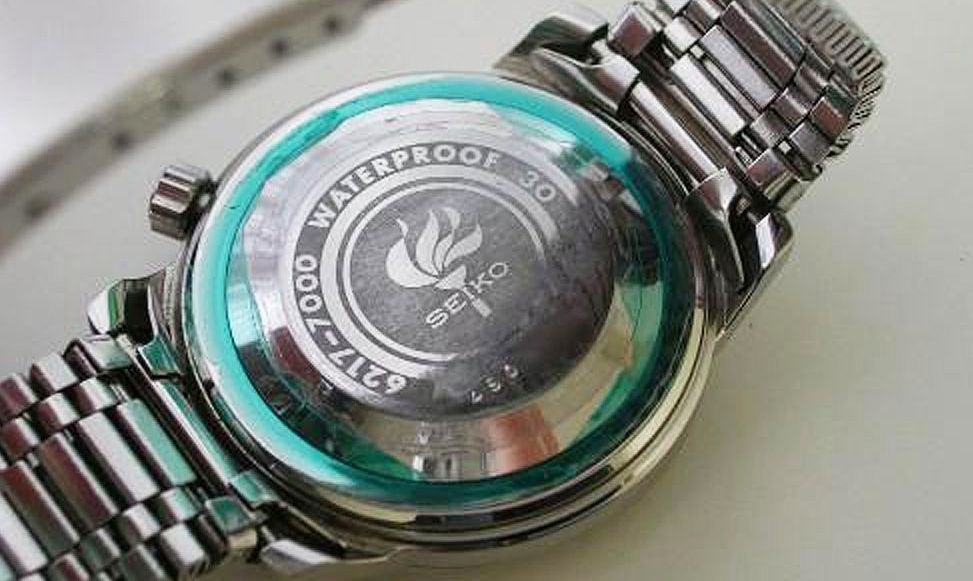 Embossed back of Seiko World Time 6217-7000 from 1964, green sticker still partially intact
Correct first generation Seiko World Time 6217-7000s will have the following characteristics that differentiate themselves from later generations: fitted with 17 jewel cal 6217A (opposed to cal 6117 of later models); only "Made in Japan" visible at 12o'clock on the dial (opposed to Made in Japan - and the serial number being visible); fluted crown (opposed to riveted crown); non-luminous hands and hour batons (opposed to lumed); black or tawny GMT hand (opposed to red or other colors); Olympic flame embossed on caseback (opposed to no embossed flame). These are some of the differences between first generation 6217-7000s and later versions, including those produced in 1965.
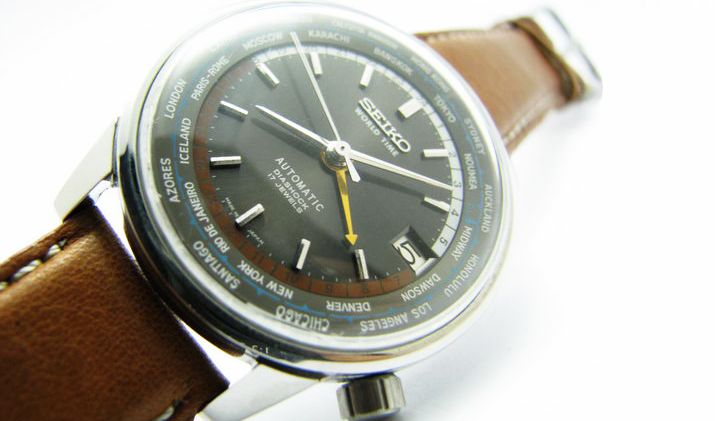
Seiko World Time 6217-7000 from 1964
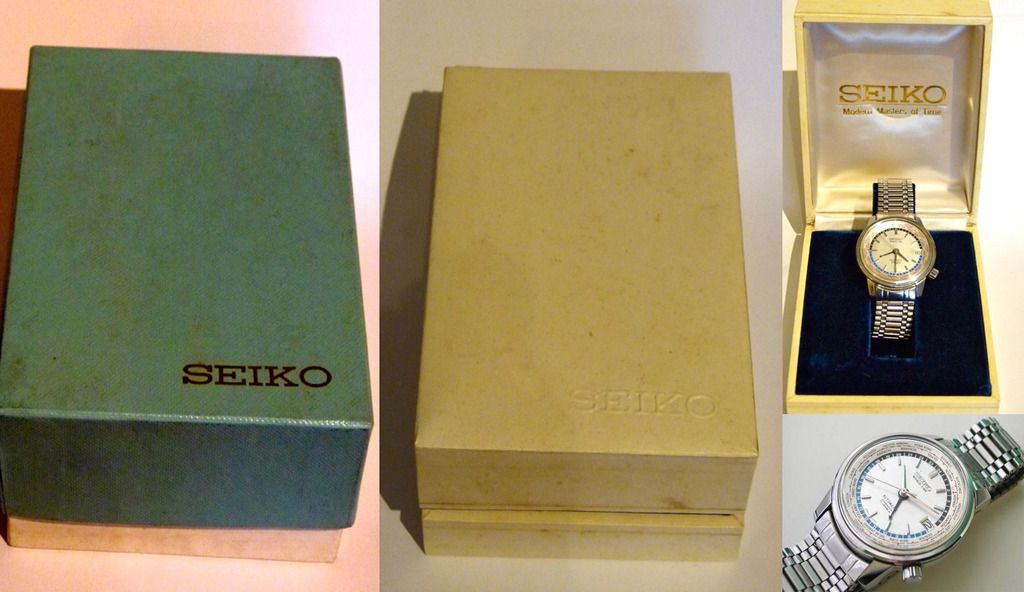
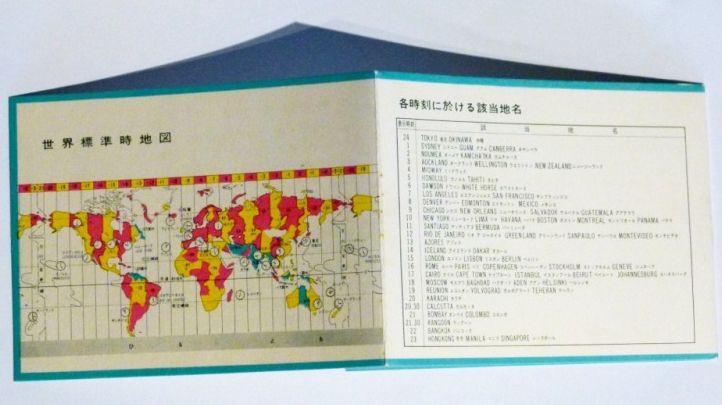
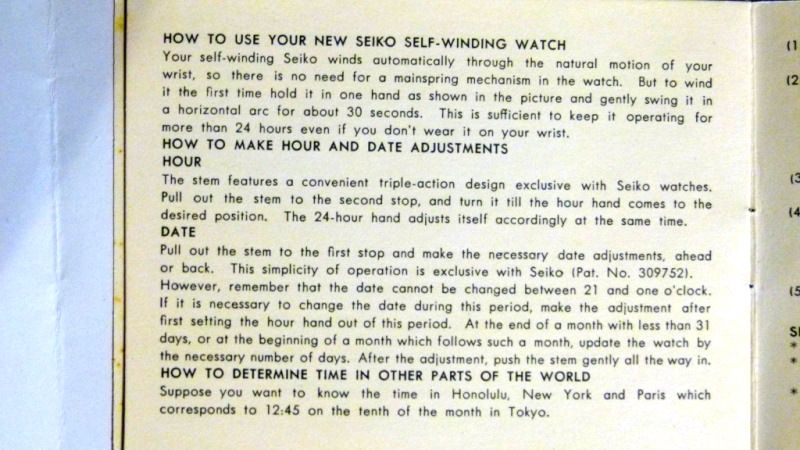
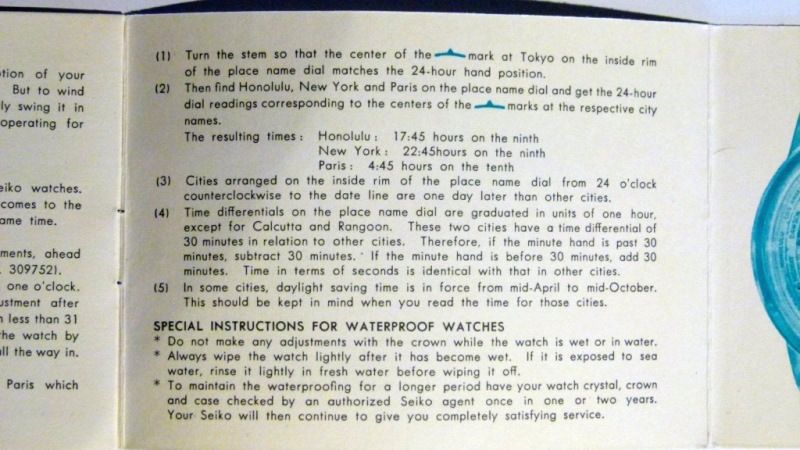
Extras, FYI: Lug width is 19mm, not the more common 18mm or 20mm. Movement "wears heavy" in that you can feel it turning on your wrist. In my experience, keeps a very good power reserve, between 24 and 36 hours. Crown stem is triple action (first position rotates 24 timezone bezel, second position sets the date, third position sets time). You cannot set the date between 21:00 and 1:00 o'clock. Patent number 309752. Photos of boxes and papers original to first generation 6217-7000 below.
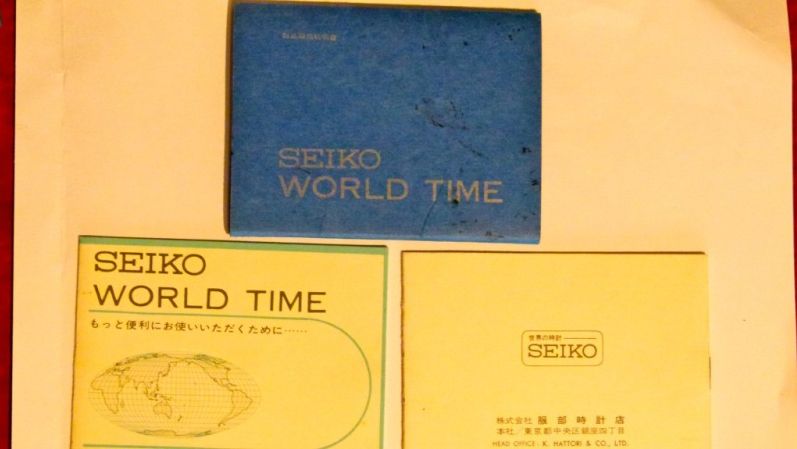
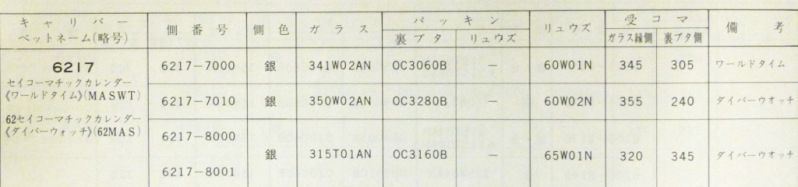
A few shots of the booklets + directions on use:
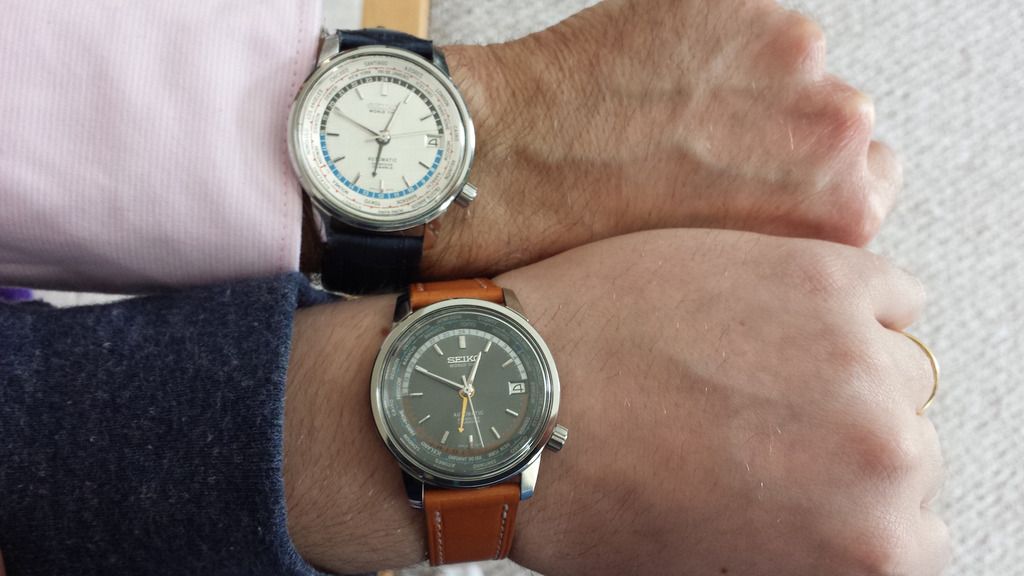
And finally a wrist shot, of me and my dad 
Thanks for reading,
Matt
This message has been edited by matthewking on 2015-05-09 01:05:15I really enjoyed it especially the wrist shot with your Dad, will be bookmarking this as essential reading. HAGWE, S
Thanks for the research and wonderful story-telling. Didn't know this. 62 movement is the variation of the one SEIKO announced the "re-issue" with the modern movement. Crown at 4 o'clock is the common character. I will look at this watch with different eyes, for sure! Thank you, Matt! Ken
Yes indeed, interesting history and relationship between Seiko lines. Hope to see you soon, Matt
thank you for filling us in on this exotic corner of Seiko's production. I really appreciate hearing from people who know their stuff. Cheers, Cazalea
Indeed, one of the best things about being a Seiko fan is that there are so many of these exotic corners to explore. Cheers, Matt
This thread is active on the Seiko forum with 13 replies. Share your knowledge with fellow collectors.
Join the Discussion →