Cazalea provides an in-depth profile of Seiko's revolutionary Spring Drive Automatic movement, tracing its 28-year development and highlighting its core objectives. His post offers a detailed technical explanation of the tri-synchro regulator and its impact on accuracy, power reserve, and the signature 'glide motion' of the hands. Readers gain a comprehensive understanding of this unique hybrid movement and its significance in horology.
Seiko introduced the Spring Drive movement in 2005, after testing and development by a team of engineers led by Yoshikazu Akahane for 28 years!
The developers of the new movement had 4 main objectives:
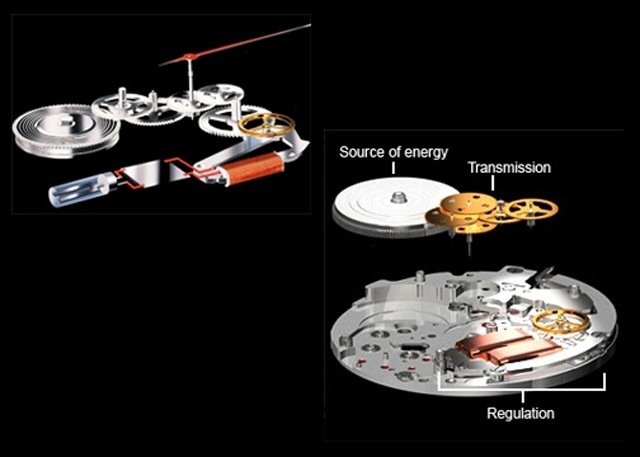
- Higher Accuracy - a new component called the "tri-synchro regulator" replaces the escapement at the end of the "normal" gear train. It controls and releases power mechanical, electro-magnetic, and electrical energy generated by the "normal" mainspring. It's capable of 1 second per day accuracy.
- Long Power Reserve - the lower friction power control combined with a special alloy in the spring results in 72 hour reserve in all Spring Drive movements.
- Glide Motion - the hands move smoothly because there is no "tic-toc" stoppage of power in the escapement.
- Fast Winding - an improved "Magic-Lever" winding system increases efficiency and speed of the mainspring winding.
The majority of the watch is mechanical. But not all of it. The merits of diverting from tried and true systems have been debated here and on other fora, but it's worth a brief technical mention of the "relatively small" deviation from all-mechanical designs.
The "glide wheel" exists in the power train at the point where we would normally have a balance wheel. The wheel is the armature for a tiny generating/monitoring/correction system (the tri-synchro regulator). It produces electrical power that activates a solid-state speed measuring and regulation system.
The speed sensors observes the rotational speed of the glide wheel, 8 times per second, and determine whether it is running at the right speed. If it is turning too quickly, the system diverts a bit of power to electromagnets which via magnetic repulsion (no contact) act to slow the glide wheel to the proper speed. The watch's hands are "upstream" of the glide wheel, between the mainspring (source of power) and the glide wheel (release of power). Because there is no stopping/starting as in a conventional escapement, the hands move smoothly and the watch runs longer on the same energy.
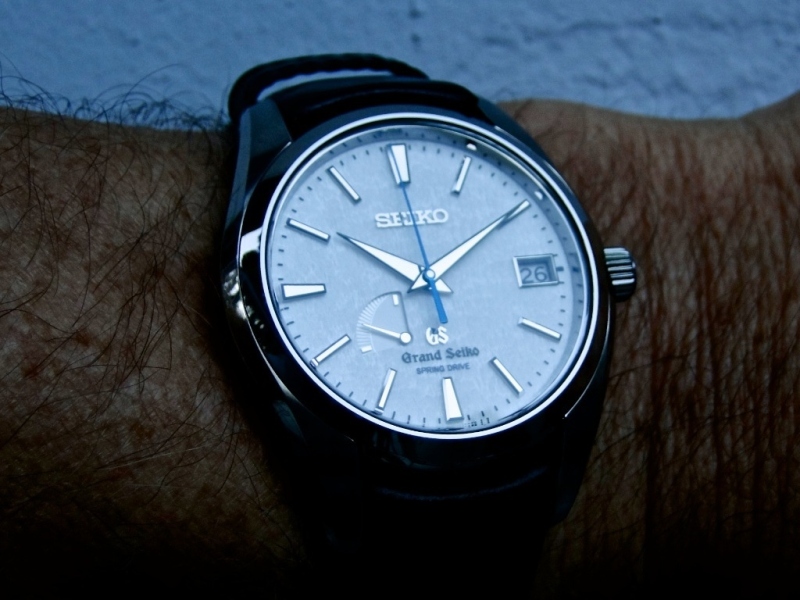
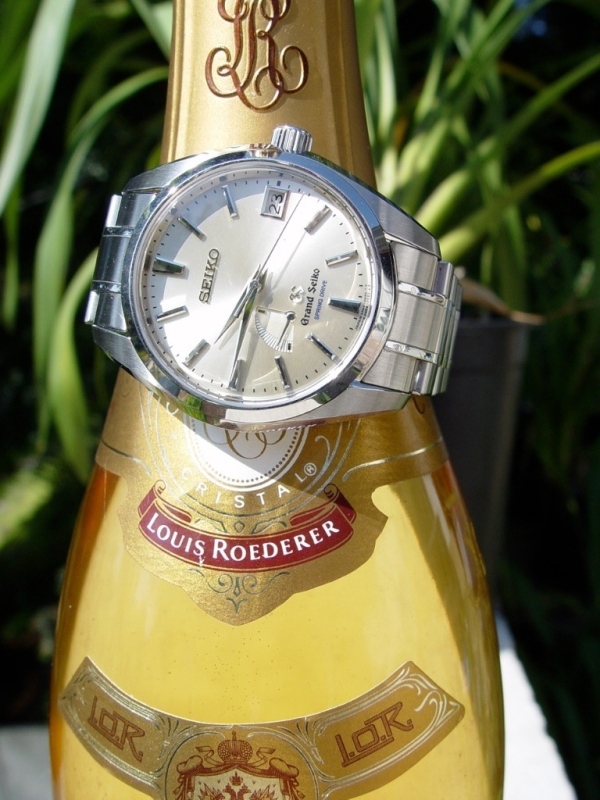
I think that's about enough theory. Let's talk about experience. I have owned more than a dozen Spring Drives. I got captivated by the concept, but then was a bit disappointed in the models in which the movements appeared. Here's a suitably PuristSPro photo of the first one I bought in April of 2005.
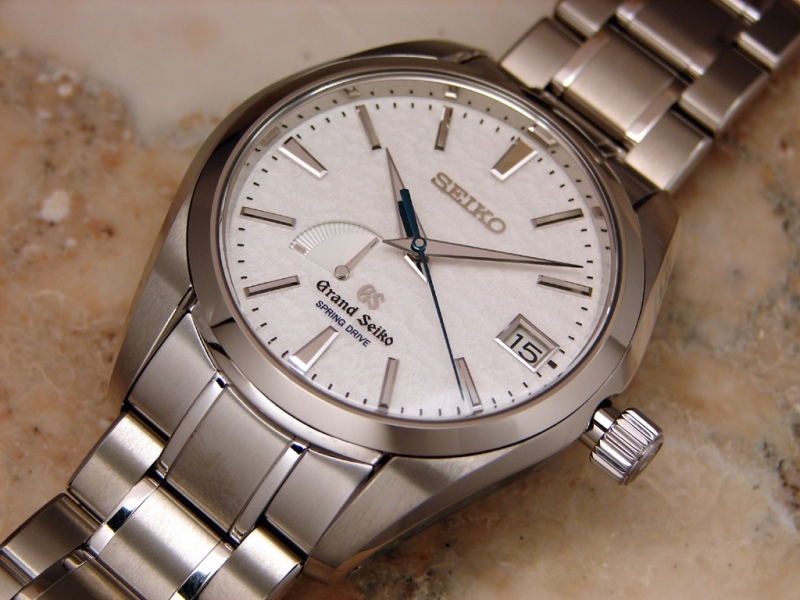
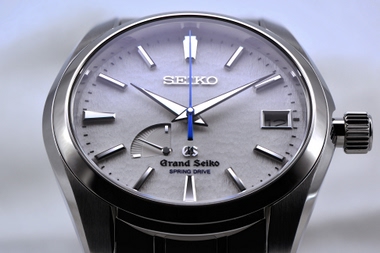
We'll skip the whole history and experience (for another post) and get on to the current example for this profile. Although its official title is SBGA011, the nickname is Snow Flake or Snow Drift. I think you can see why as soon as you see the dial. Like many of my Seiko watches, this has a polished titanium case and a blued second hand.
I seem to have bought this watch in early 2007. Based on this ad photo, it came from my pal Armin.
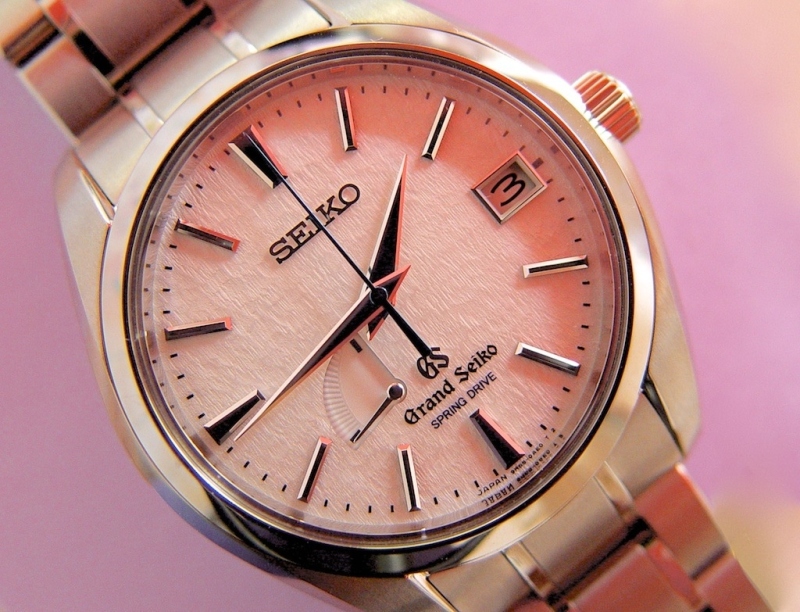
Here's one of the shots which I took very early in my ownership in April 2007. I have continued to love this photo. And the watch.
Now let's get on with the SEIKO PROFILE.
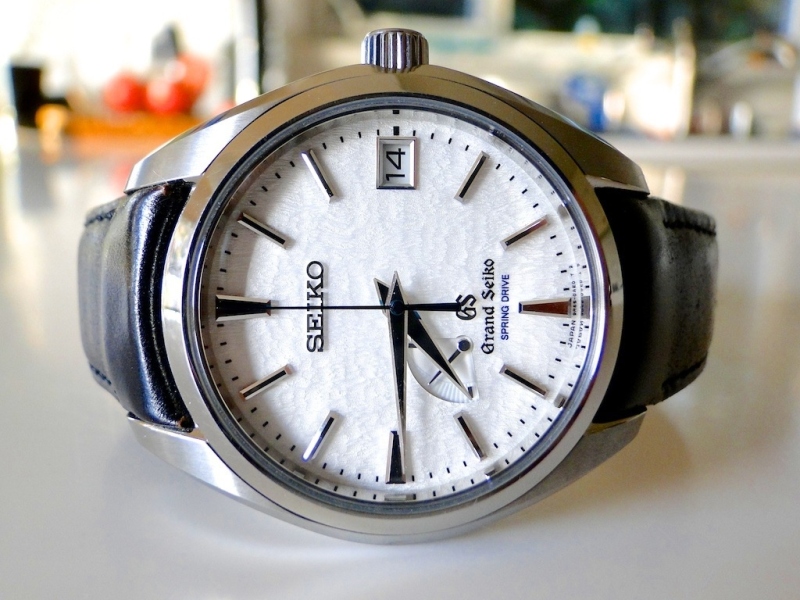
Here's a another look from the side.
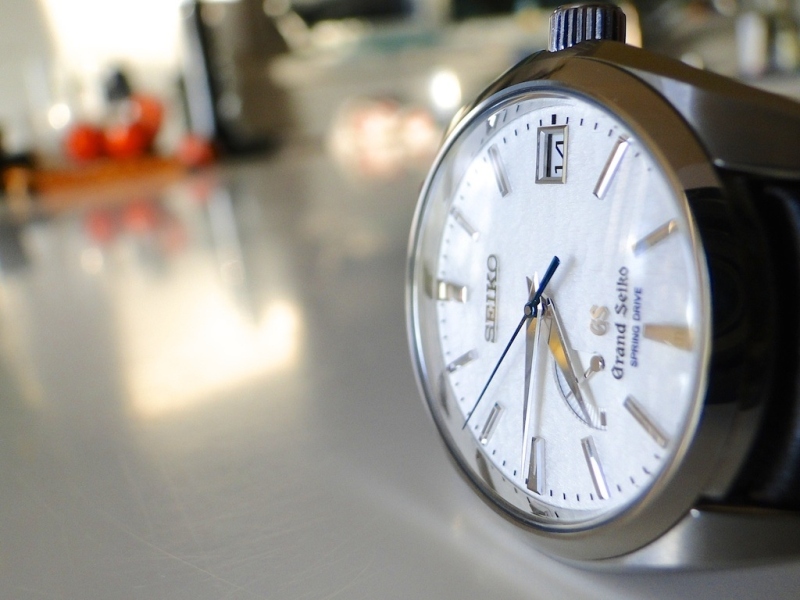
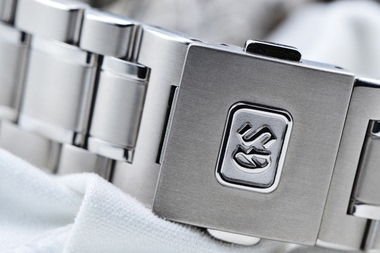
The watch came on a bracelet but I quickly moved it to this specially-shaped, very comfortable Seiko strap. The strap underwhelms me a bit, but not enough for me to change it.
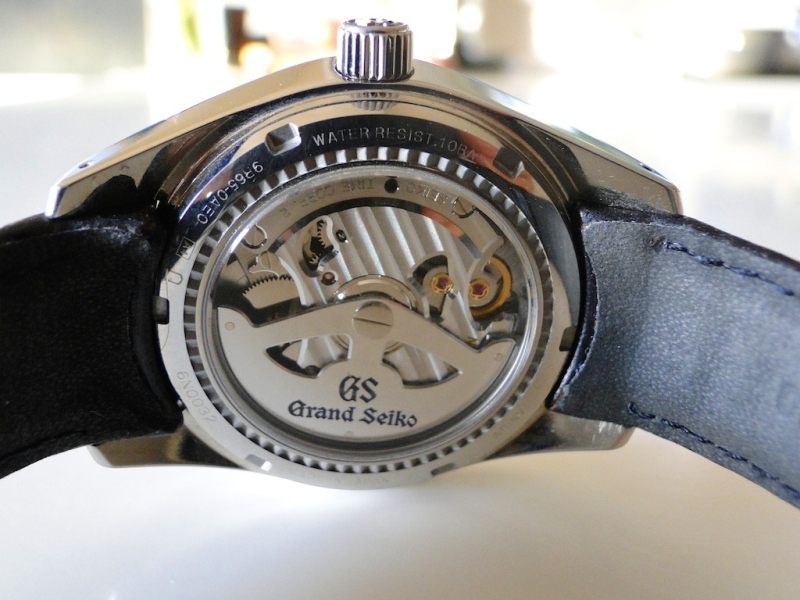
You can see the glide wheel at the right side of the photo above. The movement is very nicely finished, with stripes, bevels and polished screw heads.
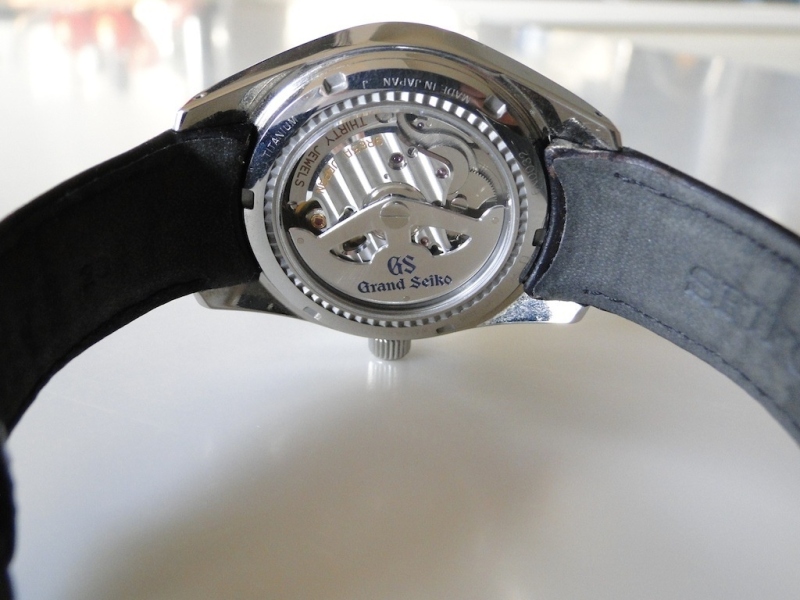
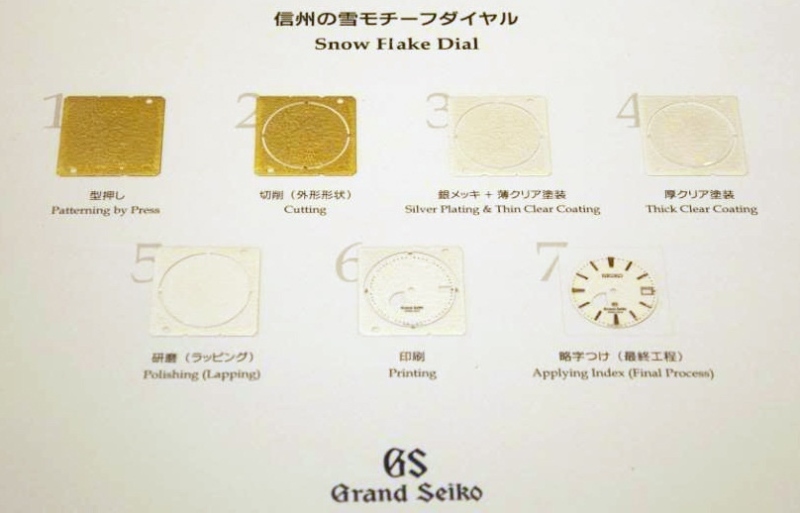
The dial is extremely readable in daylight but with no lume, not so visible at night. The textured dial is constructed in multiple steps, as shown in this Seiko illustration:
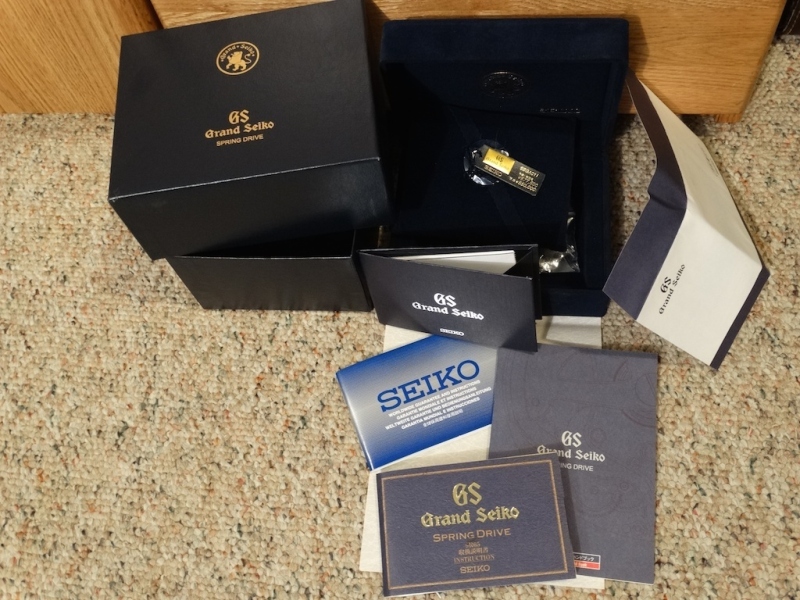
A surprising amount of material came with the watch. But not a testing certificate.
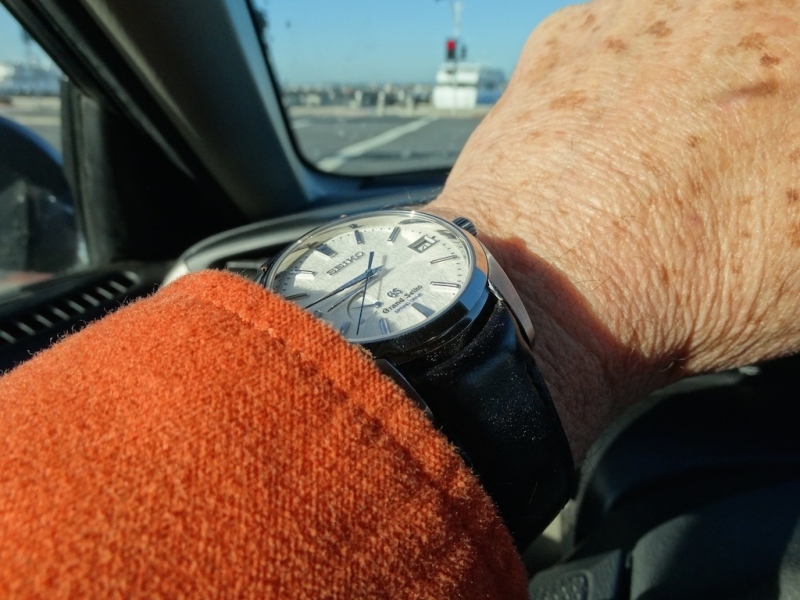
Although it's a dressy watch, I find it works well in many situations. Such as driving,
Boating,
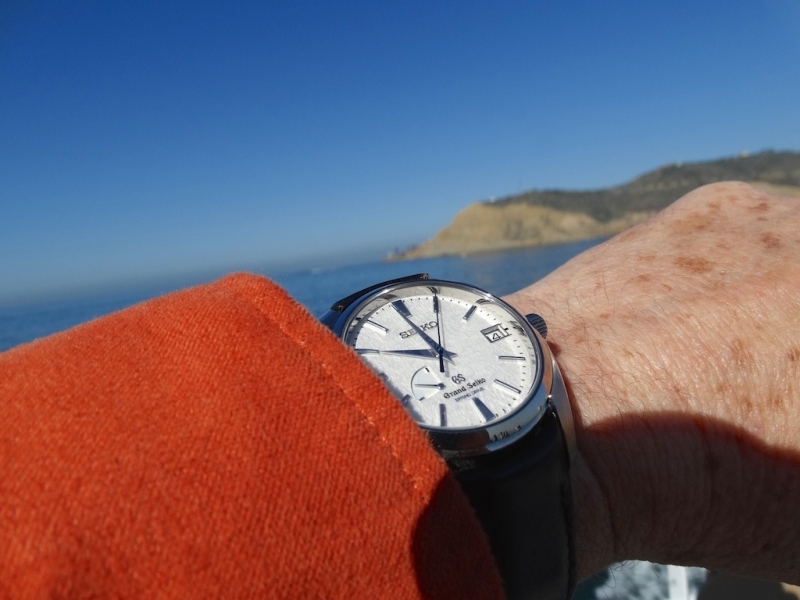
but I wouldn't take it in the water, despite the 10 bar rating and screw-down crown. It just doesn't seem right to me.
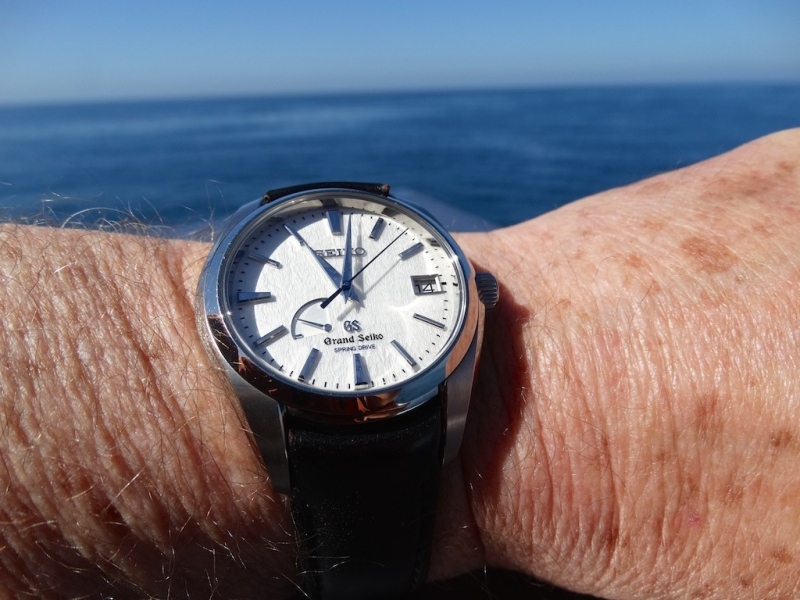
I hope that you have enjoyed this profile of the GS Spring Drive. I'll continue the PROFILE series with more watches, soon.
Please let us know if this level of detail is useful, entertaining, educational, or tedious.
Cheers,
Cazalea
This message has been edited by cazalea on 2014-03-14 22:14:55