New Release
Cazalea introduces Seiko's latest Speedtimer collection, drawing a direct line from the brand's 1960s sports timing innovations to today's Prospex releases. This article explores how Seiko's historical 'heart-shaped cam' mechanism and the 1969 Caliber 6139 automatic chronograph continue to inspire modern designs. Cazalea highlights a limited edition 100th Anniversary model and a series of solar chronographs, inviting readers to delve into the evolution of a significant Seiko lineage.


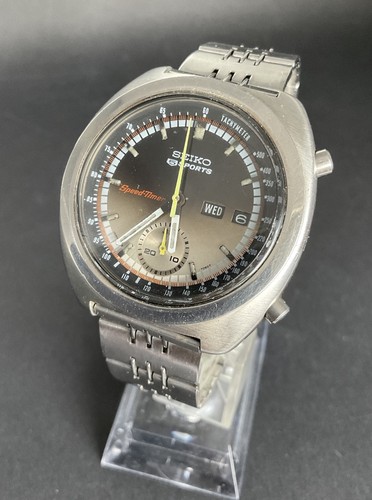
The Seiko 6139 chronograph movement, introduced in 1969, was a significant development in automatic chronograph technology. It was one of the world's first automatic chronographs to feature both a column wheel and a vertical clutch mechanism, innovations that contributed to its precise operation and smooth chronograph engagement. This movement was designed for robustness and reliability, reflecting Seiko's engineering capabilities during that era.
The 6139 caliber powered a variety of Seiko chronographs, often housed in distinctively styled cases that became popular among collectors. Its integrated design meant that the chronograph functions were built directly into the movement, rather than being modular additions. The movement typically featured a single sub-dial for chronograph minutes and a day/date complication.
For collectors, the Seiko 6139 series represents a pivotal moment in chronograph history, offering advanced technical features at an accessible price point. Its historical significance as an early automatic column wheel chronograph, combined with its diverse range of case and dial variations, makes it a sought-after vintage reference.
My Dad has the SS813 Speedtimer S
Image from Fratello
This thread is active on the Seiko forum with 9 replies. Share your knowledge with fellow collectors.
Join the Discussion →