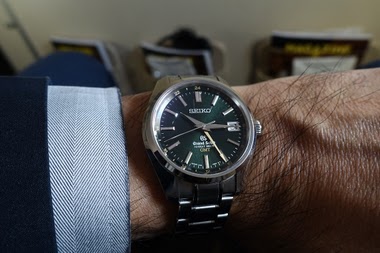
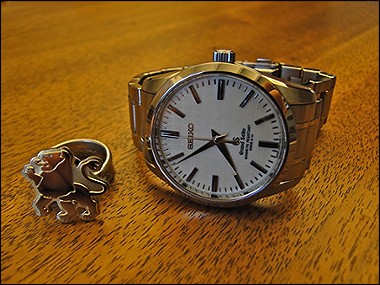
Cazalea embarks on a fascinating deconstruction of various quartz watch movements, offering a rare glimpse into their inner workings. This post provides an invaluable educational resource for enthusiasts curious about the often-overlooked mechanics of quartz timepieces. By dissecting different movements, Cazalea reveals both commonalities and surprising variations in their construction and finishing.
Having the means, the motive and the opportunity, I decided it was time to break some rules and unwind some of my quartz movements.
Before you try this at home, be aware that many movements are machine-assembled, and have multiple wheels and arbors that must go into plates with NO jewels. You will see what I mean as we proceed. I will also say upfront that I am NOT even going to reassemble these movements. They are discarded movements which I have accumulated over the years.
Each sample movement will be opened up and displayed so we can see what is unique and what is common to each. I'm using my iPhone camera today, so no great macro shots (not that they are necessary).
MOVEMENT ONE

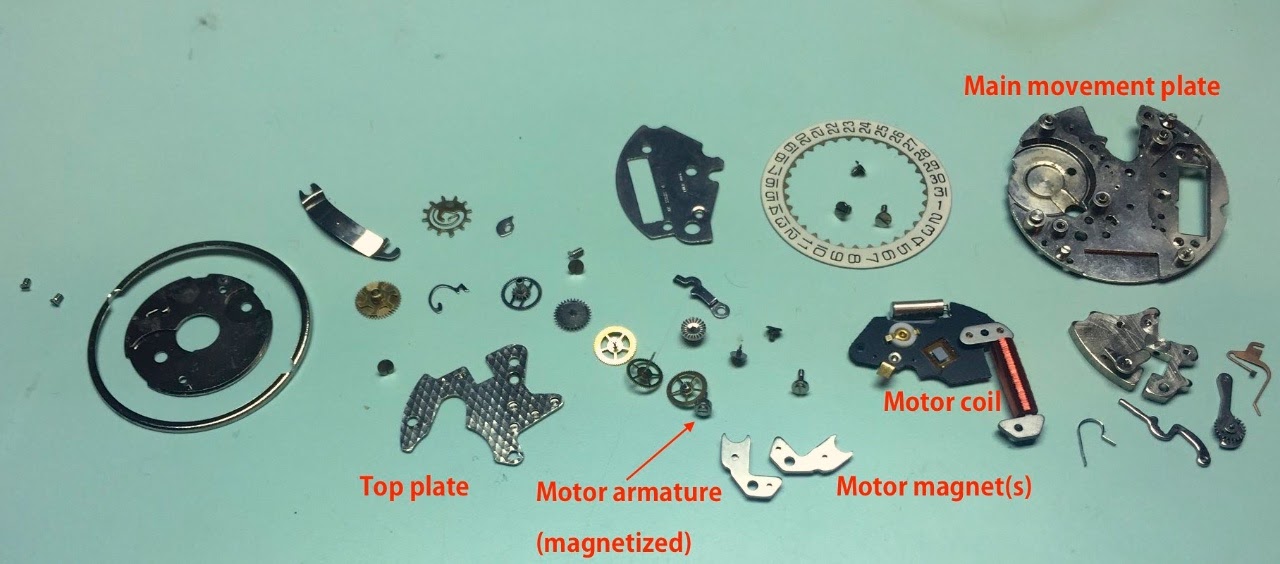
This box may not accurately represent the content, but generally I put the old ones back into the replacement movement's box. Here's how it looks after a moment or two:
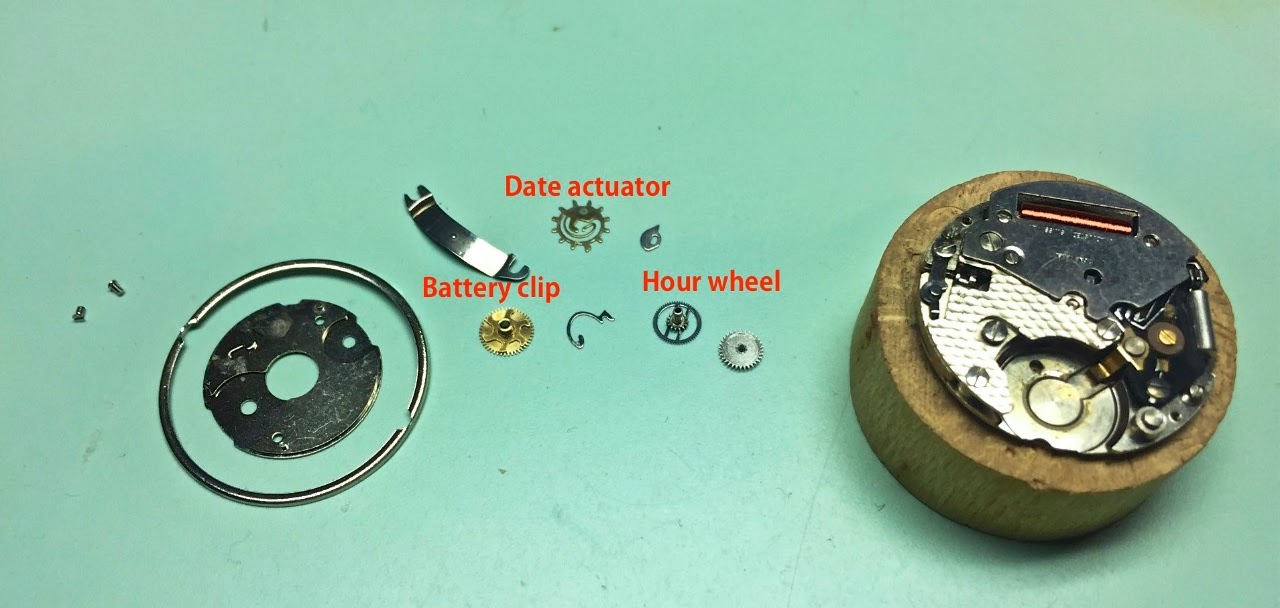
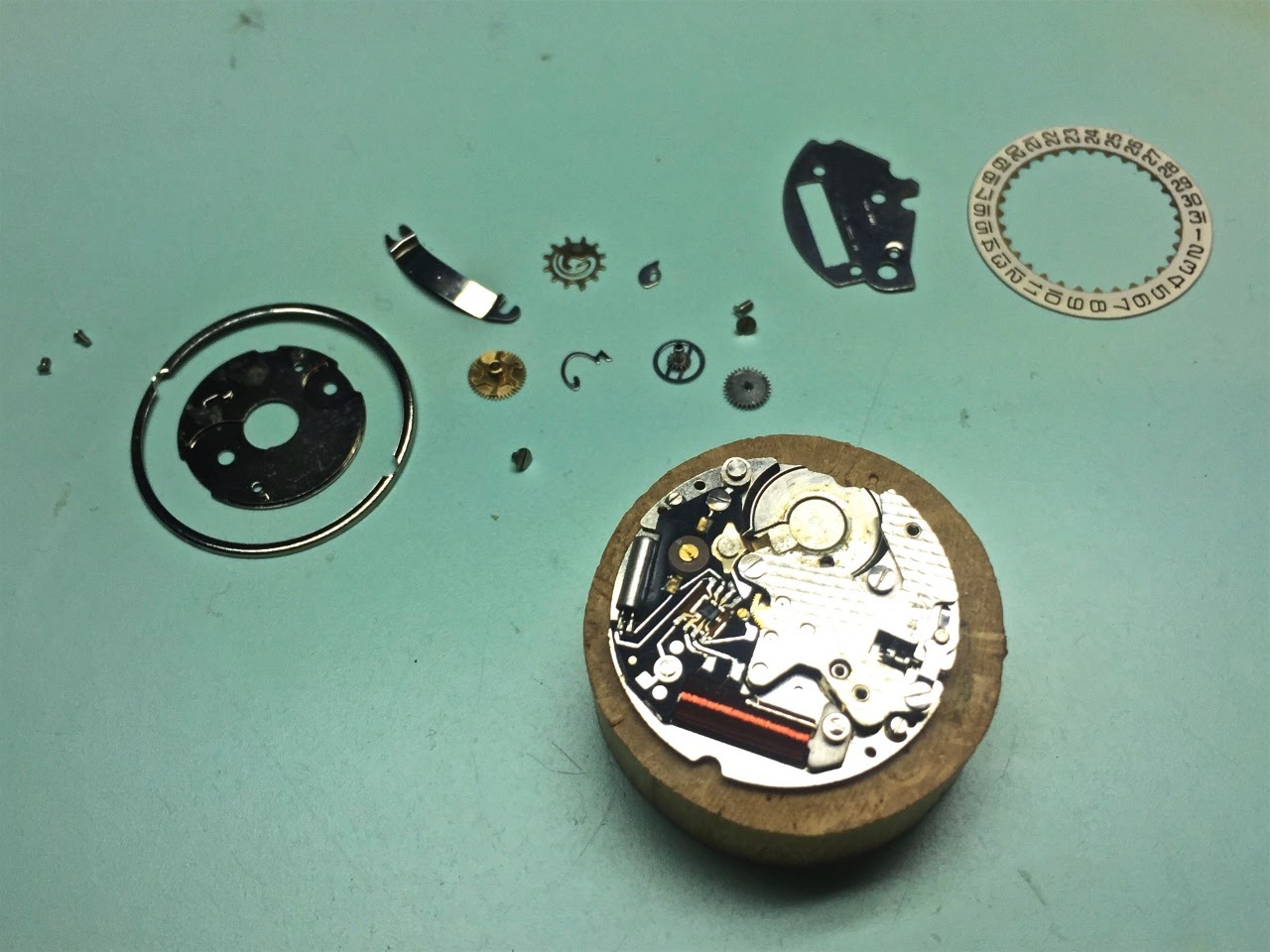

Here are all the parts, exposed.
MOVEMENT TWO
Moving along, we have a more nicely-decorated second movement. First I will take the gears off from the dial side (shown here)

This is labeled "Gucci" and has 6 jewels, which is a large count for a quartz movement.
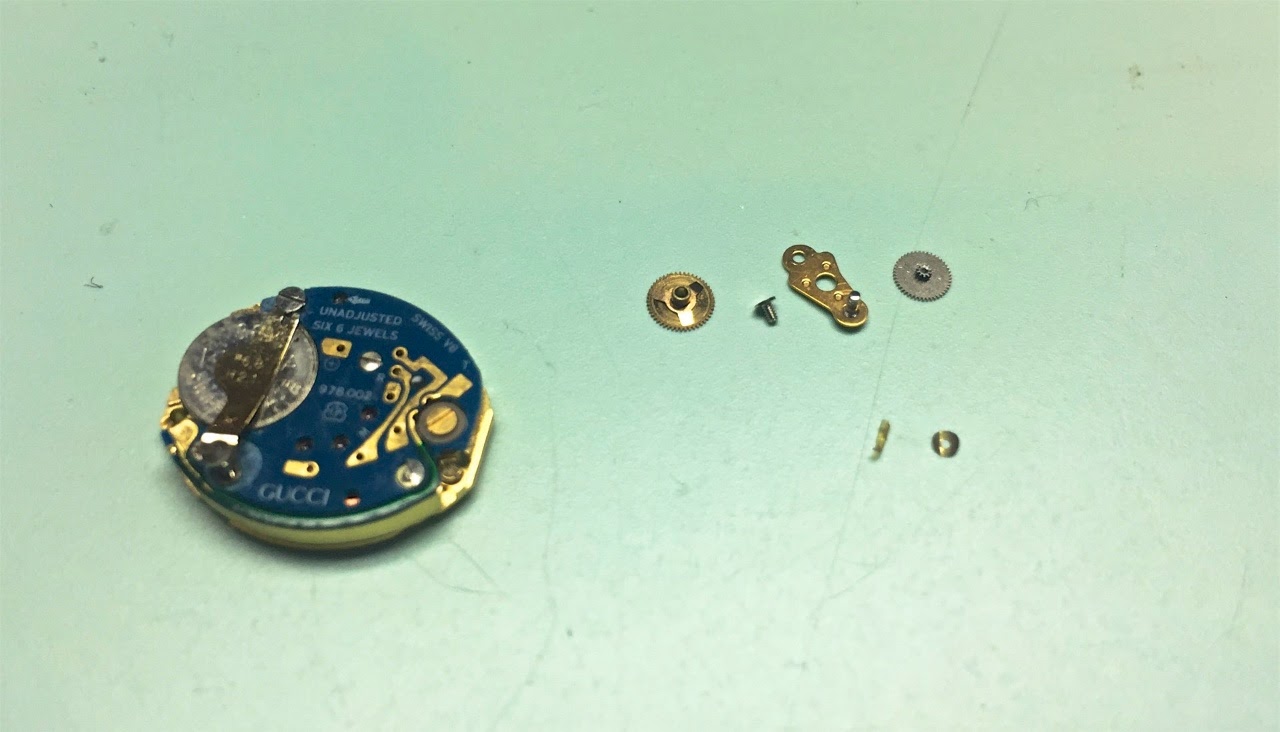
Here you can see the same common components found in the earlier movements.

MOVEMENT THREE
This is a Miyota movement. Almost all plastic!

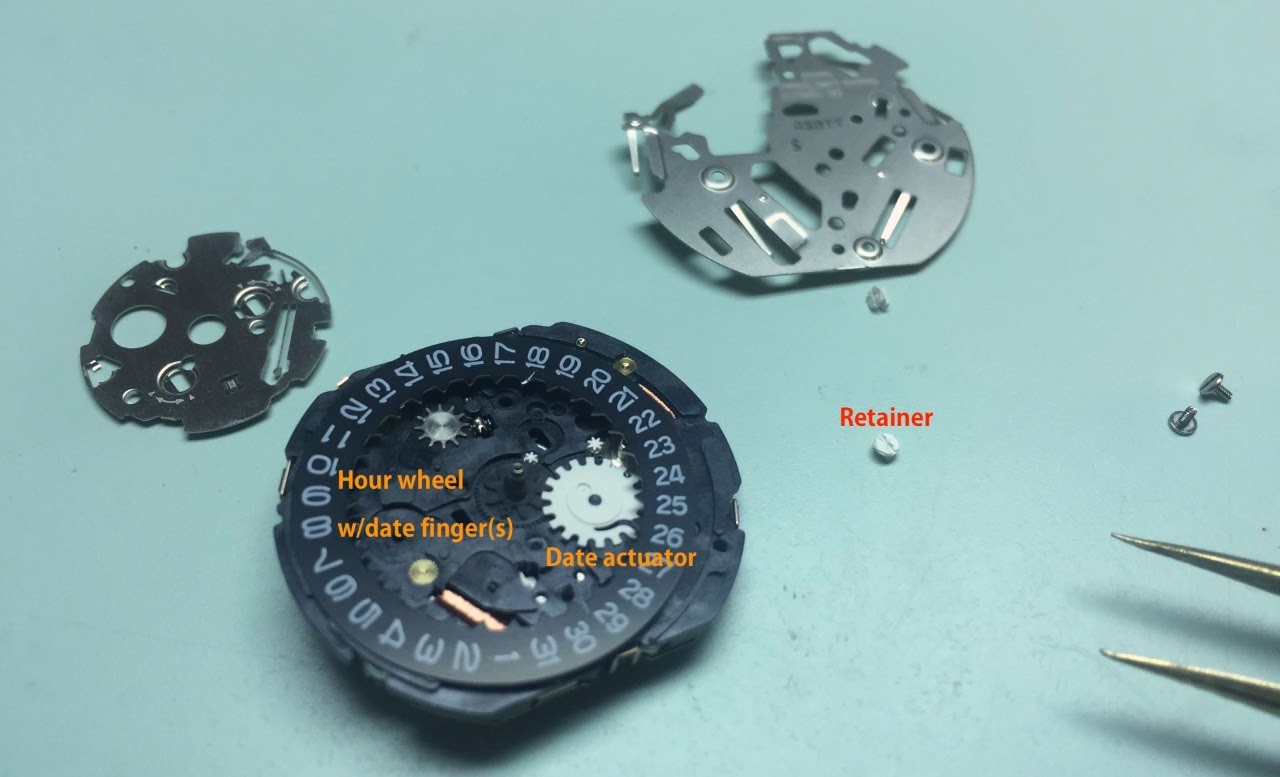
Here are the dial-side parts. The date wheel and actuator are plastic. Some of the sheet metal parts clip over the edge

Here I have separated the "plates" and found an unpleasant surprise. Did the previous owner spray a little WD-40 in here?

These parts are starting to become familiar to me
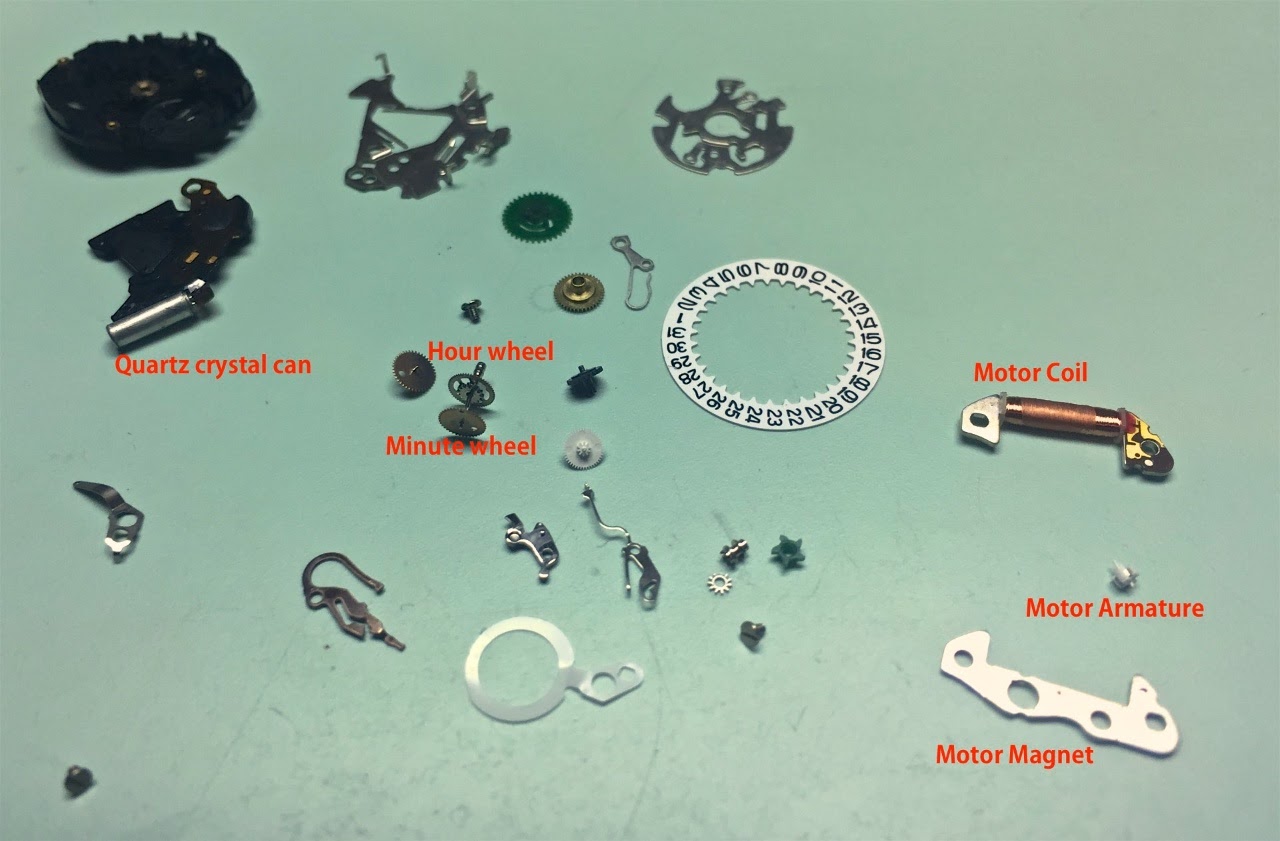
Into the bin they go!
MOVEMENT FOUR
This movement wasn't in a box so I don't know anything about it. I did notice the dial side cover was attached with two white 1/2 turn plastic retainers.

I removed the movement back and indicated its tiny white retainer so you can see it. These are used on both sides.
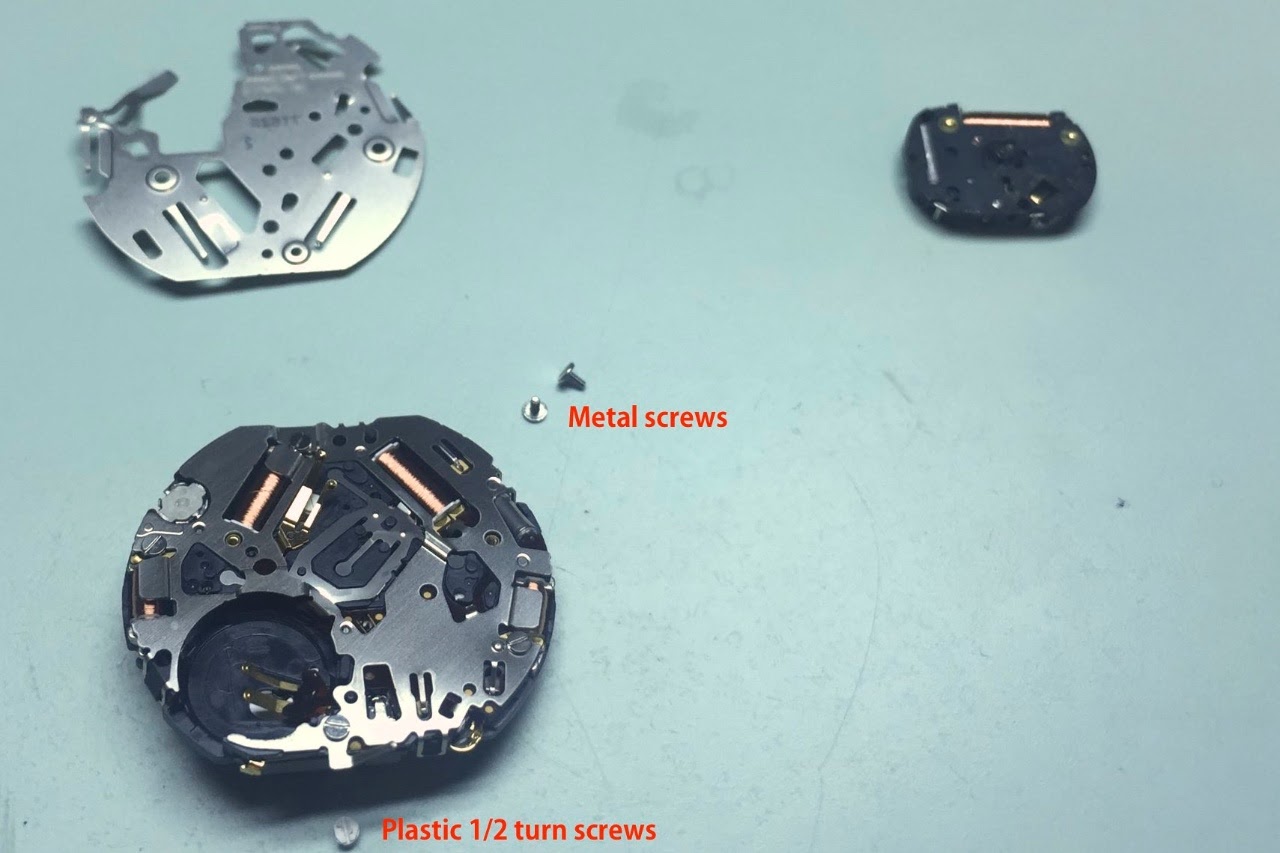
Here I am taking apart the dial side
Notice something new? Four motors - this must be a CHRONOGRAPH

More mysterious things are revealed when the circuit board is removed:

I certainly won't be getting the main bridge back onto all these items!

Notice that the one crystal and integrated circuit appear to be able to time/control all the motors. The "control" of the chronograph is electronic, not mechanical (or we wouldn't need 4 motors)

Detail of the motor armatures. I believe the chrono hands are pressed directly onto these shafts, but since there are gears on each, they may drive more gears.

Fading away photo to show all the components in this movement.
 MOVEMENT FIVE
I have a Seiko 7T59B movement. This was the world's first 1/100th of a second analog quartz chronograph with day + date + GMT, with retail price new over $1000. It's not working but I have hopes of getting it fixed. So I won't take it apart today.


MOVEMENT SIX, SEVEN, EIGHT?Is it time to step it up and dismantle one of my more expensive Swiss movements?
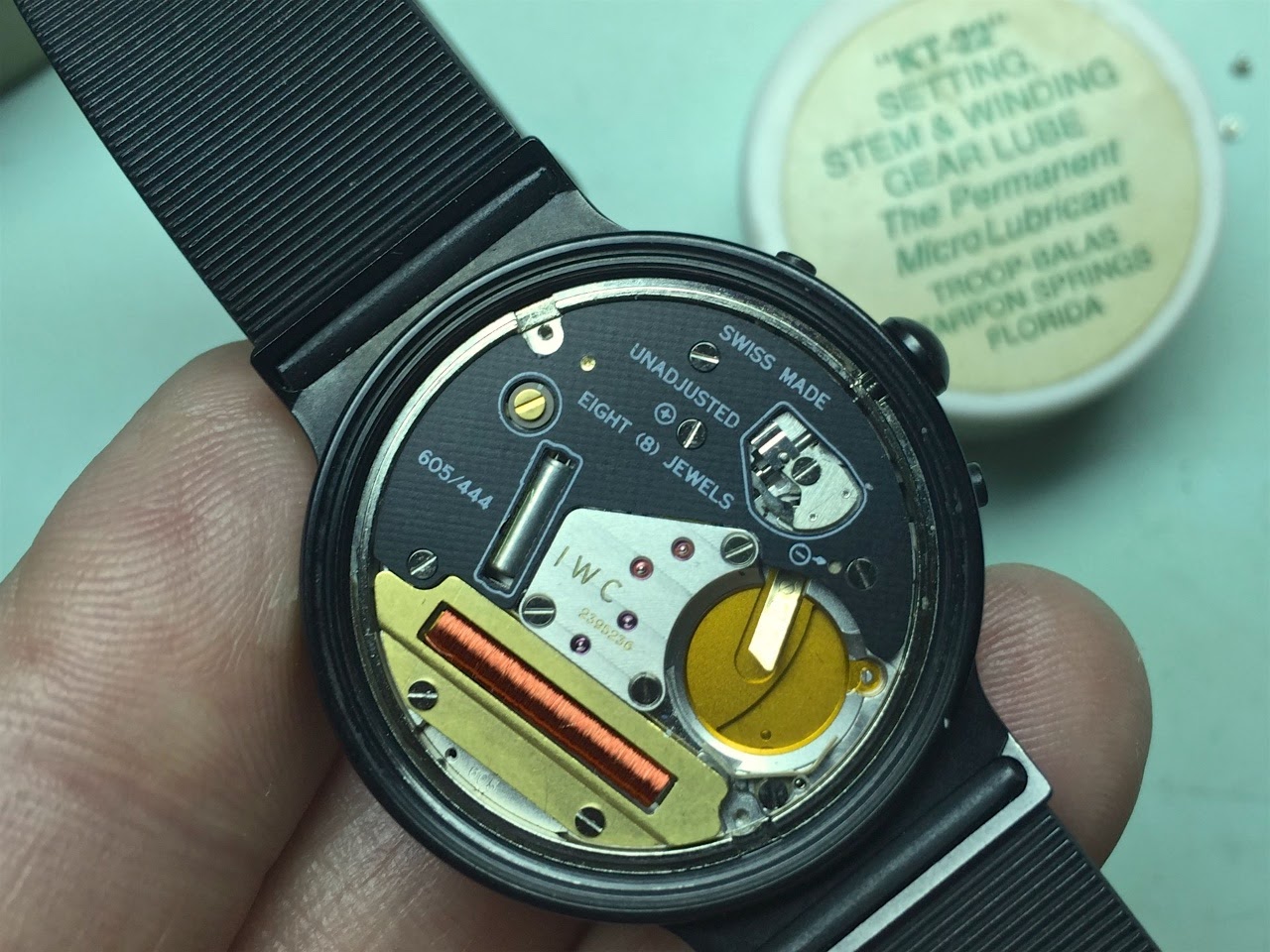
I'm not sure I want to undo my IWC as it still runs fine (once in awhile).
How about another Swiss movement? Notice the variety of location of the common (shared) components. There is no "one fits all" quartz movement.
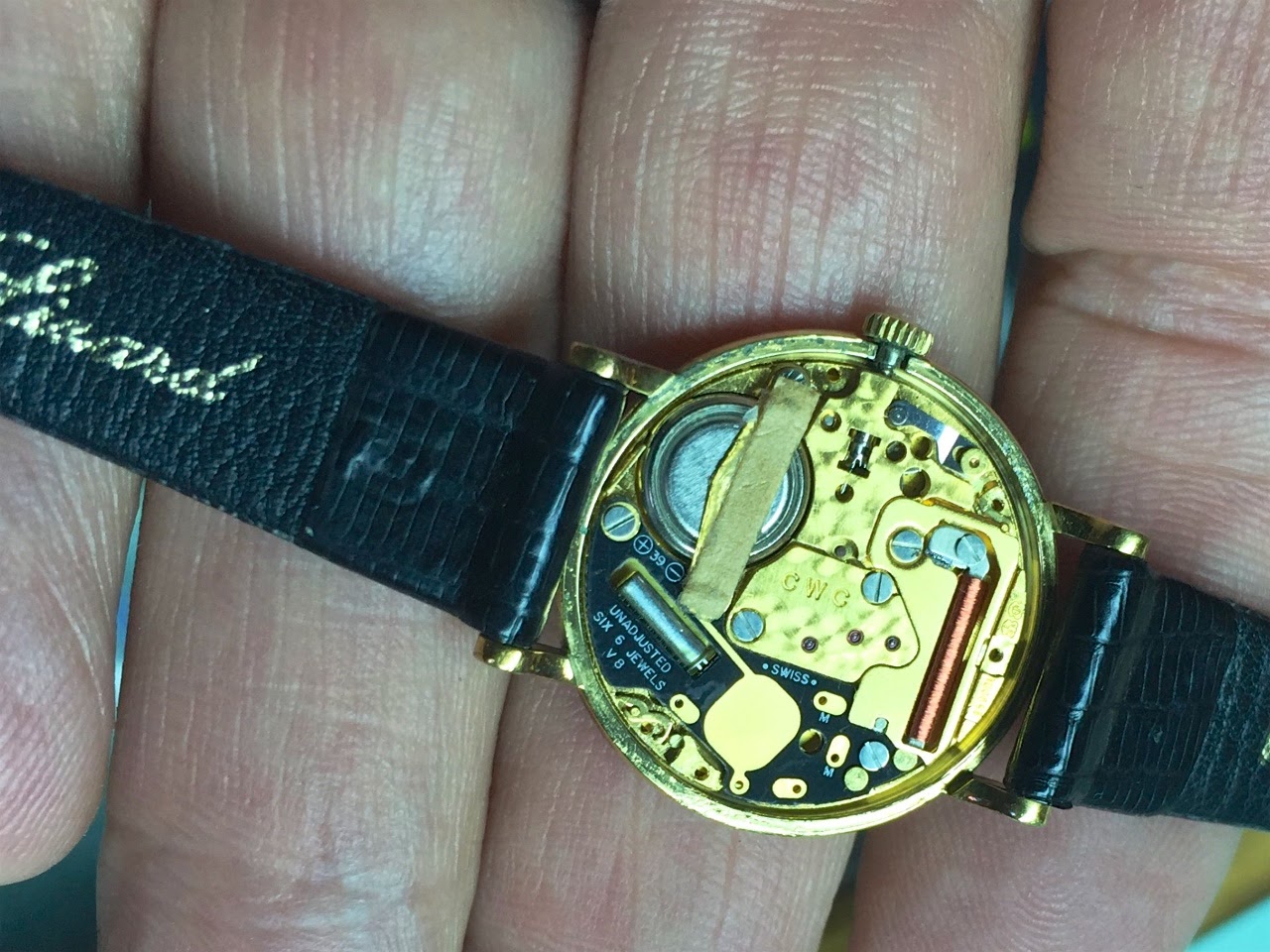
The movements above and below have a similar wheel train -- each has 3 jewels visible, in a line, coming straight from the coil toward the center of the movement. The quartz crystal can is not in a similar orientation though.

MOVEMENT NINE
Now, if we really want to go wild we could attack the mecha-quartz JLC movement, here as extracted from a Breitling. This has a quartz "motor" with mechanical chrono module stacked on top. I got this in for service from a friend and after about 10 seconds of consideration, sent it to the Breitling factory service specialist on the West Coast. He did a beautiful job. Sorry I don't have better pictures, but you can see the motor coils (red) and the battery. There's a flyback switch in the crown too (notice the tangs visible here).
MOVEMENT TEN
Shall I break into the "sealed cabin" which Seiko says preserves this movement for up to 50 years without added lubrication, and just a new battery every 3-4 years?
No, I don't think so.

We can stop here. I will clean up my bench and toss all these bits into the scrap jar.
I hope that this little tour has helped clarify what's going on inside that quartz wristwatch you wear now and then. Perhaps sometime later I can dig into Kinetic and Solar quartz watches.
Please let me know if you liked this.
Cheers,
Cazalea