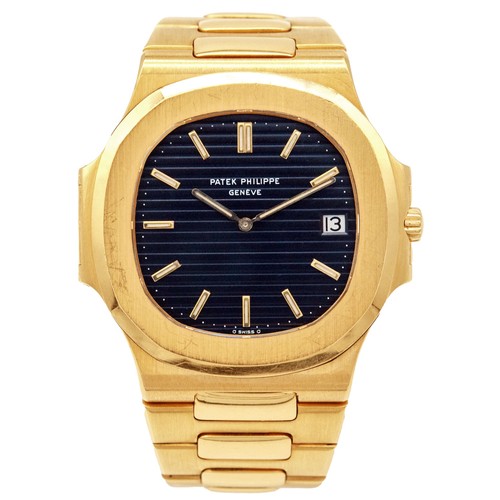
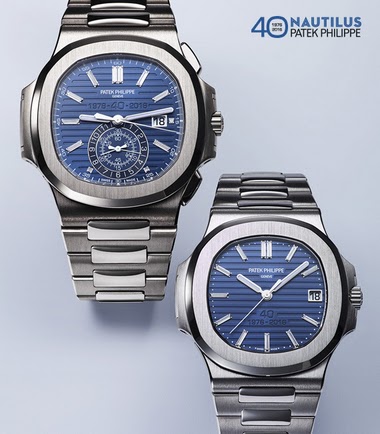
Reference Guide
Mstanga presents the tenth installment of his acclaimed "How to" series, offering a definitive guide to the intricate dial types of the Patek Philippe Nautilus Ref. 3700. This meticulously researched article, the culmination of years of study and collector interviews, aims to demystify one of the most challenging aspects of authenticating this iconic reference.


Hi friends,
"How to" number 10 is about the most difficult, hard studied research I've ever made: the dials of the Nautilus ref. 3700. Many and many years of study, hundreds and hundreds of pics thoroughly analyzed, hours and hours of interviews with collectors.
Here it is for you. (also available on issuu . com / mstanga )
HOW TO n. 10 – (The dials dilemma part. 2 - the Patek Philippe Genève writing – dial types)
I've been studying Nautilus ref. 3700 for so many years but what happened to the dials is still a dilemma with many certainties and some assumptions.
All of this that will follow is based only on my multi years studies and respects only my personal opinions, can not be considered the absolute truth that is the prerogative of Patek Philippe itself.
Dials were created and made "usually" by Stern Frères, generally hand made and the stripes engraving techniques differed with years.
In this "How To" we will focus on the writing "Patek Philippe Genève and on its correlations with what is written at 6 hours.
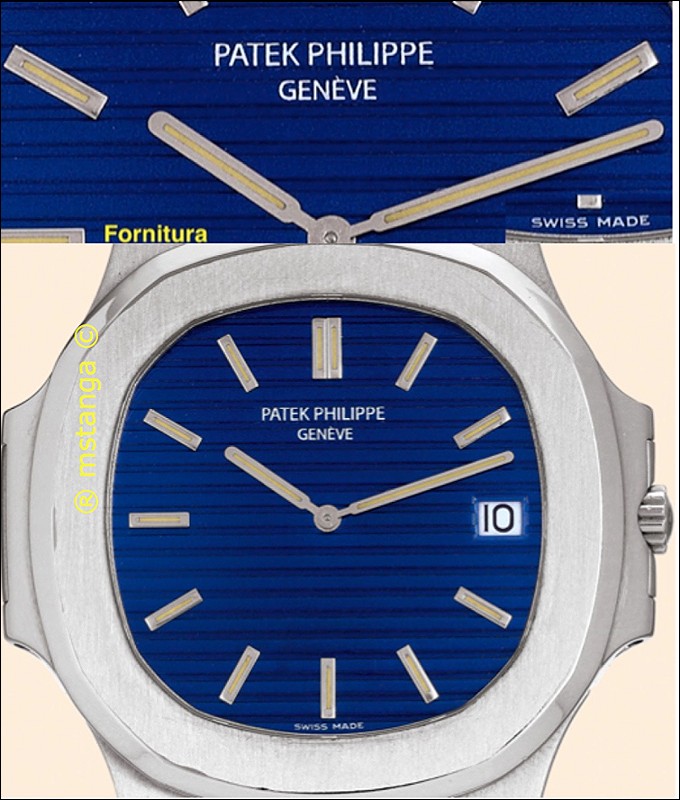
We will start taking as an example the image on the Patek Philippe booklet that was sold together with the watch starting from 1976 and from there we will continue analyzing all the possible known variants, so will face dial type 1(lines) and 1B(dots), 2, 3, 3, 4, 5, 6, 7, and the after service dials.
If I were to advise someone (that want to be sure at 100%) on a purchase I would say that it is better (almost mandatory) to choose, in addition to other checks, one 3700 with type 1 (lines or dots), 2 or 3 dials. (Dials type 6 and 7 are to be placed temporarily in a precise way and very carefully.
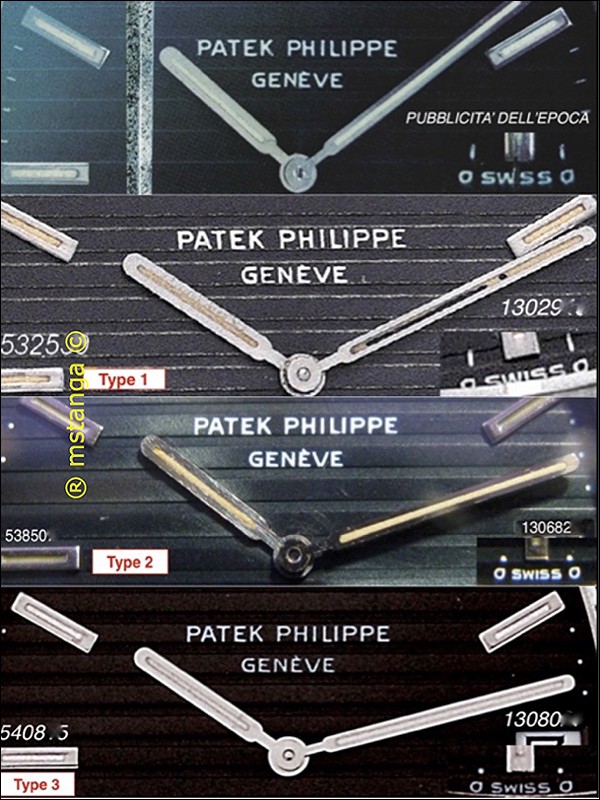
Type 1 dial
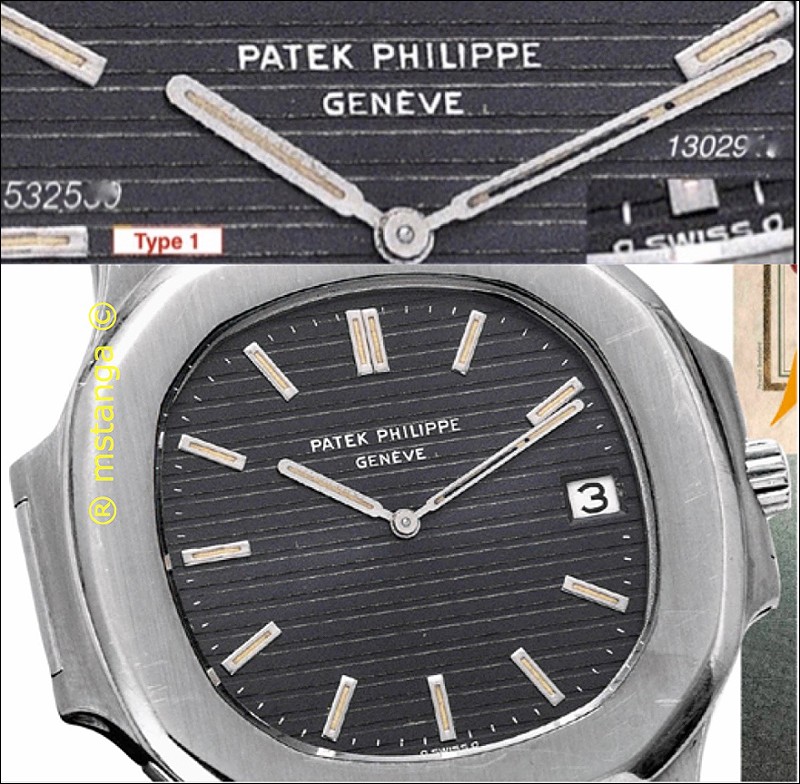
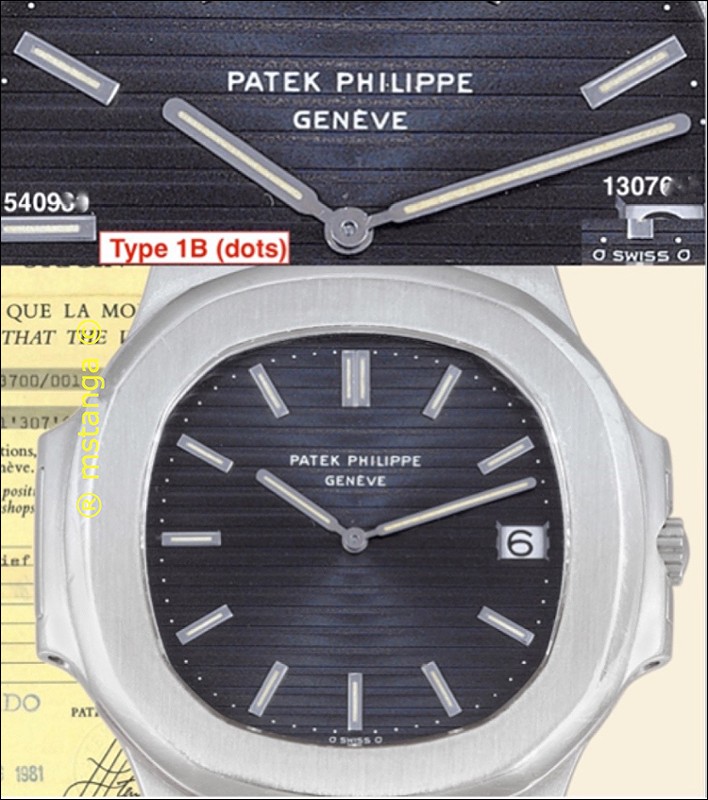
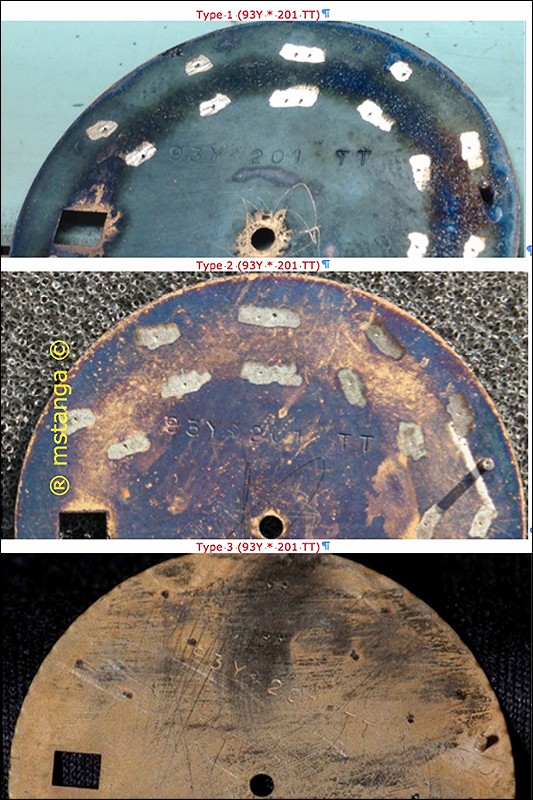
The very first ref. 3700/001 starting from 1976 until movement serial number lower than (about) 1303999 and case serial number lower than (about) 533000 had the minute track with little lines and not with dots as we are used to see in the most of 3700's dials. We find at 6 hours "sigma SWISS sigma" and the stress is very close (attached) to the second "E" of GENÈVE, the "H" is narrow, the legs of "K" are converging (to the same point). We can find this kind of writing on the dials with the minute track with dots too (type 1B (dots).
Type 2 dial
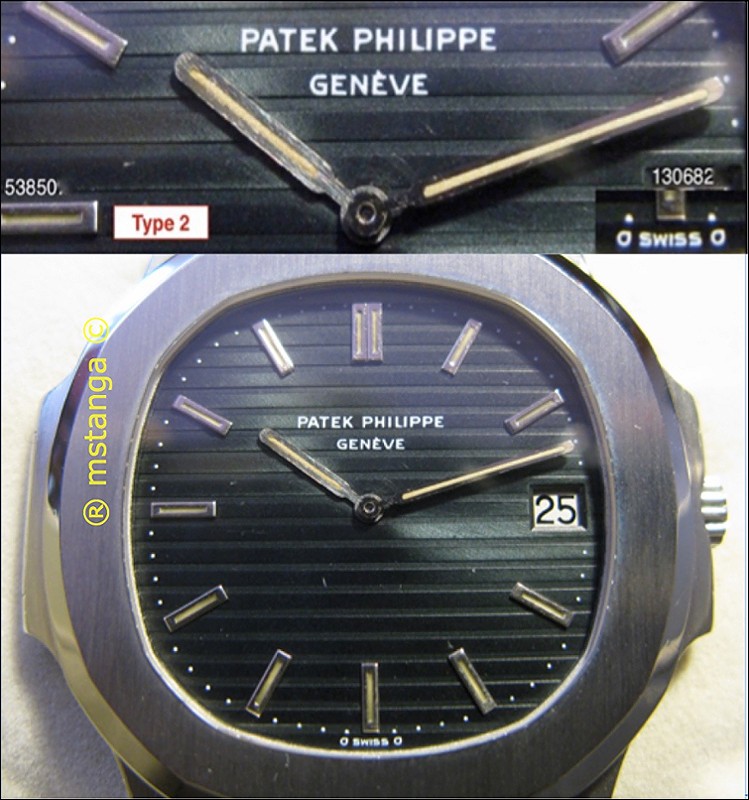
This type of writing is similar to the type 1 (maybe the writing is a bit thicker), the stress is very close (attached) to the second "E" of GENÈVE, the legs of "K" are converging (to the same point) but the lower summit of the "V" is truncated, "H" is a bit wider, the upper semicircles of the "P" are a bit different. We find at 6 hours "sigma SWISS sigma" This type of dial was mounted starting from about end of 1977 beginning of 1978.
Type 3 dial
This type of writing is similar to the type 1 but the lower summit of the "V" is truncated, "H" is a bit wider, the stress on the second "E" of GENEVE is not so close, still attached but a little more prominent and the legs of "K" are not exactly converging to the same point. We find at 6 hours "sigma SWISS sigma". It is supposed that this type of dial was mounted starting from about end of 1978 beginning of 1979
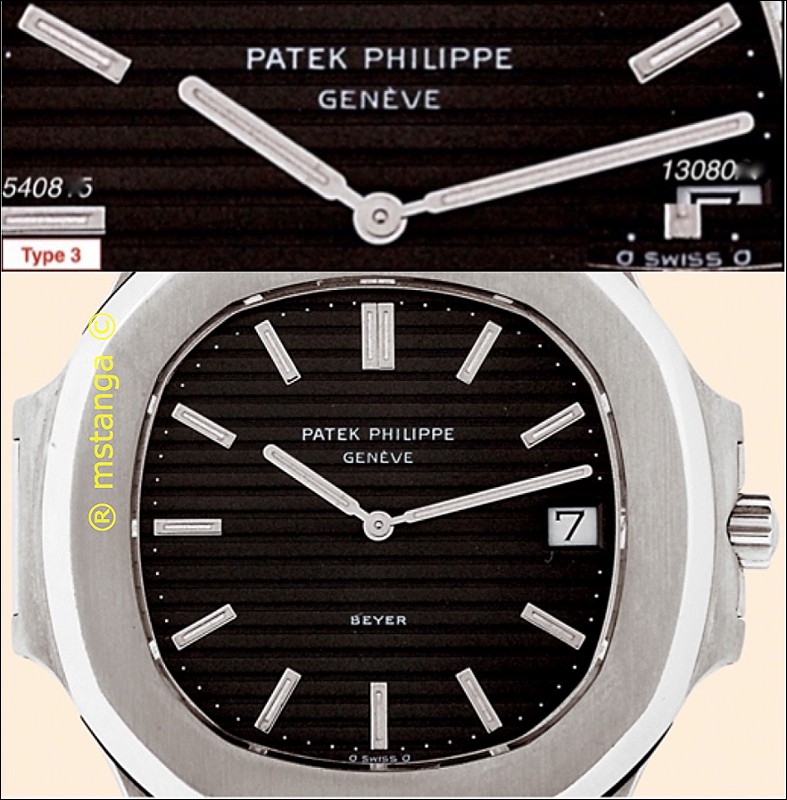
Type 4 dial
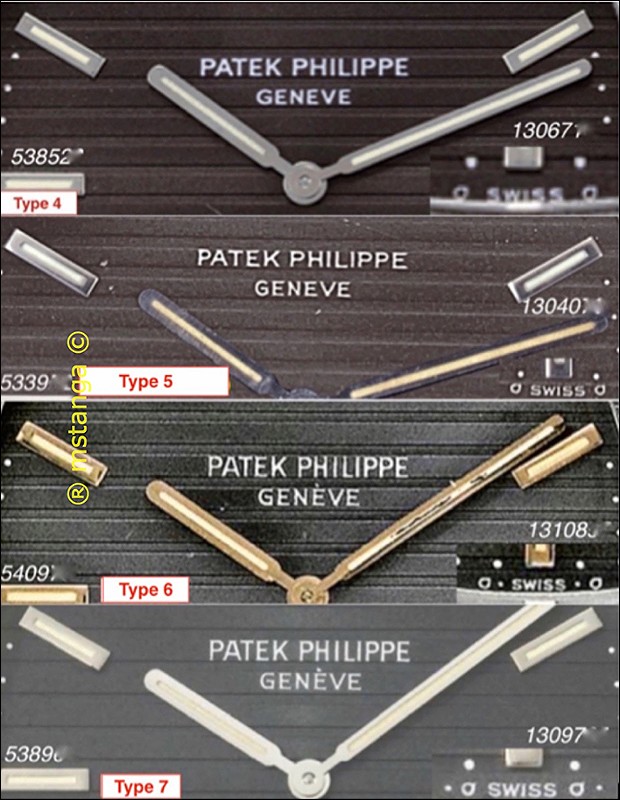
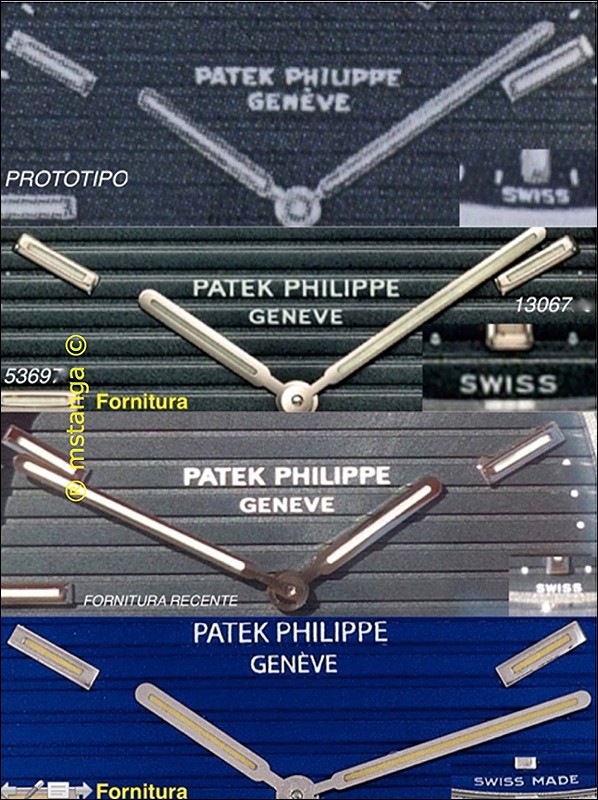
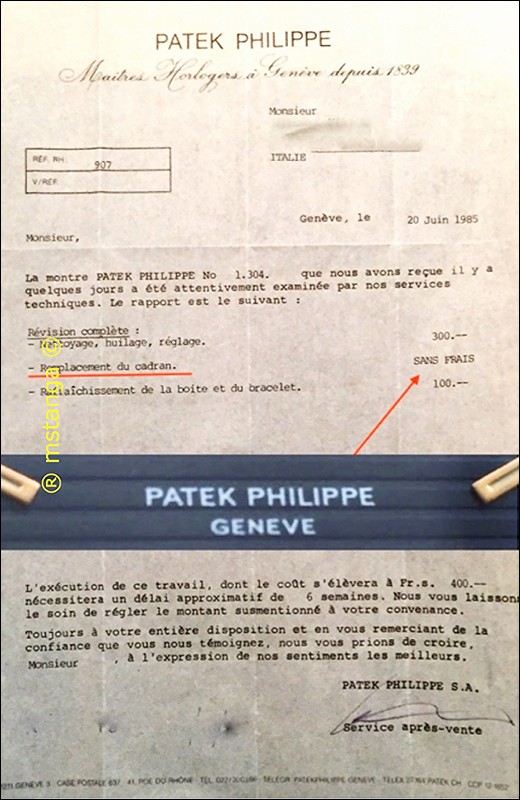
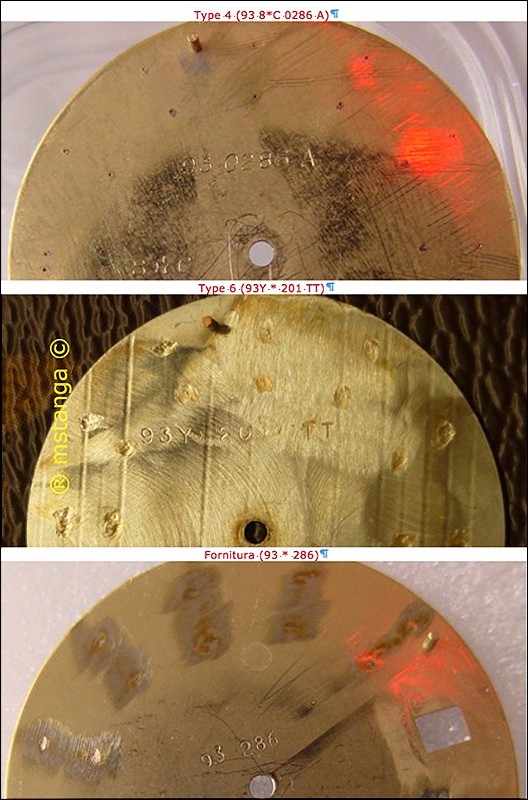
The main characteristic of this dial is that we do not find the stress above the second "E" of GENEVE, the "H" is wider than in type 1, 2 and 3 dial, the middle line of all the "E" is about as long as the upper and the lower one. We find at 6 hours "sigma SWISS sigma". My opinion is to pay close attention in evaluating for a possible purchase a 3700 with such a kind of dial because we have evidence that Patek Philippe used since the 80s this kind of dials as replacement (it was common practice, on the occasion of a revision, replacing the dial, without cost to the customer, if this had been considered damaged)
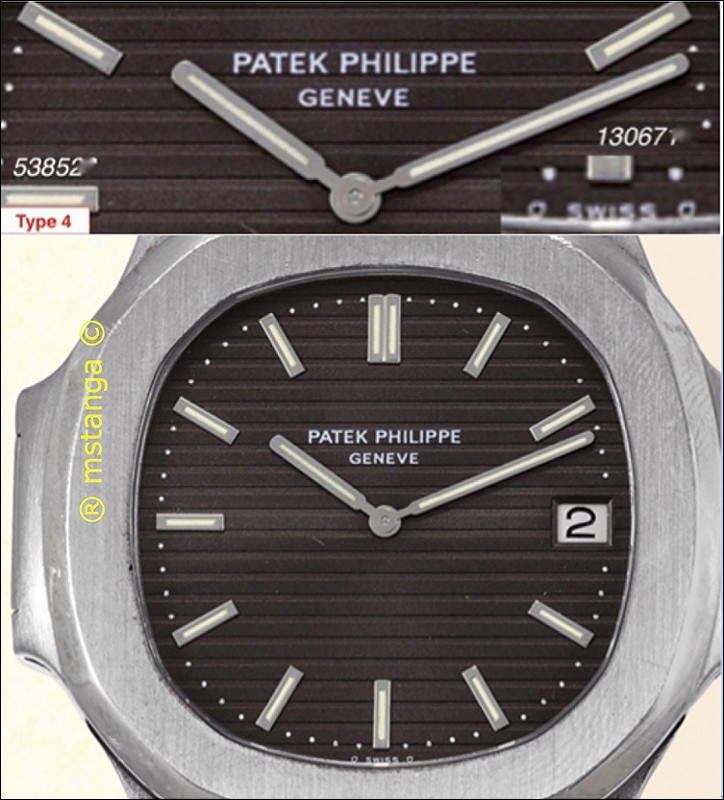
Type 5 dial
Almost the same characteristics of the type 4 dial but the form of the "K" is very strange with the lower leg very much shorter than the upper one, they are converging to the differents points, the "E" are wider and the middle line is very much shorter than the upper and the lower one. We find at 6 hours "sigma SWISS sigma". My opinion is to pay close attention in evaluating, for a possible purchase, a 3700 with such a kind of dial
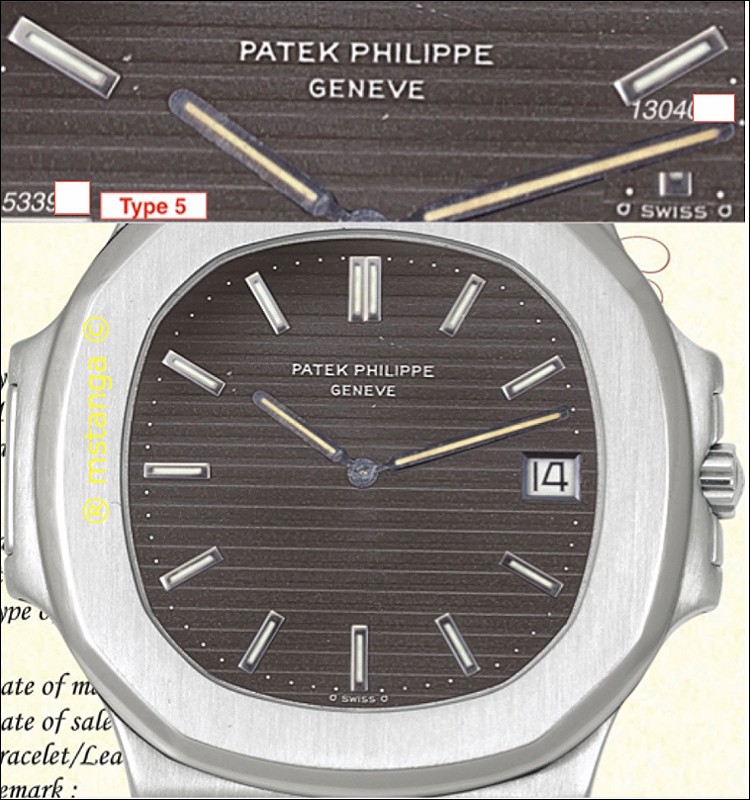
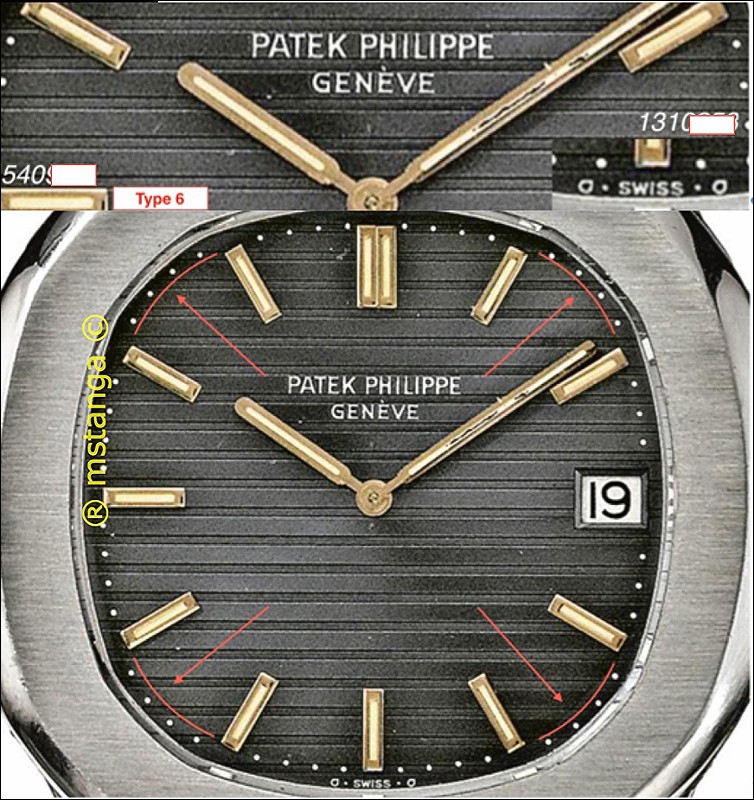
Type 6 dial
Starting from about 1980 we began to see also dial with "? . (dot) SWISS . (dot) ? "(type 6) and ". (dot) ? SWISS ? . (dot)" (type 7), these two types of dials have common characteristics except for the writing at 6 hours. The minutes track's dots (6, 7, 8, 9 – 21, 22, 23, 24 – 36, 37, 38, 39 – 51, 52, 53, 54) are extremely external to the minutes track itself, the writing "PATEK PHILIPPE GENEVE" is higher, the legs of "K" are not exactly converging to the same point, the stress is detached from the second "E" of GENEVE, sometimes these dials are of special colors (very light blue or even green).
These dials are to be placed temporarily in a precise way and very carefully.
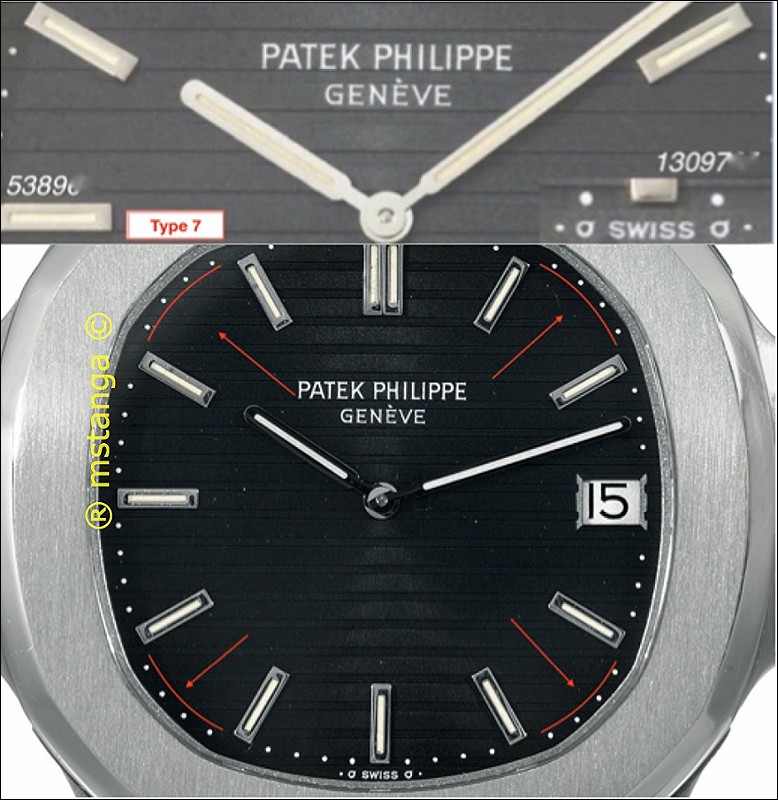
Type 7 dial
Starting from about 1980 we began to see also dial with "? . (dot) SWISS . (dot) ? " (type 6) and ". (dot) ? SWISS ? . (dot) " (type 7), these two types of dials have common characteristics except for the wrinting at 6 hours. The minute track's dots (6, 7, 8, 9 – 21, 22, 23, 24 – 36, 37, 38, 39 – 51, 52, 53, 54) are extremely external to the minute track itself, the writing "PATEK PHILIPPE GENEVE" is higher, the legs of "K" are not exactly converging to the same point, the stress is detached from the second "E" of GENEVE, sometimes these dials are of special colors (very light blue or even green).
These dials are to be placed temporarily in a precise way and very carefully.
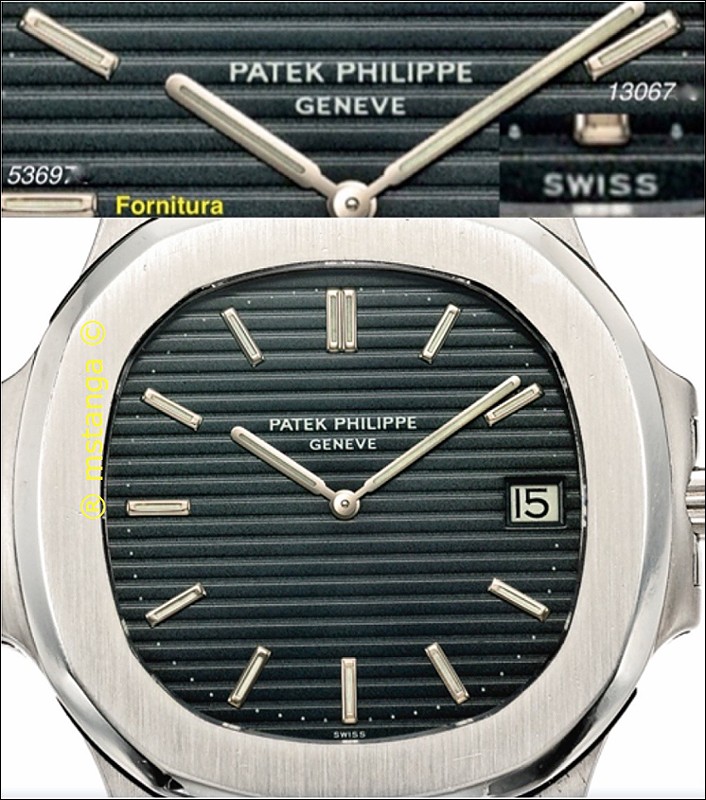
After service dials
It is our opinion that dials with only "SWISS" at 6 hours and without the stress above the second "E" of GENEVE are "to be considered after sevice dials mounted by Patek Philippe in a second time
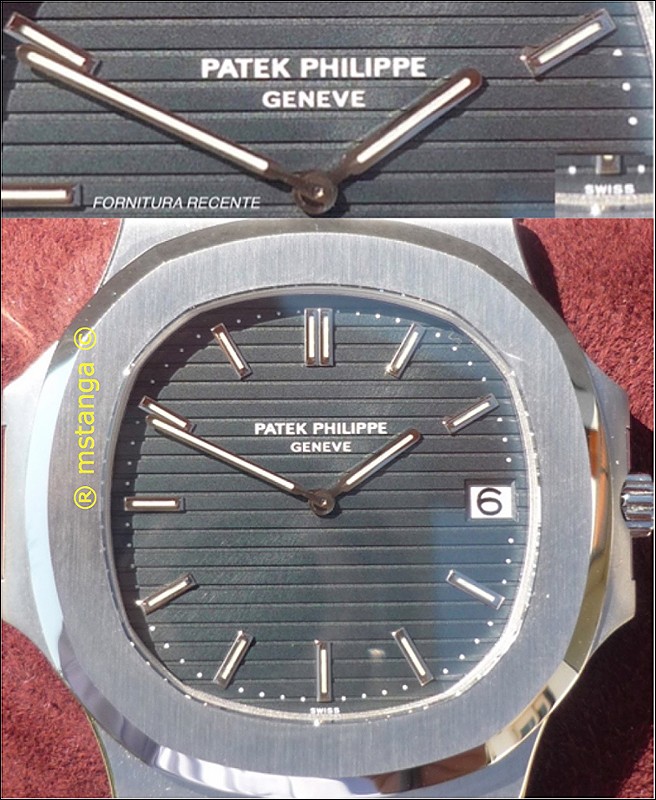
About the following dial we have written documentation of a replacement made by Patek Philippe during a service because the dial was damaged
The Patek Philippe reference 3700 is recognized as the original Nautilus model. It established the distinctive porthole-inspired case design and integrated bracelet that define the collection. This reference was produced for a significant period, laying the foundation for subsequent Nautilus iterations and solidifying its place in the brand's sports watch offerings.
This reference features a stainless steel case measuring 42 mm in diameter and 7.6 mm in thickness, fitted with a sapphire crystal. It houses the self-winding Caliber 28-20 C, which provides a power reserve of 45 hours. The watch is water-resistant to 120 meters and typically presents with a blue dial, offering a date complication.
The 3700 appeals to collectors interested in the foundational pieces of significant watch lines. It represents the initial vision for the Nautilus, preceding later mid-size and complicated versions. Its production run from 1976 to 1990 saw various dial and bracelet configurations, making specific examples of interest to those studying the model's evolution.
As of today, 2828 Patek Philippe listings are live on the eBay market and 1721 collector listings on the WatchProSite marketplace.
Absolutely fantastic work, mstanga!! I can not even begin to guess how many hours of thorough research it has taken you to assemble and organize this detailed information. Although I don’t have a Nautilus (yet) I have truly enjoyed your entire series of posts on this topic. Again, fantastic work, and thanks a lot!
complimenti Marco! ciao, chris
Even when not really looking for one, this is a very instructive thread. Thanks Marco! Cheers, Mark
the entire series has been phenomenal reading but this last piece tops it all. vintage is such a tough world to venture into and having this reference source is priceless! thanks a lot for sharing!
Thank you but... the "How to" series is not over yet. So get ready! Marco p.s.: You can find all together at: issuu . com / mstanga
What a fantastic post I really want to Hunt a few 3700 now Continoue your studies please Hans
This thread is active on the Patek Philippe forum with 6 replies. Share your knowledge with fellow collectors.
Join the Discussion →