Complications
KIH shares insights from a Patek Philippe seminar in Japan, led by journalist Mr. Hirota, focusing on the distinct advantages of PP's annual calendars and the aesthetic mastery of their cases and dials. This report illuminates why these timepieces are considered practical, durable, and enduringly beautiful by collectors.



I
attended a seminar sponsored by Patek Philippe Japan and Chronos
Japan at The Hour Glass Ginza where the well known watch journalist
of Japan, Mr. Hirota, gave the audience some enlightenment of how
PP's annual calendars are different and thus better in certain
aspects. Maybe you, PP experts. already know of these, but I
thought it would be good to share what I learned in case you want to
deepen your admiration for PP.
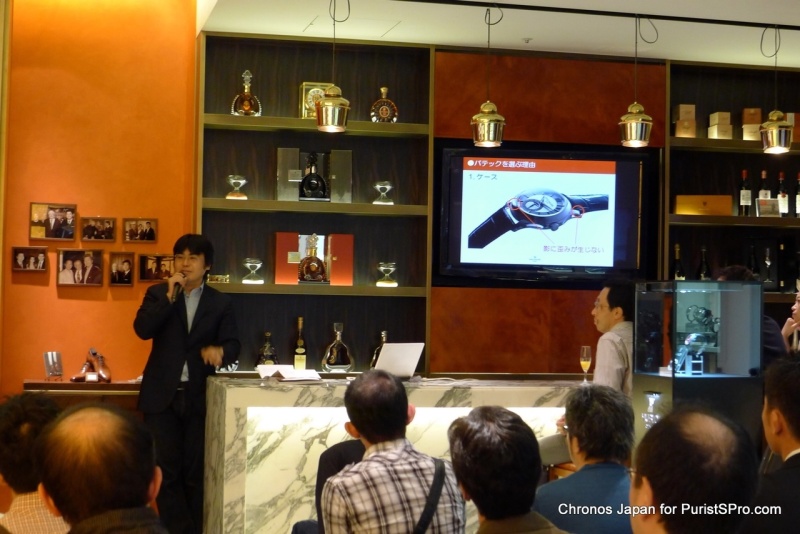
In total, more than 130 Patek gathered at THG, and it
is not everyday event to see so many Patek (new ones) at one place, so I want
to share with you some wonderful pieces as well later.
There
has been a series of topics why we love Patek. And here is sort
of related - why Patek is good, practical and long lasting love for
us, discussed from the angle of its annual calendars, and the beauty
of the case/ dial.
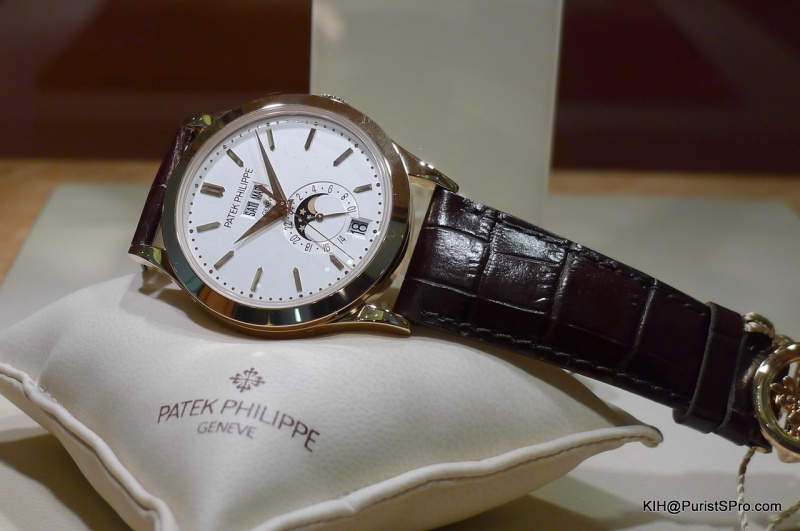
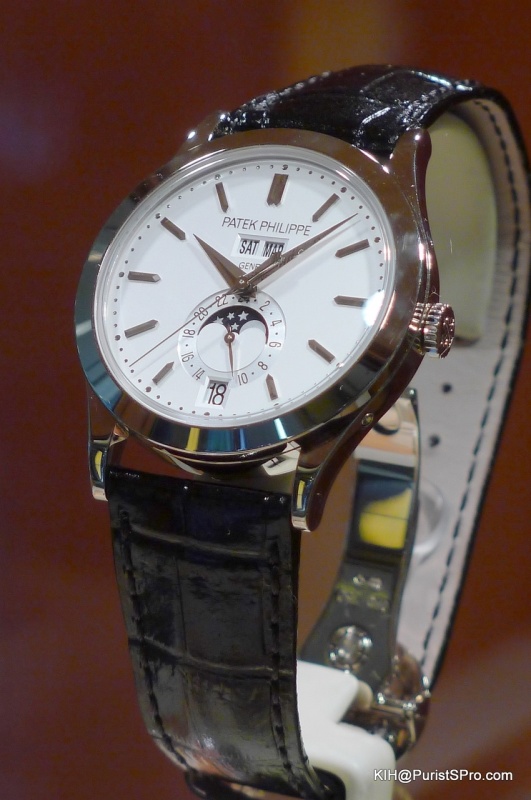
1.
Base caliber's strength
There are two camps in the torque of the
main spring - so-called "practical" calibers tend to
release stronger torque for the potential higher accuracy when worn,
while so-called "high-end" calibers tend to release less
torque for the durability of each parts. This is not the debate
of good or bad - just each camp has been expected of different
things. Now, PP has been consistently making calibers with
relatively "strong" torque release, but not strong enough
to give stress to the parts to be worn too quick, but not weak enough
to affect the accuracy when worn, since the time of 12-120, in 40s.
The latest 31-260 REG QA, for example, tries to achieve the goal of
higher frequency and longer power reserve, while reducing the
friction stress for the parts by using Silinvar (R) in escapement.
This strength of the base caliber makes it possible to put on other
complication modules flexibly.
5146
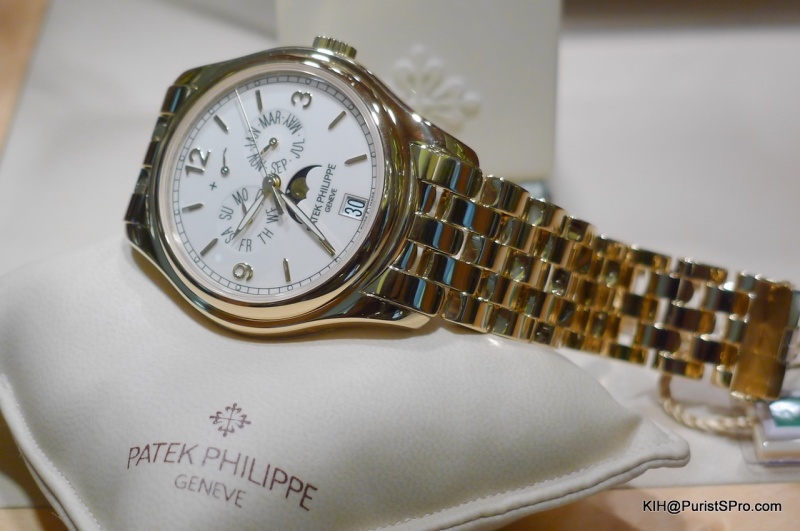
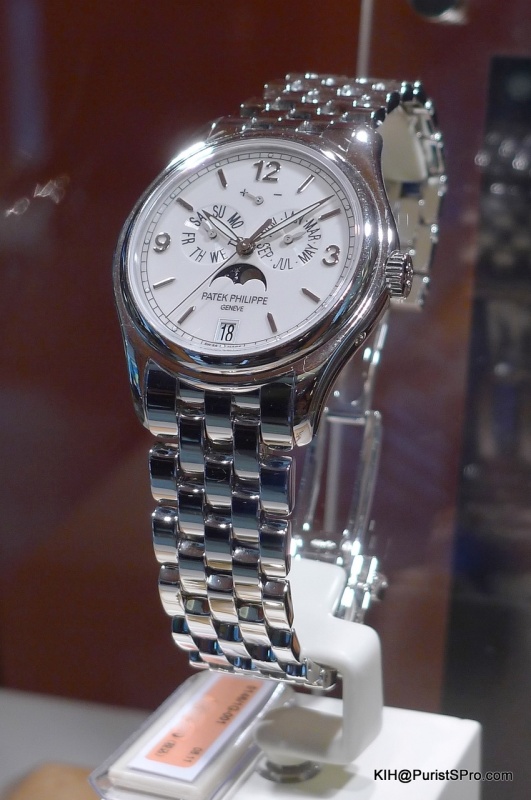
2. PP's Annual
Calendar
Most Annual Calendar movements uses its Perpetual brother
movement, which tend to use a big "leverage" in its
mechanism (to forward 3 days at one time). Now for PP it was
logical to take away this big "leverage" by giving up
February. In a nutshell, they do it with several wheels instead
of big lever that occupies big space.
The pros for this approach
is of course the less space for the mechanism and gives flexibility
to modification and variation. The cons are increased number of
parts and thus higher price, and the more parts, the more potential
for the parts to be worn out quick - PP responded to this problem by
mirror-polishing the wheel, tooth, and cog to reduce friction.
As a result, the increased number of the wheels does not affect much
to the overall performance of the caliber. The oscillation
angle is reduced by only up to 10 degrees at most. This
approach is not easy or cost effective and therefore many other
brands do not take this approach and just modifies the perpetual
calendar mechanism.
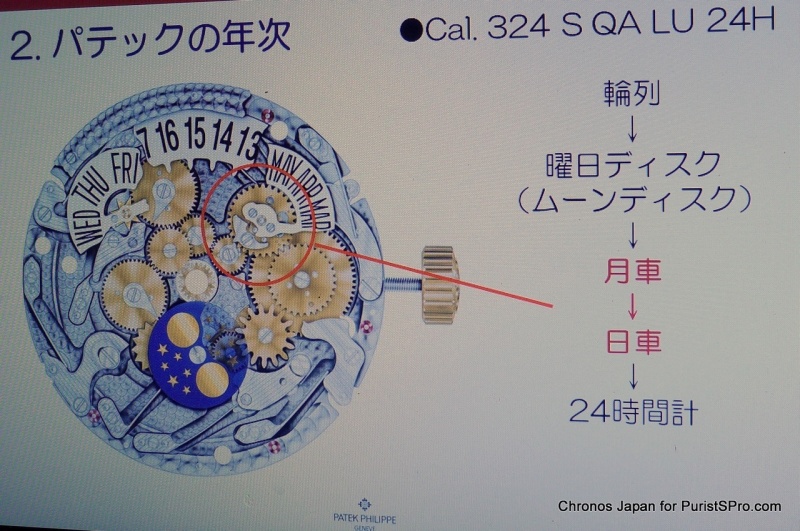
Wheel
train -> Day (moon) disc -> Month wheel -> Date wheel ->
24 hours indicator
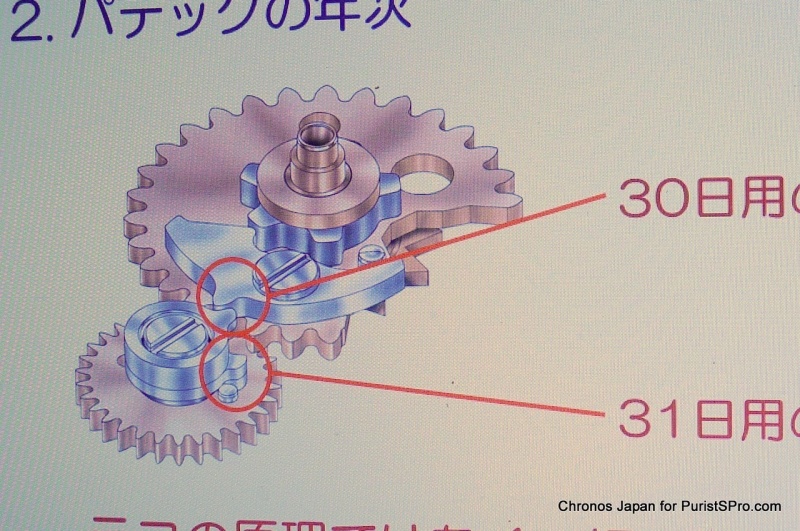
The wheel mechanism for 30-day month and 31-day month. Much simpler and smaller than the leverage mechanism.
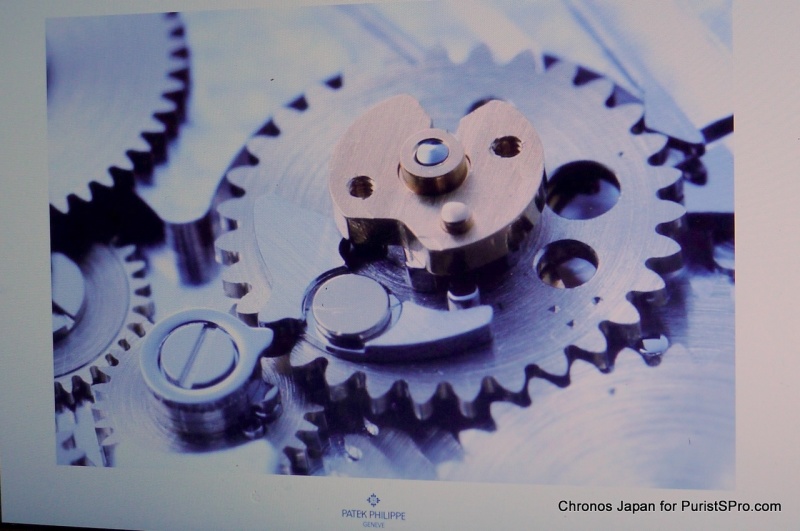
Actual
photo.
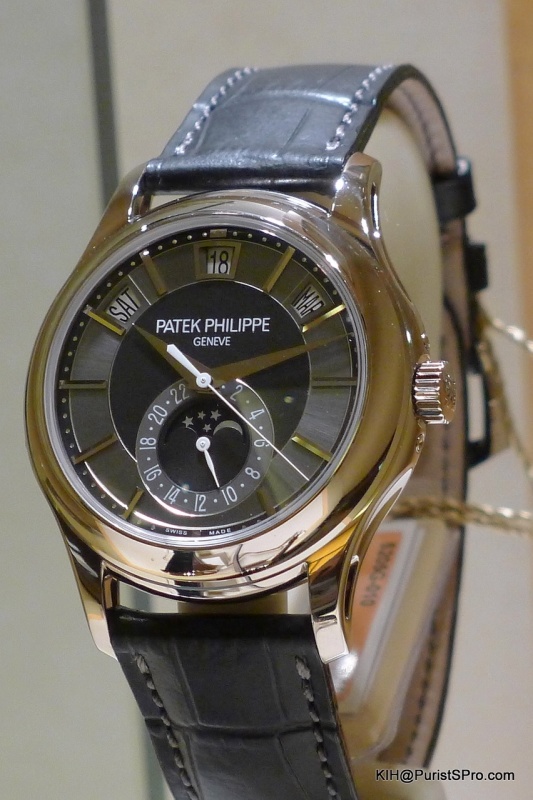
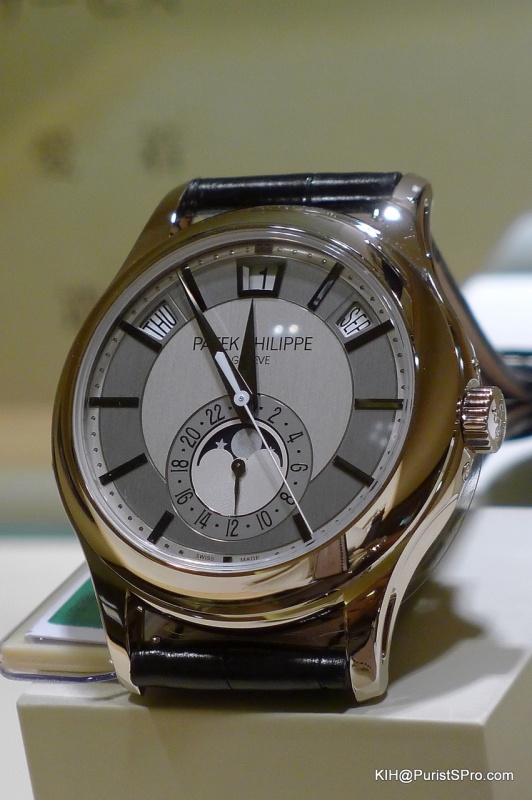
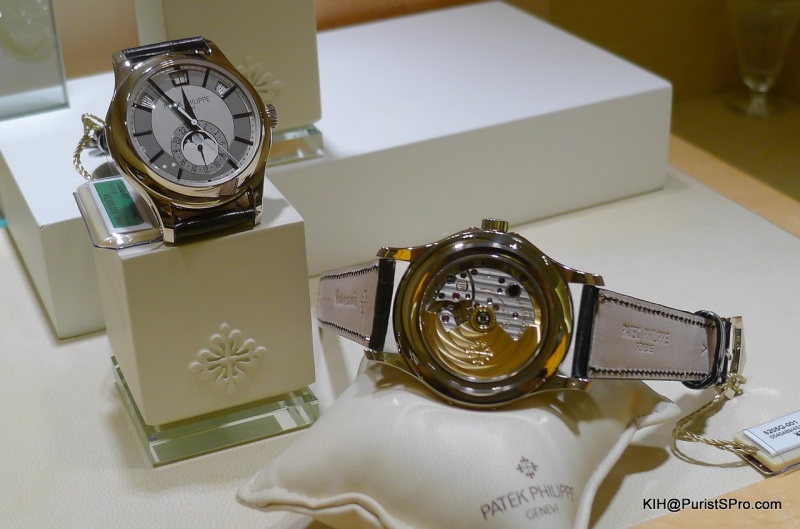
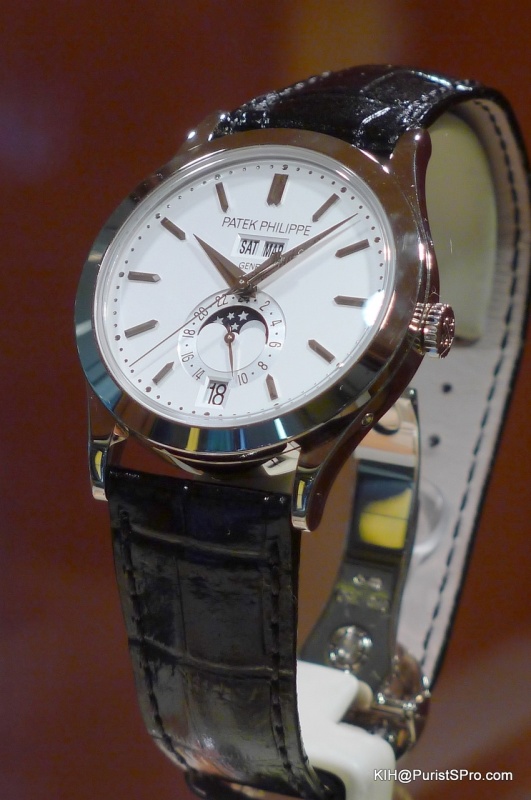
5205
Now,
why so beautiful?
1. Case
Patek cases are mostly made by
forging, not cutting. Rolex, Breitling, and Panerai are other
brands who use forging for the case. Cutting is, in short,
cheaper as it doesn't need to make the molder, but at the molecule
level it is still "loose" and wouldn't easily be made flat
mirror-looking. Most brands do use forging at some point, but
Patek uses forging (except for SS case) almost all the way for wide
variety of shape of the cases. Rolex and Breitling, the shape
of the case are relatively easy for forging and not cost as much.
Patek is really standing out in this endeavor. See your face
reflected on the side of Patek case, you wouldn't see much
distortion. (Of course there is always exceptions - very, very
good one made with cutting is Laurent Ferrier, but it takes lots of
talent and time to achieve that level, meaning, not cheap at all).
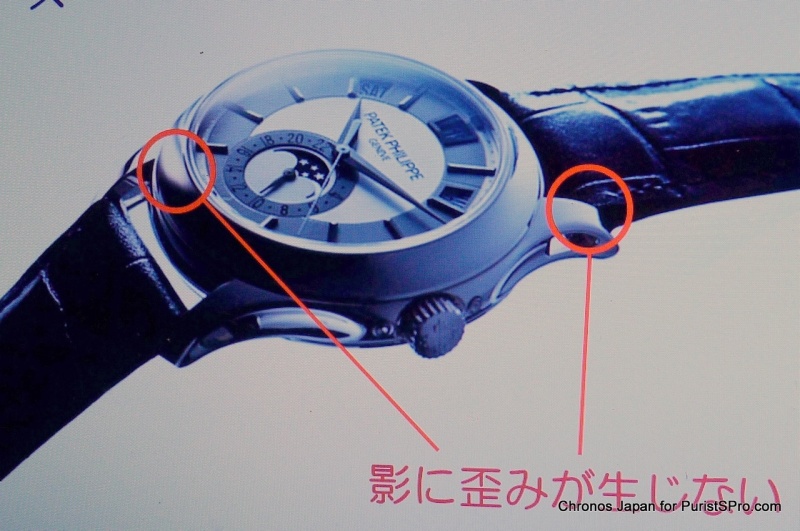
You
wouldn't see much distortion (relatively speaking) in your face reflecting on the side or
on the top of the lug,
2.
Dial
Printing (e.g. logo) and painting are relatively thin, but
take a long time for drying. Patek dial is very distinctive
compared with other brands - very thin painting, but very vivid.
Must be some secret in the process. As for the logo or index
painting, this white logo is very thinly painted but somehow it
doesn't show the hint of the dial color. They paint thinly
THREE times. The examples of Nautilus show the vivid painting
but thin enough to show the base metal brush pattern.
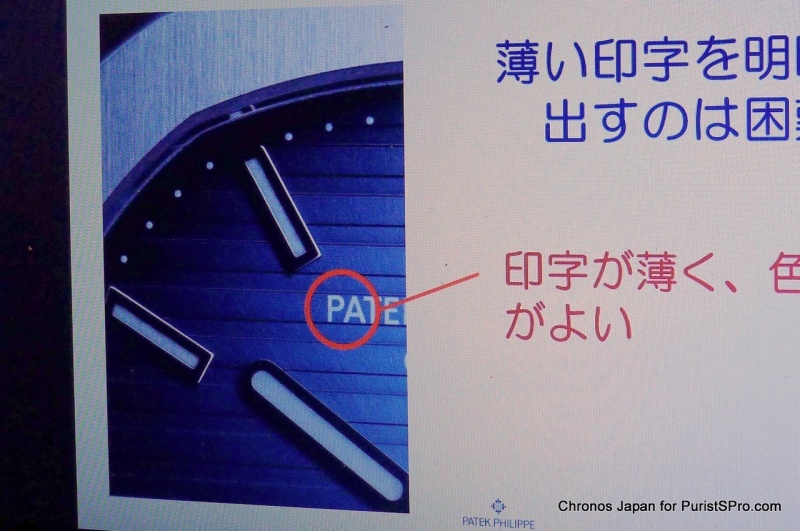
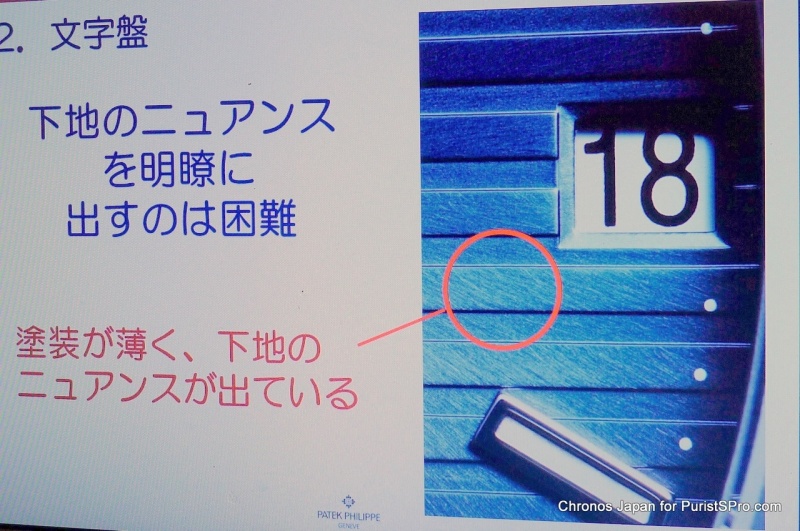
The
painting on this Nautilus dial is so thin that the unique pattern
(brushed metal) on the base shows.
Conclusion (sort of): There is no “perfect watch” in the world, and there are of course weaknesses of Patek, as with any brand. But in total, Patek has less weakness in making watches with the aim to make it last long and spare no expense or labor to make look better, and that is why it is loved and cherished for a long, long time.
========================================================
Now,
on to other pieces - novelties and new pieces.
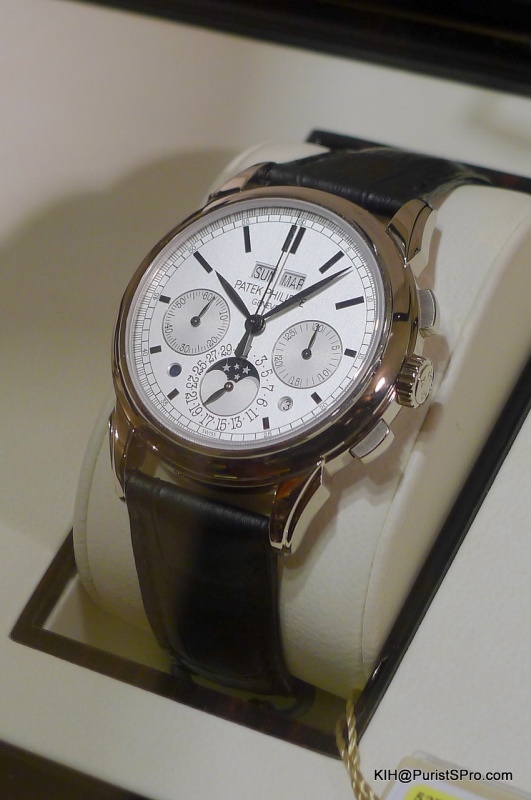
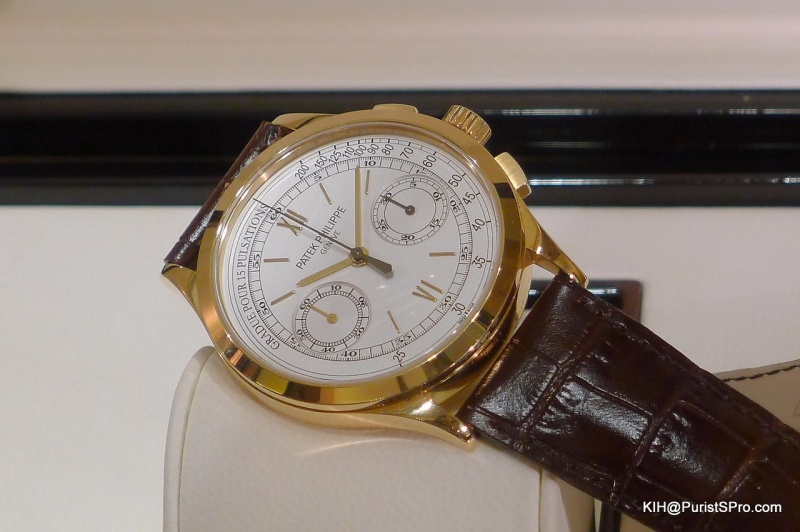
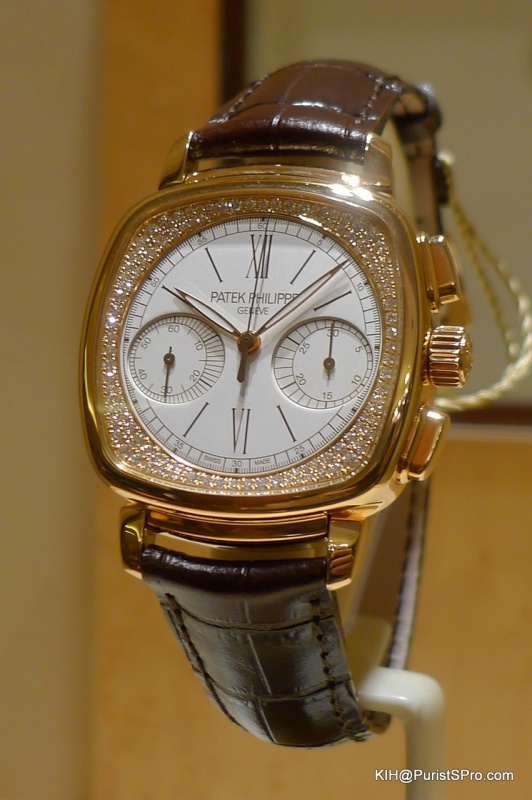
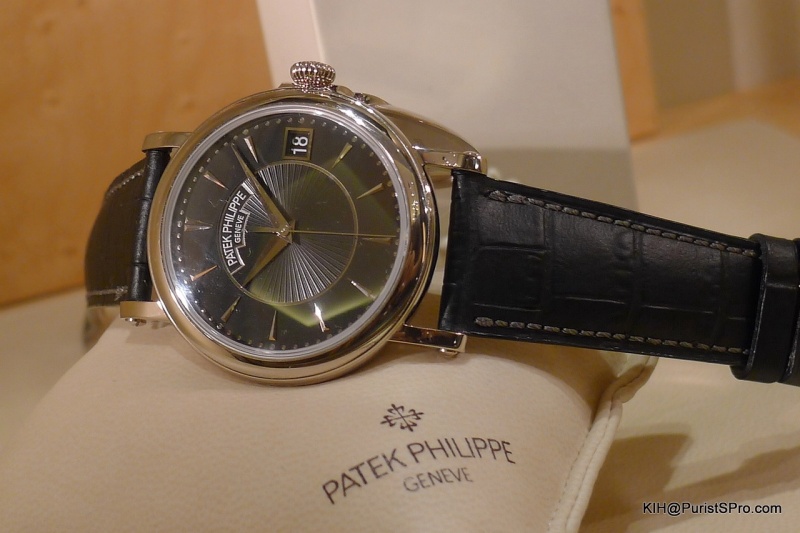
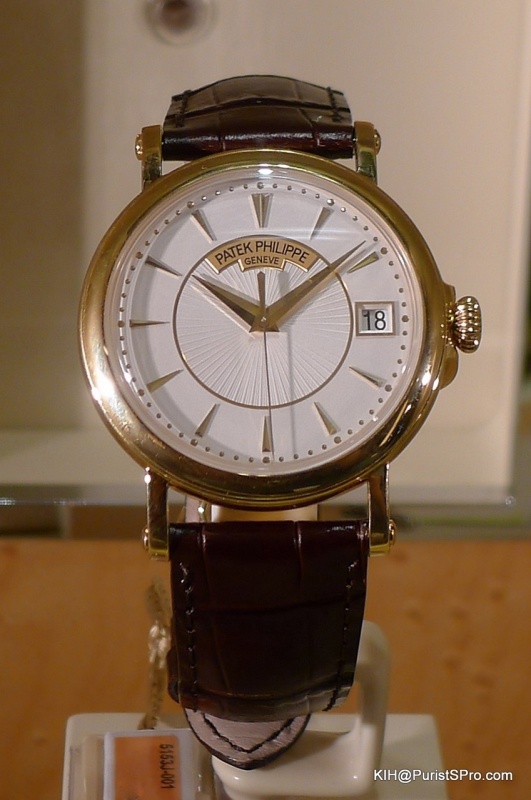
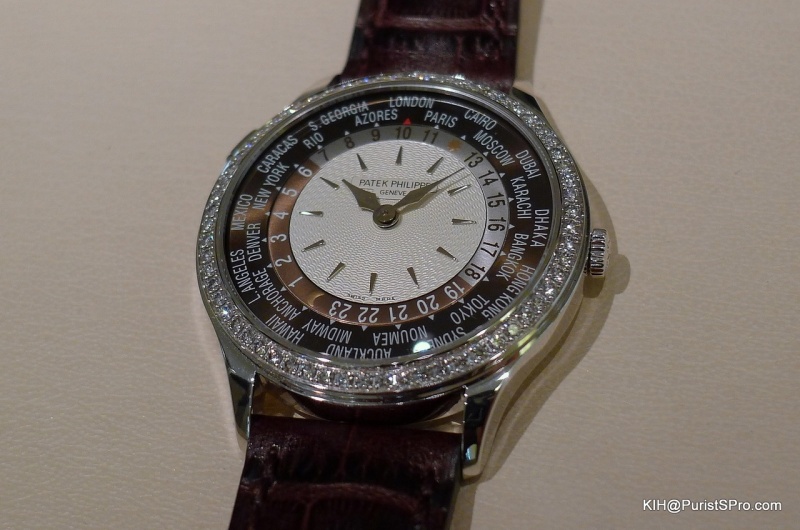
Very,
very beautiful for ladies.
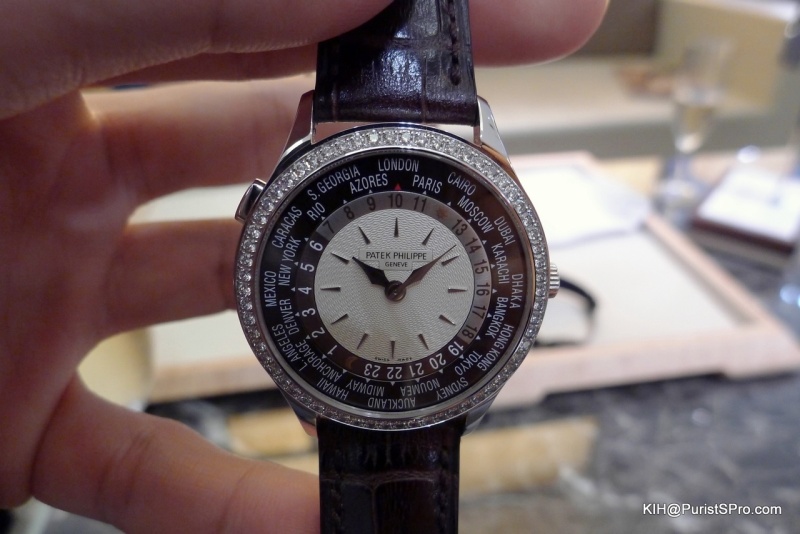
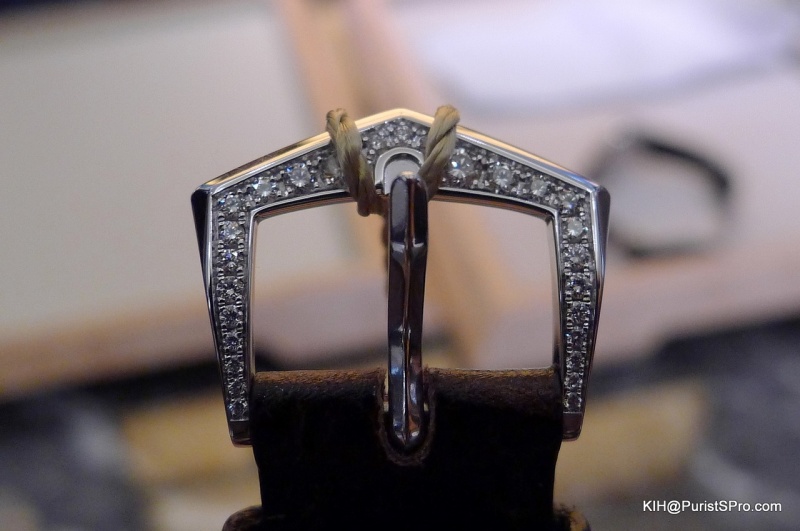
Buguette
buckle.
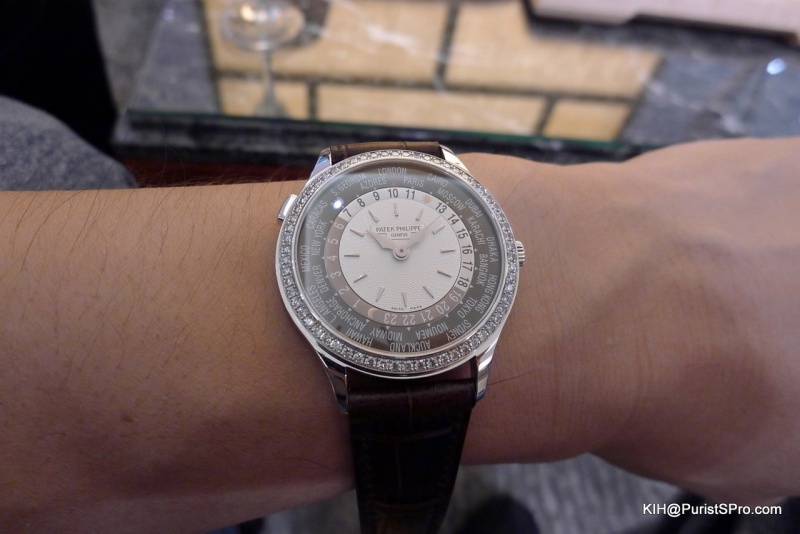
Obviously,
not for me....
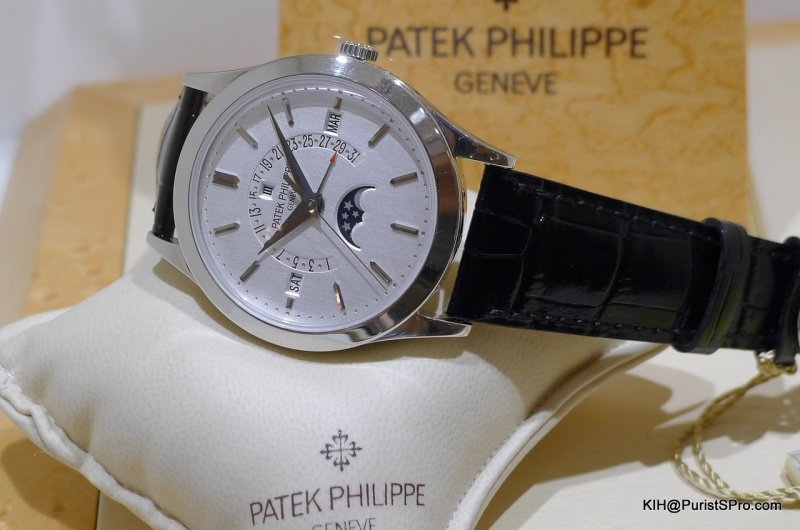
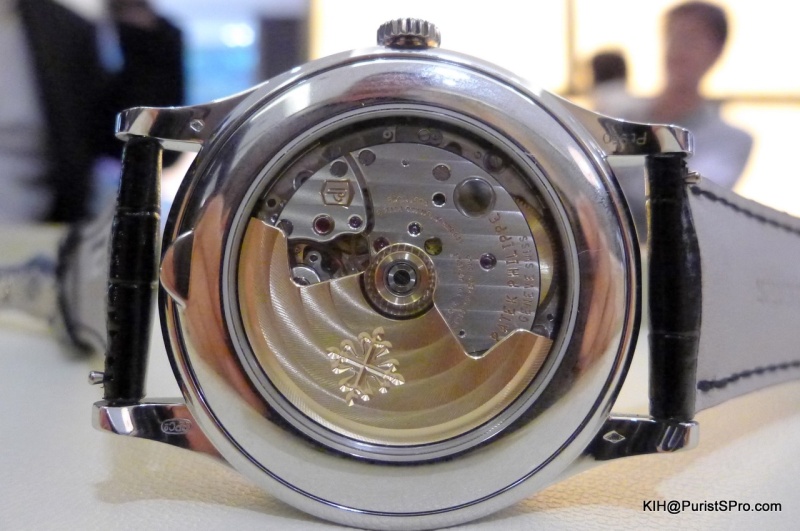
My
favorite 
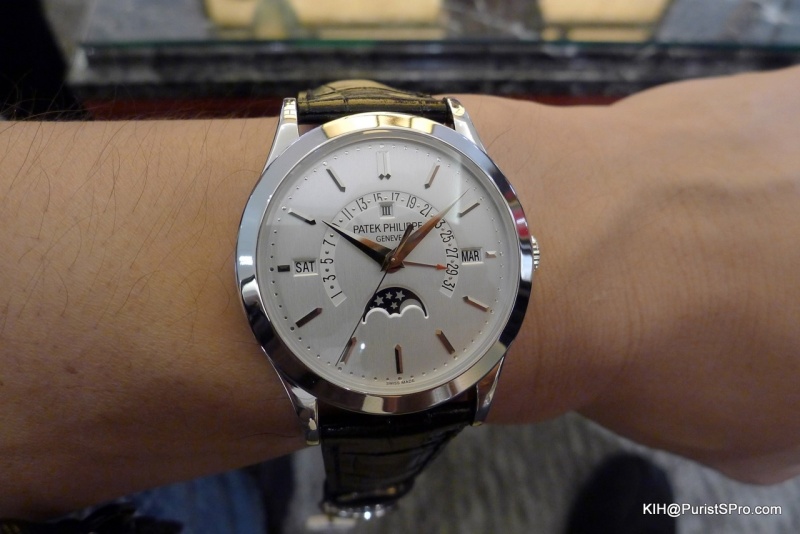
39.5mm.
Very non-flashy, non-busy dial, and thin (for perpetual), in PT.
My kinda watch
===========================================================
Special thanks: Patek Philippe
Japan - Mr. Nagano, Ms.
Otsuka, Mr. Kugaya
Chronos Japan - Mr. Matsuzaki, Mr. Hirota, Mr.
Suzuki
The Hour Glass Ginza - Mr. Momoi and all the staff...
Thanks for
reading.
Best,
Ken
The Patek Philippe Reference 130 is a significant chronograph model, notable for its classic design and the various configurations in which it was produced. While many examples feature a standard chronograph layout, specific iterations, such as those with split-seconds functionality, represent a higher echelon of horological complexity within the reference. The model is recognized for its balanced proportions and the legibility of its dial, making it a favored choice among collectors seeking vintage Patek Philippe chronographs.
This particular example of the Reference 130 is distinguished by its yellow gold case, measuring 33mm in diameter. It houses a manual-winding movement, typical for chronographs of its era, and is fitted with a crystal, likely acrylic or sapphire depending on the specific production period and any subsequent servicing. The case construction and movement finishing adhere to Patek Philippe's high standards for precision and durability.
Collector interest in the Reference 130 is driven by its historical importance as an early chronograph from the brand and the rarity of certain dial and complication variations. The presence of unique characteristics, such as Breguet numerals, specific dial signatures, or the absence of a tachymeter scale, can significantly influence its appeal. The reference appeals to those who appreciate the foundational designs of Patek Philippe's chronograph lineage.
No message body
Thank you for sharing. No doubt patek has many strengths in the watch making, that's why we love them so much. Cheers
A nice reminder about Pateks legendary annual calenders. cheers fernando
and thanks for going through the mechanics of the annual calendar mechanism. Truly there are many reasons to love our PPs, both inside and out
as Lange has shown on this subject again ;-) ! But certainly, a true annual calendar from Patek is a must have in any serious collection. Really lovely, lovely watches! In your shown list: the WG 5396 for me, please. Many thanks for a great post. Regards Moritz
It was an interesting presentation by Patek. This complication was really "popularized" by Patek and we are able to find it now in several brands like Lange or Zenith, even Omega. A sort of true speciality coming from Patek. Amongst the Annual Calendars, my fav is without any doubt the 5205. I love it! But I don't share your point of view about the Perpetual Calendar 5496P. I find its dial unbalanced (the empty space at the bottom is too large) and I don't like to see the LY window cutting the d
This thread is active on the Patek Philippe forum with 27 replies. Share your knowledge with fellow collectors.
Join the Discussion →