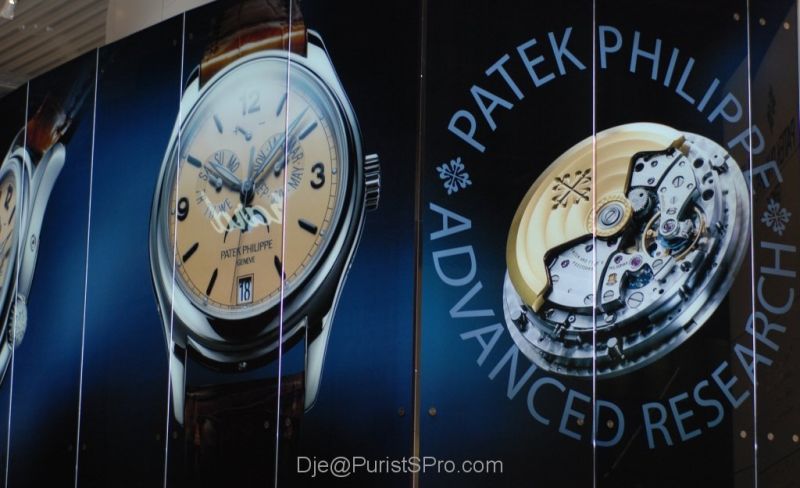
Innovation
Dje's 2008 post offers a crucial look into Patek Philippe's 'Advanced Research' initiative, focusing on the Ref. 5450. This article highlights Patek Philippe's early ventures into Silinvar® technology, a significant step towards enhancing reliability and precision in mechanical movements. Understanding these foundational innovations is essential for appreciating the brand's ongoing commitment to horological advancement.


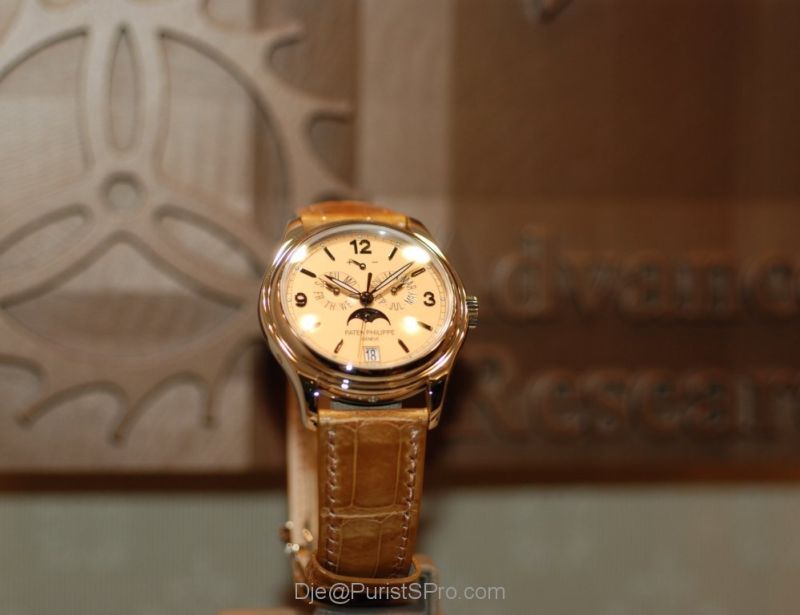


Back in 2005
Patek Philippe presented a new watch of a new kind for this venerable
brand !
The Patek
Philippe Advanced Research reference 5250 was based on a 5146 annual calendar,
with a little plus. A little something that that only you die-hard fans and
only if you were high tech aficionados could spot and appreciate.
The reference
5250 was the first Patek Philippe watch to incorporate the first step towards
the Patek Philippe watch of the future: an escape wheel made of Silinvar®,
for a better reliability without lubrication. Suitbert Walter covered this in
full: http://www.thepurists.net/patrons/members/wsw/ppforum/sil05/pp_technew.htm
After more than
900 days of use of these 5250 the result is said excellent by Patek Philippe:
more than 75% of these watches have increased their amplitude. The remaining
less than 25% have remained in the norm.
The watch was
there: http://www.network54.com/Forum/196053/message/1112696762/%2ANew+ltd-+Ed-+ref-+5250+-+Annual+Calendar+%2A
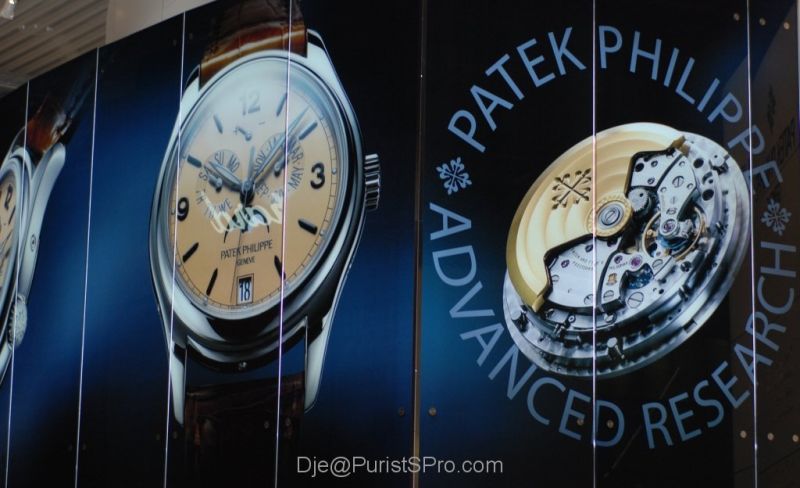
A first glance at the new 5450
The next year
step two took place with the launch of the 5350, adding to the 5250 the new
Spiromax® balance spring made of Silinvar®, with a specific Patek
Philippe curve. The objective was the optimization of rate with significantly improved
isochronism. Here was the new 5350: patek.watchprosite.com
Here was the press release of reference
5350: patek.watchprosite.com
After more then 600 days of use, Patek
Philippe says that all the 5350 calibres have maintained their amplitude.
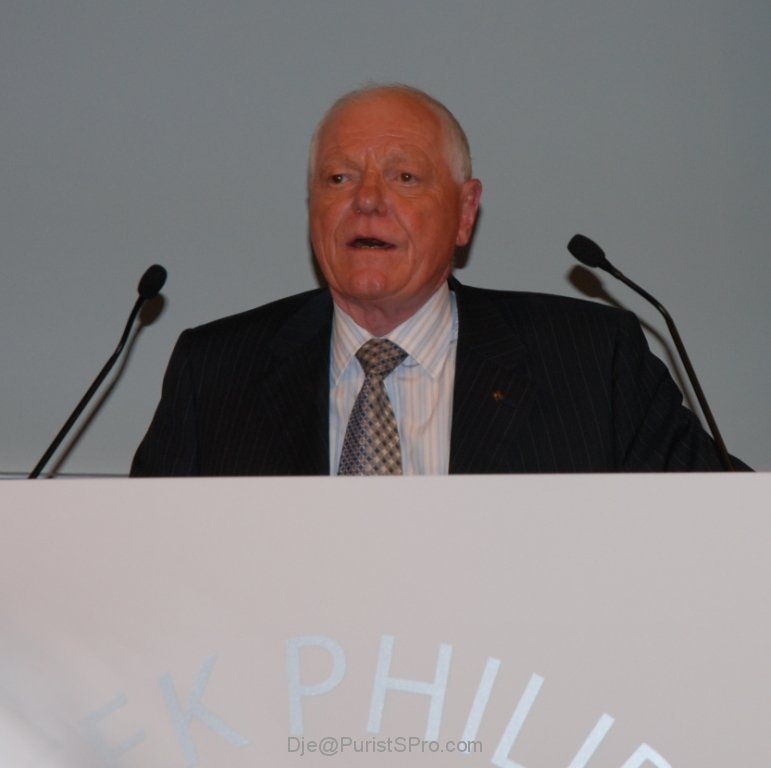
Patek Philippe president Mr Philippe Stern
So what
happened last year in 2007? Nothing on the public side, but they kept working
and the result is coming this year!
Mr Jean-Pierre Musy from Patek Philippe
So the
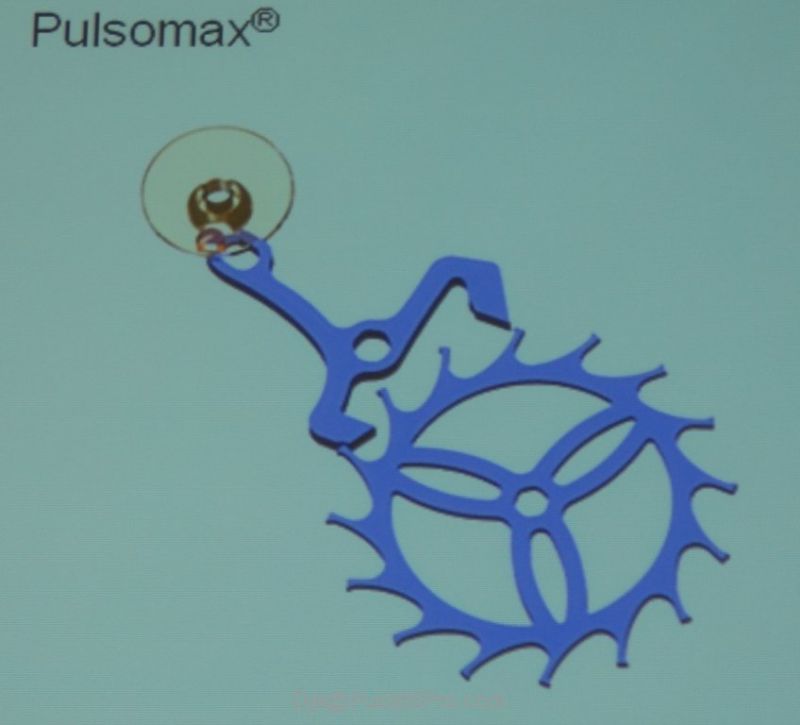
evolution this year is on the lever, the new lever being named Pulsomax®
together with the escape wheel. The Pulsomax® escape wheel and lever are
both made of Silinvar®.
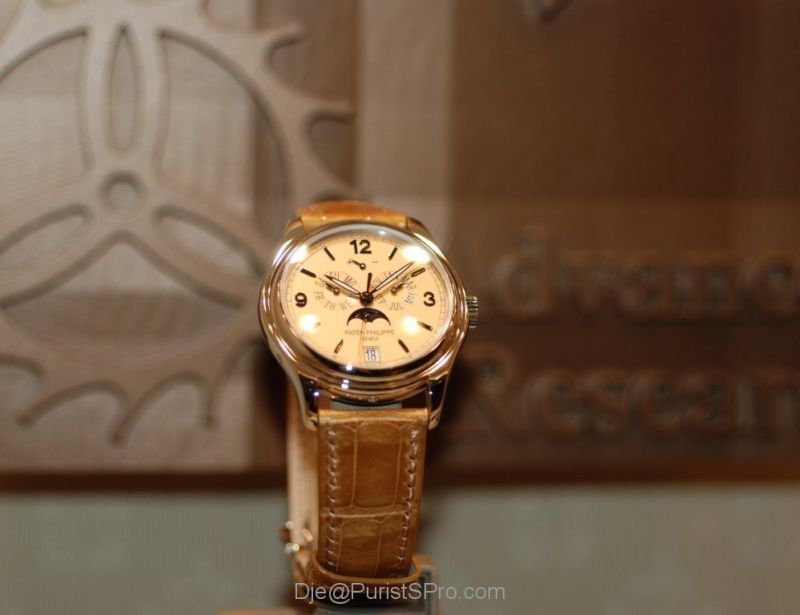
The new Patek Philippe Advanced Research reference 5450
The
Pulsomax® is still seen by Patek Philippe as a Swiss lever escapement. The first
difference with the traditional Swiss lever escapement used in watches in the
last 180 years for its dependability, ruggedness and efficiency is the absence
of ruby pallets in the Pulsomax®.
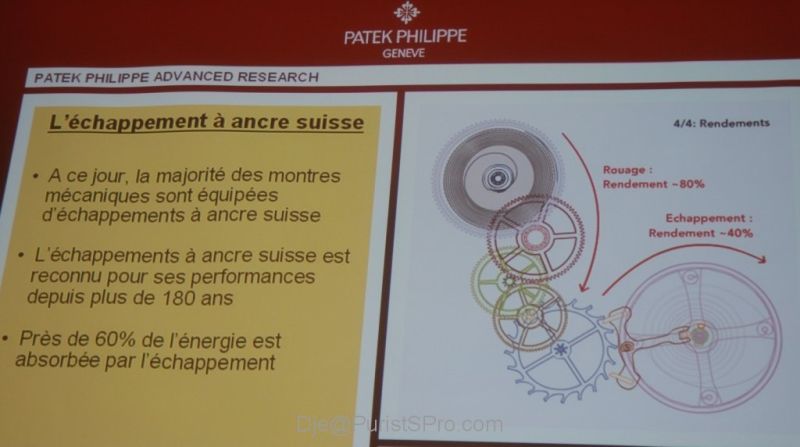
The traditional Swiss lever escapement
The ruby
pallets are the contact points between the lever and the escape wheel. We know
that the escape wheel in the 5250 was of a new design, but it was still
designed to fit with a traditional lever. The escape wheel of the Pulsomax®
has a new optimized geometry and 16 teeth instead of 20 in the 5250 and 5350.
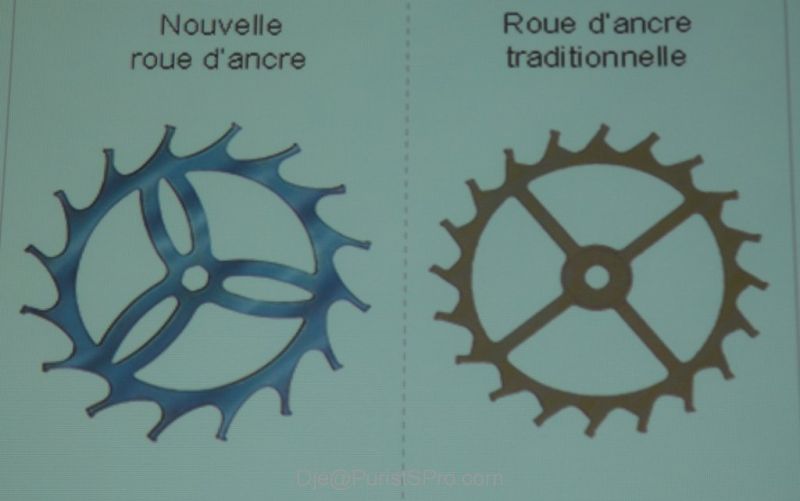
The escape wheels
So the escape
wheel of the 5250 and 5350 is already out of date! 
It is safer and
wiser in the industry to implement such a breakthrough in successive steps so
that you have time to test and you can see works well. If all had been
implemented at once and if something had not worked well, it would have been
hard, if not impossible, to see where the problem relies.
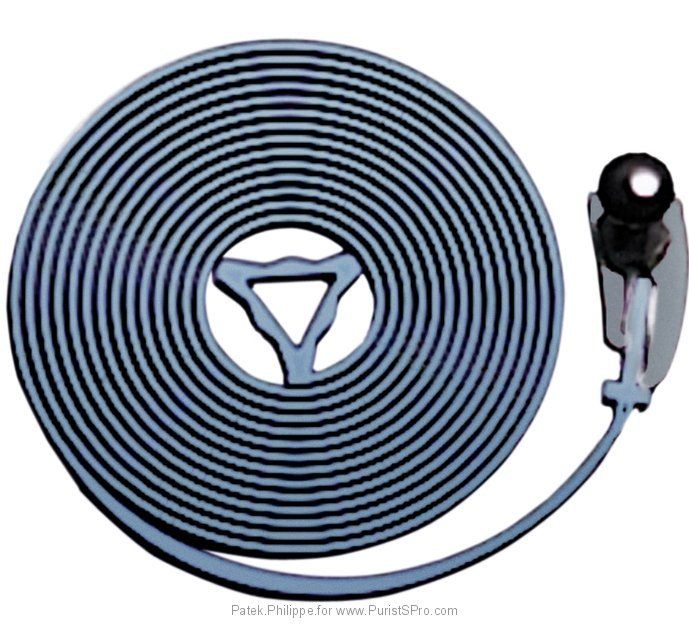
The Spiromax balance spring launched in the 5350
We indeed have
to remember that the innovations presented in the 5250, 5350 and 5450 are
really a new approach to horology.
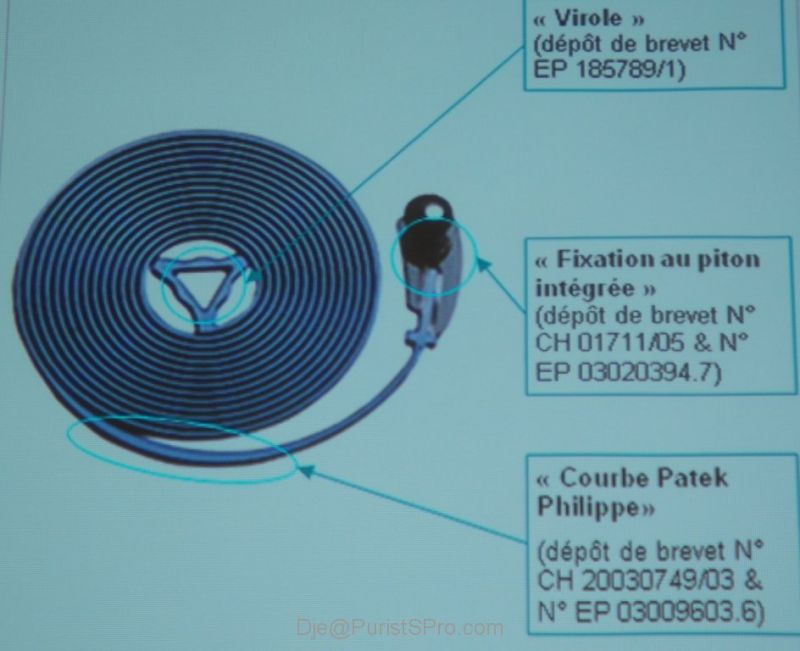
The three patents on the Spiromax
As it is the
case for Ferrari with the FXX you'd better be sure to be right before
launching a full production of such stuff! You can produce the Enzo because it
is just the most optimized version of what you know, but when you produce the
FXX you go beyond what you know! Time goes fast in our computerized world and
we hardly see to what extent innovations can come unexpected and be implemented
before we have nearly realized they exist!
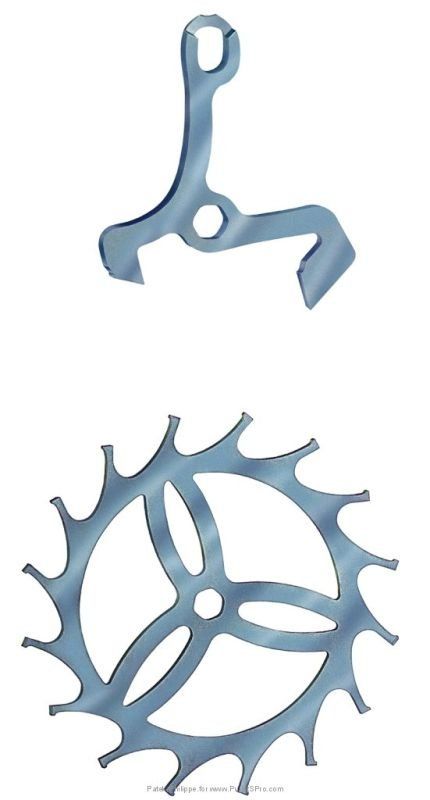
The 5450 escape wheel and lever
So to some
extent with the 5250, 5350 and 5450 each owner can be a test
"driver" of the new horology!
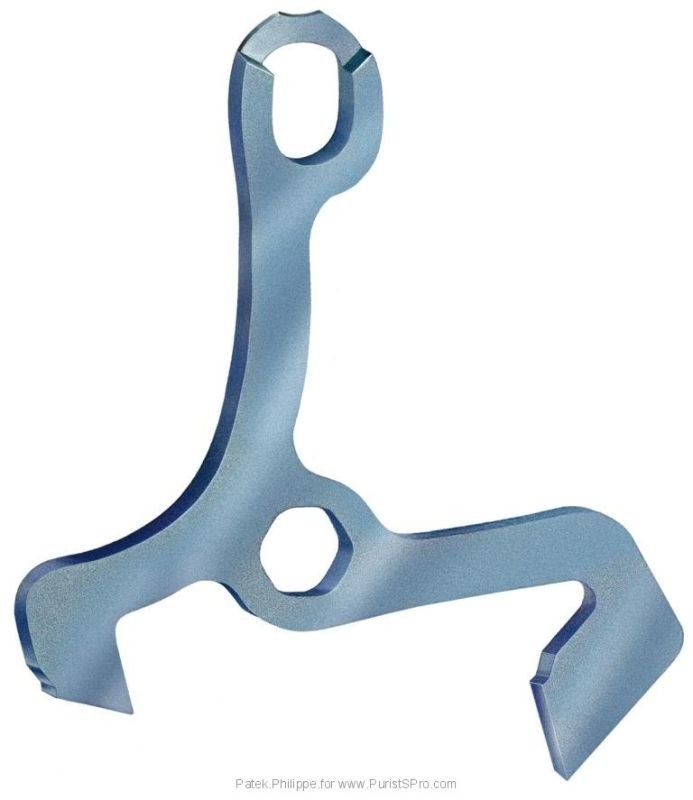
The 5450 lever
So the main
innovation with the 5450 is on the lever! You recognize that it is a lever, but
indeed its profile is quite different.
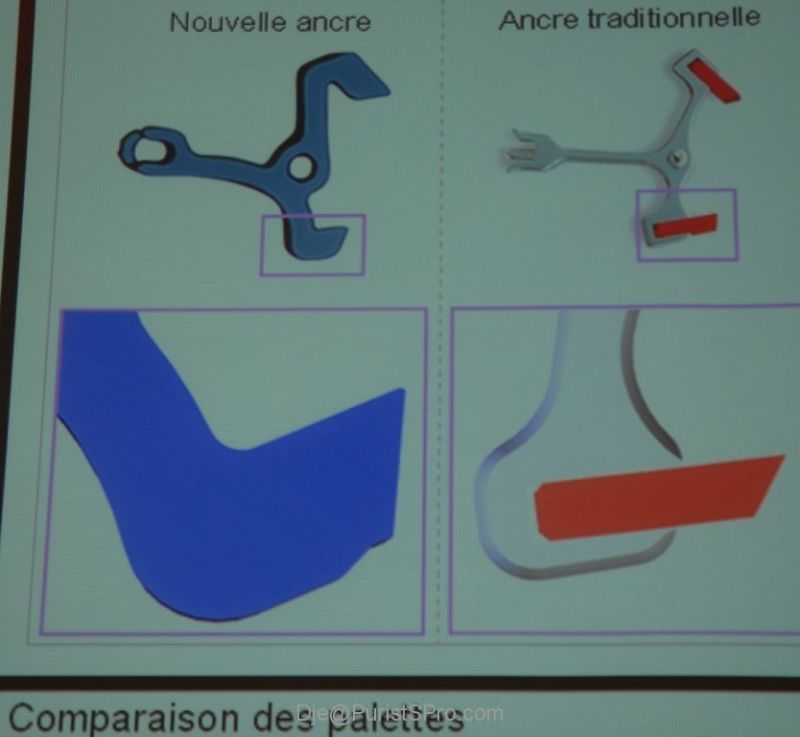
New and old lever profiles
There is change
on both extremities of the lever ! First the pallet fork is quite
different, without ruby pallets as written earlier.
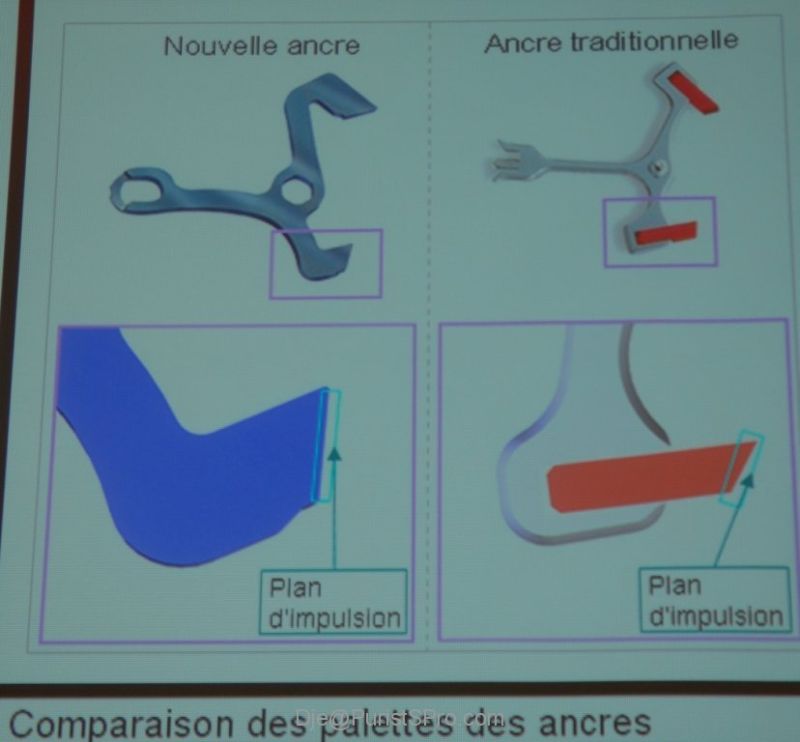
The impulse plans of the different pallet forks
One of the
difficult aspects of the calibre assembly is the fact that the ruby pallets
must be well regulated so that the contact with the escape wheel is optimized.
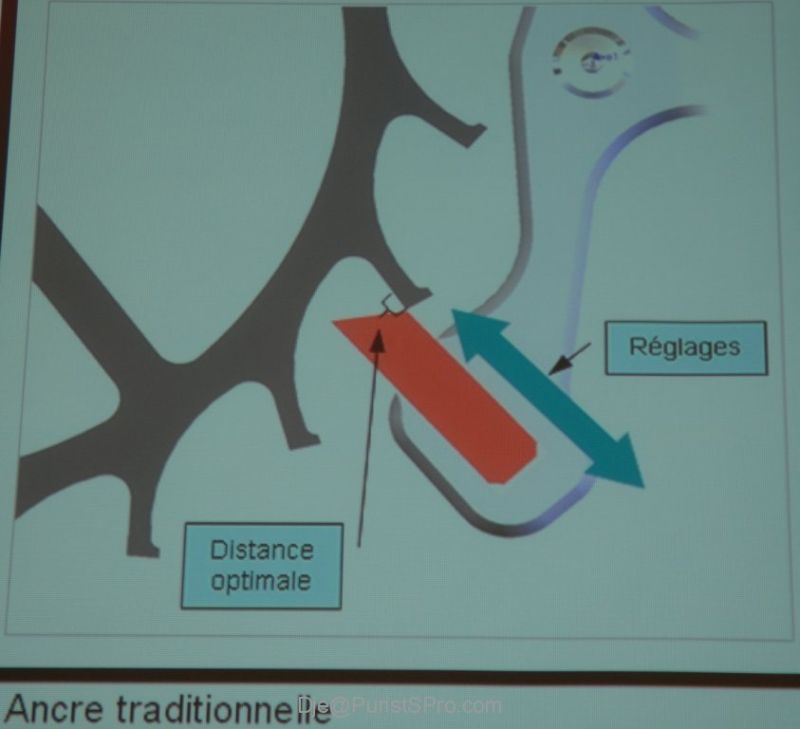
The traditional ruby pallet at use
The advantage
of the Pulsomax® on the pallet side is that there is no regulation needed
thanks to a specific design. Without regulation needed you're sure that
it is efficient and can transmit more power to the balance. More power more
easily is the aim!
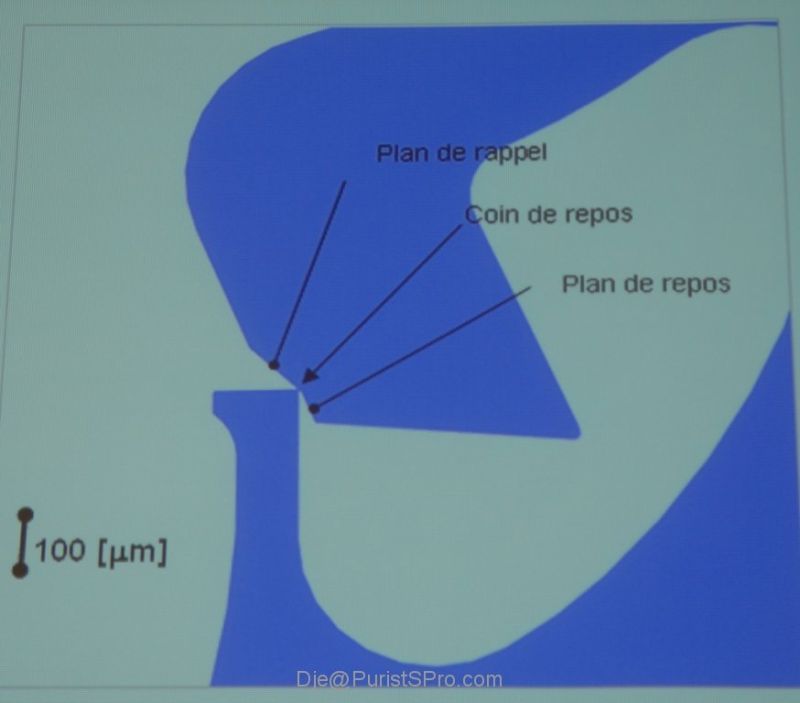
The new profile of the integrated pallet
The design of
the pallet, as seen above, brings the tooth of the escape wheel to find a
perfect position on the pallet, without any need of regulation.
"Plan de
rappel" means "return face » and "plan de
repos" means "locking face"! The "coin de repos"
is the "locking notch".

A possible first contact on the return face
Thanks to the
pallet design the escape wheel tooth is first touched, wherever it happens, by
the pallet, and then the two parts find a very temporary equilibrium position,
contacting at the locking notch until the balance spring gives another
impulsion to the lever.

Or an opposite contact on the locking face
That looks like
a design that would allow more play to the parts ! In fact that's quite
probably the contrary.
The escapement train
So the first
innovation is on the pallet extremity, but let's look at the guard pin
side of the lever!
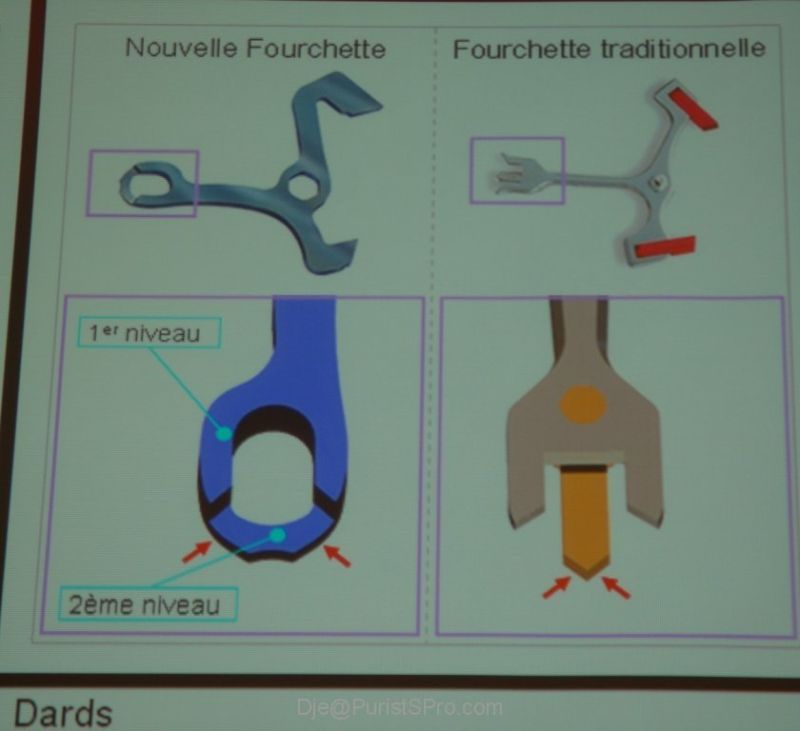
New and traditional pin design
There's a
new design there too.
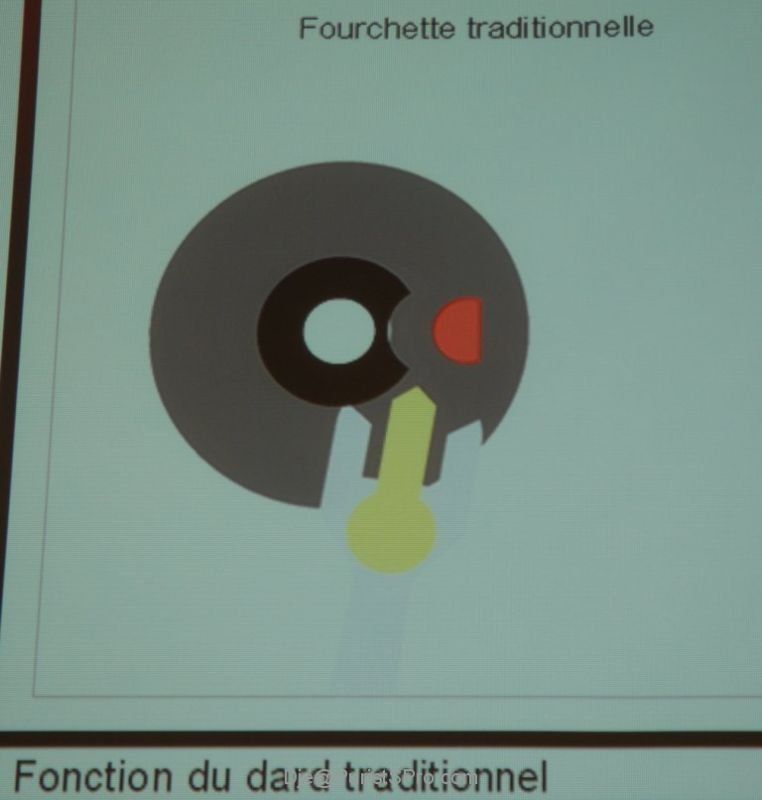
Traditional pin system
The guard pin
is the point of the lever where the pin of the roller gives the balance
impulsion to the lever. Am I clear?
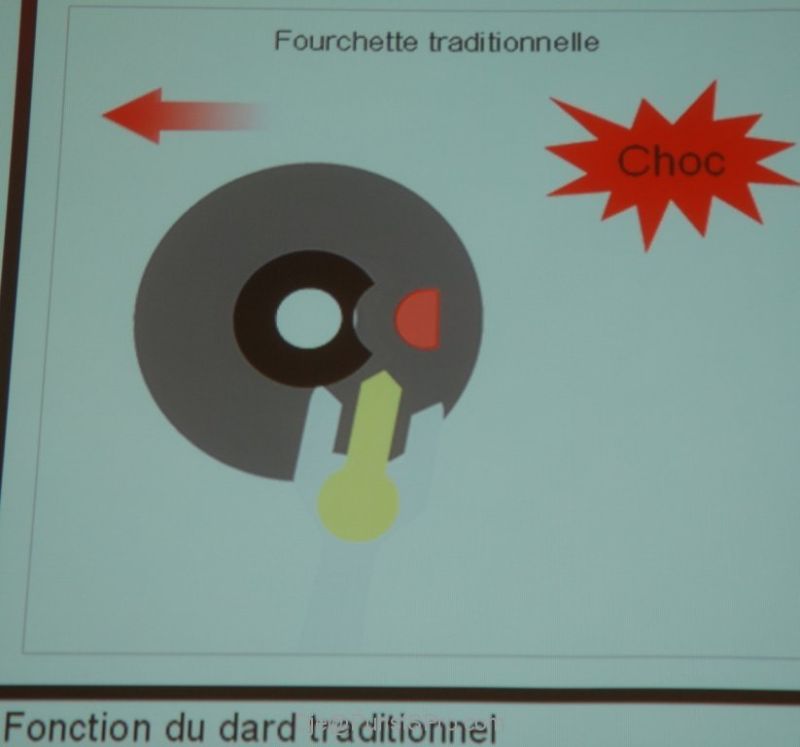
At work
In the
traditional pin system the lever must be blocked on both sides by banking
detents that prevent the lever to be pushed out of the pin way. If that was not
the case the balance wheel and the escape wheel could be disconnected after the
first impulsion.
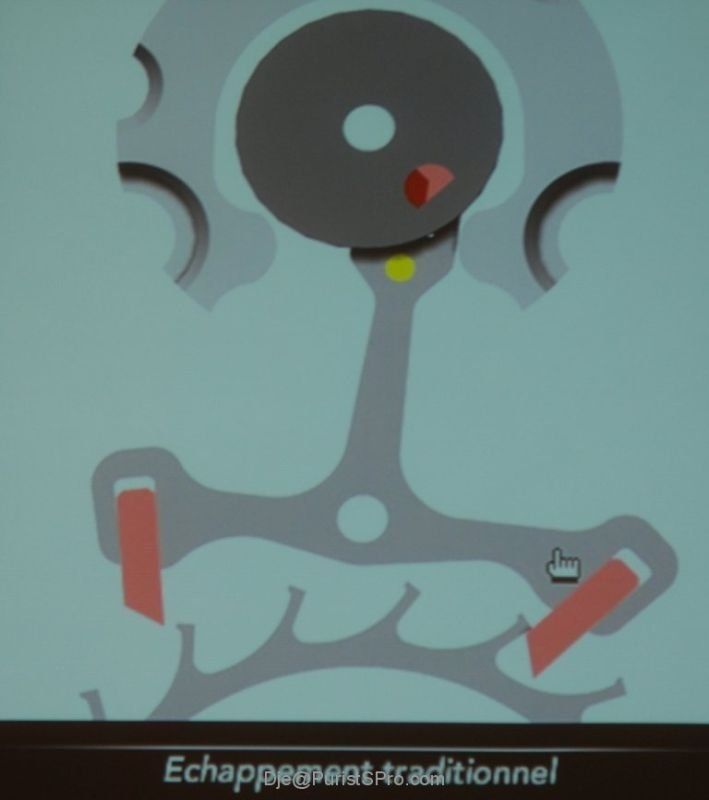
The full traditional lever at work
On the drawing
above the red pin is going to turn around the rotating grey roller and give an
impulsion to the yellow guard pin.
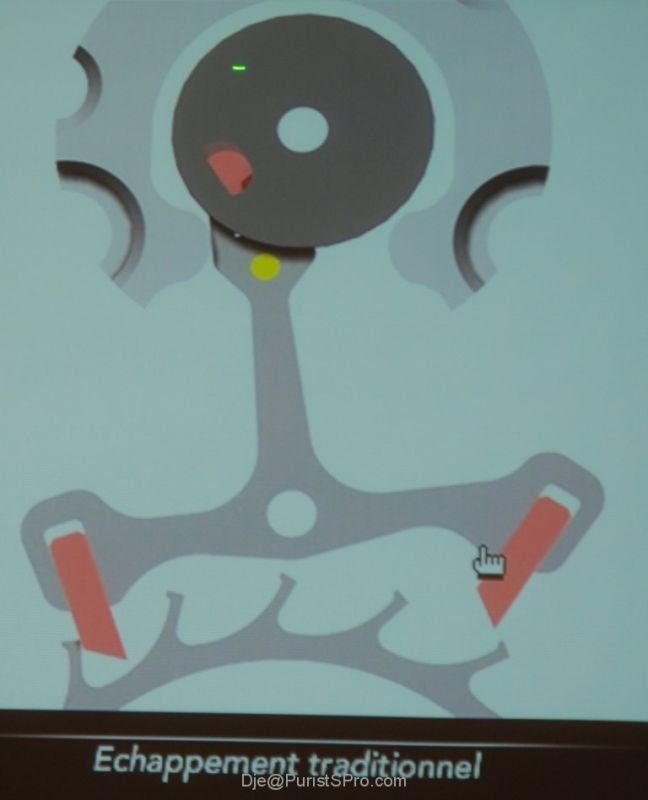
The same after the impulsion
You can see
above and below that giving an impulsion to the yellow guard pin (partly hidden
below the grey roller), the red pin pushes the lever top extremity from right
to left, from the banking detent on the right to the banking detent on the
left.
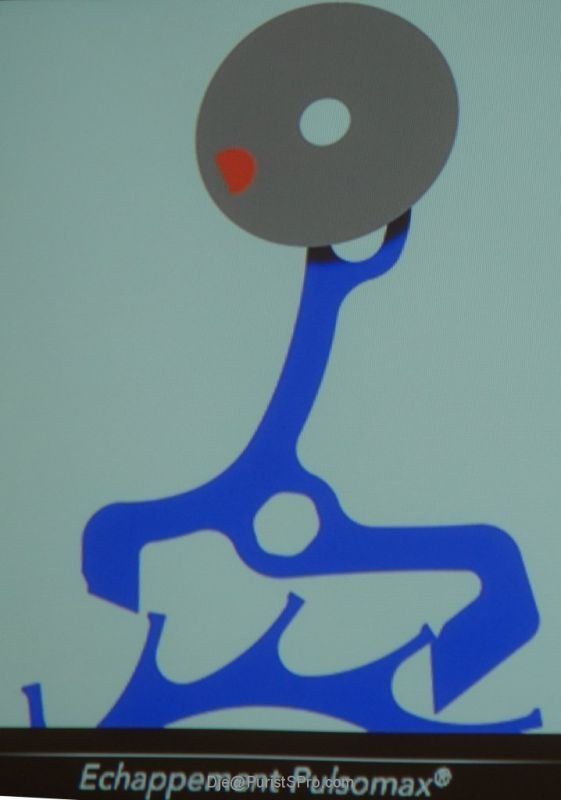
The Pulsomax lever without banking detents
While moving on
the top (roller) side from right to left the lever moves on the escape wheel
side from left to right, allowing the escape wheel to turn.
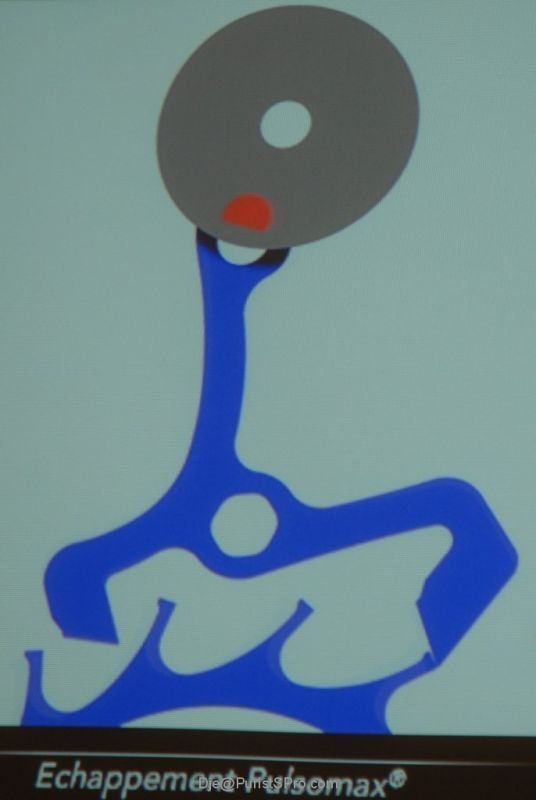
The roller's rolling
In the 5450
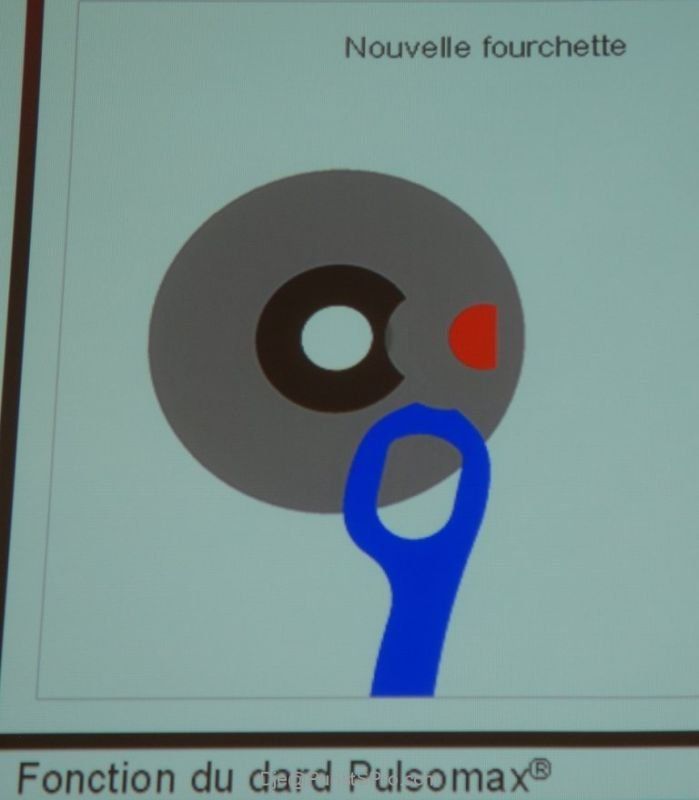
calibre the Pulsomax® obvisouly has a very close principle of functioning.
The difference is in the way the guard pin and the banking detent are thought.
Seen from the other side
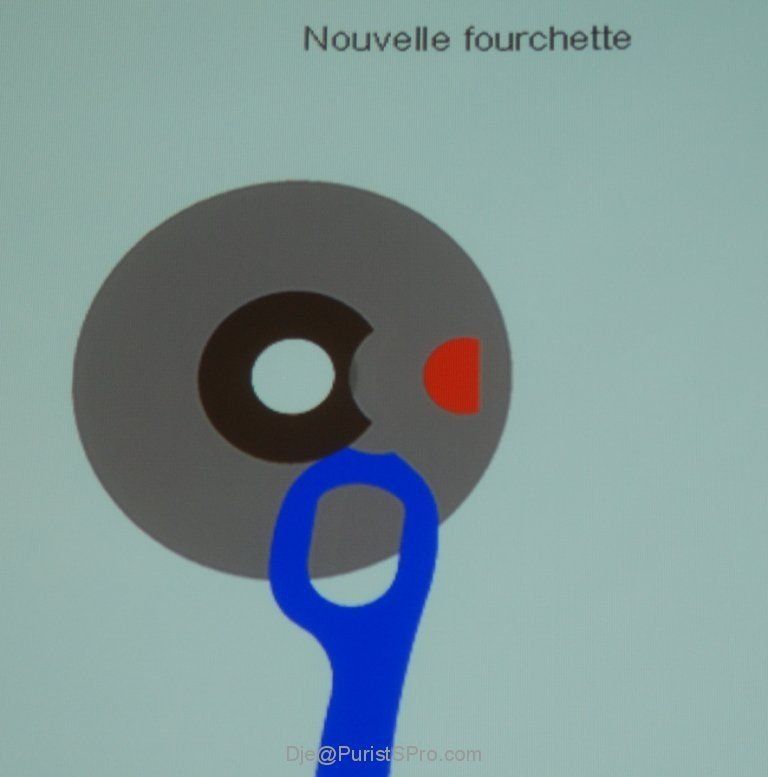
The guard pin
is like the pallets integrated in the monobloc lever. It is a raised bridge at
the extremity that has the guard pin function. This construction is allowed by
the DRIE, i.e. Deep Reactive Ion Etching technologies used for the making of
the lever. With this process silicon parts can be machined on a second
horizontal plane in an extra process. This gives a multidimensional
architecture to the Silinvar® lever.
The recessed bridge at the extremity of the lever works as a guard pin
With this
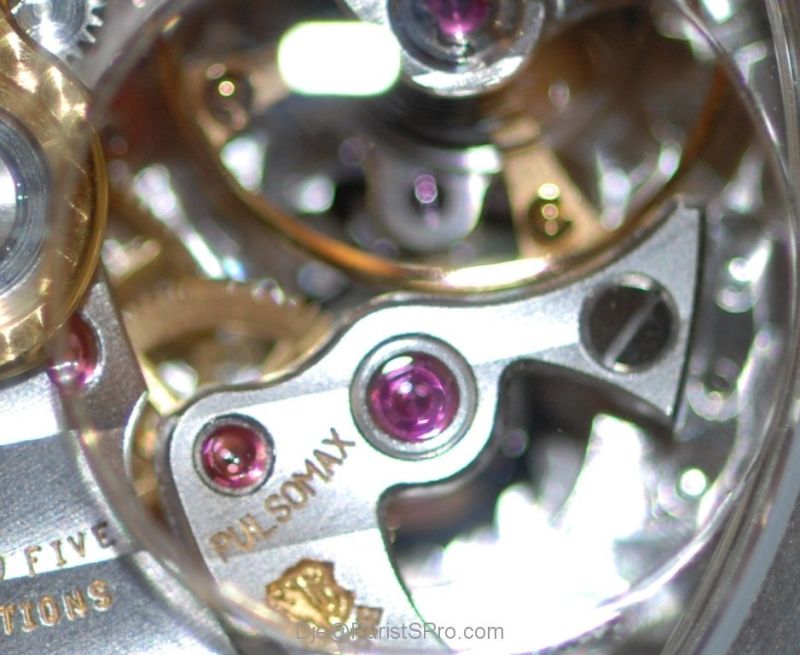
tri-dimensional form the pin extremity of the lever becomes lubrication free as
it is entirely in Silinvar®.
That's a Pulsomax, it's written on it
The profile of
the pin extremity of the lever also works as a banking detent device while the
balance wheel passes through the supplementary arc of its amplitude after the
impulsion on the guard pin.
The result
The final
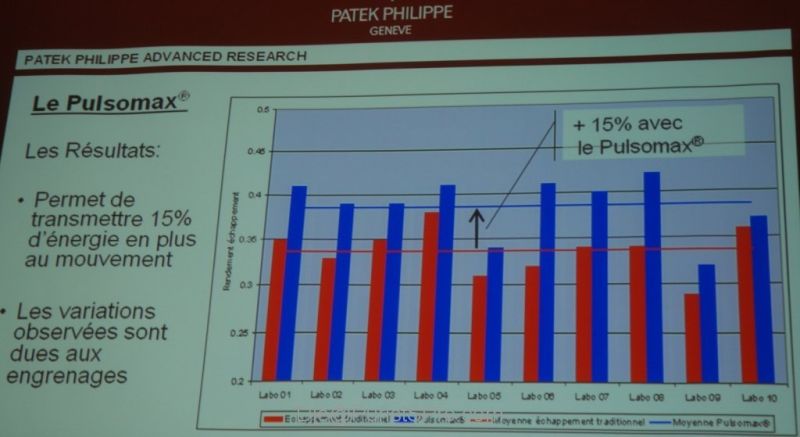
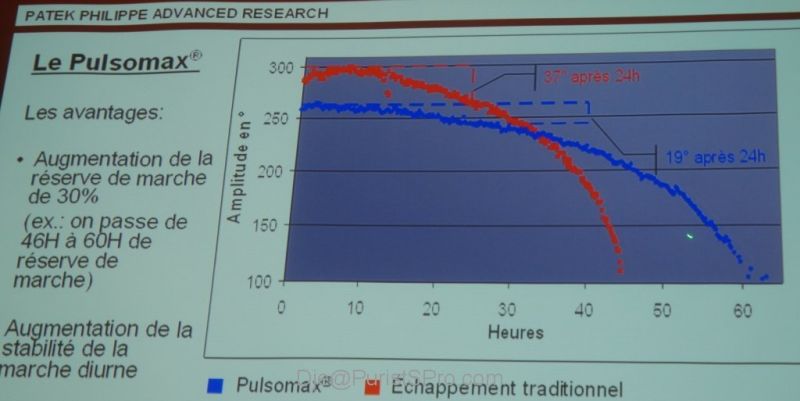
result of all this is an increase in the energy transmitted. Patek Philippe
evaluated at 15% the supplementary energy transmitted through less losses in
the escapement.
The lasting amplitude
Less losses in
the escapement apparently means a less changing amplitude of the balance wheel.
A better stability in the amplitude means a more precise watch in the long run
(if properly regulated of course), a better rate accuracy.
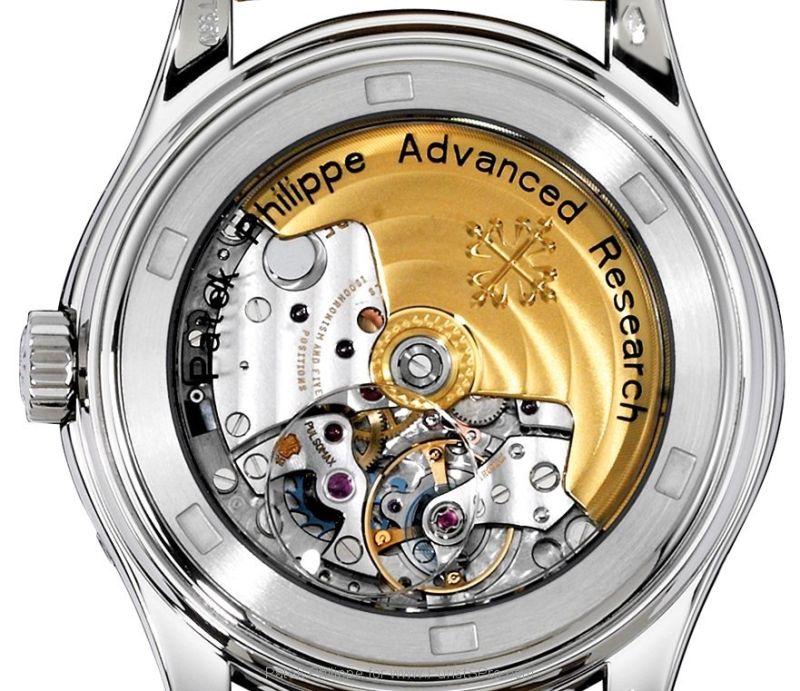
The Formula one of the Patek Philippe watches
The results
also show a 30% increase in the power reserve from 46 to 60 hours.
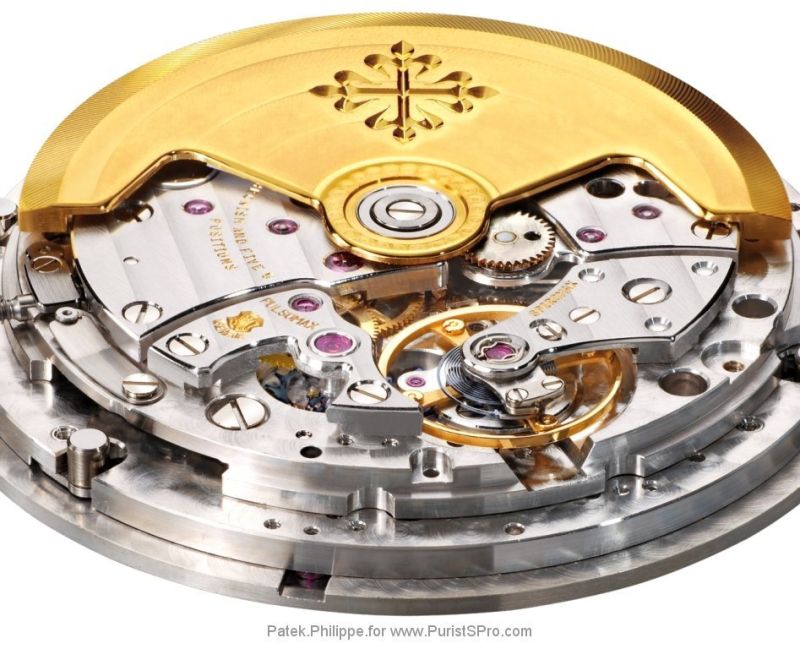
Another view on the Pulsomax
We can wonder
what will be the next step after the presentation of this Pulsomax®
escapement.
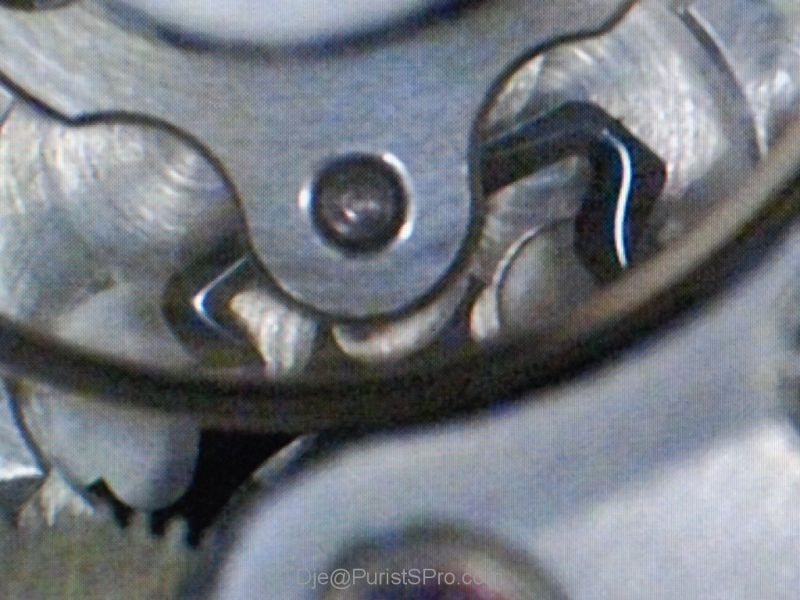
The real thing
Maybe the next
step will be the implementation of all this in the standard
watches ? The main difference, out of the Pulsomax® pieces is
the replacement of the wheel train as the escape wheel has 16 teeth instead of
20.
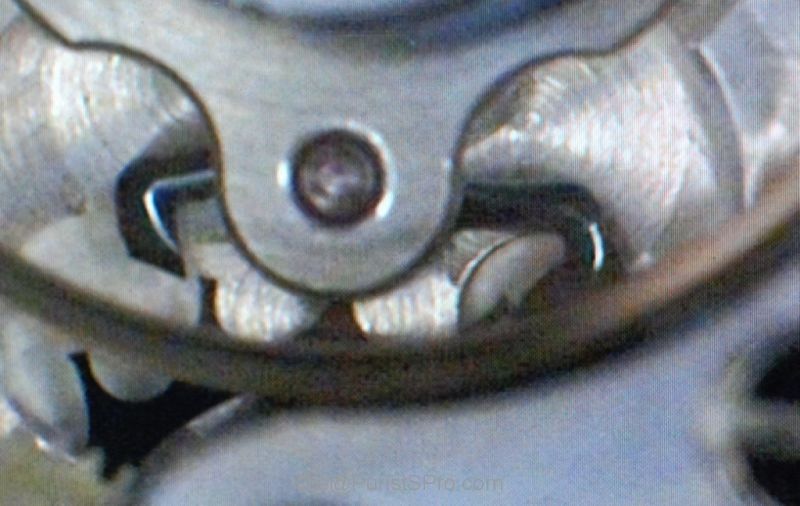
The bright Silinvar
Patek Philippe
has precised during the introductory press conference that they plan to be
independent on the Silinvar® parts production side.
You may want to
look at the pics above and below to see how the lever really looks on the
surface.
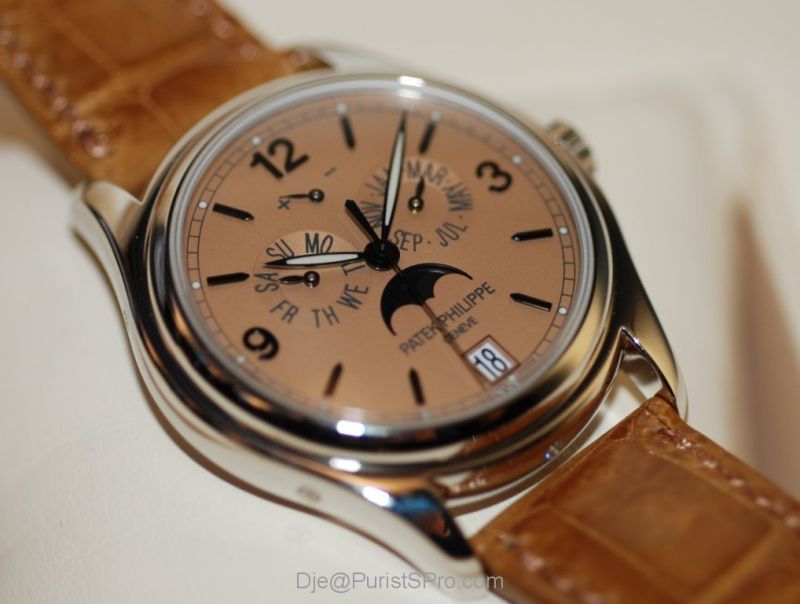
That's also a gorgeous watch
The good news
is that you can take part in the story by buying a 5450. Obviously that's
a very relative possibility!
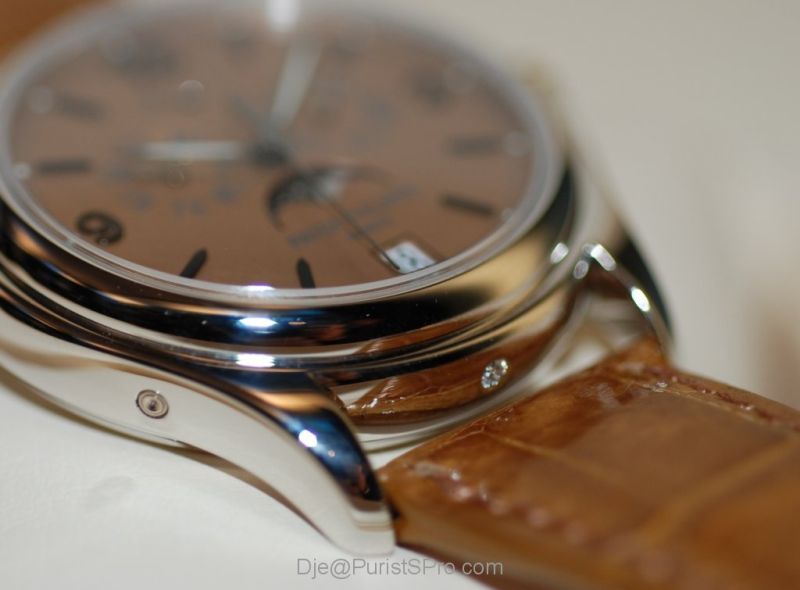
The platinum diamond
I must just say
that the 5450 is a gorgeous watch, with its pink dial and platinum case. It
will be produced in a limited series of 300.
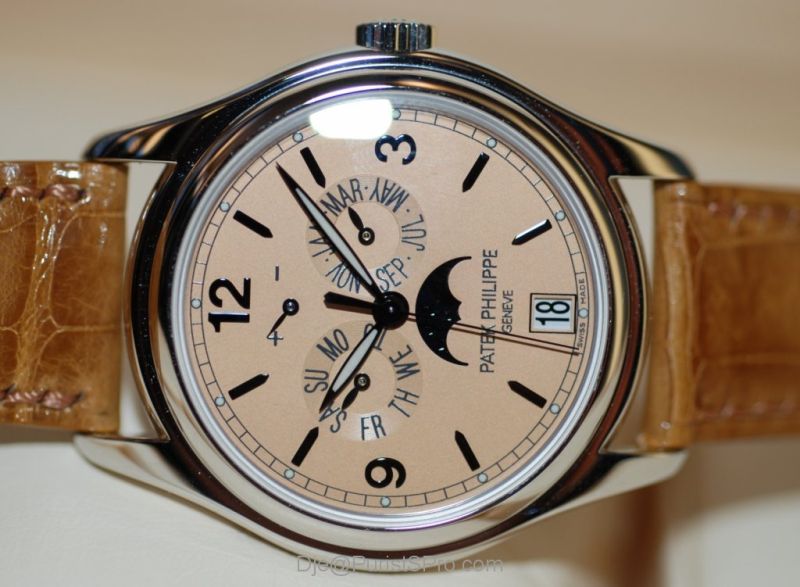
A pink dial
The watch is
water resistant to 30
meters, so that you can enjoy it on the deck of your finest
yachts!
I hope you
enjoyed it ! That's indeed a very nice watch and a technical wonder.
Dje
The Patek Philippe Annual Calendar Moon Phases reference 5146, introduced in 2005, represents a significant offering in the brand's annual calendar complication lineage. This reference succeeded the popular 5035 and 5036 models, refining the aesthetic and technical presentation of the annual calendar with moon phases. It is characterized by its balanced dial layout, integrating day, date, month, moon phase, and power reserve indications in a legible and harmonious arrangement. The 5146 was produced in various precious metals, establishing itself as a core model within Patek Philippe's complicated watch collection for many years.
This particular iteration of the 5146 is presented in an 18k yellow gold case, measuring 39mm in diameter. It houses the self-winding Patek Philippe Caliber 324 S IRM QA LU, a movement known for its reliability and precision, visible through a sapphire crystal case back. The movement provides a power reserve of approximately 45 hours. A domed sapphire crystal protects the dial, and the watch is water-resistant to 30 meters, suitable for everyday wear but not for swimming or diving.
The reference 5146 appeals to collectors seeking a sophisticated daily wearable complication from Patek Philippe. Its annual calendar mechanism requires adjustment only once a year, at the end of February, offering practical convenience. The model was available with several dial variations and case materials throughout its production run, which concluded around 2020. The yellow gold variant with a silvery opaline dial offers a classic and understated presentation, aligning with traditional Patek Philippe aesthetics.
For those who wondered why we didn't already get a review or something about this watch, now you have the answer... Jerome was working on it! Great review, my friend, and not only about the watch and the official blabla, but much more! Thanks a lot, I think I'll need to come back several times, with pleasure! Nicolas This message has been edited by Dje on 2008-06-03 06:41:47
.
Very interesting developments in horology in general! Will this become the norm for all new watches within PP in the future?
Thanks so much for posting this...very clear and interesting info on the watch. I love the aesthetics as well..big fan of salmon dials. Wonder what the 5550 and the 5650 will have in the coming years?!! Tim
e
for this deep know how
This thread is active on the Patek Philippe forum with 29 replies. Share your knowledge with fellow collectors.
Join the Discussion →