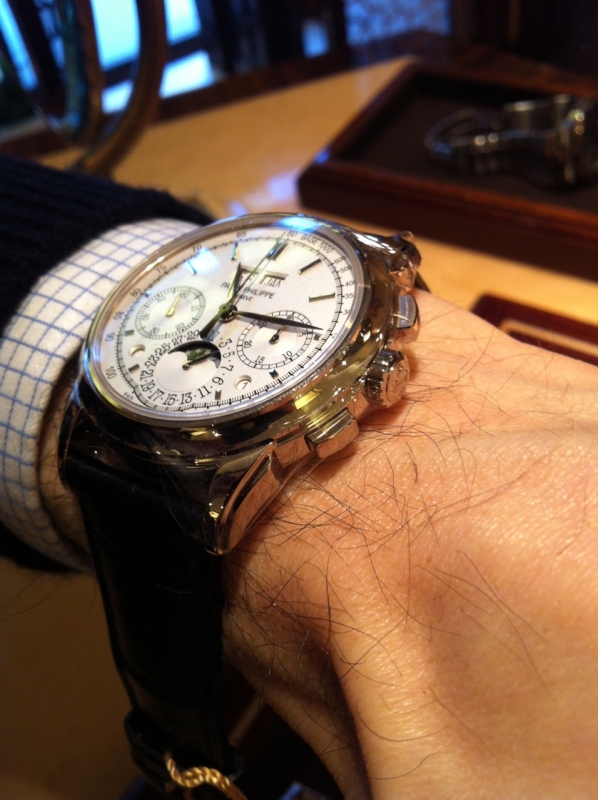
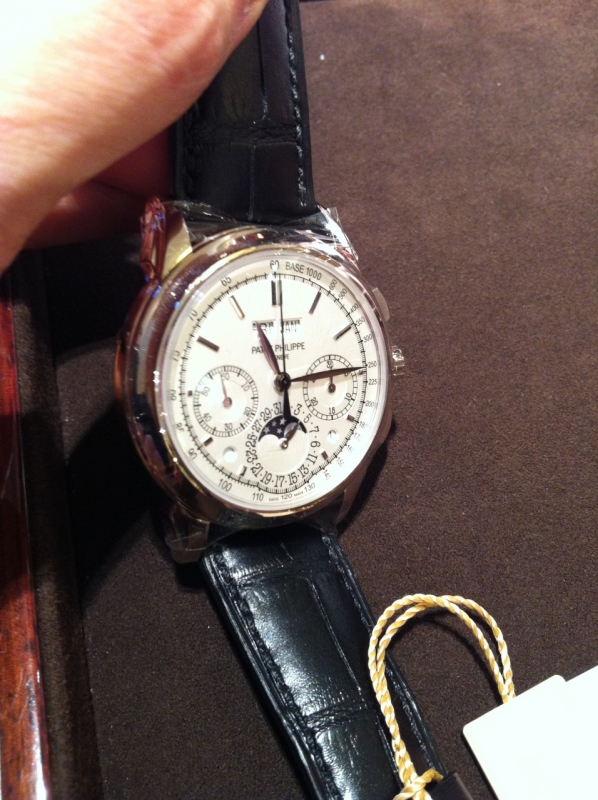
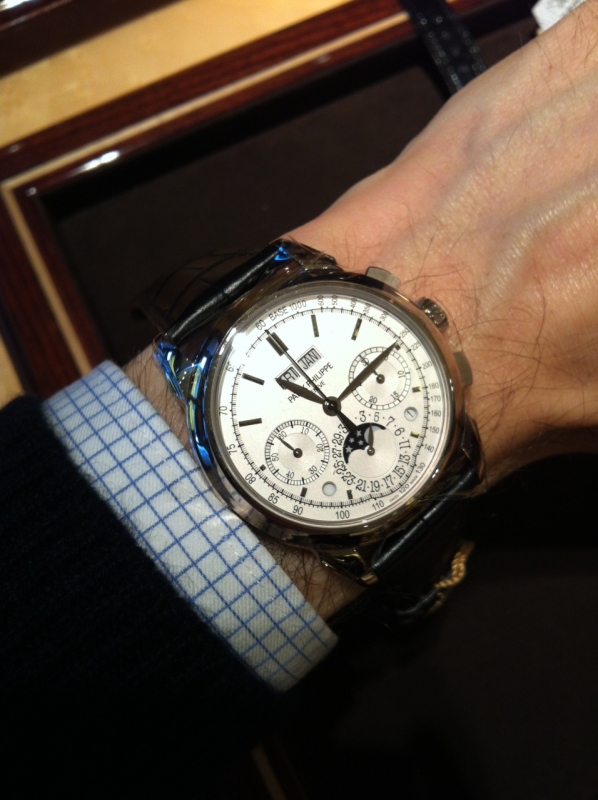
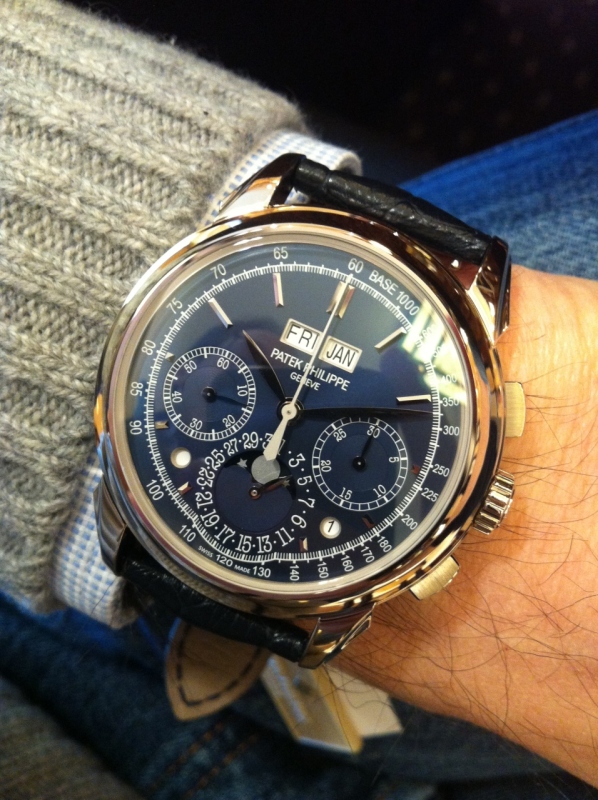
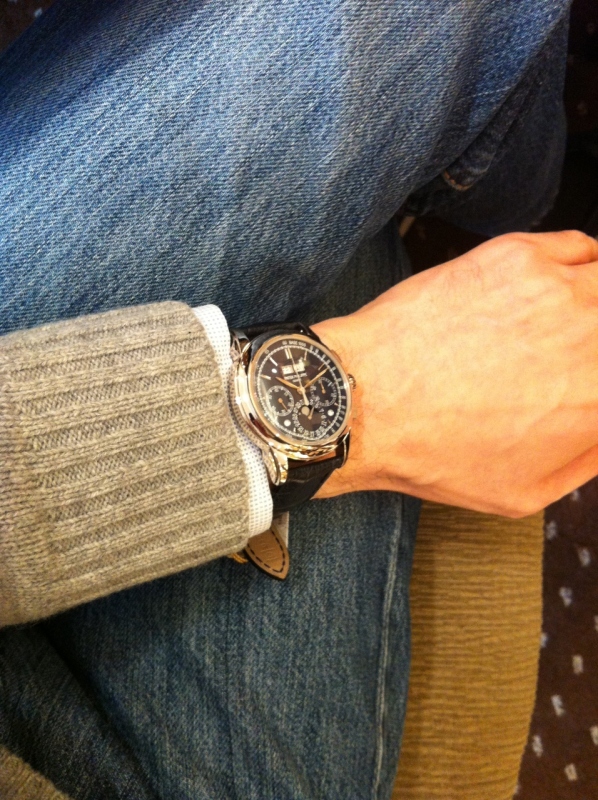
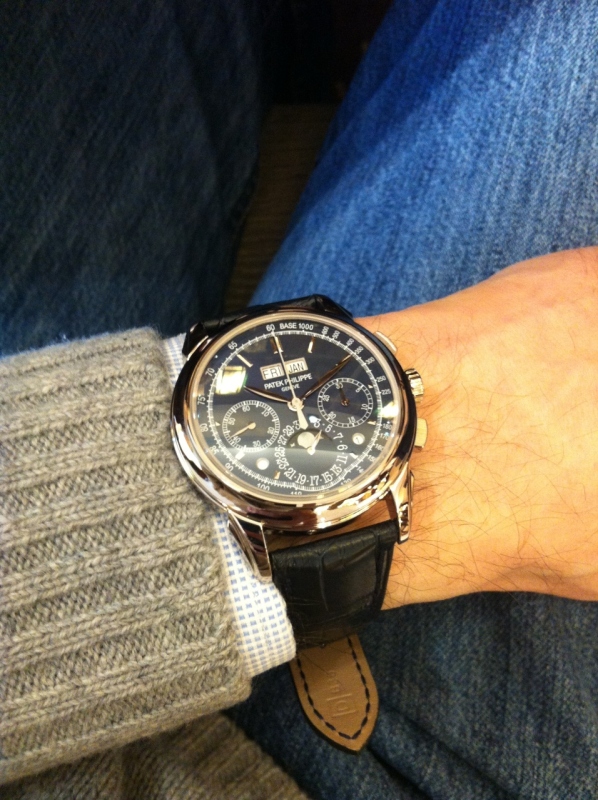
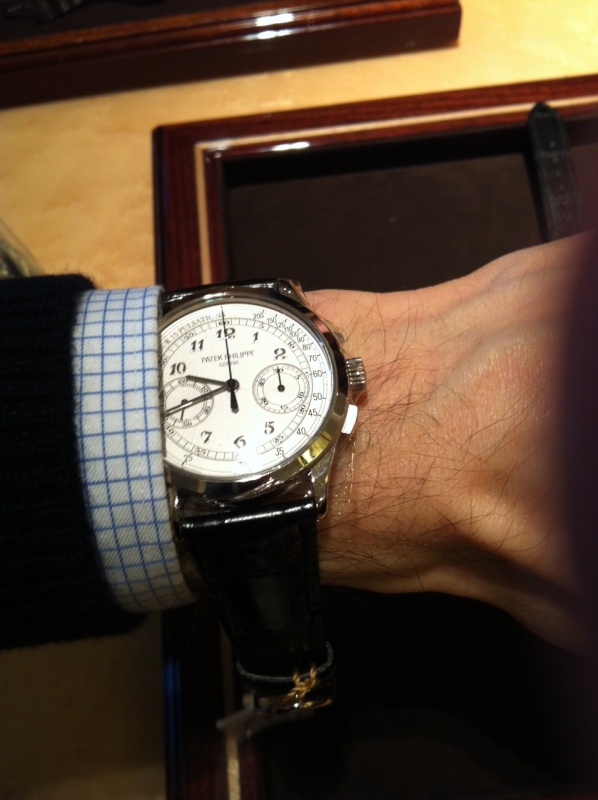
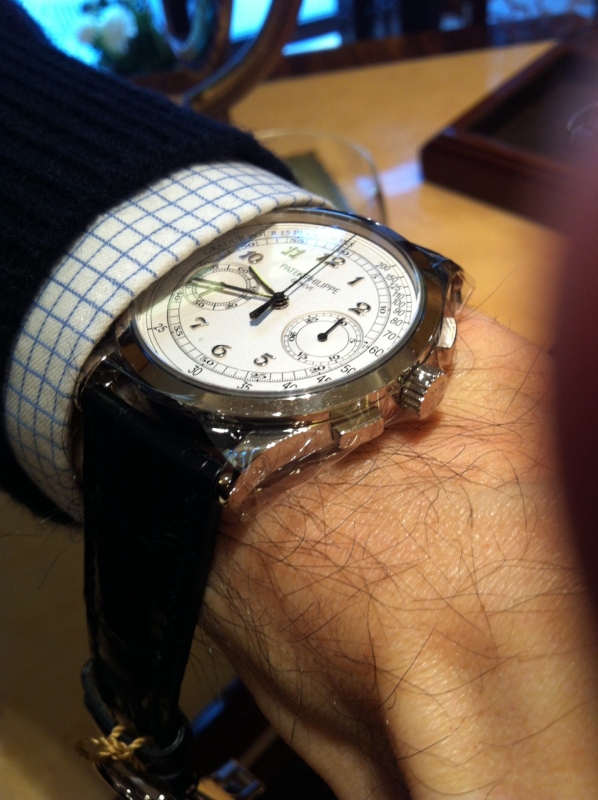
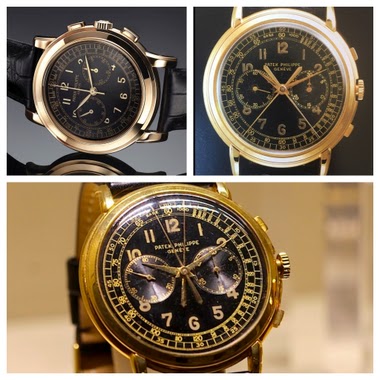
Mark in Paris offers a thoughtful comparison of Patek Philippe's perpetual calendar chronographs, specifically the 5270G (white and blue dials) and the 5170G, against their predecessors like the 3970 and 5970. His reflections encourage readers to consider how perceptions of new models evolve over time, challenging immediate judgments.
About the Patek Philippe Grand Complications Ref. 1518
The Patek Philippe Reference 1518 holds a significant place in horological history as the world's first perpetual calendar chronograph produced in a series. Introduced in 1941, it established a foundational complication for the brand, preceding other notable perpetual calendar chronographs such as the 2499 and 3970. This reference is recognized for its pioneering role in combining these two complex mechanisms in a wristwatch.
This reference was primarily offered in yellow gold, with a limited number produced in rose gold and an even smaller quantity in stainless steel. The case typically measures 35mm in diameter, housing the manual-winding caliber 13''' Q. The movement features a column-wheel chronograph mechanism integrated with the perpetual calendar complication. The dial often presents with applied Arabic numerals or bâton indexes, and a tachymeter scale on the outer periphery.
For collectors, the 1518 represents a landmark Patek Philippe reference, highly sought after for its historical importance and rarity, particularly examples in alternative metals. Its design language and technical sophistication set a precedent for subsequent perpetual calendar chronograph models, making it a cornerstone for understanding the evolution of this complication within the brand's catalog.
Specifications
- Caliber
- 13''' Q
- Case
- 18k yellow gold
- Diameter
- 35mm
- Dial
- Silver
- Water Resist.
- 30m
- Crystal
- Hesalite
About the Patek Philippe Grand Complications Ref. 3970
The Patek Philippe reference 3970 is a perpetual calendar chronograph, a complication central to the brand's heritage. It succeeded the highly regarded reference 2499 and served as a bridge to the later reference 5970. The 3970 was produced over an extended period, allowing for several series and subtle variations in its design, making it a significant model for collectors interested in the evolution of Patek Philippe's complicated wristwatches.
This reference features a 36mm case, commonly found in 18k white gold, yellow gold, rose gold, and platinum. It is powered by the manual-wind caliber CH 27-70 Q, based on a Lemania ébauche, which offers a power reserve of 60 hours. The watch is fitted with a sapphire crystal, protecting a dial that typically includes subdials for the chronograph, perpetual calendar displays, and moon phases.
The 3970 appeals to collectors seeking a classic Patek Philippe perpetual calendar chronograph with a traditional aesthetic and a historically important movement. Its long production run from 1986 to 2004 means that examples from different series, such as the first, second, and third, exhibit minor differences in dial layout and case details, providing distinct collecting opportunities within the reference.
Specifications
- Caliber
- CH 27-70 Q
- Case
- 18k white gold
- Diameter
- 36mm
- Dial
- Silver
- Water Resist.
- 25m
- Crystal
- Sapphire
About the Patek Philippe Ref. 5070
The Patek Philippe reference 5070, part of the Complications collection, marked a significant return for the brand to large-format chronographs. Introduced in 1998, it was the first non-perpetual calendar chronograph produced by Patek Philippe since the reference 1463, which ceased production in the early 1960s. Its design drew inspiration from a unique Patek Philippe aviator's watch from the 1940s, characterized by its prominent case and dial layout, yet reinterpreted for a contemporary audience. This reference established a new aesthetic direction for the brand's chronographs, moving towards more substantial case dimensions.
The watch features a 42mm case, initially offered in 18k yellow gold, housing the manual-winding Caliber CH 27-70. This movement, based on a Nouvelle Lémania ébauche, was extensively finished and modified by Patek Philippe, meeting the brand's stringent quality standards. It provides a power reserve of approximately 55 hours. The dial, in this specific configuration, is black, protected by a sapphire crystal, and the watch is water-resistant to 30 meters. The fixed bezel frames the dial, and the watch is typically fitted with a leather strap.
Reference 5070 appeals to collectors interested in modern Patek Philippe chronographs that combine traditional movement architecture with a more contemporary case size. Its limited production run and the subsequent introduction of variants in other precious metals contribute to its collectibility. The reference represents a distinct period in Patek Philippe's chronograph history, bridging vintage inspirations with a new era of larger watch designs.
Specifications
- Caliber
- Cal.CH 27-70
- Case
- 18k yellow gold
- Diameter
- 42mm
- Dial
- black
- Water Resist.
- 30m
- Crystal
- Sapphire
About the Patek Philippe Chronograph Ref. 5170
The Chronograph reference 5170, introduced in 2010, marked a significant development for Patek Philippe as it was the first serially produced chronograph to feature a fully in-house manufactured movement. This reference succeeded the reference 5070, transitioning from a Lemania-based caliber to a proprietary design, underscoring the brand's commitment to integrated manufacturing for its complications. It represents a modern interpretation of a classic chronograph layout within the Patek Philippe catalog.
The reference 5170 features a case measuring 39.4 mm in diameter and 10.9 mm in thickness, available in 18k white, rose, or yellow gold. It is equipped with the manual-winding caliber CH 29-535 PS, which offers a power reserve of 65 hours. The watch is fitted with a sapphire crystal and is water-resistant to 30 meters. The movement is visible through a sapphire case back, showcasing its intricate finishing.
This reference appeals to collectors seeking a contemporary Patek Philippe chronograph with an in-house movement. Early variants, such as the yellow gold reference 5170J-001, featured a pulsometer scale, which was later replaced by a minute track on subsequent iterations. The various metal options and dial configurations provide distinct aesthetic choices for collectors, reflecting different periods of its production run.
Specifications
- Caliber
- CH 29-535 PS
- Case
- 18k White Gold, Rose Gold, or Yellow Gold
- Diameter
- 39.4 mm
- Dial
- Silver, Black, or Opaline
- Water Resist.
- 30m
- Crystal
- Sapphire
About the Patek Philippe Perpetual Calendar Chronograph Ref. 5270
The Patek Philippe Grand Complications reference 5270 is a perpetual calendar chronograph, succeeding the highly regarded reference 5970. It represents a significant evolution in Patek Philippe's grand complications lineup, being the first perpetual calendar chronograph to feature an in-house developed movement. This transition from a modified Nouvelle Lemania base caliber to a fully integrated Patek Philippe movement marks a notable advancement in the brand's technical independence and horological prowess. The 5270 maintains the classic aesthetic of its predecessors while introducing subtle design refinements.
The reference 5270 is housed in a 41 mm case, available in 18k white gold, rose gold, or yellow gold. The case design is characterized by a concave bezel and two-tier lugs, contributing to its distinctive profile. It is powered by the manual-winding caliber CH 29-535 PS Q, an integrated chronograph movement with a perpetual calendar mechanism. This movement offers a power reserve of approximately 55 hours and is protected by a sapphire crystal, ensuring water resistance up to 30 meters.
This reference appeals to collectors seeking a modern interpretation of a classic grand complication from Patek Philippe. Its in-house movement and refined case details distinguish it within the brand's offerings. Multiple dial variants have been produced, including silver, blue, and opaline, providing collectors with a range of aesthetic choices. The 5270 continues the tradition of Patek Philippe's perpetual calendar chronographs, offering a blend of technical sophistication and traditional design.
Specifications
- Caliber
- CH 29-535 PS Q
- Case
- 18k White Gold, Rose Gold, or Yellow Gold
- Diameter
- 41 mm
- Dial
- Multiple variants available
- Water Resist.
- 30m
- Crystal
- Sapphire