Complications
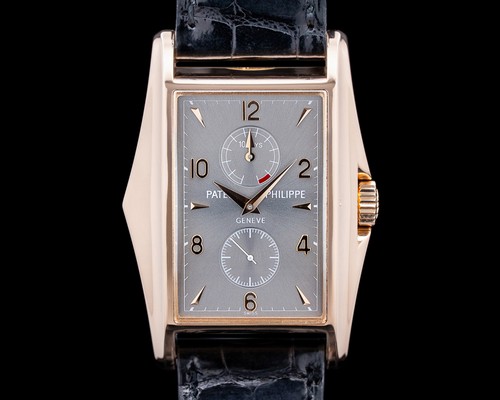
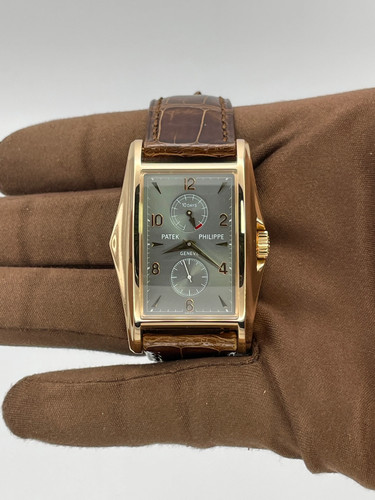
AndCavanaugh's insightful post delves into the rarely discussed world of shaped movements, specifically Patek Philippe's caliber 28-20. This article explores the evolution of this significant movement across three distinct references: the 5100, 5101, and 5200. AndCavanaugh highlights how Patek Philippe masterfully utilized space and incorporated advanced horological features within these uniquely designed calibers, offering a crucial perspective on a pivotal era in modern watchmaking.


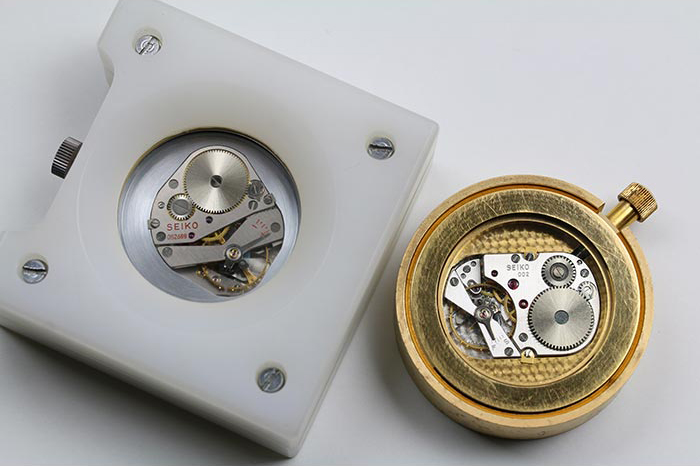
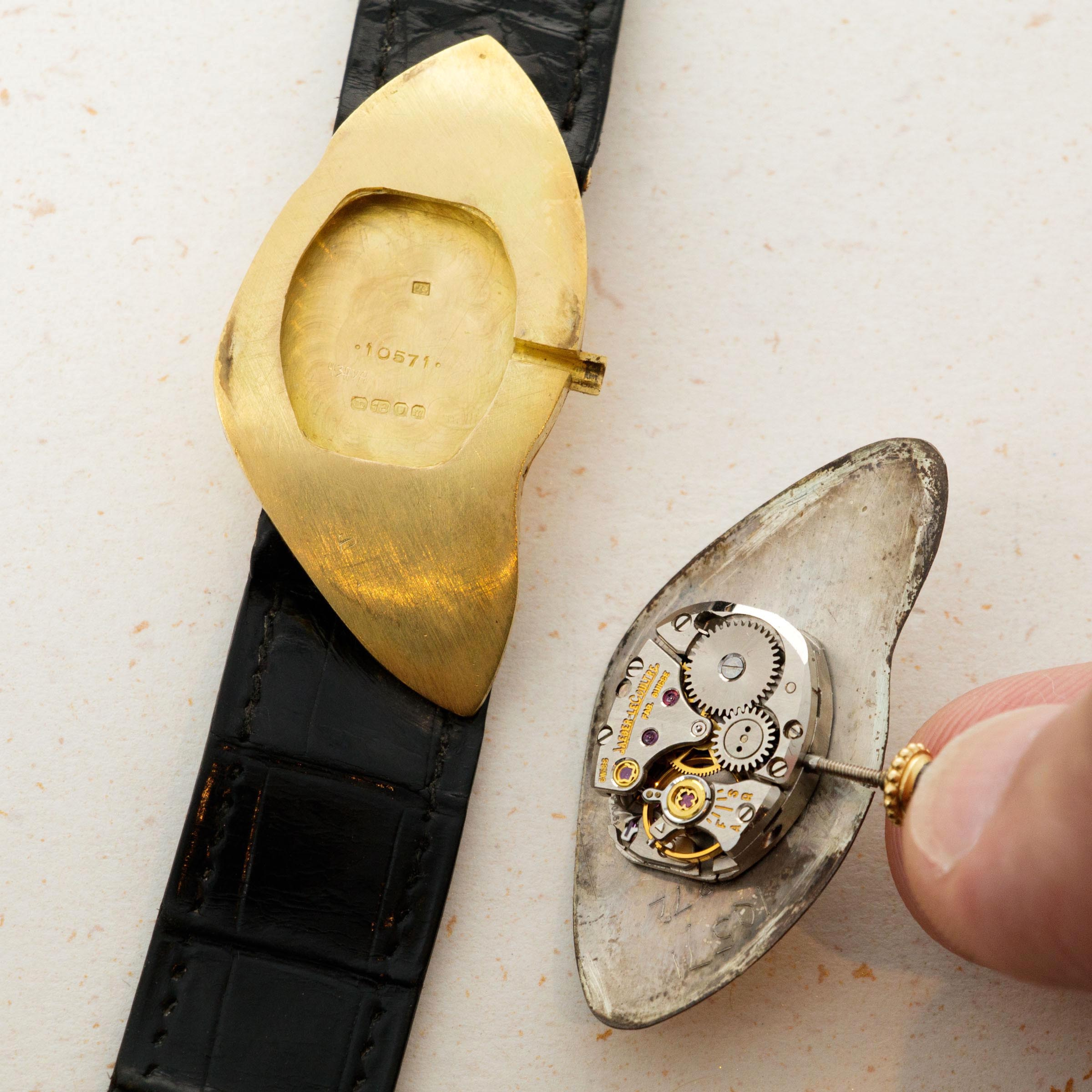
Shaped movements are rare, good ones more so. A shaped movement should use the space inside a watch as efficiently as possible, such as in these Seiko Observatory movements. Compare this Carter crash movement to this other Cartier Crash movement one and you’ll see how much of a difference it can make. One of the best-shaped movements in recent memory is Patek’s brick-full-of-springs caliber 28-20.
28-20/220 REC 10J PS IRM

All 10-days of power are housed in two massive barrels, requiring an extra-thick barrel bridge and oversized arbors/arbor jewels. The first, larger, barrel is wound by tuning the barrel arbor (like normal), and the barrel rotates the wind the second barrel. The second, smaller, barrel is like a motor barrel and is wound by turning the barrel while the arbor drives the train. These barrels rotate very slowly so there is an extra wheel between the smaller barrel and the center wheel. Everything after that is normal. The first barrel has a slipping bridle like you’d find in an automatic to prevent overwinding, instead of using Patek’s dynamometric crown.
Those two jewels in the upper right corner are for the planetary style power reserve indicator, more of which can be seen on the dial side. The up side of the differential is connected to the ratchet on barrel one, and the down side is connected to the arbor wheel on barrel two. Naturally, it takes a very long time to wind the watch, around a hundred turns of the crown.
The movement uses traditional bridge construction with visible jewels set in 18k gold bushings. Screw fixed brass/gold settings were once popular because they made “rubbed-in” jewels easier to replace, but even then were not strictly necessary. With fiction set jewels these are purely decorative and Patek only used them on the bridge side, the jewels on the other side are set directly into the mainplate like normal.
TO 28-20/222 REC 10J PS IRM


As they'd already done with caliber R27, Patek added a tourbillon to 28-20 to create the reference 5101 in 2003. This was the first tourbillon with 10 day power reserve. The art deco case came in all three flavors of gold, as well as platinum (most common by far) and some specially engraved ones. 5101 was a slower mover and 20 years later the platinum ones sell for half MSRP on chrono24.
To do this they moved the train to the dial side, which means the second barrel has essentially been flipped upside down, as has its connection to the power reserve differential. What I referred to as the extra wheel is now two superimposed extra wheels, one drives the time and the other drives the rest of the train. Increased height on the dial side means the up/down no longer sits against the dial, and needs its own bridge. Those small bridges on the back bearing the Geneva seal and movement number are purely decorative, but aren’t part of the main plate and can be removed. I speculate this is to make the tourbillon more accessible to the watchmaker. If you remove them you’ll find a second hidden moment number engraving directly on the main plate.
The tourbillon cage is styled after those on the 30T/34T. Patek touted the movement’s six interior angles (even many repeaters have none) but the tourbillon itself lacks the painstaking hand finishing seen on its contemporaries, like VC’s Malte. Patek focused on performance, like other Patek tourbillon of the time each movement is a COSC certified chronometer. I don’t think Patek does this anymore, but I haven’t bought a Patek tourbillon lately so I may be wrong.
28-20 REC 8J PS IRM C J

The third and final reference to house the 28-20 was launched in 2013 in white gold with a blue or white dial and a more accessible price. Reference 5200 has the same pseudo-Advanced-Research vibe as ref. 5235. It uses both the Spiromax balance spring and Pulsomax escapement. It has stop seconds, which is a big deal to some, and a new calendar on the dial side. I think these also got the dynamometric crown. The power reserved was dialed back to 8 days.
It’s no longer a bridge movement, the extra wheel is tucked under the barrel bridge and a split three-quarter (or 3/5th as there are 5 wheels) imitates finger bridges. Plates made to look like bridges are another pocket watch era throwback. The gold bushings are gone and I personally think this version looks better than the original, though I suspect most would disagree.
The instantaneous day-date calendar sips smalls amounts of torque over a long period of time, which it stores to change the date in and instant around midnight. I assume there is a larger snail under that 24-hour wheel which calendar jumper rides on. Like almost all Patek calendars, it cannot cannot be set from the crown. Don’t worry though, Patek includes a special case-scratching-tool which can be used to actuate the pushers. Like with the 5101, the 5200 wasn’t particularly popular, and was axed in 2018, bringing Patek’s shaped mechanical calibers to an end (since caliber 25-21 doesn’t count)
The Patek Philippe World Time reference 2523, launched in 1953, is distinguished by its innovative two-crown system. One crown serves for winding the watch, while the second, positioned at 9 o’clock, controls the city disc. This design marked a significant development in the functionality and user experience of world time complications for the brand.
The reference 2523 was offered in two primary versions. The initial ref. 2523 featured larger lugs that extended above the bezel, with a case diameter of 35.5 mm. A subsequent variant, ref. 2523/1, presented a slightly larger diameter of 36 mm and thinner lugs that were integrated without extending above the bezel. Both versions were powered by the caliber 12-400 HU, which incorporated the world time module developed by Louis Cottier.
This reference appeals to collectors interested in Patek Philippe's historical advancements in complicated watchmaking, particularly the evolution of its World Time series. The distinct design differences between the 2523 and 2523/1, especially regarding lug integration and case dimensions, provide specific points of interest for enthusiasts tracking the model's development and variations.
I'd be curious to know if the planetary differential could be seen as some sort of remontoir. It's funny (irony mode on) to see how capable Patek is and what's the current offer in terms of shaped movements. Of course my mind goes quickly to the recent Cubitus, it took many years (I've always loved fairy tales, irony still on) for developing those amazing round movements😁😁😁 Anyways, what impress me the most is the search for aesthetic, because that "fake" finger bridge means nothing more than be
All power reserve indicators use a differential. The watch does have a "remontoir d'egalite" in the literal sense though since the second, smaller mainspring is wound up by the first. I personally like the fake finger bridges.
Looking forward to your next post on another movement. Keep up the good work !
This thread is active on the Patek Philippe forum with 12 replies. Share your knowledge with fellow collectors.
Join the Discussion →