Nilomis, a self-professed non-die-hard Omega fan, shares his unexpected acquisition of an Omega Speedmaster Solar Impulse. Initially hesitant due to its size and price, nilomis was swayed by the watch's charm during his search for a GMT travel companion. His post offers a personal review and a series of detailed photographs, highlighting the watch's unique features and his journey to ownership.
I'm not a die hard Omega fan and I do not believe that everything that Omega manufactures is great and I'm tired of the plethora of "limited editions" that Omega releases every year and when I first saw this watch, on the wrist of a dear friend, I was not excited because of the size and the high suggested price tag.
I was shopping for a travel watch, with GMT capabilities, and this one was offered to me. Initially I want to pass but ... everybody here knows how this works.
Sort of a magic moment, and a lot of haggling / trading/begging, now I own a
Speedmaster Solar impulse.
Here are some pics and some quick notes:
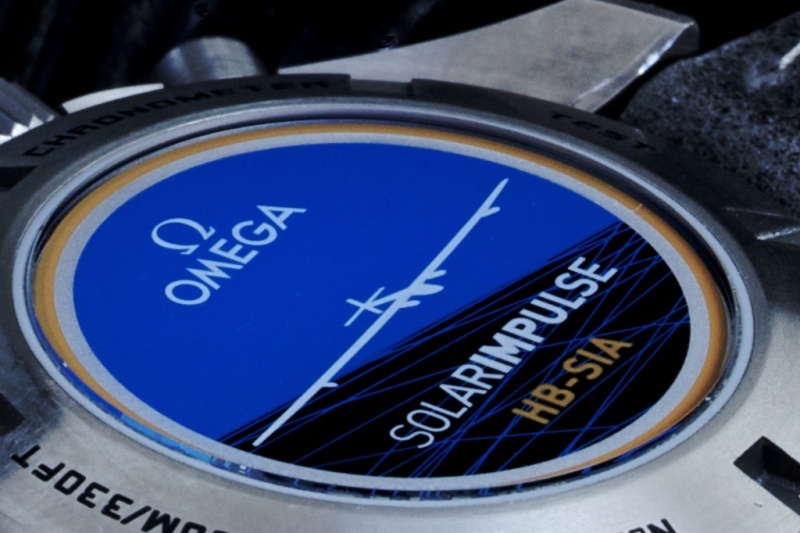
1) The case back with a reference to the "Solar Impulse" (a project to fly around the world using only solar energy - See note at the end of this post)
2) On the side of an old plane artificial horizon. Notice the carbon fiber dial.
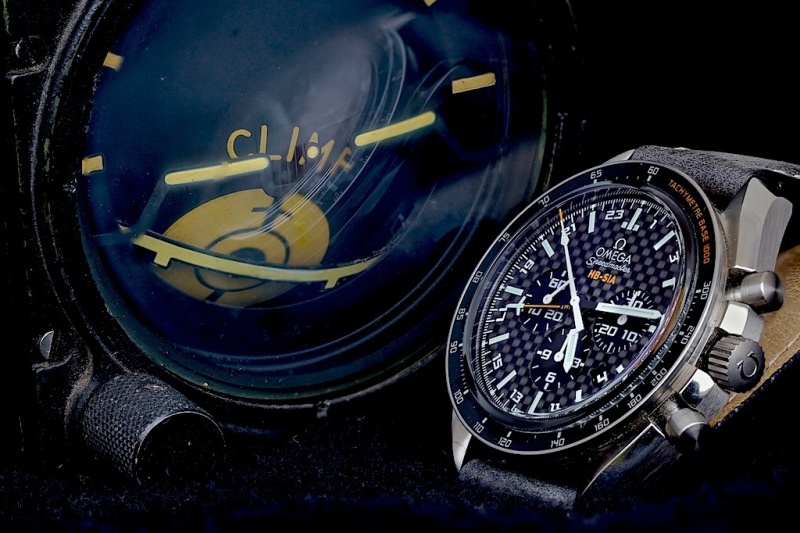
A note about the above picture:
It was producing using a technique called "stacking focus" and is a result of a merge of 10 pictures, each one with a different focus point.
Since the posted picture is small one cannot see the amazing details on it.
3) Exposed to sun, after all it's a "Solar Impulse"
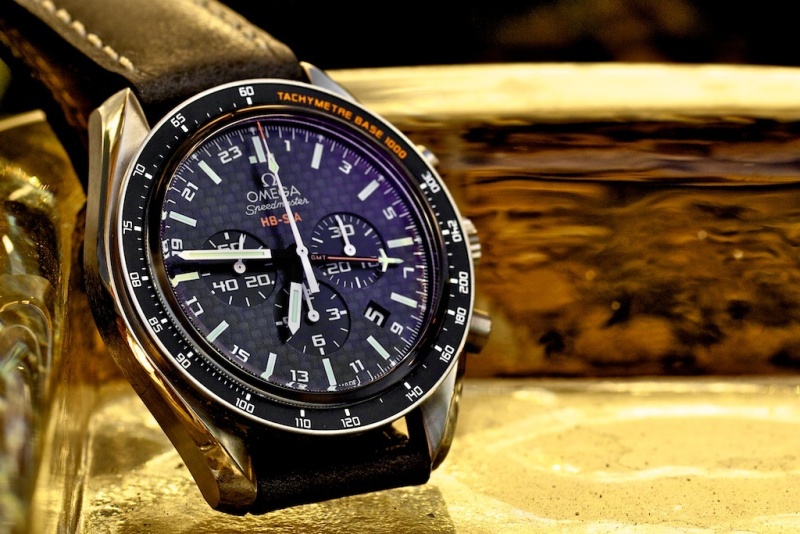
4) Another one
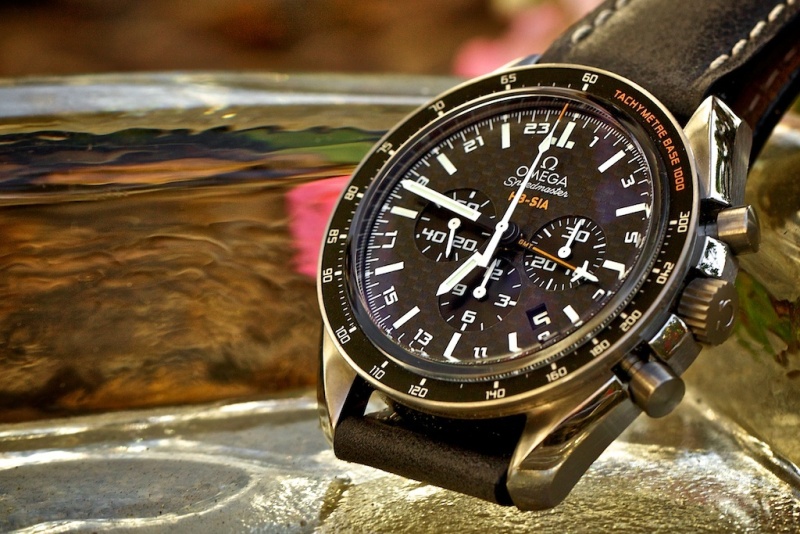
5) Long exposure, showing the chronograph seconds moving
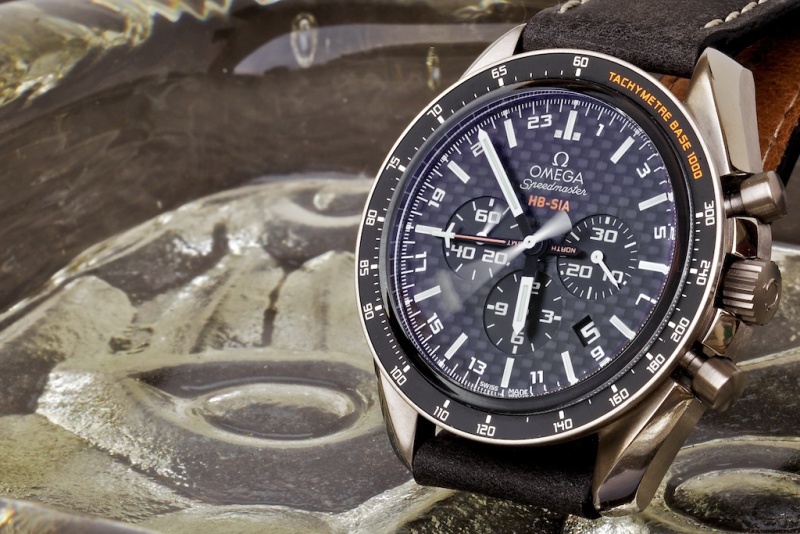
6) Same, with a fast shutter speed
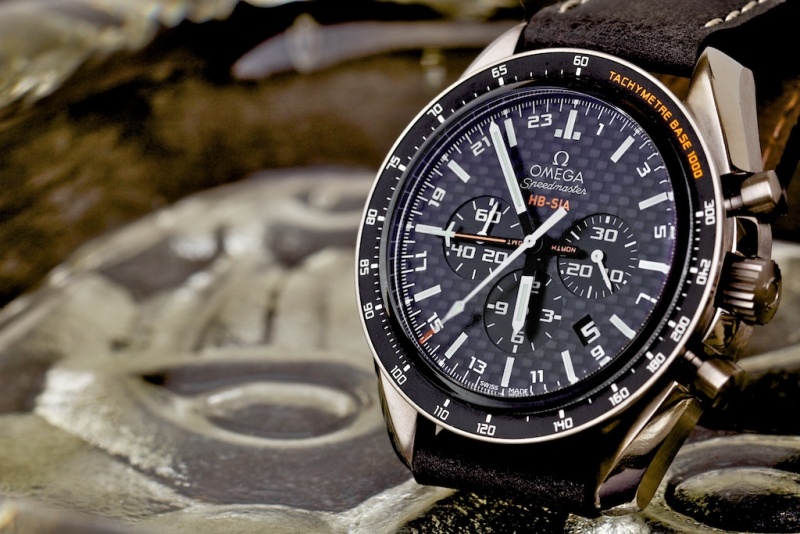
7) Sun is the theme. Sun reflexes here.
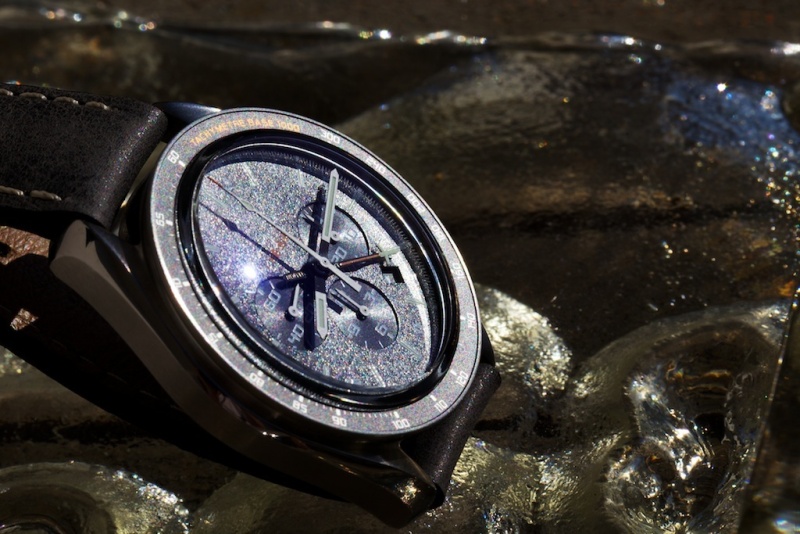
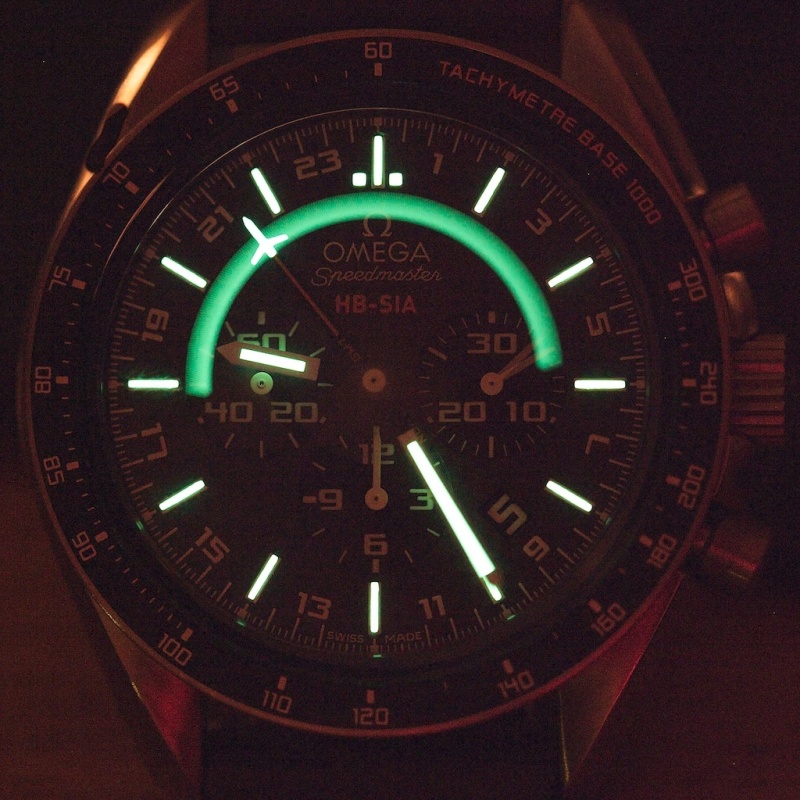
8) Lume shot. I love the night visibility and the little 24 hours/GMT plane.
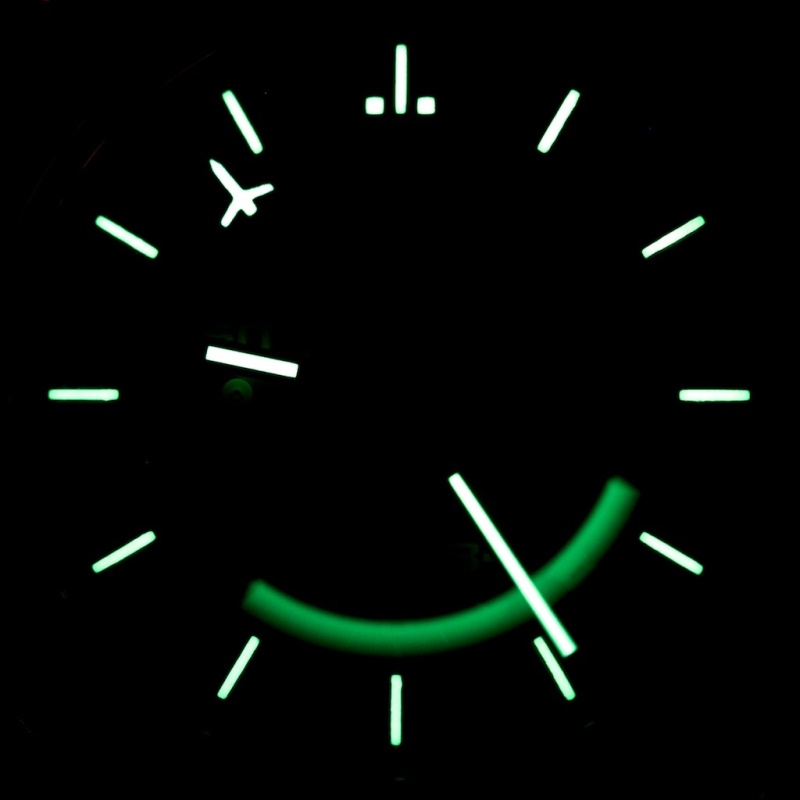
9) Another lume shot. The red tone was produced by the power led of one of the computer monitors.
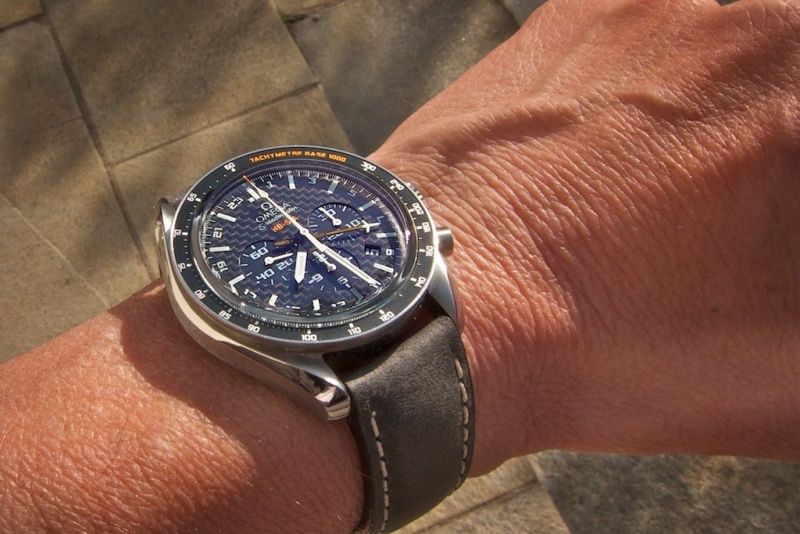
10) A mandatory wrist shot. Notice that the SI is a tad bigger to my meager wrist.
Some information and personal comments:
From Omega site:Crystal - Scratch-resistant sapphire crystal with anti-reflective treatment on both sidesCase - TitaniumDial - Black Carbon fibreWater resistance - 100 m (330 feet)Case Diameter - 44.25 mmMovement:Caliber - Omega 3603 (Co-Axial)Self-winding chronograph with column wheel mechanism, free sprung-balance and Co-Axial Escapement for greater precision and durability. 2nd time zone through 24 hour hand. 12 hour and 30 minute totalizers, stop second function, start/stop push button, return-to-zero push button. Rhodium plated finish and gold plated engravings. Officially certified chronometer.Power reserve - 55 hoursComments:1) ComfortImmediately after I grabbed the watch I removed the, also titanium, bracelet (I'm not a bracelet person) and put a leather strap, with an Omega matching logo. The strap, a Hirsch Calfskin Stitched (Vintage Black) fitted perfectly (22mm) and changed the watch from water to ... vodka (I'm not a wine person!).
I'm amazed how comfortable the watch "dresses" and how light is on my wrist.
2) Movement/PrecisionAs I expected, since the watch is powered by a F. Piguet Co-Axial movement, the precision is outstanding.
I did not put, yet, the watch on a time machine but my measurements, against an atomic clock, shows little or no deviation.
I'm aware that this movement had issues on the past but I own two other watches (3303 and 3313), that had been "blessed" by my watchmaker, without a single issue.
I believe that Omega fixed the issues and any discussion about this matter seems to be superfluous.
3) CaseThe titanium case follows the standard, and I like this, Speedmaster classic design and the case finish is excellent (IMHO).
4) Operations / ComplicationsThe 3603 movement has a GMT function, sort of a classic implementation, that allows hour and date changes up and down. One nice feature is the 24 hours hand that uses a little (luminova coated) plane that is a clear reference of some Omegas of the past.
The chronograph operation is smooth and, let's remember that this is a column wheel based), very precise.
I didn't experience the chronograph hand "jump" that happens on 861 based Speedmaster.
5) VisibilityI saw some comments, over the Web, about the dial (being carbon fiber based) legibility.
My experience shows that this is not a fact and, even with my myopic eyes, I can read the dial without any issue. I love how the sun reflexes on the dial.
6) Dislikesa) Could be a little smaller. I'm a believer that the 42mm of a classic Speedmaster fits better on my wrist but the case format in association with the titanium lightness helps.
b) The anti-glare coating. I'm not a particular fan of the blue tone that this coating put on the crystal. As this watch is a keeper, in the future, I go to remove the external coating, like I did in the past with another watch.
c) The date at 4 could be bigger but I like the "Zenith style" of date at 4.
Summary:In my humble opinion it's nice watch, a true keeper, and I'm very happy with everything that Omega put on it.
I dare to say that this one is the best Omega watch that I ever had (and in the past I had many others) .
It was promoted to be my travel watch.
Thanks and a wonderful weekend to all
A final note about the Solar Impulse (the plane):From Wikipedia:
Solar Impulse is a Swiss long-range solar powered plane project being undertaken at the École Polytechnique Fédérale de Lausanne, by Bertrand Piccard and André Borschberg.
The project eventually hopes to succeed in the first circling of the earth with a piloted fixed-wing aircraft using only solar power.
The project is promoted by Bertrand Piccard, who co-piloted the first balloon to circle the world non-stop.[1]The first aircraft, bearing the Swiss aircraft registration code of HB-SIA, is a single-seater, capable of taking off under its own power, and intended to remain airborne up to 36 hours.
This aircraft first flew an entire diurnal solar cycle, including nearly 9 hours of night flying, in a 26-hour flight on 7–8 July 2010.
Building on the experience of this prototype, a slightly larger follow-on design (HB-SIB) is planned to make circumnavigation of the globe in 20–25 days.[4]Omega is one of the main partners of the Solar Impulse


