Patrick_y's exploration of micro-rotor movements offers a vital perspective for both seasoned collectors and newcomers. His detailed analysis, spanning historical context to modern innovations, addresses the nuanced engineering and practical considerations of these intricate calibers. This article synthesizes community insights, providing a comprehensive look at the enduring appeal and unique challenges of micro-rotor watches.
Synopsis: What micro rotor is your favorite and why?
Patek Philippe 240 caliber, first debuted in 1977. Photo from Patek Philippe.
WHY MICRO ROTOR:
Micro rotors are amazing automatic winding movements. They were initially pioneered to help make a watch thinner, by taking the place of where a barrel would normally be situated, a micro rotor could be nested into a movement, which reduces movement thickness when compared to equipping a traditional large rotor above the movement.
A QUICK HISTORY:
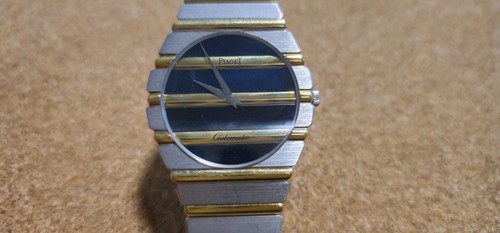
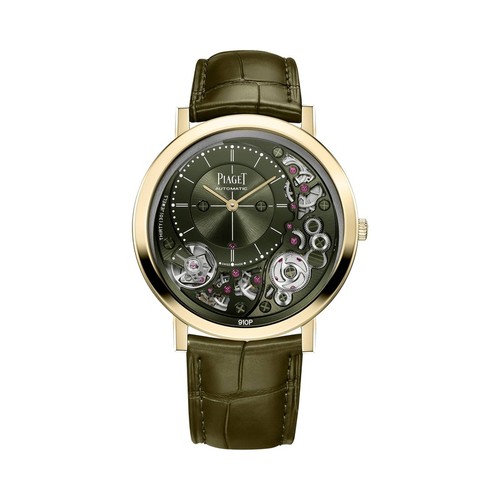
The first Micro Rotors came from the 1960s; Universal Genève, Piaget, and a few other brands are the likely pioneers of the technology. Some would argue they weren't "good movements" until the Patek Philippe 240 caliber came along in the 1977. Initially, even the Patek Philippe 240 caliber had some small winding problems, but today, I would argue that the Patek Philippe 240 is probably one of the best micro rotor movements. Twenty years later in 1997, the Chopard 1.96 debuted, introducing bi-directional winding to micro rotors for the first time. And another twenty years later in 2017, Bulgari debuted the BVL 138, an exceptionally slim micro rotor movement, setting a record (that would be matched or beaten by a Piaget a short time later).
THE CONS OF MICRO ROTORS:
However, micro-rotors have smaller mass and shorter diameters than traditional rotors. That means that they're less efficient at winding watches. This, combined with other friction issues, ball bearings, etc. mean that some people will not have a great experience - in other words, you wear your large rotor watch and the watch stays running. But when you wear your micro-rotor watch, the watch sometimes doesn't transmit enough of your wrist energy into the mainspring and the watch stops. Some of my micro-rotor equipped watches will stop at night - even if I walked 15,000+ steps earlier that day!
SHARE YOUR EXPERIENCE AND THOUGHTS:
Please participate and here are some suggested questions for you to inspire your responses:
1. What watch do you like with a micro rotor? Are you a fan of micro rotors specifically?
2. Do you own a watch with a micro rotor? Which micro rotor(s) do you own (please state the brand and the caliber number)? And please tell us about your experiences with the micro rotor (does the watch wind well, keep good time, anything you'd like to mention).
3. Any other thoughts you'd like to share or comment?
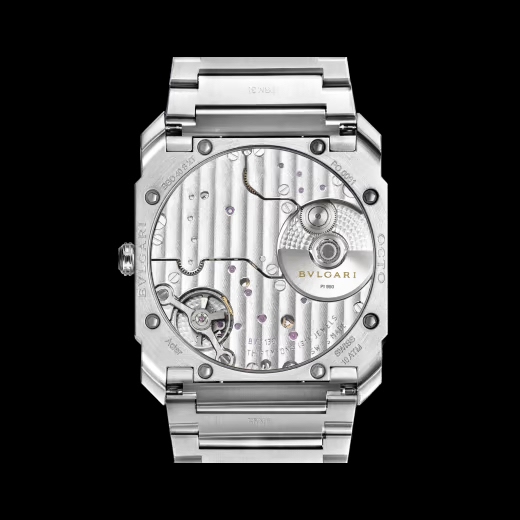
The Bulgari BVL 138 2nd Generation Movement; has a slightly larger platinum rotor than the 1st Generation Movement. The First Generation movement debuted in 2017. Supposedly, the 2nd Generation winds significantly better! Photo from Bulgari.

The Chopard 96 caliber which debuted in 1997. One of the few micro-rotor movements that can wind in both directions! Most micro-rotors wind in one direction (Patek Philippe 240 caliber winds only in the Counter Clockwise direction). Photo from Chopard.

Parmigiani Fleurier Micro Rotor movement, Photo by the author.

MING's 29.01 WorldTimer uses a micro rotor movement! Photo from Ming Thien.