WPS member · Automotive forum
26 replies4095 views0 photos
Marcus Hanke's detailed account of an off-road driving experience in the Lausitz mining region offers a unique perspective on adventure travel and vehicle capability. This article highlights the practical skills and specialized vehicles required for exploring remote, man-made landscapes. His narrative provides valuable insights into the philosophy behind extreme off-road expeditions.
Exploring the Lausitz mining region: a man-made desert in the heart of Europe
by Marcus Hanke
Imagine
your hotel room is a mere 4.5 square meters large; to climb into bed,
you have to either use a ladder, or some artistic capabilities. A shower
cabin is there, but so small, that you are likely to flood the room
even after tiny movements. The toilet - well, it is sufficient to say
that something like this is present. The chef de la cuisine is lousy,
and the coffee is as good as you can make it. But when you wake up in
the morning and look outside, you will see something like this:
The next morning shows this:
or that:
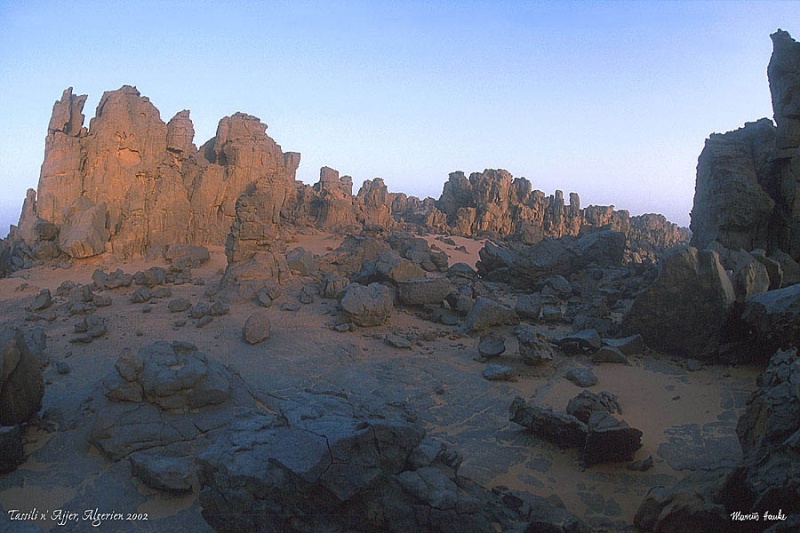
Of
course, you can try to find nice hotels offering these scenic views and
travel from one to the next, in order to enjoy a changing scenery. I
tried, and it is not that easy. Most of the time, some lump of concrete
or architectural structure will compromise the view, let alone the noise
of other guests. So the only and logical alternative must be: the hotel
room itself is mobile, transporting you from place to place. And
whenever a scenic experience, remote from all other people and
entertainment technology is what makes out a perfect holiday for you,
the hotel-room must be capable to be moved off-road.
This is the
philosophy behind our compact Bremach truck “Gwenn”, which my dear
friend MTF often respectlessly refers to as “the Hankewagon”. However,
in order to exploit its capabilities, one should try to learn more about
the vehicle, its mechanics and electric system, its potential
weaknesses and how to repair damages somewhere without any technical
infrastructure; or at least, how to make the car moving again, even if
this means to limp back to a city at a snail’s speed. And also it is
good to stay in training for advanced off road driving with these
vehicles, since you never know when you need it.
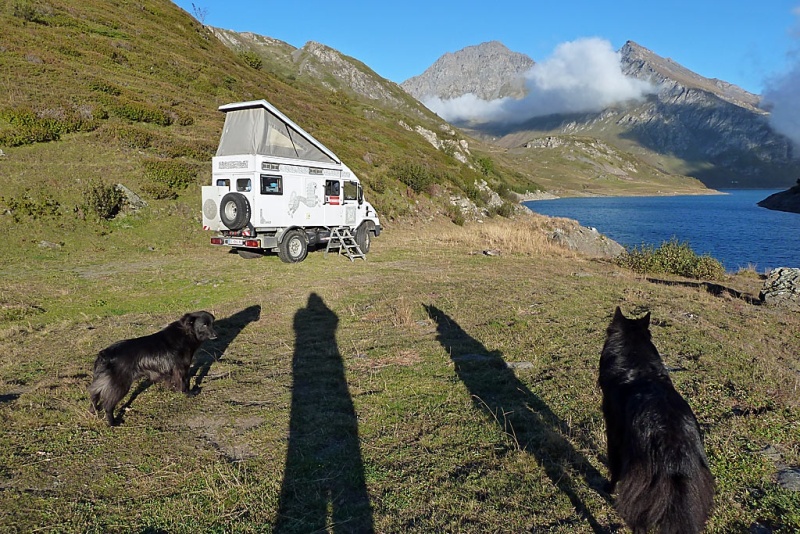
Once a year, the small group of
Bremach and Iveco 4x4 camping car owners organizes a special meeting:
partly to exchange experiences and “campfire stories”, partly to expand
knowledge and practical abilities. In the previous years, we had a visit
to the Bremach production facility in Brescia, near the Garda Lake in
Upper Italy, a technical driving training in a dedicated testing range
and a weekend course on “bush mechanics”. This year, however, we found
something very special for our annual meeting: Driving the Lausitz.
The Lausitz is a landscape in the
North-East of Germany, near the German-Polish border, not very far from
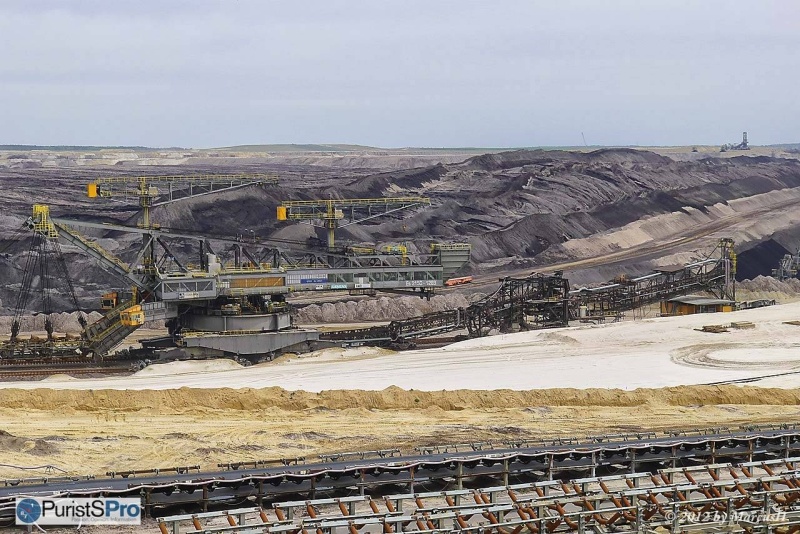
Berlin. Since more than 100 years, the exploitation of huge brown coal resources
made the region one of the major German energy suppliers. The coal is
not excavated beneath the surface, but gigantic excavators are cutting
deep wounds into the landscape, eating away not only nature, but also
many old villages and houses located there for centuries. Since 1950,
more than 25,000 inhabitants of the region had to leave their homes,
sacrificing them to the energy hunger of the state. Until 1990 this
happened in the communist GDR, where civil rights and people’s interest
did practically not exist. Later, the people at least received an
appropriate compensation and are able to purchase new homes. However,
the traditional communities are torn apart, lost forever.
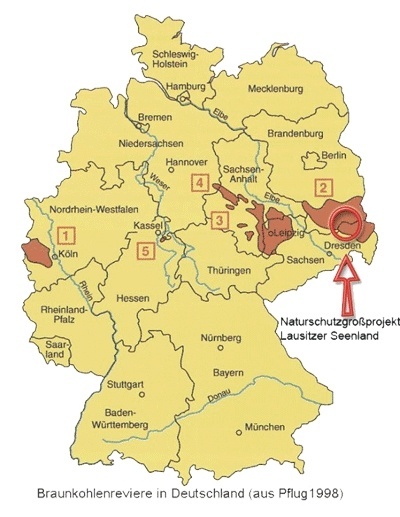
Location of the Lausitz coal region in Germany
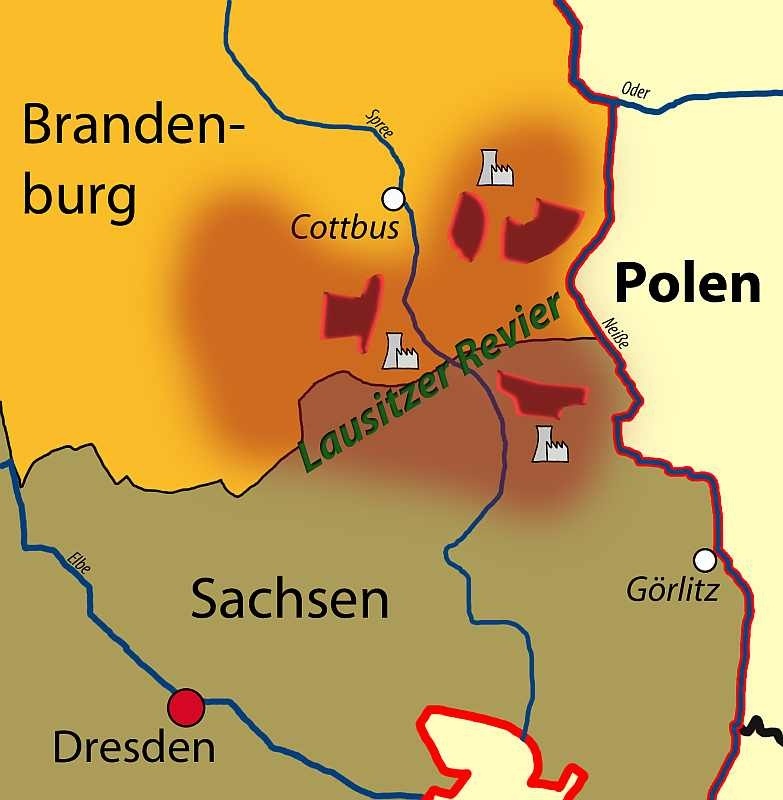
At
least the wounds in the nature are closed again: The holes are filled
with water, becoming a scenery of countless lakes, while the hills
created by the buckets of the excavators are first strengthened by
special plants, until finally covered with thick forests. This
renaturation process costs time and money, but it is hoped that the
future as recreational area not too far from Germany’s capital will
bring new life into the moribund industrial region, where the only jobs
available are in the coal mining industry.
Normally, both, the active mining
area, and the renaturation parts are banned for private vehicles.
However, there is one tour organizer who has an official permission to
guide tours since about fifteen years; result of a desperate effort of
the region’s administration to stimulate tourism. Primary condition for
the permission was that the tour guides must not offer a simple driving
experience, but also supply historical, technical and ecological
information with the tour. Please click on the following link to learn
more about the tour organizers (German):
By the way: for people who are
interested to see the area, but have no off road capable vehicle, the
guides also offer to take passengers in their own vehicles.
When
we asked them to organize a two-days tour for our trucks, they were a
bit sceptical at first. Never before had they led such a large group of
heavier vehicles through the area, therefore it was decided to split the
entire group into two parties that would drive different routes.
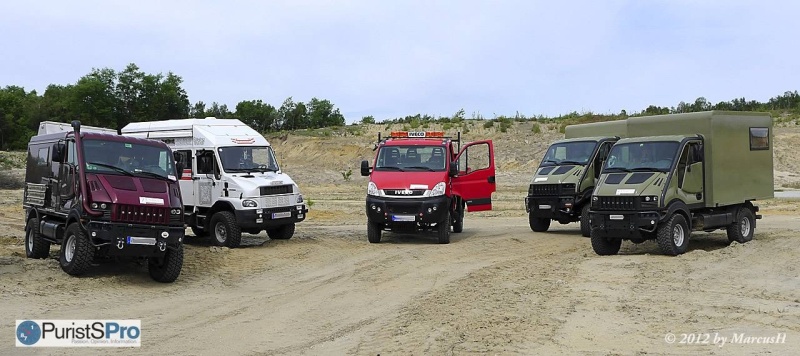
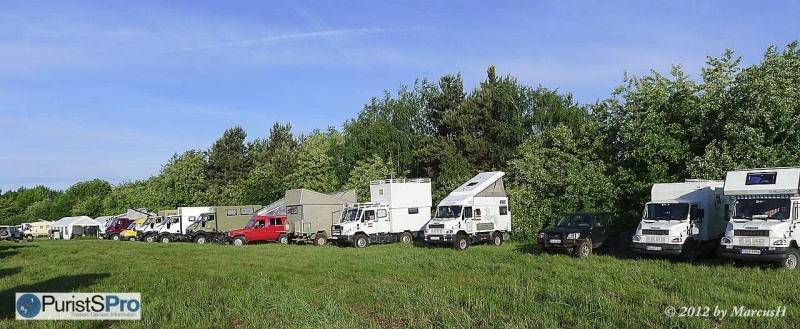
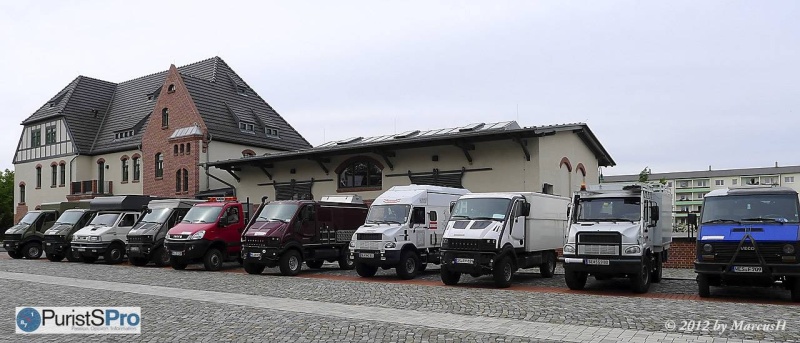
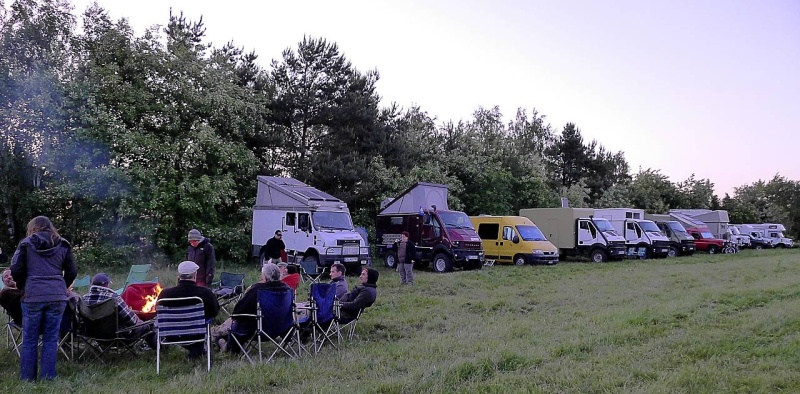
On
May 17th, 20 Bremach, Iveco and SCAM (another small Italian
manufacturer of off road trucks, meanwhile taken over by Iveco and
responsible for the production of their 4x4 Daily) trucks, all highly
customized to fully accommodate their crew with all supplies for long
distance trips, met on a meadow near one of the new-born lakes of the
Lausitz area. The camp attracted several spectators from nearby
villages, many asking details about the cars.
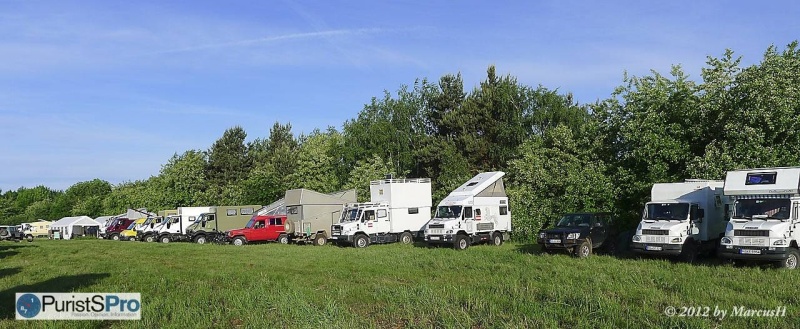
The planning by the tour
organizer’s crew was perfect, we had everything we needed on the place,
with full catering. While every vehicle has a more or less equipped
cooking facility aboard, it saves time and permits to concentrate on
driving and communication, when the food is taken care for.
Additionally, the hospitality of these regions in Eastern Germany is
famous, and we did not want to miss it.
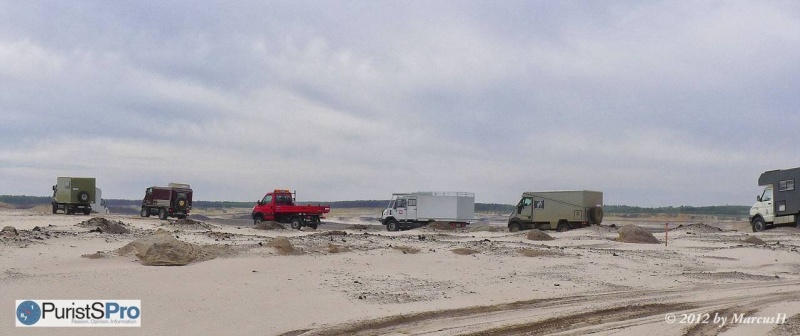
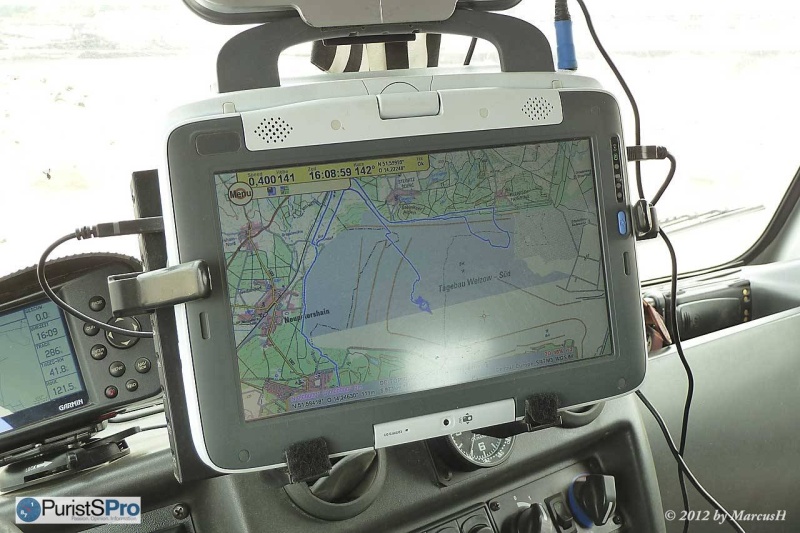
The first day took our
group into the active mining area. Upon departure, all vehicles received
walkie-talkies for direct communication between the group and the
guide, and there were two escorting vehicles with instructors present.
Driving in the mining area is dangerous, and depends on a stack of
special permits. Of course, no car may leave the group, which is why not
one, but several guides made sure that no one got separated.
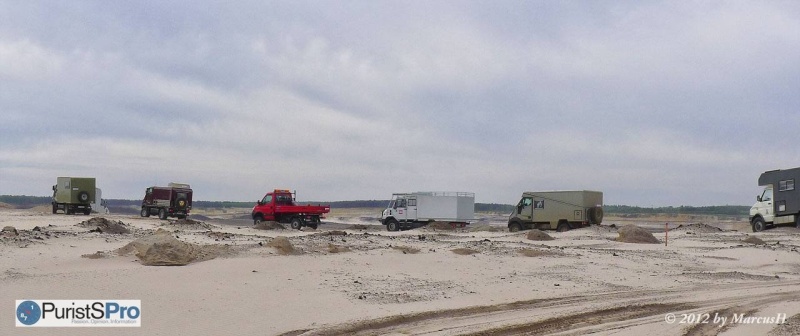
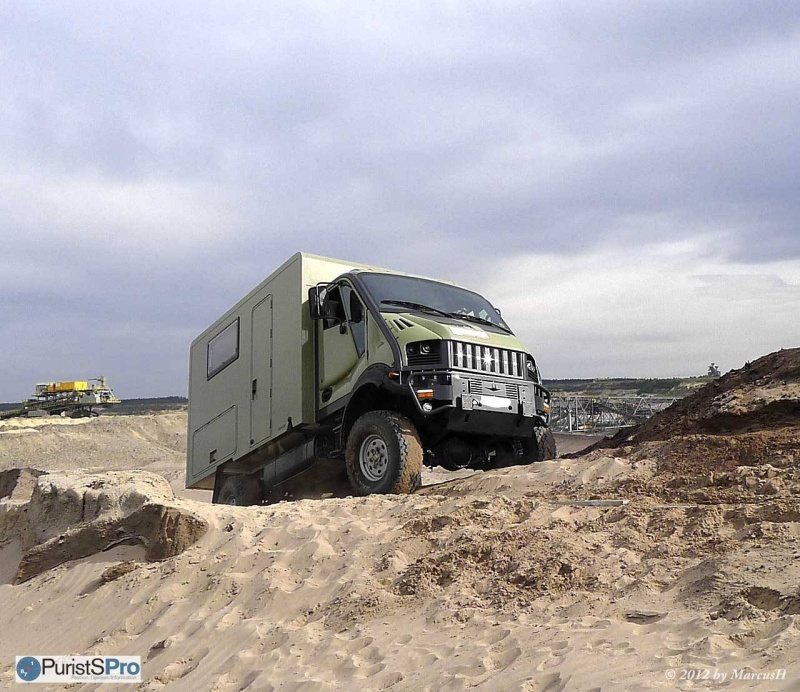
As a warm-up, we tried some
specific situations, such as steep climb and descent, driving with
maximum axle articulation, and - I admit that my heart sank into my
boots here - the crossing of a slope at an angle where the vehicle was
close to toppling over.
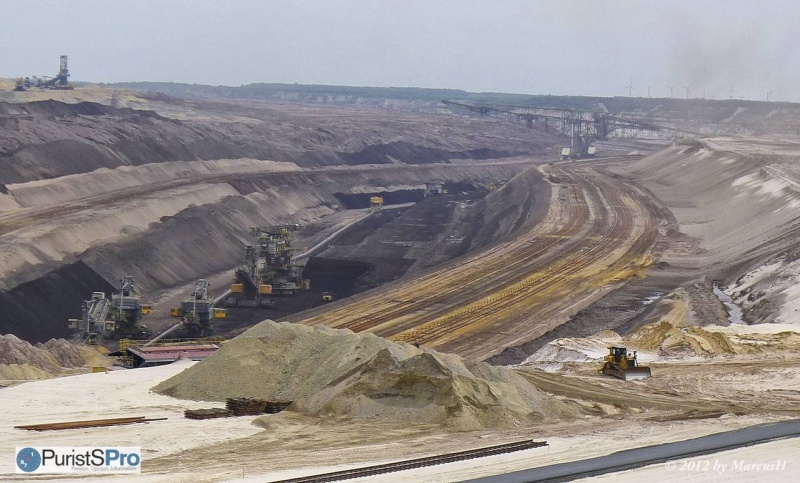
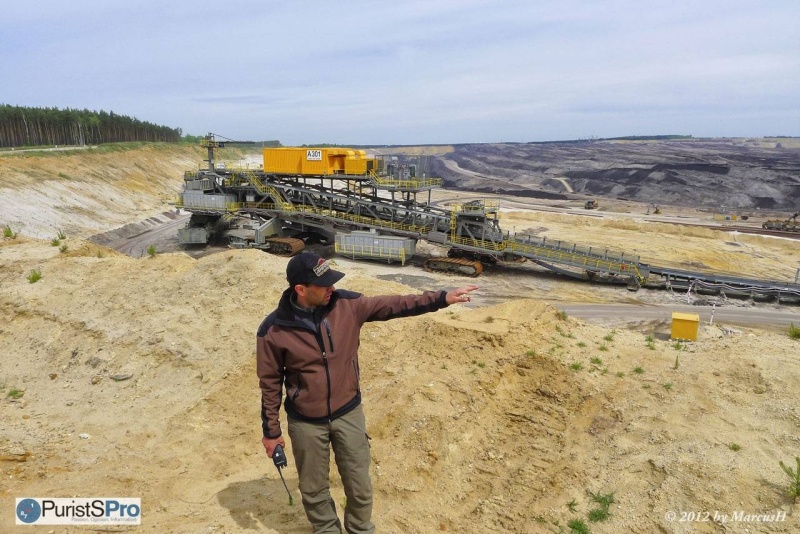
After that, we entered the zone
where the huge excavators scraped away the soil in a thickness of some
ten to fifteen meters, only to expose the pure black coal bed, which is
removed thereafter. The soil itself is the rest of a primeval coastline,
and thus very sandy, containing a lot of sulphur and other minerals.
The sand is stacked on huge heaps, and after the coal layer is
exhausted, the original soil is applied again, to make the holes in the
landscape more shallow, and to facilitate the renaturation process.
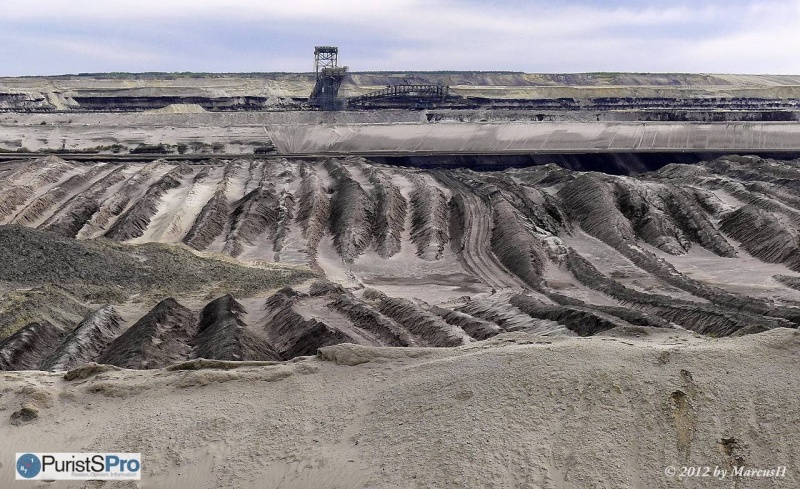
We made our way through a
fascinating and and extremely varied landscape: sometimes, it made us
believe to be in some areas of the Sahara desert, with wide and soft
areas full of sand. Every now and then, the wind would create a dust
devil quickly moving over the soil. Between the small dunes, rocks and
spots with very hard sand created a thrilling pattern of yellow and
black parts. The sky was lightly clouded, but the light was hurting in
the eyes. Sometimes, we found black rocks, that were not really rocks,
but looked like scorched stacks of palm tree leaves: Rests of the beach
on a sea that vanished millions of years ago, which are not yet coal, so
their herbal nature is clearly recognized. You hold them in your hands,
and are overwhelmed by the weight of the time ...
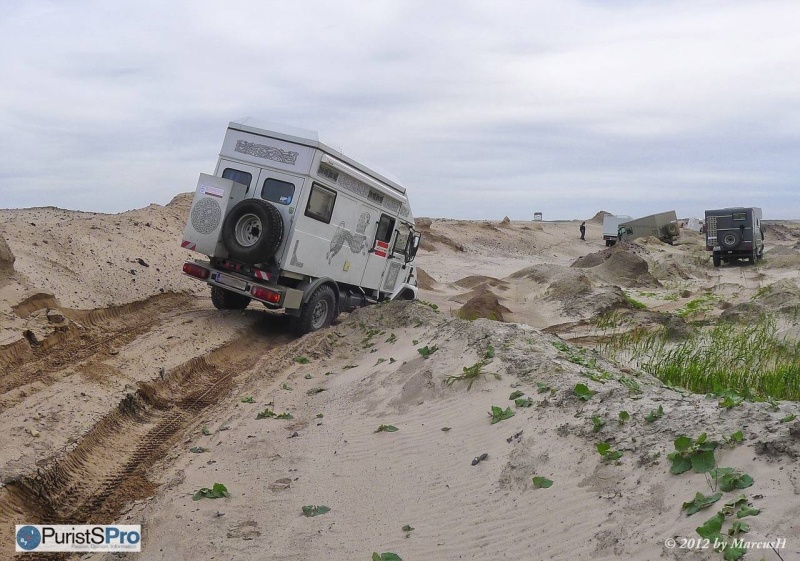
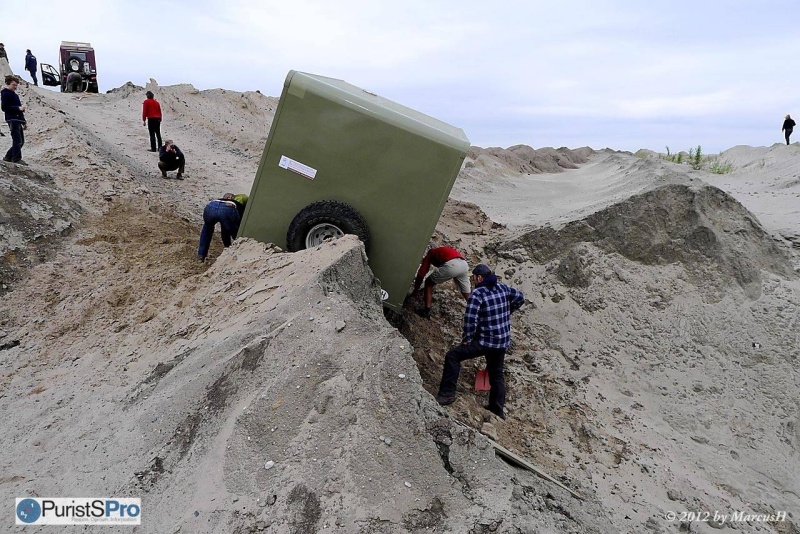
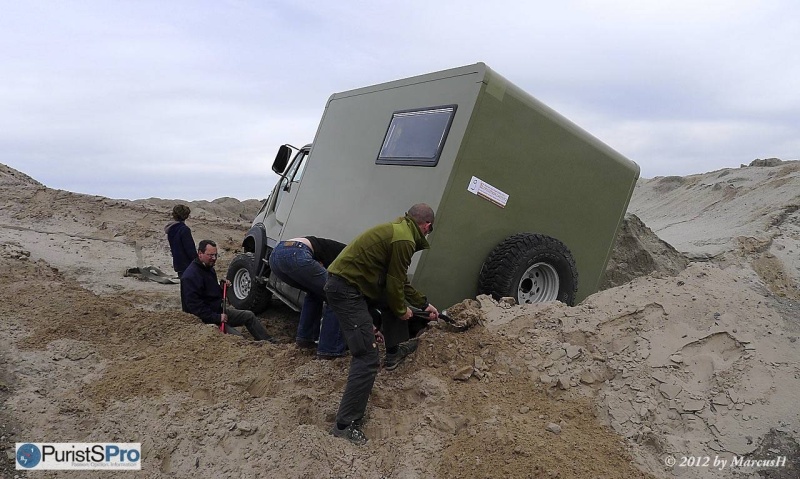
Here, the first critical situation
occurred: One of the trucks threatened to tumble down a steep slope,
after it lost its grip when the driver tried to turn upwards into the
slope. All hands were needed to stabilize the truck by shovelling away
sand under its upper wheels, and securing the lower wheels by placing
metal sand boards under them. After a while, another Bremach, quipped
with a large hydraulic winch, pulled the unlucky vehicle upwards. The
following cars had to reverse and climb up the track they had come down,
and which we had previously considered unnavigable. But with the
assistance of many boards, ropes and speed all succeeded, and finally we
all stood on a safe track again.
Other areas looked like the
volcanic deserts in Iceland, with black rock, mixed with patches from
bright red iron oxide and yellow sulphur. Vegetation was sparse here,
they few grasses and bushes desperately clinging to the little ground
water they are still able to reach; the mining needs a lot of water,
which is why the ground water level drops drastically. Tolkien would
have liked this landscape, since it could have been a good setting for
Mordor ... It is not surprising that some television productions used
this area to depict a scenery on the Moon.
Sometimes, we would leave the
immediate mining area and cross small villages. The houses there are
old, built from red bricks. Unlike concrete buildings, brick houses seem
to age with dignity. Even when abandoned for ages, they still look
beautiful, and not so raunchy like modern houses. Some of these villages
will meet their fate soon, since the huge excavators are estimated to
arrive there within the next months. This will bring the end to a
village that stood there for centuries. As sad this is, most inhabitants
accepted their removal since a long time. Since the thickness of the
coal layer is well known, the schedule of land destruction is clear
since some twenty or thirty years. And of course, the mining policy of
the only noteworthy supplier of jobs in the region is not questioned.
Since it had not rained for a
while, there was barely any mud on the tracks; not that we missed it,
driving was difficult enough already without. There were tight turns,
wild bumps, very steep descents that made my dogs helplessly slip
forward in the cabin, and always we were accompanied by the voice of our
guide Oliver, who gave us advice, but also many valuable information on
mining technology, the ecological and economic background, on the
plants and animals that can be found. This was really fantastic!
Our
first driving day was long, and ended only well in the evening. For
some of us, who had never been driving off-road before, the experience
was really thrilling, more than one driver arrived in the camp with
trembling hands and knees.
The
second day focussed on the renaturation of the Lausitz area. We drove
on the beaches of lakes that were just flooded with river water, since
the ground water level is already too low, and also too acescent. In two
or three years, the sandy beaches we crossed will be the bottom of new
lakes that shall attract many tourists in search for recreation.
Steffen, the second tour guide, pointed out the system of resettling
plants: Before the natural vegetation of the region, a dense pine tree
forest, can grow, many different stages see the preparation of the sandy
soil with the help of small and unspectacular grasses, then a network
of low-growing bush work is planted, to counter erosion by wind and
rain, before young trees take over the lead. Hard work is done here. In
former decades of the mining, the open scars were simply left deserted,
without any human interaction. It was believed that nature can heal its
wounds alone - but this did not work: Before a closed vegetation carpet
could grow, erosion and chemical hyperacidity had practically destroyed
the soil.
It is thus understandable that our
routes had to be chosen very cautiously, and any deviation from the
path was strictly forbidden, as soon as we crossed any vegetated areas.
From time to time, we would go hiking a bit, searching for rare plants
and animal tracks. The Lausitz is the first German region where wolves,
exterminated since nearly two centuries, are resettling. They cross the
border from Poland, and already two packs are here. For them, there is
enough living space, and prey, since wild boars and deer have become far
too numerous: a consequence of the ubiquitous cultivation of corn, that
is used for the production of ethanol fuel. Unfortunately for us, we
could not find any wolf tracks, though.
The off road challenges here were
less demanding, compared to what we experienced the day before, in the
active mining area. So we rather enjoyed the beautiful landscape. Well,
there was a situation where I made a fool of myself, since I desperately
tried to climb over a rather small, but sharp sand dune without avail. I
did not want to accept the fact that I still had too much air left in
my tires. Only after further reduction, I crossed the obstacle rather
effortlessly ...
The two days of our Lausitz tour
were absolutely great, and we were able to see a highly dynamic, quickly
changing landscape, that is first destroyed by human activities, only
to be repaired afterwards. Barely anybody from our group had believed
that such a scenery exists in the heart of Europe. Consequently, it is
not surprising that the experience will be repeated next year. Since we
had seen only a tiny fraction of the huge area this time, the tour
organizers are already planning another tour for the next Bremach
meeting in 2013.
Regards,
Marcus
P.S.: As
a true watchnut, I grasped the opportunity of this driving weekend to
test a new rubber-coated sports watch under rough conditions.
Click on the following link to read my test report on the Ulysse Nardin Marine Diver “Black Sea”:
ulyssenardin.watchprosite.com
Copyright July 2012 - Marcus Hanke & PuristSPro.com - all rights reserved
PuristSPro Homepage
Comments, suggestions, and corrections to this article are welcome. 
This message has been edited by Marcus Hanke on 2012-07-20 15:55:41 This message has been edited by ED209 on 2012-07-29 20:16:01
Key Points from the Discussion
- The use of two GPS navigation units, while seemingly overkill, is justified by the need for redundancy in remote, infrastructure-lacking environments, akin to space missions.
- Driving a heavy Bremach truck off-road differs significantly from standard 4x4s due to mass inertia and lower horsepower-to-weight ratio, requiring a different driving approach.
- The Bremach trucks' capabilities are impressive given their size, with owners noting their ability to traverse challenging terrain that smaller, modified 4x4s might struggle with.
- The off-road community often undertakes extensive expeditions, with some Bremach owners shipping their trucks to Australia for multi-month treks through the outback.
- The unique landscapes of the Lausitz mining region, a man-made desert, offer a compelling backdrop for these specialized off-road training and experience-sharing events.
Advertisement
Advertisement
Continue the conversation
This thread is active on the Automotive forum with 26 replies. Share your knowledge with fellow collectors.
Join the Discussion →