Lépine, a distinguished collector, shares an exceptional addition to his collection of Imperial Japanese Navy pocket watches, offering a unique glimpse into early 20th-century aviation history. His detailed post highlights the historical significance of these timepieces, which, while not luxury items, represent pivotal moments in military and aeronautical development. This article delves into the fascinating, often overlooked, collaboration between British and Japanese forces that shaped early naval aviation.
I've added something to my small collection of Imperial Japanese Navy pocket watches.
I thought this might also be of interests to watch enthusiasts here. These watches are not
about technical design nor of expensive materials from exclusive brands. What you have
here is a collection of aviation and military history.
Shortly after the Wright Brothers established powered flight, the Imperial Japanese military
began using aircraft as early as 1910.

In fact, by 1914, at the beginning of the Russo-Japanese and WW1 wars, Japan was
using aircraft in war sorties.

One of the key milestones in the development of WW2 aircraft carrier and fighter plane was in fact
the British Sempill Mission of 1921. During the interwar period, the British Royal Flying Corp developed
for the Japanese Navy the flying technology and the technics to fly aircraft off of ships. The British
wanted to support Japan who were WW1 allies against the Germans. The British also wanted Japan
to control the Russian Army in the Pacific so saw extensive benefits to developing Japanese airforces.


During this era, there were a vast number of different military aircraft developed for Japan. Below is only a small percentage of the number of different aircraft being developed.

One aircraft is of particular interest to me and so is the type of clock installed on them. The Gloster Sparrow Hawk was developed for the Sempill Mission and sold to the Imperial Japanese Navy.
The below is an original 1921 photograph taken at the Gloster aircraft factory in Brockworth England. Note: there is a second frame of this photo that is currently in the Ed Coates collection on display at the Australia Civil Aviation Historical Society museum (C.A.H.S.)

The instrument clocks in these planes were the RFC Mark IV and Mark V. What is truely remarkable is the below watch. It has RFC broadarrow markings and the Imperial Japanese Navy markings with issue number 166 written on the Mark V. In all the years of collecting watches, this is the first I have ever seen such a watch.


And this is how it was mounted to the instrument panels of these early planes.

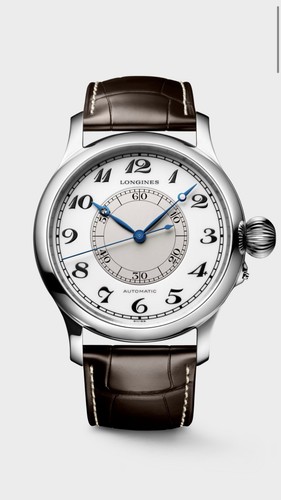
You can see how this 1918 watch compares to the 1940 Longines Weems that replaced the Mark V. The kanji writing is similar.


The story would be fairly complete if we ended here, but I came across one more discovery. The Mark V is perhaps the last of it's kind and no other is known to exist with Japanese writing, however, there are a fair many
that are only RFC marked Mark IV and Mark V watches.
This next watch is unknown in the British military as well and no other have been seen with military markings. This one is extrodinary since it is a flying chronograph that has a serial number that dates manufacture to before 1900. The watch was made by S. Smith& Son Ltd. watch maker to the British Admiralty. Since the Imperial Japanese Navy was at this time buying technology from the British, it seems only fitting that the IJN also
buy chronographs from supplier to the Admiralty. And because of the writing on the back, there is no mistake that this is a Navy Pilots watch, perhaps the last in existance.


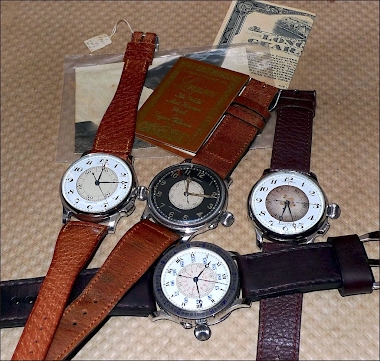
With the exception of the Imperial Japanese Army watch on the top row right side, all others are Imperial Japanese Navy pilot watches spaning WW1 to WW2.
The second row are all Seikosha watches with Longines 18.72 movements in them.