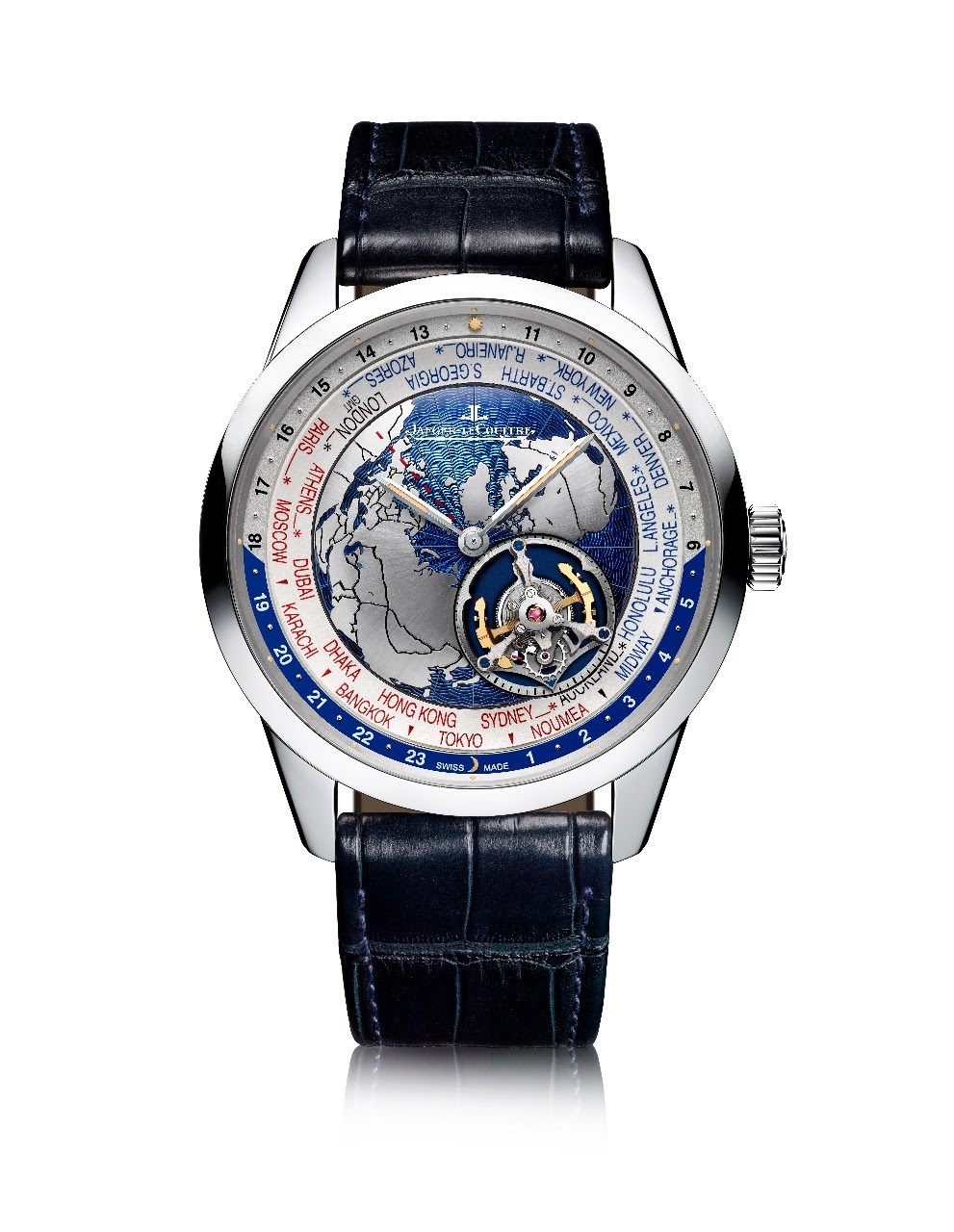
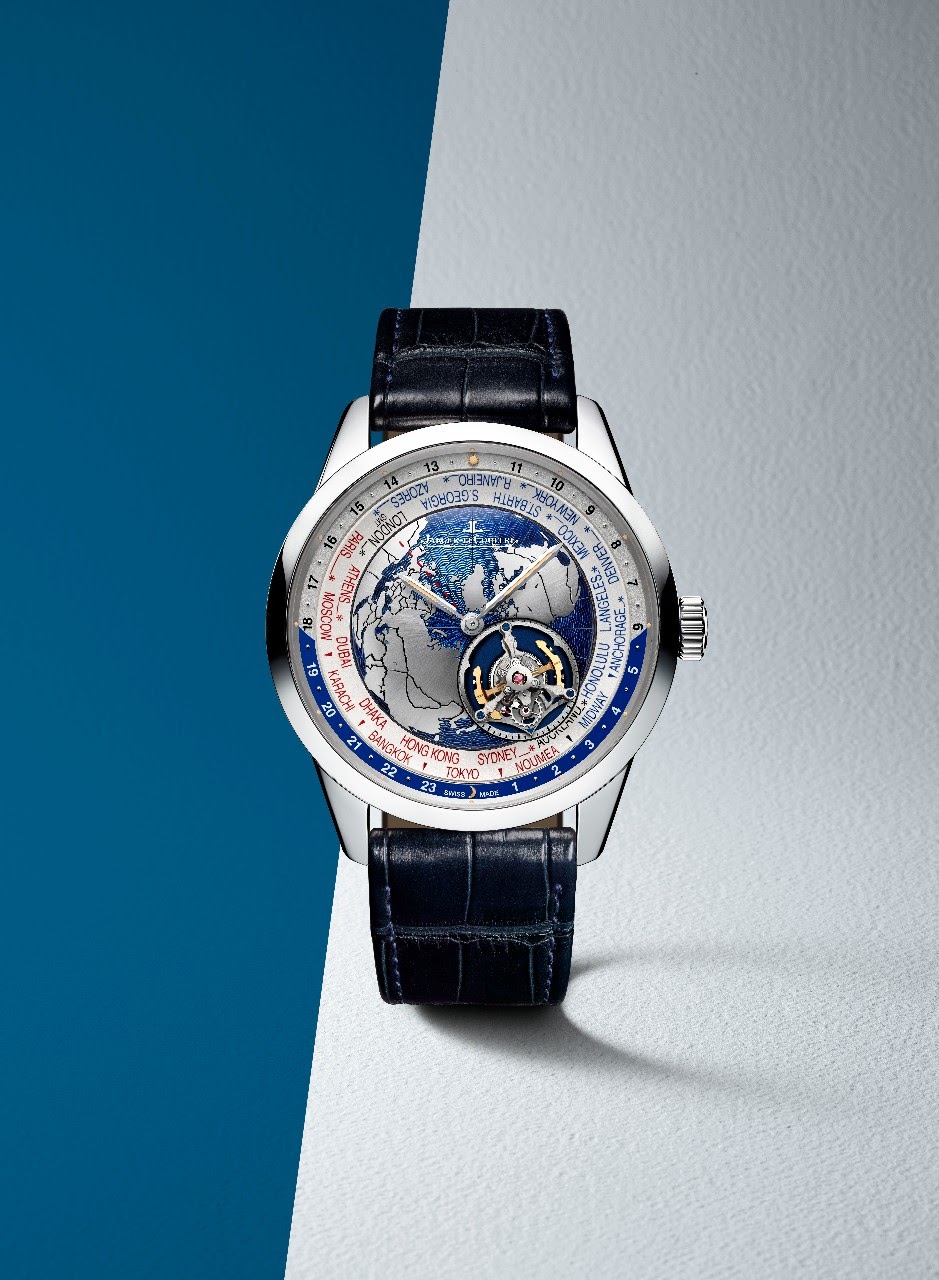
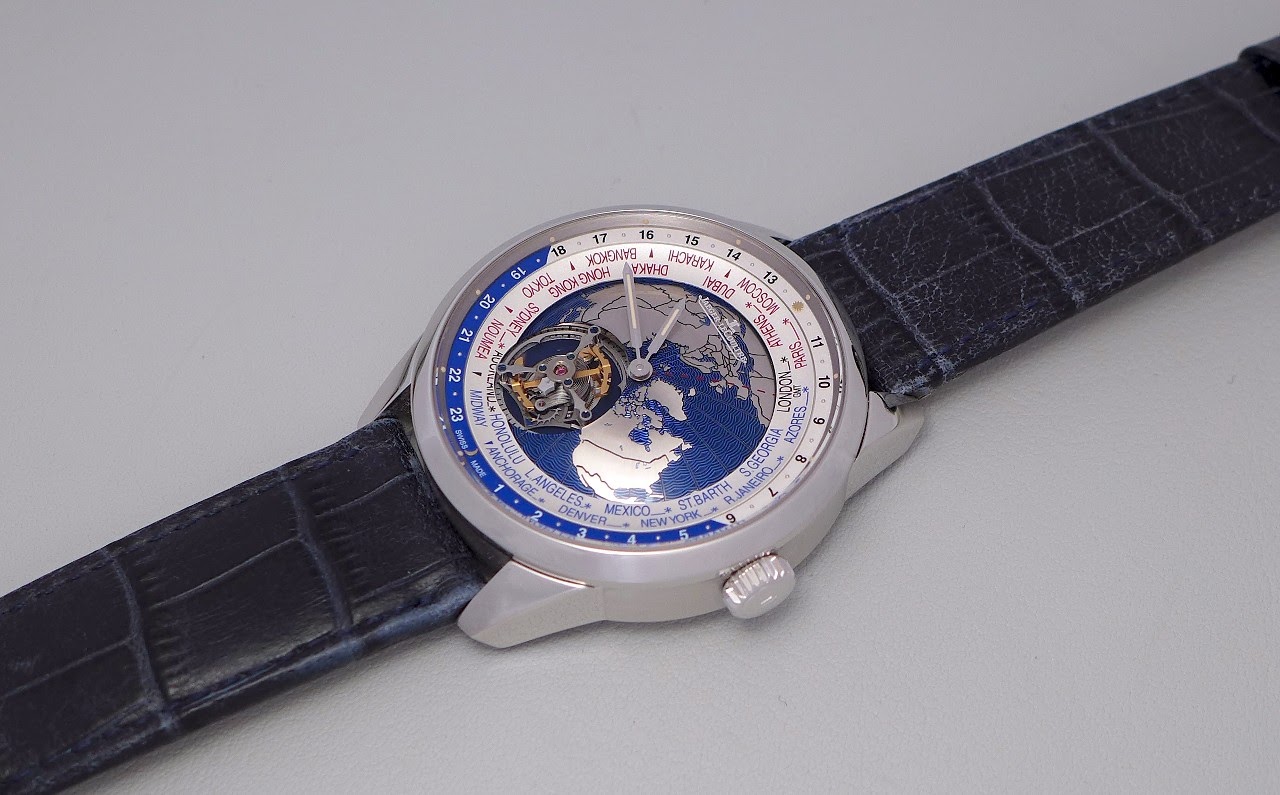
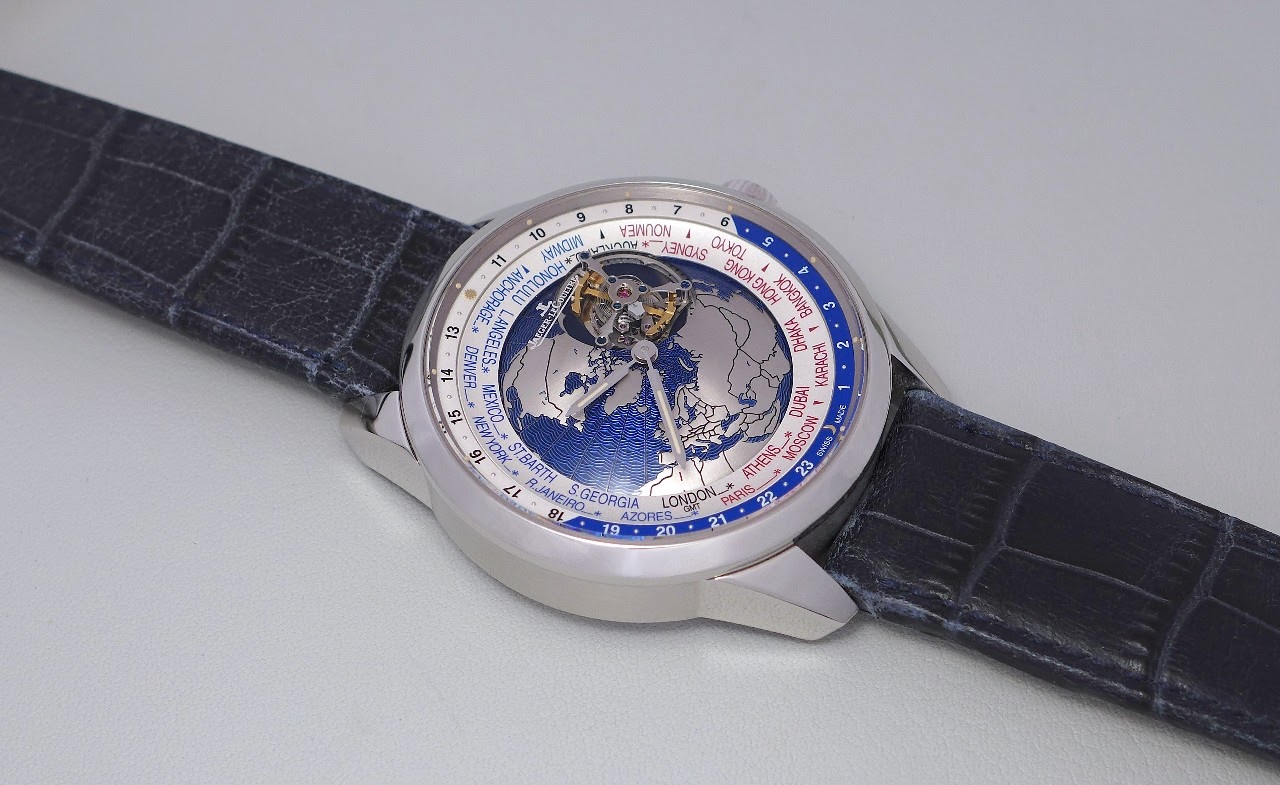
After the Tribute to Geophysic unveiled in 2014, and the True Second / Universal Time in 2015, Jaeger Lecoultre came, at the beginning of the year 2017, with another member of the Geophysic Family, the Geophysic Tourbillon Universal Time.
Is this a bigger Geophysic Universal Time with a tourbillon? Not really.
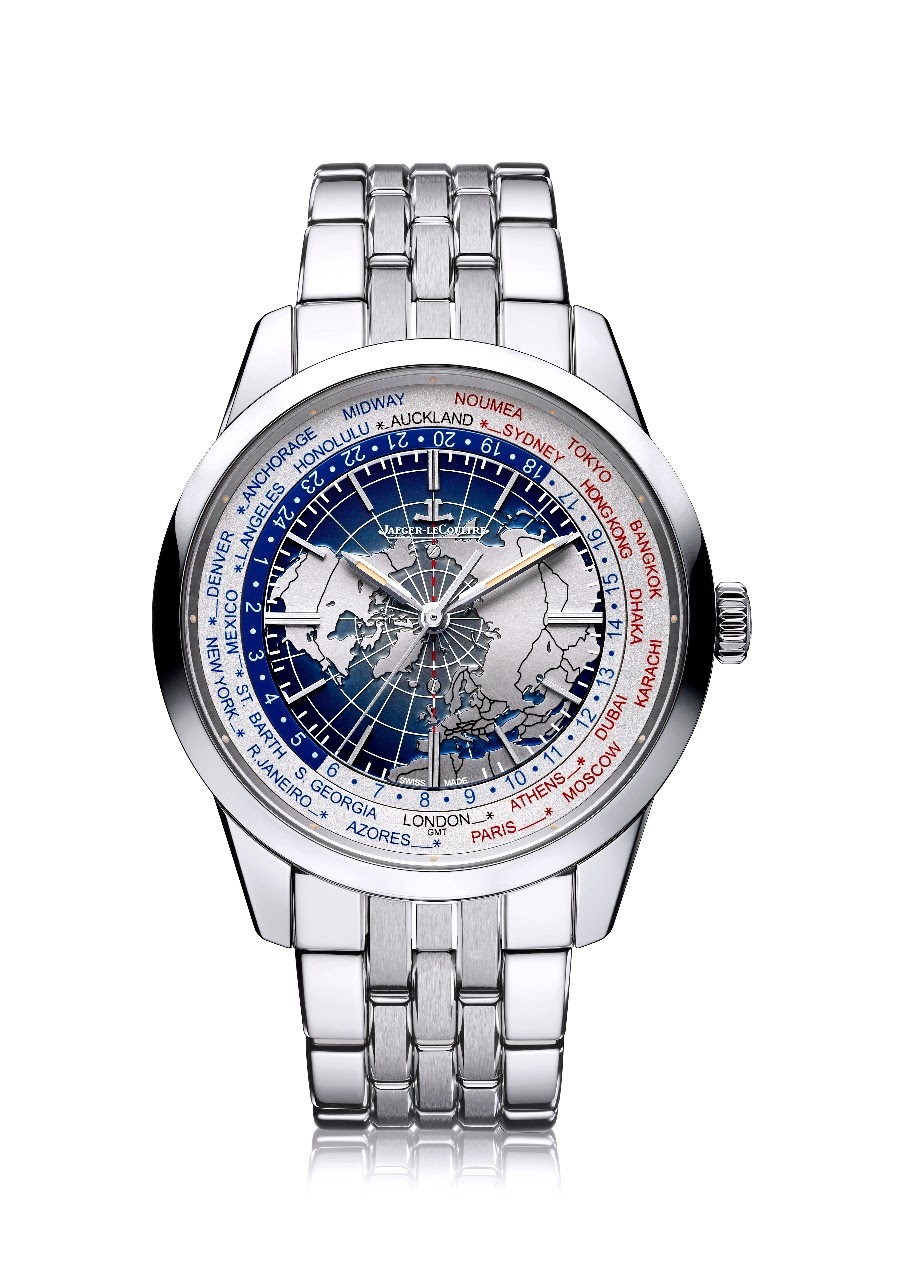
The Geophysic Universal Time on Bracelet.
Compared to the Universal Time, this " Tourbillon Universal Time " ( which I will call T.U.T ) presents some huge differences.
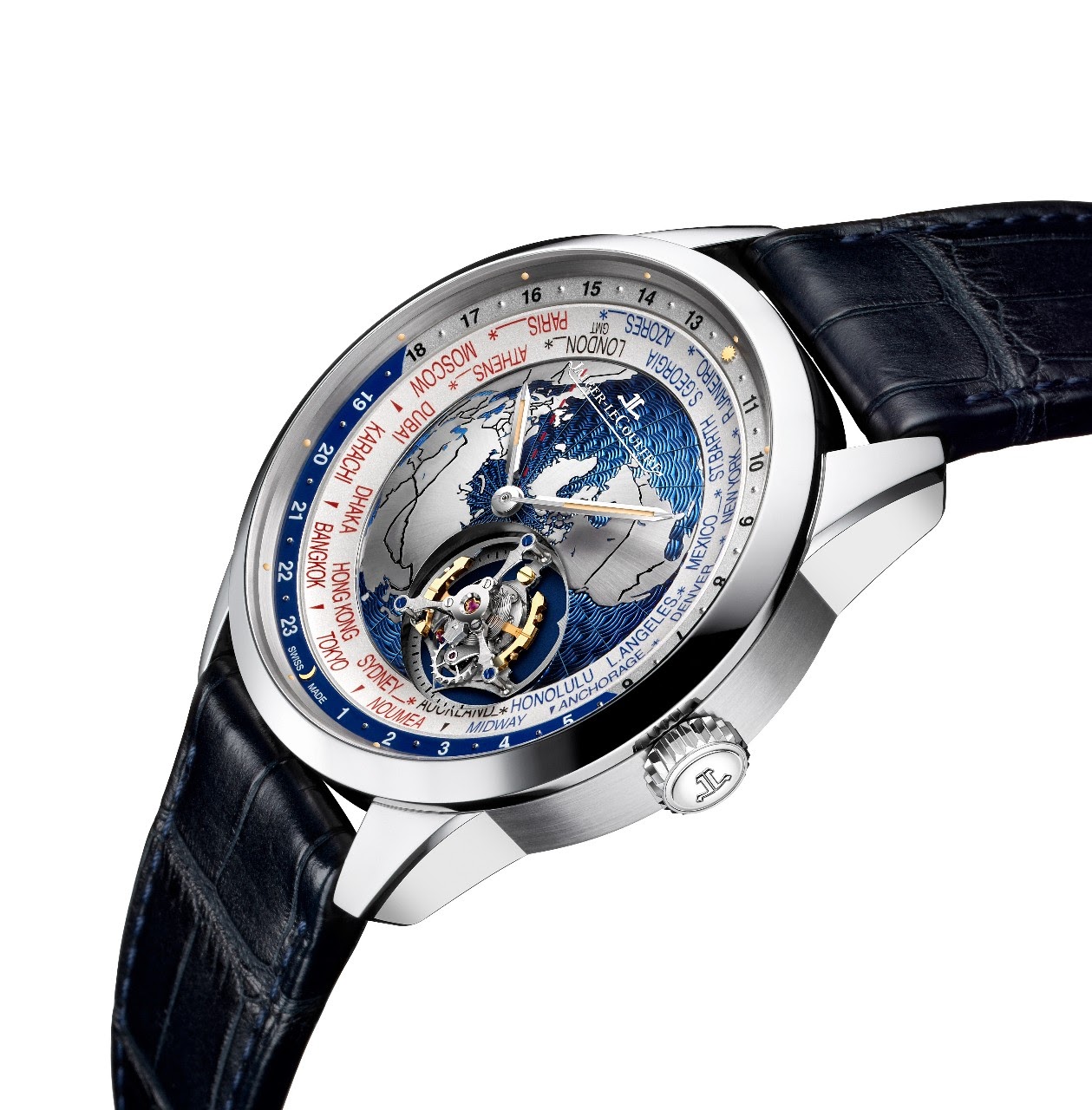
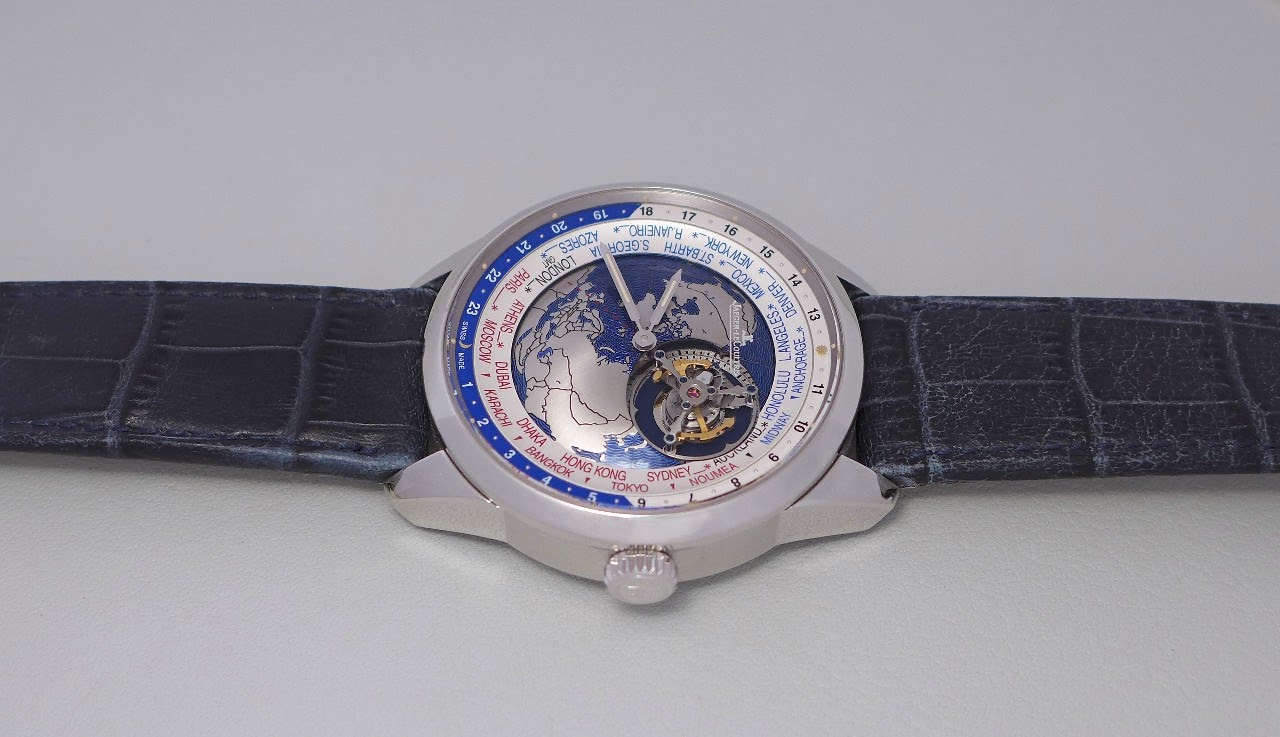
First of all, the case, which is made in platinum, only, and which is bigger and thicker with a diameter of 43, 5 mm and a height of 14, 87 mm.
Is it a good or bad thing? When I read the informations about the proportions, I was dubitative. In the metal, it is different.
Yes, I would have preferred a slightly smaller case ( 41 or 42 mm ) and thinner too ( 12, 5 or 13 mm ), yes, with these bigger proportions, the Geophysic looses a bit of its original balance ( the Tribute case is 38, 5 mm, the True Seconds is 39, 6 mm, and the Universal Time is 41, 6 mm ).
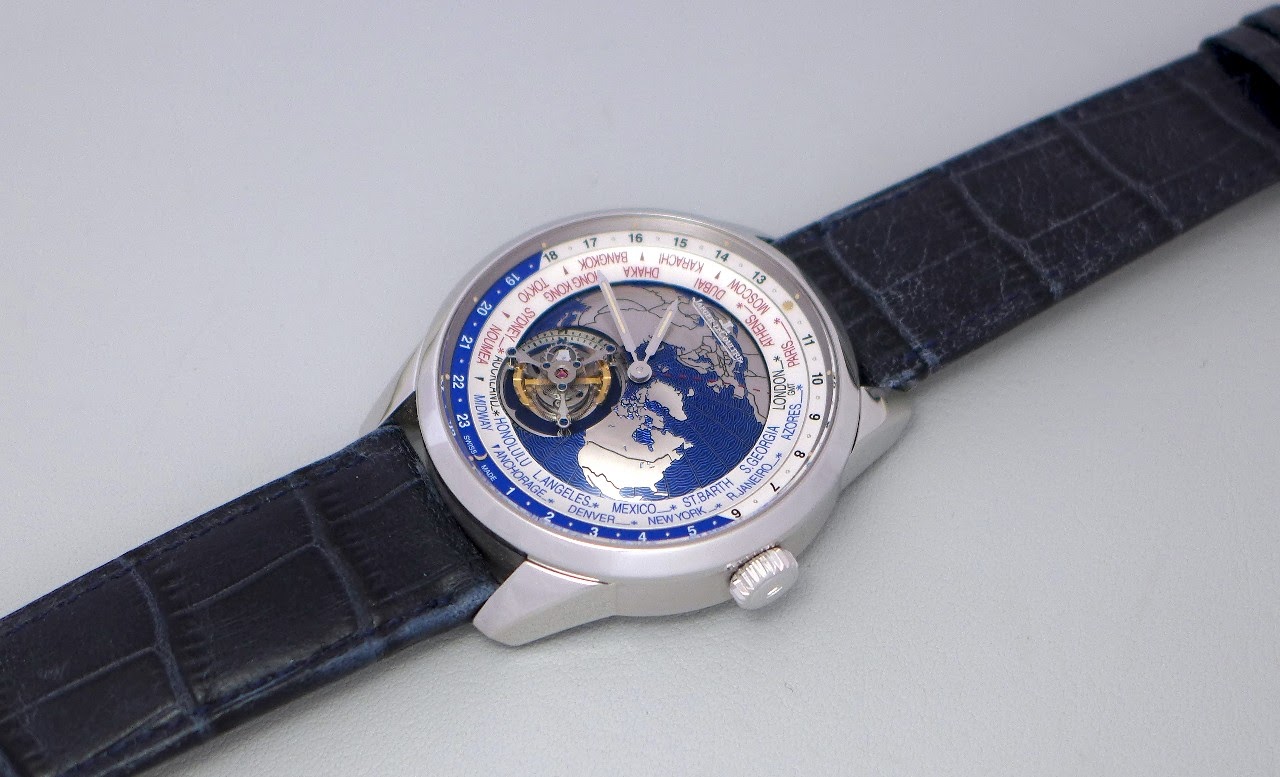
Another perspective:
But when I saw this big case, I was thinking that it would be perfect for a new sports watch! More macho, this new case would be more à propos for a sports watch, in my opinion, rather than for a sophisticated watch such as this one.
Another precision, the T.U.T is water resistant to 50 meters.
Then the dial... There is a lot to say, here. First difference, the dial is domed, spectacularly domed, which gives a very positive impression.
Secondly, you will immediately notice that there are no screws to " hold " the dial, on the T.U.T.
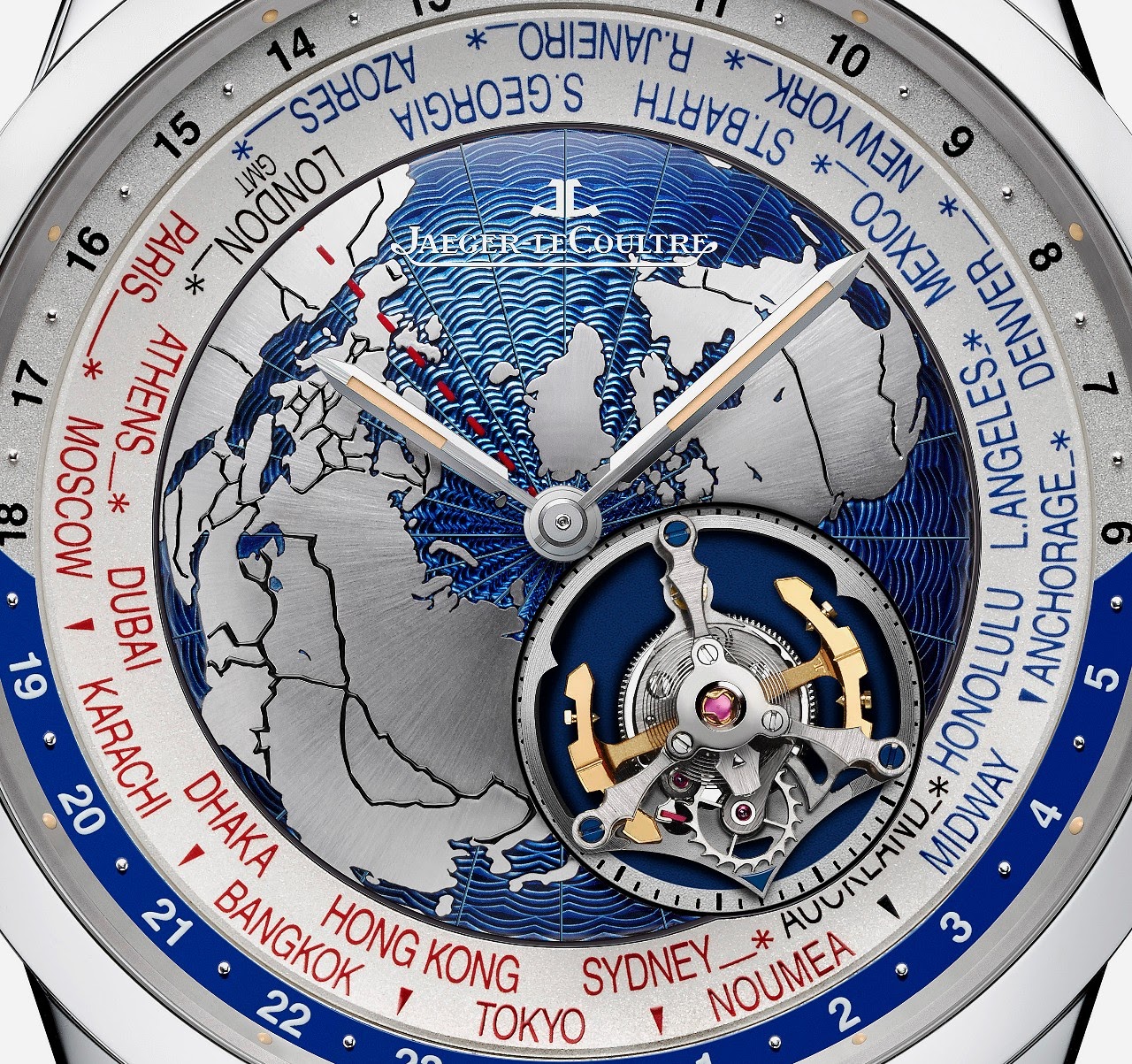
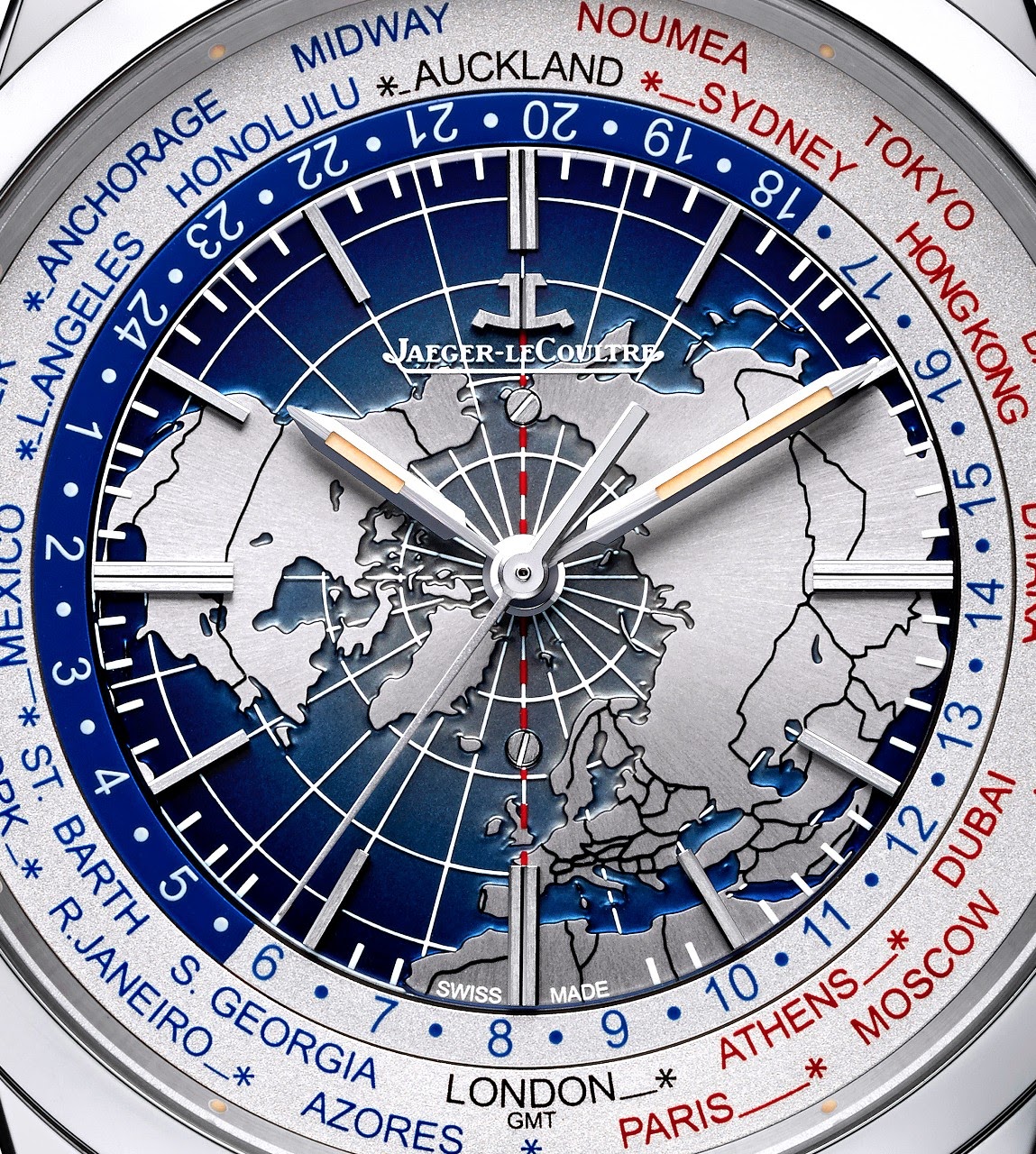
Thirdly, the location of the 24 hours and cities ring is reversed. On the U.T, the ring of the cities is on the outer part of the dial, while the 24 hours are surrounding the dial. On the T.U.T, it is the exact opposite.
Here, for the comparison, a close up of the Geophysic Universal Time Dial:
Fourth difference, the ring of the cities on the U.T is fixed, while you can choose your city with the T.U.T.
Fifth point, the presence of a tourbillon. There was some confusion, when the watch was unveiled through the first official pictures from the press release, as some thought that the Tourbillon was irremediably fixed between 4 and 5 o clock. In fact this is an orbital tourbillon, which means that it turns all around the dial. To be more precise, this is the whole dial which turns with the Tourbillon.
Sixth point, the dial is lacquered AND guilloché blue, with engraved satin brushed continents.
The outcome is qualitative, in terms of feelings, and very pleasant to look at. Even for someone like me who is not a big fan of tourbillons.
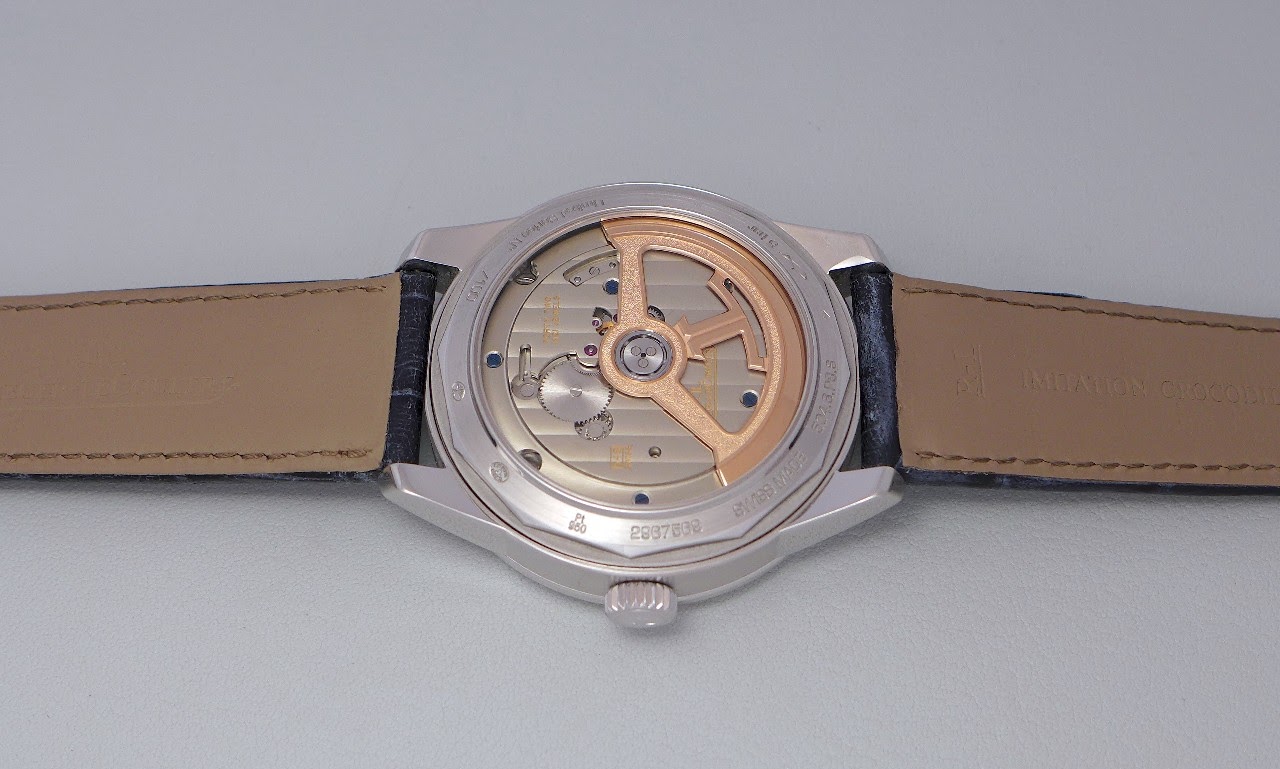
Now, the movement. The Cal 948 is an automatic movement, beating at 28, 800 vibrations per hour, made of 338 parts, and offering a power reserve of 48 hours.
I must say that I am not a big fan of automatic movements on watches from that kind of segment ( and price ).
When you look at the movement, there is not much to see, as pictured below:
No bridges, no sculptural show... Well, I am a fervent fan of the " less is more " rule, but here, I would have liked something more demonstrative, in terms of decoration.
The show is definitely on the dial side, with a very nice tourbillon which has a common point with the Universal Time and the True Seconds, the presence of the Gyro Lab balance wheel.
I was thinking of the exclusivity of such a combination of complications ( Tourbillon + World Time ), and I remembered that some brands used it before, such as Girard Perregaux with the WW TC, enamel or not.
Still the concept is original, with this dial and tourbillon which turn.
Limited to 100 pieces, this watch has some strong assets, those mentioned above, which are the reasons which make me like it.
My biggest problem is the automatic movement. If only it would have been manual or more aerial, it could have well been another source of delicious nightmares for me...
Looking forward to reading your comments and thoughts,
Best.
Nicolas