Hello Friends!
I wish to share a watch from my collection. I like this time piece so much, for it is a classic. A plain workhorse whose presence can be ignored by the most of casual viewers, but not by the knowledgeabel watch aficionado.
It was made by IWC, and they called it Ingenieur. Here is a bit of its story...
I had been looking after an example of this watch for some time, after learning about it reading some articles about its development story. In spite of never having seen a watch of this model, I was deeply impressed by the rugged look of this tiemepiece, as well as by its classic clean design, well in the style of the 1950/1960´s. I was also aware of the fame it got among collectors world wide, almost making it an "object of cult".
This example crossed my road by chance, giving me the opportunity of adding it to my collection.
This example was found by chance in one of the several shops I customary visit in search of new pieces, just a few days before last Christmas, so it came to be my ideal Xmas self present.
I was as happy as astonished to discover it in one of the showcases, because after many months asking about this model at several vintage sellers, I had realised that this one would be not easy to find.
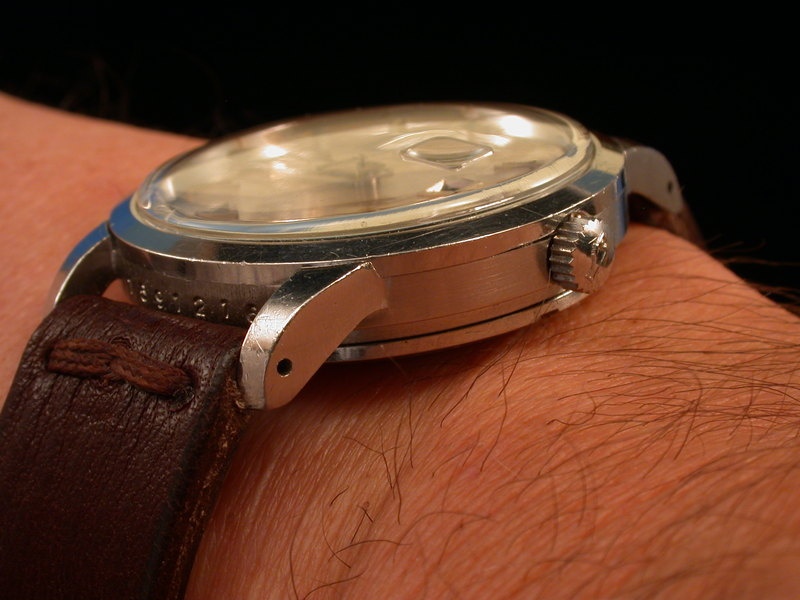
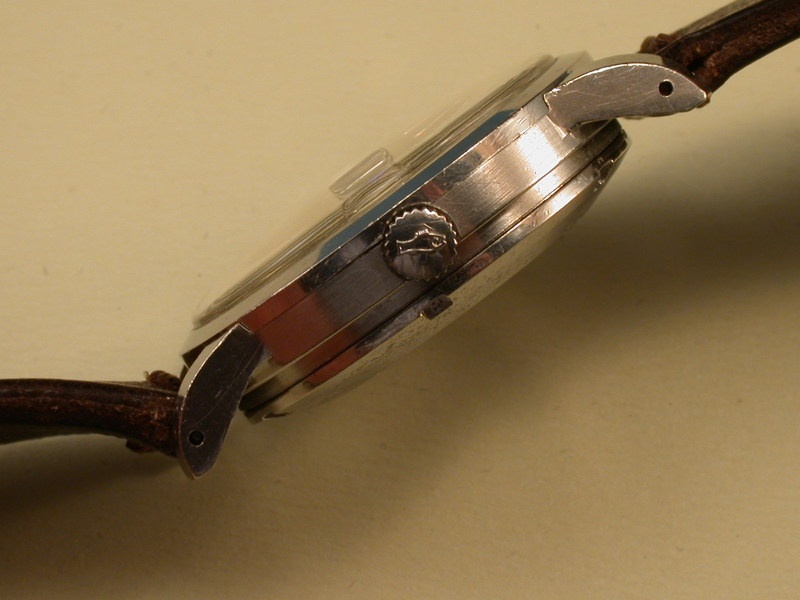
As soon as I asked the clerk to show it to me, I could sense the ruggedness of this watch, with its thick stainless steel case, closed with a screwed back, making for a very strong assembly, which can be enjoyed in the wrist very inconspicuously.
In a casual view, the watch is very nice, but being so clean and simple, it can be seen as a common old watch, something I can well appreciate as it allows me to wear a high quality vintage watch, while visiting some city areas were it is not safe to have a more well known watch like an steel Rolex, for example.
Just a bit of History.
The first version of the Ingenieur model, was launched in 1955, but its history actually begun around ten years before, when IWC contracted the services of a new technical director, called Albert Pellaton, in the year 1944, who was assigned to the Development department.
Mr. Pellaton was responsible for the design of the first automatic movements for IWC, the caliber 81 with sub seconds, and caliber 85 with central seconds, both being launched in 1950.
To these two pioneer movements, were followed by caliber 852, with central seconds, which was mounted inside an iron box, working as a Faraday cage, which insulated the movement from strong magnetic forces which could alter its correct functioning.
The original idea of IWC was to offer to their customers, a new model, somewhat a civil version of their famous MK XI, which was an antimagnetic, manual wind military/pilots watch.
For this reason, IWC didn´t wish to offer a visualy revolutionary design, nor a fancy dial model, but a very classic, low profile, but very strong watch (its 37 mm diameter, and weight were not common in those years), which was directed to an special sector of market: engineers, industrial supervisors, locomotive engineers, field researches and explorers, whose proffesional activities would require them to work in open places, or in a media with strong magnetic fields, or needing a watch capable of sustain a lot of fisical action and tough treatment.
Other competitive brands were offering watches of this type, in models like the Omega Railmaster, or the Rolex Explorer and Milgauss.
The name chosen for that new model, was "Ingenieur" which obviously means "Engineer" in French, and gives a hint about the market this watch was designed for.
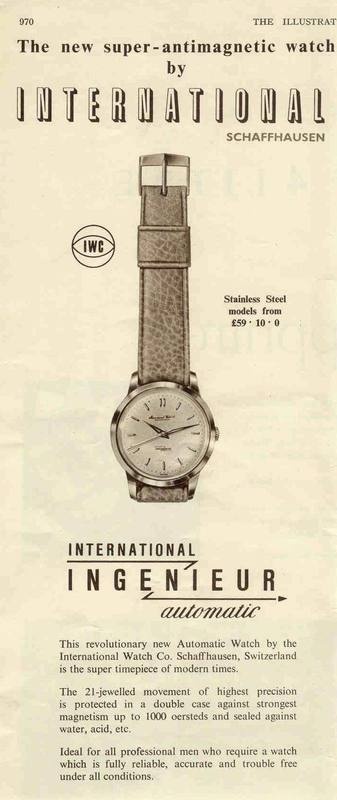
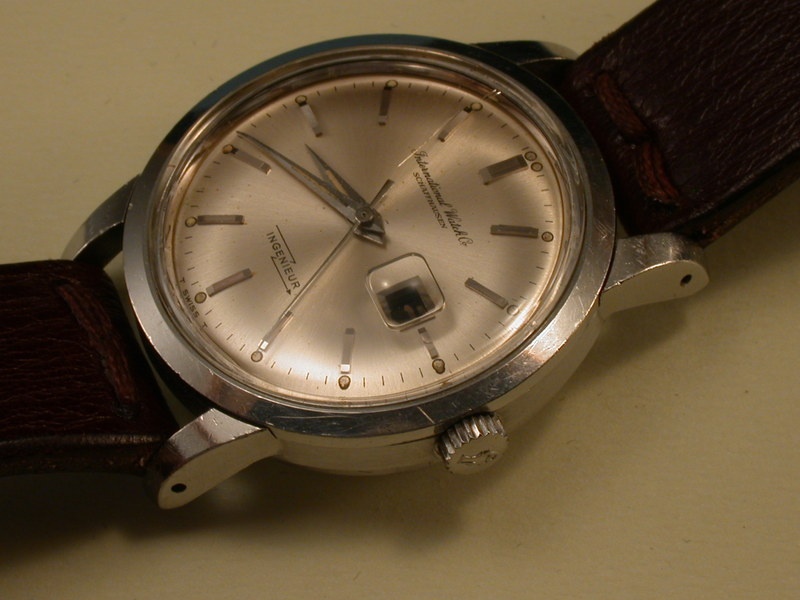
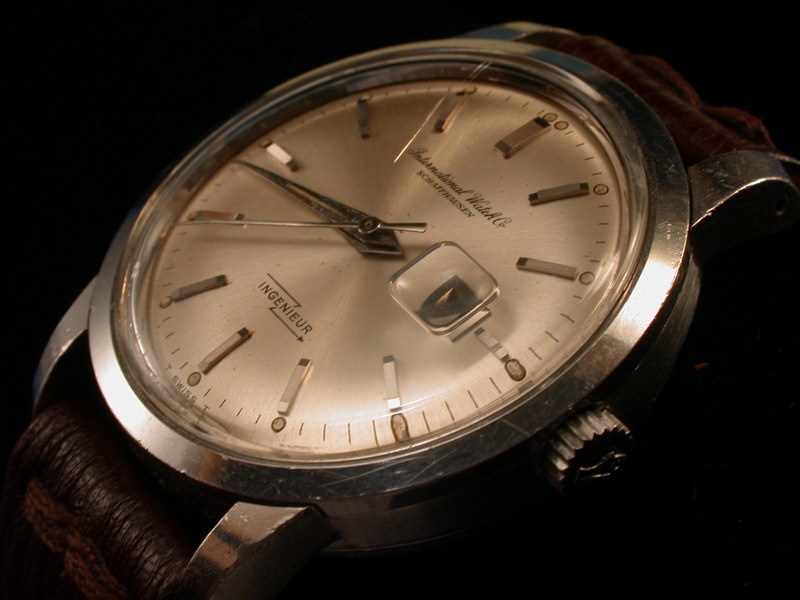
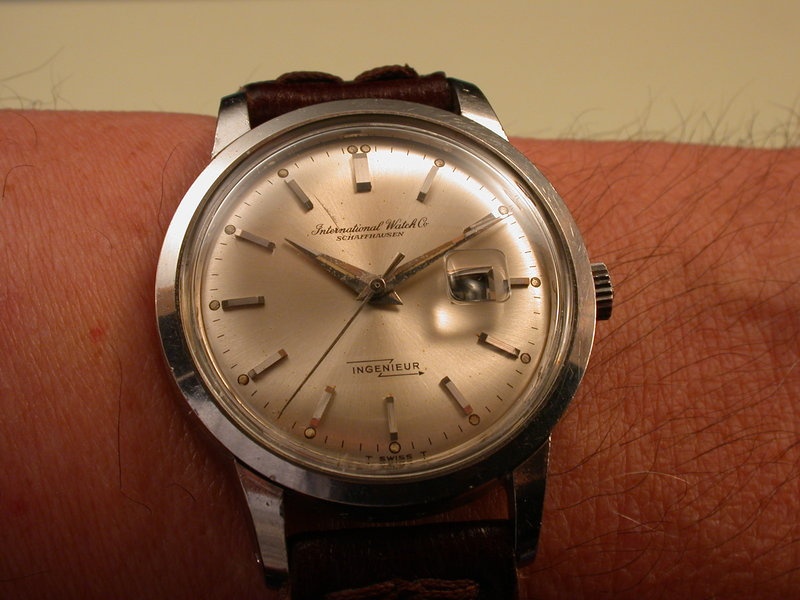
As it is easy to see in the pictures, the design concept offered a very simple case and dial, very classic and timeless. I feel that the design is so good as to transform it in a so looked after model, coveted by both collectors of the IWC brand, as well as by collectos of vintage watches.
It is worth noting that being a design so well recognized and remembered, IWC has launched a few years ago, a line of watches called Vintage, incuding a model of Engineer with a very similar to the original case and dial, except for its larger size.
An unusual movement.
It is interesting to analize its rather unusual and controversial movement, popularly known as "Pellaton system", after the name of its designer.
I called it "controversial" because I have read several different comments about this movement design: some experts claim it is a revolutionary and extraordinary caliber, while others say it is unnecesary complicated, and unconventional, referring to a movement which shows some unusual features, in an automatic mechanism.
Both extremes in opinions, make me suspect that the truth about this movement, must be in the middle of the road.
Not being a technical expert myself, I´ll try my best to show and describe how the Pellaton movement works.
A description of the Pellaton System:
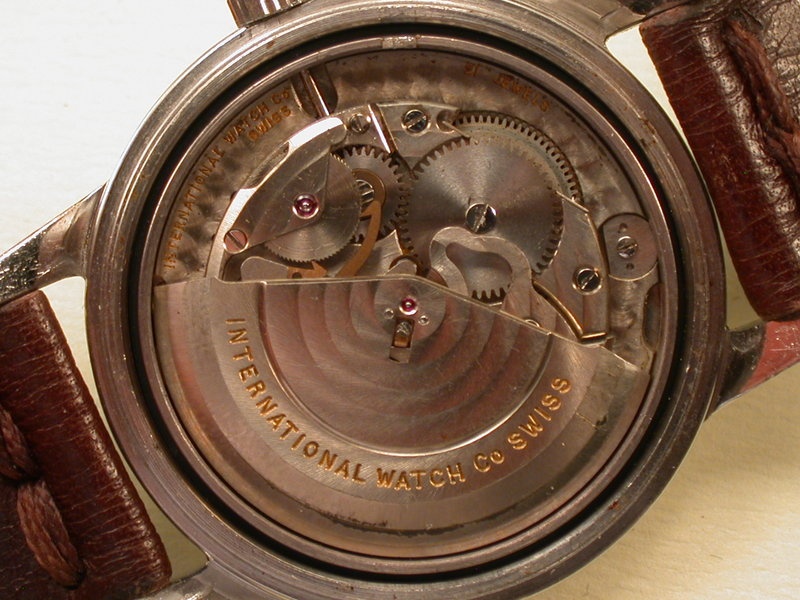
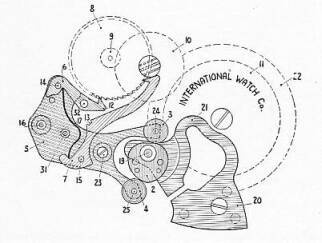
On the contrary of other more conventional automatic movements, which equip other watches, in which the rotor movement is transmited to a group (train) of wheels, which finally move the barrel in a more or less direct way, in the case of the Pellaton movement, the rotor shaft is connected to an excentric central piece ressembling a heart.
This piece, makes moving another piece, with the shape of a tunning fork, whose both arms end in small jewelled wheels. This tunning fork moves lateraly in an alternative way.
.
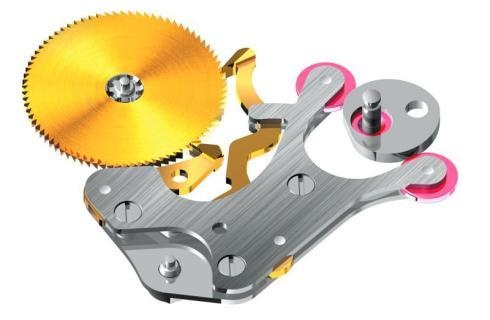

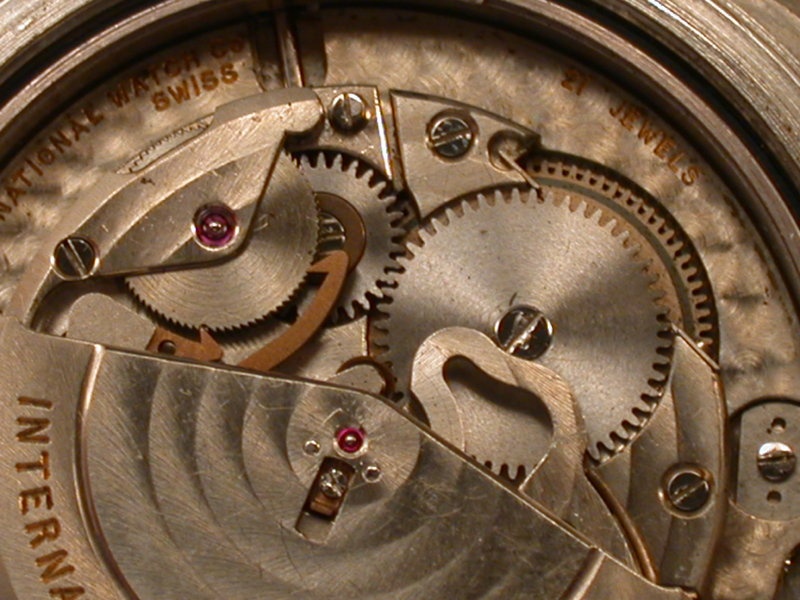
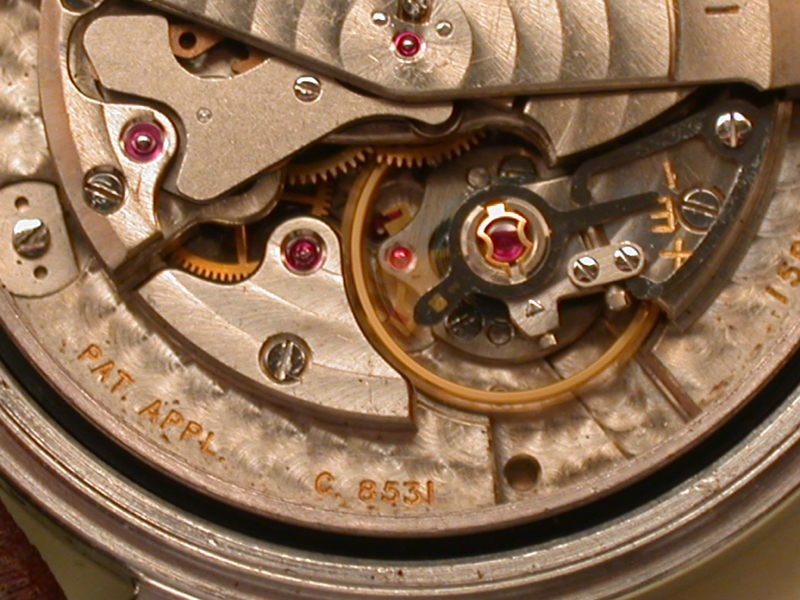
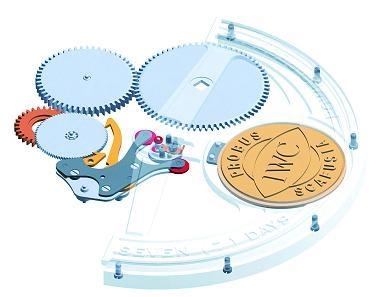
This alternate lateral movment, makes that two arms, of different lenght, and ending in a small claw (in yellow color in the drawing) impress movement to the wheels that will turn the barrel, which winds the watch.
In the following photographs, both arms (gold colored) are clearly visible.
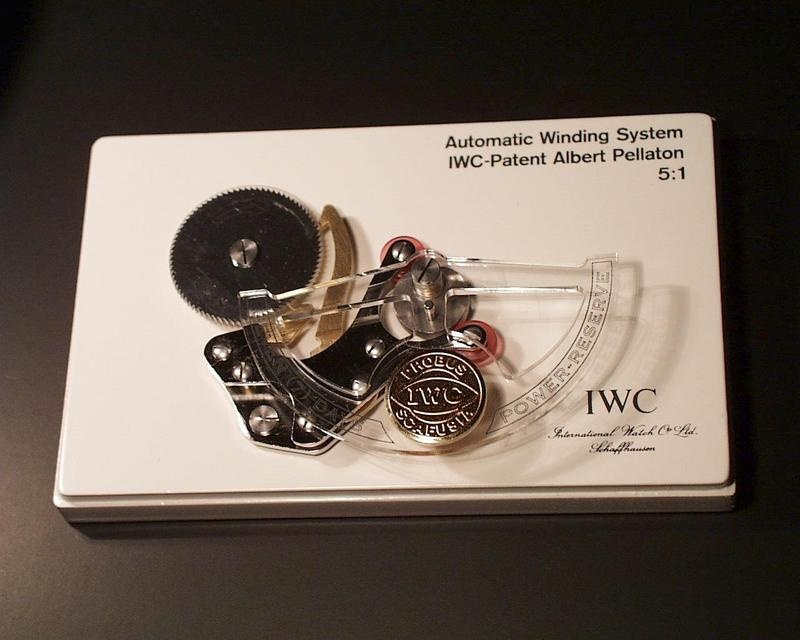
It is interesting to note, that a few years ago, IWC offered a big scale model of the Pellaton movement, which is shown in the photograph below.
This model was intended for sale to collectors, watch makers, or for use with educational purposes. I don´t know if this 1 to 5 big scale model is still available.
The drawing below, shows the scale model in more detail:
It is said, that the new Pellaton system, offered certain easy procedure for dissasembly when the movement needed a service, as well as an excellent snti shock resistance. Also it was known as a very effcient system of self winding.
Though this system was patented and used with exclusivity by IWC, this type of automatic movement has some precedents, like certain excentric wind movements offered by Longines in 1945, and a Lanco double lever and bumper movement.
In 1952, IWC introduced some improvements in their original 85 caliber, giving birth to the caliber 852, a very successful movement, of which about 49.000 examples were built in the following 6 years. In 1953, a new derivate caliber was introduced, featuring a date, and named 8521, which was produced till year 1958, with a total of 13.200 movements made.
In year 1958, IWC improved again its caliber 852, introducing their new caliber 853. These improvements where also given to the date movement, offered under caliber name 8531, introduced in 1959. This caliber 8531 is the one used in my own example.
In 1964, IWC introduced a new caliber of the series, called 854 (no date) and 8541 (date), with a lesser diameter and height.
Collectors distinguish three generations of the classic Ingenieur, depending on its movements and production period.
Cosmetically, both first two generations are very similar, except for small variations in their dials, type of hands, and indexes. In the first versions, the brand name IWC appears complete and in a beautiful English caligraphy. In the last series, the name is presented with just the three initials, applied in metal on the dial.
Dials were offered in silver color, also silver with a slight golden hue, or black. Cases were offered in stainless steel and gold.
A metalic bracelet matching the case was offered, as well as leather straps.
A short description of my own watch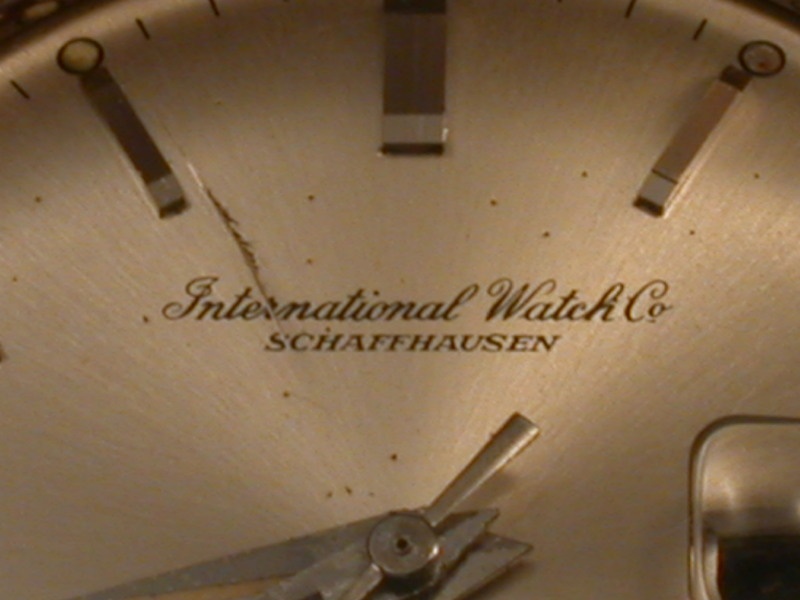
My watch is representative of the first generation model (made from 1958 through 1967) and got the reference 666AD
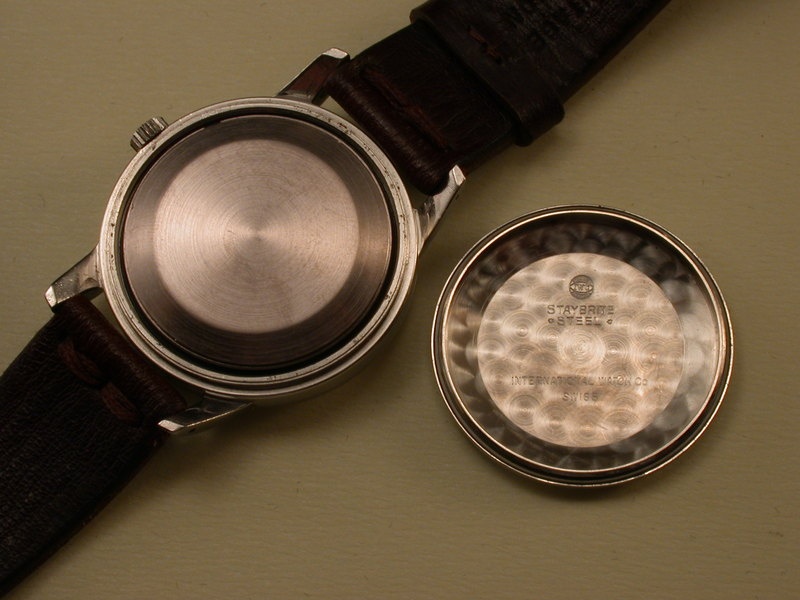
It is equipped with the Pellaton movement caliber 8531, with 21 jewells, central seconds hand, and date. The stainless steel case has a 37 mm diameter, case is water proofed to 100 meters depth, and it has an internal iron protection against high magnetic fields, as shown in the photographs.
This watch was made in year 1962, as per IWC information.
The dial shows the name of this prestigious watch maker, in a very elegant English script.
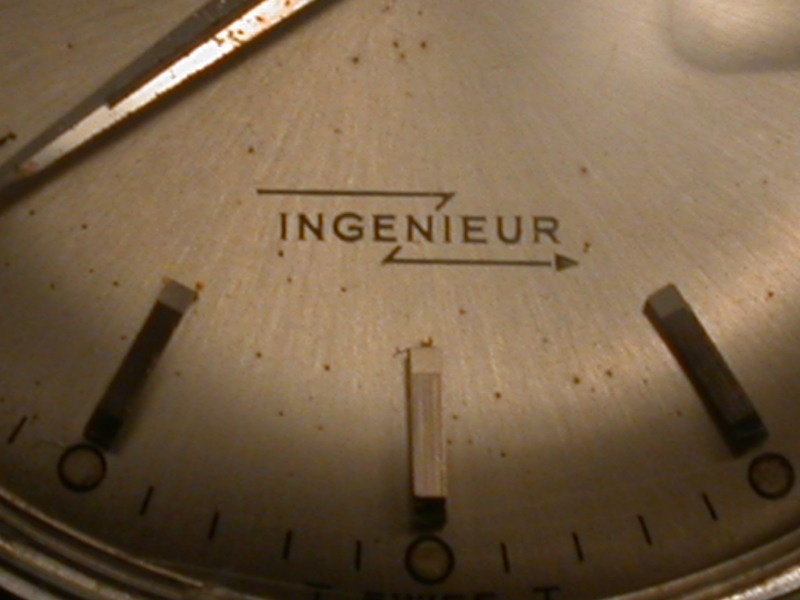
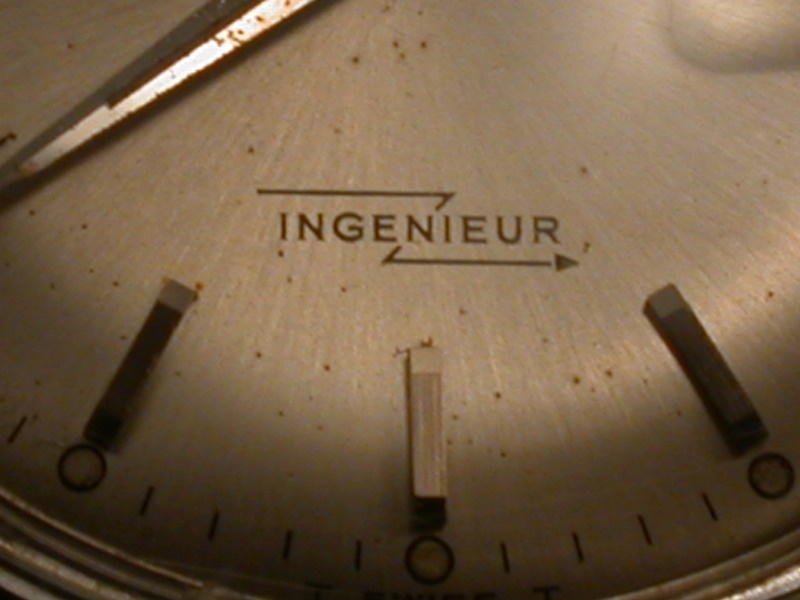
Below the hands axle and above "6", the name of the model "Ingenieur" is shown, crossed by an arrow or ray, which somewhat ressembles the universal sign of high voltage used in a machine or electric mechanism. May be this symbol refers to the capability of this watch to resist those high magnetic fields.
This most simple symbol, is perhaps the only visual sign which distinguish this model from other similarly simple IWC models of that epoch.
I feel it gives a very special touch to the watch, and is the sign which makes a collector to focus his eyes with interest when he glances it.
It is also interesting to note the symbol used in the winding crown of this model, a fish, which denotes the waterproof characteristic of this watch.
The dial has a very particular color, which resembles a very light champagne hue.
There is an unconfirmed version, which tells that the silver dials of the Ingenieur model, was painted with an special paint, in which powdered gold was used, and this would explain the light amber color of these dials.
The dial surface shows also a sunburst (soleil) design which enhances its quality look and classic spirit.
hands are of "dauphine" type, and straight baton indexes in high relief, each with a tiny dot of tritum.
A curious detail in my watch, is that the date wheel is black, with silver numbers. As the black background is proper of black dialed watches, this suggest a change during a past service, when the local watchmaker didn´t have the proper silver wheel at hand.
The only cosmetic problem of my watch, is a small deep scratch on the plexi, which I couldn´t change yet, not finding a correct original plexi, with the internal little loup in the internal face.
I find much pleasure to wear this watch on my wrist, and to be able to enjoy a nice classic vintage, with a very low profile presence.
I wish you´ll like this timepiece as much as I do.
Thank you for your kind attention, and receive my best cordial regards,
Abel.

Model: IWC Ingenieur.
Vintage: 1962
Reference: 666AD
Calibre 8531 - type Pellaton, 21 jewels, central seconds hand, date, anti magnetic protection.
Seel case, waterproof to 100 meters.
Diámeter 37 .
This message has been edited by Subexplorer on 2012-03-17 19:39:12 This message has been edited by Subexplorer on 2012-03-17 19:40:53