SALMANPK's exploration of the DSKY Apollo Moonwatch offers a fascinating look into a modern homage to a pivotal piece of space exploration technology. This article delves into the intricate details and faithful reproductions that make this DSKY replica a compelling device for enthusiasts, highlighting its advanced features while honoring its historical significance. Readers will discover how contemporary engineering can bring a piece of space history to life with remarkable accuracy and functionality.
DSKY (Diss-Key) is an abbreviation for ‘Display and Keyboard’. The term was adopted for the interface during the Apollo space program.
Width x Length x Height mm
DSKY (excl. strap mounts): 38.1 x 44.2 x 13.05
CNC micro machined 316L Stainless Steel case with a military grade ceramic coating
- Time & Date Display
- Stopwatch, Timer & Alarm
- GPS Navigation
- Authentic DSKY interaction
- Programmable core software
- External digital I/O interface
Processor & Connectivity
- ATSAMD21 M0 @48MHz
- 256kb FLASH | 32kb SRAM | 256Kbit non-volatile FRAM
- USB charging/programming port
- External 8 channel digital IO port supporting I2C, SPI, PWM and ISP
GPS
- Latest generation high performance GNSS receiver
- Concurrent reception of up to four L1 GNSS systems
- Ultra-low-power with Super-S technology for improved RF sensitivity
Software
- Compatibility with Arduino®, MakeCode® & CircuitPython® programing environments
- Operation requests performed as per the original DSKY with Verb and Noun entries.
- Operational data requests are presented in original and custom formats with selectable units.
- Programmable embedded hardware includes digital and annunciator displays, keypad, GPS and FRAM.
Source: CollectSpace, klabs
The DSKY with its micro-OLED display replicates the vibrant high-contact image of the electroluminescent display found on the original Apollo DSKY.
The display is fully programmable with a unique proprietary font that closely replicates the characters and labels of the original digital display. The colouration of the display has been faithfully reproduced in collaboration with Rosco®, a renowned Academy Award-winning supplier of colour filters to the motion picture industry. The integrated filter accurately reproduces the 530nm wavelength of the original DSKY display.
To ensure the display’s integrity it resides beneath a hermetically sealed anti-reflective scratch-resistant Schott® glass panel.
The annunciator display ensures an authentic experience of this feature. 14 programmable indicators mirror the layout found on the DSKY that flew in the Apollo 11 lunar module ‘Eagle’. Each indicator label is faithfully reproduced in the original Gorton font and authenticity is further maintained with, each indicator of the display incorporating three micro-LED’s, emulating the use of three incandescent bulbs found on the original Apollo DSKY.
As per the digital display the colouration of the segments has been faithfully reproduced with Rosco® filters. The colouration specification for the warning indicators was acquired from original archival documentation while the remaining white segments employ a special filter that replicates the colouration of the original tungsten filament bulbs. Finally, the segmented frame beneath the Schott® glass panel is chemical etched from stainless steel and coated as per the main case with a matching ceramic finish. This process ensures a precision finish that maintains the authenticity of the design.
The Keypad
The layout of the keypad includes 19 distinct tactile buttons. The labels on the keys have been faithfully recreated using the original Gorton font. Our goal was to create a keypad that offers a consistent tactile experience across all the keys, with a responsive and comfortable key actuation force.
We made a conscious decision to steer clear of a typical membrane-style keypad, as it wouldn’t deliver the desired customer experience. As a result, each key features a tactile micro switch enclosed by a hermetically sealed key cap.
Operation
The original Apollo DSKY operated in a method that was fascinating, but unusual for our times. Instead of using traditional commands, users would input numerical verbs and nouns to request operations. The Apollo Instruments DSKY aims to recreate this unique experience by utilizing the same verb and noun requests as the original Apollo DSKY. This attention to operational accuracy is extended to the digital and annunciator displays, which accurately reproduce the outputs of the original Apollo DSKY.
DSKY provides a diverse array of functions, displaying data in various formats. These include a faithful reproduction of how parameters would have been presented to the astronauts. In addition, there are multiple custom formats available that enhance readability and provide supplementary parameters.
Software
Framework based modules forming the backbone of the system. Event based callbacks for more efficient execution of code. Start-up, cyclic and shutdown framework functions, allow for predicable/clean start-up and shutdown of each module. User functions can be easily generated and integrated into the framework to support custom DSKY operations. Debug framework, allowing modules to be switched on and off during debugging. Modules generated with unit testing in mind, allowing use of AUnit or similar hardware-based unit testing. Documentation based on Doxygen framework. API type interaction with DSKY functions.
Battery
The DSKY Moonwatch features a 300mAh lithium polymer battery. This bespoke design was developed and validated through our partnership with Alpha Micro Ltd to satisfy all necessary certification requirements.
Our electronics and battery integration specialist who previously held a position with a leading Formula One racing team provided his expertise in the battery design, integration and regulatory compliance. The charging and protection circuitry incorporates multiple safety features utilising cutting-edge battery management technology that has demonstrated perfect reliability during development and testing. The current software build provides 24 hours of operation under standard conditions, though we expect this duration to extend significantly as we introduce new power-efficiency features.
For extended storage, the DSKY Moonwatch can enter sleep mode or power down completely. This function is triggered through timed PRO key combinations, replicating the sleep sequence of the original Apollo DSKY. To ensure the DSKY Moonwatch remains operational for future generations, we engineered the battery to be replaceable. This service may be delivered through our centre or certified specialists.
Connectivity
The charging and programming of the DSKY is undertaken through a micro-USB port situated on the rear of the device. In addition, there is an I/O port that offers ISP support for bootloader programming and 8 programmable digital I/O channels. These channels can be programmed and configured to support SPI, I2C, and PWM.
Furthermore, we are currently working on a range of external devices that can be connected to the DSKY.
The Future
DSKY’s proprietary I/O port will provide connectivity with upcoming electronic devices under development by Apollo Instruments. These devices include breadboard interfaces, development enclosures, and robotic systems. A product currently under development is an enclosure that replicates the main chassis of the original Apollo guidance computer.
This innovative product will facilitate the installation and programming of proprietary development boards in an environment that immerses the user in an engaging Apollo experience. Two noteworthy board designs under development are mini core rope and NOR array modules.
Source & Credit: Apollo Instruments UK
This message has been edited by India Whiskey Charlie on 2026-04-03 13:28:50
About the Omega DSKY Apollo Moonwatch Ref. DSKY
The DSKY Apollo Moonwatch from Horological Meandering represents a fascinating intersection of horological innovation and space program heritage. Drawing inspiration from the Display and Keyboard (DSKY) interface units used in the Apollo Guidance Computer, this timepiece transforms the iconic computational display that guided astronauts to the moon into a wearable tribute. The design directly references the original DSKY units that were integral to navigation during humanity's greatest space exploration achievement, creating a tangible connection between wrist-worn timekeeping and the technology that enabled lunar missions.
Technically, the watch abandons traditional analog timekeeping in favor of a digital display that mimics the original DSKY's green phosphor screen and distinctive alphanumeric readout. The white case construction and prominent keypad layout faithfully recreate the utilitarian aesthetic of NASA's guidance computers, while the electronic movement ensures accuracy befitting its space-age inspiration. The substantial case size and angular form factor prioritize functionality and visual impact over traditional horological elegance, making this a statement piece that bridges technology and timekeeping.
As a contemporary creation celebrating the Artemis II mission, this watch occupies a unique niche in the collector market between traditional horology and space memorabilia. Its appeal extends beyond typical watch enthusiasts to include space program aficionados and technology collectors. The limited nature of such specialized pieces, combined with renewed interest in lunar exploration through the Artemis program, positions this as both a conversation starter and a potential collectible for those seeking alternatives to mainstream space-themed watches.
Specifications
Case
white/silver
Diameter
unknown
Dial
green digital
Key Points from the Discussion
The DSKY replica is more than just a display; it's a programmable device compatible with Arduino, MakeCode, and CircuitPython, allowing for custom software development and interaction mirroring the original Apollo DSKY's Verb and Noun entries.
The display's authenticity extends to its color, faithfully reproduced using Rosco® filters to match the 530nm wavelength of the original electroluminescent display, and protected by a hermetically sealed, anti-reflective Schott® glass panel.
The annunciator display features 14 programmable indicators, each with three micro-LEDs, replicating the original Apollo 11 lunar module 'Eagle' DSKY's layout and incandescent bulb effect, with Gorton font labels.
The DSKY's case is CNC micro-machined from 316L Stainless Steel with a military-grade ceramic coating, ensuring durability and a precision finish that maintains design authenticity.
The discussion briefly touches upon the extreme material challenges faced in space travel, specifically the friction heat of 2000-3000°C during re-entry and 0° Kelvin in space, which required inventing specialized materials and testing machines.
A personal anecdote highlights the potential health risks associated with working on exotic materials for space programs, with many engineers in one team succumbing to various cancers.
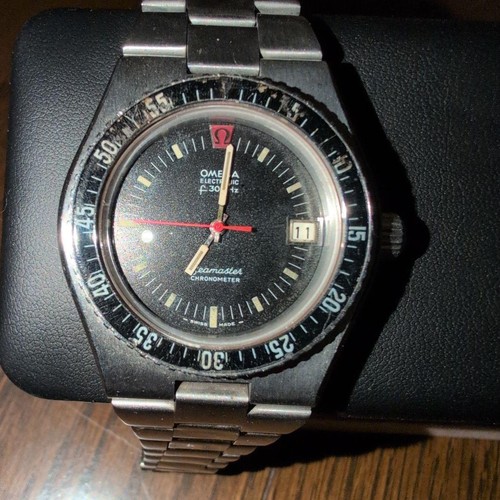
Another contributor shared an image of a watch commemorating the 40th anniversary of the first manned space flight, adding to the theme of space exploration horology.
Advertisement
The Discussion
CA
Carlos22
Apr 3, 2026
Very unique! Here’s my more conventional Artemis watch
SA
SALMANPK
Apr 3, 2026
Fun Watch 😊👍
Here is mine Mir Expedition EO-14. AKA: Mir EO-14;Sirius (Sirius);Soyuz TM-17 (Serebrov, Tsibliyev). Launched: 1993-07-01. Returned: 1994-01-14. Number crew: 2 . Duration: 196.74 days. Carried Vasili Tsibliyev, Alexander Serebrov, Jean-Pierre Haignere to Mir; returned Serebrov, Tsibliyev to Earth. Progress M-18 undocked from Mir's front port at around 17:25 GMT on July 3, and Soyuz TM-17 docked at the same port only 20 minutes later at 17:45 GMT. The EO-14 crew landed at 08:18 GMT on January 14
KM
KMII
Apr 3, 2026
And one from even further back…
Here in the 40th anniversary of the first manned space flight version.
KM
KMII
Apr 3, 2026
Thanks Salman 👍🏻🙏🏻
Not as technically cool as the one from your opening post, though 🤖
SA
SALMANPK
Apr 3, 2026
They did a Great Job, According to them took 4 years to develop, you can feel the passion 😊👍
KM
KMII
Apr 3, 2026
Most certainly 👏🏻👏🏻👏🏻
Available on the marketplace
4,628 Omega listings are live on the eBay market and 357 collector listings on the WatchProSite marketplace.