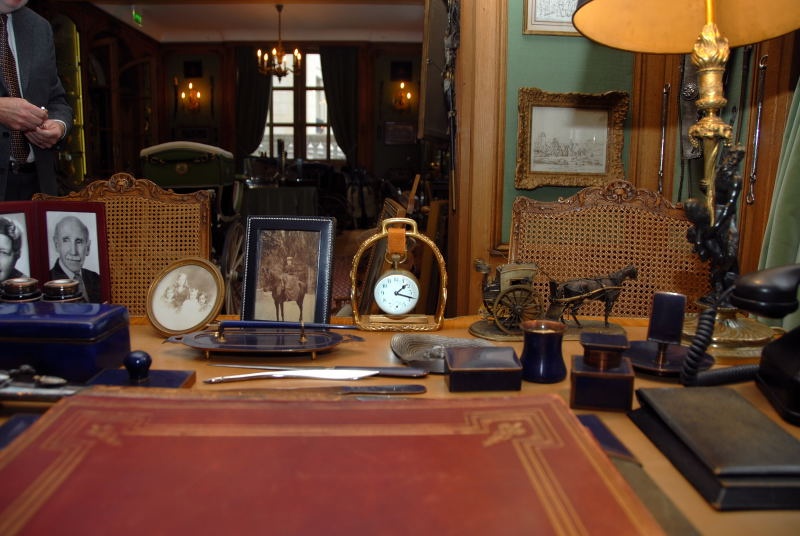
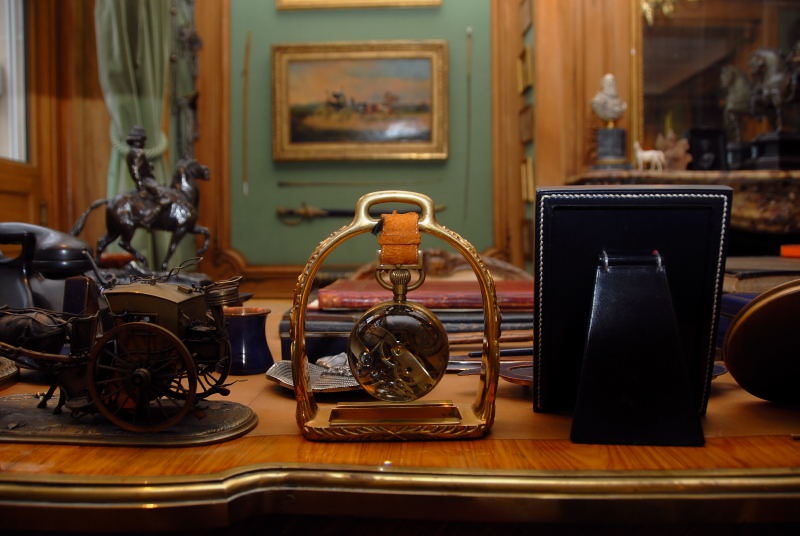
[The view from Emile Hermès desk with the pocket watch that magnified his fascination with the mechanics of the watch]
In a year when Hermès has promised the ‘gift of time’ to all, it is worth reflecting how La Montre Hermès has evolved over the years. While in more recent times there has been a move by luxury houses to produce the haute horlogerie watch line, with Chanel and perhaps Ralph Lauren being the stand out newcomers, Hermès has been around for over 80 years. Hermès has history in the watch business and as a new movement is introduced this year it should be seen through the origins of the past. Watches, before handbags were on the agenda, and one of the founding family members for where Hermès is today: Emile Hermès was especially fascinated by clocks and watches and started the watch and clock line as a part of a response to the changing world. Hermès watches now form part of collections of watch collectors and the Paris auction house: Artcurial held a specialist auction of Hermès watches a few of years back. Hermès are truly a watch brand in their own right.
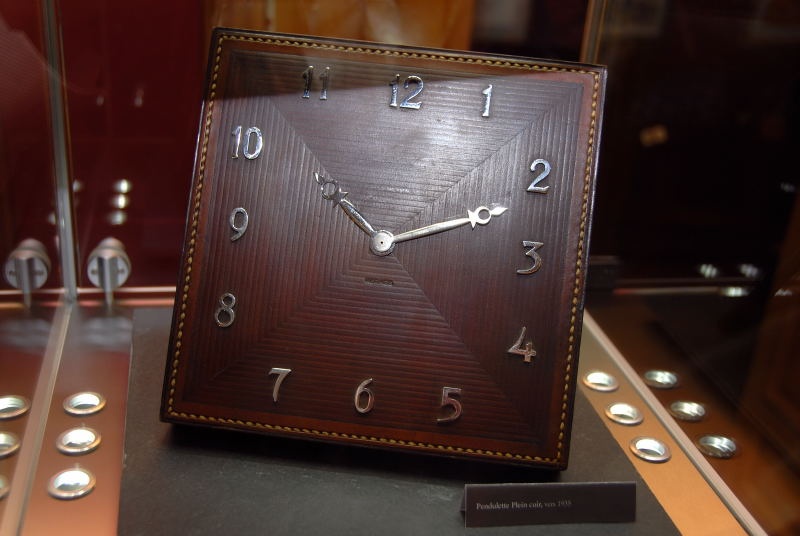
[The leather clock has been in the Hermès retail line since 1935. The clock sold today remains basically unaltered]
Time has been an essential element of Hermès from the beginnings. The actual symbol of Hermès, implies the passing of time. The now famous picture of the Duc coachman waiting for the owner and for the journey to begin is symbolic of the importance of time to the Hermès firm. Along with the traditional starting point for saddlery and harnesses, the element of time was in the waiting. There is both time in the waiting, and a timeless quality to Hermès designs.

Hence, for over 80 years, watches have always been a mainstay of Hermès. Because of Emile Hermès fascination with mechanical movements, the pocket watch that is part of the Hermès haute horlogerie collection is a faithful rendition of the pocket watch that sits on what was once Emile Hermès desk. Emile Hermès wanted the movement and the mechanics to be visible to study it.
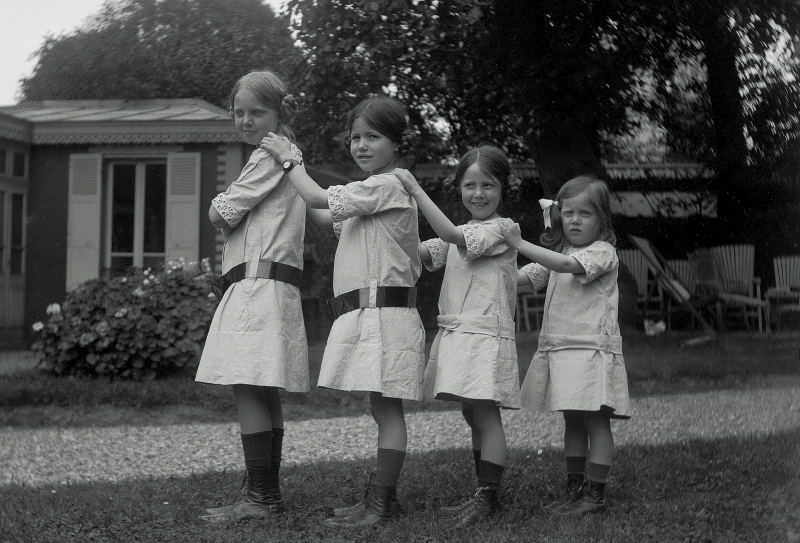
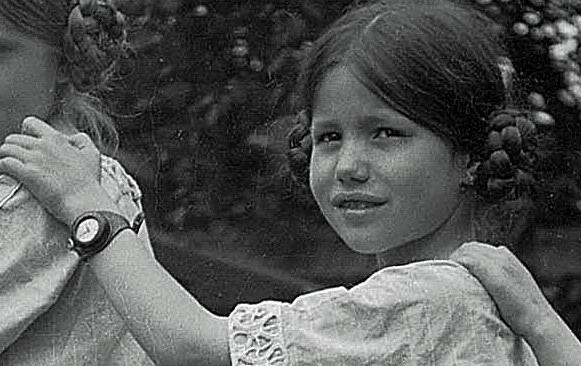
Emile Hermès also gave watches to his daughters and one of the more famous photographs of the Hermès daughters shows Jacqueline Hermès wearing her watch on the wrist. Guillaume De Seynes sixth generation family member and Vice President of Hermès says that his then nine year old grandmother in the photograph was an energetic girl and Emile Hermès had developed the pocket watch wrist holder in part as a way of keeping the watch attached to his rambunctious daughter.
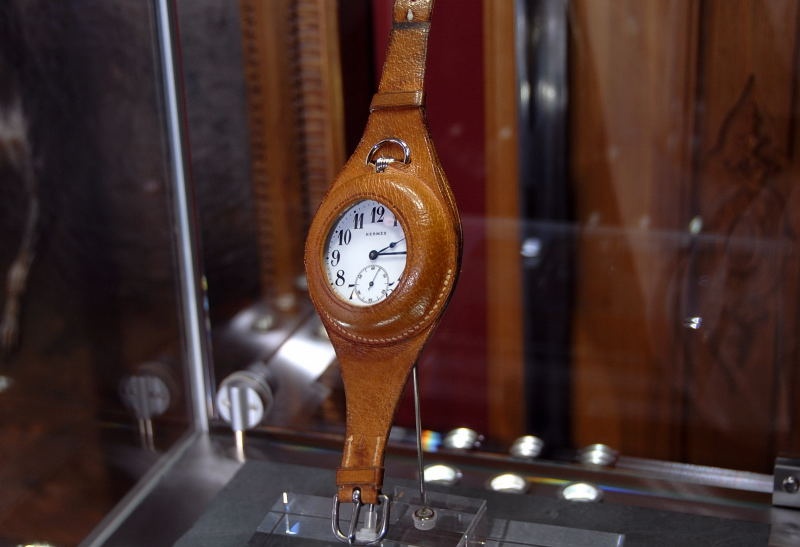
[A pocket watch in the Hermès leather pocket watch wrist strap]
For this article I was allowed unprecedented access to Emile Hermès inner sanctum (office) above the bustling streets of Paris. In a room that was once the private office of Emile Hermès, above the streets of Paris, at 24 rue Faubourg St. Honore, a number of the La Montres Hermès collection from the past was shown. I was allowed to both photograph the vintage watch collection as well as Emile Hermès desk. All the watches follow the Hermès mantra to take simple things and make them beautiful. What started as a leather goods manufacturer, Hermès would make the pocket watch holder and strap (in about 1912) – the coach driver could see the time as driving the, has developed into a full manufacture. From 1928 onwards, Hermès sold watches especially created for it by some of the most prestigious watch manufacturers. There was always an innovation about the watch design, but what is striking about Hermès watches is the legibility of reading the time. It is the very definition of elegance and simplicity even on the most complex of watches (such as a chronograph).
Developing and designing straps for ladies watches using leather that was refined and subtle was also set alongside innovative ways of wearing a watch on your person: as a belt buckle or in a lighter. The movements for the watches came from various manufacturers: Le Coultre, Cyma, Angelus, but the design of the watch or clock was always Hermès. It was innovative, made to be beautiful and functional at the same time.
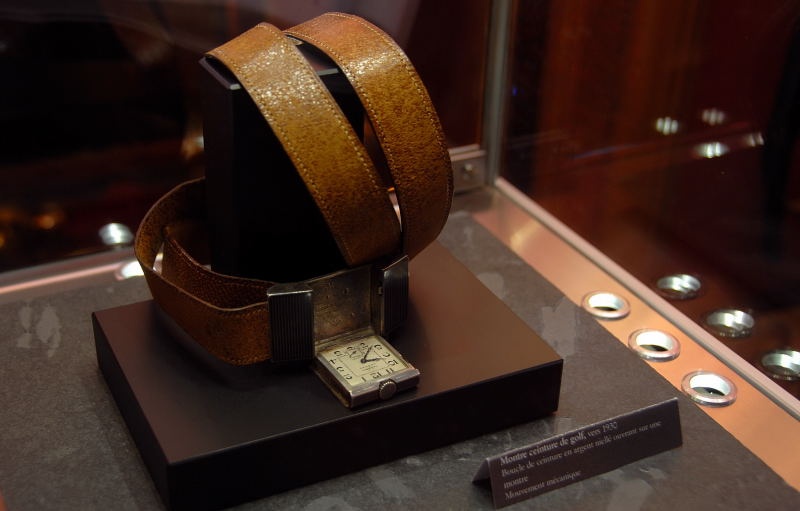
[A watch within the belt buckle: to help keep time on the golf course without the necessity of wearing a watch]
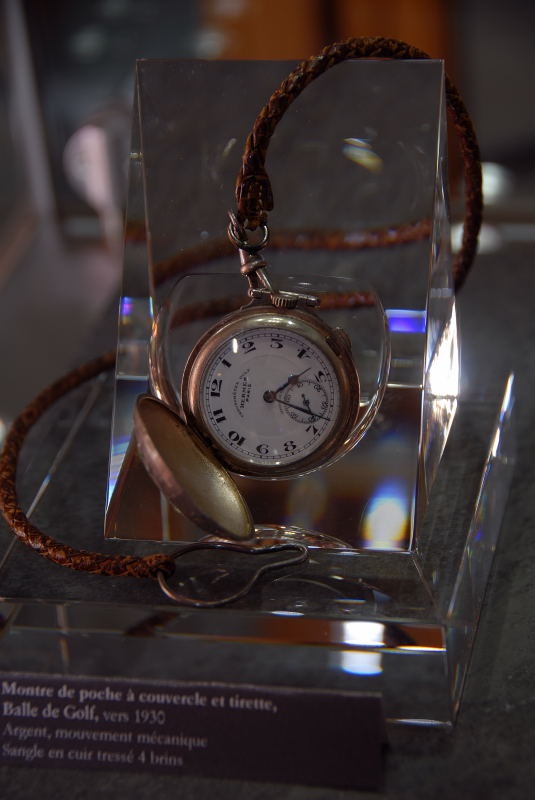
[A variation on a theme: a pocket watch on a leather strap for golf. From about 1930]
As the age of leisure and disposal income progressed, that characterised the twentieth century, Hermès produced and sold products that were timeless in quality and design. The horse drawn carriage gave way to the horseless carriage, and leather bridle straps were no longer required (except for a few equestrians), Hermès had to find new lines of business. In keeping with the picture of the Duc and the waiting coachman, Emile Hermès decided to use Hermès leather workers skills in the rapidly changing world of personal transport. Emile Hermès focused on the needs of the traveller, from luggage to scarves and timekeeping. But never ones to pander to the vagaries of fashion, Hermès always kept to producing products in way they should be done.
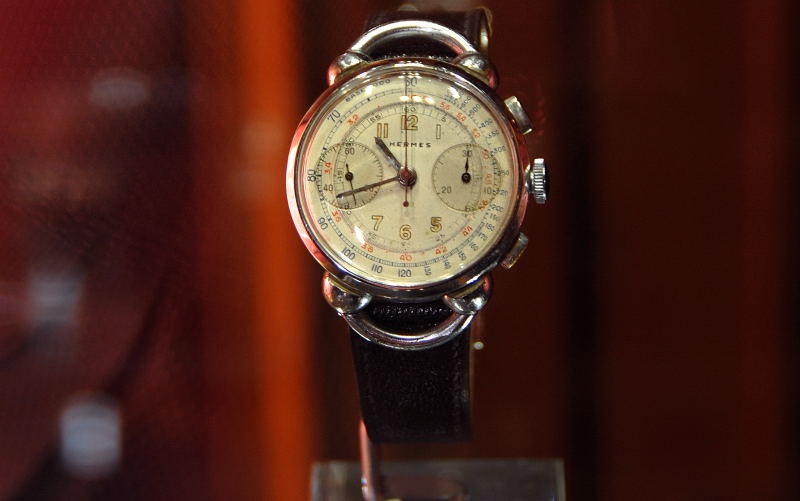
[Hermès chronograph from 1930 with a Cyma movement]
From producing and selling watches in collaboration with other high-end watch companies, the next step forward for Hermès was the development of a fully-fledged watch company: La Montre Hermès S.A. in Biel (Switzerland) was formed in 1978. Hermès, using base ebauche from Jaeger LeCoultre, Vacheron, or (more recently) ETA, would create their own designs for the watch and the movement/complication, but be able to control the finishing of the movement and the watch. At a time when the Swiss watch industry was in disarray and declining, Hermès chose to invest in the craftsmanship and skill of watchmakers. The creation of La Montre Hermès, planned since the 1920’s, was not dependent on the state of the market, but on a long term Hermès plan.
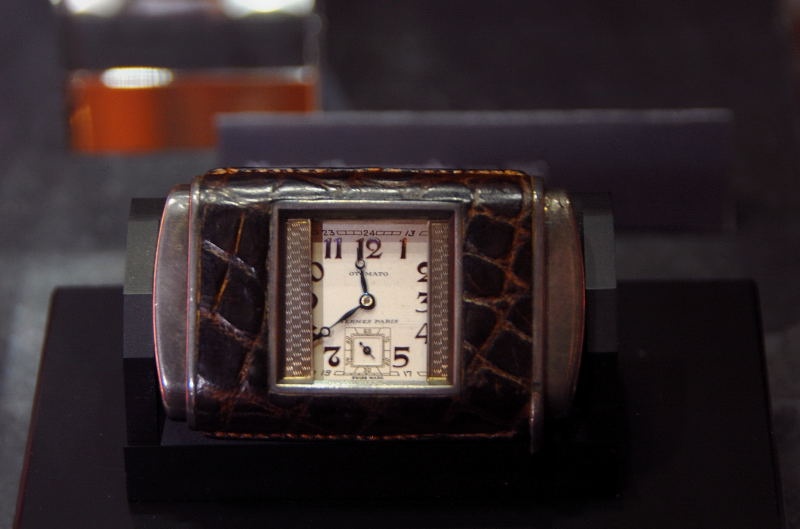
[The first timepiece sold by Hermès: a ladies handbag watch produced by Cyma]
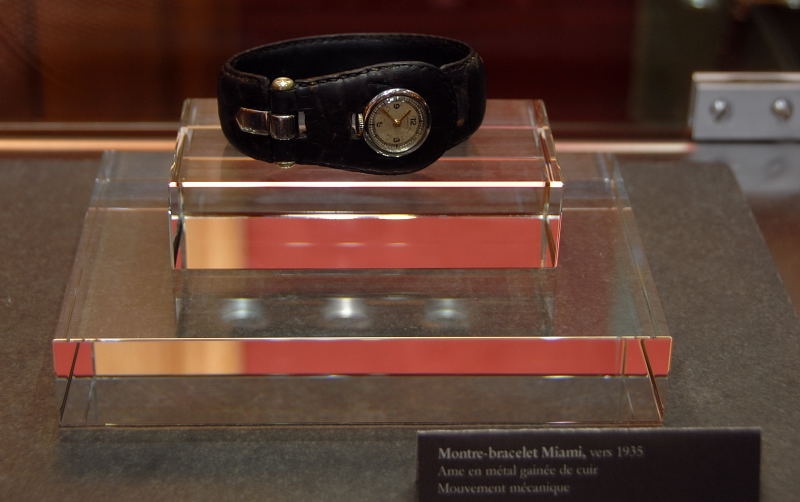
[A ladies watch as a leather bracelet – called the ‘Miami’ - from the 1935]
In more recent years (since 2006) Hermès have had Vaucher automatic movements at the heart of their watches. Apparently, and so the rumour goes, the reason the partnership ever started was because a member of the Sandoz family (that owns the Parmigiani group) rented an apartment from one of the Hermès family in Paris. The two family members started talking, and the next thing you know, Hermès is using Vaucher movements and has a 25 percent stake in the movement manufacture. Owning a 25 percent stake in Vaucher, that was formed to supply movements to Parmigiani, Hermès used the base ebauche and applied their own finish and standards. This was the ‘H’ patterning on the plates, the anglage and polishing to the edges. However, a mere one hundred and seventy five years after the founding the ‘maison’ , and about a century after Hermès started manufacturing watches or watch related leather parts, the company has launched its own movement.
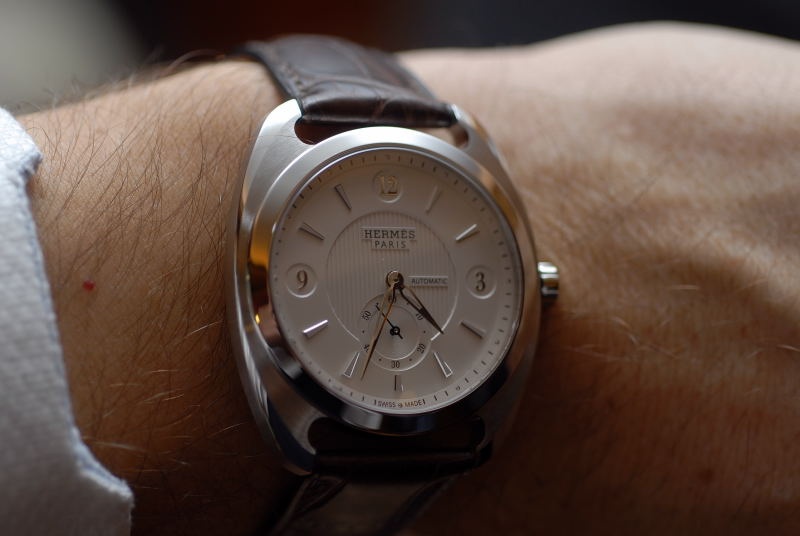
[The new look Dressage watch from Hermès with the H1837 movement]
The movement, called the H1837 Calibre (after the year of foundation for Hermès) represents the company’s first foray into being an independent watch manufacture. Although based closely on the Vaucher automatic movement, and Hermès admits that they did ask the movement designers at Vaucher for advice, this is a movement manufactured at Hermès own workshop within Vaucher. Having worked so closely with Vaucher over the last few years, it is no surprise to see a movement looking so similar to the one that Hermès watchmakers are already used to. It certainly helps in designing watches and in the after sales market if your watchmakers are already familiar with a movement of a particular design and construction. It has taken 3 years to get this far, and will probably take even more years yet for the new movement, and new movement capacity, to feed its way through the Hermès watch line. For now, the H1837 movement will reside in the newly designed Dressage watch, in steel, or various shades of gold; with a metal bracelet or a leather strap (with a redesigned clasp). It is a very modern, yet elegant watch on the wrist.
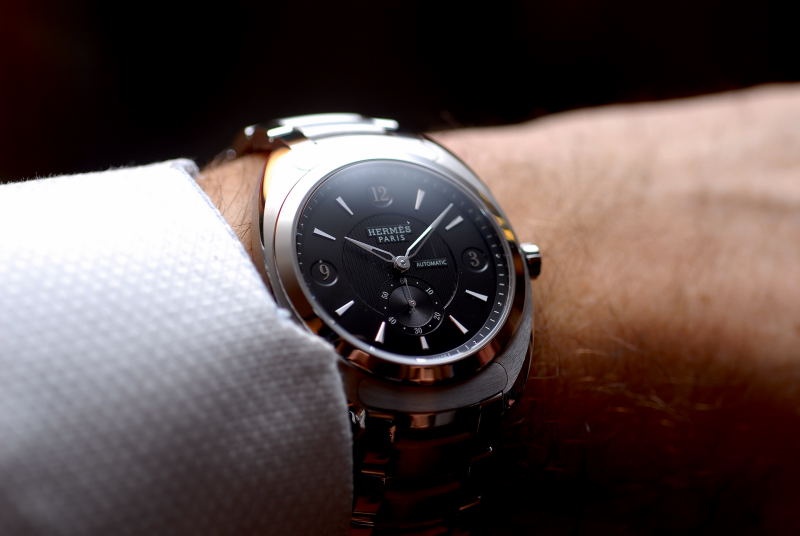
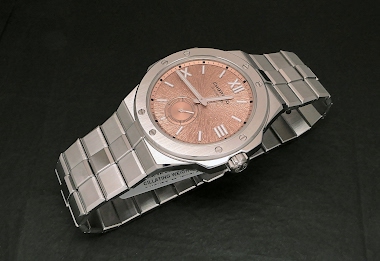
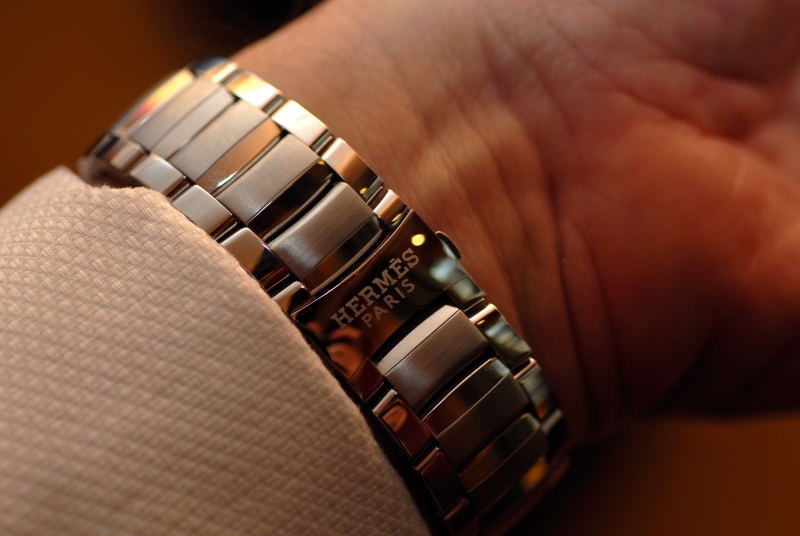
[The new Dressage watch on the metal bracelet]
The difference is not so much for the H1837 movement it is, as the name suggests, the starting point. While the H1837 has been fitted into the newly designed dressage watch, as it is a basic time only watch, the idea is that the H1837 will lead the way to the development of other movements and to modules that will fit onto the H1837. In the works are chronographs and perpetual calendars that fit in with the other Hermès watches.
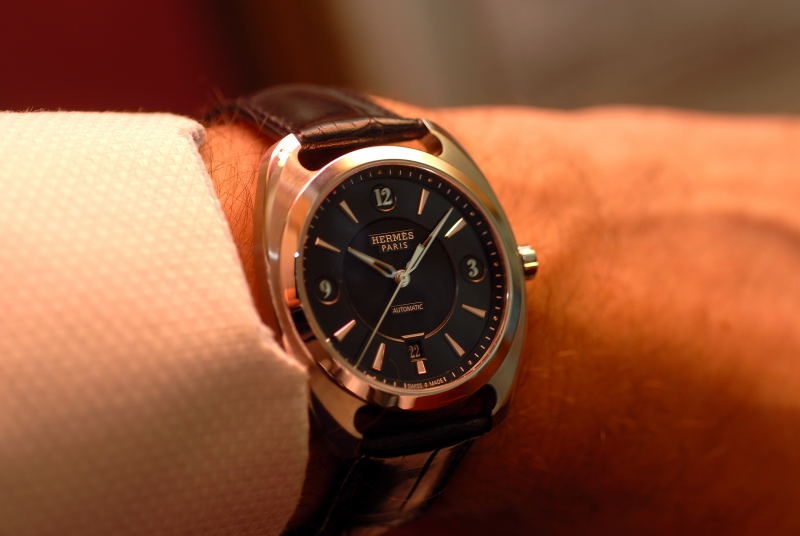
For my money, I think Hermès will expand beyond where they are at present. Their own movement manufacture now allows all aspects of quality to be controlled. From the machining of the plates and the movement parts, to the finishing (and the proprietary ‘H’ pattern) and construction of the piece, it is all now under one roof. When chatting with Luc Perramond, CEO La Montre Hermès, I was hoping that they would do more with the design of the new H1837 movement. It would be good to see a free-sprung version, and one that included further complications that were integrated as part of the movement.
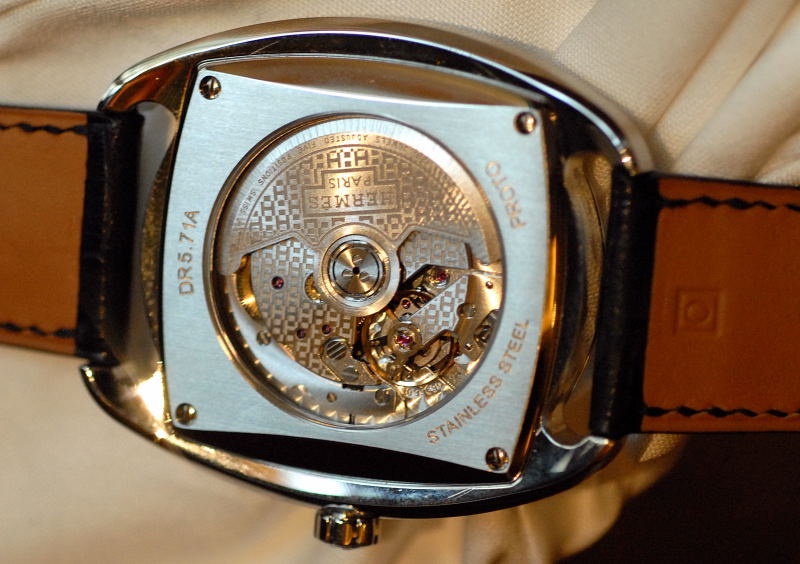
[The new H1837 movement through the exhibition back of the Dressage watch]
What is sure is that Hermès, like other fashion houses (such as Chanel and Ralph Lauren) has started to elevate itself into a very serious watch brand. Hermès certainly has more credentials in this area and has taken gone one step further, and leap-frogged over some watch brands in the process, to develop their own manufacture. It had always been on the cards, there was always this intention from the time of Emile Hermès to develop their own movements to go with their own design and approach to timepieces (watches and clocks). It has taken a little longer than expected, but then again, anything of quality takes time to accomplish and all good things come to those who wait! The good things to come from Hermès are that their watches will exude the same qualities as all their products: make simple things beautiful. A watch should be just that: simply beautiful and I am sure that Hermès will make good on its belief.
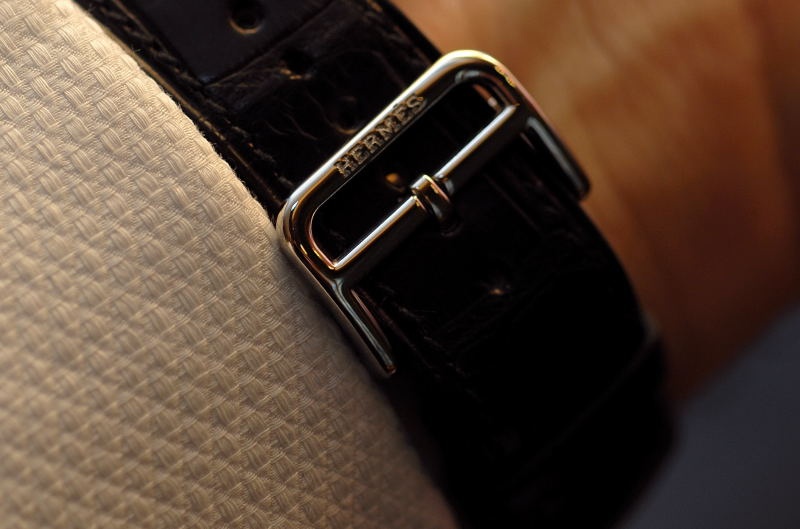
[The leather strap clasp for the Dressage watch]
This year’s Dressage watch, with the H1837 movement, is the start of the next stage of the process.
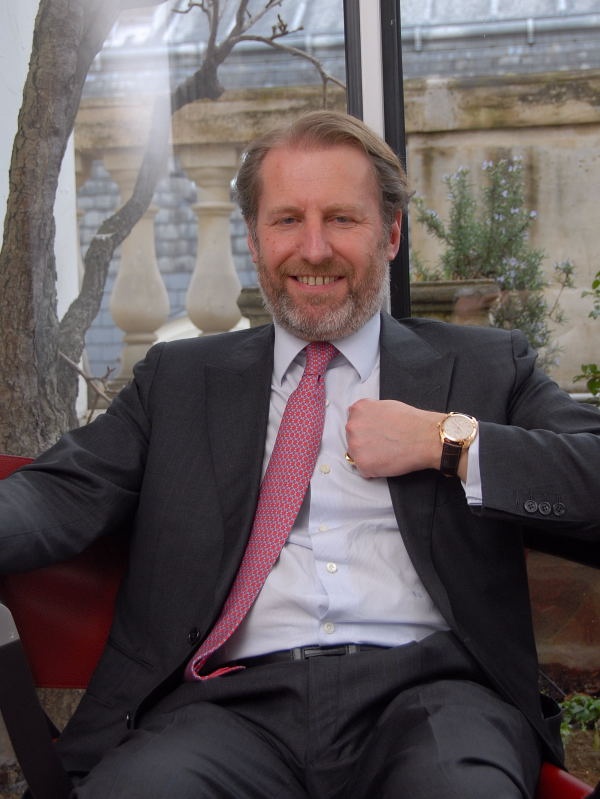
[Guillaume De Seynes models this years Dressage watch with the new movement.]
Andrew H
This message has been edited by 219 on 2012-05-13 01:46:15 This message has been edited by MTF on 2012-05-18 02:52:56