GWIS's insightful post offers a horological journey through London's Science Museum, highlighting the Clockmakers’ Museum's treasures. His detailed account and personal photography bring to life the groundbreaking work of John Harrison, the timeless elegance of Breguet, and the revolutionary genius of George Daniels. This article contextualizes why these historical figures and their inventions remain profoundly relevant to contemporary watchmaking and collecting.
We took our daughter on a day trip to London and we visited the Science Museum. For those of you that haven’t been, I highly recommend it. The exhibits range from space travel and flight through to medicine and communications. However, of particular interest to WPS members, within the Science Museum is the Clockmakers’ Museum (which they believe is the oldest dedicated clock museum in the world). It houses some amazing pieces and here are some quick pictures of my favourites:
John Harrison

As many of you may know, in the 1700’s John Harrison won the largest of the rewards under the British Government’s Longitude Act for developing a series of 5 chronometers that were sufficiently accurate for sailors to be able to determine their longitude at sea. Harrison’s clocks helped revolutionise navigation, and therefore safety, at sea. Up until that point ships had an unfortunate and unplanned habit of crashing into land as a result of insufficiently accurate navigation! The brilliant book “Longitude”, by the American writer Dava Sobel, tells the full story.
The Clockmakers’ Museum has the fifth and final of Harrison’s chronometers - “H5”

 Breguet
The main focus of the collection seems to be English clock and watchmaking but a few Breguets managed to find their way in. For those who are interested, and can get to London, apparently the Science Museum will be having a Breguet exhibition in 2023 but the specific dates have yet to be confirmed because they are still finalising the arrangements.

George Daniels
My favourite exhibits were the collection of George Daniels watches.


This Space Traveller’s Watch (on loan to the Museum) is a thing of incredible beauty, and credit to the owner for allowing the museum to put it on display and share it with everyone.


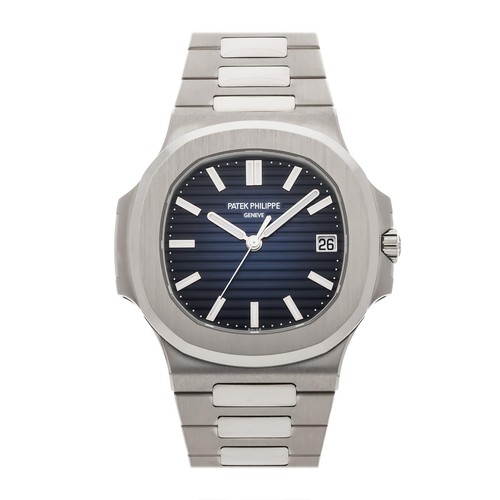
There were also some examples of his wristwatches on display, including the first watch to have a coaxial escapement - a Patek Nautilus! This one might be even more valuable than a Tiffany 5711! Picture courtesy of Hodinkee (I forgot to take a picture because I was in love with the Space Traveller’s Watch!).

An example of one of Daniel’s Millennium watches and an early Omega with a Coaxial escapement.


As I said, a visit to the Science Museum is definitely worth it, not least because admission is free (although a donation is recommended).
All the best,
Jon