Daos (dxboon) presents the Girard-Perregaux WW.TC John Harrison, a limited edition timepiece honoring the legendary watchmaker. This article delves into John Harrison's pivotal role in solving the longitude problem at sea and how GP's new WW.TC model pays tribute to his legacy. Daos provides historical context, detailed imagery, and insights into the watch's design and significance.
It may seem difficult to fathom for people living in the world today,
but there was once an age during which man had not yet mastered the idea
of timezones and accurate calculations of longitude at sea.
Ocean-going tragedies related to botched longitudinal calculations, such
as the 1707 grounding of an entire English squadron of warships upon
the Scilly Isles, which resulted in 2,000 deaths, heightened the desire
of the British government to solve the problem of inaccurate
calculations of longitude at sea. In order to entice the greatest
scientific minds of the day to apply their smarts to this particularly
relevant problem during the age of English exploration (After all, one
cannot expand the empire if one's ships are routinely running aground!),
Britain's Parliament passed the Longitude Act in 1714. The Longitude
Act offered a reward of 20,000 pounds (The modern equivalent of several
million dollars!) to anyone who could find a method of calculating a
ship’s longitude to within half a degree (approximately 18.64 mi/30 km).
The
longitude problem was studied carefully by many intellectuals of the
era, including a watchmaker named John Harrison. Harrison's simple
approach showed great promise. His idea was to use a clock to measure
the time difference between the journey’s starting point and the ship’s
current position. Because the Earth completes one full revolution in
approximately 24 hours, each hour thus represents 15 degrees of
rotation, or 15 degrees’ difference in longitude. By measuring the
difference between the exact local time at the ship’s position
(determined using a sextant) and the exact reference time (at the point
of departure, indicated by the clock) the longitude of the ship can be
calculated (No more math! My head hurts!).
The main challenge
inherent to Harrison's idea was that the reference clock had to maintain
its accuracy despite the pitching and rolling of the world's rough
seas. Making this timepiece became John Harrison’s lifelong quest. The
self-taught watchmaker, who was born March 24, 1693, was trained as a
carpenter, but ultimately devoted his life to developing reliable and
accurate timepieces. In the pursuit of this goal, he built novel
mechanisms based on the work that Christian Huygens and Robert Hooke had
carried out on the spiral spring, and used brass and steel alloys to
reduce the effect of expansion and contraction. In 1773, after many
successes and failures, the amazing performance of his H-4 watch was
recognized and earned him part of the reward promised in the Longitude
Act. Due to the intense rivalries engendered by the cash prize, as
well as the ambiguous conditions imposed to obtain it, the total sum was
never awarded in full.
Not unlike John Harrison,
Girard-Perregaux has long researched issues of precision. As a tribute
to Harrison, who shared their goal of timekeeping accuracy, the
Manufacture is issuing a special version of the WW.TC that commemorates
the 250th anniversary of his historic trip from Portsmouth, England to
Jamaica.
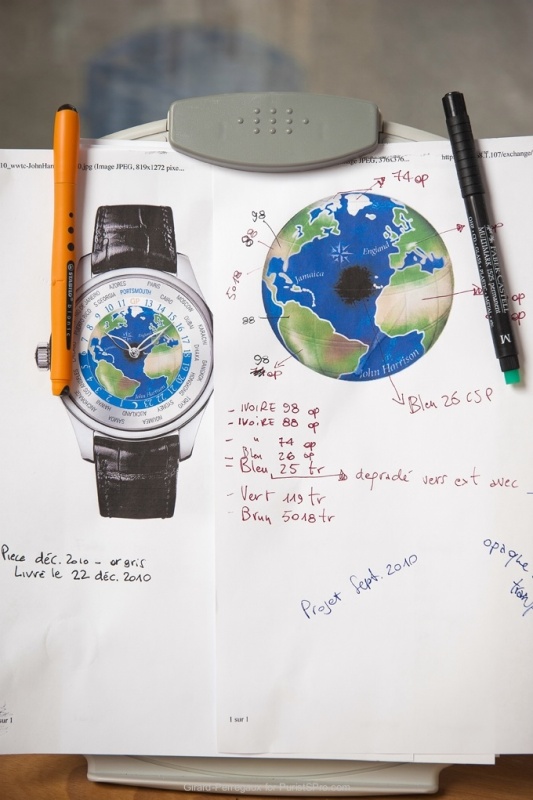
On
that trip, Harrison tested his H-4 pocketwatch, which embodied all his
best efforts toward creating a highly precise timepiece. The trip was a
success, as Harrison and crew navigated safely to Jamaica and back.
For this accomplishment, and Harrison's contribution to the fields of
watchmaking and navigation, he has earned the moniker "father of the
marine chronometer."

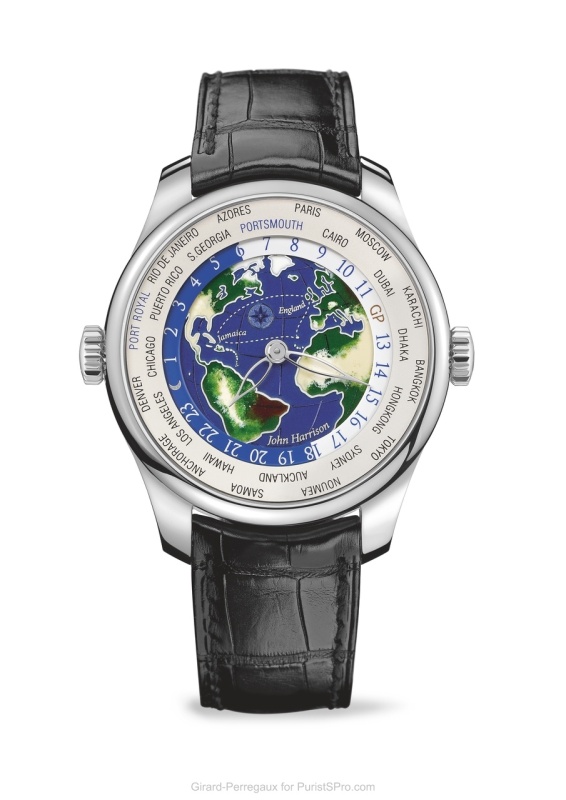
The
limited edition of 50 pieces honoring John Harrison's historic voyage
with his son William and crew depicts the journey undertaken from
Portsmouth, England, to Port Royal, Jamaica, against a map of the
Atlantic Ocean. The trip spanned the time period from November 1761 to
March 1762 and was intended to test the reliability of the H-4
timepiece.
The dial of the ww.tc John Harrison is crafted in
delicate champlevé enamel, produced in the enameling workshop of the
Girard-Perregaux Manufacture.
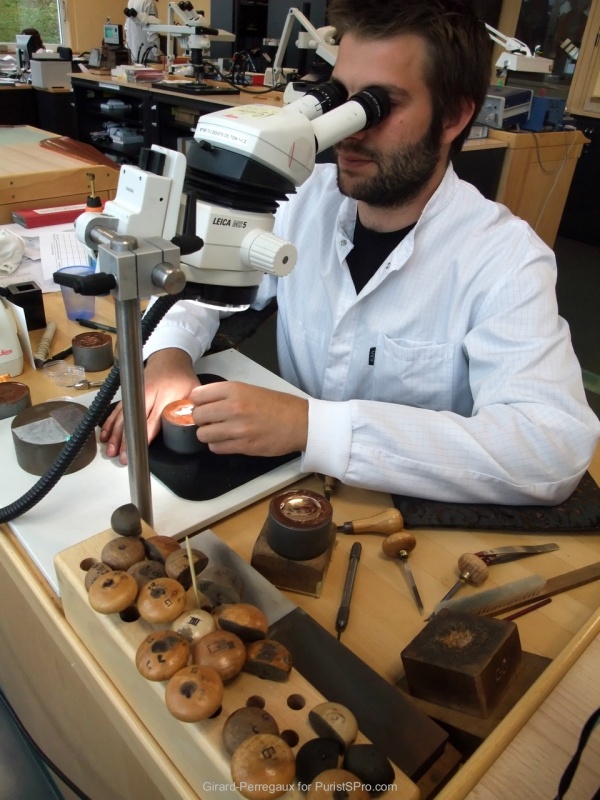
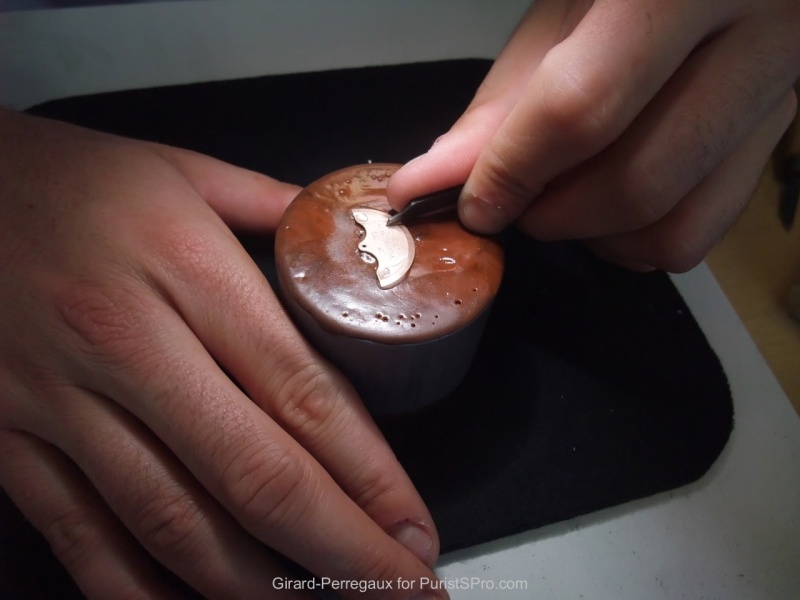
Chisels are used to create the engravings on the rotor and dial of the watch.
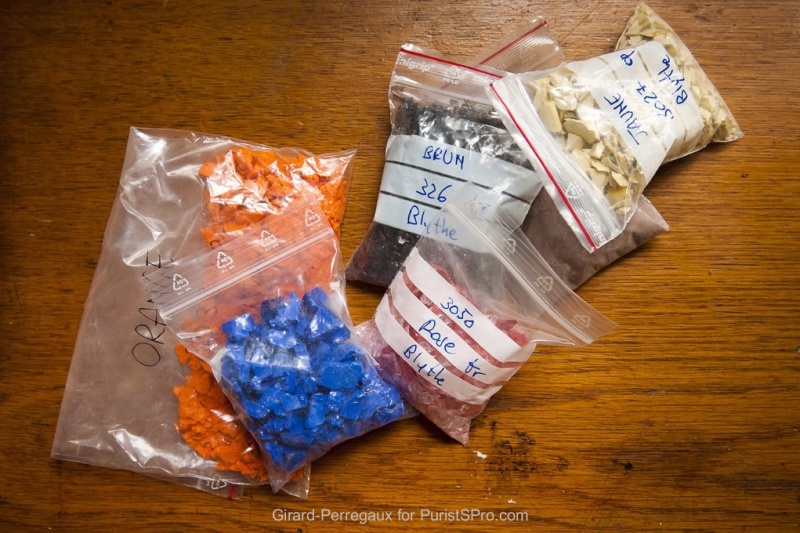
Raw
enamel is mixed with metal oxides to create various shades. The
traditional process of enameling is equal parts art and science. A
master enameler develops a feel for the enamel over time after years of
practice. They learn how different enamels react to different firing
temperatures and conditions. The complexities of the chemical reactions
inherent in the traditional enameling process ensure that each dial is
truly a piece unique.
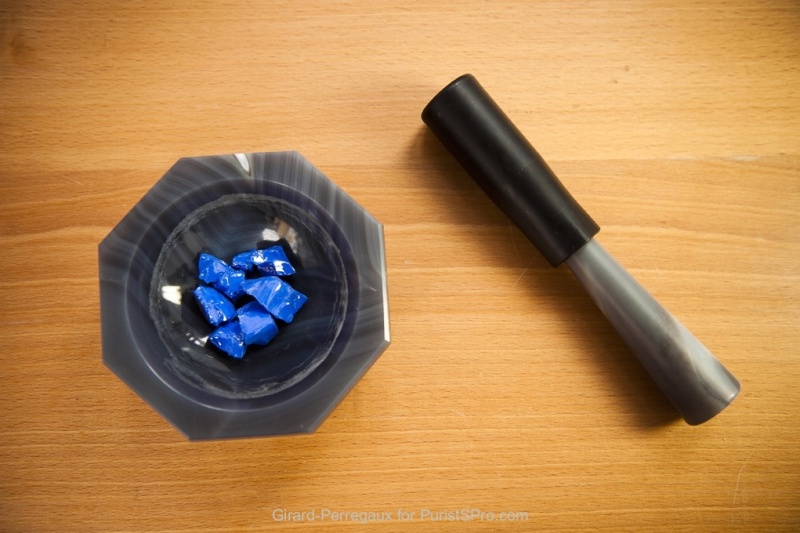
Preparing the enamel the old-fashioned way involves some elbow grease!
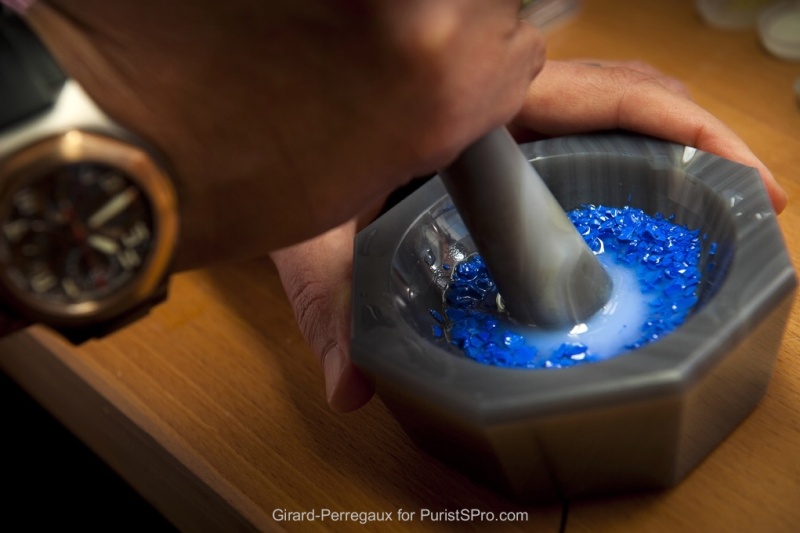
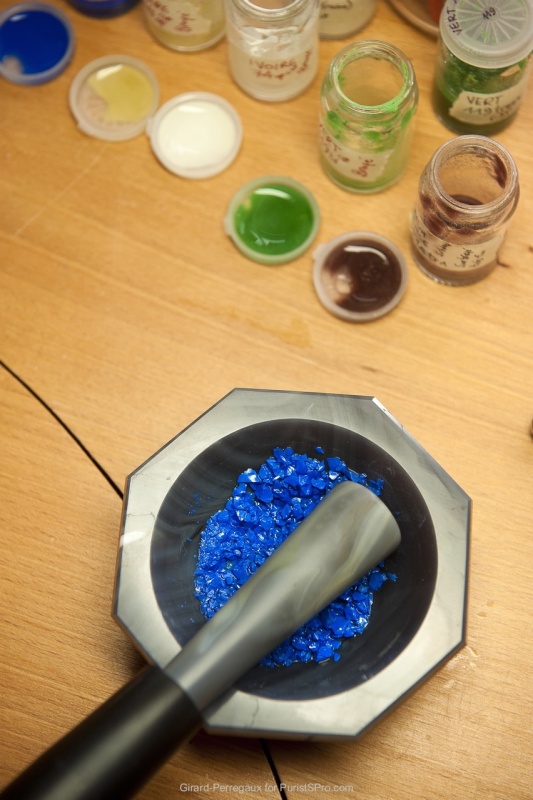
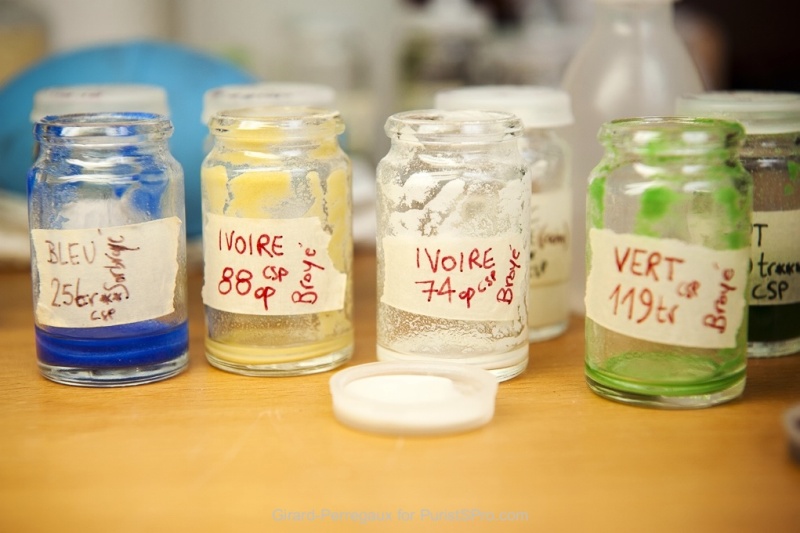
Tinting enamel is challenging, but several colors can be created -- some in eye-popping shades.
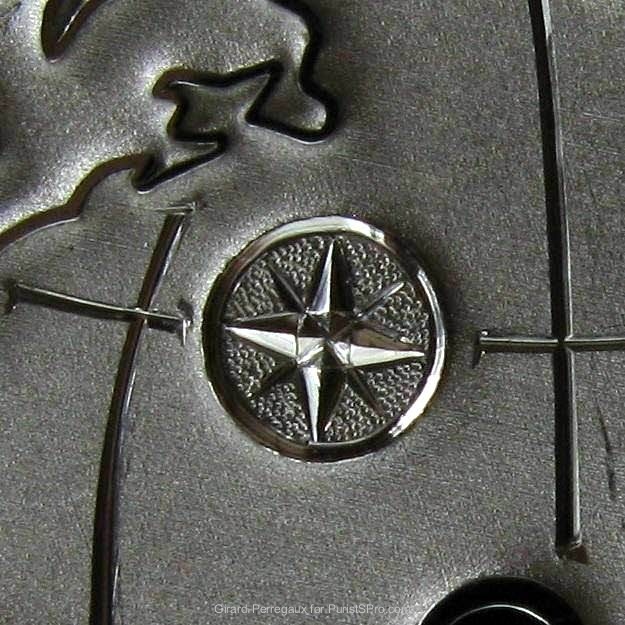
The
contours of the map are engraved on an unprocessed plate of white gold,
while the compass rose, showing the eight directions of the wind and
measuring no more than 3 mm, is hand-sculpted by a craftsman-engraver.
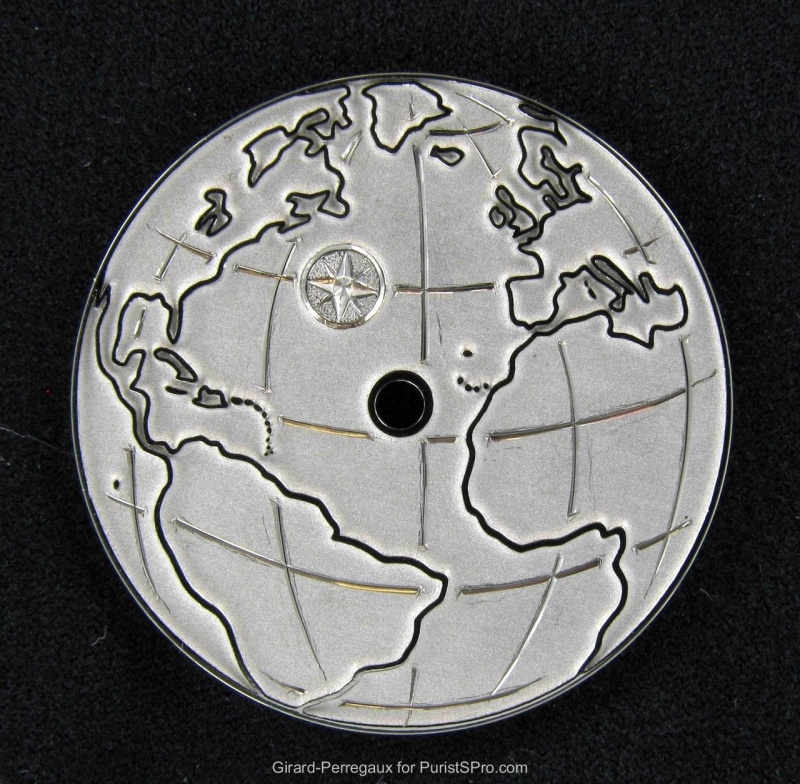
The liquid green and blue enamel is laid into the cavities using a brush.
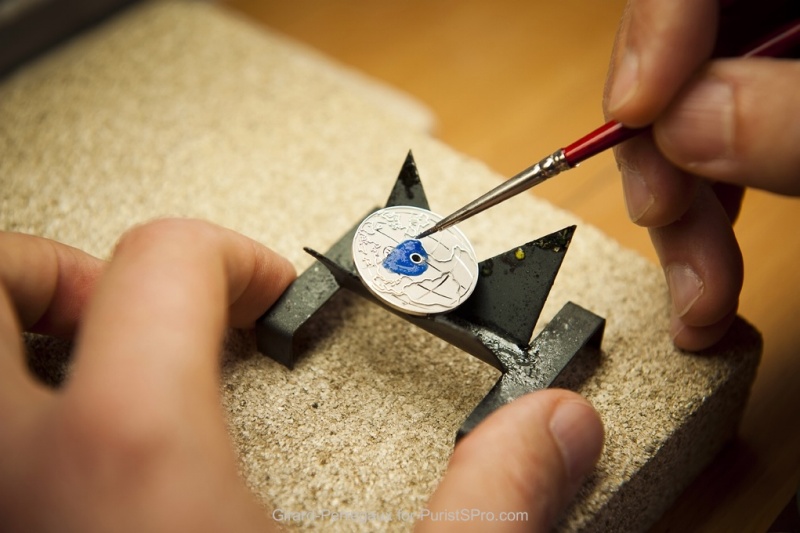
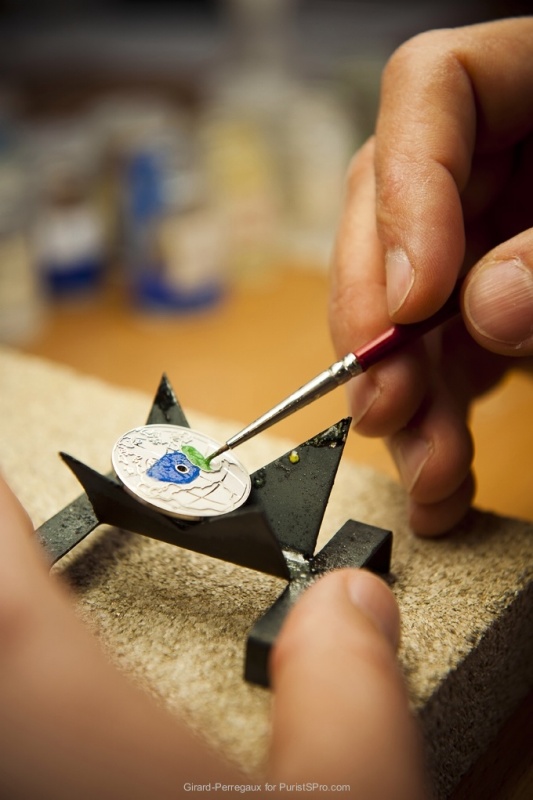
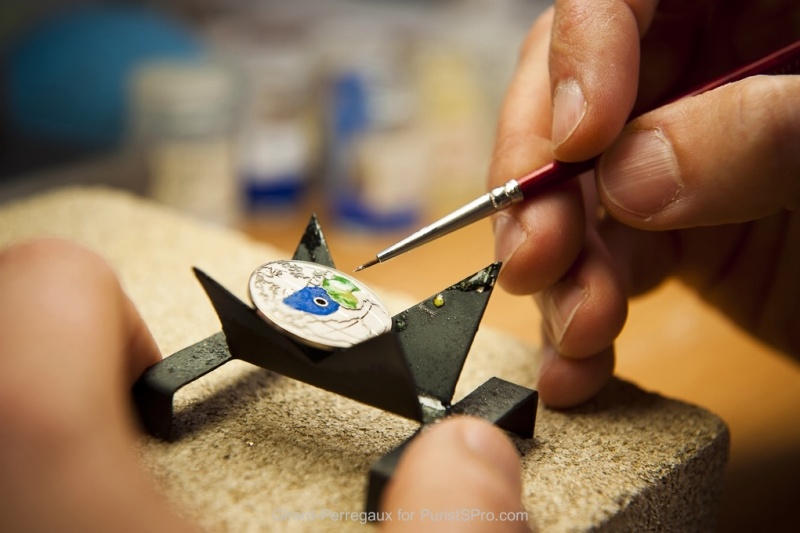
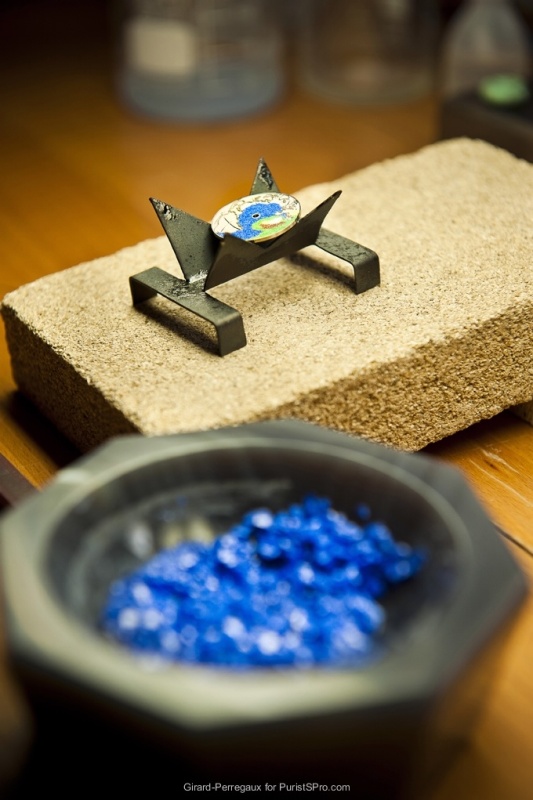
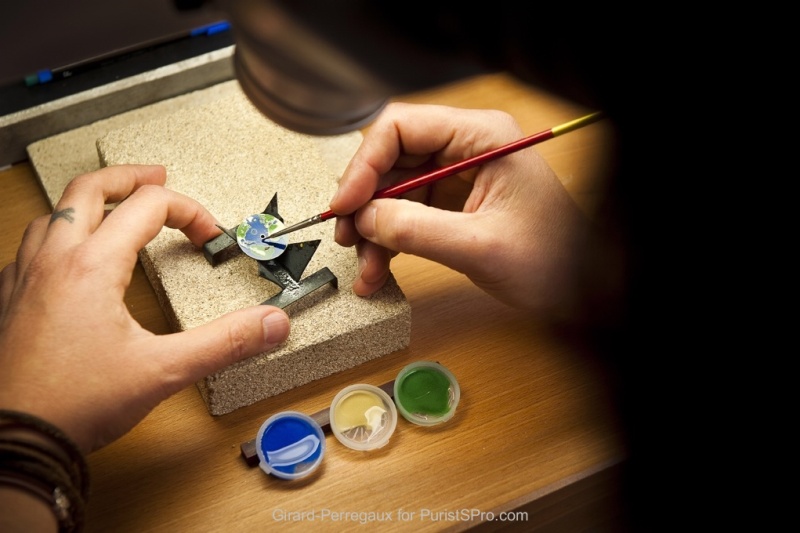
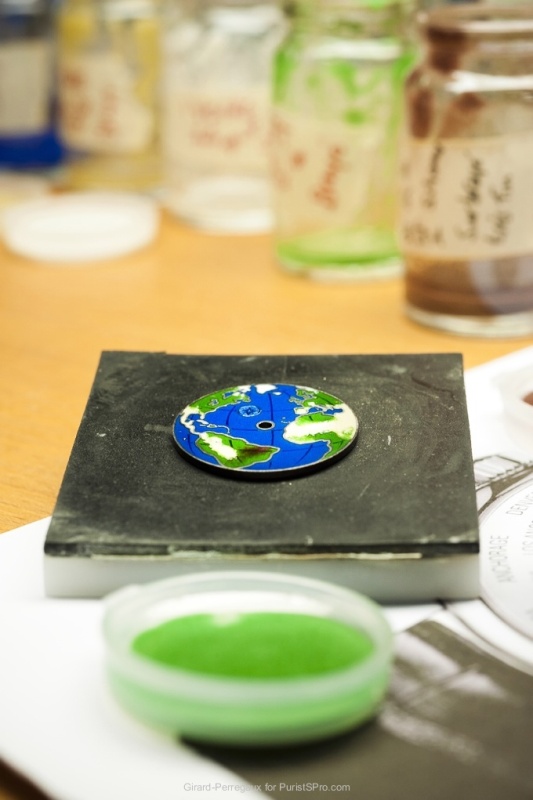
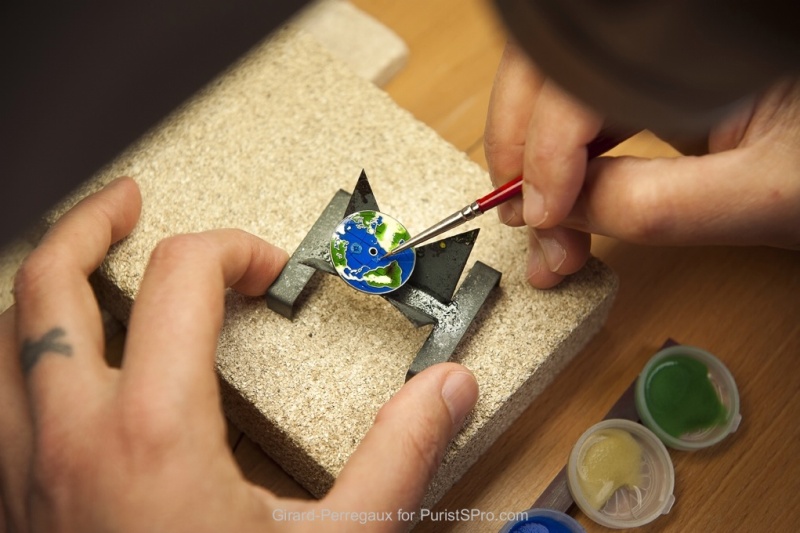
Next comes the firing, timed to the minute in a furnace at 800°C, to create the magic of vitrification.

After cooling, the excess enamel is removed by vigorous sanding using a hard stone and water.

The
dial is then manually polished with a diamond file, before a last
firing called "Dorure" or gilding adds shine and reveals the enamel’s
full splendor.

The
Harrisons' journey is delicately indicated on the dial by a trace of
silvered powder stretching from England to Jamaica, and back again.
Echoing the dial's color scheme, Portsmouth and Port Royal are
highlighted in royal blue on the cities ring, which is activated by the
white-gold crown and engraved with the GP logo at 9 o’clock. Universal
time, as distinct from local time, can be instantly read from the
blue/white hours ring using the rhodium-plated leaf-shaped minutes
hand. The hands are also subtly skeletonized. The alternation of
satin-brushed and polished finishes on the white-gold case adds a sense
of finesse, beauty, and proportion.
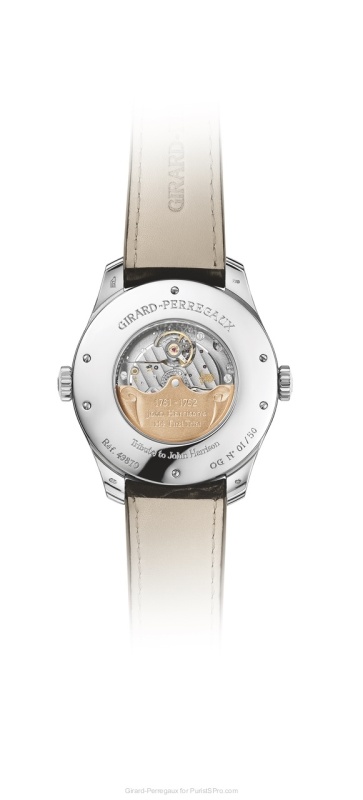
The
transparent case-back reveals the Girard-Perregaux 033G0 automatic
caliber, which is widely recognized for the excellence and reliability
of its construction. It is fitted with a coupling mechanism that
activates the bi-colored ring indicating the time in 24 time zones. As
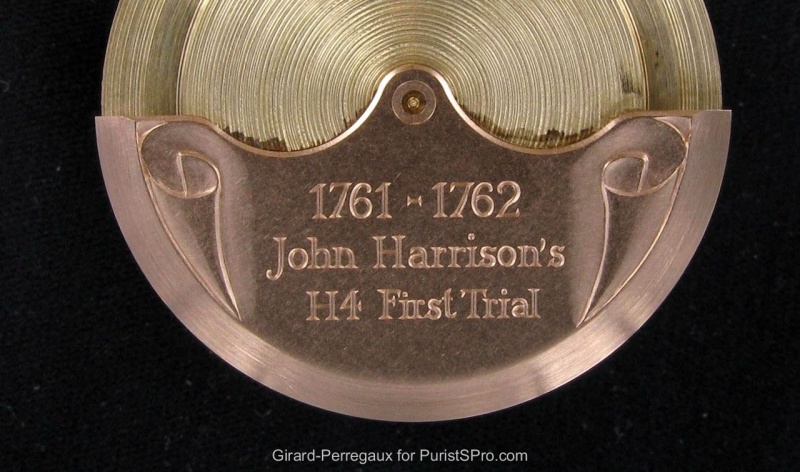
a tribute to this fabulous journey in watchmaking history, the
pink gold oscillating weight is engraved with a parchment bearing the
dates on which the H-4 started and finished its Atlantic crossing.
The ww.tc John Harrison is available in a limited series of 50 individually numbered timepieces.
 Technical specifications for World Wide Time Control John Harrison limited edition (ww.tc John Harrison):Case in white goldDiameter: 41 mmHeight: 11 mmCrystal: antireflective sapphireCase-back: sapphire crystal, secured with six screwsWater resistance: 50 metresDial in champlevé enamelGirard-Perregaux GP033G0 movementMechanical with automatic windingCalibre: 11 ½ ’’’Frequency: 28,800 vibrations/hour (4 Hz)Jewels: 26Power reserve: minimum 46 hoursFunctions: hours, minutes, display of world times with day/night indicatorBlack alligator strapFolding clasp in white goldThank
you to our friends at GP for providing the lovely making-of photos
detailing the creation of the hauntingly beautiful champlevé enamel dial
on this piece. I'm actually not a world timer fan, but this dial is
STUNNING! If I was in the market for a world timer for my collection,
this would definitely be it.
Technical specifications for World Wide Time Control John Harrison limited edition (ww.tc John Harrison):Case in white goldDiameter: 41 mmHeight: 11 mmCrystal: antireflective sapphireCase-back: sapphire crystal, secured with six screwsWater resistance: 50 metresDial in champlevé enamelGirard-Perregaux GP033G0 movementMechanical with automatic windingCalibre: 11 ½ ’’’Frequency: 28,800 vibrations/hour (4 Hz)Jewels: 26Power reserve: minimum 46 hoursFunctions: hours, minutes, display of world times with day/night indicatorBlack alligator strapFolding clasp in white goldThank
you to our friends at GP for providing the lovely making-of photos
detailing the creation of the hauntingly beautiful champlevé enamel dial
on this piece. I'm actually not a world timer fan, but this dial is
STUNNING! If I was in the market for a world timer for my collection,
this would definitely be it.
Hope you enjoyed this glimpse into the life of John Harrison and the new watch that bears his name.
Cheers,
Daos
This message has been edited by dxboon on 2011-06-08 10:23:30 


