Foversta's comprehensive report from SIHH 2012 provides an in-depth look at Girard-Perregaux's collection, marking a pivotal moment for the brand as it prepared to transition to Baselworld. This article explores GP's strategic shift and showcases key novelties, including the 1966 collection, the Annual Calendar Equation of Time, and the Laureato Tourbillon with Three Spinel Bridges, offering valuable insights into the brand's direction under PPR ownership.
As you know, GP presented this year its latest collection in the context of the SIHH. The decision to move to Baselworld in 2013 is absolutely not surprising, Sowind being now a subsidiary of PPR. If I regret this decision for personal reasons (nothing can replace the SIHH organization), I believe it is the right decision for the future of GP. In a sense, the presence at the SIHH is perfect for brands which already have the right level of recognition and visibility. SIHH is very selected fair which can be visited only with an invitation and I think that GP needs something else now, in order to reach a larger audience not in terms of customers but in terms of image. Moreover there is a sort of effervecence at Baselworld which makes communication between the staff of the brands easier and this can be also favourable to GP. More people will understand why GP is one of the top Manufactures in the world.
But before moving to Basel, there was a 2012 collection and this collection was very important, being the first "PPR" one. It was a very comprehensive collection exploring all the sides of the Manufacture, from simple 3 hands watches to a striking watch without forgetting uncommon Tourbillons. I propose to browse the watches I had the chance to see during my appointment at the GP booth, I will come back to some of them later this year.
Let's start by the 1966 collection. As I mentioned it in another post, I always found the "1966"name not the best to describe the purpose of the collection. 1966 is a year of innovation, of break-through with the high frequency movement. On the other hand, the 1966 collection symbolises the elegant and understated side of the Manufacture. Of course,if there is not any true opposition between these two dimensions, I would have chosen a more relevant name.
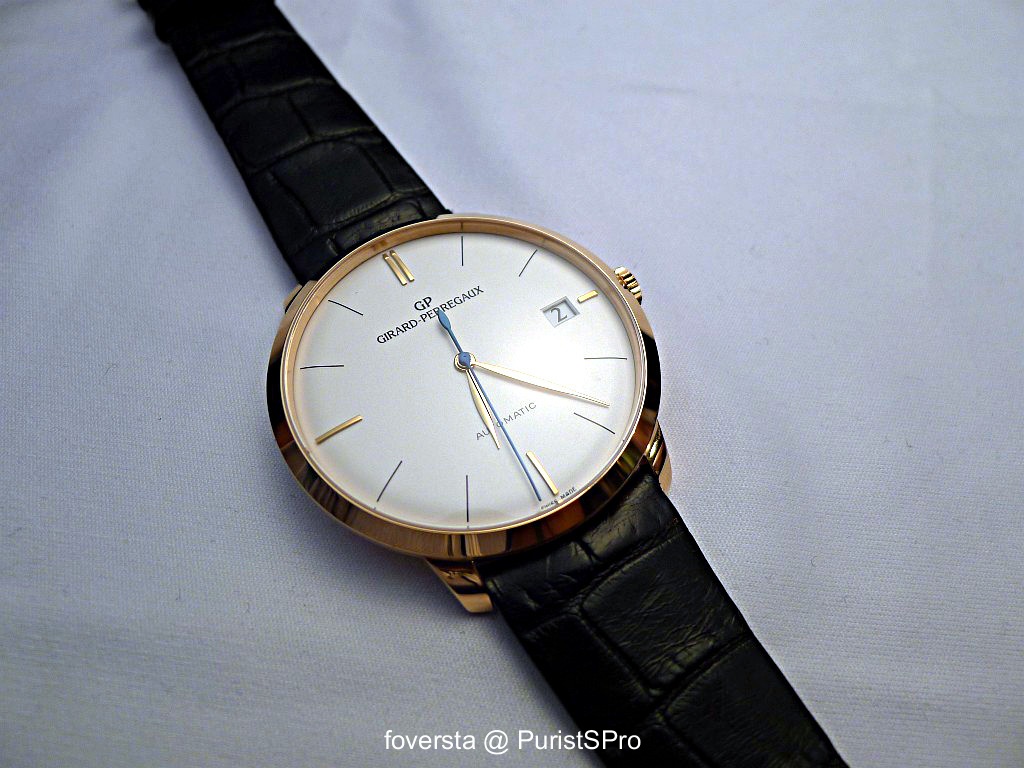
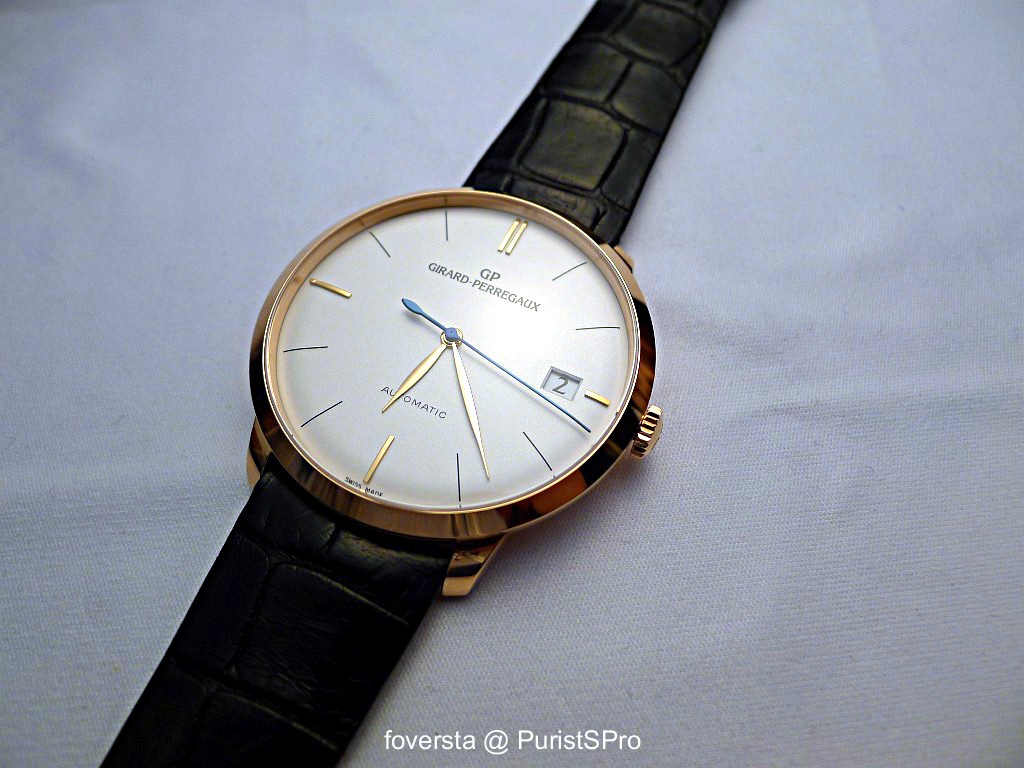
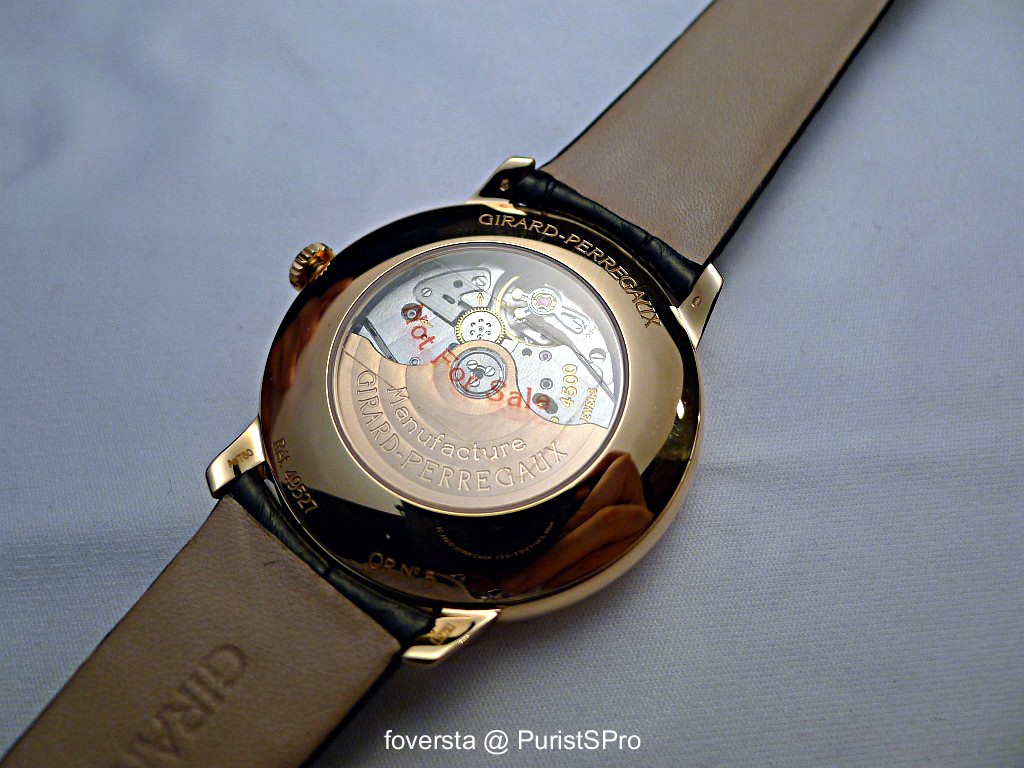
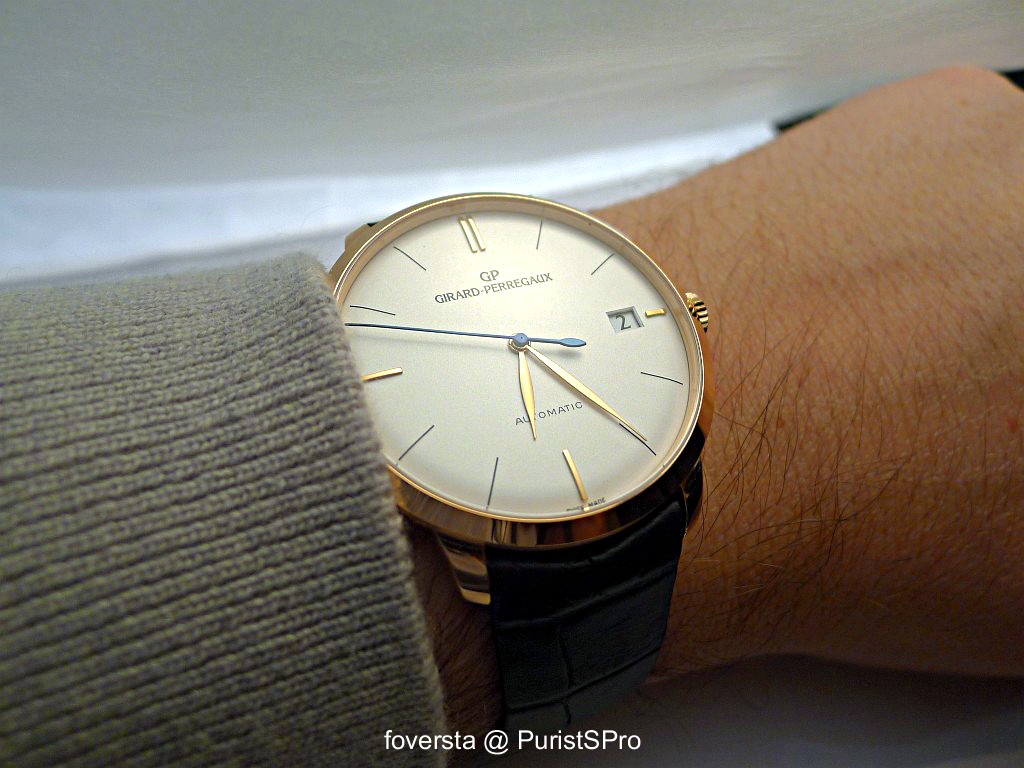
At first glance, you may think that this 3 hands 1966 is not a novelty. And you would be wrong! Because this watch is housing caliber 4500 which is larger (30,6mm) than the 3300 (26,2mm) used in the similar 38mm watch. The consequence is a larger case (sorry, I don't remember exactly the actual size) but the dial balance is preserved. The watch tends to be too big for my taste due to the thin bezel and the 38mm version was enough. Anyway, this enlarged version remains attractive and it is a very worthy way to enter GP world.
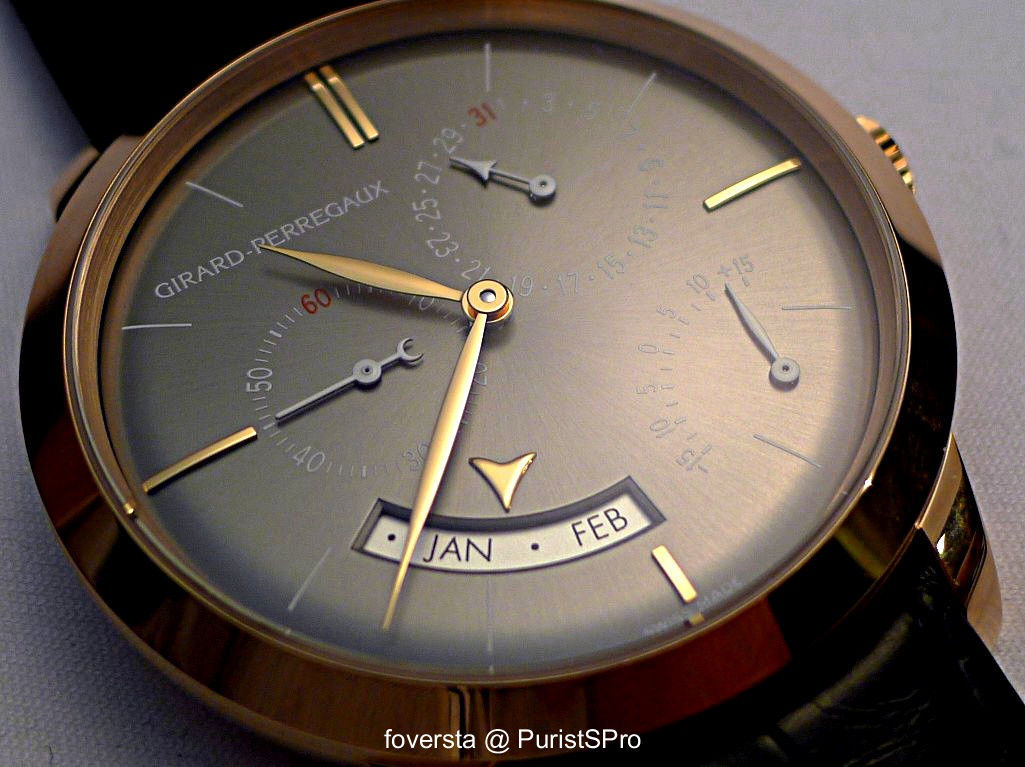
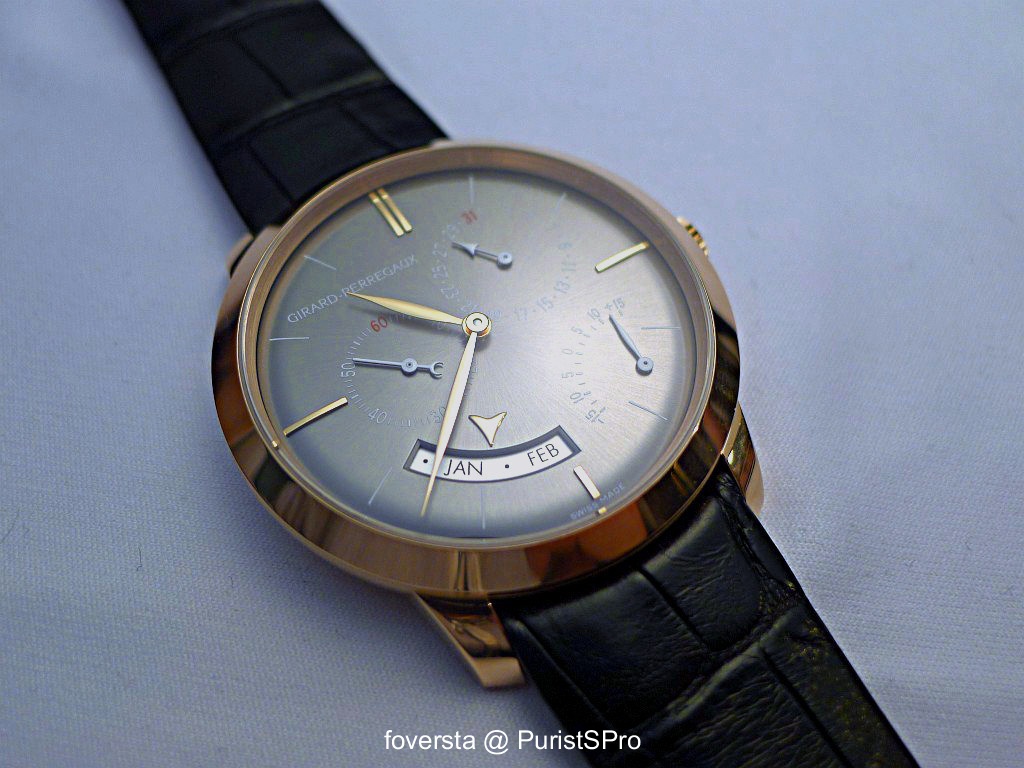
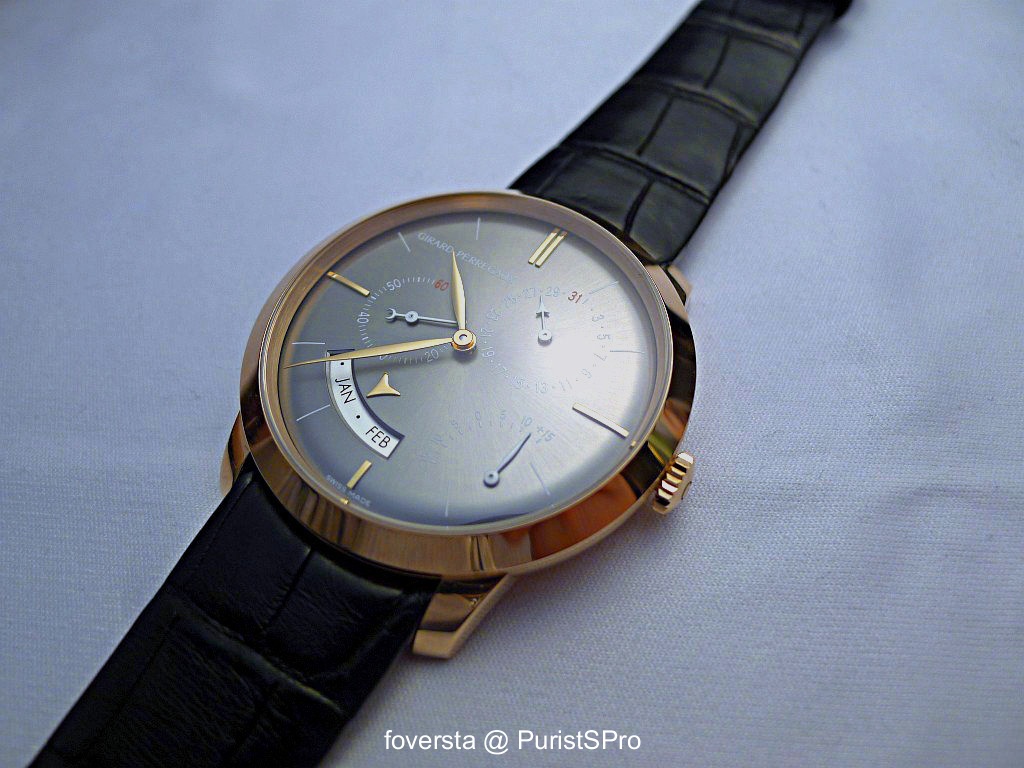
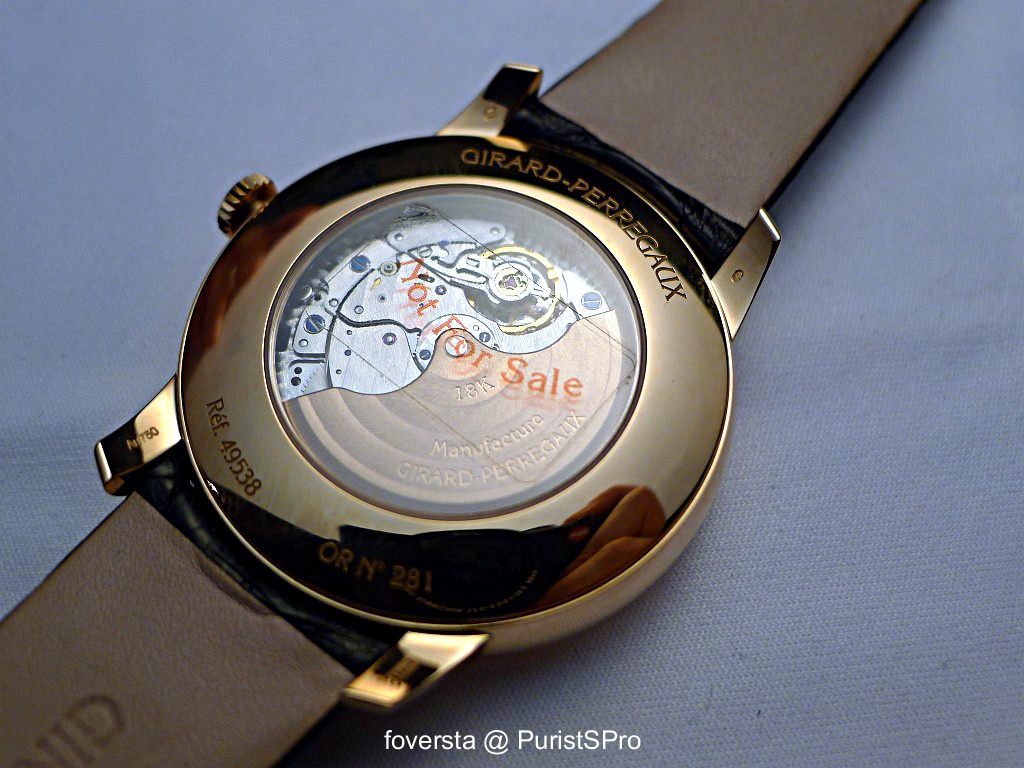
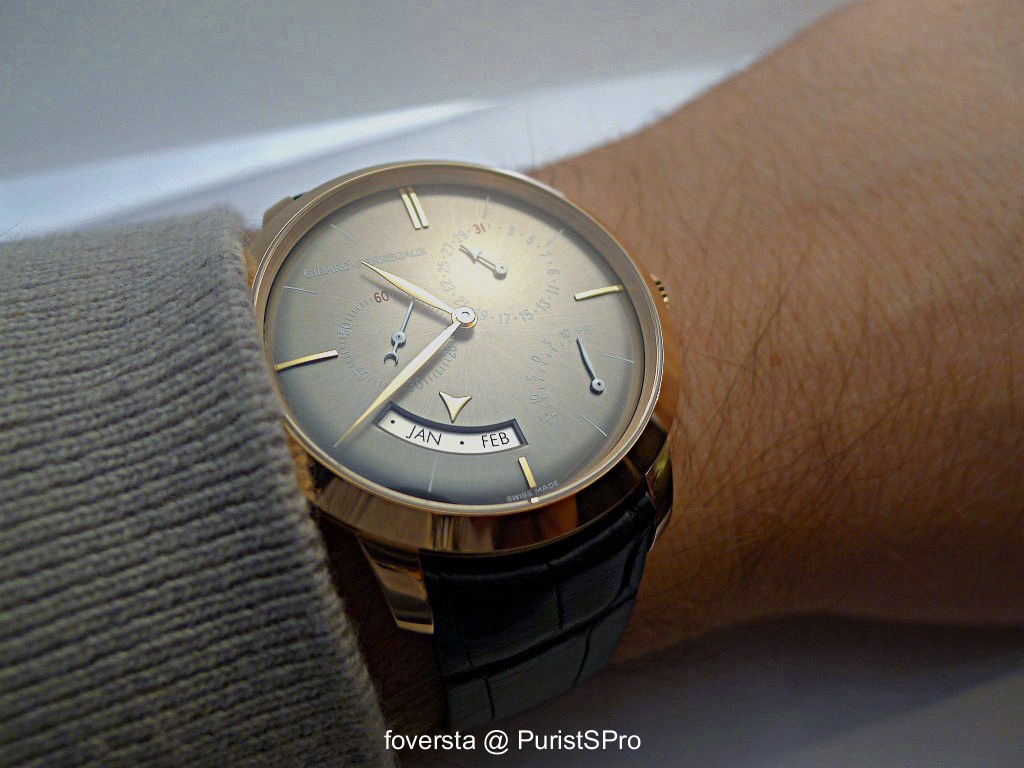
Maybe the most famous watch of the 1966 collection is the Annual Calendar / Equation of Time. Not because the watch is worn by the French president but thanks to its very clever and original dial lay-out. Forget the usual logic and very quickly the position of the different displays on the dial becomes very practical and brings a lot of pleasure at the daily use. The 2012 Annual Calendar and Equation of Time keeps its 40mm case but offers a new combo: pink gold case and slate dial. The watch becomes even more refined (the sunray finishings of the dial are really beautiful) and the months display is highlighted due to the higher contrast between the white months disk and the slate dial.
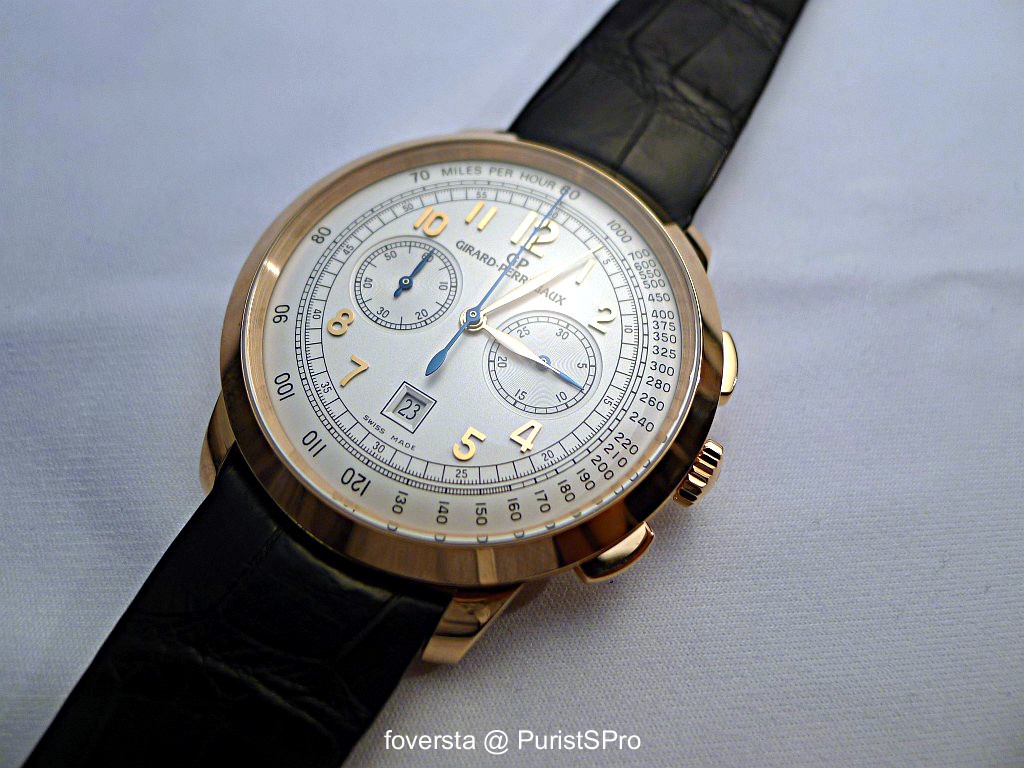
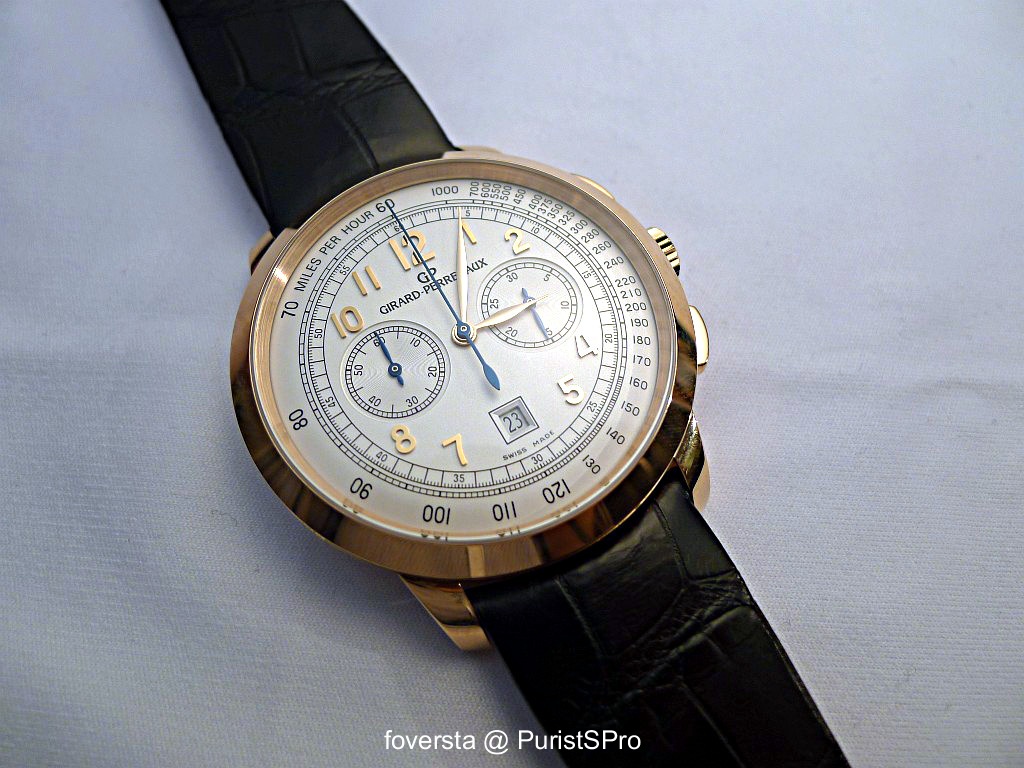
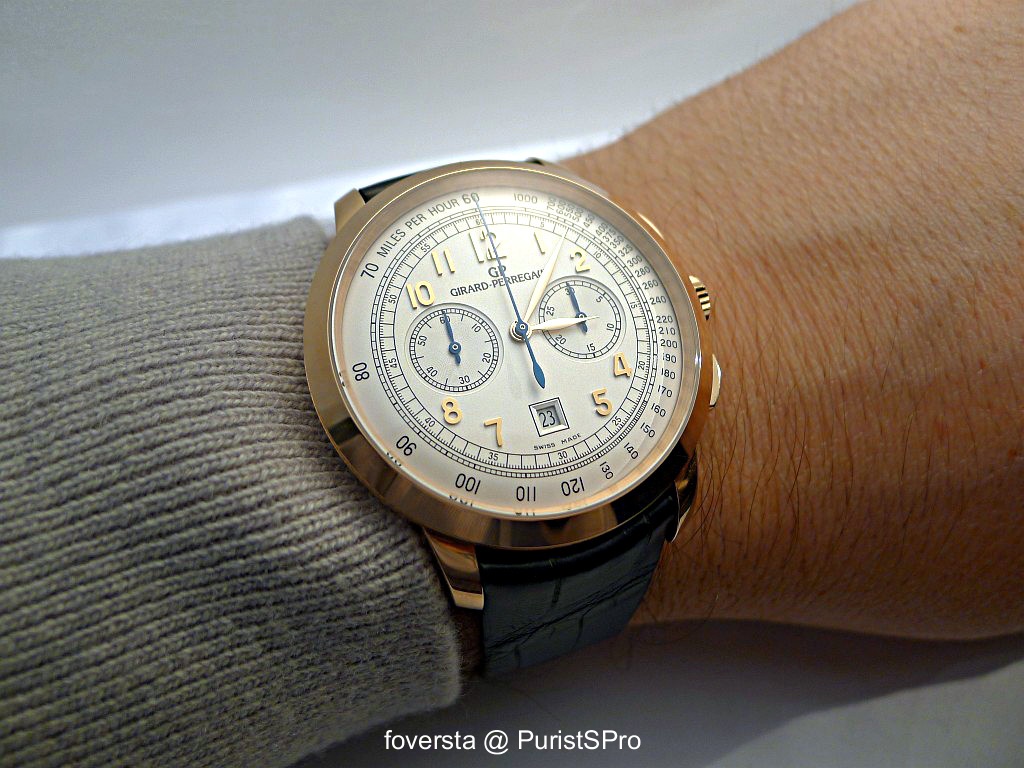
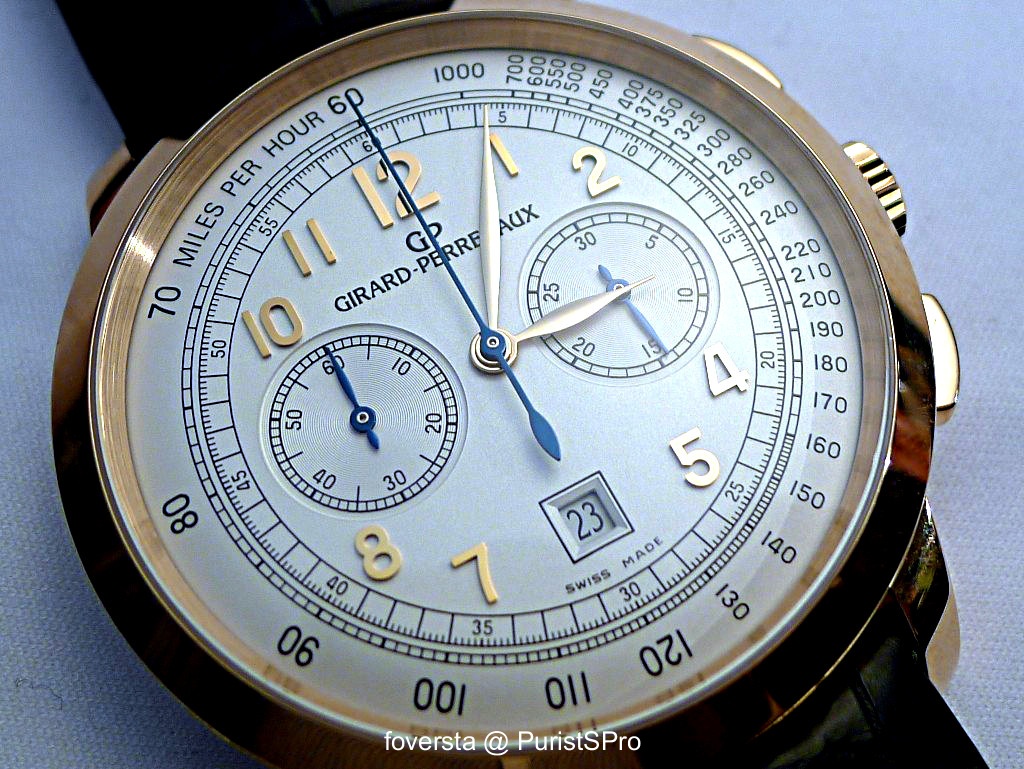
If with this watch, a pure aesthetical evolution was done, it is not the case with the 1966 chronograph because it gets an additional complication: a date window.
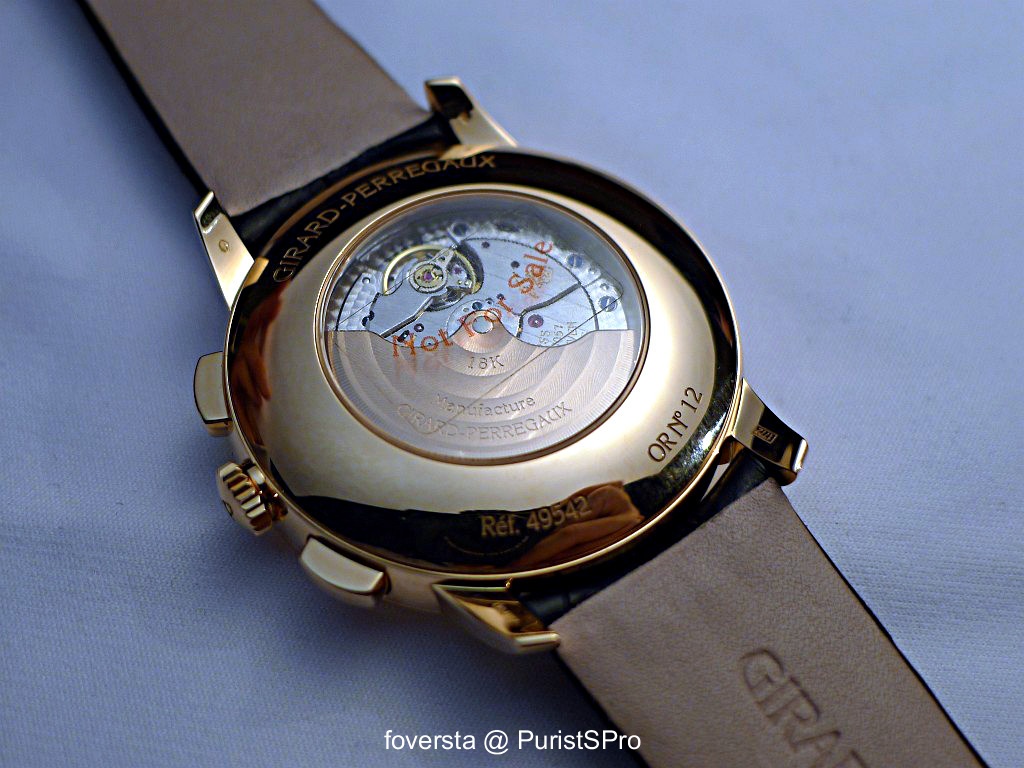
I already expressed my love for the dial of the 1966 chronograph. GP designers did a great job here again because the date window was well inserted on the dial even if it gives the proof that caliber and module are a bit lost in the case. I appreciated a lot the use of applied figures which give volume on the dial (they replace the indexes of the "no date" chronograph). This 40mm watch is a pure beauty with similar strengthes and weaknesses than the "no date" chronograph. Its main assets are its classic and elegant dial and the 1966 case. Its main weakness is the use of a modular caliber. If we turn over the watch, we discover the base movement and absolutely not an integrated movement. It is fairly disappointing for a Manufacture like GP but they work on this topic.
All these watches share in common the comfort of the 1966 case. Whatever are their diameters, the short and curved lugs make the case very comfortable on the wrist.
Now, let's discover the main novelty within the 1966 collection: the Minute Repeater.
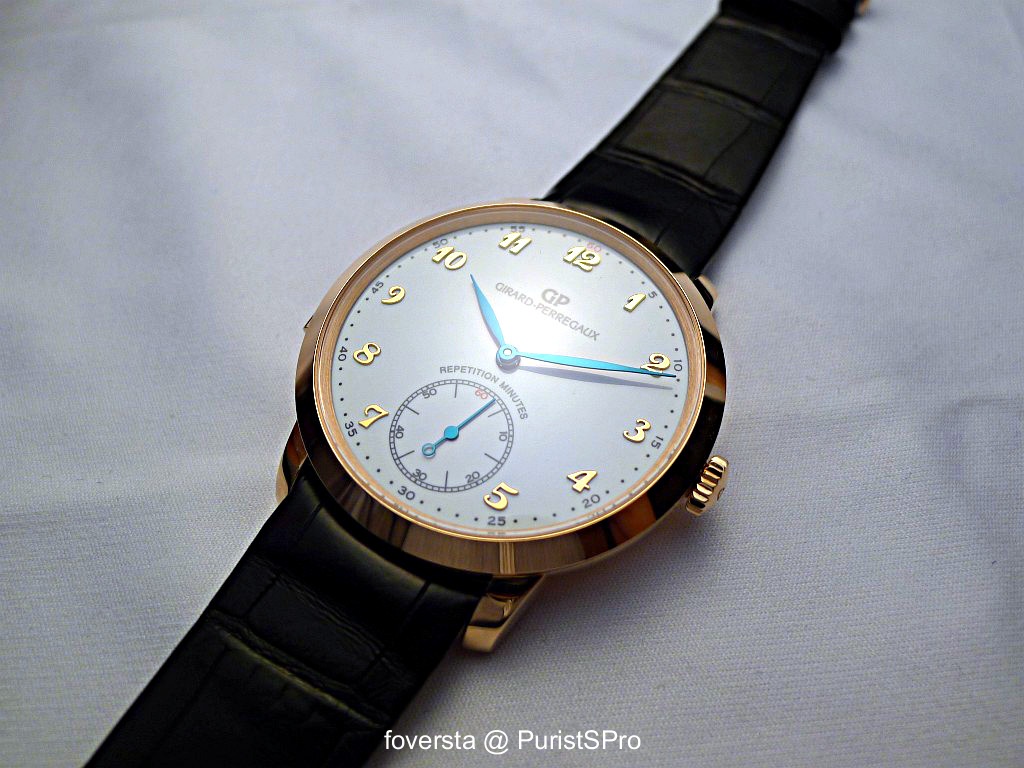
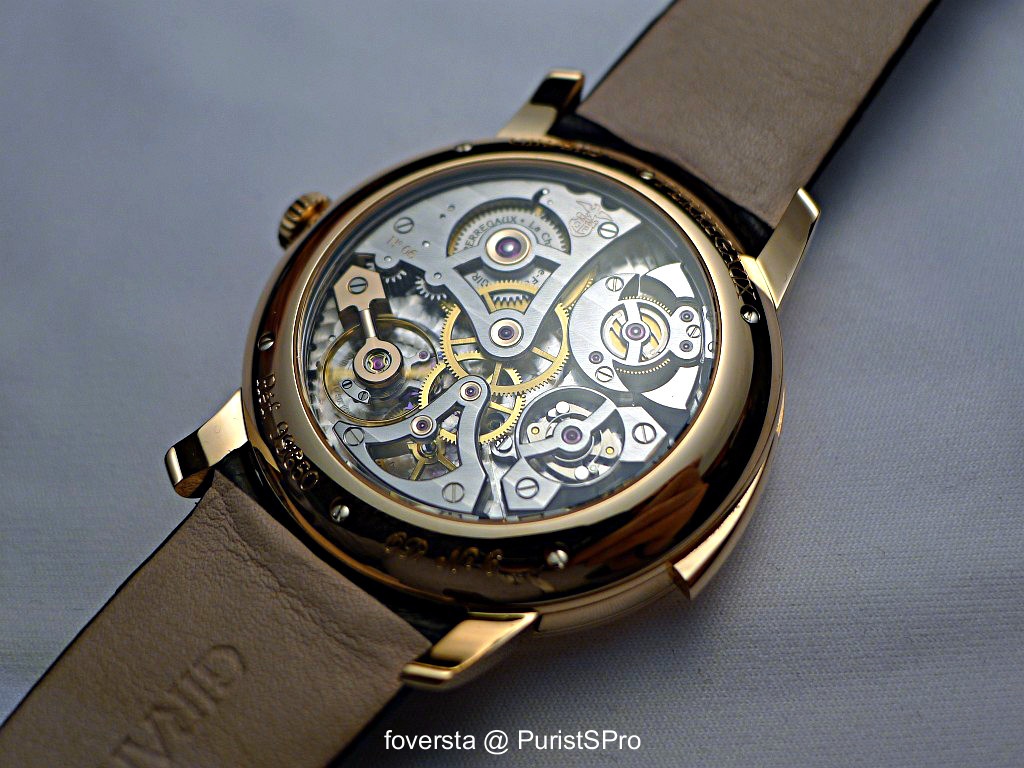
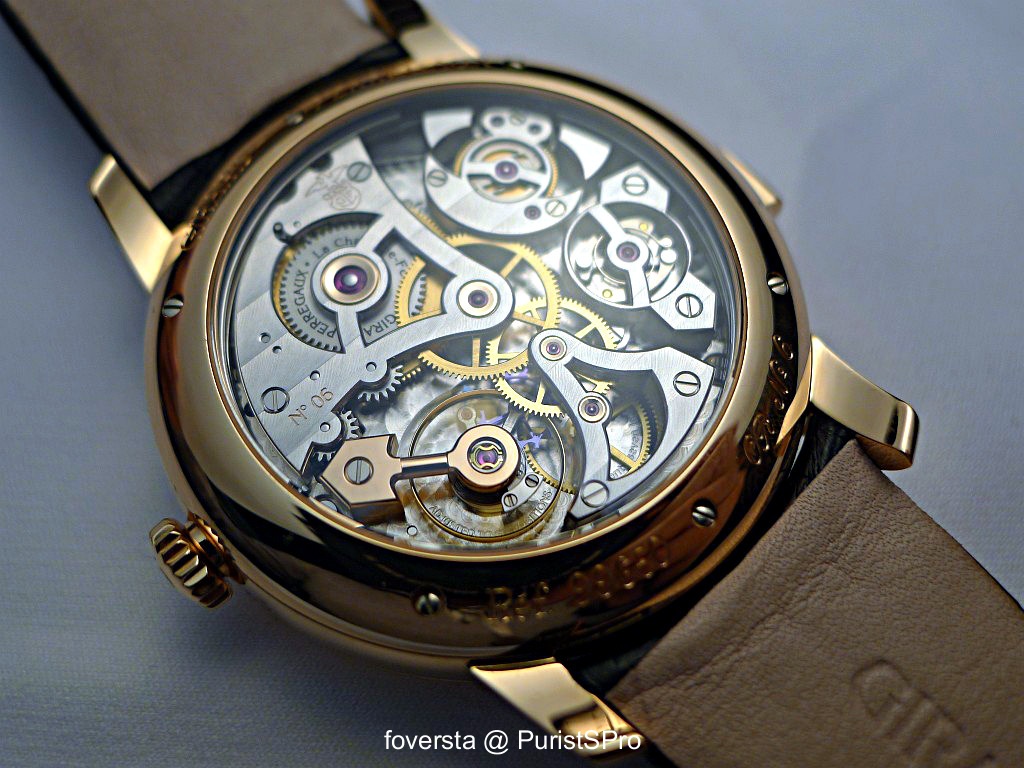
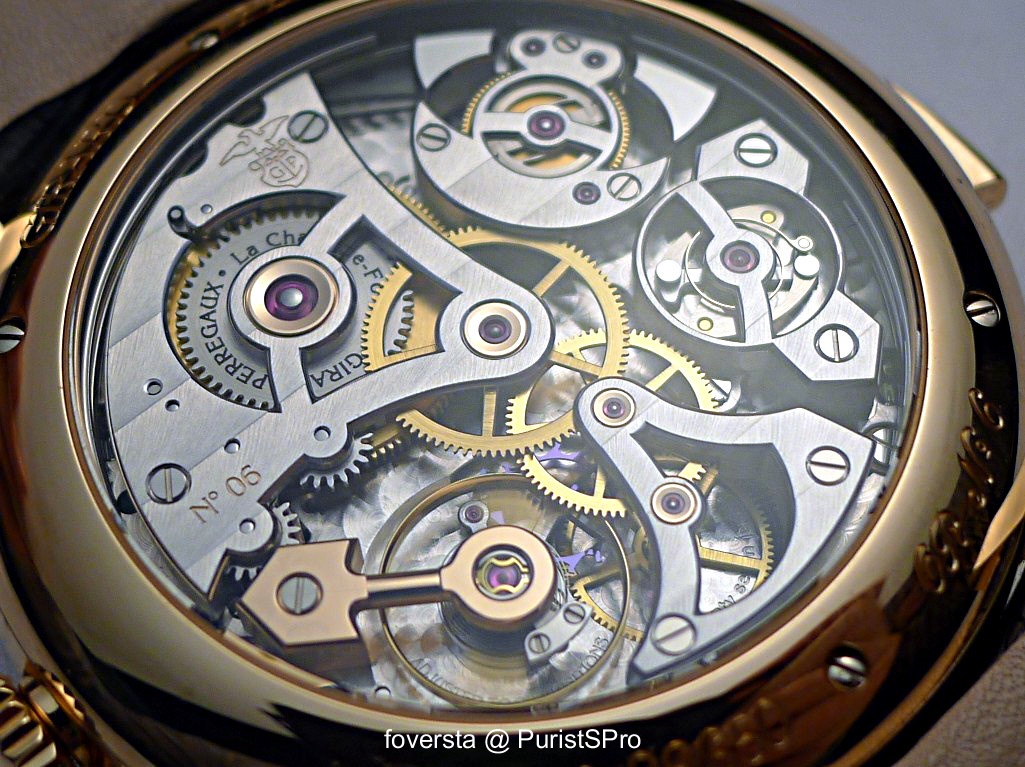
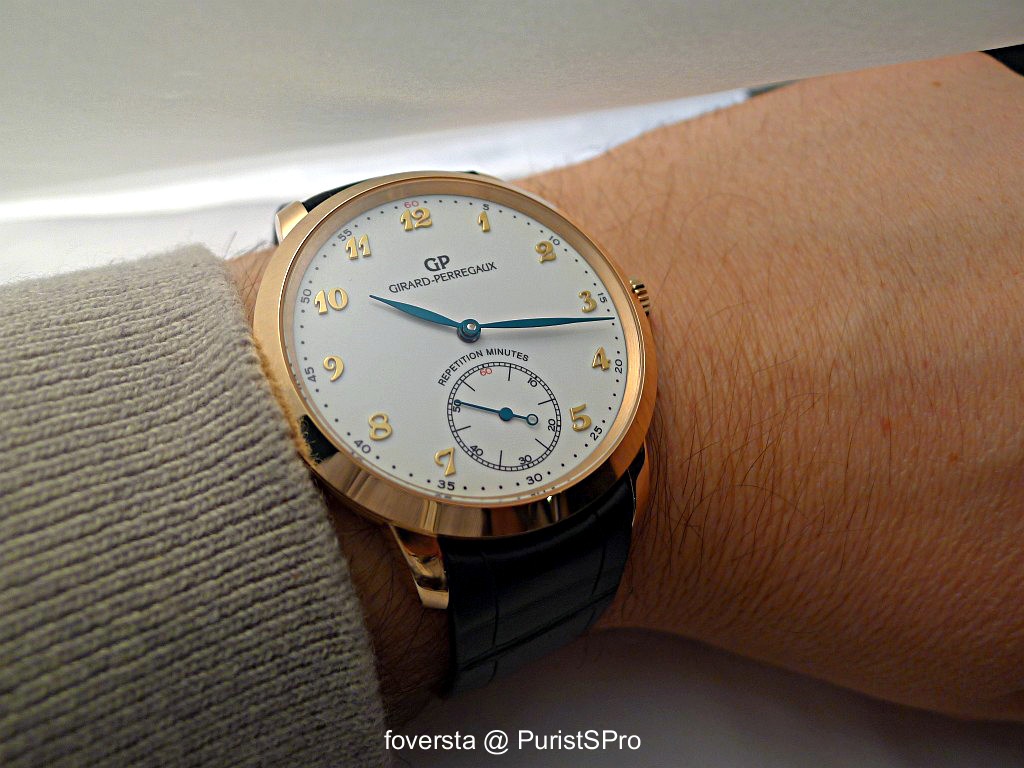
It is without any doubt a watch which was expected by GP fans as the 1966 collection has started to explore a wide range of complications. GP reputation on striking watches was strongly reinforced thanks to the 3 Opera and now the MR complication is housed in the 1966 case. Forget any reference with the Opera: the 1966 Minute Repeater strikes diffently from the Opera 1 or 2 and the caliber has nothing related with the Opera 1. Actually, the movement was developped by La Fabrique du Temps and if you compare it with the Louis Vuitton Minute Repeater, you will recognize a similar lay-out. But in the context of the GP, its finishings, its architecture is much more impressive.
Work on the movement was really outstanding and I would like to underline some features:
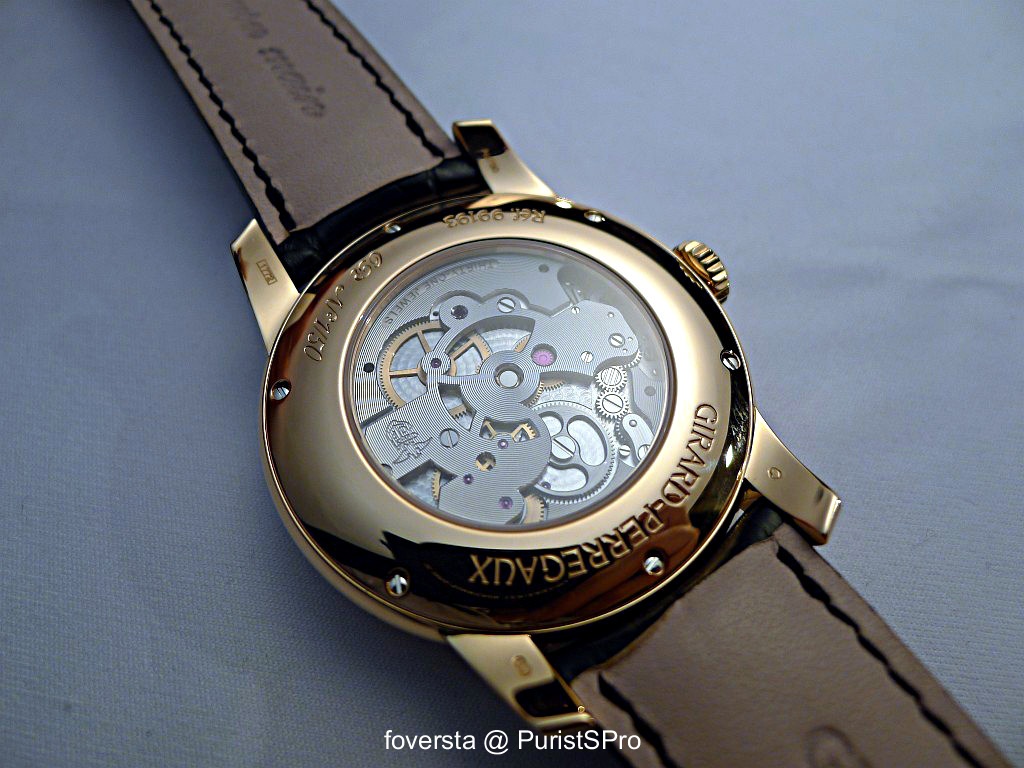
- first of all, the bridges were opened almost like a skeletonized finishing: the key parts of the movement are clearly visible and isolated. The visual result is truly eye-catching with a feeling of depth. Everything is visible from the backside: inertia wheel, countersprings, minutes rack, hammers... One of the most beautiful elements is the balance bridge inspired by the Tourbillon Gold Bridges. - second interest of this finishing style is the accessibility to these crucial parts to improve service and adjustment. - third interest is obviously sound purety. When the GP team made the watch strike, I was impressed by the "silence" around the MR notes. You don't hear the inertia wheel, the sound is very clear and pure which is a proof a great technical achievement.
Movement has a 3hz frequency and a power reserve of 100 hours.
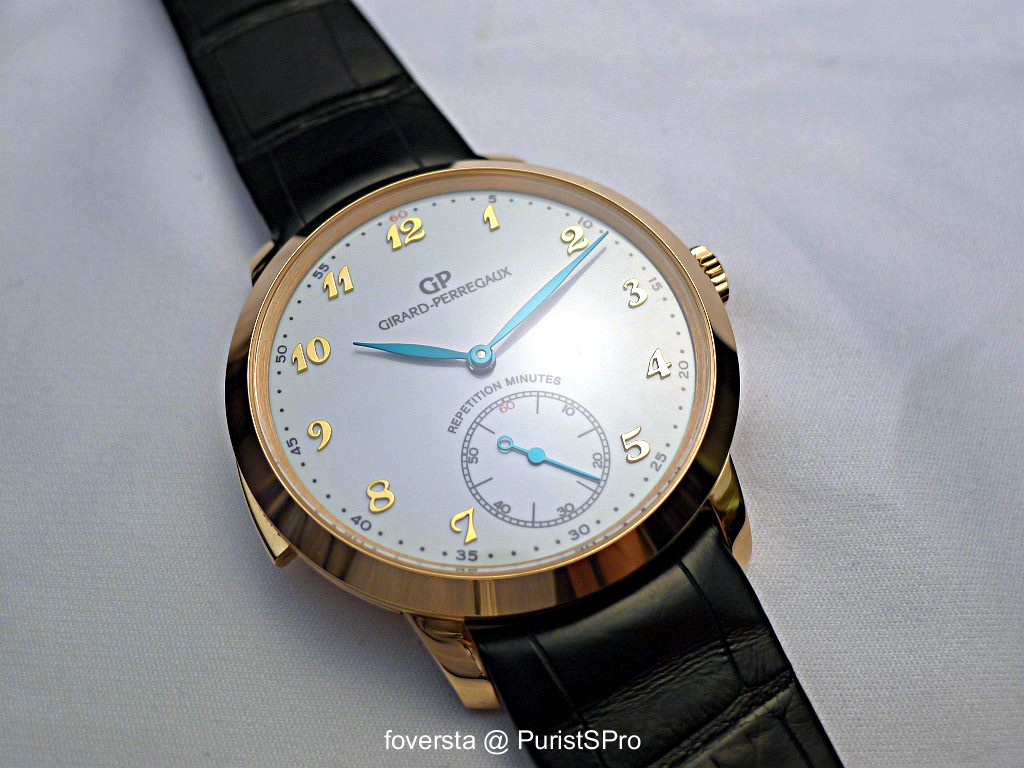
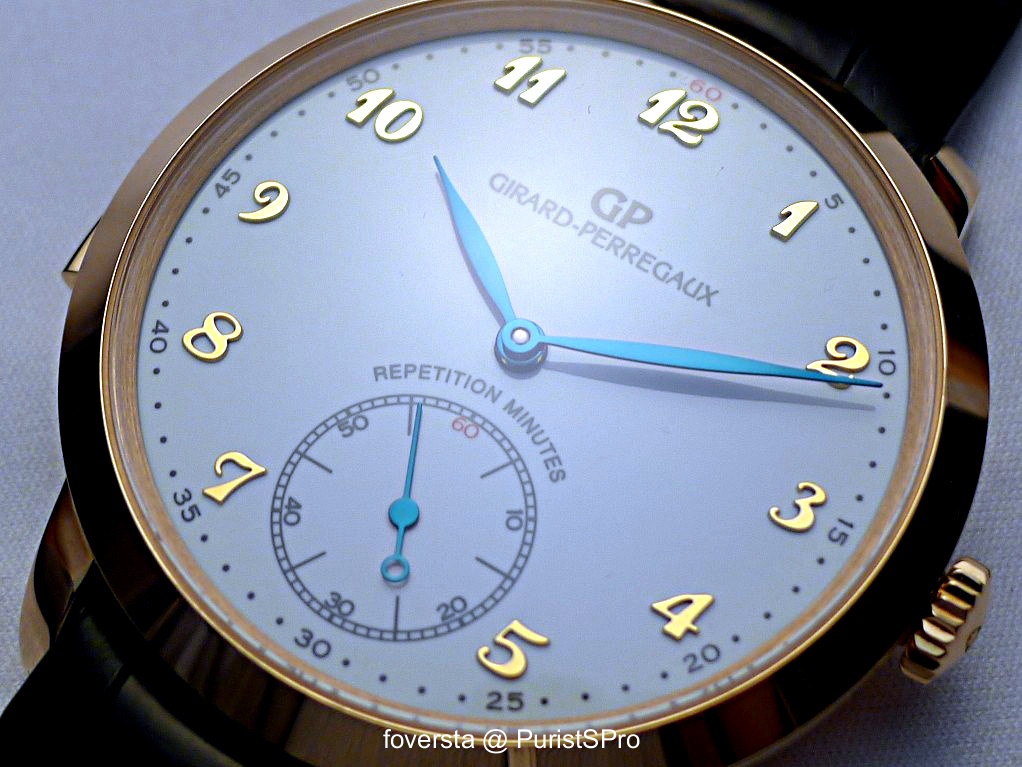
MR mecanism is launched through the sliding lever on the left side of the case. This lever is clearly visible and it is the reason why I would have prefered an enamel dial without the "Répétition Minutes" on it. Anyway, these two words remain quite shy and they don't spoil the dial balance. The enamel dial contributes a lot to the charm of the watch. It is perfectly balanced (see the small hand subdial) and the applied figures give volume. Combo between the blued hands and the dial is gorgeous.
Thanks to its shape, 42mm PG case gets the proper air circulation for a better sound propagation.
I was seduced by this watch thanks to its sound purety and the contrast between the quiet dial side and the luxurious and gorgeous movement. One of the top watches of the 2012 SIHH.
Enjoy the sound dial side:
And movement side:
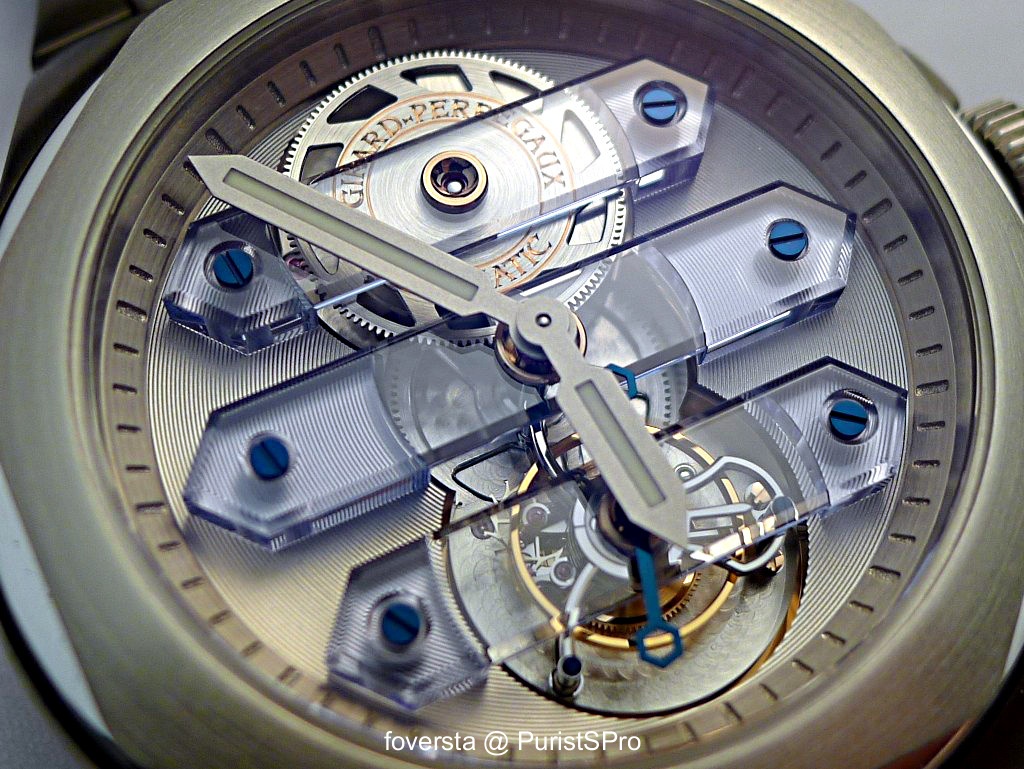
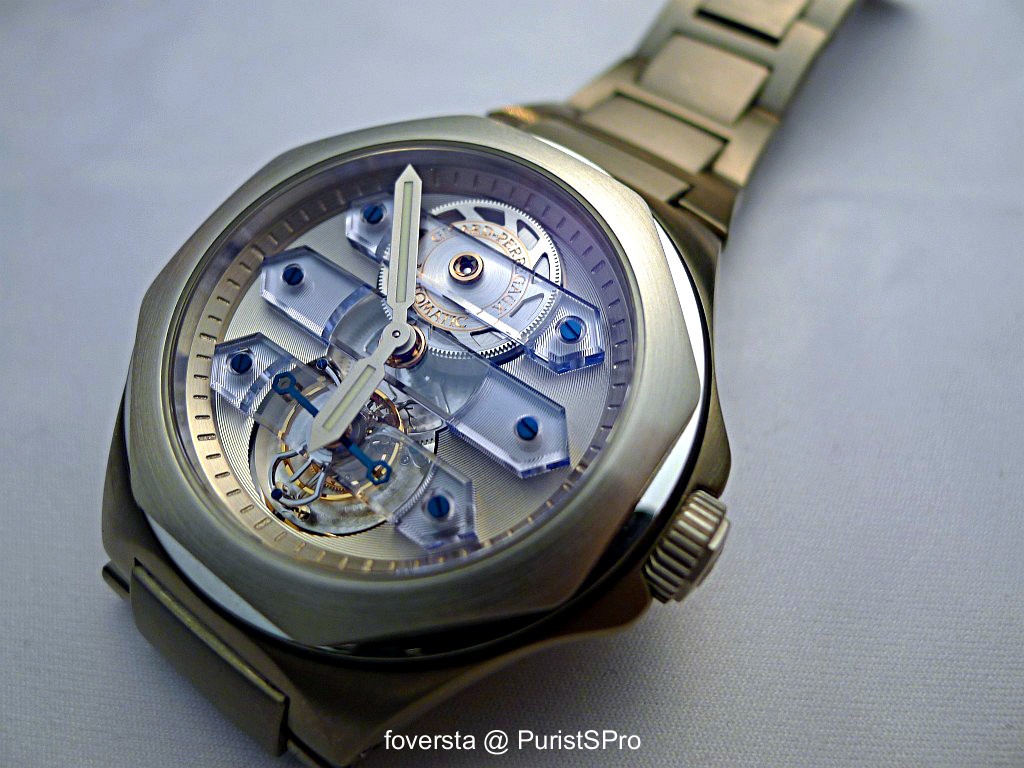
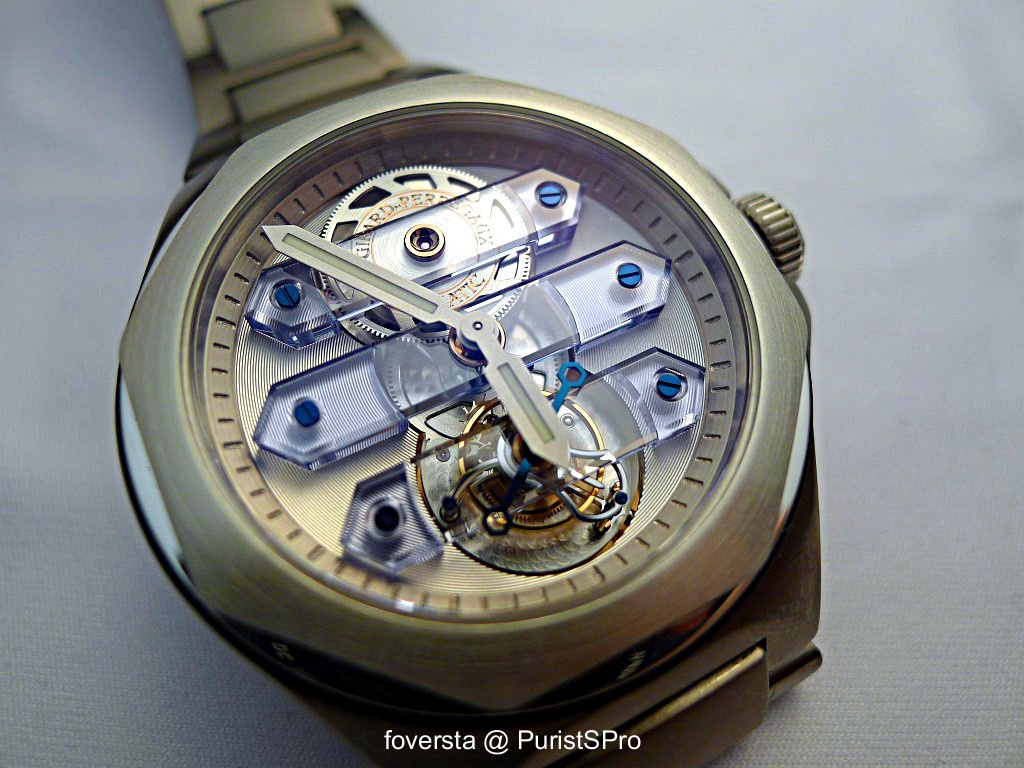
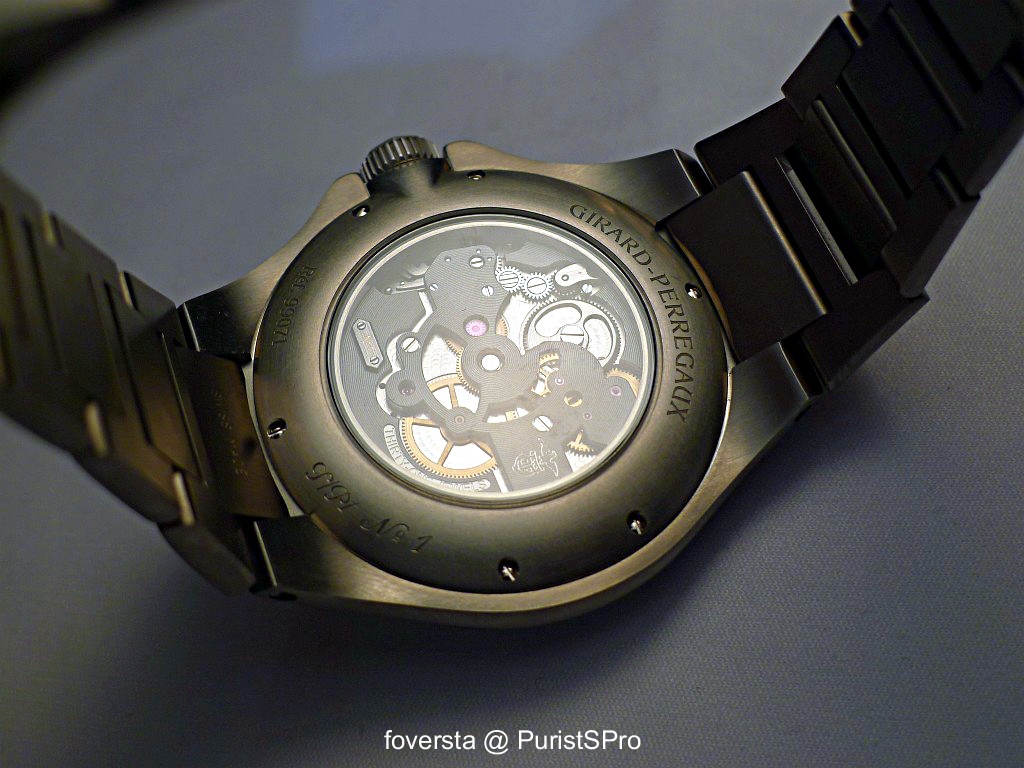
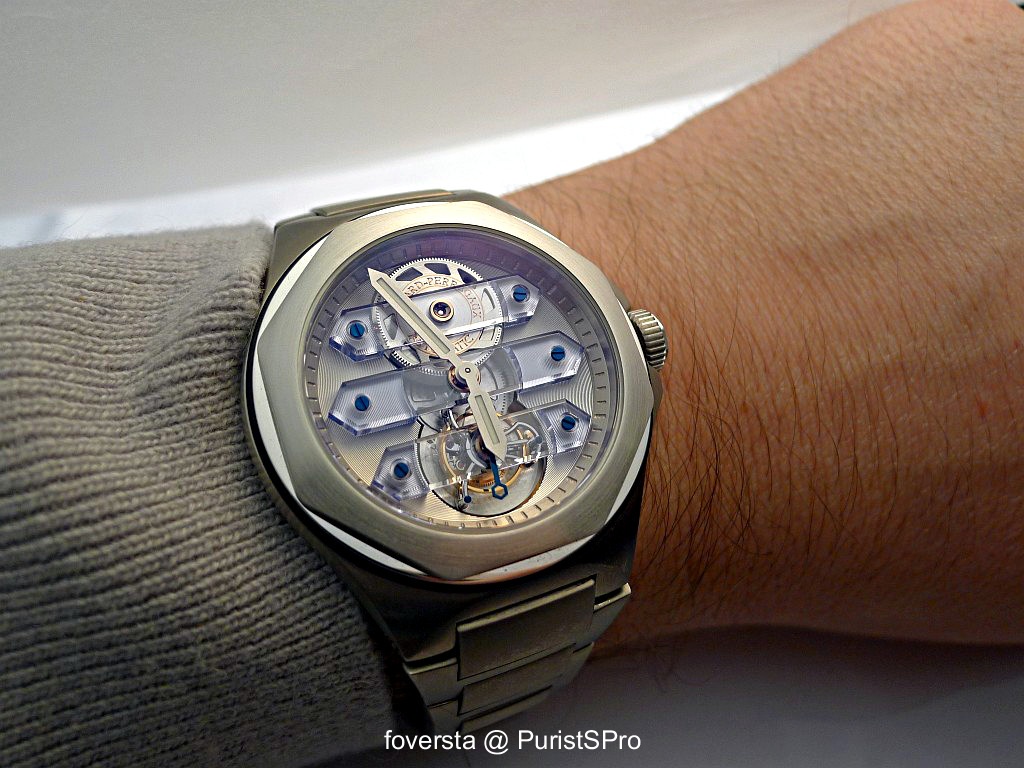
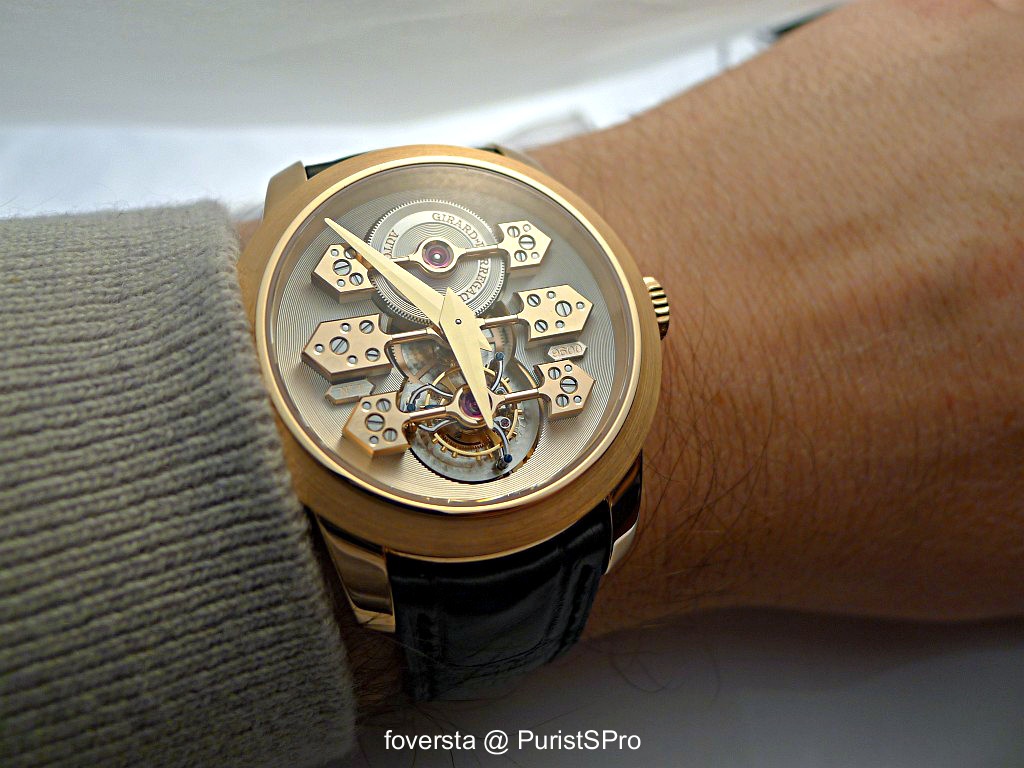
I spoke a few lines before about the Gold Bridges and their shapes. So let's discover now this new version of the Laureato Tourbillon with spinel bridges. I presented you several years ago the version with sapphire bridges but the very light blue shades of spinel makes the watch even more luminous. How can we describre it? The Laureato Tourbillon is for me a "Star-Trek" watch, I mean a futuristic watch coming from the past. It has a lot of charm and the Tourbillon, combined with the spinel shades defines an unusual atmosphere. When you move your wrist, the bridges seem to act like neon rods!
42,6 mm Titanium case with vertical satin-brushed finish makes the watch very comfortable on the wrist and the octogonal bezel, along with the bridges, enhance the geometric design of the watch.
Automatic movement has a power reserve of 48 hours and a 3hz frequency. As usual, the winding rotor is located dial side which allows to keep a handwind movement lay-out backside.
The dial is twice animated by the Tourbillon and the rotor: the Laureato Tourbillon is a living watch, almost live-wire!
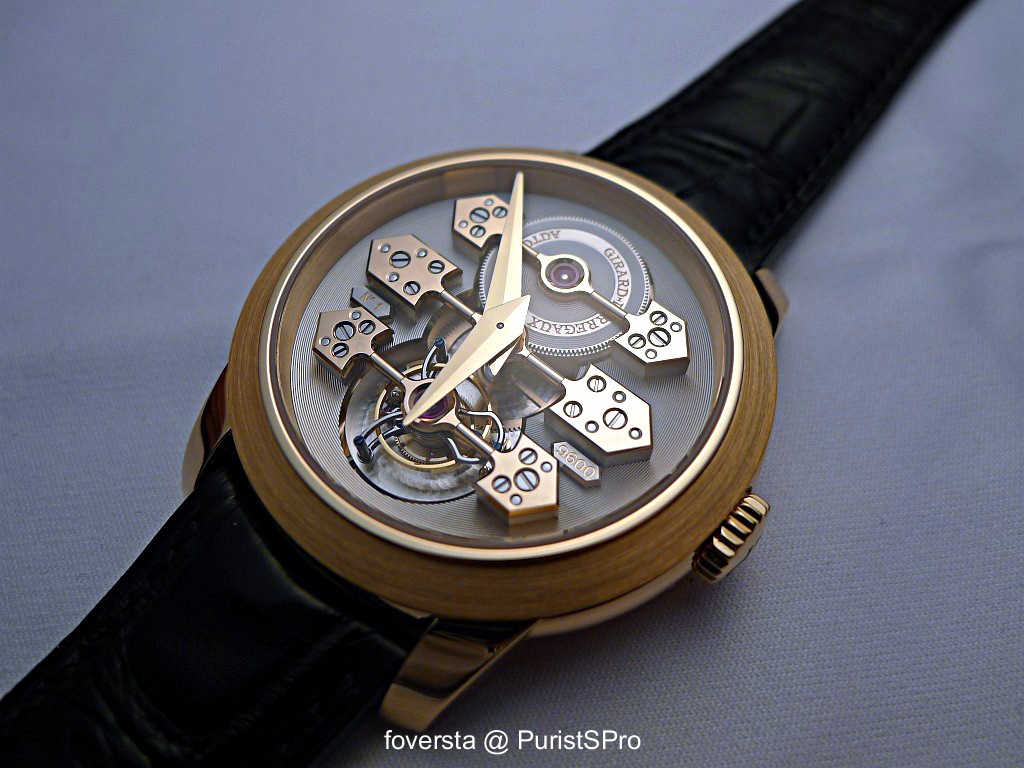
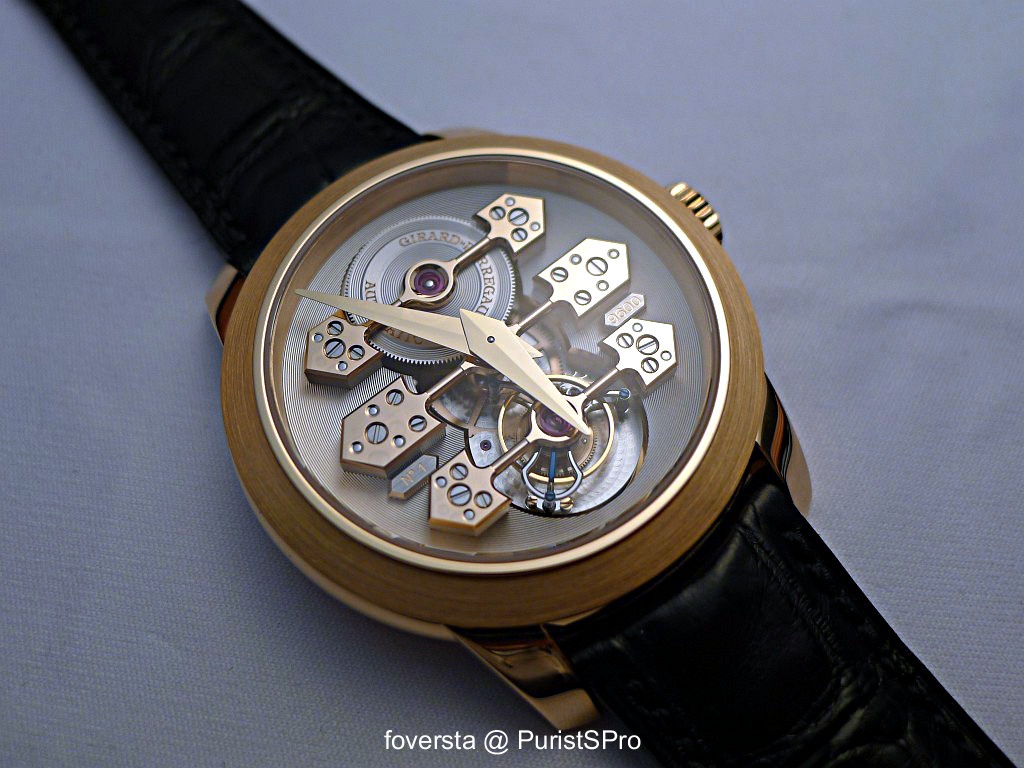
We stay with a similar movement with this 41mm Tourbillon with 3 Gold Bridges: the change can be found in the shape of the bridges which gets the central rod (vs the previous two rods bridges) to make the whole design "lighter". I much prefer this version because, for me, it makes more enjoyable the view on the rotor and the Tourbillon.
Of course, the same impressive feeling of depth was preserved and we can spend hours watching the dial details. Same remark than with the Laureato has to be made here: thanks to the rotor dial-side, lay-out of the movement is similar to a handwind one. Power reserve is 48 hours and frequency is 3 hz. A fascinating watch which allows to take advantage of the beauty of the 3 bridges Tourbillon in a more classic context than with the Laureato.
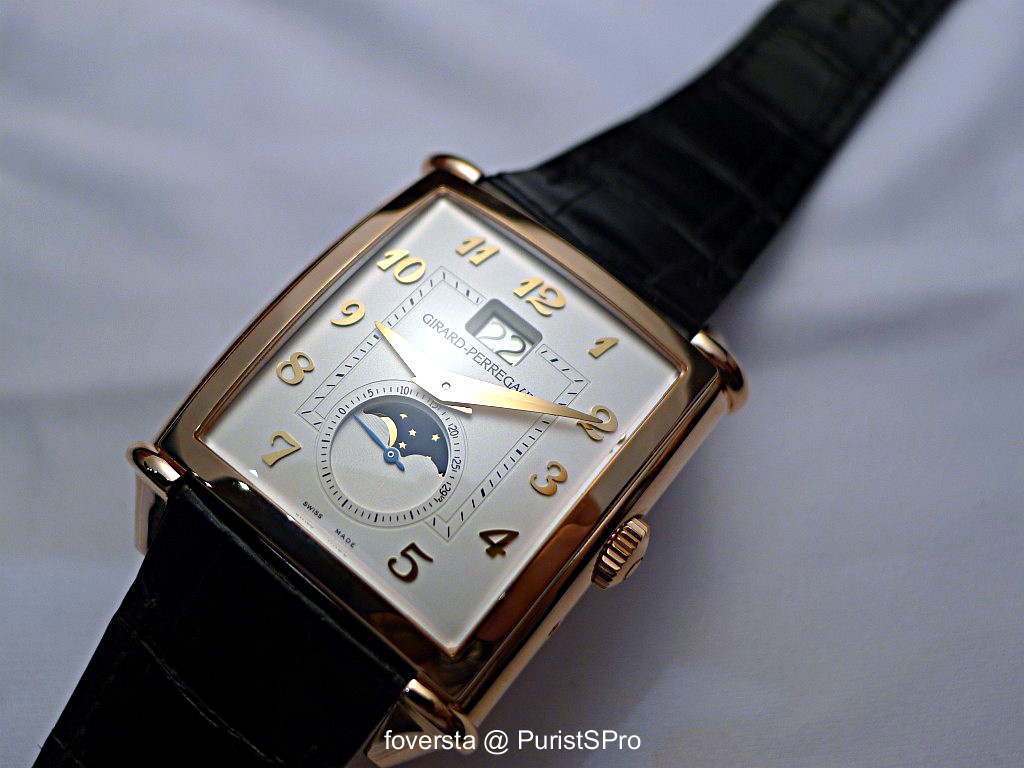
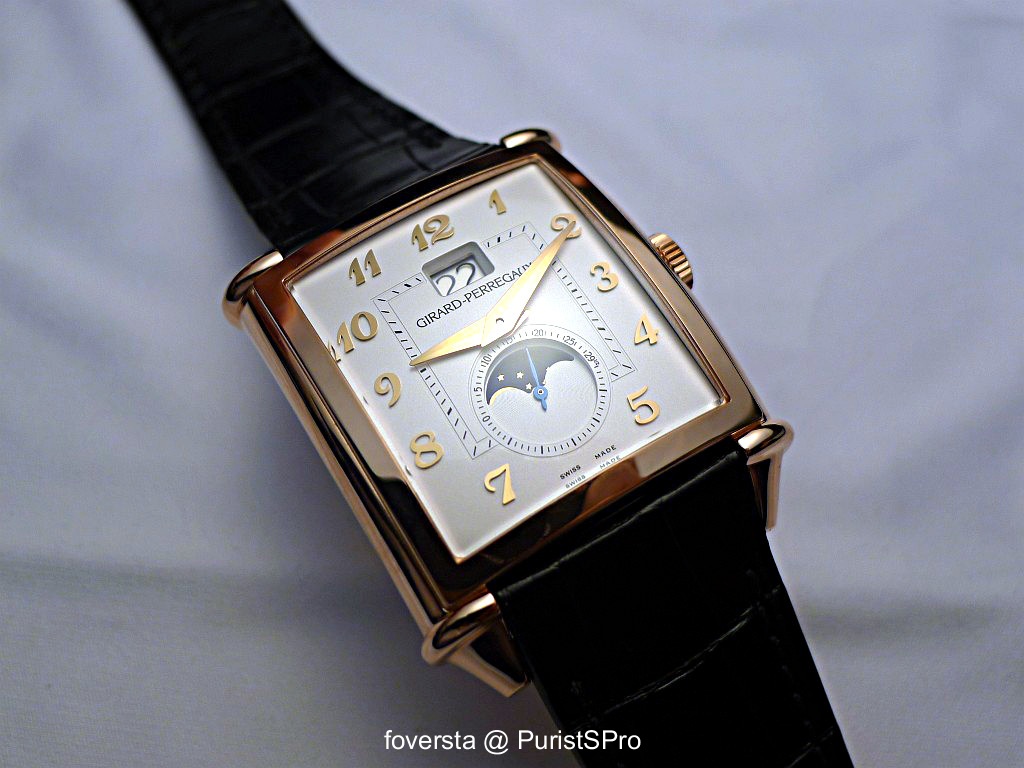
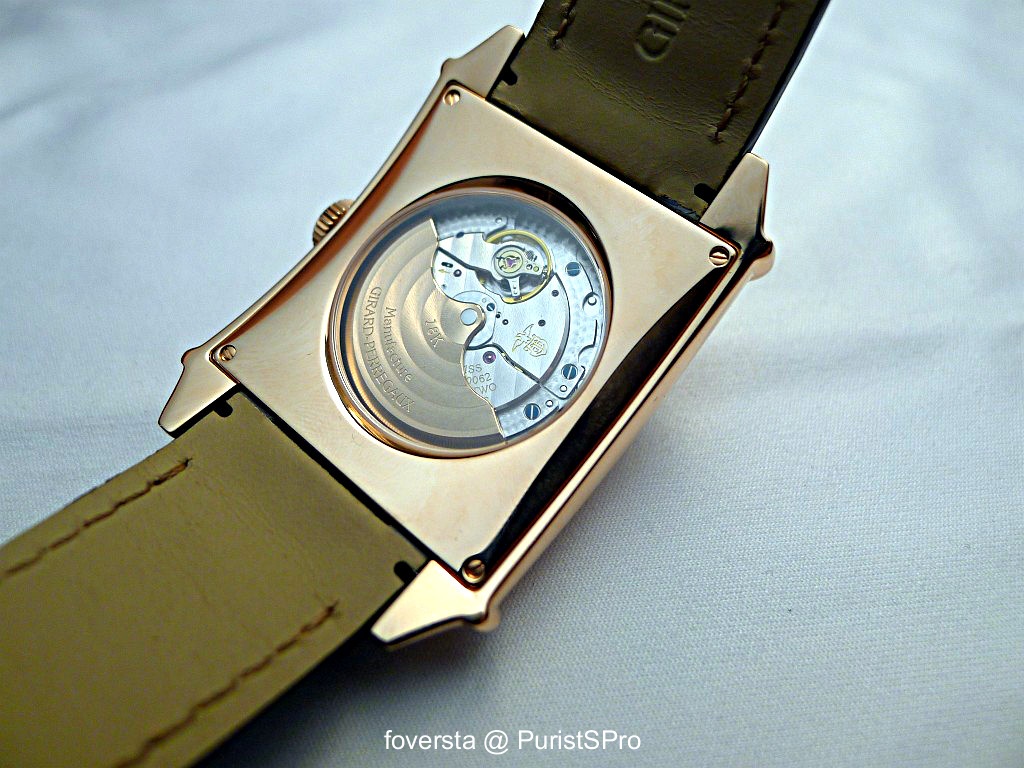
Two new members join the Vintage 1945 family with the Large Date Moonphases and the Chronograph with enlarged cases. Sadly, I couldn't shoot the Chronograph. I present you the Large date Moonphases which is my fav between the two.
Lay-out of the dial is perfect thanks to the large date system and the big Moonphases display which fills the bottom side. This display brings a poetic atmosphere to the watch and also balances the overall design. Due to the case enlargement, thanks to this display, the watch doesn't look too big because there is no empty "areas" on the dial. Applied figures are more than welcome here enhancing the elegancy of the watch. Case dimensions are: 36,1 x 35,25 (almost a square case) and despite the enlargement, size remains very reasonable. Why? Because the typical lugs are very short and because the case has a curved shape which makes it very comfortable on the wrist. This curved design is a key point with these watches.
Automatic movement is based on the 3300 has a 4hz frequency and a 46 hours power reserve.
Cases are available in PG and in SS (this more affordable version being another opportunity to discover GP world with a high quality/price ratio watch).
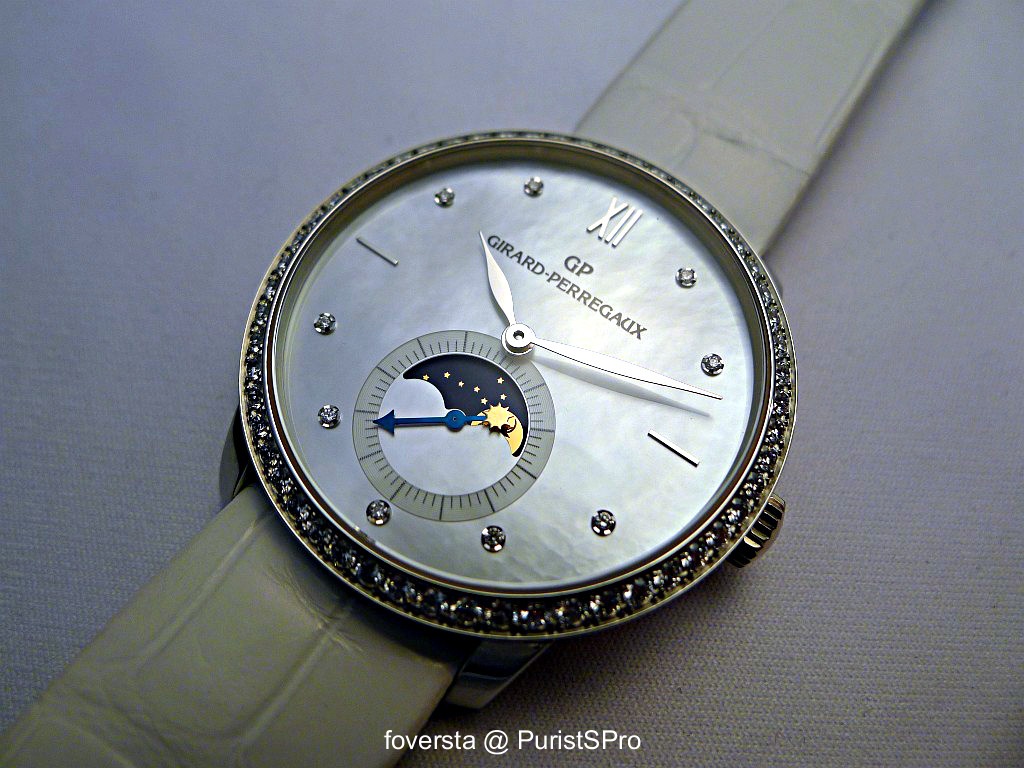
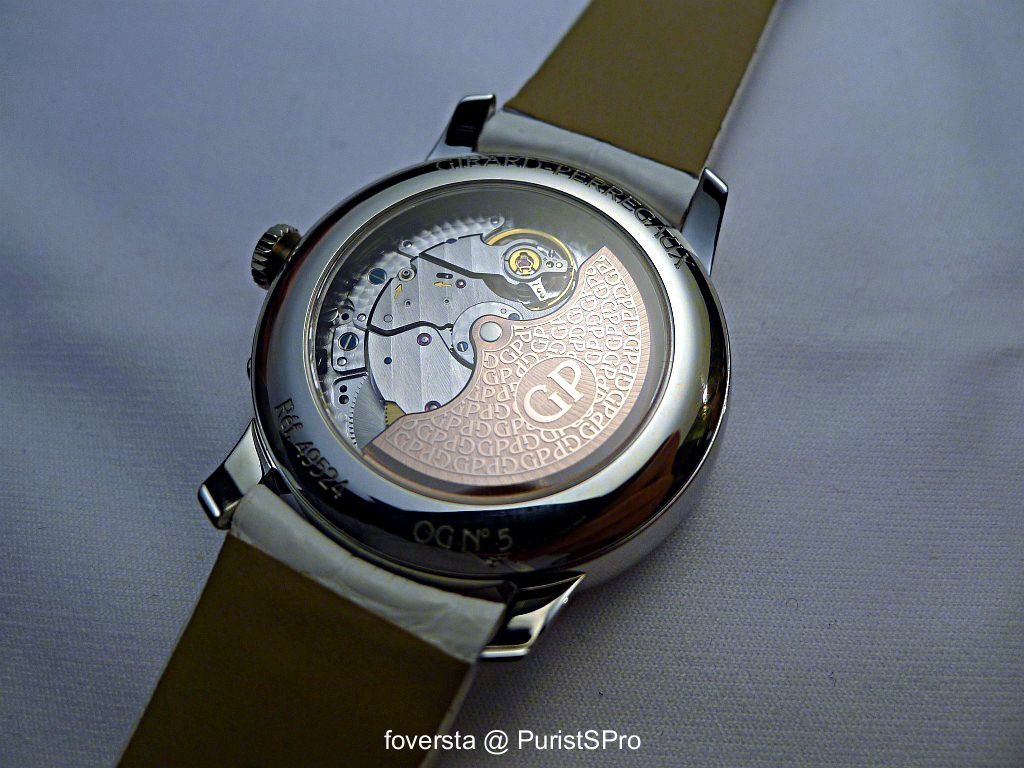
Ladies were not forgotten! I come back to the 1966 collection because I wished to finish the report with it. I must confess I have a secret love of watches without date and moonphases display. This very fine 1966 Lady Moonphases, based on the 3300 movement has a 36mm PG case and a diamonds set bezel.
The harmony between the moonphases display, the MOP dial and the set bezel makes the watch very attractive. My only concern is about brand name on the dial: I would have prefered it to see it smaller. Anyway, this ladies' watch was also a great achievement by the GP Manufacture.
Report is over now. Sadly, I couldn't see each and every watch which was unveiled this year due to a busy activity at the booth but I could present you the 4 pillars of the new collection:
- 1966 Minute Repeater - Laureato Tourbillon Spinel Bridges - Vintage 1945 Large Date Moonphases - 1966 Lady Moonphases
With this collection, GP found the best way to say goodbye to SIHH and I will regret not to see them again at Palexpo in the future... but at the same time, I know that Baselworld will be the right place to support their future ambition.
Thanks a lot to the GP team for the warm welcome at the booth!
Fr.Xavier This message has been edited by foversta on 2012-02-12 03:22:16
About the Fiat Ref. 1966
The 1966 Ford Mustang represents a significant year for the model, building on the initial success of its introduction. This reference is part of the first generation, which established the Mustang as a distinct category of American automobile. It continued to offer a range of body styles and engine options, allowing for considerable personalization and appealing to a broad market segment. The 1966 model year saw refinements rather than radical changes, solidifying its design language and market position.
The vehicle's construction typically featured a steel unibody chassis. Various engine configurations were available, including inline-six and V8 options, paired with manual or automatic transmissions. Specific dimensions varied slightly depending on the body style, such as coupe, convertible, or fastback. The interior offered a functional layout, with instrumentation focused on driver information.
This reference holds interest for collectors due to its place in the early history of the Mustang and its enduring popularity. The availability of different engine and trim levels means that specific examples can vary widely in their features and performance. It remains a recognizable and sought-after classic, often celebrated at automotive events worldwide.
Specifications
Caliber
B18
Case
Steel
Diameter
40.5mm
Dial
Black
Water Resist.
100m
Crystal
Glass
About the Girard-Perregaux Quai de l'Ile Ref. 4500
The Girard-Perregaux Quai de l'Ile, reference 4500, represents a contemporary offering within the brand's diverse portfolio, known for its distinctive case construction and customizable elements. This model series was introduced to showcase modern design while maintaining the brand's horological expertise.
This reference typically features a multi-part case, often incorporating different materials like titanium, palladium, or rose gold, allowing for unique aesthetic combinations. It is powered by an automatic mechanical movement, often visible through a sapphire case back, offering standard timekeeping functions.
The Quai de l'Ile series is relevant to collectors interested in modern watchmaking and innovative case design from a historical manufacture. Its modular construction and contemporary styling set it apart from Girard-PerPerregaux's more traditional collections, appealing to those seeking a distinctive and customizable timepiece.
Specifications
Caliber
Caliber 2460 QH
Case
Titanium, Palladium, Rose Gold
Diameter
41mm
Dial
Transparent
Water Resist.
30m
Crystal
Sapphire
About the Girard-Perregaux Ref. Vintage1945
The Girard-Perregaux Vintage 1945 line, introduced in 1994, draws inspiration from historical models, specifically a 1945 Art Deco piece. This collection is characterized by its rectangular or tonneau-shaped cases and a design language that evokes mid-20th century aesthetics. The Vintage 1945 series quickly became a cornerstone of Girard-Perregaux's offerings in the 1990s, reinterpreting classic forms with contemporary watchmaking standards. It represents a significant period for the brand in re-establishing its heritage-inspired collections.
Early models in the Vintage 1945 series typically featured stainless steel cases, though gold variants were also produced. The case dimensions varied depending on the specific model, often presenting a balanced profile suitable for dress wear. These watches were frequently equipped with automatic movements, showcasing Girard-Perregaux's in-house capabilities or finely finished outsourced calibers. The crystal was commonly sapphire, ensuring durability and legibility, while water resistance was generally suitable for daily wear rather than aquatic activities.
For collectors, the Vintage 1945 series appeals to those interested in neo-vintage watches that successfully blend historical design with modern execution. The 1994 introduction year marks it as one of the earlier and more influential lines from Girard-Perregaux's resurgence in the 1990s. Its various iterations, including time-only, small seconds, and later complicated versions, offer a range of choices for enthusiasts seeking a distinctive rectangular watch with a clear lineage.
Specifications
Caliber
GP3000
Case
Stainless Steel
Diameter
28mm x 28mm
Dial
Silver
Water Resist.
30m
Crystal
Sapphire
About the Girard Perregaux Ref. 1966Chronograph
The Girard Perregaux 1966 Chronograph is a notable offering within the brand's classically styled 1966 collection, distinguished by its integrated chronograph function. This reference emphasizes traditional watchmaking aesthetics combined with a practical complication, positioning it as a more technically involved piece compared to time-only or simple date models within the same line. It represents Girard Perregaux's commitment to horological complications in a refined, understated package. The design adheres to the collection's established visual language, ensuring continuity while introducing enhanced functionality.
This particular iteration features a 40 mm case crafted from white gold, providing a substantial yet luxurious feel on the wrist. The watch is powered by an automatic mechanical movement, the GP03300-0064 caliber, which is visible through a sapphire case back. This movement offers a power reserve of approximately 46 hours. A sapphire crystal protects the dial, ensuring clarity and scratch resistance. The case dimensions contribute to a balanced presence, aligning with contemporary preferences for moderately sized chronographs.
For collectors, the 1966 Chronograph appeals to those seeking a sophisticated chronograph from a respected manufacture, without overt sporting pretensions. Its white gold case and classic design make it suitable for formal wear, while the chronograph complication adds a layer of horological interest. The choice of a display case back allows appreciation of the movement's finishing. This reference stands as a solid example of Girard Perregaux's capabilities in producing complicated watches with a focus on traditional design principles.
Specifications
Caliber
GP03300-0064
Case
White gold
Diameter
40 mm
Dial
Silver
Water Resist.
30 m
Crystal
Sapphire
About the Girard-Perregaux Girard Perregaux 1966 Ref. 1966MinuteRepeater
The Girard-Perregaux 1966 Minute Repeater with Annual Calendar and Equation of Time, reference 1966MinuteRepeater, represents a significant addition to the 1966 collection, building upon the minute repeater movement introduced in the preceding year. This particular iteration distinguishes itself by integrating additional complications, elevating its technical complexity and dial presentation within the range. It caters to collectors seeking a high-complication timepiece that combines traditional horological artistry with a refined aesthetic.
This reference features a case crafted from precious metal, housing a sophisticated automatic movement. The integration of an annual calendar, a pointer date, a month indicator, and an equation of time display alongside the minute repeater mechanism demonstrates the brand's expertise in grand complications. The crystal is typically sapphire, providing clarity to the dial and protection for the intricate movement. The design maintains the classic proportions and understated elegance characteristic of the 1966 series.
For collectors, this model appeals to those with an appreciation for haute horlogerie, particularly the combination of an audible complication with practical calendar functions and the more esoteric equation of time. It fits into the Girard-Perregaux lineup as a demonstration of advanced watchmaking capabilities, offering a blend of technical prowess and classical design. The discreet integration of multiple functions on the dial maintains a balanced and legible appearance.
Specifications
Caliber
GP09M00-0003
Case
Pink Gold
Diameter
42 mm
Dial
Silver
Water Resist.
30 m
Crystal
Sapphire
Key Points from the Discussion
The Laureato Tourbillon with Three Spinel Bridges is highly praised for its sublime, futuristic yet retro design, with questions raised about the durability of spinel compared to sapphire bridges.
The Girard-Perregaux 1966 Minute Repeater and the Laureato Tourbillon 3 Spinel Bridges were considered two of the few stars of SIHH 2012.
The 1966 Chronograph is preferred without the date complication, and there is a desire for an integrated, hand-wound or automatic movement for future iterations.
Despite concerns about fragility, an owner of the Laureato Tourbillon with Three Bridges reports wearing it during activities like bike riding and showering without issues, suggesting good durability.
A question was raised about the Girard-Perregaux Minute Repeater video, as the watch appeared to be 11:57 but only rang 8 times for the hours instead of 11.
The move from SIHH to Baselworld for Girard-Perregaux sparked debate on its potential impact, with some expressing concern about losing SIHH's exclusivity while others saw it as a necessary step for broader image reach.
Advertisement
The Discussion
DJ
Dje
Feb 12, 2012
Thank you
Hi FX, Thank you for your report. I would just say that the collection presented this year is to me even more appealing a few weeks later, and a very good one for the last at the SIHH! We will miss them in Geneva, even if I agree with your comments. Hopefully we'll see them in Basel.... Best Dje
FO
foversta
Feb 12, 2012
Thanks a lot Jérôme!
And thanks for your great report you made! Fx
VM
VMM
Feb 12, 2012
Beautiful post.
Beautiful pictures too. Love them all, and finally a MR video for our pleasure. Still thinking that Laureato would be a perfect beater on my wrist. Thanks, FX. Vte
FO
foversta
Feb 12, 2012
Thanks Vicente !
I was a fan of the previous Laureato Tourbillon but this one has something magic... Fx
AM
amanico
Feb 12, 2012
Very interesting report, Francois.
GP did a supperb job on the 66 Minute Repeater and the Laureato Tourbillon 3 Spinel Bridges... 2 of the few stars of this 2012 SIHH. Of course I will come back to them with two dedicated reviews. As for the other watches, there is one I saw which deceived me: The Chronograph. Ok, I am not a fan of the date, in general, and I hear that GP smartly located it at 6, but, still, I find it less pure than its on date brother. Once again, it is a matter of personal taste. Can't wait to see a manual move
FO
foversta
Feb 12, 2012
Thanks Nicolas.
About the 1966 chronograph, me too I prefer it without the date. For the time being, I mainly expect from GP an integrated movement, handwind or automatic... I feel to live the same story than with another great Manufacture, AP. Of course, the design of the 1966 chronograph would make the handwind movement very logical. About the Vintage 1945, I was a bit worried by the thickness but absolutely not by the size. Maybe the curved design obliged GP to make it thicker than expected but it was ok for
Continue the conversation
This thread is active on the Girard Perregaux forum with 32 replies. Share your knowledge with fellow collectors.