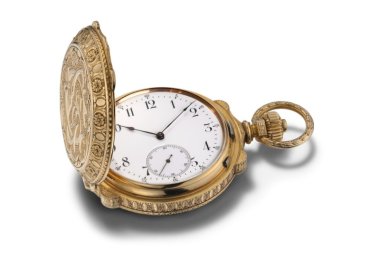
Vintage
Friends, As I mentioned before new-years, I have found my first Bautte. The brand Girard-Perregaux has always been strongly connected to the year 1791. Why? Because 1791 was the year when Jean-Farncois Bautte made his first pocket watch. We all know that GP have a strong root from pocket watch and t


Friends,
As I mentioned before new-years, I have found my first Bautte.
The brand Girard-Perregaux has always been strongly connected to the year 1791.
Why? Because 1791 was the year when Jean-Farncois Bautte made his first pocket watch.
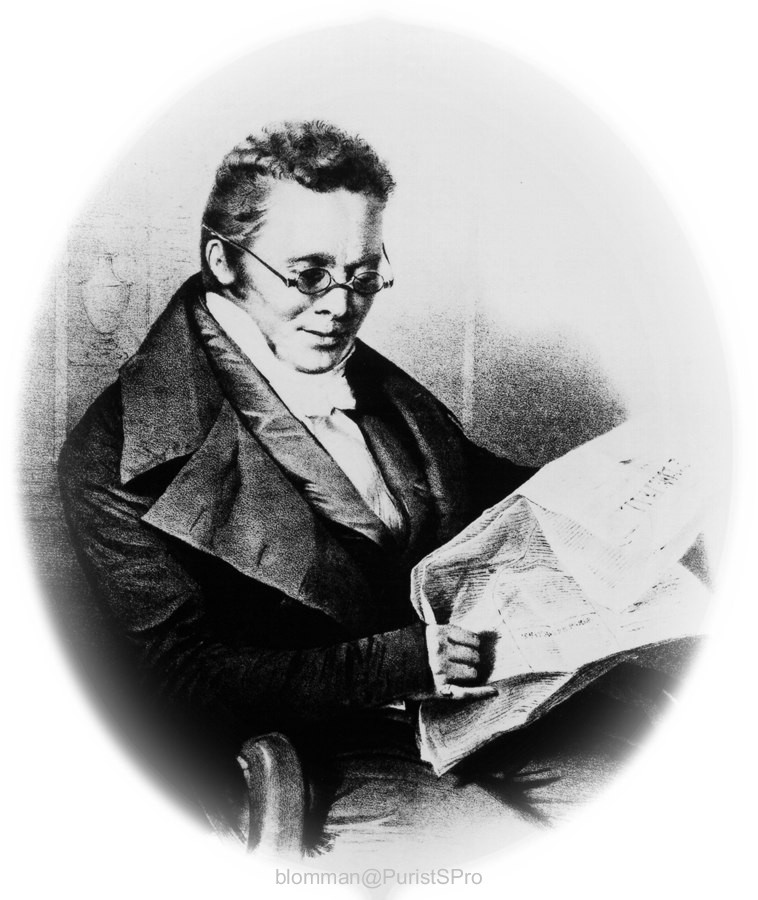
We all know that GP have a strong root from pocket watch and the Tourbillon with Three Golden Bridges movement is a testament to that!
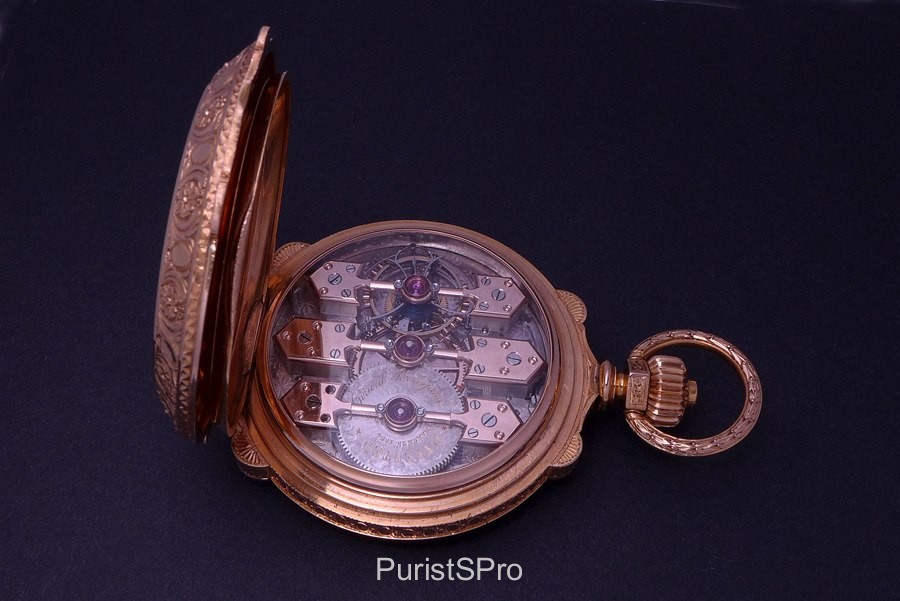
So it feels natural for me to start to explore the roots of Girard-Perregaux.
That plus I have a friend that is trying to get me to go into pocket watch...
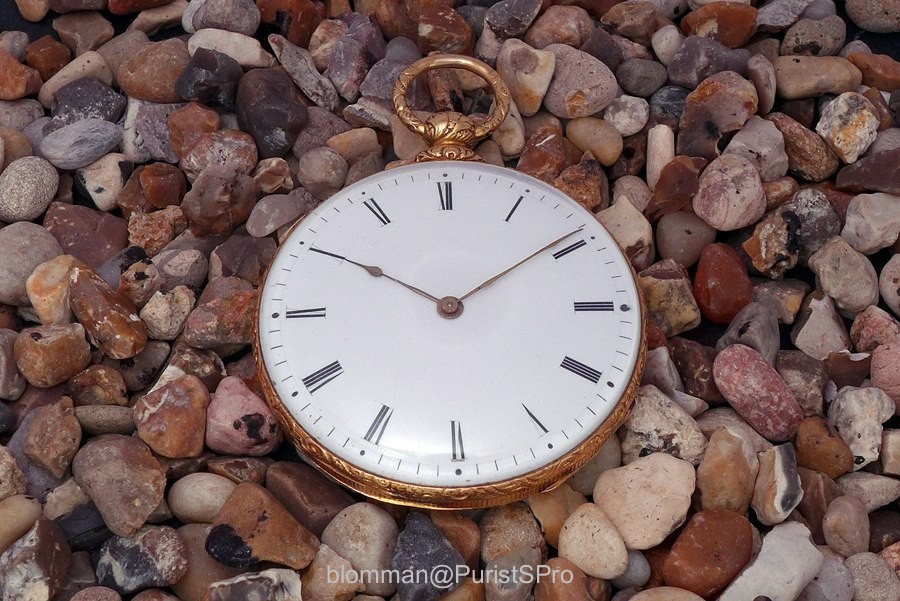
The gold case is 48.5 mm in diameter, 12 mm thick including the crystal glass.
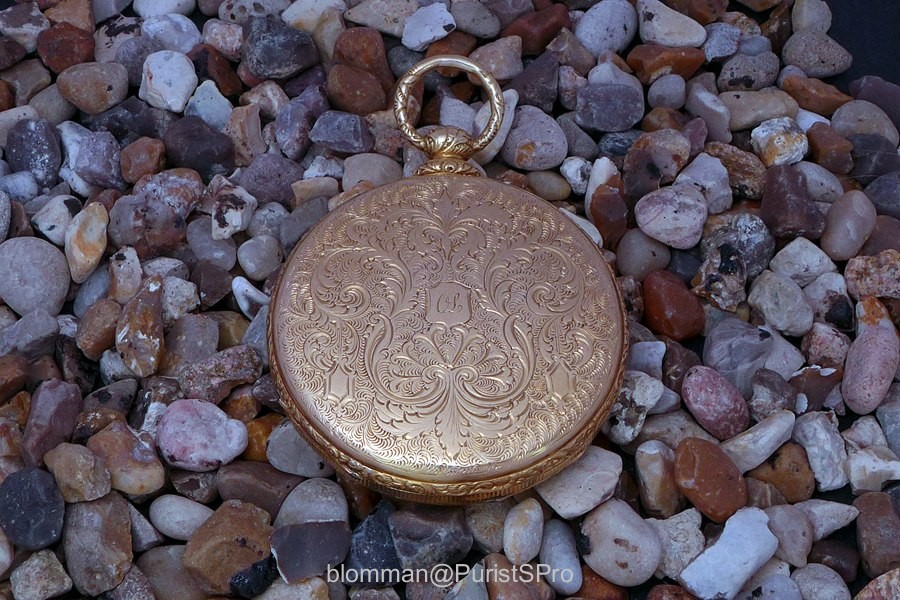
Exterior the case is very nicely decorated with engraved leaf patterns and on the side there is a “line” pattern often seen on coins.
This is an “open-face” pocket watch and has no cover to protect the crystal and dial.
The white enamel dial have no cracks, thin gold hands and the long thin Roman numerals are pitch black in contrast which makes it very easy to read.
The inside of the case do not offer much of decoration but tells a story about this pocket watch:
“ECHAPPEMENT A ANCRE”
“DIX TROUS ET”
“TROIS LEVEES EN RUBIS”
Translated that would be “Anchor escapement, ten holes and three with ruby”.
Then we have the signature: J. F. Bautte, Genève.
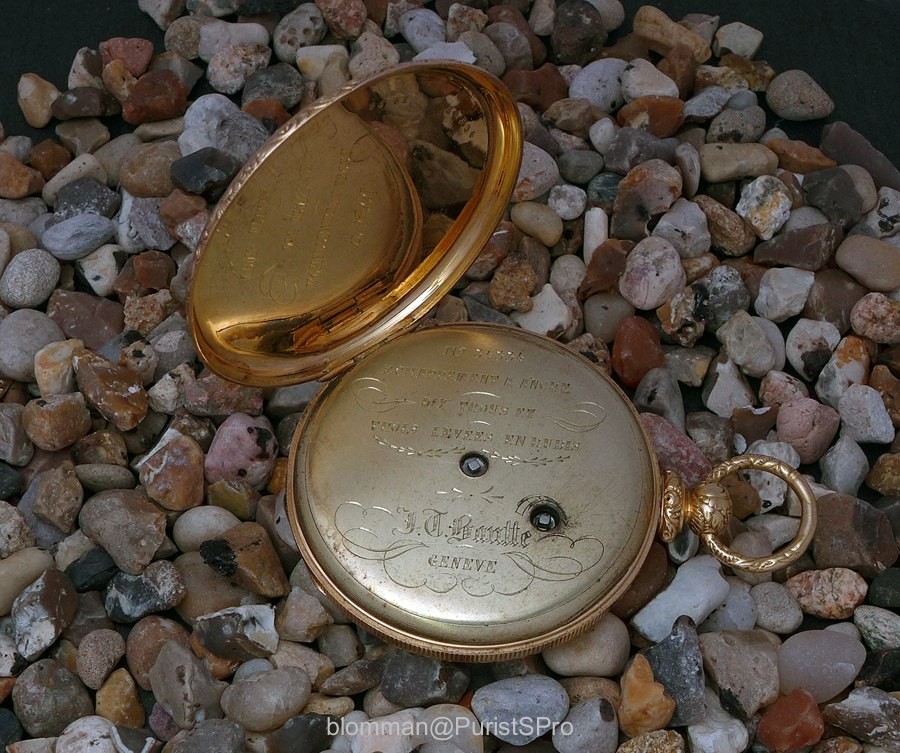
I am totally inexperienced when it comes to pocket watches, but what the curator at Girard-Perregaux could tell me was that this pocket watch is from before 1837.
Up until his death, watches from the Bautte manufacture were signed “J.F. Bautte”.
After his death they were only signed “Bautte”.
The movement is also without decoration, but very pleasing to the eye!
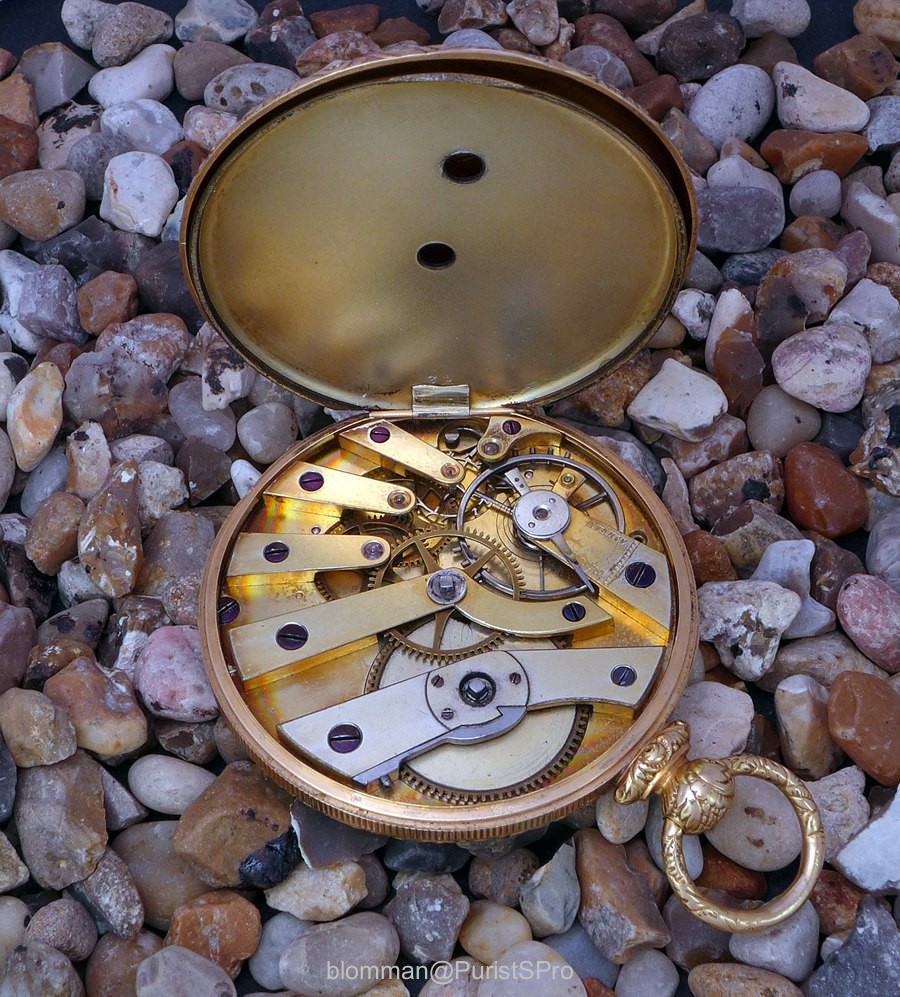
Decoration of the movement started to cover up scratches, misplaced holes, etc.… I.e. mistakes.
So, I guess at this point to show a non-decorated movement were something hot!
Funny how things change! Today many manufactures compete who can make the most beautiful engraving on their movements.

Here is a lot to like even without decoration.
The strong separated bridges holding the gear train, the oversized balance wheel and the mega barrel dominating the view.
The arch layout is a decoration in itself!
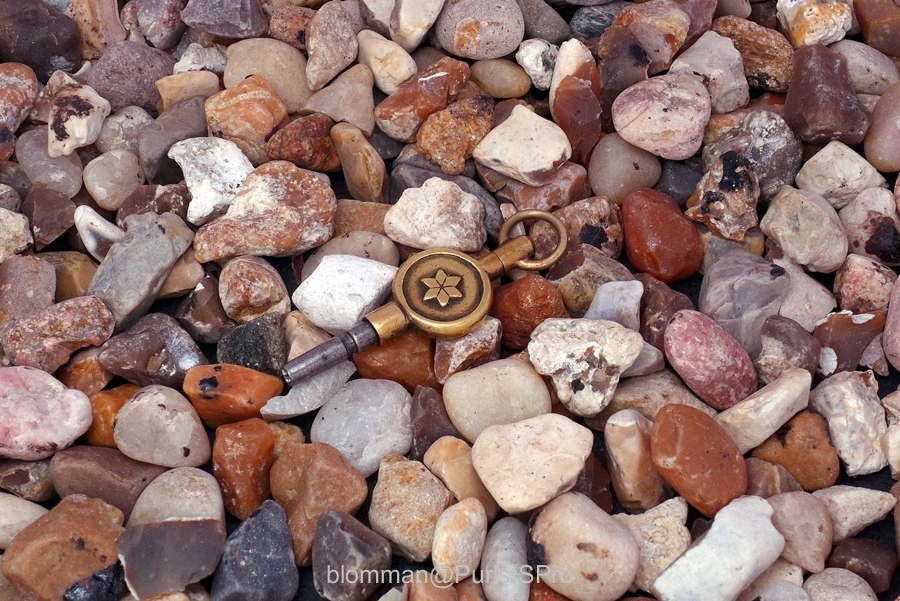
The movement have a very nice mercury-gilt finish and like you may have guessed, it is a key wound movement.
The central key position sets the time and the position at six o’clock winds the spring in the barrel.
One interesting detail is what actually already said on the inside case, the movement have a lever escapement.
Most pocket watches from this period were fitted with cylinder escapement.
The lever escapement construction is much more accurate than the cylinder escapement.
What can I say, after seeing this and understanding a bit more of the Girard-Perregaux roots I appreciate the Tourbillon with Three Golden Bridges even more!
A big thank you to the curator of Girard-Perregaux for all the help.
Best
Blomman
you've found. Once again, big congratulations, looking forward to seeing it in the flesh one day. CC
External engraving & the dial itself are very nice, indeed ! So, just don\'t loose the key for winding ! Enjoy this treasure in the Best of your health !! Another abyss you are looking into ?.. Cheers & Best, hs
Congratulations. You are now delving deep into the roots of your favorite brand.
What a beauty Is the case serial number 34334? Also, is the balance wheel cut?
The engraving is one thing of beauty, but the movement I adore not overdone and just right, congrats on this beautiful pocket watch.
Thank you, my friend! Best Blomman
This thread is active on the Girard Perregaux forum with 14 replies. Share your knowledge with fellow collectors.
Join the Discussion →