Vintage
blomman Mr Blue revisits his early passion for vintage Girard-Perregaux chronometers, specifically focusing on the Gyromatic Chronometer HF reference 9086. He shares his insights into two variants, the 9086 AF and 9086 FN with a captivating blue dial, highlighting their historical significance and the technical prowess of GP's high-frequency movements.


So, this weekend I promised a Vintage GP post… Sorry for the late hour, but I have experienced trouble with the image uploader...
One of my first GP watches I got was the Gyromatic Chronometer HF, 9086 AF.
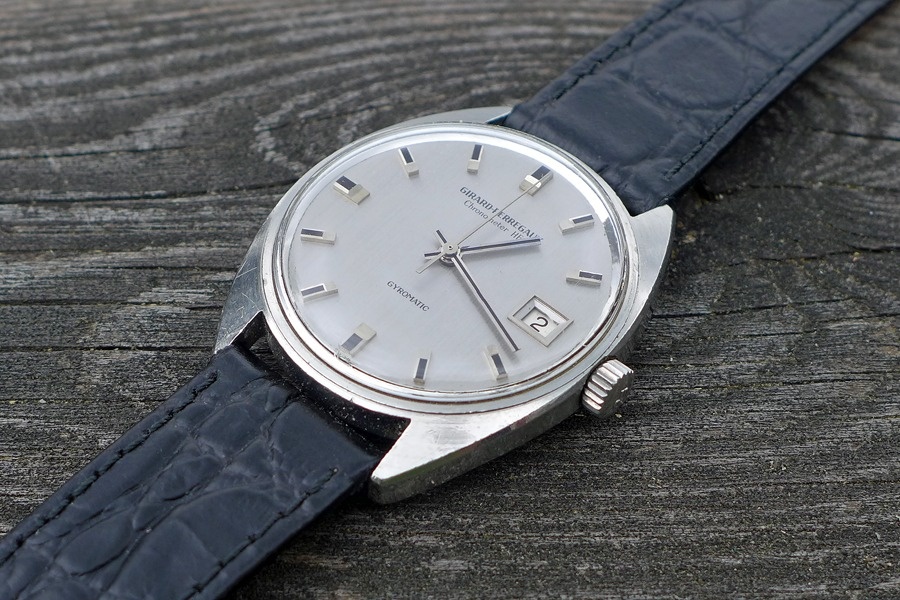
As many of you know I have a special interest in Chronometers. I love the idea of wearing a watch that is very accurate!
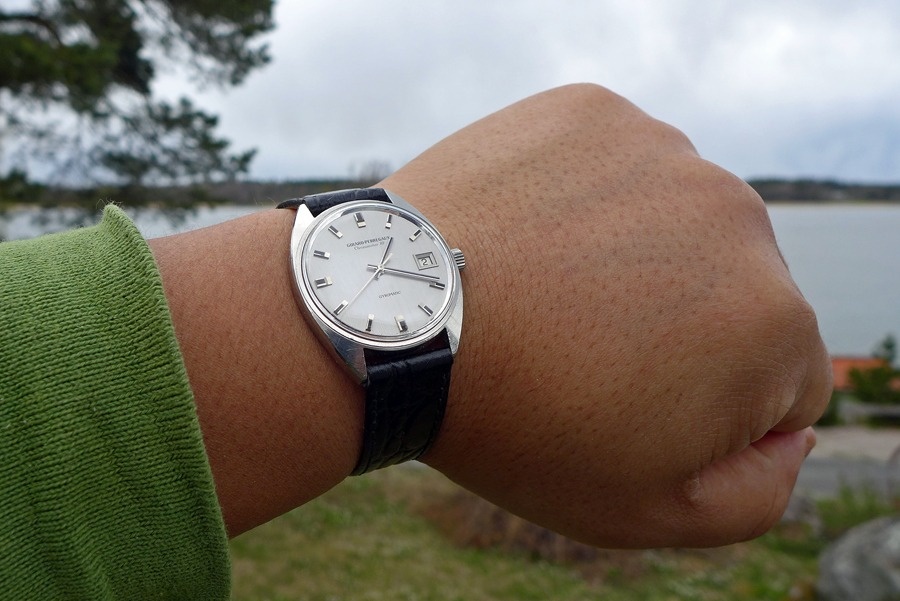
And the 9086 is such a lovely watch on the wrist. Great size, under the radar, accurate, easy to read time… And a very important part of the GP history!
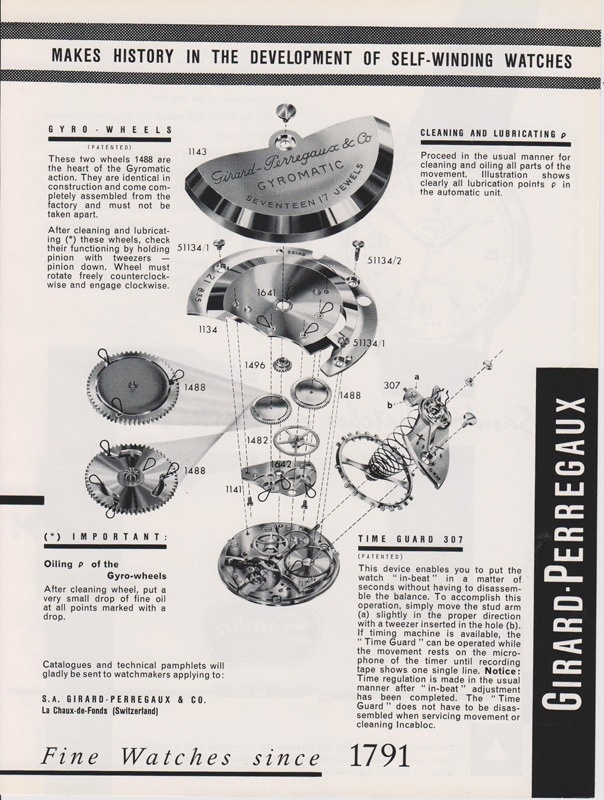
1957 Gyromatic concept patent.
1965 Presented the first ever high frequency movement (36’000 Alt/ hour).
1966, the Centenary Prize of the Neuchâtel Observatory was awarded to Girard-Perregaux as a tribute to the constant investments in precision and the engineers’ extraordinary achievements.
1967 Girard-Perregaux obtained 662 certificates, representing 73% of all those issued by the Neuchâtel Observatory in the classic wristwatch category that year.
If you combine that with my weakness for blue dials…
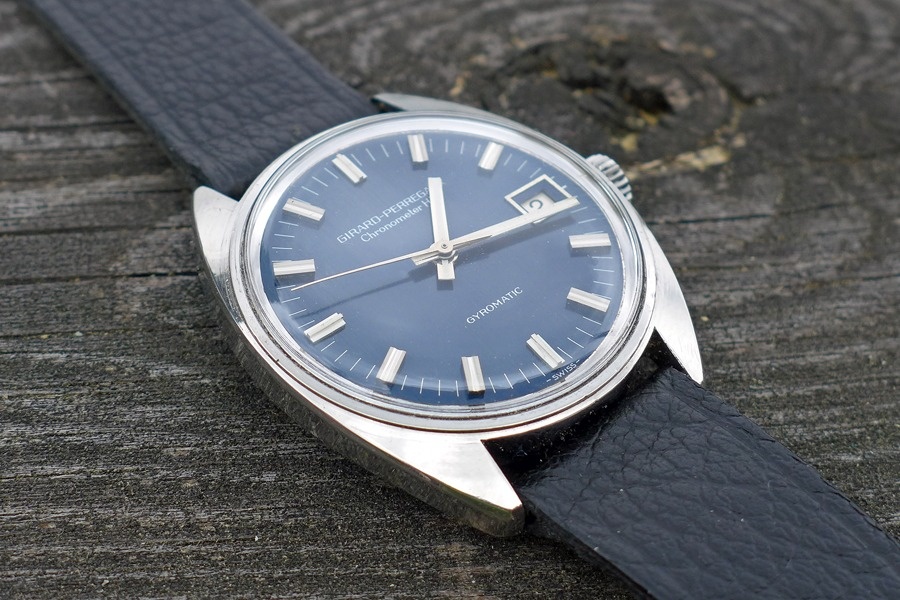
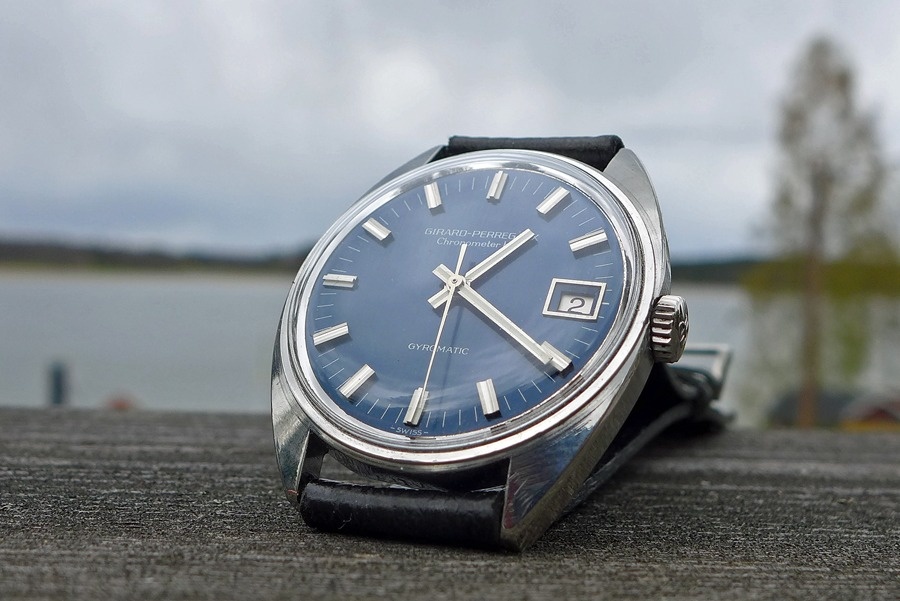
You will understand my choice: Gyromatic Chronometer HF, 9086 FN, blue dial.
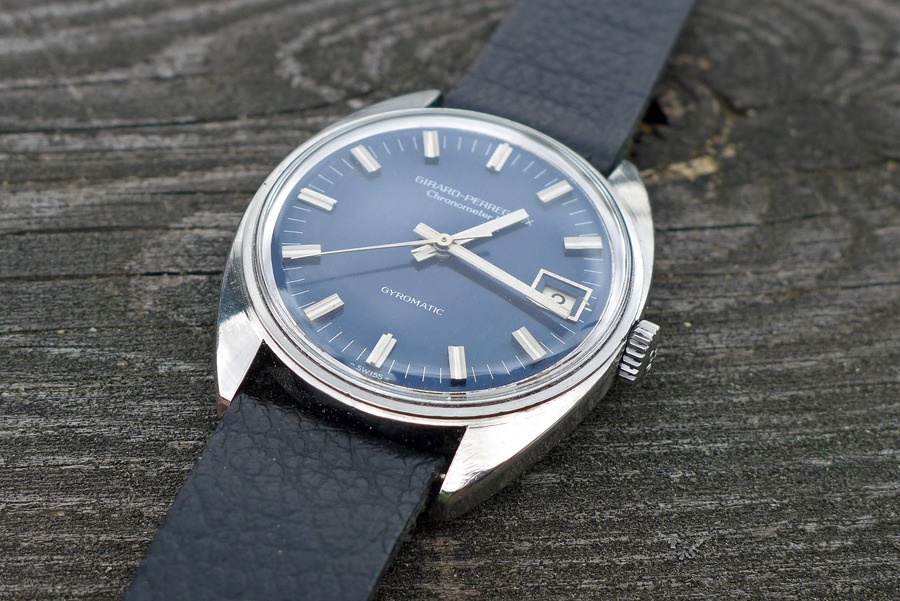
Same size, same case, but inside the Silver is calibre GP42.1, while in the blue is calibre GP42.4.
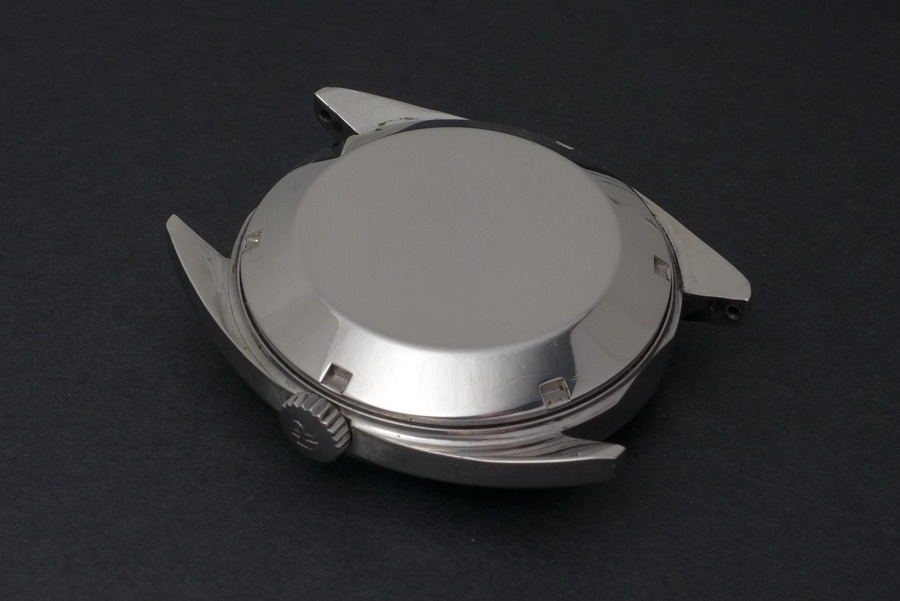
Both comes from the same Bas calibre AS 1843, Automatic, Date, Ball bearing, Central second, Stop second, GP fine adjustment, 36 000 vph. Both have the incabloc shock protection system.
But, the GP42.1 has 39 jewels (1968).
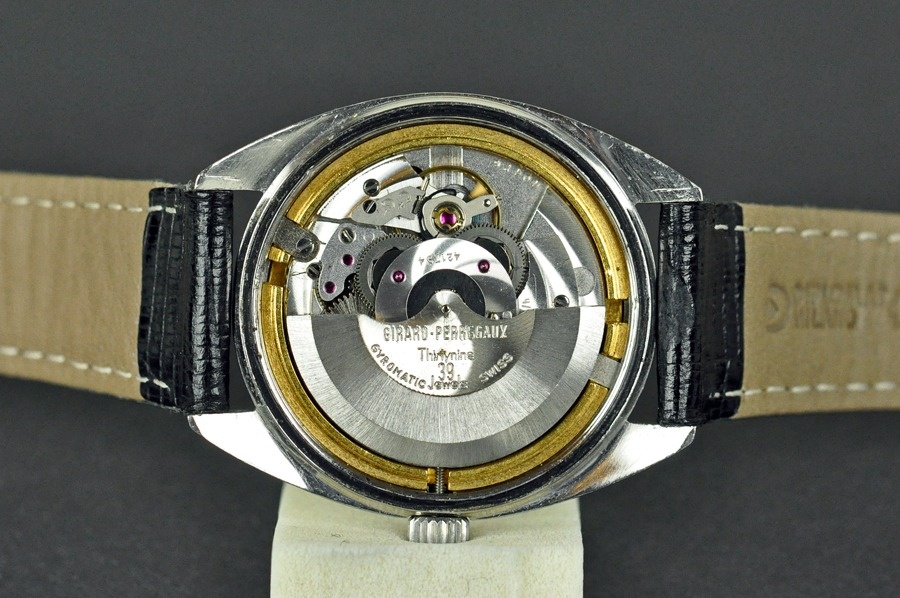
While the 42.4 only has 17 jewels (1969).
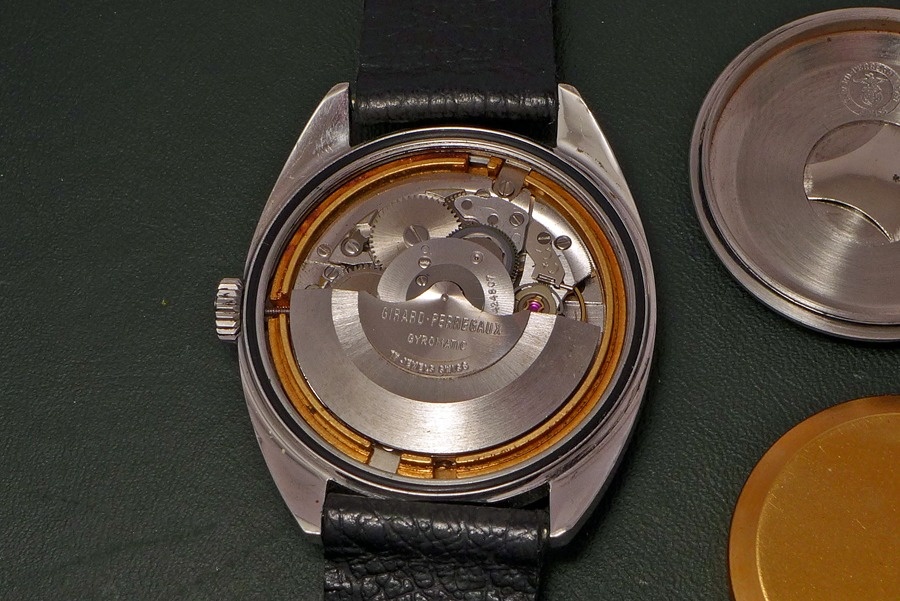
Obvious, the visual difference is the color of the dial and hands.
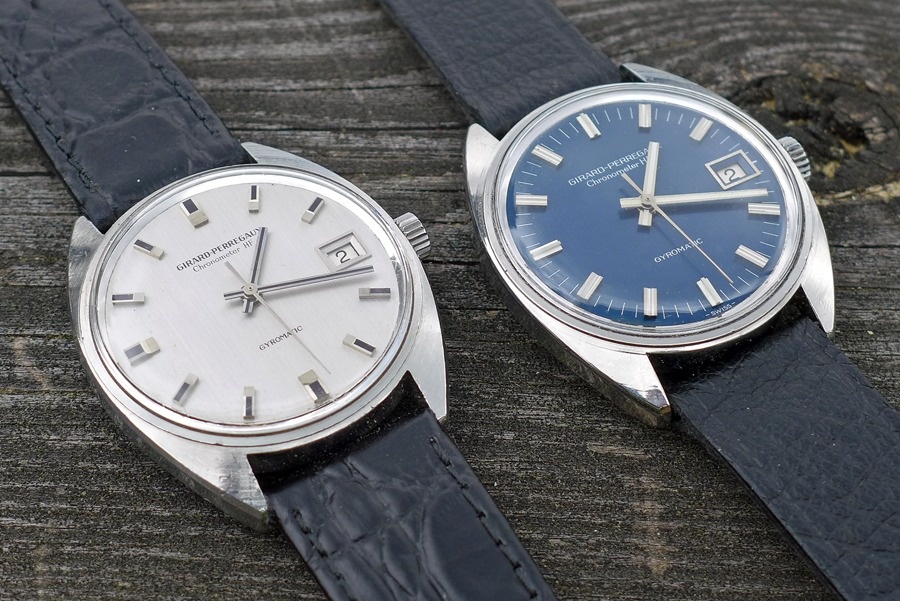
The blue dial shifts between almost black to clear blue depending on angle and light.
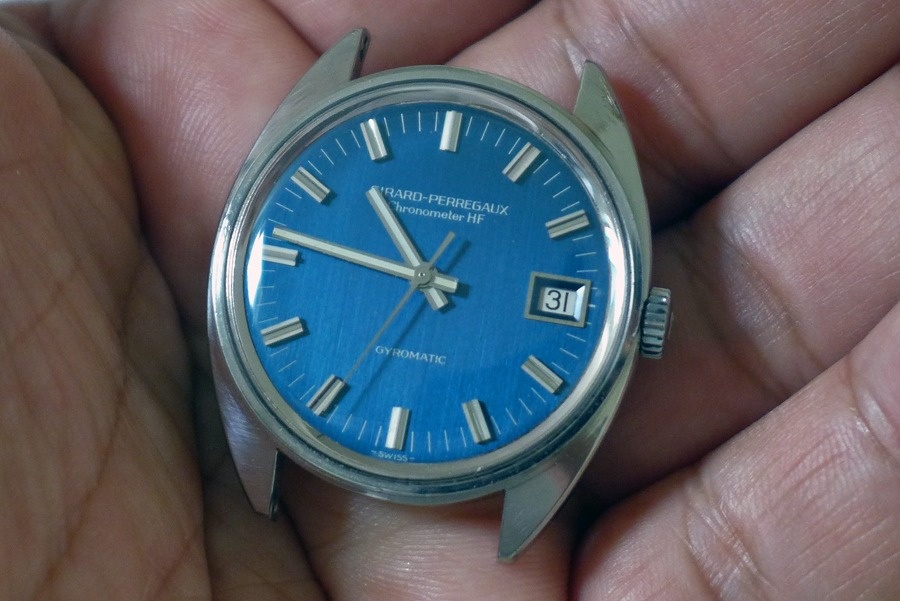
When using flash as a light source, you see the multi facet applied index which makes the watch easy to read. But the flash also brings out some small spots on the dial. Spots that is so small that in natural light it is very hard to see them with the naked eye…
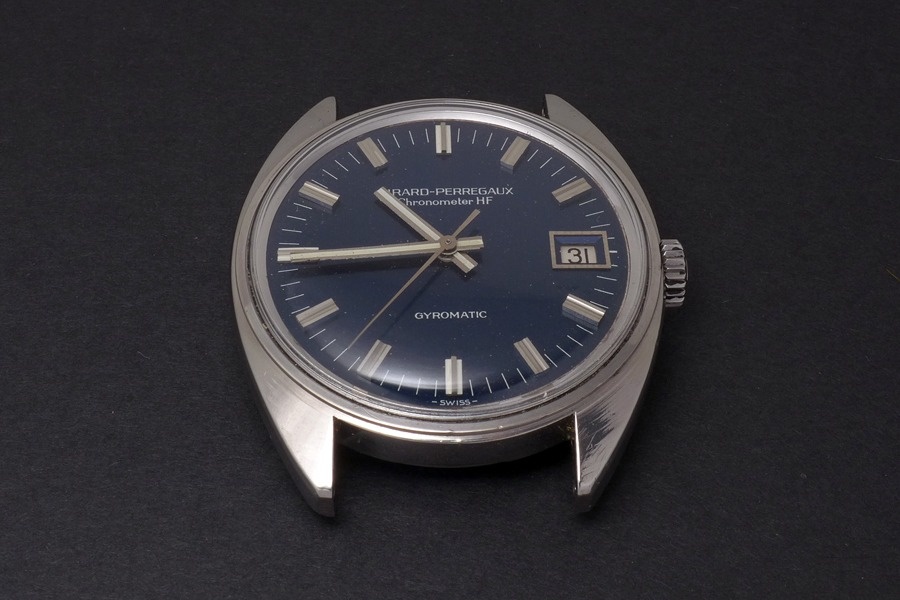
Classic “C shape.
On the
wrist… Yes, it’s all good! 
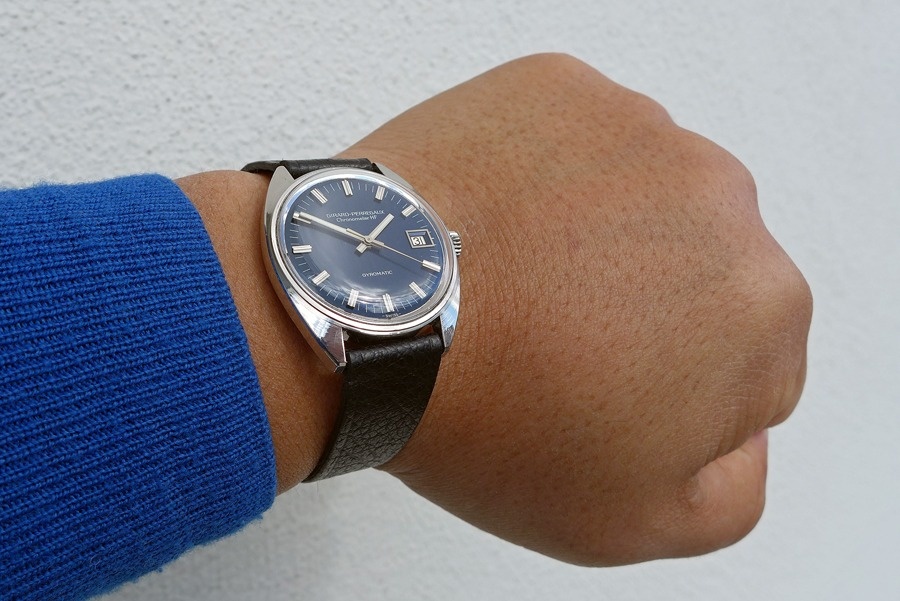
What can I say – I hope to add a couple more of these Chronometer HF …
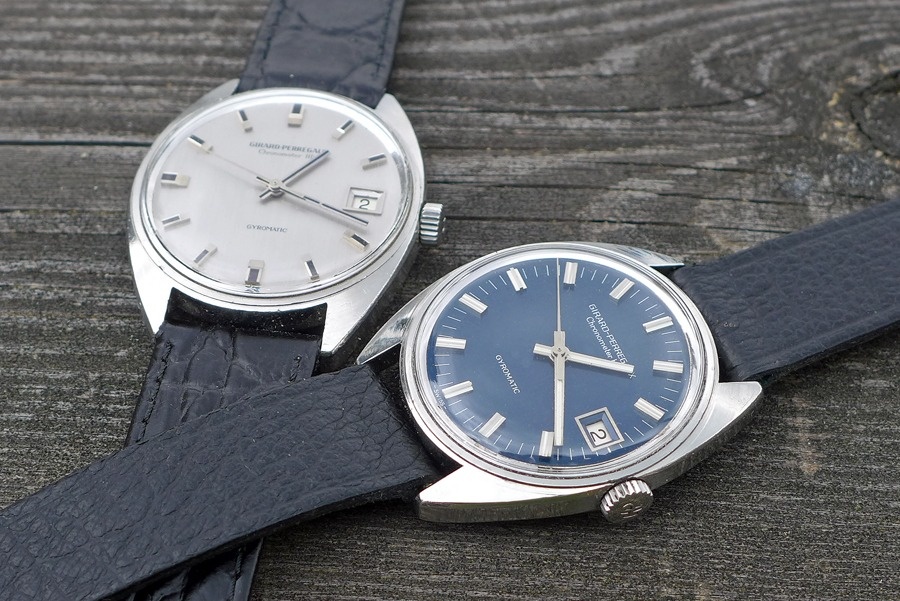
Such an elegant, but still sporty watch!
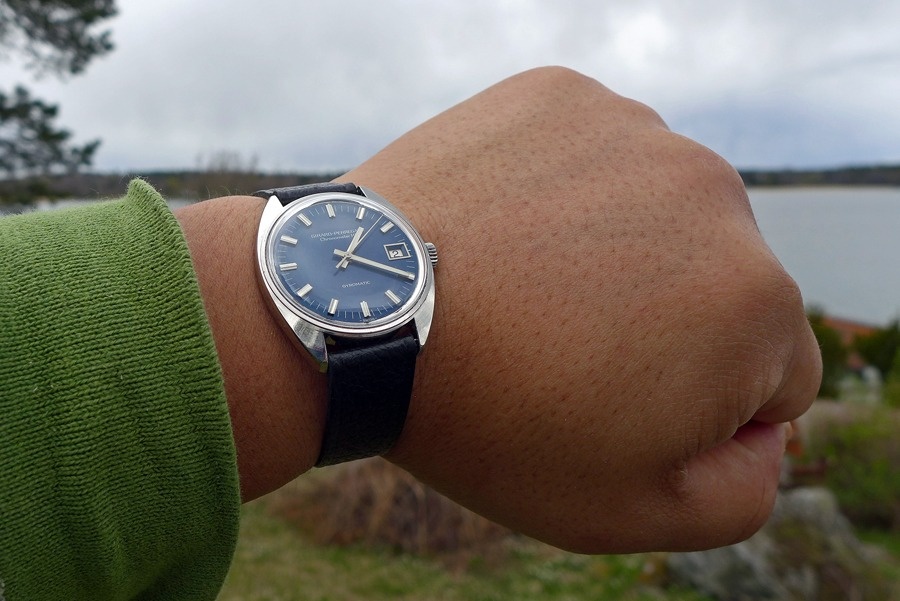
A perfect everyday companion.
Best
Blomman
This message has been edited by blomman on 2014-05-11 14:08:11 This message has been edited by blomman on 2014-05-11 14:08:46This blue version is eye catching. The brushed dial is a plus. Bravo, Blomman, and thanks for this very interesting post. Best, Nicolas
The Question is - when will you get your first GP Chronometer...?! ;) Best Blomman
One; or several, as I Would like to dig a bit into this theme, among the vintage GPs. But you know that feeling too well! Best, Nicolas
they always come in pairs ,) Lovely watch Thank you for reviewing Best regards Damjan
Well, I have been thinking a lot about this... You know that the odds is break even when I get a new watch - that it is a watch I already have or a new all together! ;) Best, my friend Blomman
This thread is active on the Girard Perregaux forum with 16 replies. Share your knowledge with fellow collectors.
Join the Discussion →