
Complications
Brandon1 initiates a compelling discussion on the merits and aesthetics of free-sprung balances versus those with regulators, revealing a personal bias that shapes his appreciation for watches. His post delves into the 'idea' of stability conveyed by free-sprung designs, inviting fellow collectors to share their technical understanding and emotional connections to this intricate horological feature. This thread explores the blend of engineering principles and aesthetic preferences that define a collector's passion.
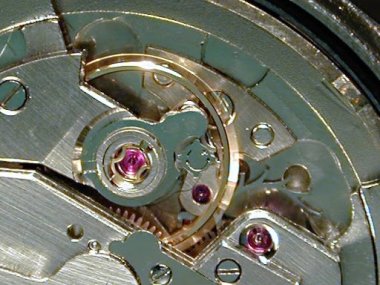
I certainly have a preference for variable-inertia regulators, of which the most typical examples are free-sprung. However, I have a particular soft spot for the old IWC system that combined a variable inertia balance for large adjustment with a regulator for fine adjustment.
i probably own a watch with one, but i'm not technically minded so wouldnt know. i have several with no regulater, but i dont think that is the true explaination. someone please enlighten me. best Graham
Hey Graham, In a (very small) nutshell, a free-sprung balance is where the balance spring length is fixed and the adjustment is via the polar moment of inertia of the balance...hmmmm. Bit techy, sorry. From the other direction: On a balance with a regulator, you adjust the timing by (usually) moving a lever, which changes the length of the spring, which speeds up or slows down the balance wheel. On a free-sprung, this is done by changing the weights around the rim of the balance - you know, thos
... the Richard Lange has a free-sprung balance with a swan neck regulator I believe. Now why that would make sense (outside of esthetics) I don't know. Best Andreas
as far as i know is that it adjusts the stud holder...much like the new GP Microvar setup. This is used to control the beat. Many (most?) watches that have a free-sprung balance have an adjustable stud holder of some kind. B
thanks Ben, i think i've got it. from a money a saving point of view i like the vintage pieces to have regulaters so i can adjust them, but aesthetically i can see that a free sprung looks better and probably is of higher quality. cheers G
This thread is active on the Horological Meandering forum with 26 replies. Share your knowledge with fellow collectors.
Join the Discussion →