Sometimes luck is undisputedly on your side - certainly this time: An american gentleman, a scrap dealer, couldn't believe his eyes when he searched the web for 'egg' and 'Vacheron-Constantin' , the inscription he has found on the golden egg-shaped sculpture he just bought at a flea market. Upon res
Sometimes luck is undisputedly on your side - certainly this time:
An american gentleman, a scrap dealer, couldn't believe his eyes when he searched the web for 'egg' and 'Vacheron-Constantin', the inscription he has found on the golden egg-shaped sculpture he just bought at a flea market.
Upon researching the history and the potential value he quickly abandoned his original idea to melt the artefact and sell the material for its 'intrinsic value' - the solid gold it was made of.
Instead, he bought a ticket to London to meet Mr Kieran McCarthy, a Fabergé specialist and director at fine art dealers Wartski in London. Mr McCarthy was "buzzing from top to toe." - what he immediately recognised was one of the 8 missing Fabergé eggs, made on commission for Tsar Alexander III of Russia for his wife, Tsarina Maria Feodorowna.
The Tsar has the habit to present to his wife every year on the occasion of the easter celebrations a golden egg, made on commission by his jeweller Carl Fabergé. Fabergé had a carte blanche for these commissions: designs were produced in the greatest secrecy, "the only pre-requisite being that they contained a surprise."
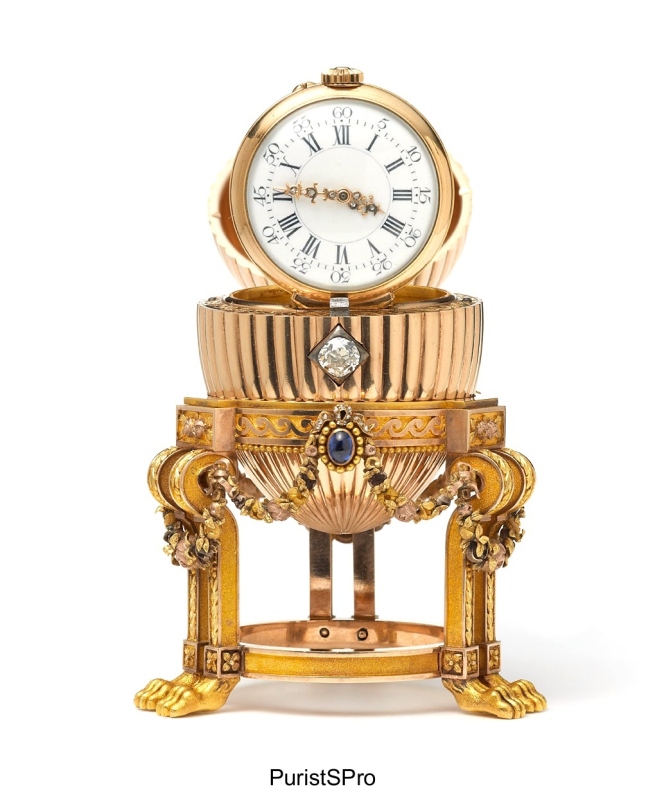
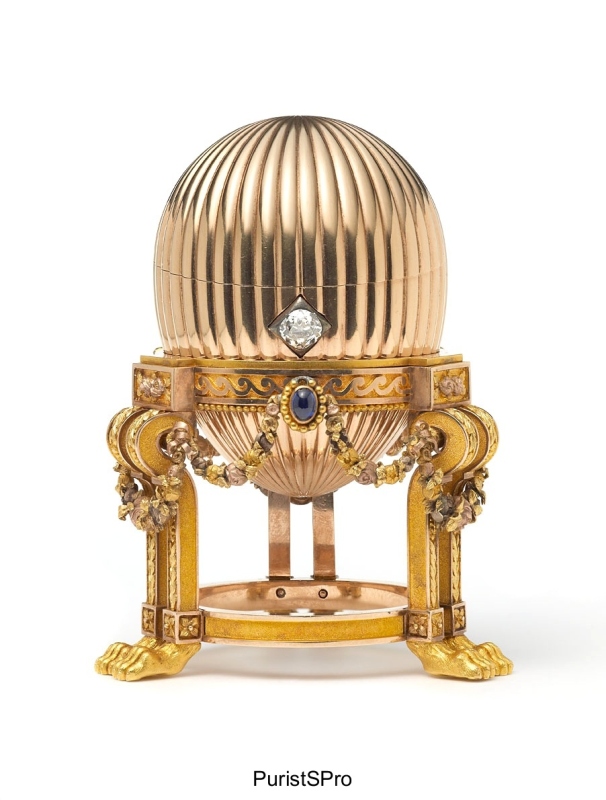
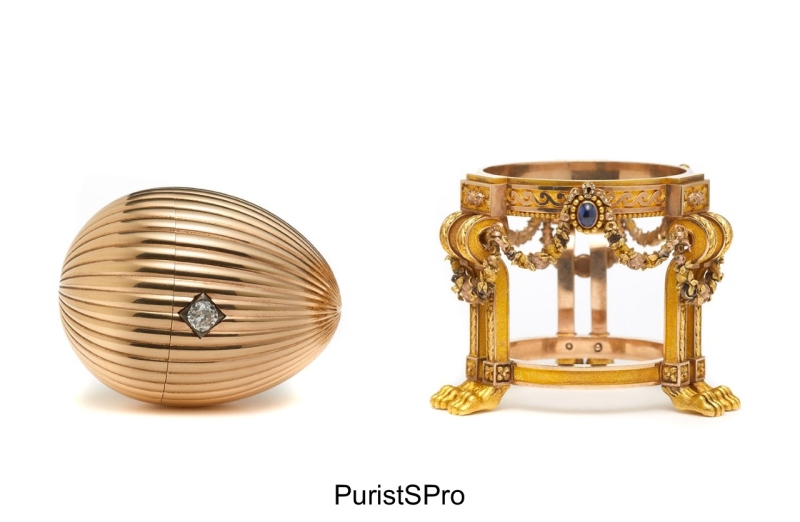
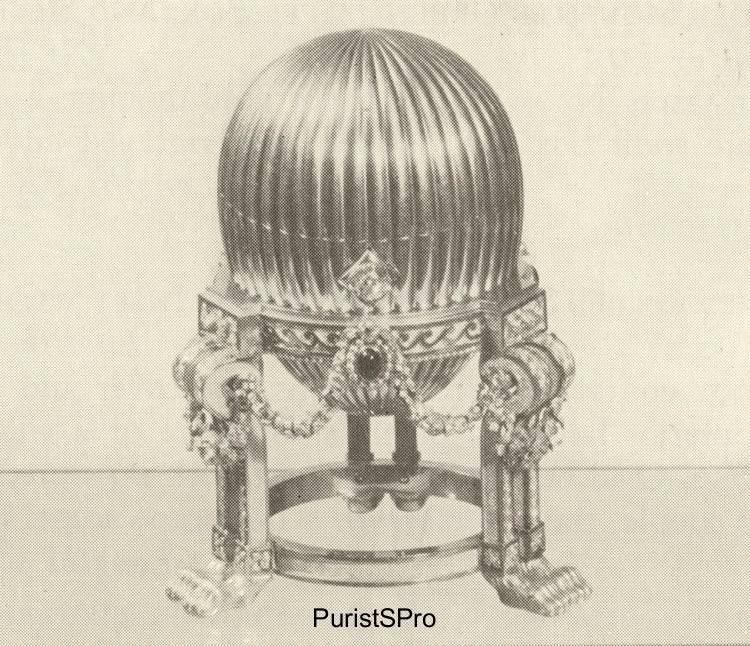
The first egg was completed in 1885, while the object in question is the Third Imperial Egg completed in 1887. It is an almost humble artefact measuring only 8.2 cm., with a foundation crafted as an elaborate gold stand supported by lion paw feet.
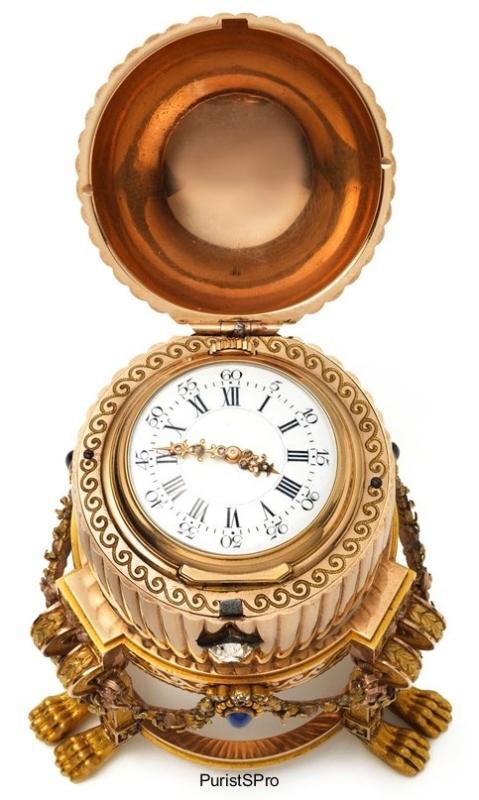
Three sapphires suspend golden garlands around it, and a diamond acts an opening mechanism to reveal the Vacheron Constantin watch inside:
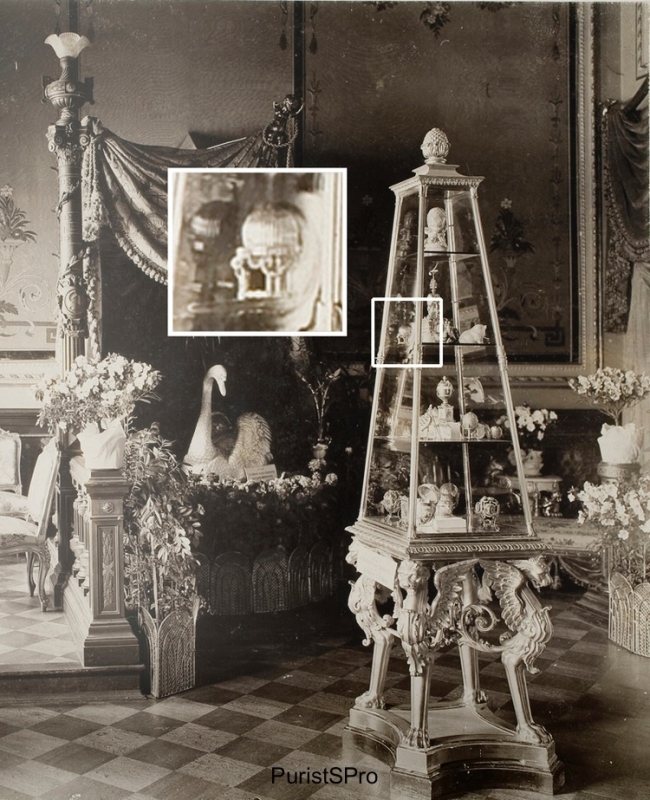
The further history of the egg is quite fascinating as well: The egg app read as part of the imperial exhibition in St. Petersbug:
After the Soviet revolution, under a state plan to convert 'treasures into tractors' many imperial artefacts, including 42 of the imperial eggs were sold and made their way into private collections and museums. Eight, including this very third egg, were thought to have been lost.
Two of the missing eight are thought to have survived, though their locations remain a mystery. The other five were almost certainly destroyed, McCarthy said, with no reference to them after the Revolution.
The third one fared a better luck: many years later, in 2011, historians of Fabergé spotted the very egg being listed in a Parke Bernet auction catalogue in New York, described as lot 259, but it was not identified as an Imperial Egg. The description read:
Fourteen-karat gold watch in reeded egg-shaped case with seventy-five point old-mine diamond clasp by Vacheron & Constantin; on eighteen-karat three-tone gold stand exquisitely wrought with an annulus, bordered with wave scrollings and pairs of corbel-like legs ciselé with a capping of roses, pendants of tiny leaves depending to animalistic feet with ring stretcher; the annulus bears three medallions of cabochon sapphires surmounted by tiny bowknotted ribbons set with minute diamonds, which support very finely ciselé three-tone gold swags of roses and leaves which continue downward and over the pairs of legs. Height 3 1/4 inches. [Parke Bernet auction catalogue]
The disinherited Imperial Egg was purchased at that auction by a Southern lady for $2450. After her death in the early 2000s, her estate was sold and the egg, still unrecognized, made its way to a midwestern antiques stall where it was spotted by our scrap metal dealer.
He planned to quickly resell it to be melted down for its gold value, but all of the prospective buyers who tested it thought he had overpaid. Blessedly stubborn, he refused to sell it at a loss and so for years he just kept the egg at home. Years later, in 2012, he performed his fateful Google search and found a report of the discovery of the egg in
an article published in the Telegraph ...
In the meantime, The Third Imperial Egg has been purchased by a private collector who has allowed the public to glimpse it at Wartski before it disappears from general view again.
Its value has been estimated to be around 24 Mio €.
(reported with material from CNN, The Irish Examiner, The History Blog and Der Spiegel)
Thanks for reading,
Magnus
This message has been edited by AnthonyTsai on 2014-03-24 06:20:23