Cazalea initiates a practical series on electric clock maintenance, driven by personal experience and a desire to preserve horological instruments. This introductory post sets the stage by categorizing various types of electric clocks, from modern quartz to historical transistor and synchronous models. It offers a foundational understanding for collectors looking to maintain the utility and longevity of their timekeeping devices.
BACKGROUNDThe concept of doing a series of posts on maintaining clocks has been in the back of my mind for awhile. I got motivated to start on it a month ago, when a half-dozen of my clocks stopped. I decided to get it finished because ThomasM posted a frightening shot of his Panerai clock suffering battery leakage.
Although at a distance the average Purist might not seem to be the sort of person to have a quartz clock on the wall above his desk, there's no doubt of their utility, convenience and desirability - if for nothing else than to serve as a reference source for setting all the mechanical watches in the collection.
I'm going to divide this post into several sections, dealing specifically with the inner workings of electric clocks, their power source / battery which is also their greatest enemy, and some simple things we can do (as well as the complications involved) in maintaining a fleet of electric clocks.
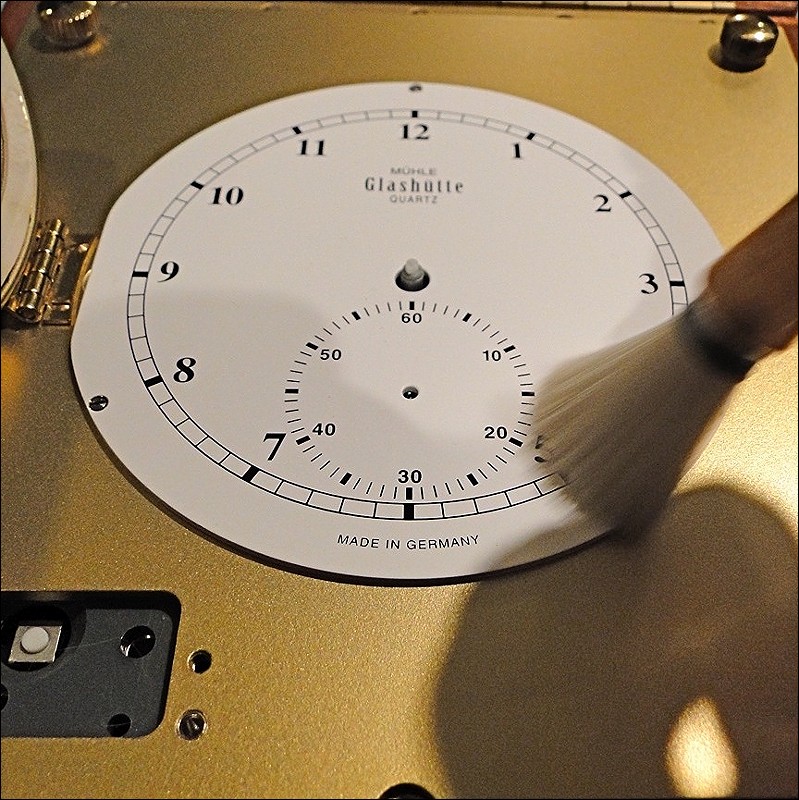
Cleaning the dial of a quartz marine chronometer
For historical purposes, it's worth mentioning that in the past century there have been many different types of electric clocks -- most of which can still be used today. In addition to the modern AA-cell powered quartz clock motor, there are other power sources which might be found moving the hands of our clocks.
NOT TO BE COVERED
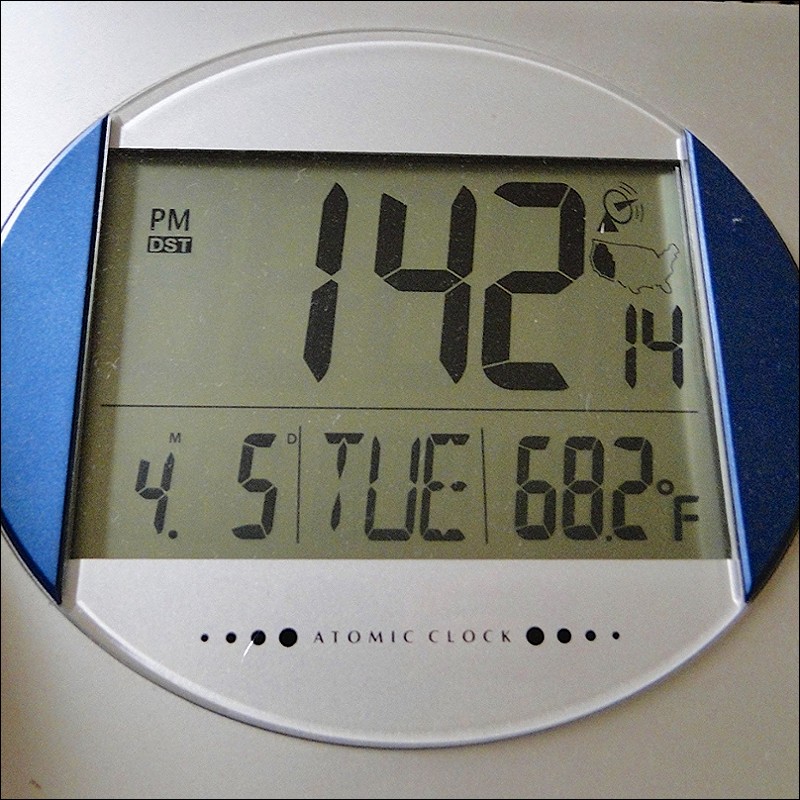
We will ignore digital and non-moving clocks, like this one:
"Atomic" digital clock
TRANSISTOR CLOCKS
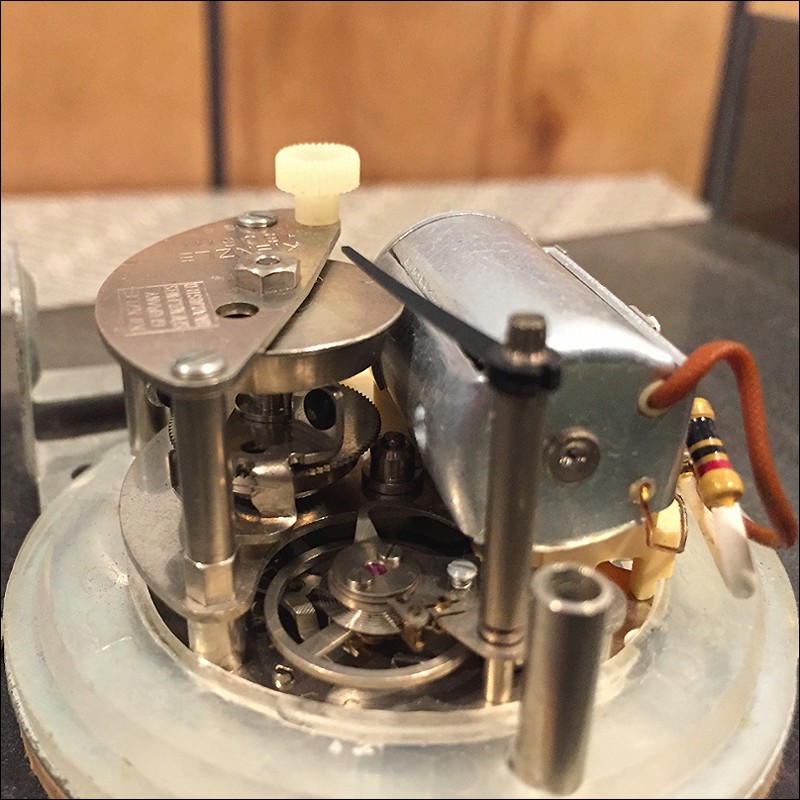
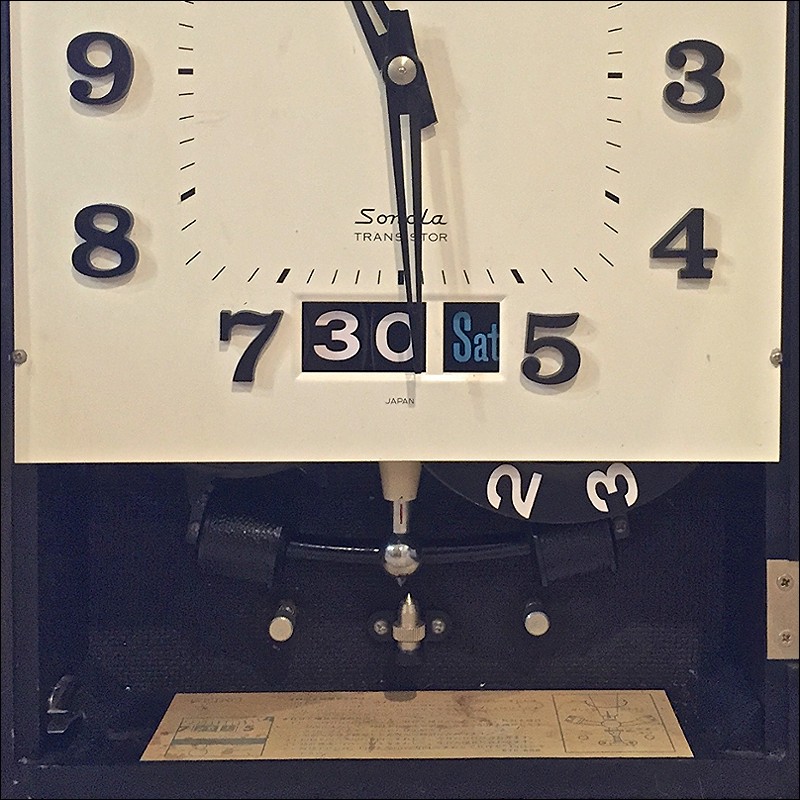
About a dozen of my clocks have transistorized movements. The transistor, or electronic switch, provides a periodic on/off signal to initiate a kick to the pendulum, or a spin to the balance wheel. Depending upon the clock's design, you might have the same problems that any mechanical clock or watch has, PLUS issues related to the electrical supply (but MINUS any winding or mainspring issues).
Transistor clock with balance wheel
Transistor clock with pendulum
ELECTRIC CLOCKS
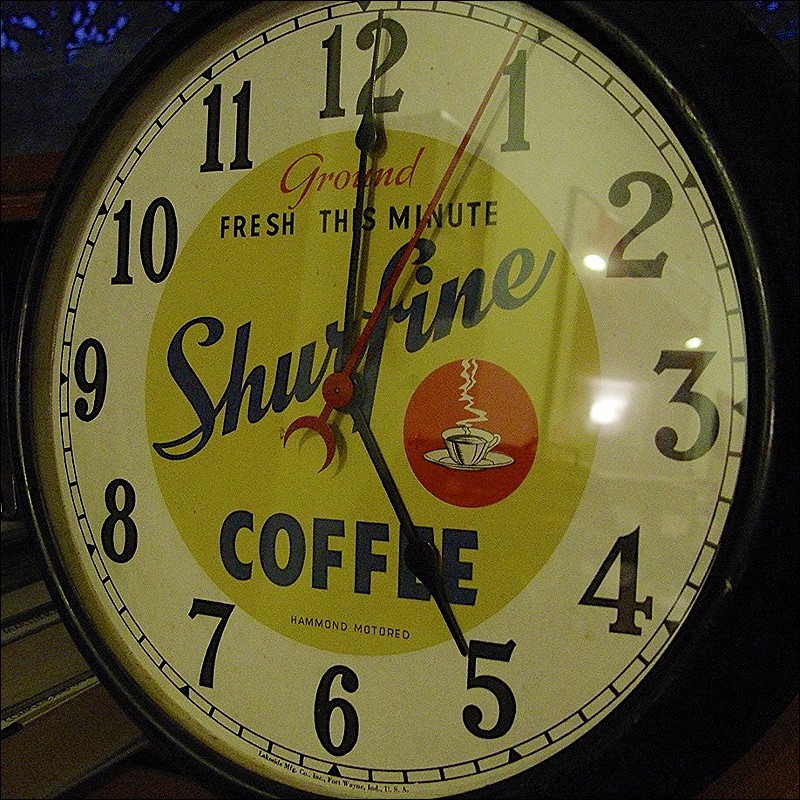
Some electric clocks use A/C synchronous motors. Their virtue is the clock's speed is directly related to the input frequency - and either 50 Hz or 60 Hz is very dependably supplied in the US and other countries. The Achilles heel of this design is starting torque - these motors have virtually none, so you have to spin a starter wheel, use a gearbox, or get the hands moving somehow. Older clocks are subject to gumming up or the bearings or bushing dry out - so the motor can't keep the hands going. Since they plug into the wall, batteries are not a problem.
Synchronous Clock
FLIP CLOCKS
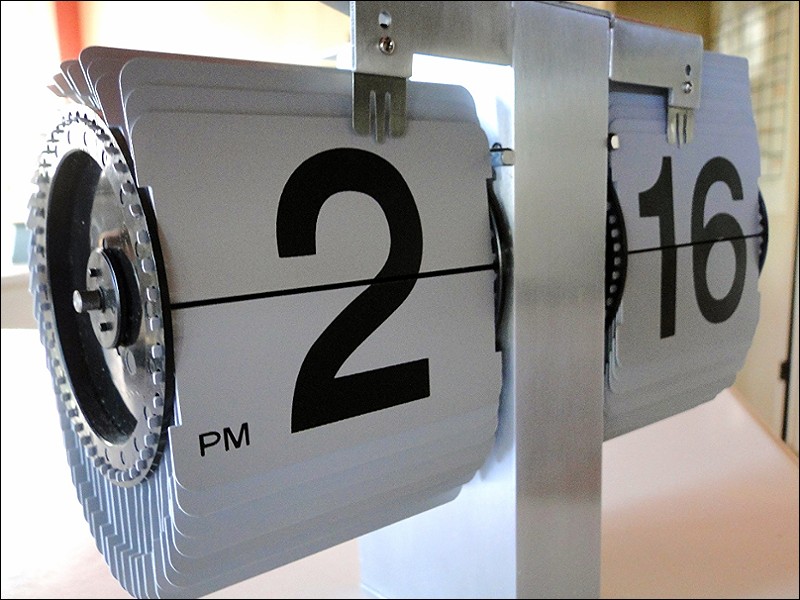
The flip clock was very popular for a decade or two after its invention around 1950, but it is fragile and laborious to construct. The design provides a digital reading of the time using split number cards moved by a typical synchronous motor. The cards are "flipped" by rotating past a spring finger. Filp clocks may show the time (as mine does) and more complicated models may also display date, day, month, year, etc.
Flip clock
THE QUARTZ CLOCK
I believe that we use the term "quartz" with regard to most clocks because a quartz-crystal frequency source is used in the bulk of our electric clocks today. As is the case with ThomasM's Panerai, or MTF's AP watch brand clocks, standard-sized motors of good Swiss construction can be found in the elaborate and beautifully-finished cases.
Marine quartz clock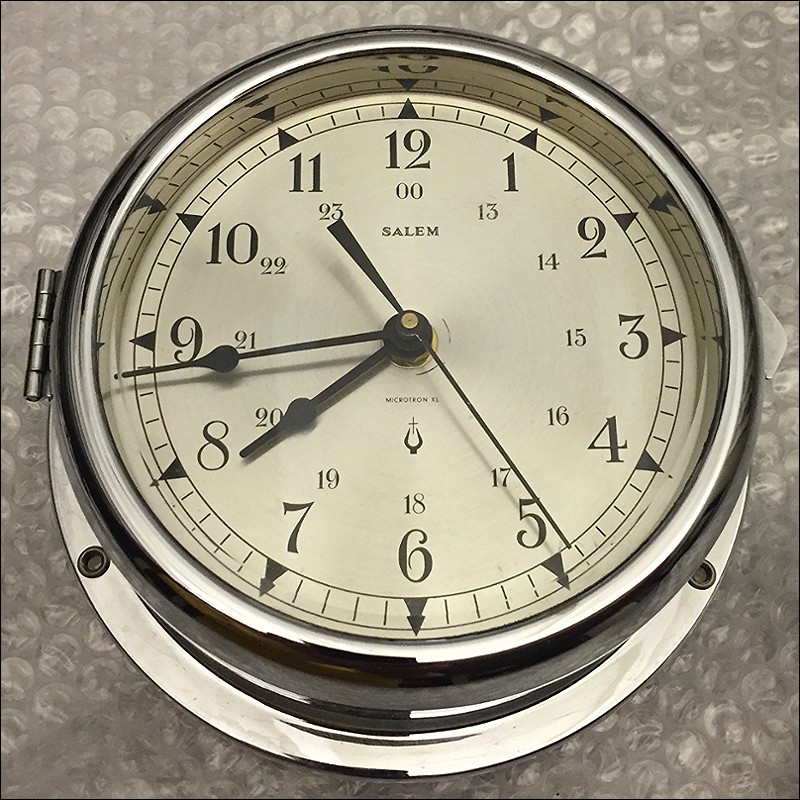
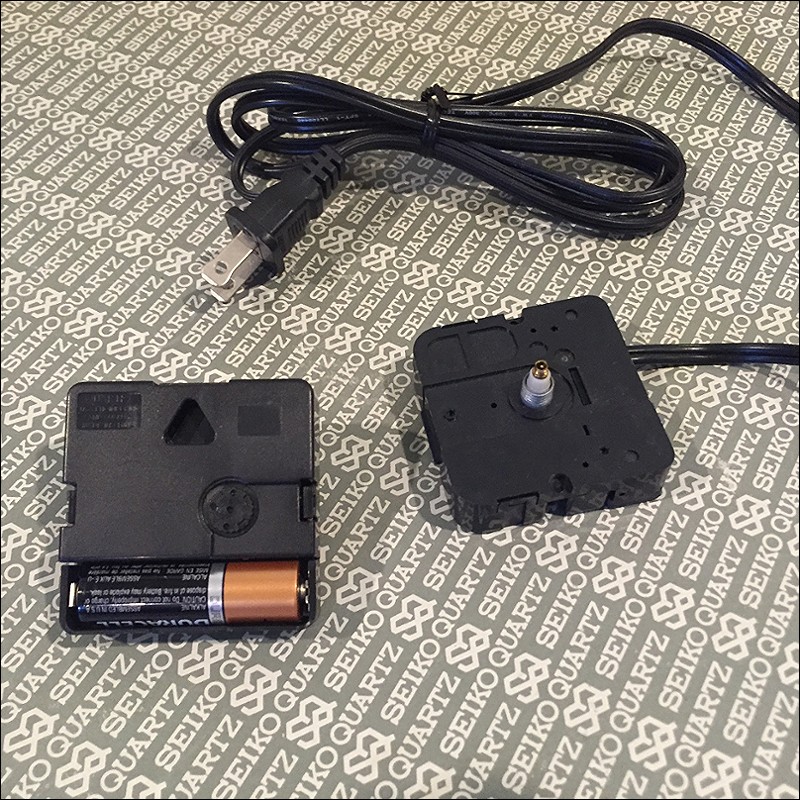
Quartz clocks are usually battery powered, but you might find the occasional one with an A/C adaptor for mains (line) power. Of course that means the clock should be mounted over a special wall outlet that is recessed to hide the cord.
Battery and line-powered clock motors
 QUARTZ CHRONOMETERS
 High-end quartz clocks can be assembled from precision components in order to achieve very high rates of dependability and accuracy, for navigation and other professional purposes. This Glashutte clock has a push button (under hatch at bottom left) to provides "hacking seconds" so you can set the clock precisely.
Quartz Marine Chronometer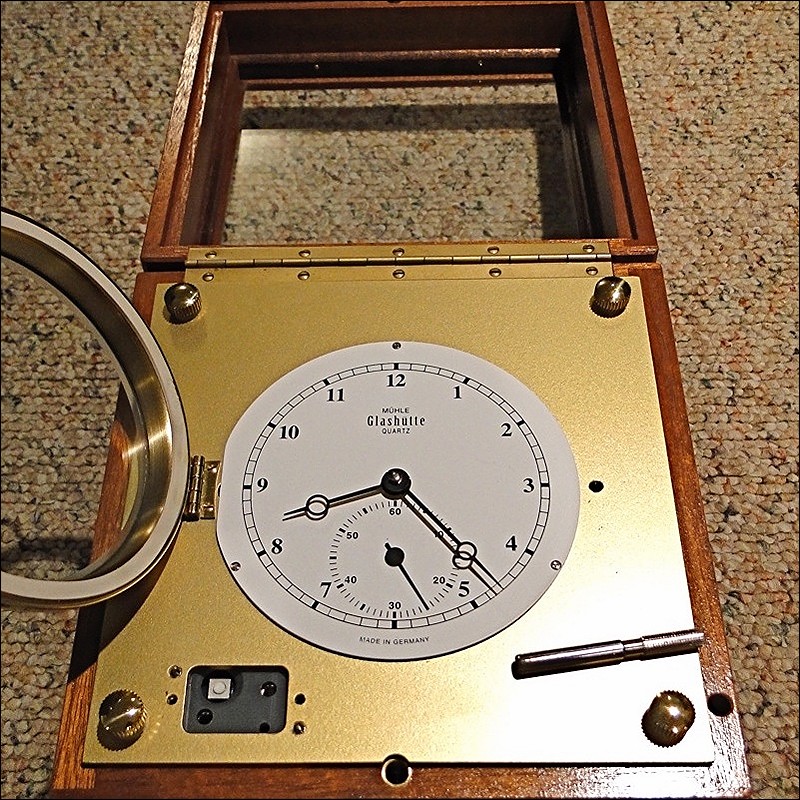
This photo illustrates a massive improvement in component quality and adjustment precision compared to the typical "black box" quartz clocks shown earlier.
Coin shown for scale ELECTRIC CLOCK COMPLICATIONS
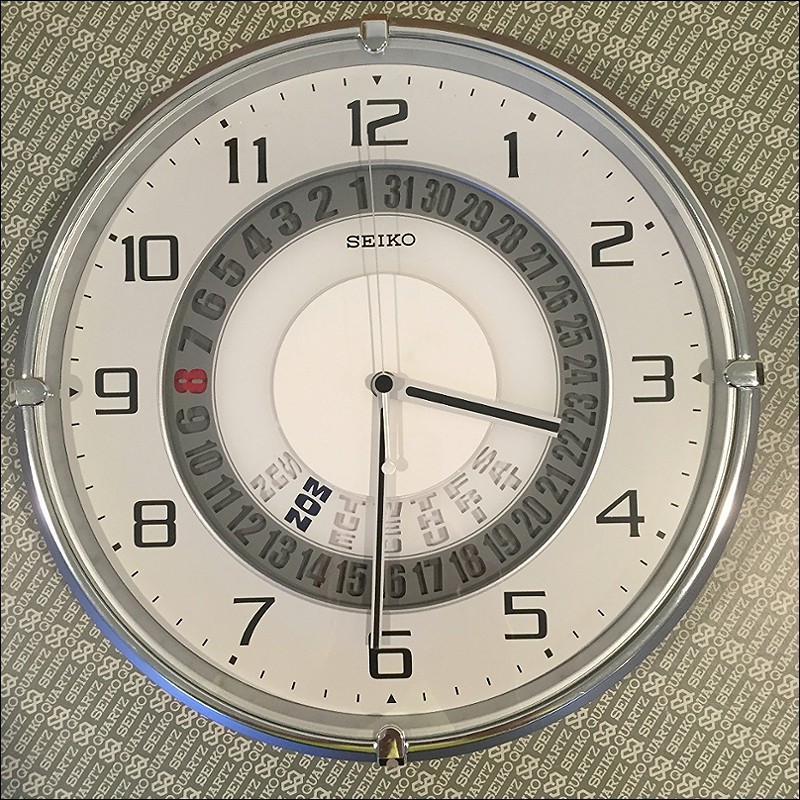
 Although most quartz clocks have two or three hands and simply tell the time, that's not all they are capable of doing. With suitable imagination and add-on modules, complications can be added for a reasonable increase in cost and complexity.
Quartz Clock with window day and date (rotating like a watch) plus electronic Westminster Chimes (movement shown flipped in right photo)
Motor controlled by electronic chiming/timing module at top left, where batteries are inserted
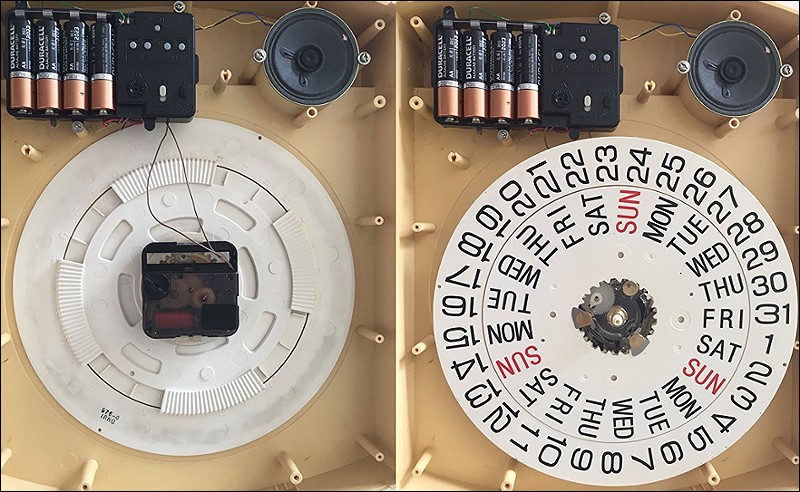 Quartz Clock with day date rotating back marker
Quartz Clock with moon phase and calendar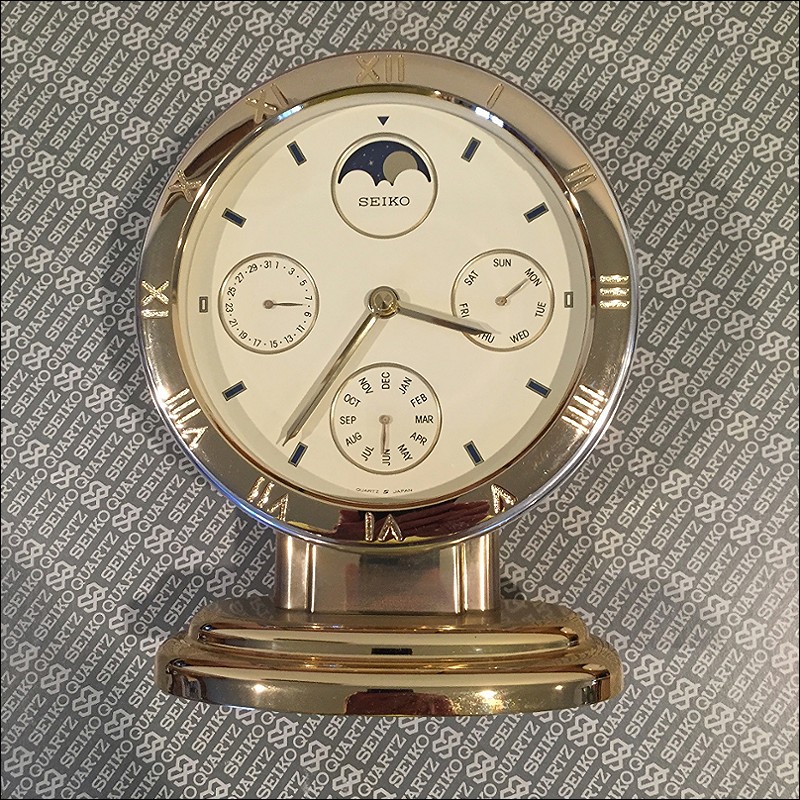
German Quartz clock with calendar, moon phase, and chimes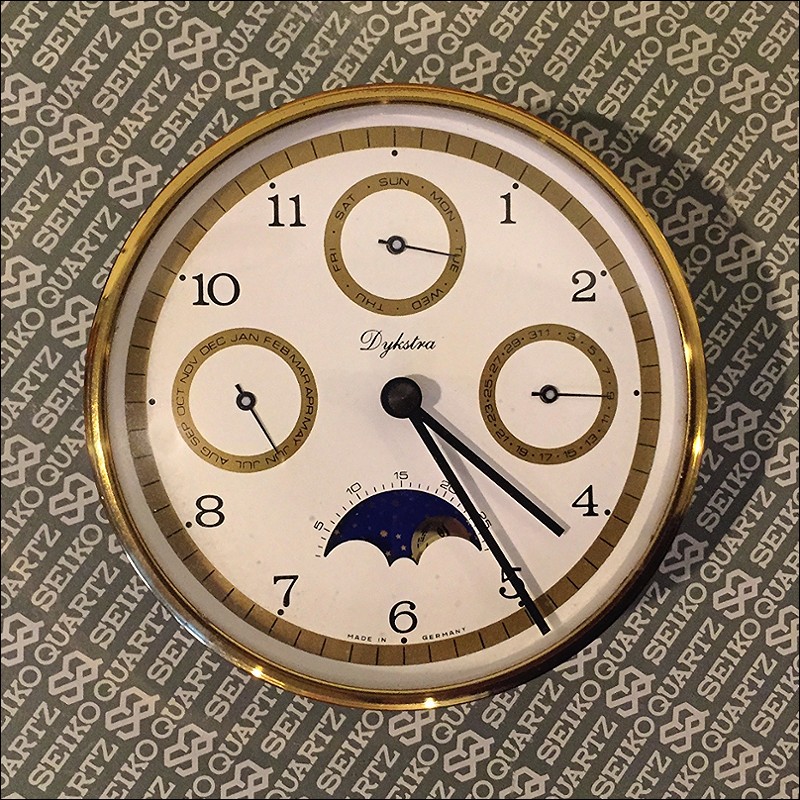
"Farmhouse" quartz clock with small seconds and moon phase driven by two separate movements and a complication module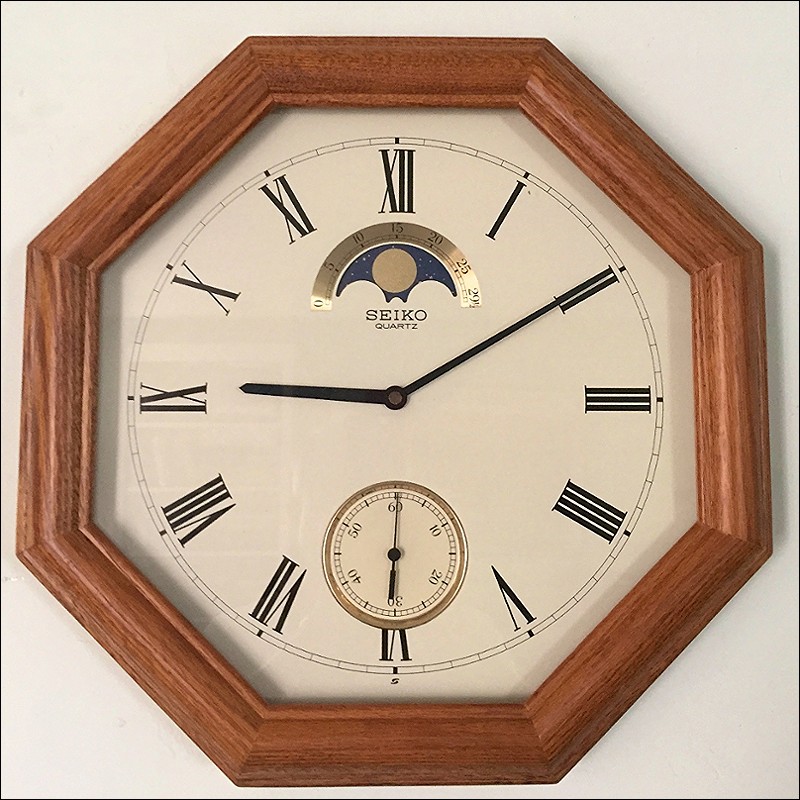 SUMMARY
As we've seen here, there are many variations of electric clocks on the market, and this is just scratching the surface. I believe these clocks are nice enough to show that owning a few electric clocks (quartz or otherwise) is a suitable occupation for a Purist.
It is a crime to allow leaking batteries to ruin these nice timekeepers! Part 2 of this series will provide a few tips on forestalling that problem, or rectifying it when it (inevitably) occurs.
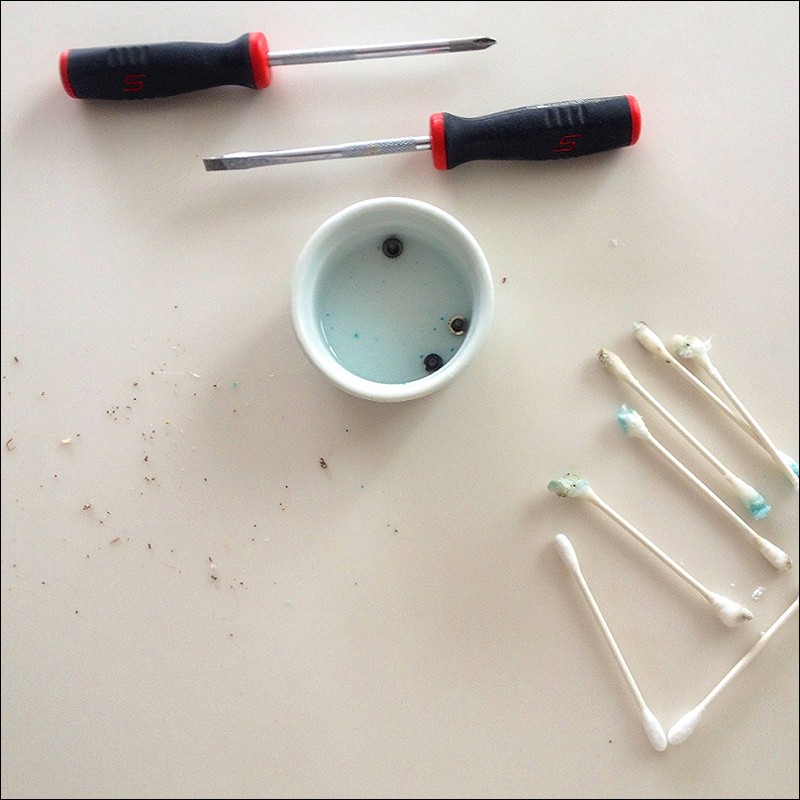
Simple tools are usually adequate for cleaning up electric clocks. Baking powder solution neutralizes battery acid and cotton swabs help extract debris
Please share your comments and questions so I can incorporate them in the next post. Thanks for reading.
Cazalea