Don Corson Dresdener Regulator Fabrication
Manufacture

Don Corson Dresdener Regulator Fabrication

By Kong · Feb 27, 2009 · 14 replies
Kong
WPS member · Horological Meandering forum
14 replies7773 views0 photos
f 𝕏 in 💬 🔗

Kong's multi-part series, "The Making of the Dresdener Regulator," offers an extraordinary, step-by-step documentation of independent watchmaker Don Corson's meticulous process. This first installment focuses on the initial fabrication of the movement's plates and bridges, revealing the artisanal skill required to transform raw materials into precision components. It provides a rare and detailed look into the foundational stages of creating a bespoke timepiece.


14 collectors discussing this on the WatchProSite forumJoin the Conversation →


After completing the design and compiled the Bill of Materials (BOM), he proceeded to purchase materials.

Once the materials were in his atelier, fabrication began....


Fabrication


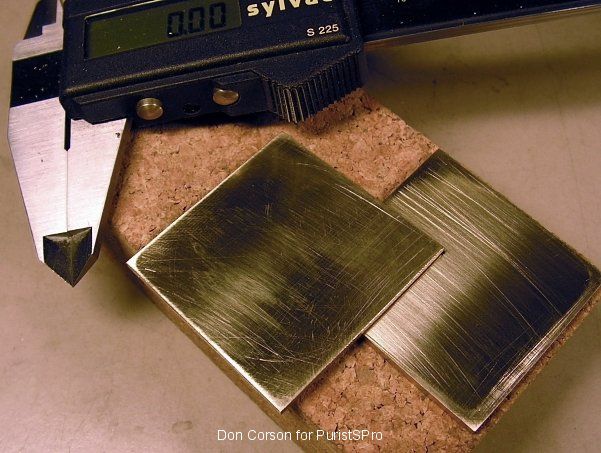
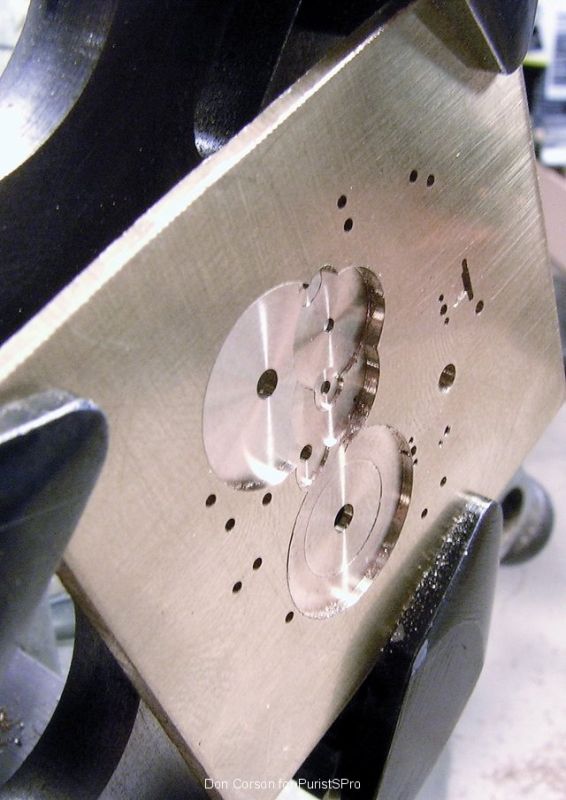
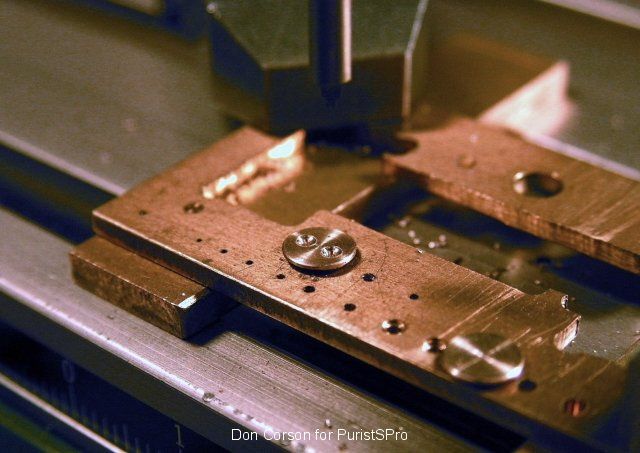
It starts with just two stress released brass blanks for the plate and bridges.


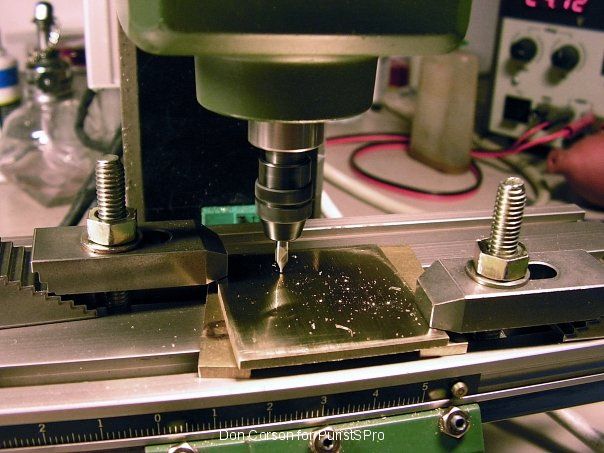
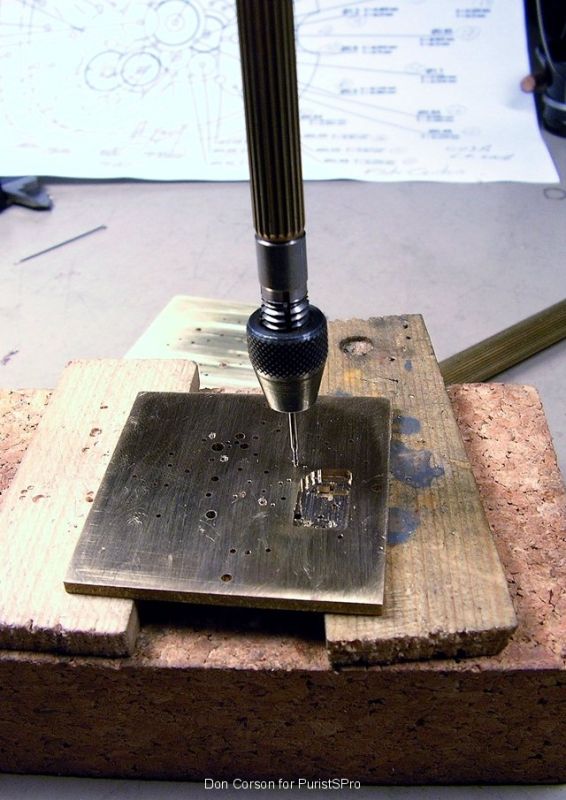
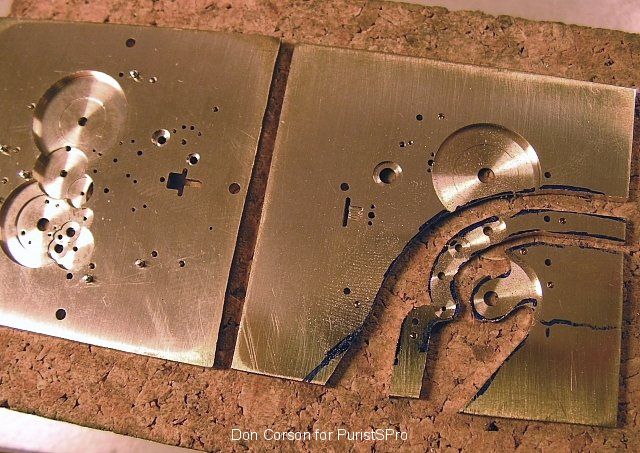
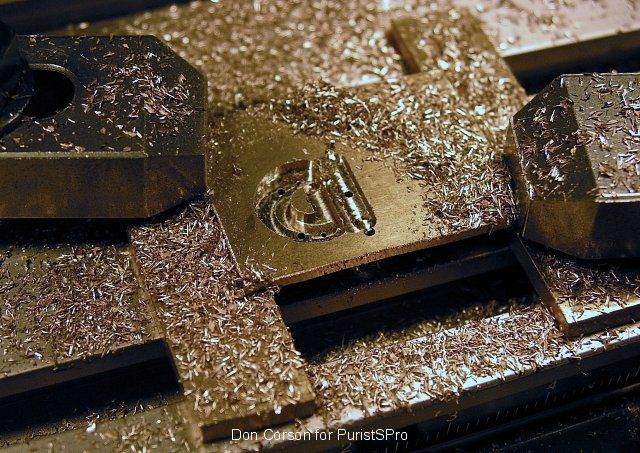
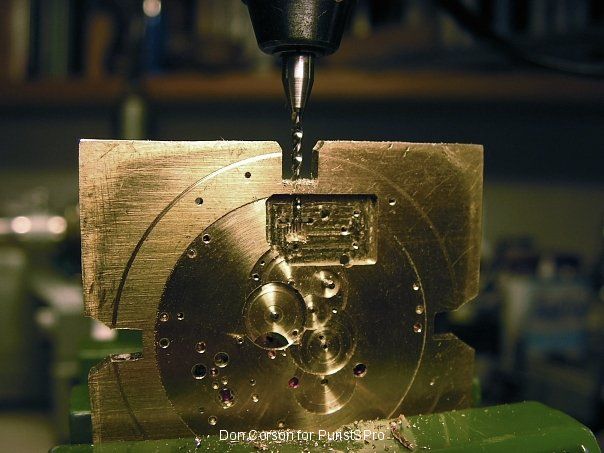
Those blanks get riddled with holes, a total of 101 holes in 19 different diameters.


Some of those holes are then threaded...


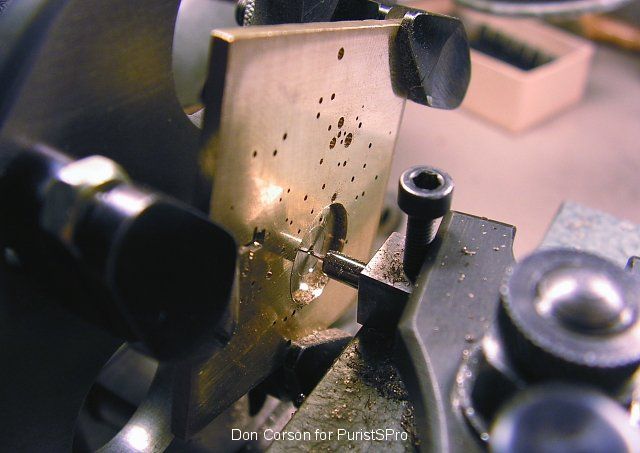
Then a little lathe work to remove the excess metal...


It is like making a sculpture, hammer and chisel, just remove the material that doesn’t belong to
David and leave the wanted.


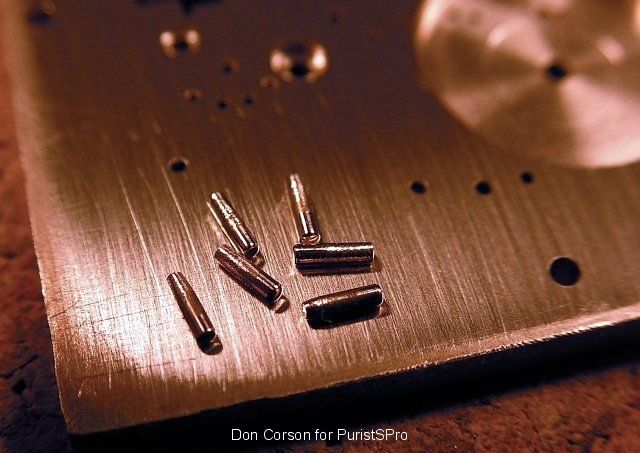
Preparation of the steady pins ....


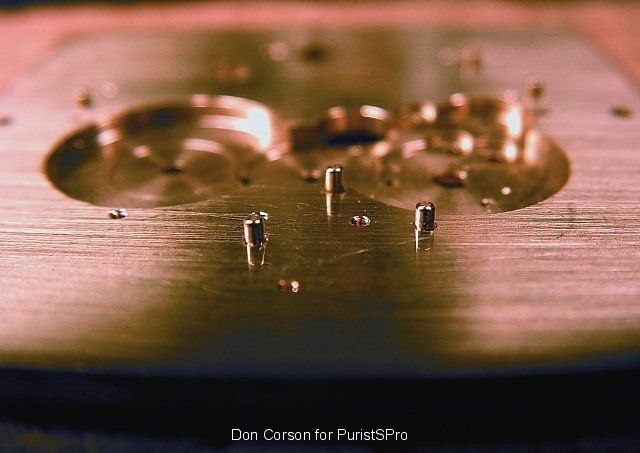
To keep everything in its proper place,  steady pins are pressed fitted into the designated holes...


The bridges (up till now were in a single piece of material) were cut into individual pieces.


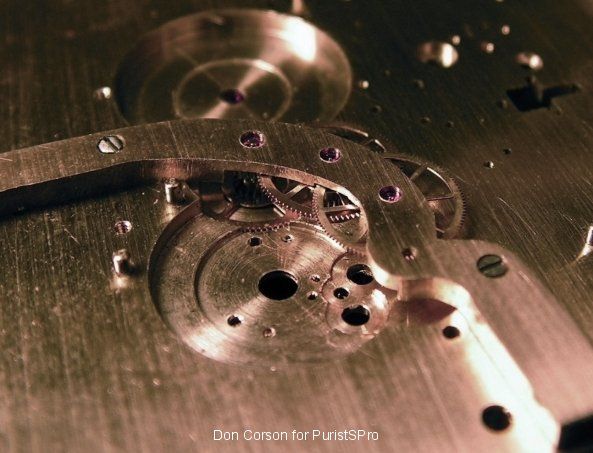
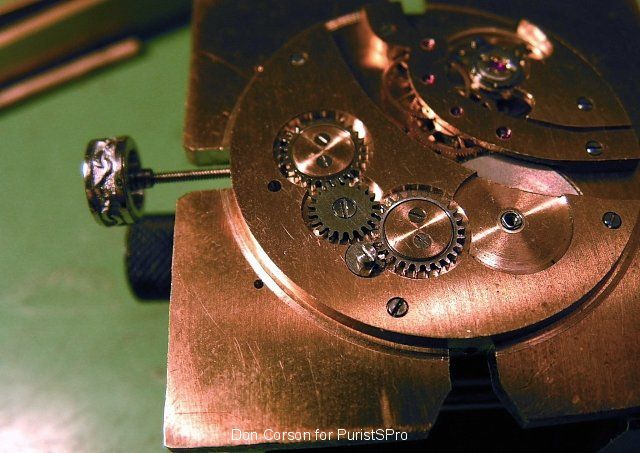
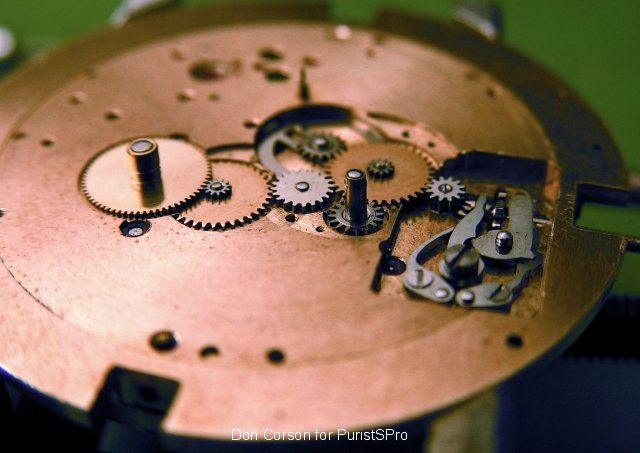
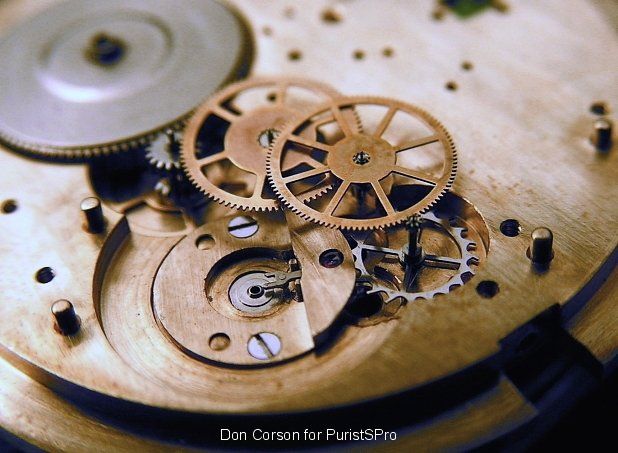
After fitting the jewels,  the train wheels were first mounted.


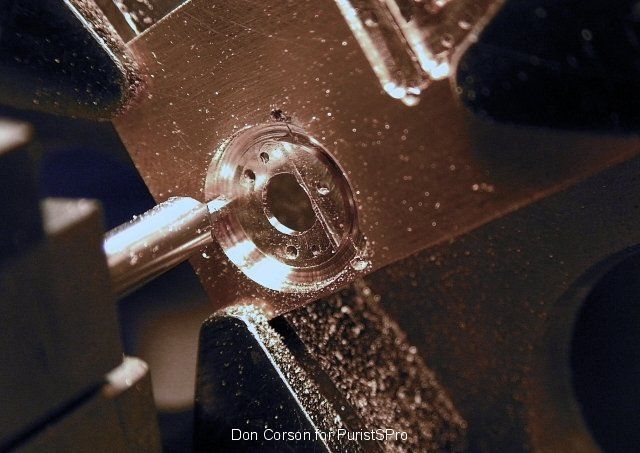
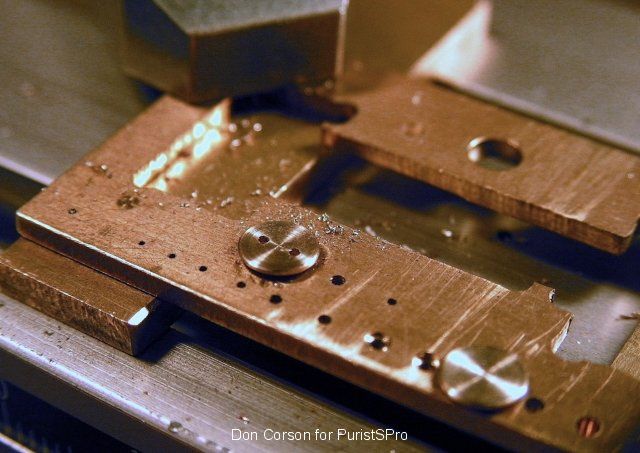
Next is to fabricate the anchor bridge, drilled all the holes and milled the top side.


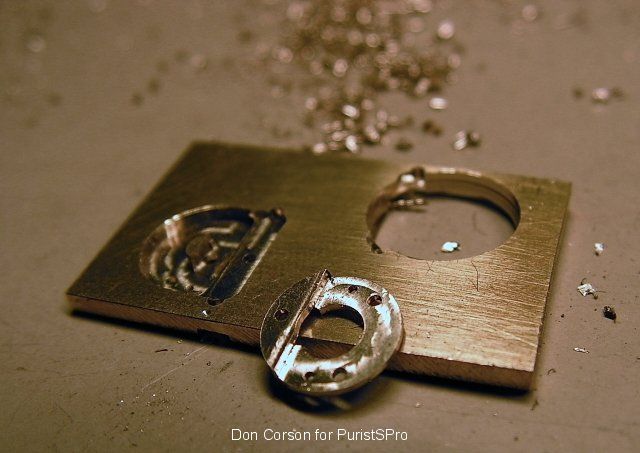
After milling the bottom side, turning out the part.


The anchor bridge.


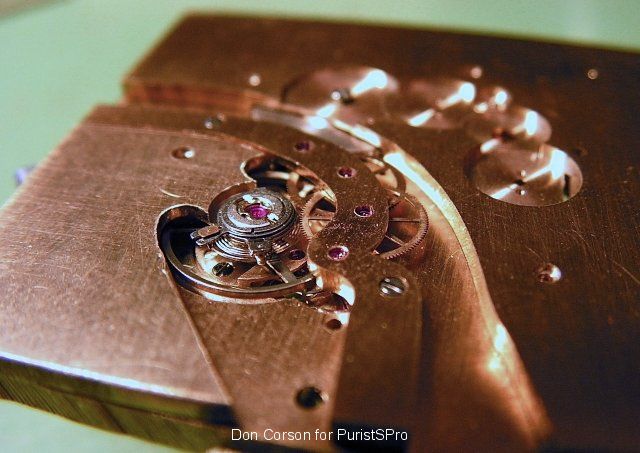
Here you can just see the anchor bridge jeweled and mounted under the balance wheel.


Drilling the stem hole...


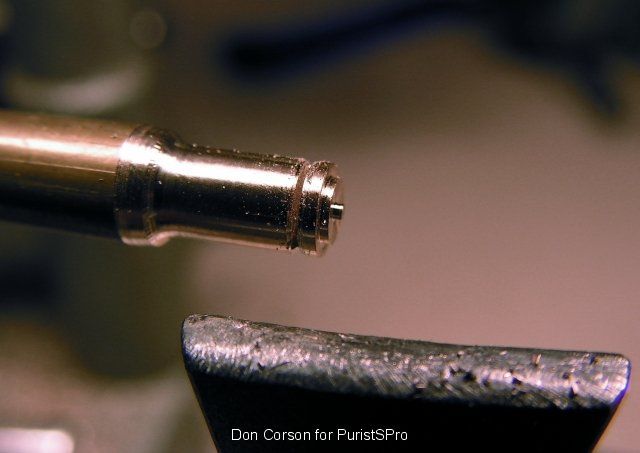
Before we can mount the winding train we need to make the wheel studs.  Above is turning the stud
from a brass rod…


drilling the screw holes…


and making the countersinks to finish the stud.


Now the studs are mounted.  Only the ratchet wheel is to be added.


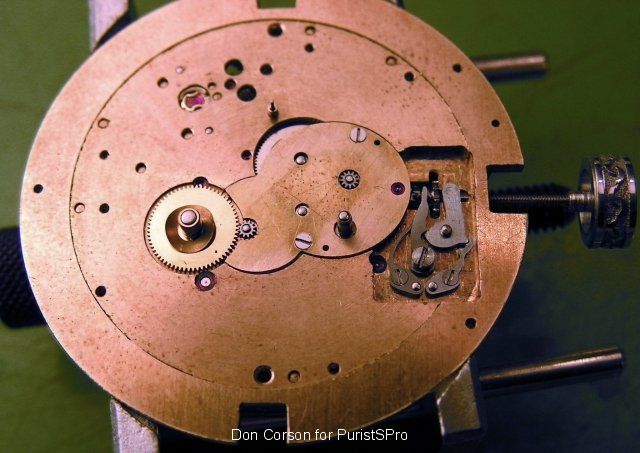
On the dial side the keyless works has been made and assembled ...


the motion works held in place with the cover.


Now that the movement is fully assembled and works, the next step is decoration.


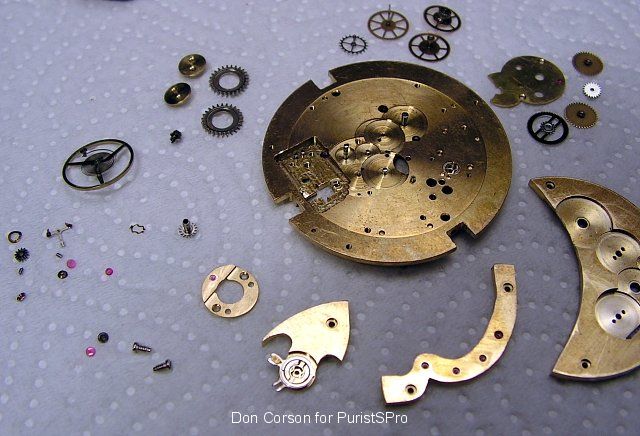
Before the decoration process, the components were disassembled....


All the steel parts that have been pressed into the plate, such as the axles were removed
otherwise they will be destroyed during the process of plating...


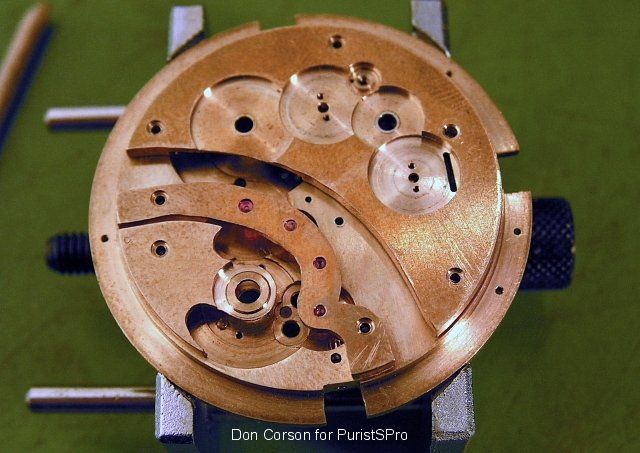
The bare plate and bridges.


The next part is the decoration of the movement.


Stay tune!


Please click here for Part 2


This message has been edited by AnthonyTsai on 2009-02-27 13:20:48 This message has been edited by AnthonyTsai on 2009-03-04 08:41:48

Added link to Part 2

This message has been edited by Kong on 2009-03-05 22:56:23 This message has been edited by Kong on 2009-03-19 10:25:22

Key Points from the Discussion

  • Don Corson confirms that he uses standard jewels but plans to use larger ones in his next watch to make them stand out. He also notes that custom-made jewels are possible, referencing examples from Speake-Marin and Gauthier.
  • The process of drilling 101 holes in the brass blanks is done on a milling machine with an XY table, now enhanced with CNC for added precision and peace of mind, though manual positioning was used for earlier watches.
  • Don Corson designs all watch parts from scratch using TurboCAD, noting that specialized watchmaking CAD software exists but is prohibitively expensive, and that measuring existing parts is the most time-consuming aspect.
  • A significant portion (64% by item count) of the movement parts are either made or modified by Don Corson himself, highlighting the highly individualized nature of his watchmaking, despite sourcing common items like spirals and sapphire glass.
  • The community emphasizes the rarity and difficulty of individuals like Don Corson successfully creating their own watches from raw materials, contrasting his artisanal approach with mass-produced luxury watches.
  • The detailed fabrication process is likened to the painstaking methods used by master clockmakers for Viennese regulator clocks, underscoring the traditional craftsmanship involved.
Advertisement
The Discussion
AN
AnthonyTsai
Feb 27, 2009

It's fascinating to see a work-in-progress and can't wait to see the decoration report. Question for Don, the drilling machine you use to drill 101 holes, is this machine hooked up to a computer so it drills the holes for you? Or do you manually adjust the position of the drill for each hole? If it's the latter, how do you guarentee precision of drill placement? Cheers, Anthony

OP
Ophiuchus
Feb 28, 2009

It can't be understated just how rare people like Don are for even attempting this, to make their own watch- let alone succeed. I myself have wanted to do this for years, but have been trapped in place so remote so as to have no hope of tools. Perhaps in a few more years... The very fact that Don is a site moderator for us PuristS is something quite important & telling as well- he doesn't make watches with insane amounts of finishing, jeweled to the hilt, slathered with diamonds. The man makes w

DO
DonCorson
Feb 28, 2009

I do the drilling on my milling machine. It has an XY table so it is no problem to position the holes if you take some precautions. For my first watches the positioning was by hand, now I have added CNC to the machine. The computer control needs to use the same precautions as by hand, but I can check the coordinates several times before starting to drill to have some peace of mind. Purely by hand one can make a mistake at any time and one really needs to be careful. The CNC just adds some sereni

DO
DonCorson
Feb 28, 2009

Hi Ophiuchus, Working on the face place with the workpiece off center there is, of course, some unbalance when turning. But the turning speeds are pretty slow and in general it doesn't cause a problem. Note also that although there is often talk of all the tolerances in this or that movement being under 1/1000mm, there are only a certain number of really critical dimensions in a movement. The diameter of the holes that are turned out for the wheels, or even that they are round, is not among them

ER
eric_s
Mar 1, 2009

looking forward to part 2...

PS
PS
Mar 1, 2009

I found this post really interesting! I would like to try a similar project I and have searched for suitable CAD software. I'm quirius to what you are using and if it comes with a library of movement parts or if one has to define every wheel/toohing etc before starting the layout procedure. The mill looks like Proxxon which is a brand I have good experience from sofar as I have their micro pillardrill with X/Y-table. Thanks Patrik

Advertisement

Continue the conversation

This thread is active on the Horological Meandering forum with 14 replies. Share your knowledge with fellow collectors.

Join the Discussion →