
Complications
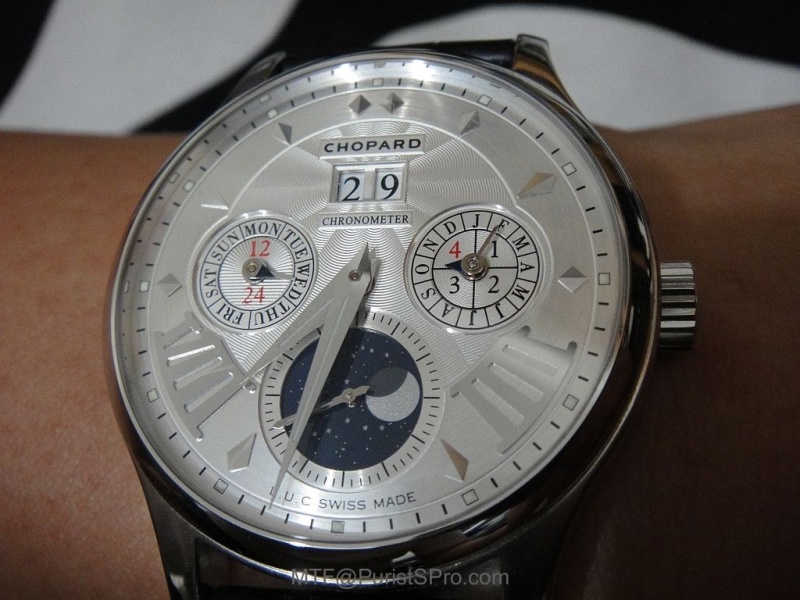
MTF's post offers a unique, real-time comparison of two perpetual calendars, the Chopard L.U.C Lunar One and a Ulysse Nardin, as they transition from February 29th to March 1st. This rare, side-by-side observation highlights the distinct mechanical philosophies behind their date change mechanisms. The discussion that follows delves into the technical nuances and historical context of instantaneous versus gradual perpetual calendar changes.


Dear forumners,
The planned Perpetually PuristS Singapore 2012 event did not come to fruition: apologies to all.
However, an old stalwart (UN) and a new perpetual calendar watch together with some sherry did have a quiet race together.
They both started on the 29th February, of course. After dinner, a gentle post-prandial sherry and we settled for an evening of quiet PuristS Contemplation.
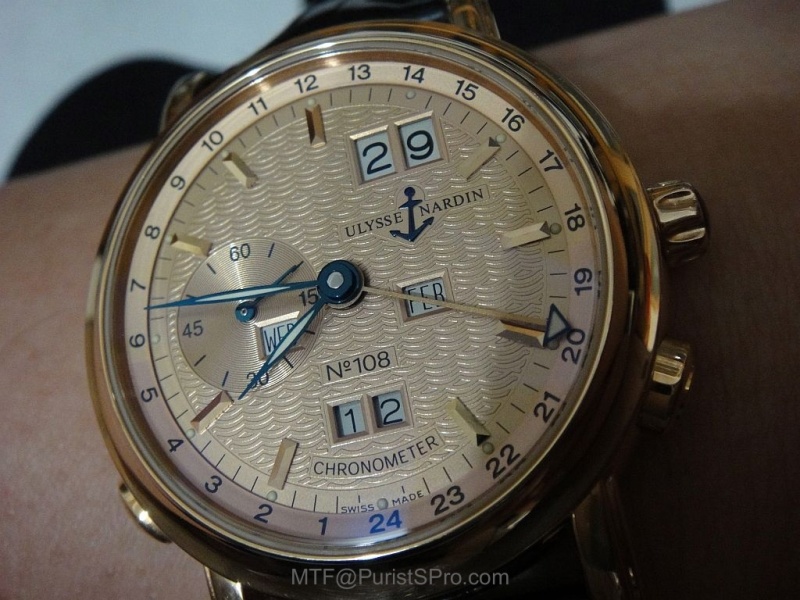
The UN took an early lead and went all googly-eyed in the date window. 
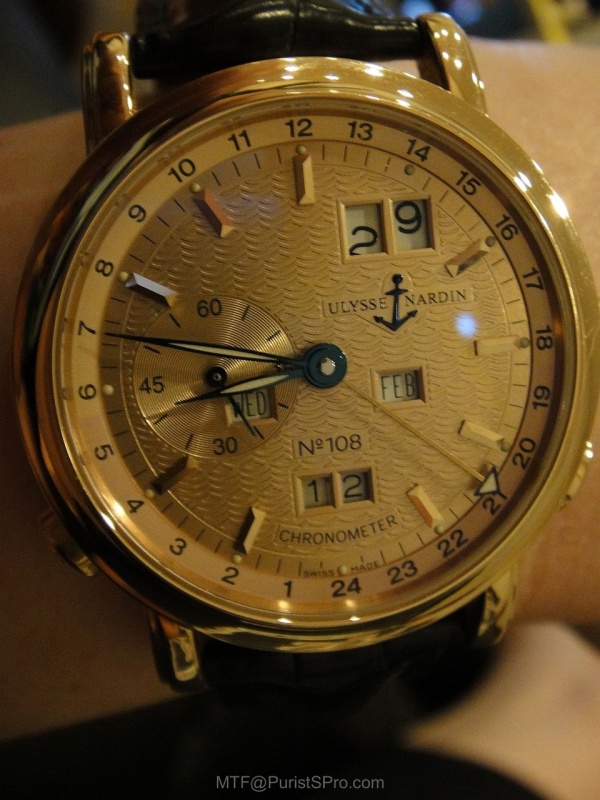
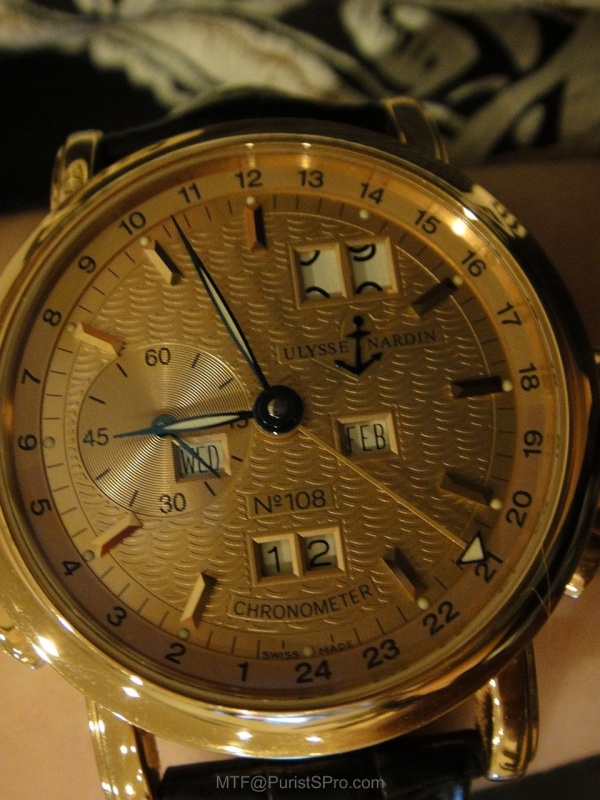
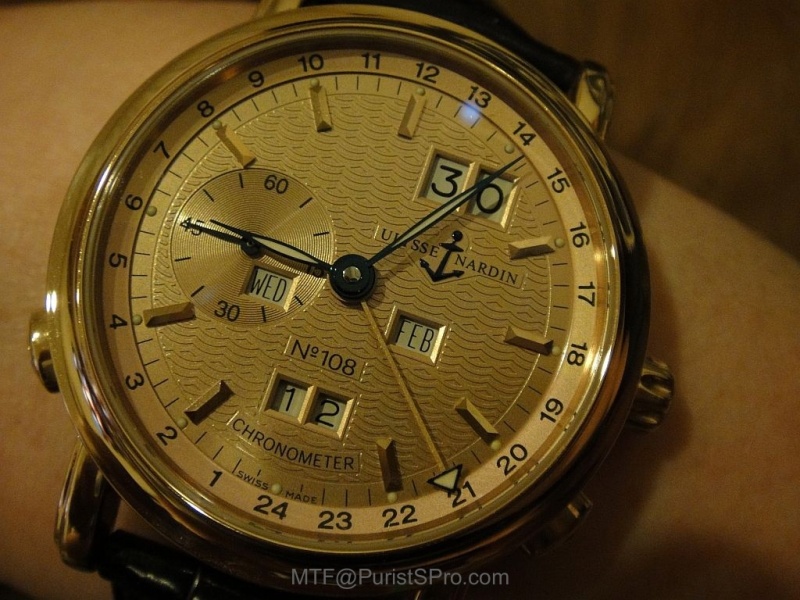
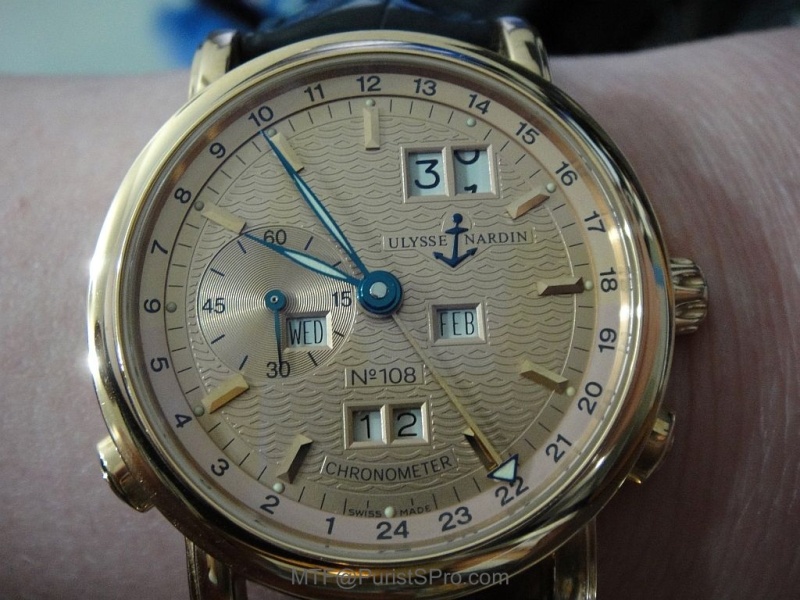
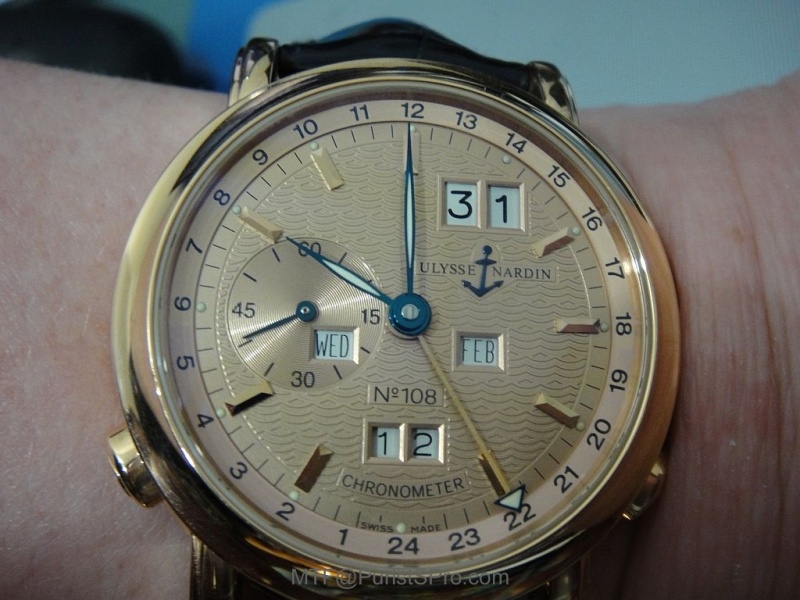
Just over half an hour to go and both were ready to jump over into March, showing 31st February (sic). The UN was already changing Day to Thursday.
The Chopard is supposed to jump instantaneously Date, Day, Month and Leap Year indicators at midnight.......we'll see if it's a rumour.

15 minutes to go and UN is all googly-eyed again; it thinks its Thursday already but still in February.
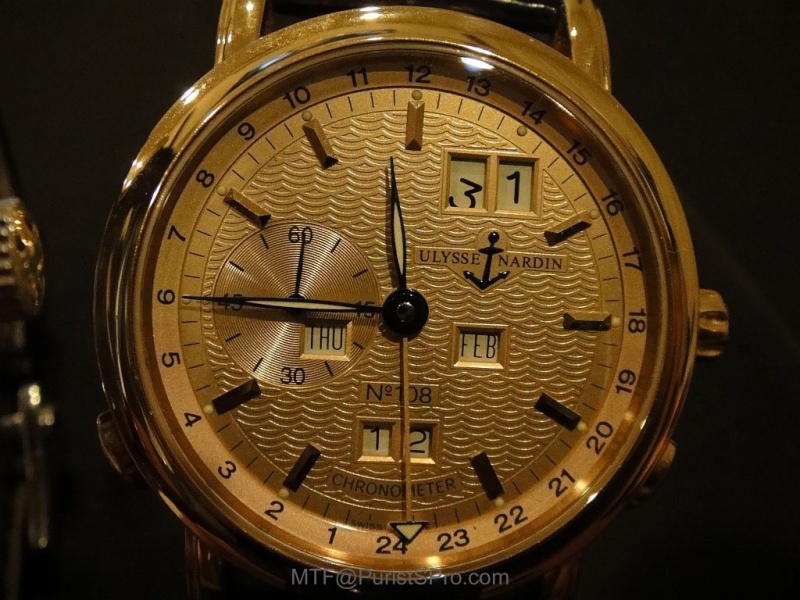
6 minutes before midnight and Chopard Lunar One is still steady in February.
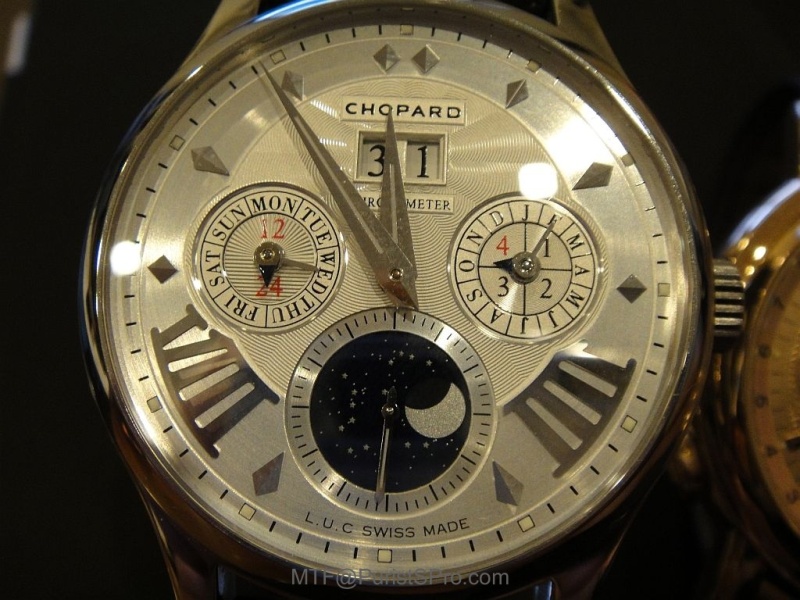
At the same time, UN is changing date and month.
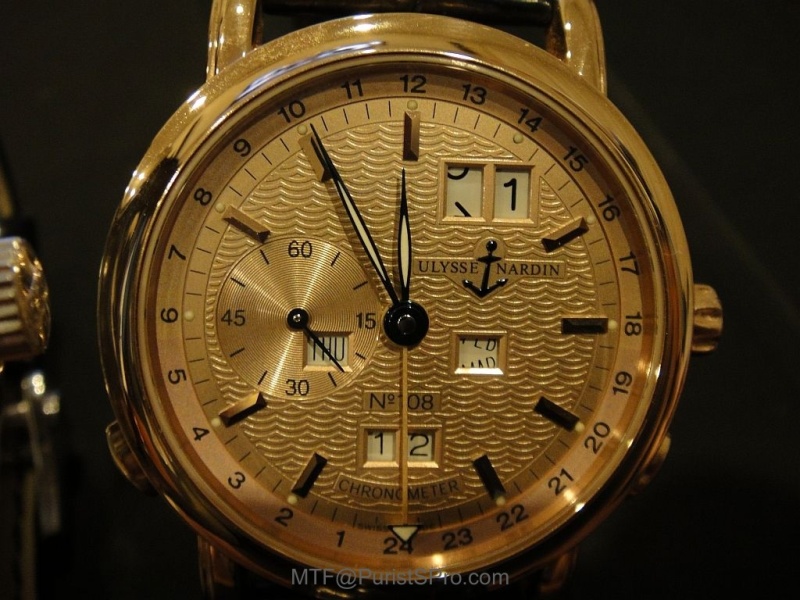
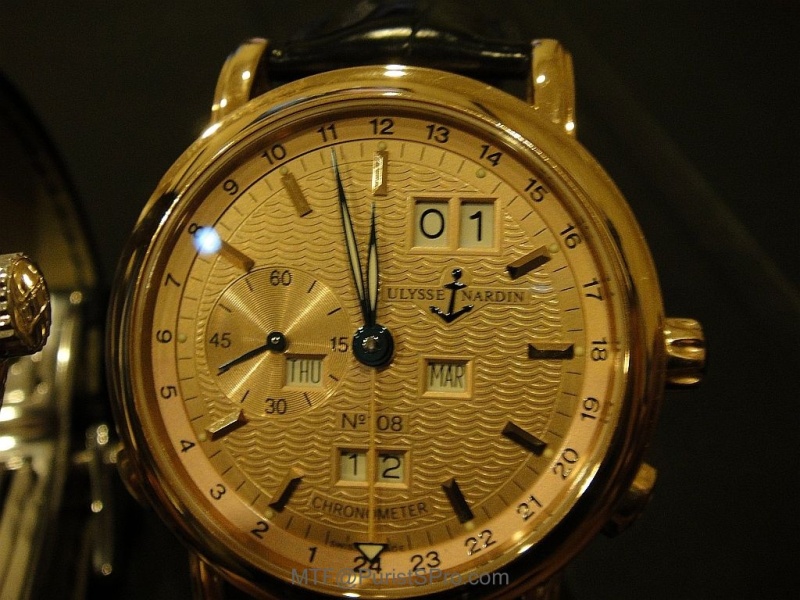
2.5 mins before midnight and UN has prematurely ejaculated its all. But we could go home early unlike some Breguet owners who have to wait until nearly 01:30H....hehehe.
7 SECONDS before midnight and Chopard Lunar One is still at it......doing nothing.

MIDNIGHT and Chopard Lunar One Gone Wild ; spinning Date, Day, Month and Leap Year indicators instantaneously.
No chance to turn on the video function on my digital camera
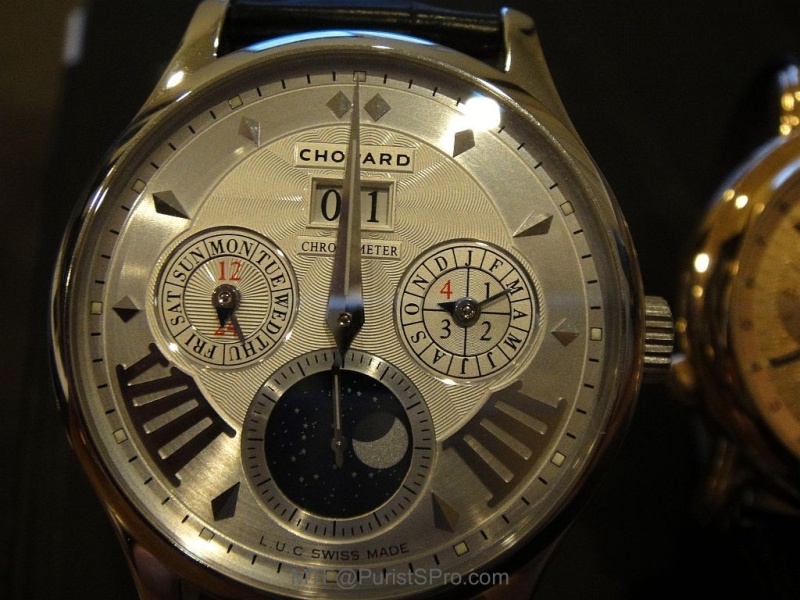
Chopard 1 : Ulysse Nardin 0
Another 4 years for the re-match.......
Regards,
MTF
It's something I never thought about - the time it takes for the change. These two manufactures obviously took two drastically different approaches. Thanks for the post!
emil, It's all about power....or more about torque. To turn all the indicators at once requires storage and release of a bunch of torque. Saving the power before the big jump takes a toll on time-keeping up til that point. So, many makers choose the s-l-o-w route by rationalising that most people are asleep or PDT (pretty darned tired) around the changeover period. Most people are happy to wake up in the morning to find their clever watches actually changed dates correctly. Don't start me on the
...is a great reason. I think we all appreciate when a brand develops a watch that goes just that little bit further to prove its capabilities. Emil
UN did not choose the s-l-o-w way of date change, because they were not competent enough to offer an instantaneous calendar change. The Oechslin calendar mechanism is based on rotating movements solely, without any programmed cams or levers. The latter permits more exact timing of the changing process, but implements many additional factors and potential sources of trouble, both during manufacturing and service. The Oechslin system works with dented wheels and Maltese crosses, making it rather r
Marcus, I completely agree and did not mean to imply that UN went for the slow method because of incompetence with power management. I was thinking of u-hum...er...other 'famous' brands....tee hee. The UN +/- GMT Perpetual Calendar watch is the best of the "slow ones for a good reason"; one of my favourites. Sometimes when I am feeling sorry for myself......I am cheered that I have the two best perpetual calendar watches...Yay! And that is even before we discuss their beautiful dials............
but sometimes you have to let things go when you dont want to. if i get the chance to buy another perpetual it will be a UN in WG, i have too many YG or RG watches. it is the best perpetual system IMO. Graham
This thread is active on the Horological Meandering forum with 28 replies. Share your knowledge with fellow collectors.
Join the Discussion →


