
Manufacture
Pingtsai's in-depth article from 2012 provides a comprehensive look into Bulgari's strategic transformation into a legitimate watch manufacture. The post details their investment in resources, technical capabilities, and creative talent across movement, dial, and case production, offering valuable insights into the brand's journey in haute horlogerie.
Bulgari Watchmaking - Movements, Dials and Cases
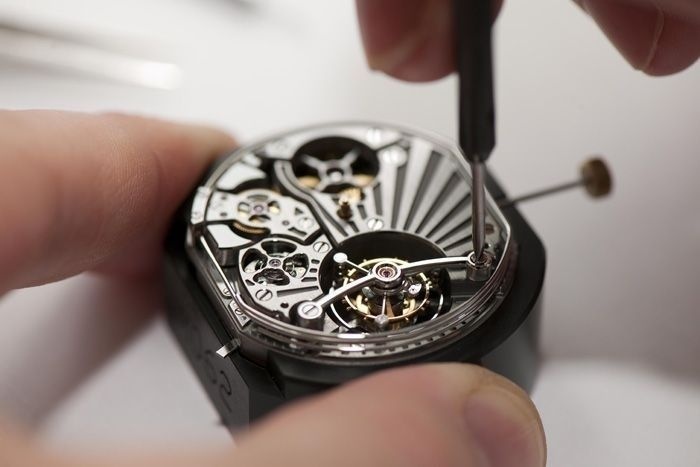
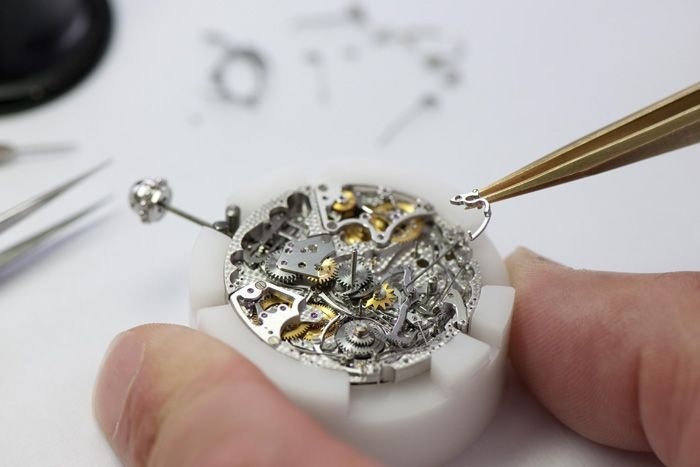
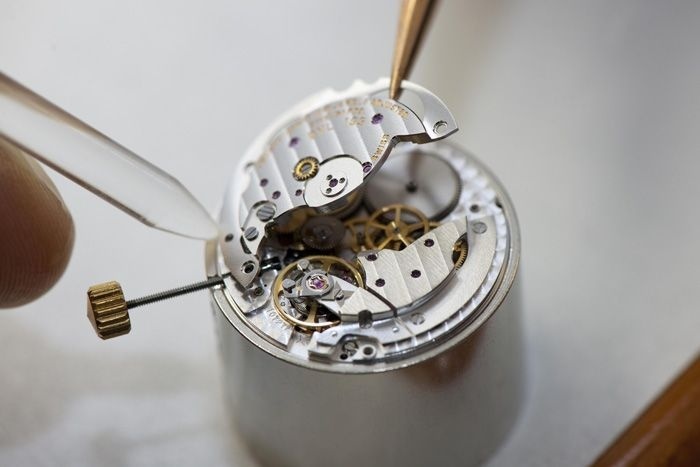
Carillon Tourbillon assembly
Being regarded as a true watchmaker in today’s knowledgeably discerning watch community isn’t the simplest accolade to achieve. Carefully orchestrated, purposefully integrated, with a clear goal in mind, Bulgari has successfully built up all the resources necessary to transform themselves into a true watch manufacture. It has taken millions of dollars, years of strategic decision making, careful marketing and a clear vision. And one could say that they are just getting their feet wet.
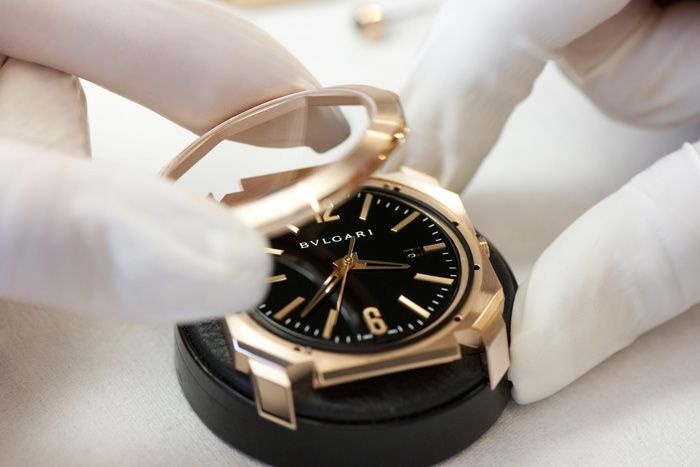
Bulgari has built up their image as well. With each new release, they get more and more convincing. They flash their technical capabilities and creative talent with each endeavor, masterfully combining mechanical greatness with visual greatness. At some point, even some of the skeptics will have to admit that there’s really something quite elegant about that eight sided case.
Being a watchmaker in the traditional sense requires only a craftsmen’s bench, special tools and parts, a sharp technical mind, and a careful hand. Being the watchmaker of today involves much more. There’s a team, vast resources, a comprehensive approach, an understanding of the market and of course plenty of capital. Let’s take an overview look at Bulgari as the watchmakers that they have become today.
Creating the Movement
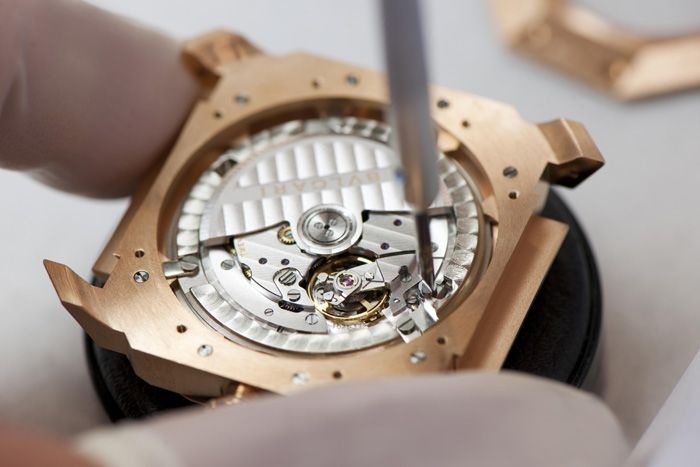
Central to any watchmaking production is the mechanical movement. It is the heart of the visionary thinking and quite literally the physical watch itself powering it and giving it “life”. There are about 70 of the finest watchmakers in the world that work at the Manufacture de Haute Horologerie in Le Sentier. Specializing in mechanical movements, they are among the elite in their field. These expert craftsmen and women must sometimes work on movements that are composed of up to a thousand tiny parts all within a small space of only a few cubic centimeters. The assembly must be done with absolute precision in order to ensure accurate time function.
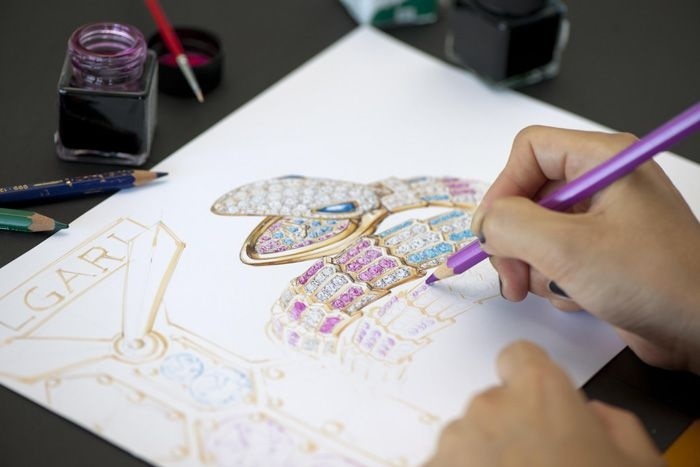
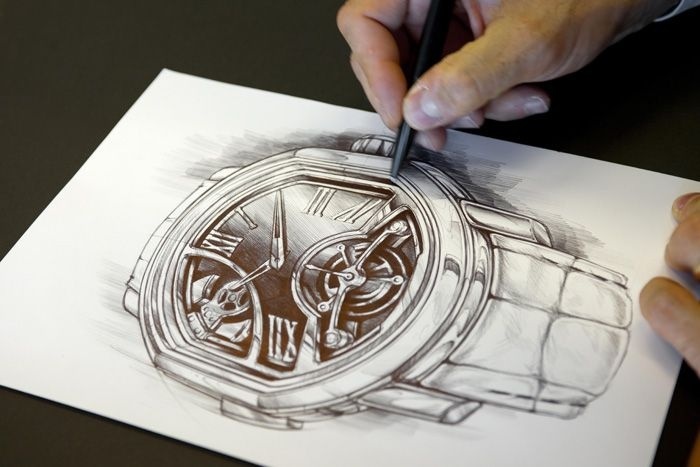
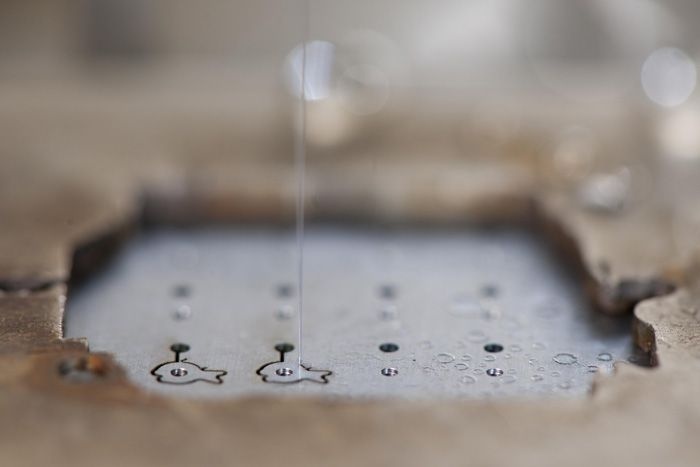
The movement design engineers first design and then draft up plans for each caliber. Once the plans have been finalized then the process of creating all the individual parts of the movement is set into motion. The numerous components will be subjected to multiple machining, milling, spark erosion and profile turning operations. Parts that are barely visible to the naked eye have to meet stringent precision standards that are within thousands of a millimeter. Machines play a crucial role in this part of the process due to their ability to measure and cut to exact specifications.
Finishing the Movement
Finishing on a movement often defines the level of “fineness” of a watch to the true aficionados. In the top tier of watch manufactures where it becomes increasingly competitive and brands are bumping elbows when it comes to watch complications. Many companies have incredible movements in terms of what they can do. Often the quality of finishing of the movement becomes the distinguishing factor that separates the great from the exceptional.
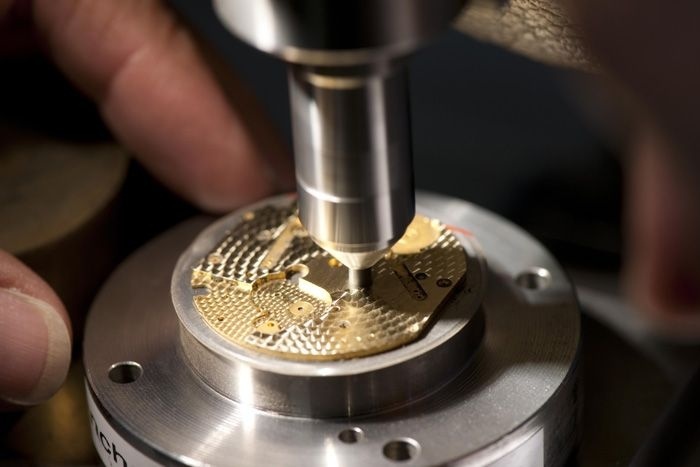
Bulgari has made sure not to neglect this very important detail in watchmaking. They complement hi-tech modern machinery with complete hand crafted finishing paying tribute to an artistic tradition that has carried on till today. They employ age old techniques to decorate movement components with hand beveling, circular satin-brushing, snailing (Snailing is similar to sunray brushing but with spiral lines leaving from the center, instead of straight lines. It is often seen on ratchets, bridge pavements, oscillating weights, barrels and barrel covers.), satin-brushing and circular graining or Perlage. Côtes de Genève, a pattern of straight lines designed by watchmakers in Geneva in 1880 and Perlage circular graining are both found on the Caliber 193 that powers the new Octo watch. Often seen on bridges, plates or at the bottom of recesses, both techniques are not only used to decorate movements but also to hide or cover up any scratches or imperfections. As in master goldsmithing that Bulgari is accustomed to in their jewelry, the watchmaking division strives for the same excellence in appearance of their movements.
Dial Manufacturing
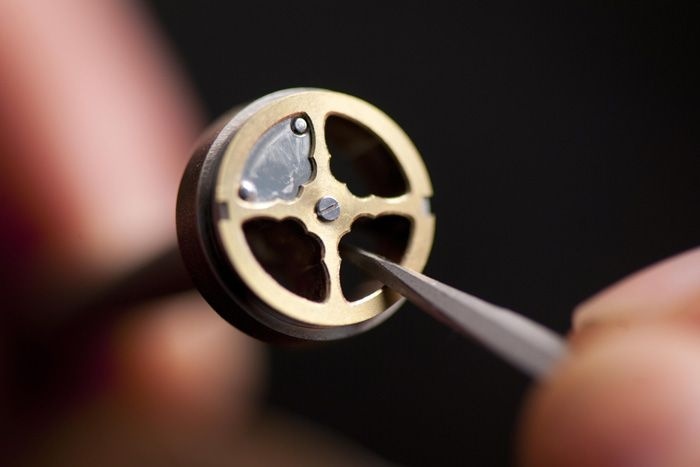
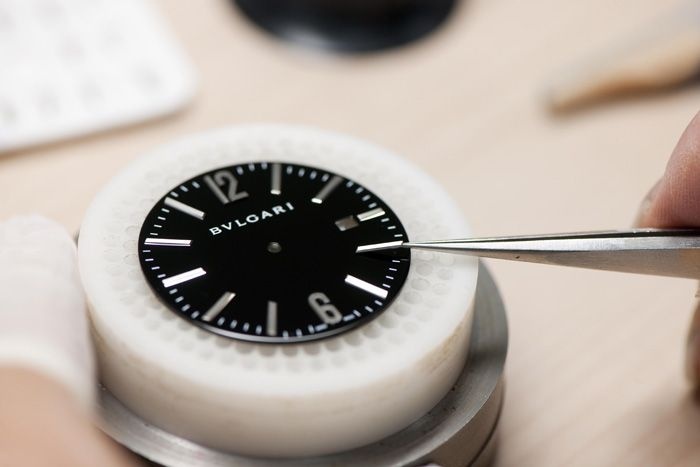
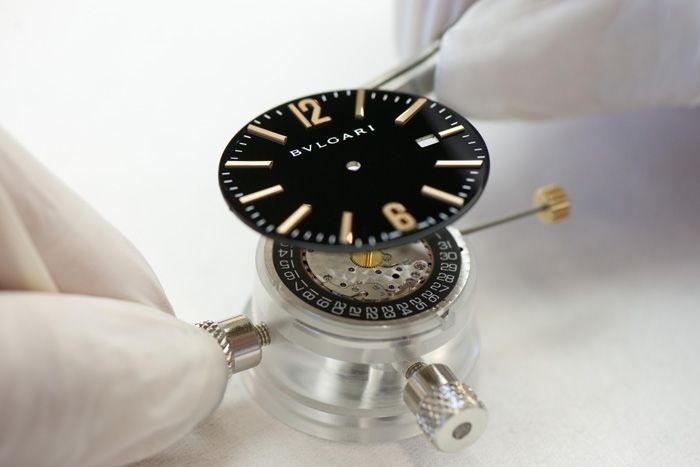
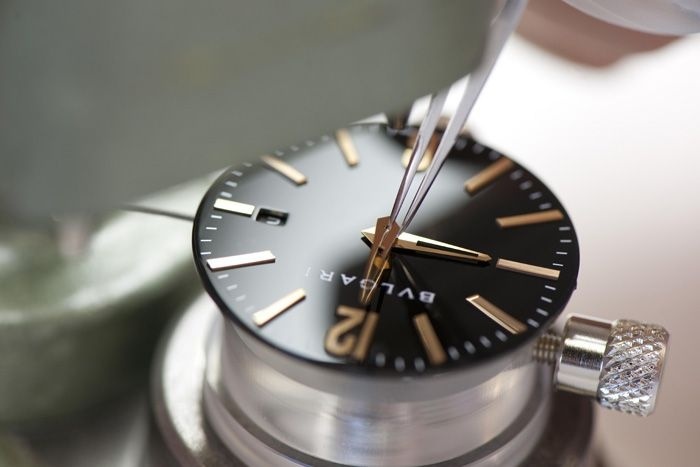
At Bulgari the exterior of the watch – case, dial and strap are regarded with equal importance as the interior movement. They are subjected to the same strict quality standards and high level of care during production. Bulgari’s dial manufacturing facilities in La Chaux-de-Fonds consists of around 30 staff members who all understand the importance of the dial in delivering the initial impression of a watch to the customer. It is usually the first thing that people see and the main thing that gives a watch its identity. Similar to making Bulgari’s top movements, the skills required for constructing their best most high-end dials are extremely sophisticated as well and rely on the expert knowledge and experience of their craftsmen.
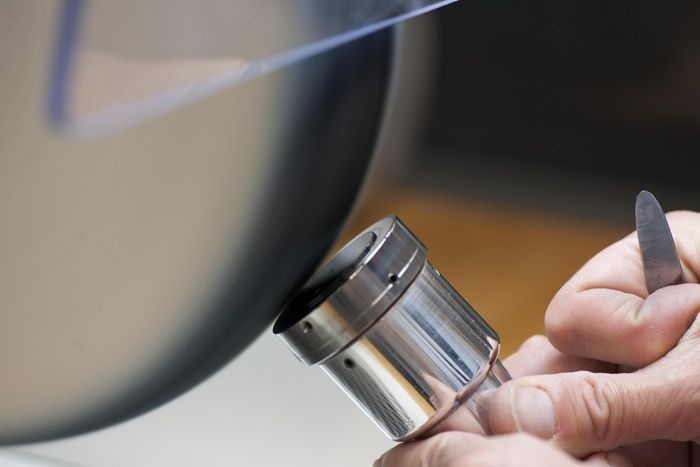
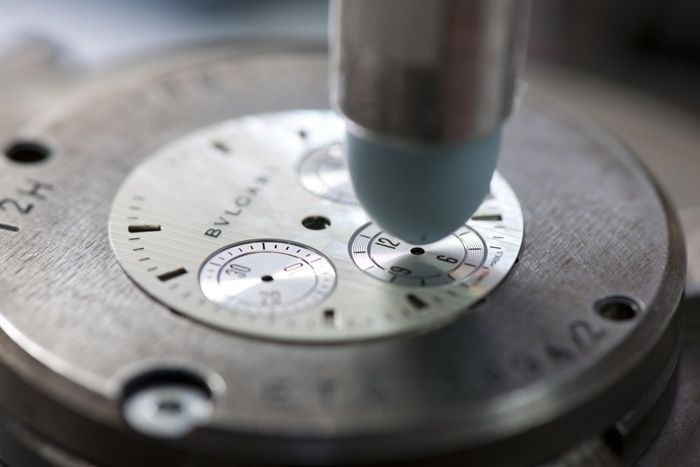
Bulgari’s dial manufacturing facility specializes in producing those dials that involve extremely complex processes to create. These are the intricate hand-crafted dials belonging to limited production pieces that require special skills to make. Absolute precision is required to achieve the fine workmanship that Bulgari deems acceptable in these dials. The specialists use traditional hand-craftsmanship methods which include hand machining and polishing of the initial brass plate, transferring and several other highly delicate procedures. Transferring is an especially meticulous operation since it involves coating a surface with a thin layer of lacquer and then carefully using a hand held miniature inkpad to pick up the impressions of the numbers, shapes or minute markers and printing or transferring them to the dial. There are no schools that provide training for this subtle dexterity. Applying too much or too little pressure will mean having to start all over again.
Bulgari dial specialists are also experts at cementing mother-of-pearl surfaces in place, fitting sapphire crystal plates and laquering using the champlevé technique, a favorite Bulgari artistic dial treatment. Incisions are made in the metal of the dial surface and the spaces are filled with lacquering or enameling. This highly skilled technique creates beautiful contrasts in the surface aesthetic of the dial.
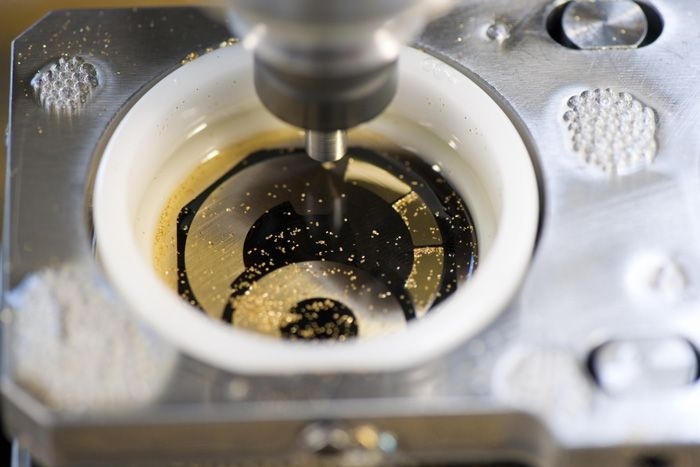
Dial milling

Case and Bracelet
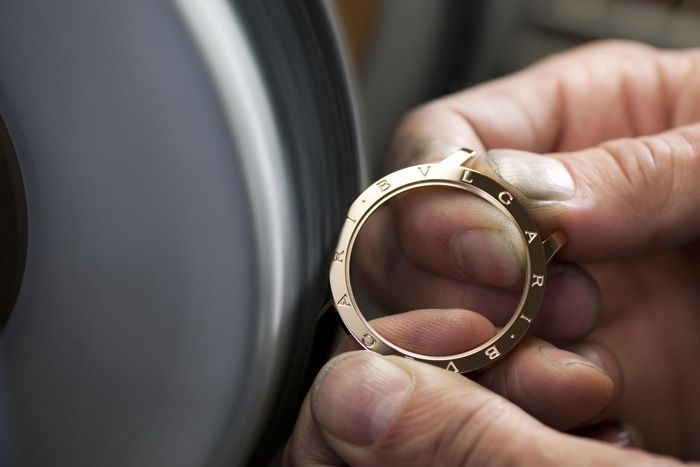
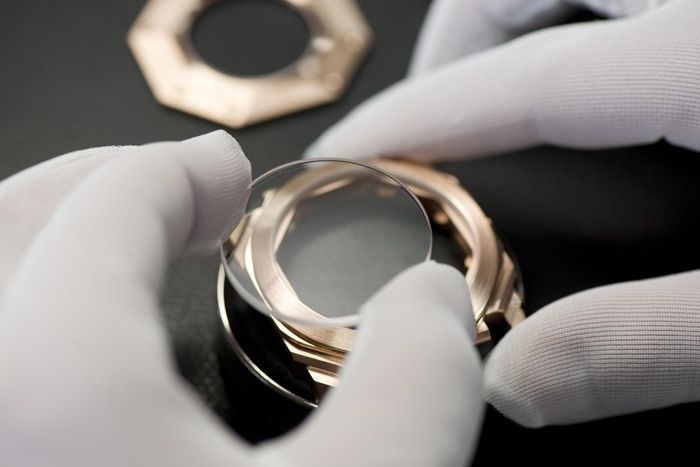
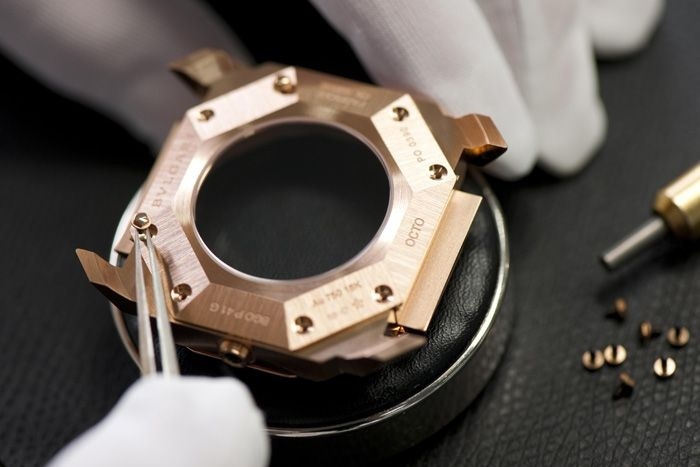
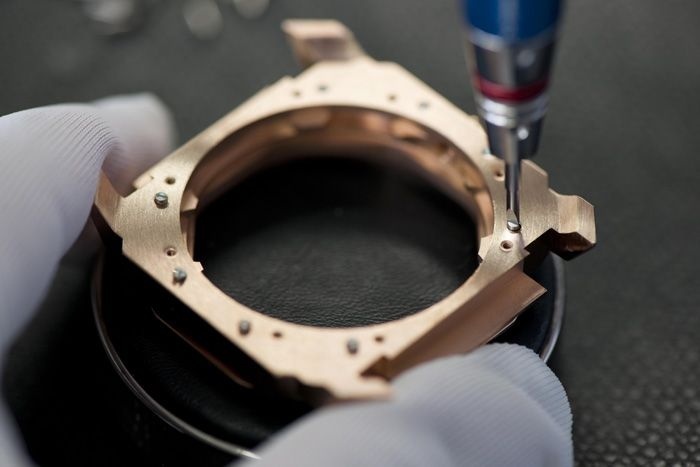
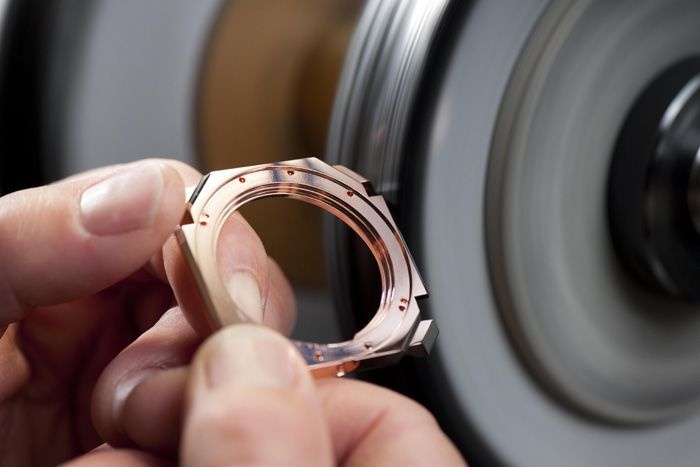
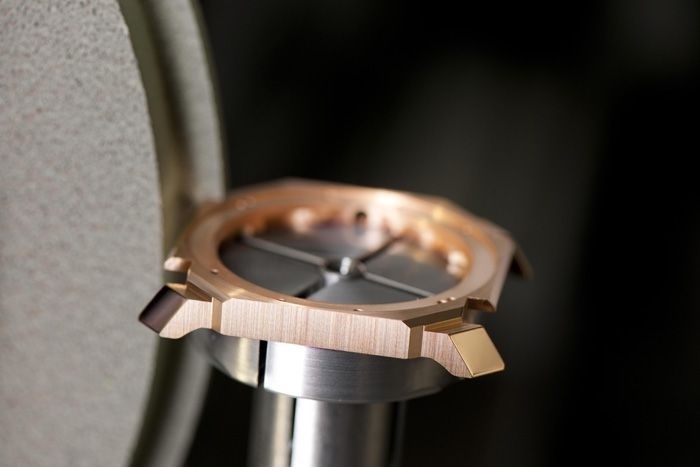
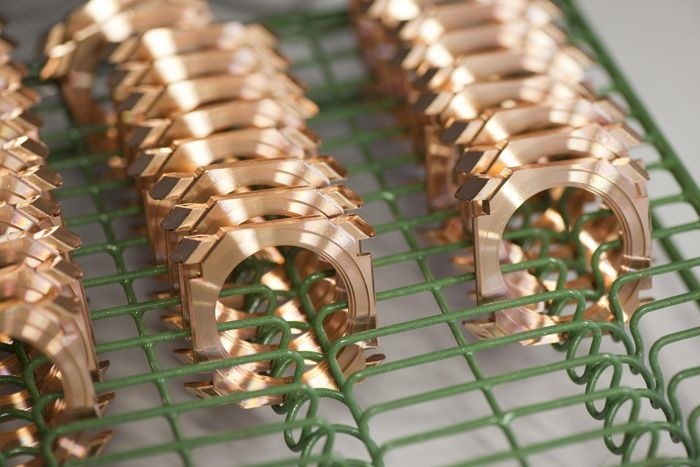
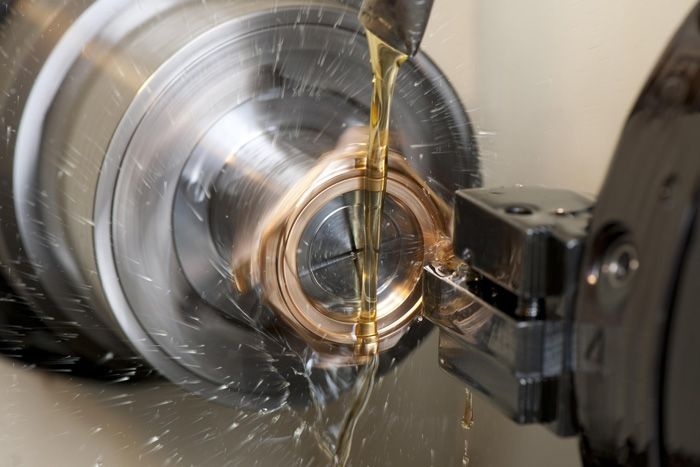
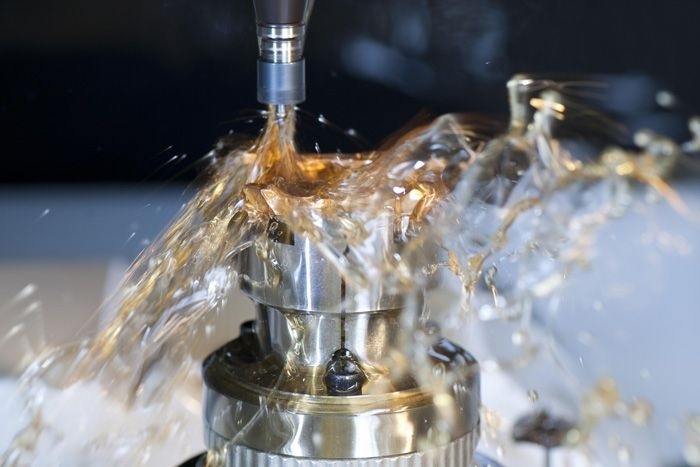
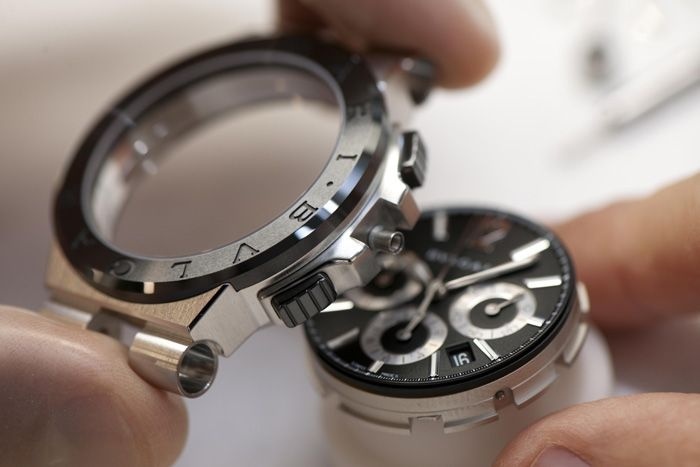
The case and bracelet manufacturing site at Saignelégier is dominated by robots and machinery that are continuously operating, some 24 hours a day, cutting and assembling the metalwork existent in watch models. Computer controlled numerical machinery make up most of the production as they repeatedly cut into blocks of gold and steel while a constant stream of oil is spraying and a polishing room puts the final touches on the gleaming pieces of precious metals. Before the final state where the parts are assembled, there are numerous other steps such as sandblasting or bead-blasting, soldering and finally the hand polishing. A last check of the finished components is performed before they are sent to be assembled into watches in the workshops in Neuchâtel.
Over 300 employees are spread between the various Bulgari watchmaking sites comprising dozens of highly specialized skills and professions that make up the talent and expertise that drives the company’s constant quest for excellence and a respectable position in today’s highly distinguished group of true manufactures.
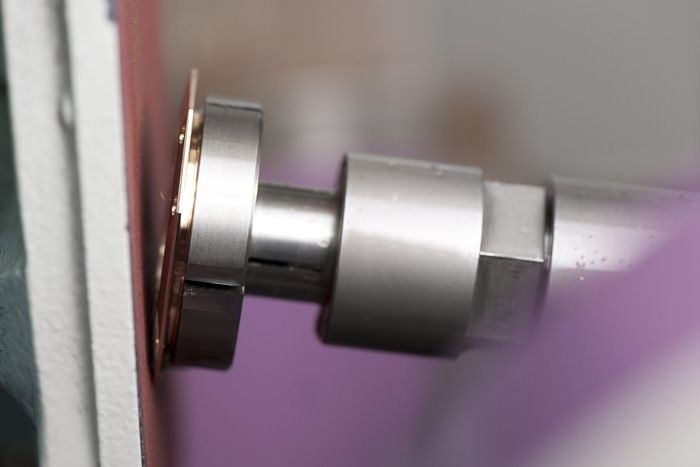
Back case polishing
and see more pictures of all the various processes used to make different types of dials. Even better if Bulgari can make some videos too! Cheers, Anthony
Very well done and great insights to read up. Many thanks again. Best wishes, Joel
This thread is active on the Bulgari forum with 3 replies. Share your knowledge with fellow collectors.
Join the Discussion →


