Kong, on behalf of Don Corson, presents 'Watchmaking at Bulgari - Part 4: Bulgari Time in Neuchâtel,' offering an exclusive look into Bulgari's watchmaking facilities. This installment showcases the culmination of the manufacturing process, from case and bracelet integration to dial and hand application, providing a comprehensive overview of Bulgari's commitment to horological craftsmanship.
Posting on behalf of Don Corson.
As Bulgari decided several years ago to reinforce its presence in
Switzerland, making its center for watchmaking here they purchased the
old FAVAG factory in Neuchâtel. Many of you may know FAVAG as one of
the major producers of master-slave clocks and the punch clocks used in
factories. They have completely renovated the building which now
houses several other divisions of Bulgari along with the watchmaking
activities.
We had the please to be able to visit the
watchmaking shops as well as watch development, after sales service and
quality assurance.
We start out in the watchmaking shop where
the products that we have seen today all flow together. We see the
cases from H.Finger, the bracelets from Prestige d’Or and the dials
from Cadrans Design once more along with movements from Bulgari Le
Sentier and other high end manufacturers.
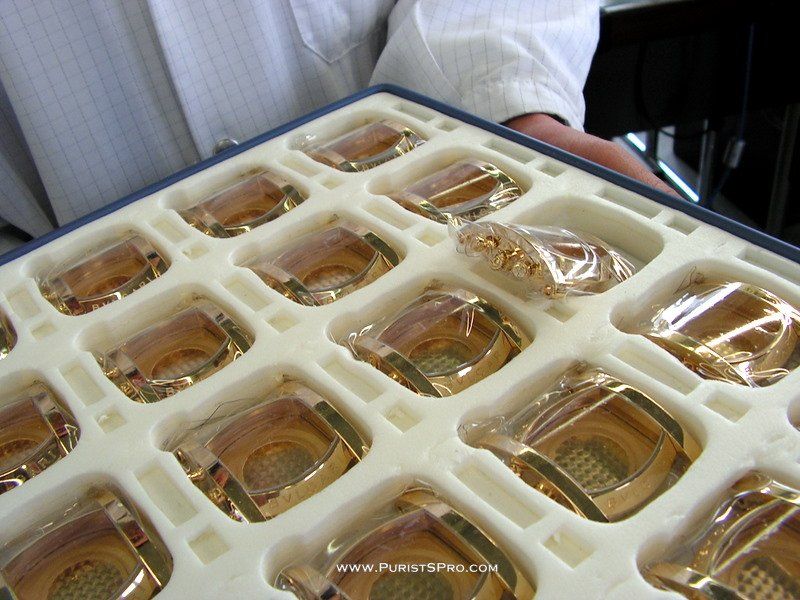
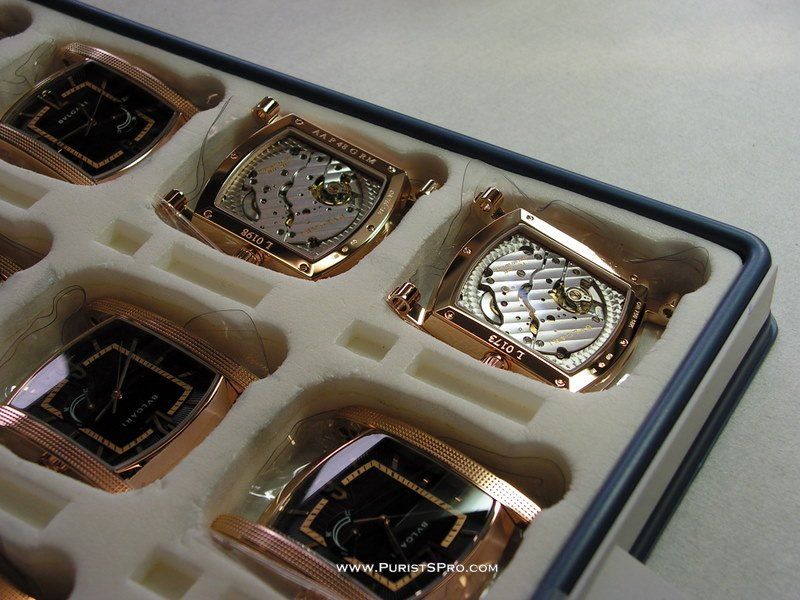
Here a pallet of gold cases from H.Finger.
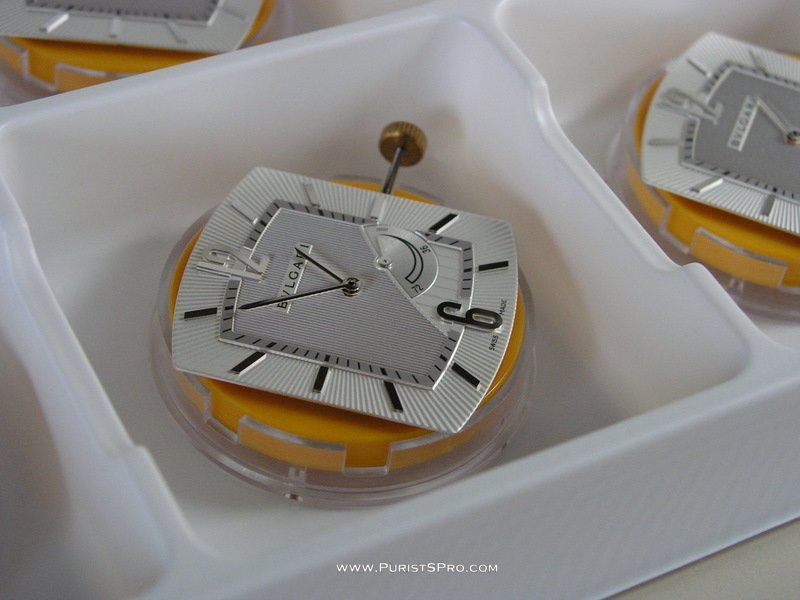
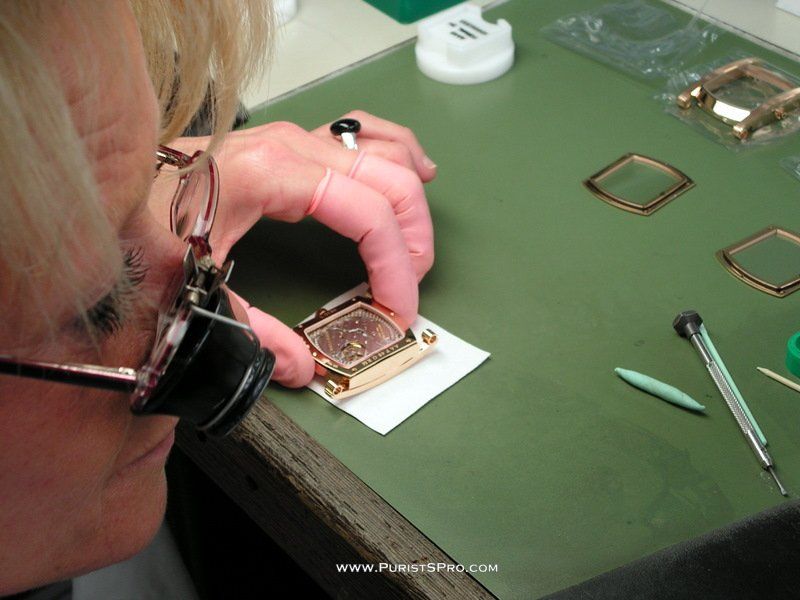
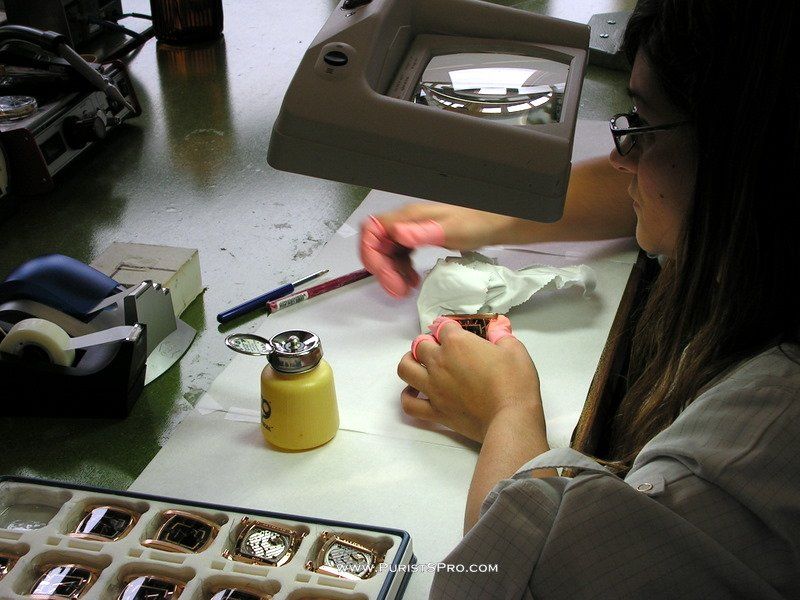
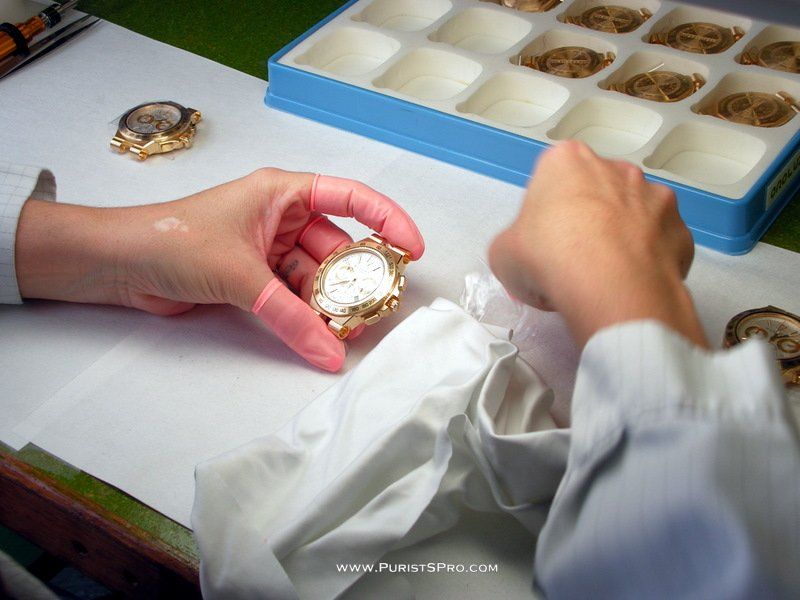
We see the dials being mounted and the hands applied.
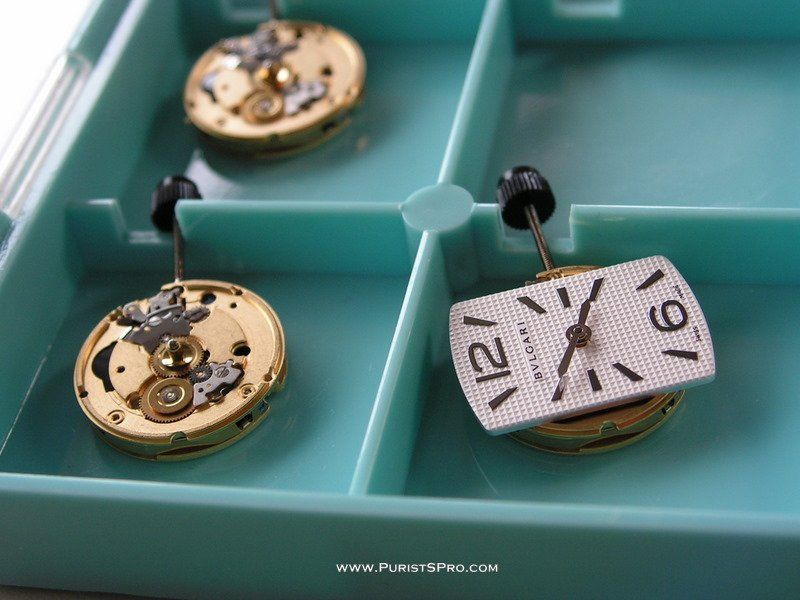
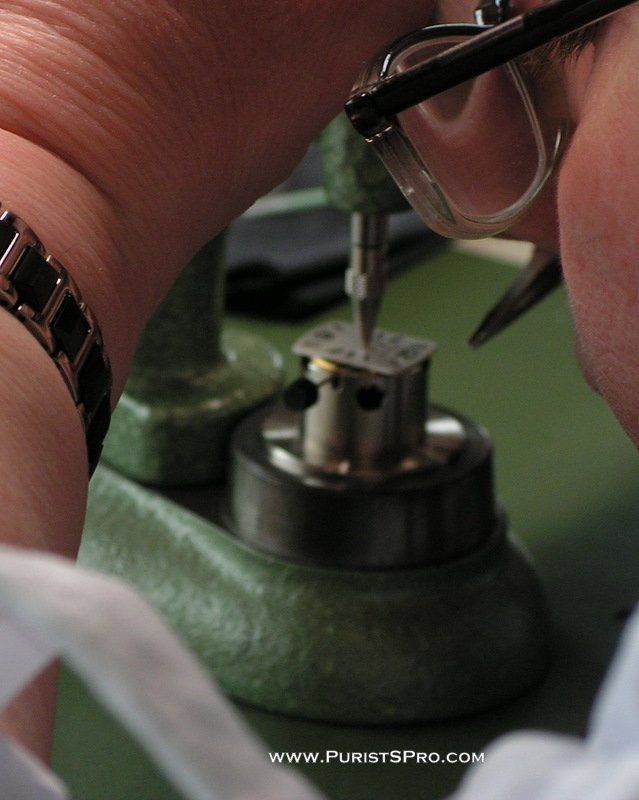
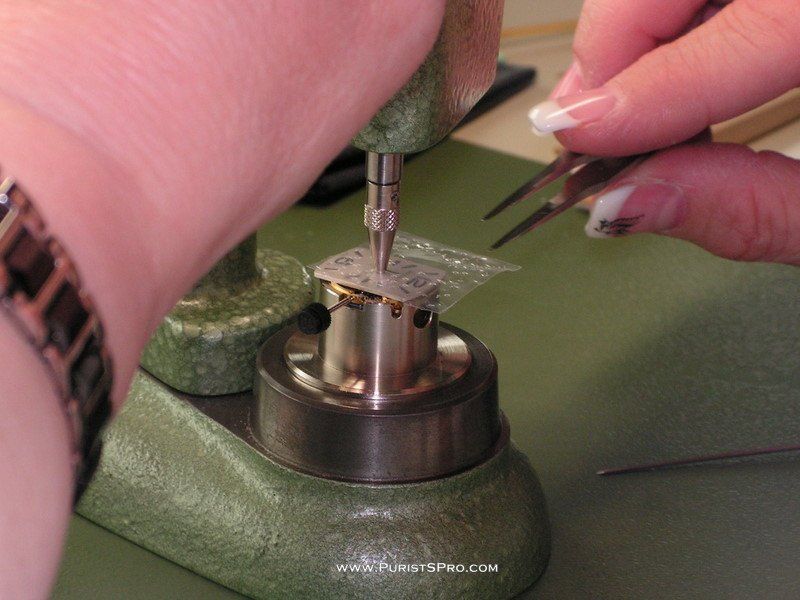
Depending on the size of
the product order hands are mounted either manually or with a
semiautomatic tool. Here the semiautomatic tool which speeds the hands
mounting greatly.
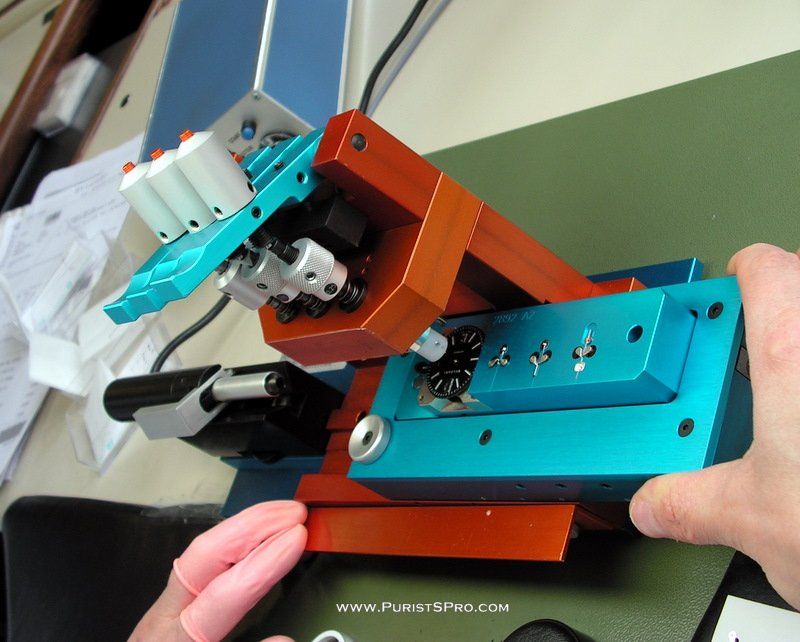
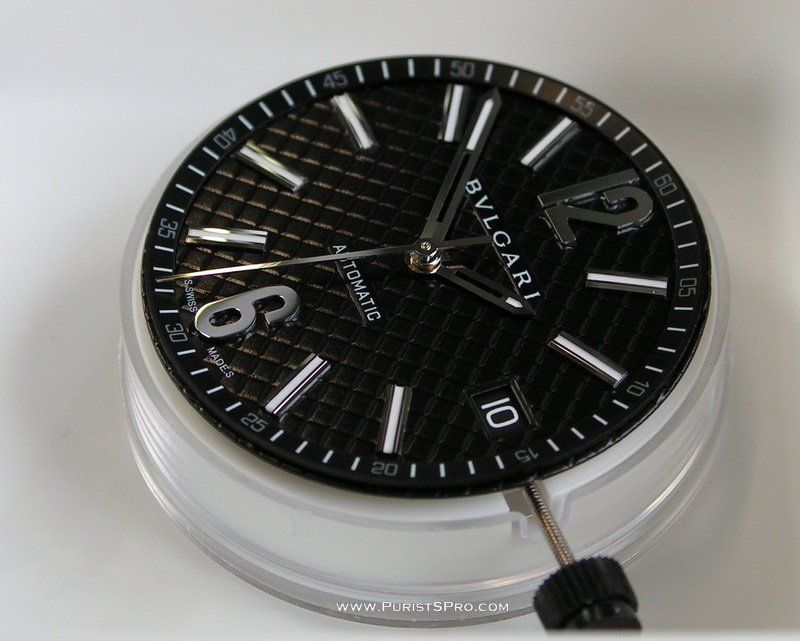
After the dial and hands are mounted the movements are cased up.
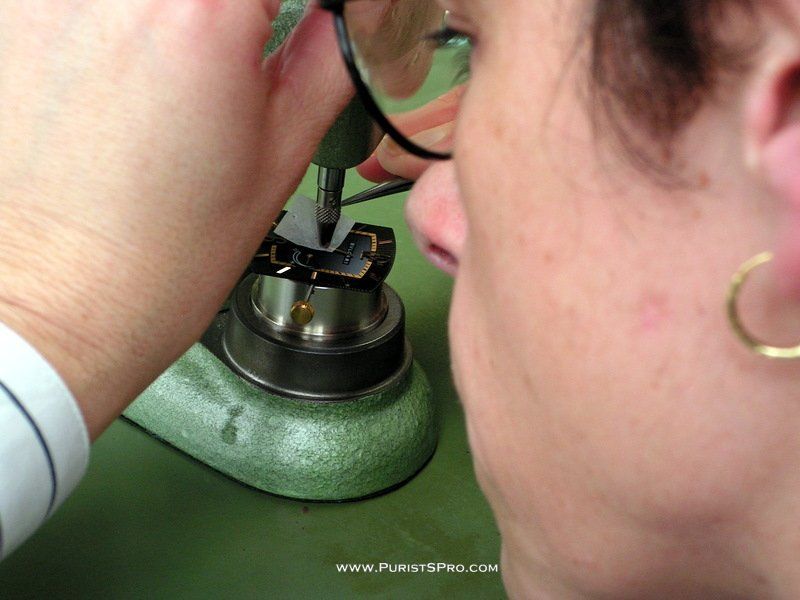
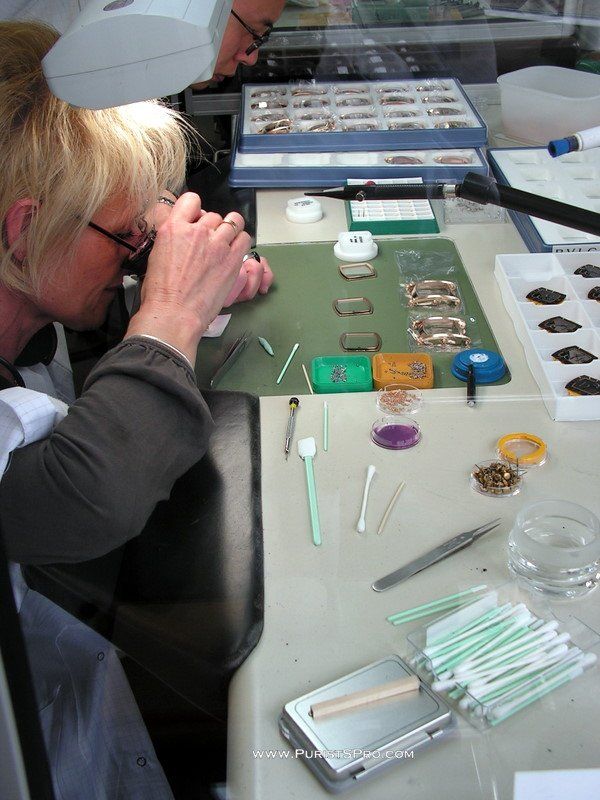
Of course particular attention is paid to cleanliness.
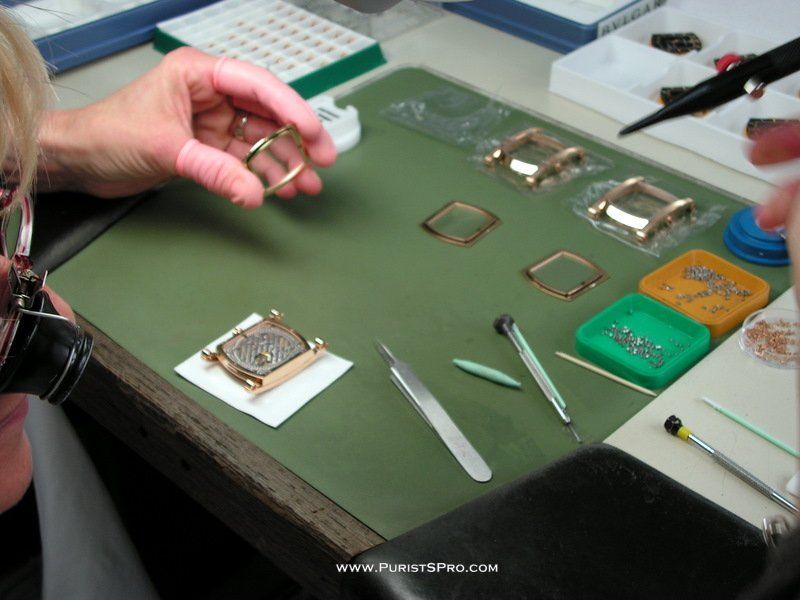
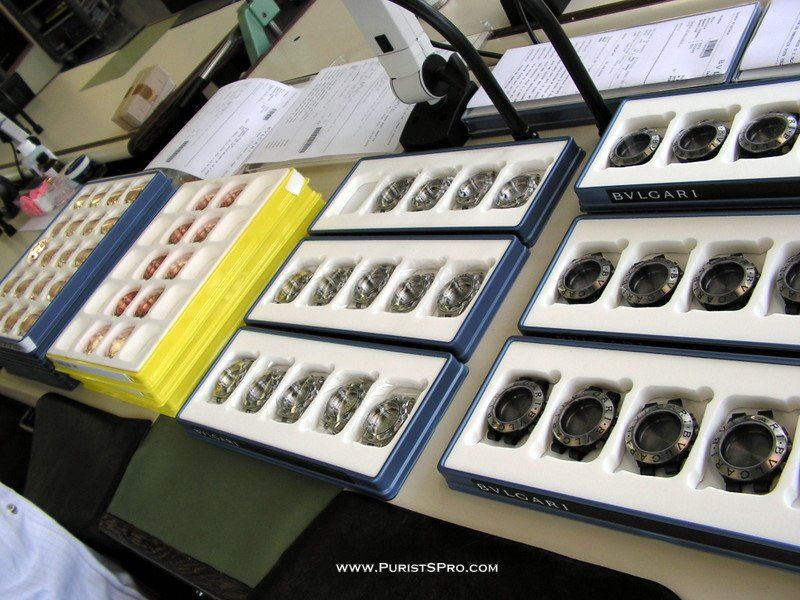
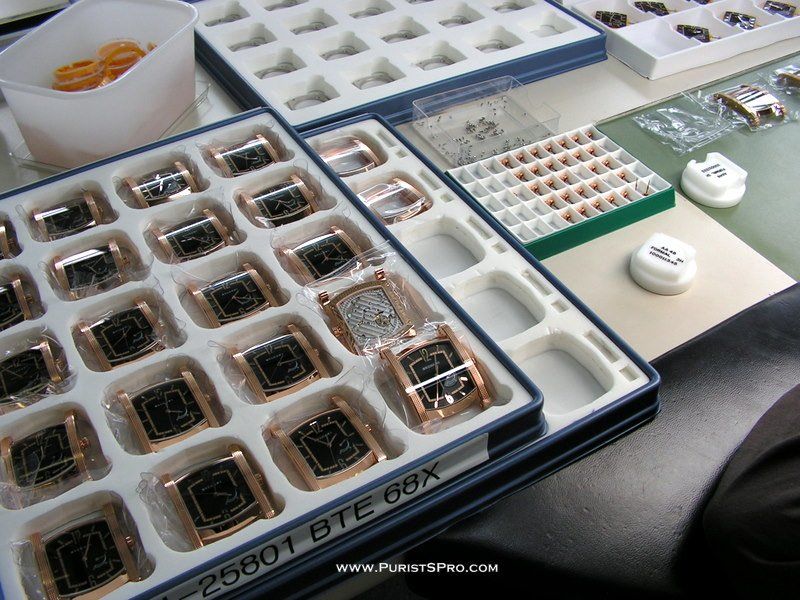
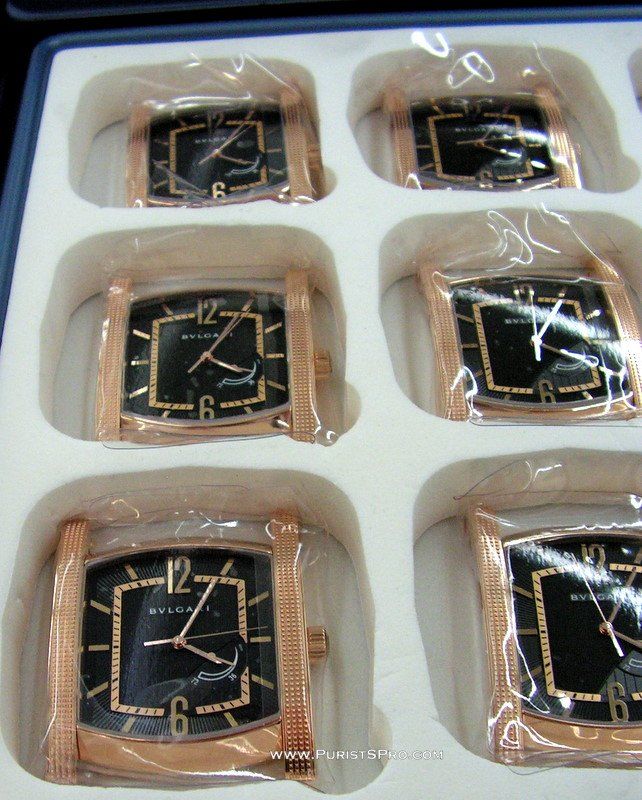
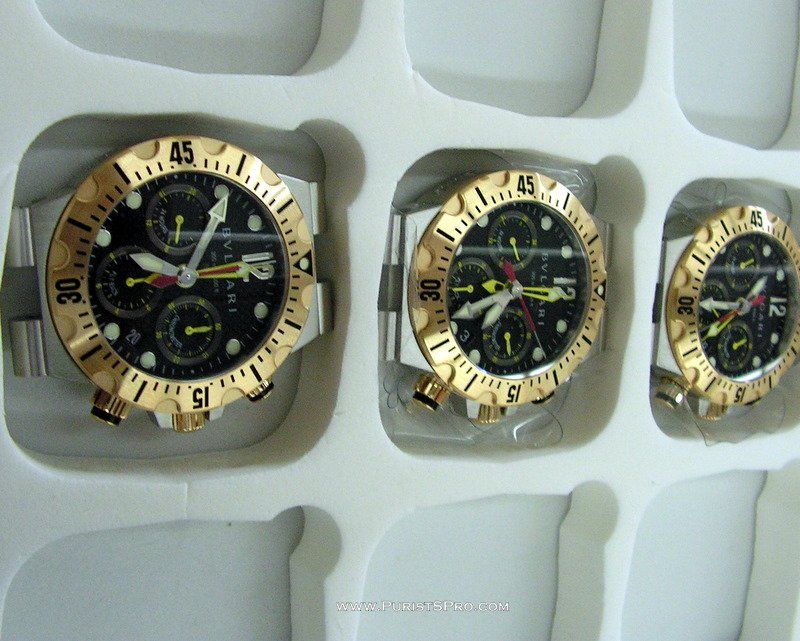
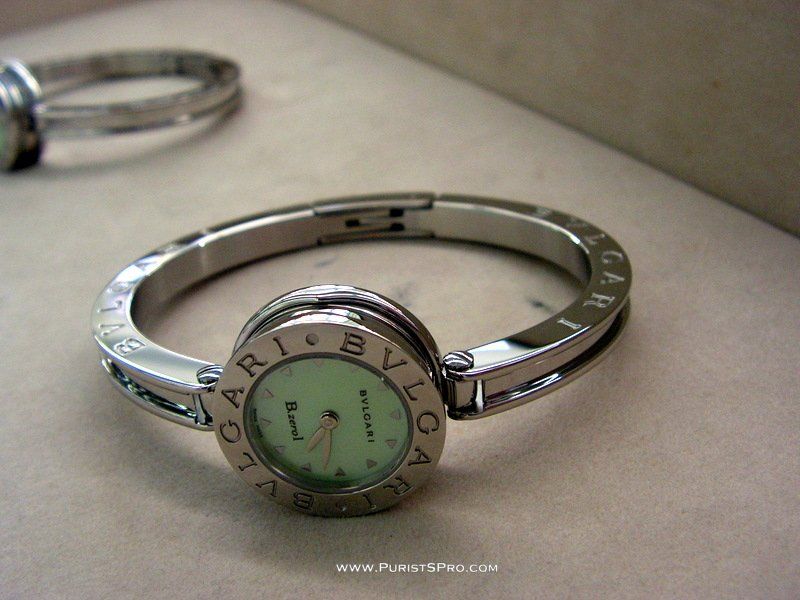
A small selection of the watch heads seen here.
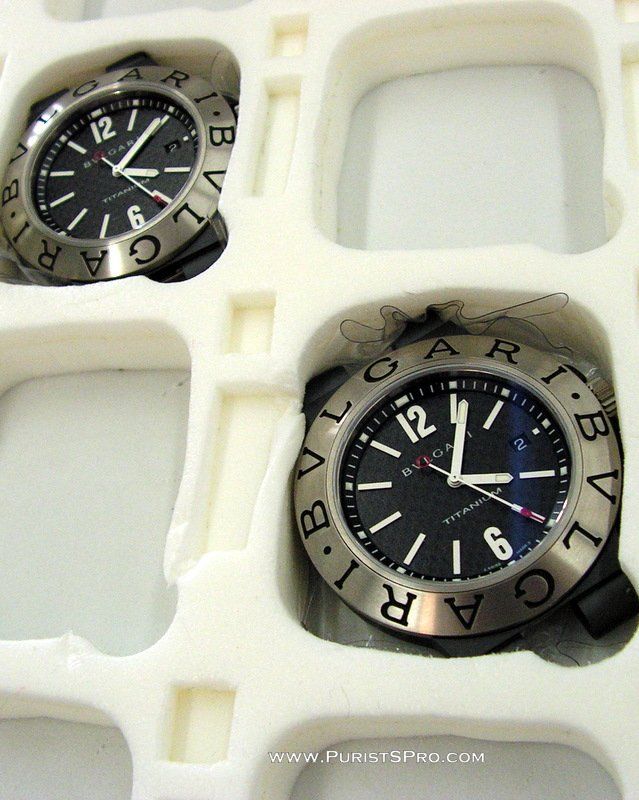
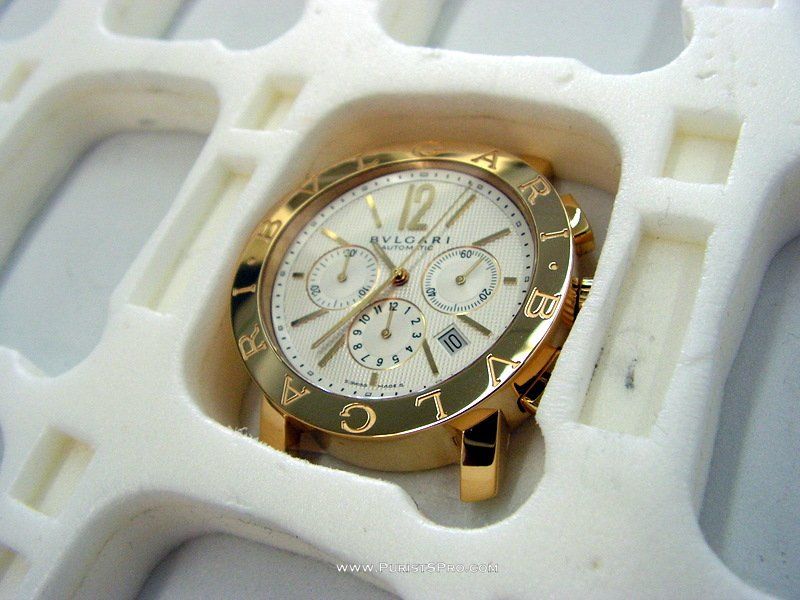
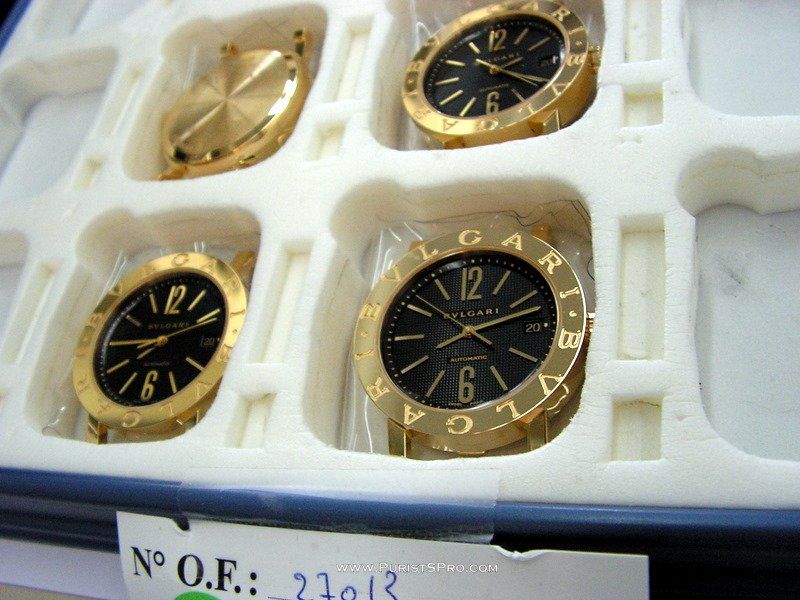
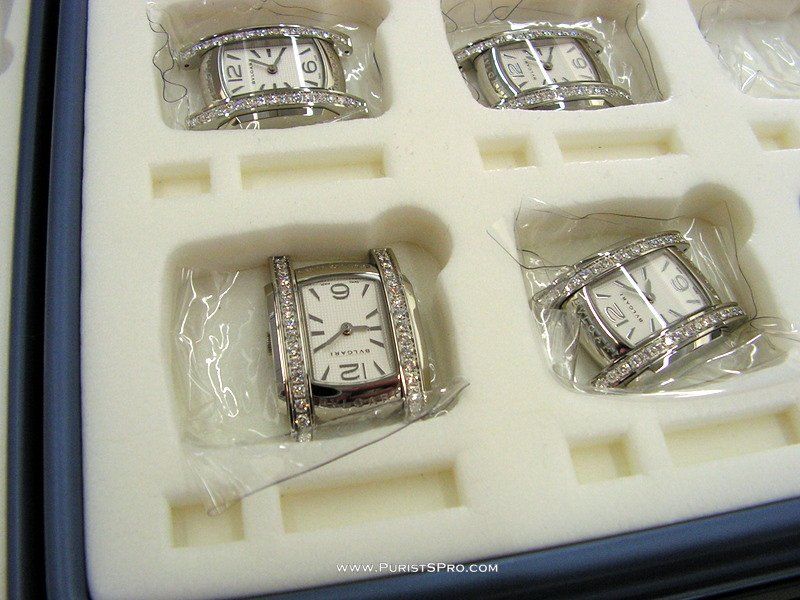
After final assembly the watches are tested for watertightness.
Initially just using air...
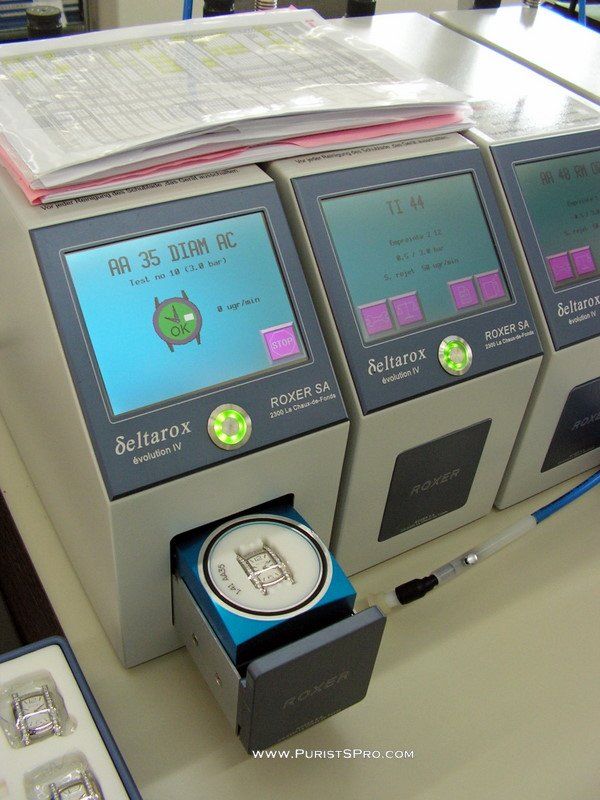
The final step is a
test in water. The test using air finds about 90% of the "leaky"
watches, but the final test with water is necessary to have full
confidence.
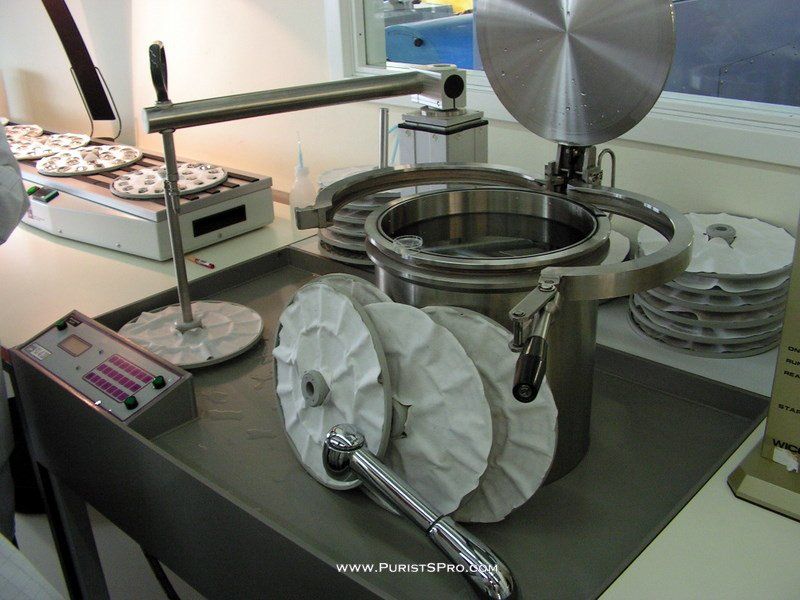
After the pressure test
under water the watches are heated up to about 45°C and then a drop of
cold water is placed in the crystal. If there is any humidity in the
case it will show up immediately as condensation on the inside of the
glass. If this is the case the watch is disassembled completely and
the movement cleaned immediately so it is not damaged.
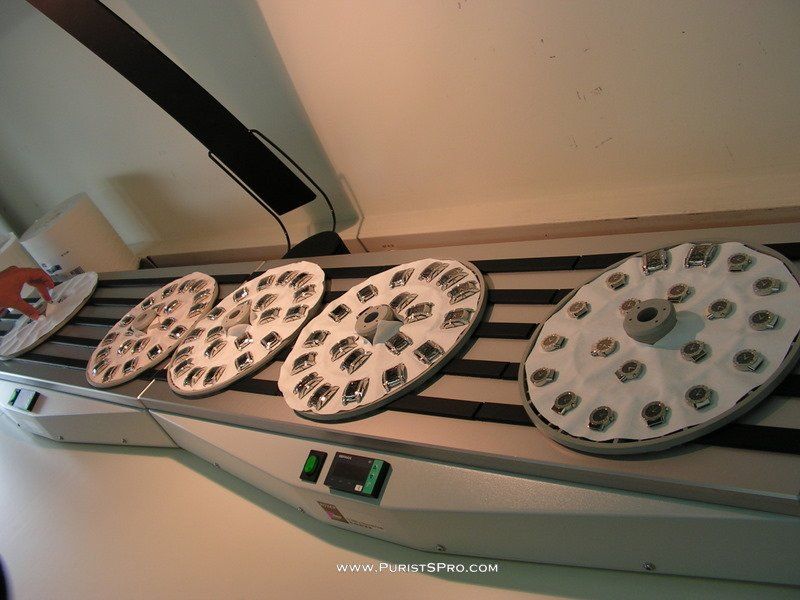
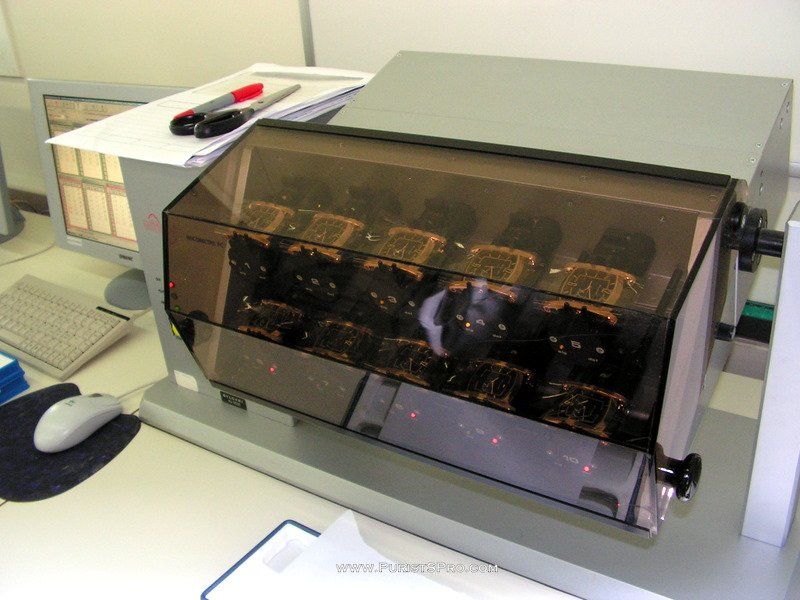
Then the watches are all fully wound and tested after a one hour wait in all positions on an automatic tester.
Assuming that all is well
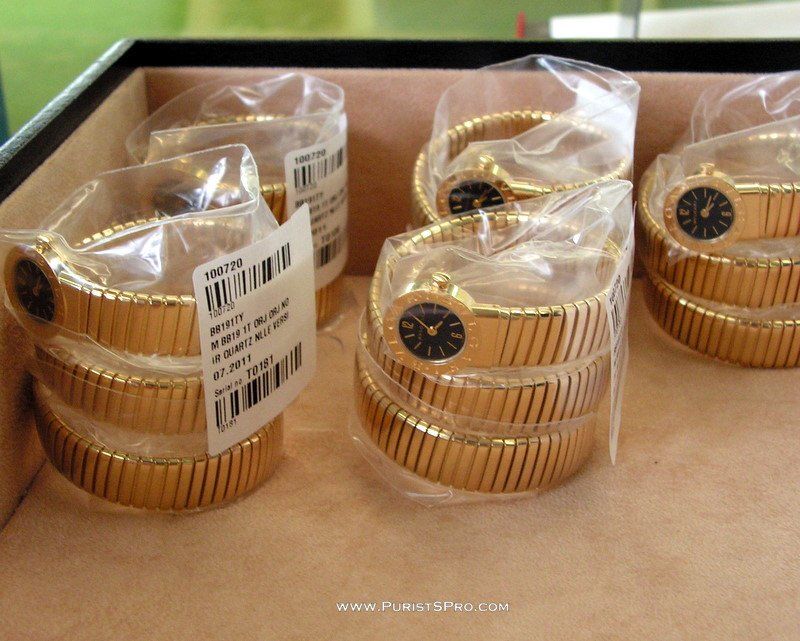
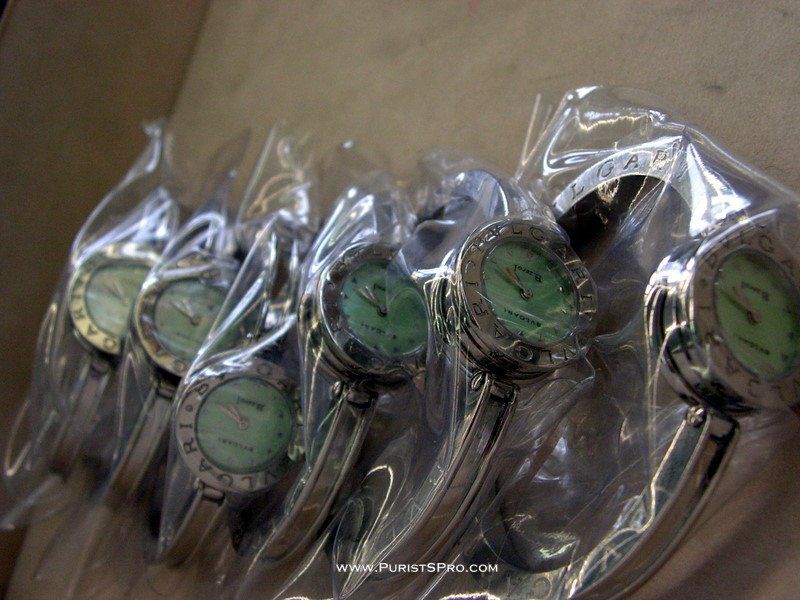
at this point the watches are checked once more for cleanliness and
anomalies in the polish or other decoration and then packed in a
protective plastic in which they will remain until they are sold.
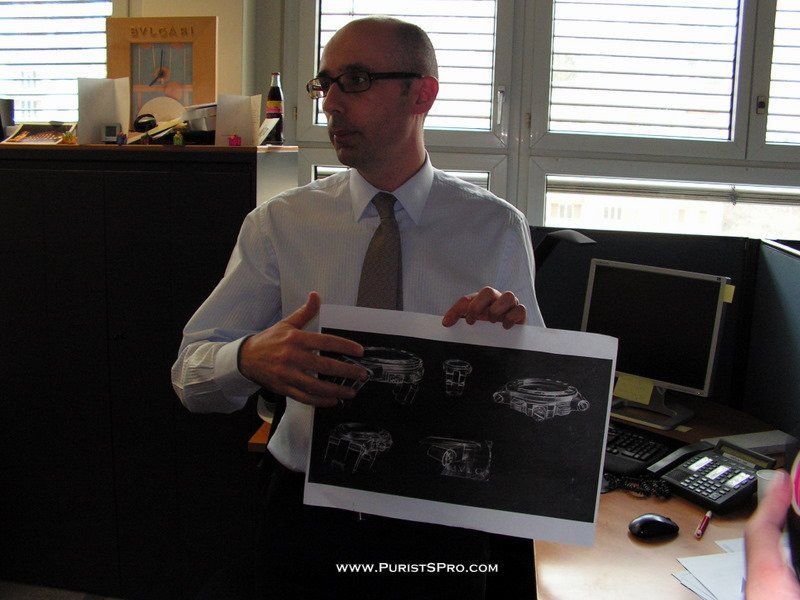
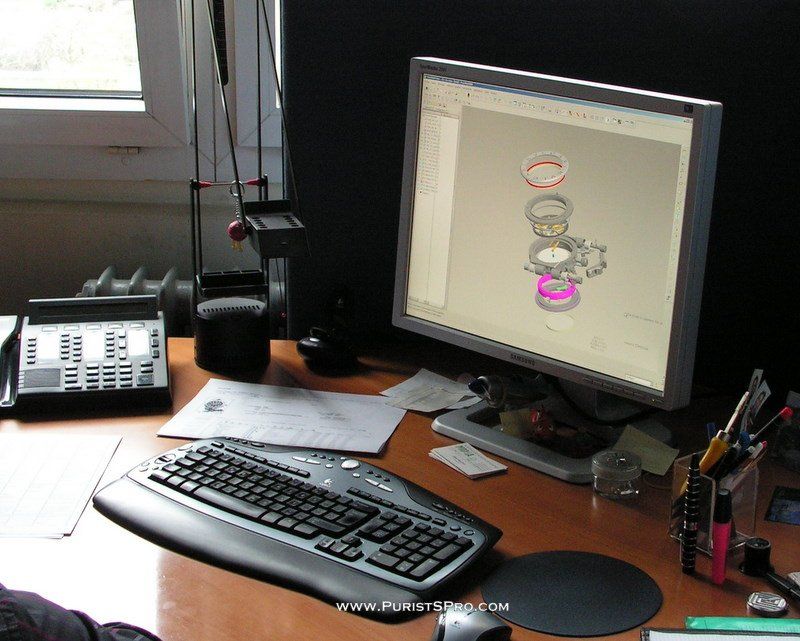
We now move on the the
development offices who’s main job it is to interpret the wishes of the
designers into words that the manufacturing people can understand. On
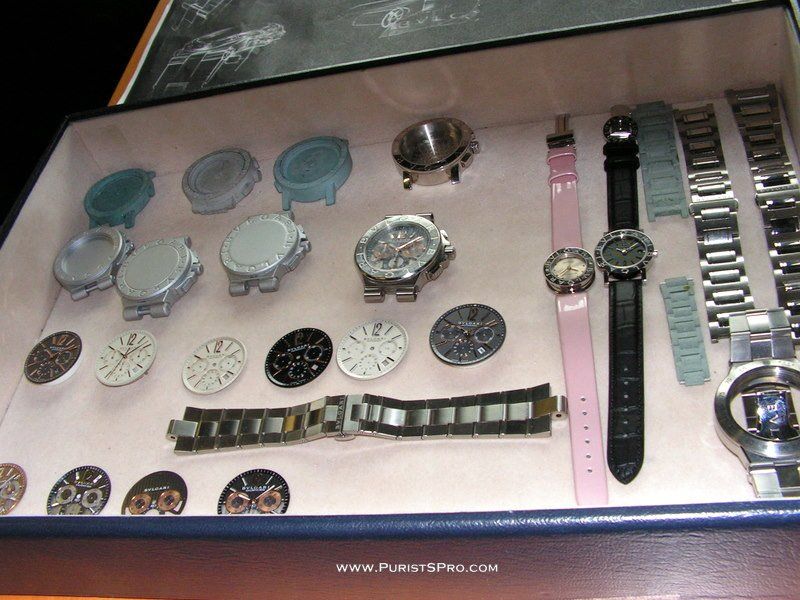
the way between first ideas and a final product many models and
prototypes are made. Quite handy is stereolithography which allows
"printing" in 3D directly from a computer. This produces a plastic 3D
model.
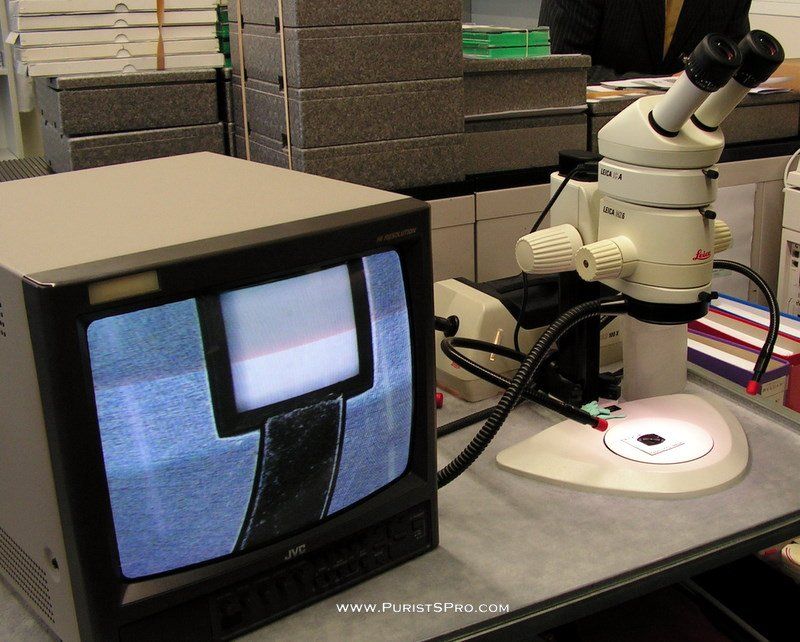
Moving on to the quality
assurance department we find another set of optical measuring
equipment. This is used to control all the parts coming in from
suppliers, even the suppliers belonging to the group. As often as
possible they try to do the controls at the premises of the supplier to
avoid shipping delays there are quality faults found.
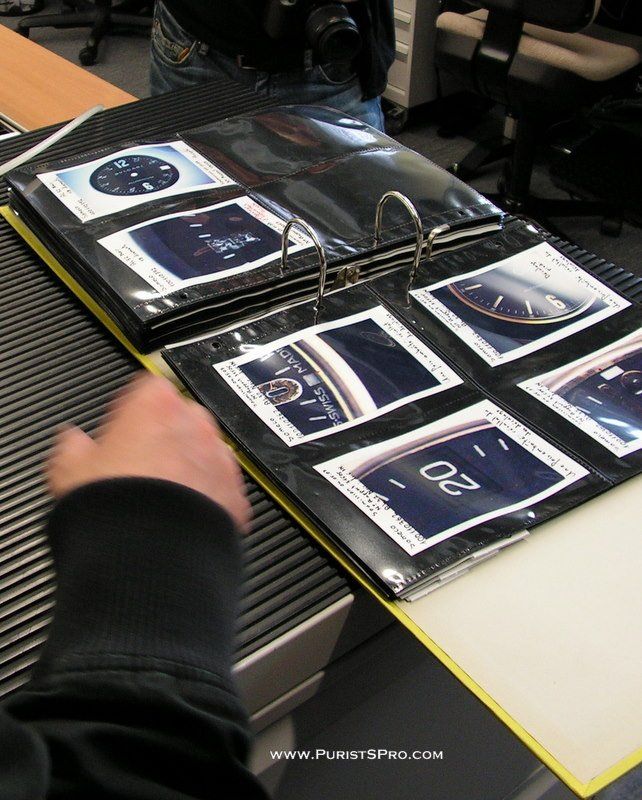
Any faults found are catalogued to help in rectifying problems found in the future.
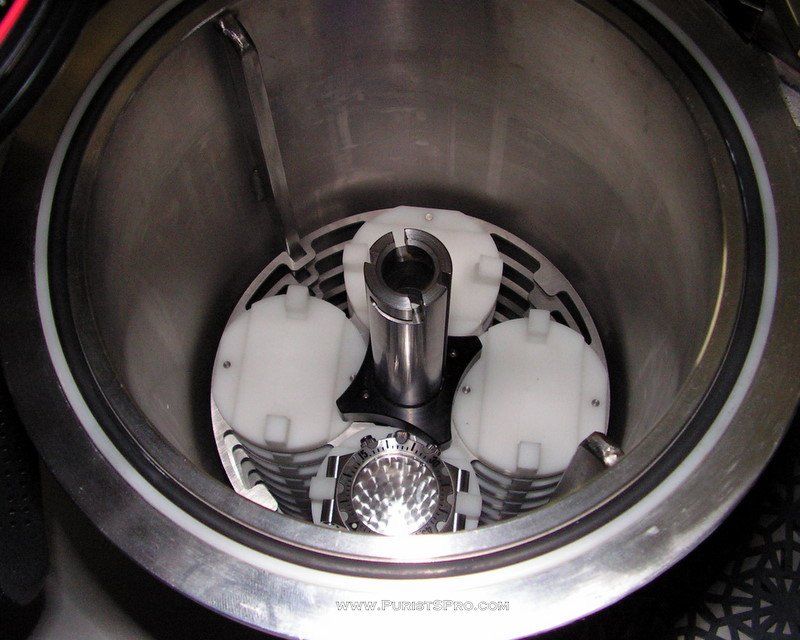
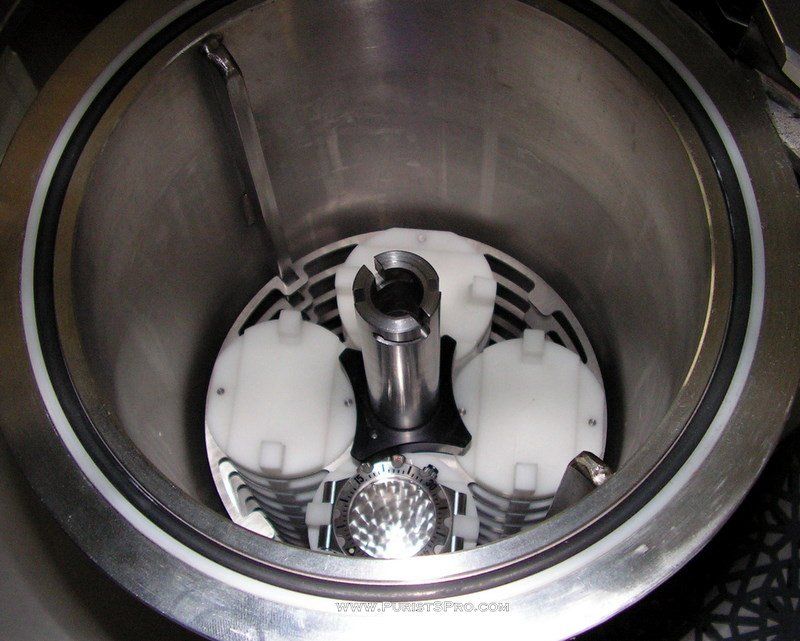
One of the exclusive
pieces of test equipment found here is a tester for waterproofness to
400meters what can actuate the buttons of a chrono during the test.
Our last stop of the day
is in the after sales service shop. Bulgari tries to do all the
service as close to the end customer as possible in keeping with their
goal of service times of not longer than 3 weeks. The shop here does
the service for Switzerland and repairs and service of complicated or
vintage watches that can not be done at the other service centers.
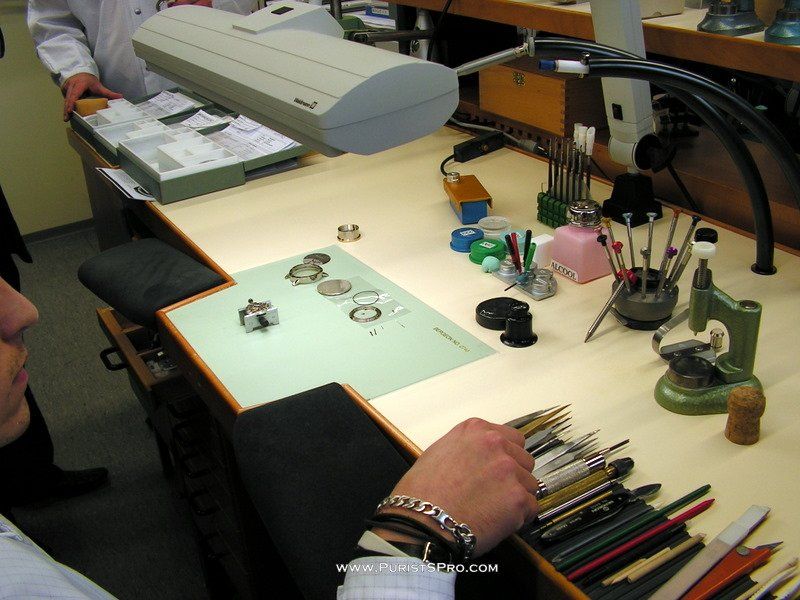
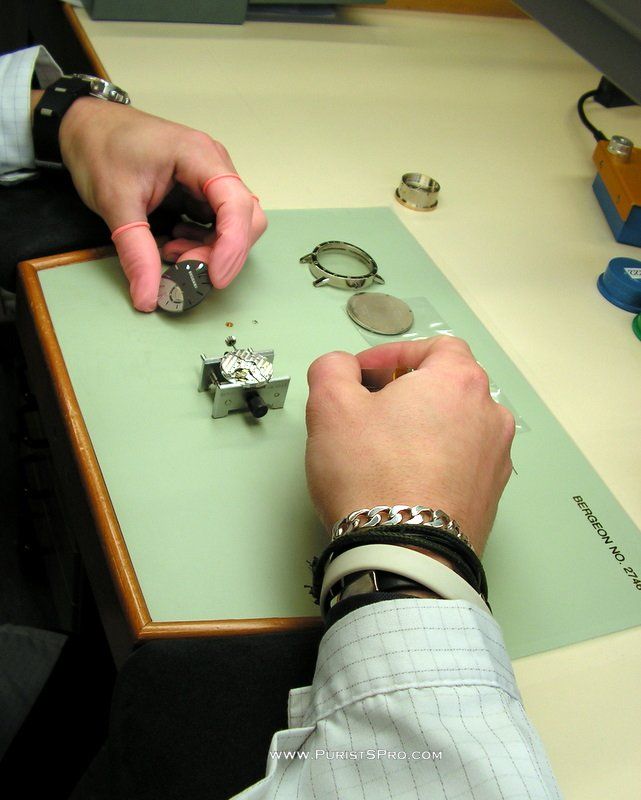
A watch is stripped down for cleaning.
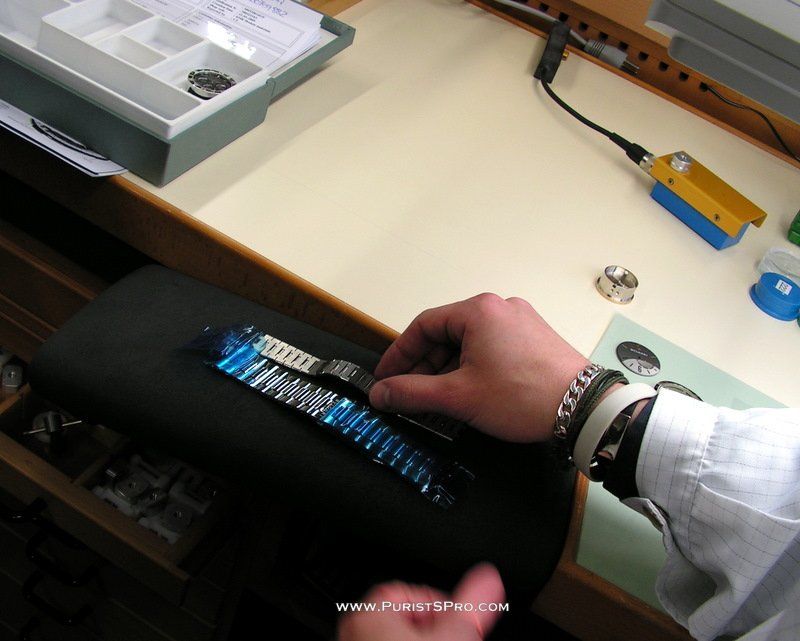
Cases and bracelets are also repolished or brushed.
Of particular interest
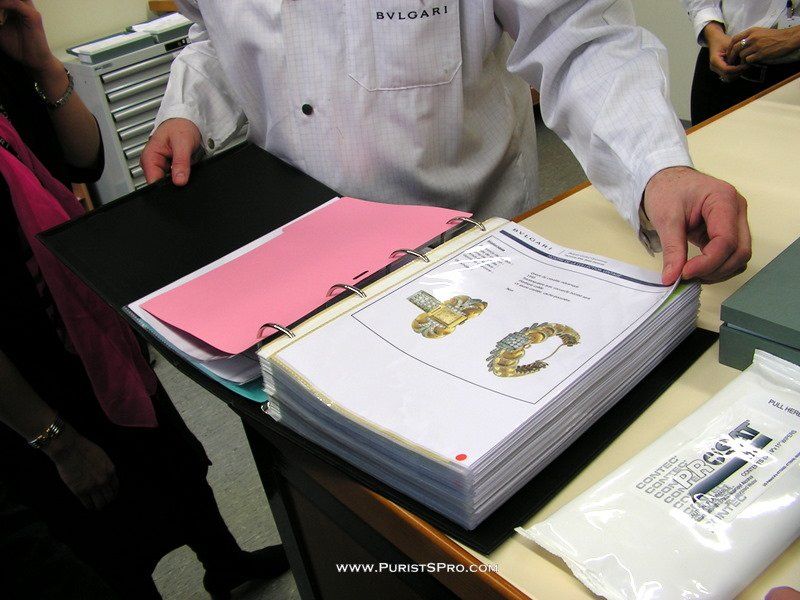
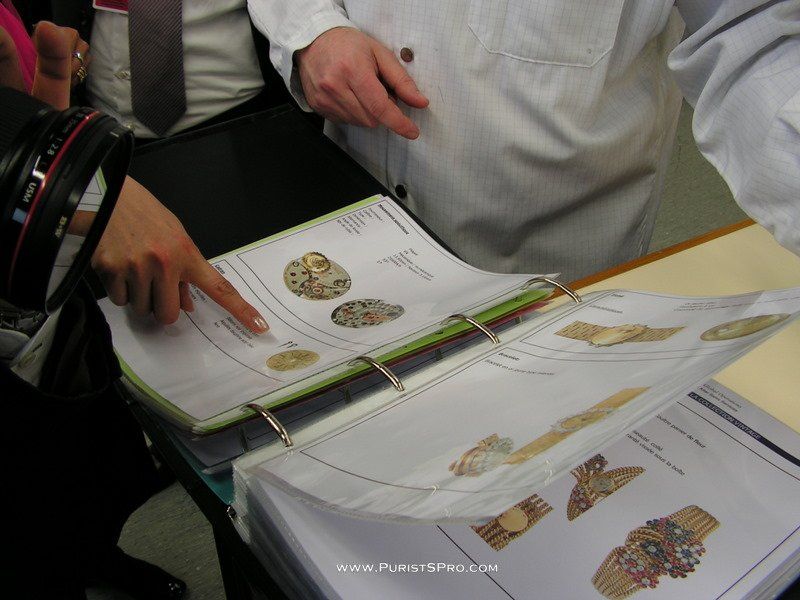
here are the vintage Bulgari watches that have been repaired here.
They are compiling a catalogue of these pieces along with the pieces
that are in the Bulgari Museum for internal reference.
I would like to thank Asha
Langdown of Bulgari South Asia for the invitation to accompany this
group to visit the Bulgari watch manufacturing facilities. For those
who like the smell of a working machine shop it was a good day.
Bulgari has a long history as an innovative jeweler who has made
jewelry timepieces since the 1920’s, but has relatively recently
decided to move into the domain as a watchmaker.
With the
industrial basis they have made for themselves in the last years they
are a real factor in the business now. To their own movements from
DR&GG, cases from H.Finger, bracelets from Prestige d’Or and dials
from Cadrans Design they can add their knowledge of jewelry making,
working precious metals, and the Italian flair from their design center
in Rome.
Their newest model shows just how far they have come.
The Sotirio, named after their founder Sotirio Bulgari, no longer has a
bigger than life BVLGARI logo on the bezel. This is a sure sign for me
that they are now settling down as watchmakers and have gotten over
their youthful insecurity in the watch market.
Don
This message has been edited by AnthonyTsai on 2009-06-16 13:55:51 This message has been edited by MTF on 2009-06-19 08:39:03