Bulgari Casemaking at H. Finger
Manufacture

Bulgari Casemaking at H. Finger

By DonCorson · Apr 8, 2009 · 19 replies
DonCorson
WPS member · Bulgari forum
19 replies6179 views29 photos
f 𝕏 in 💬 🔗

DonCorson offers a rare, behind-the-scenes look into Bulgari's casemaking facility, H. Finger, shortly after its integration into the Bulgari group. This article provides valuable insights into the intricate processes and technical challenges involved in crafting watch cases, from initial design translation to final polishing and assembly. Readers gain an appreciation for the precision engineering and craftsmanship that underpin luxury watch production.

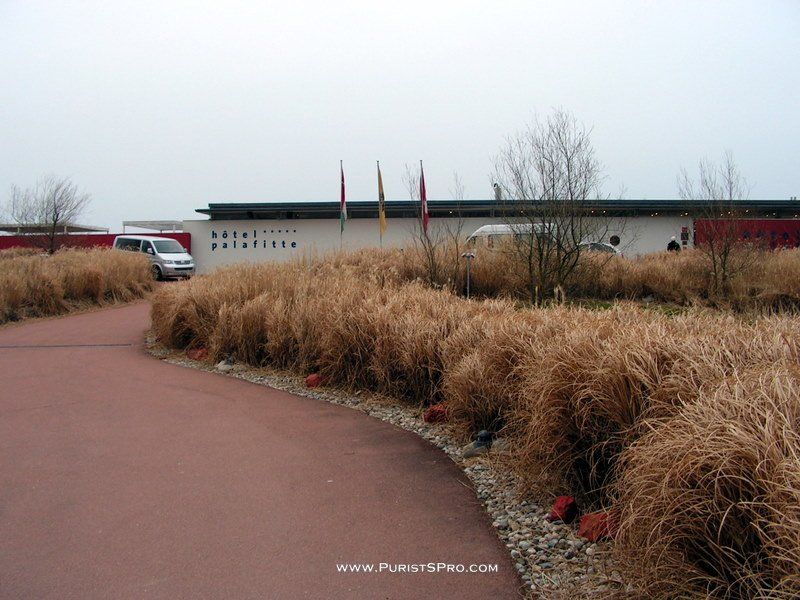
Ready for a long day investigating the industrial strength of Bulgari. Our meeting place is the Hotel Palafitte in Neuchâtel.  Very stealthy, you would never suspect a 5-star hotel here, hiding behind the rushes just at the waterline of Lake Neuchâtel.


Our first stop of the day will be the company H. Finger which is located in an industrial park in Lengnau (you know Lengnau as the home of Rado Watches I’m sure).  Finger recently joined the Bulgari group and is already well integrated, making the cases for most of Bulgari’s watches.

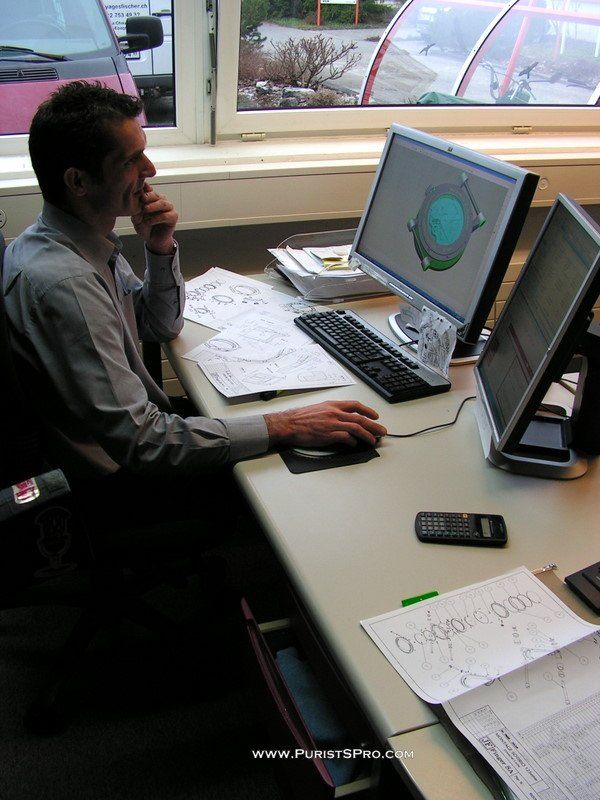
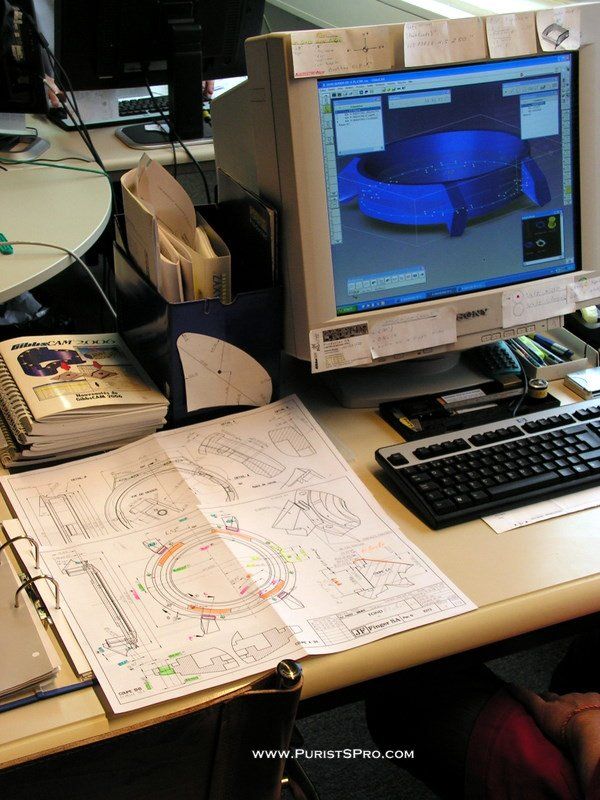
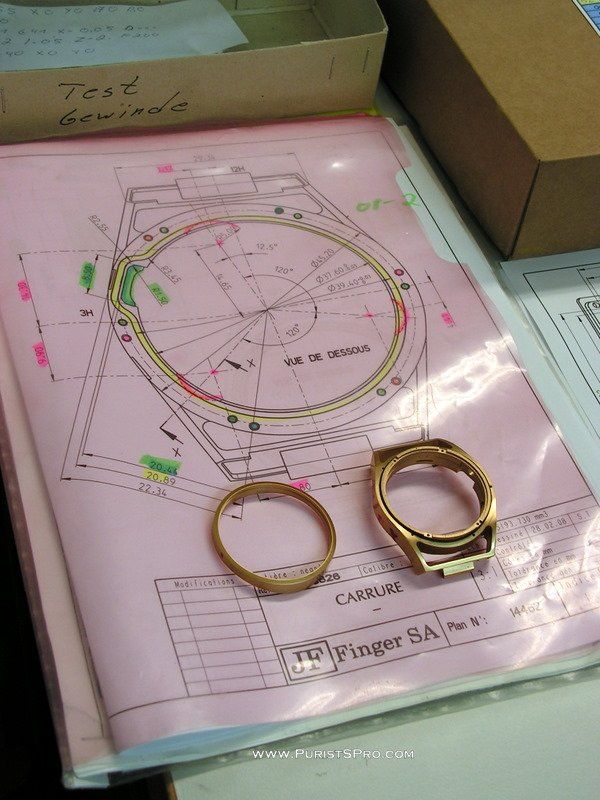
Having arrived at H.Finger first stop is the development office.  Here the ideas of the watch designers are translated into "makeable" designs and the final technical drawings and the programming for the CNC machines in production is done.  As the different view points of architects and civil engineers mean much interaction before a successful building can be built so it is between the watch designers and the machinists here.  Beautiful ideas are not necessarily easy, or even possible, to make.  But with enough exchange to find what is the essence of the design and what it is that causes the problems in production a design that can be successfully produced without defacing the designers ideas can always be found.  But no-one said it will be quick or easy.


After the design is finalised using a 3D-CAD software the machine programming must be carried out.  The CAM software helps doing this programming and allows simulating on the computer the movements of the cutting tools and the workpiece to optimise the tool paths and ensure that the part can be made quickly and safely.


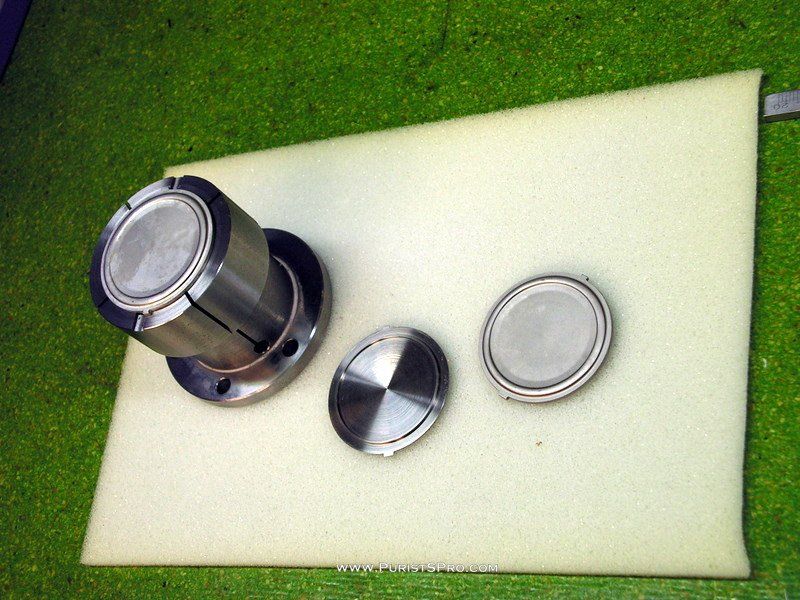
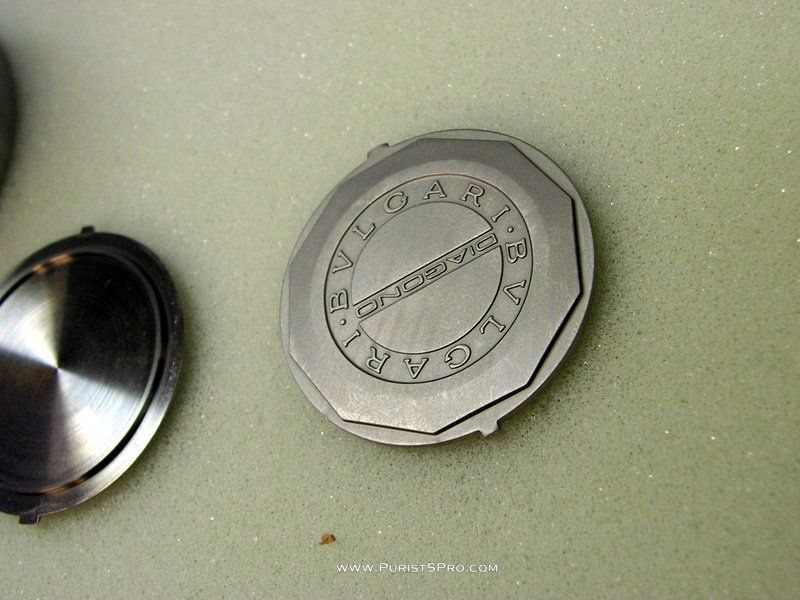
Some parts are turned on a lathe and others milled on a milling machine.  Here we see a case back.  The blank is first stamped which forms the outside with its decoration.  The inside, which needs very close tolerances to be water tight, is then turned.  As here, special chucks are made to hold the parts when working.


The stamped blank.


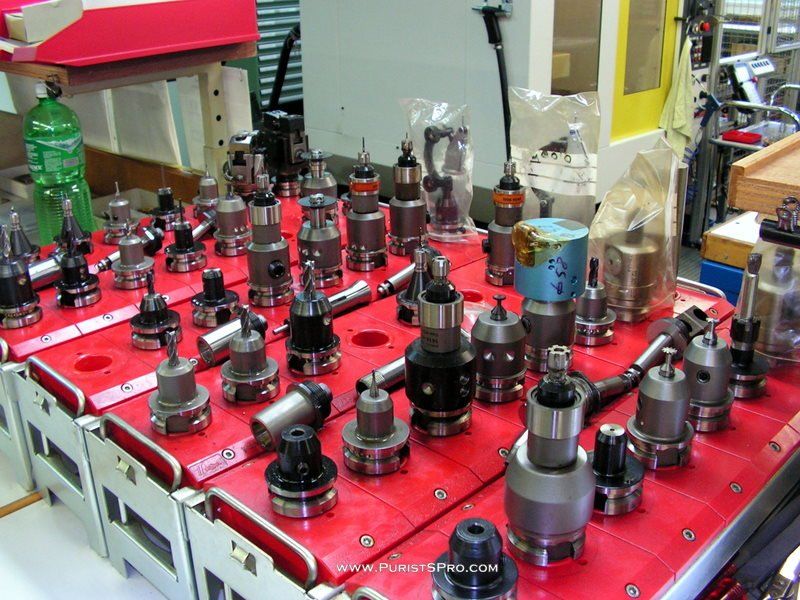
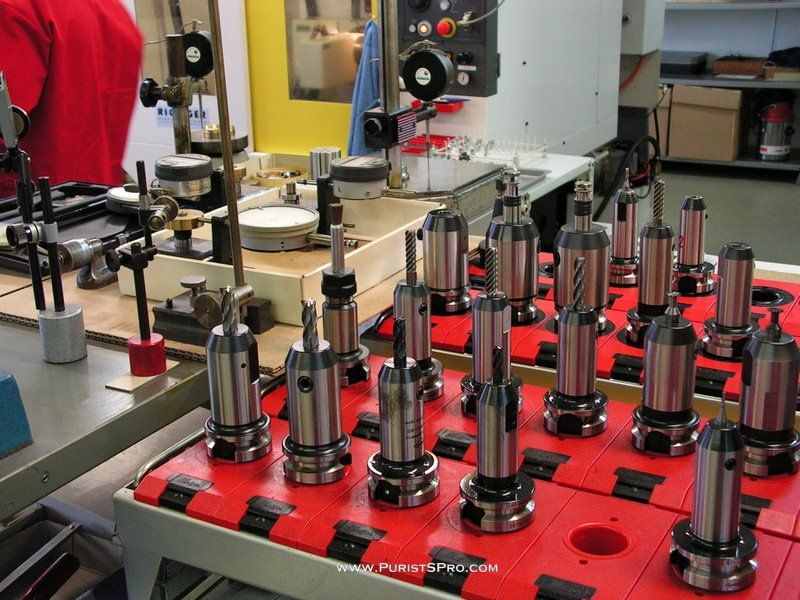
Here a small selection of the cutting tools used on the milling machines.


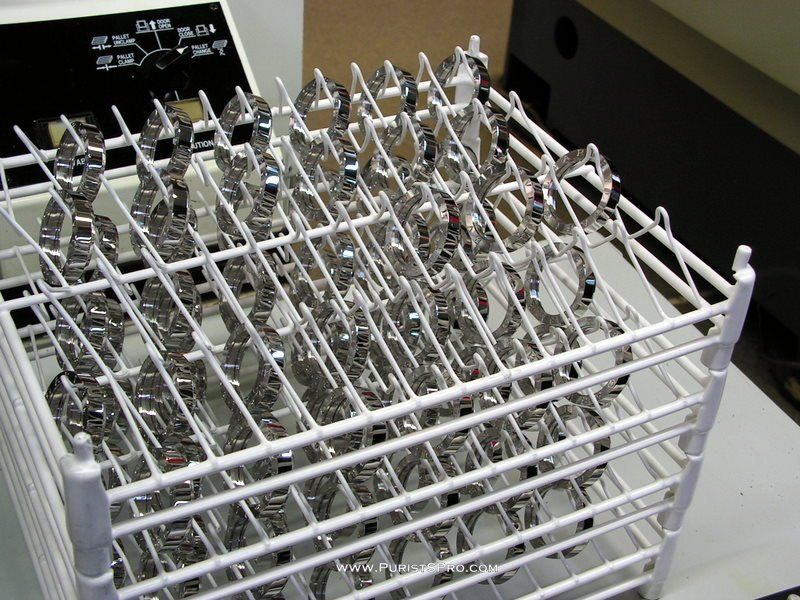
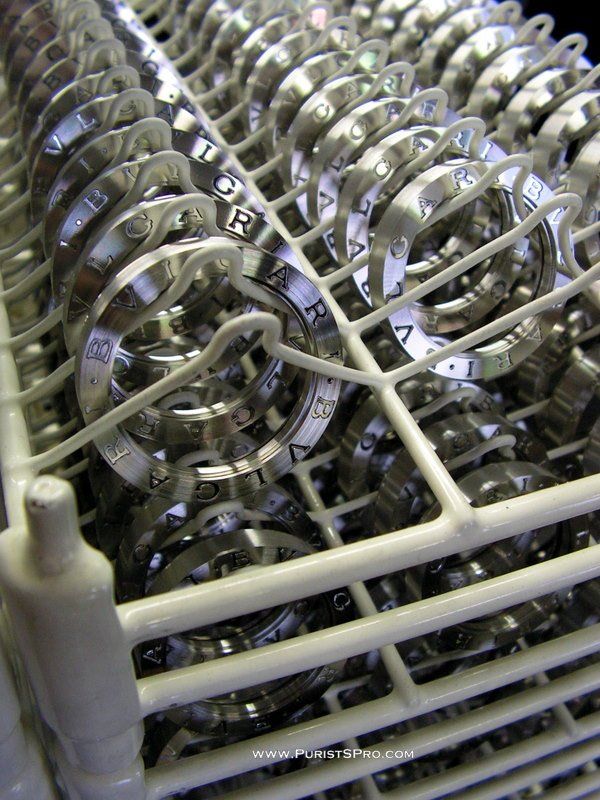
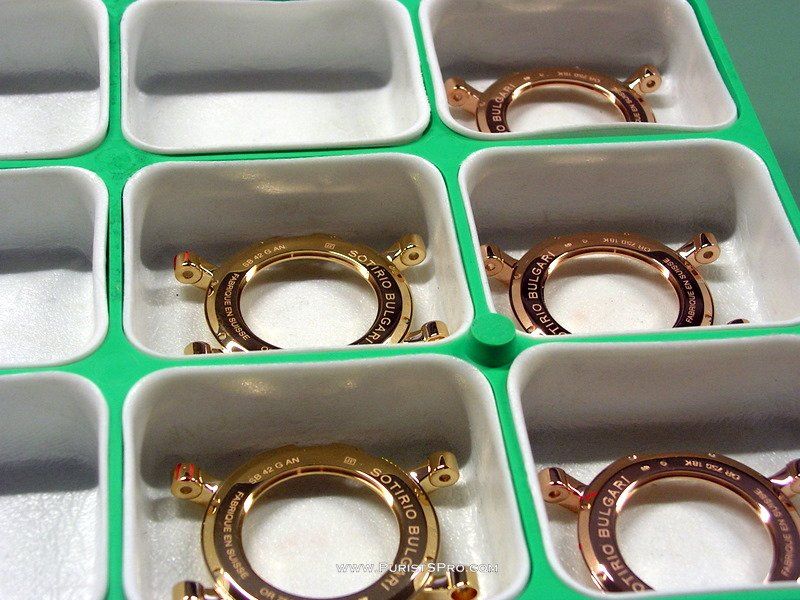
These Bulgari Bulgari cases are also first stamped in a procedure with 7 stamps with a heat treatment in between each time to create the logo.  Then the cases are turned and polished.  Finally the lugs will be soldered on.


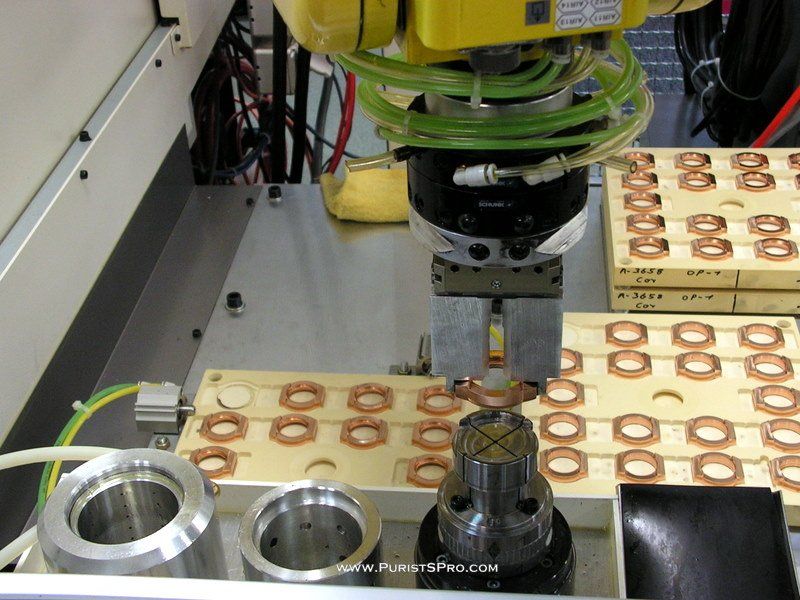
Here we see a manipulator robot loading a gold blank into a chuck.  The manipulator will then unload the chuck that is presently in the milling machine and replace it with this one.


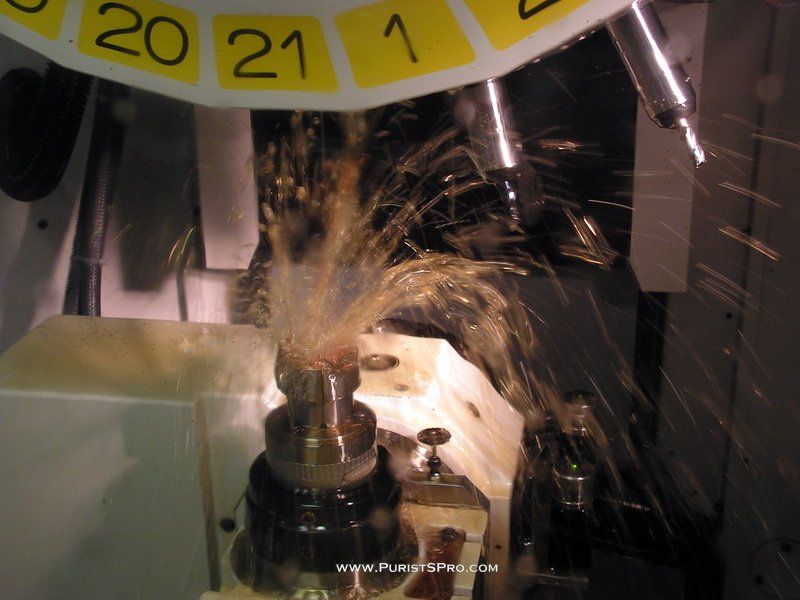
The gold blank is being milled in this picture.  This milling machine can accept 21 different tools, some of which can be seen here on the turret.


This shows some of the work done on this machine.  In particular the case back with attached lugs of a Sotirio.


Other work in gold


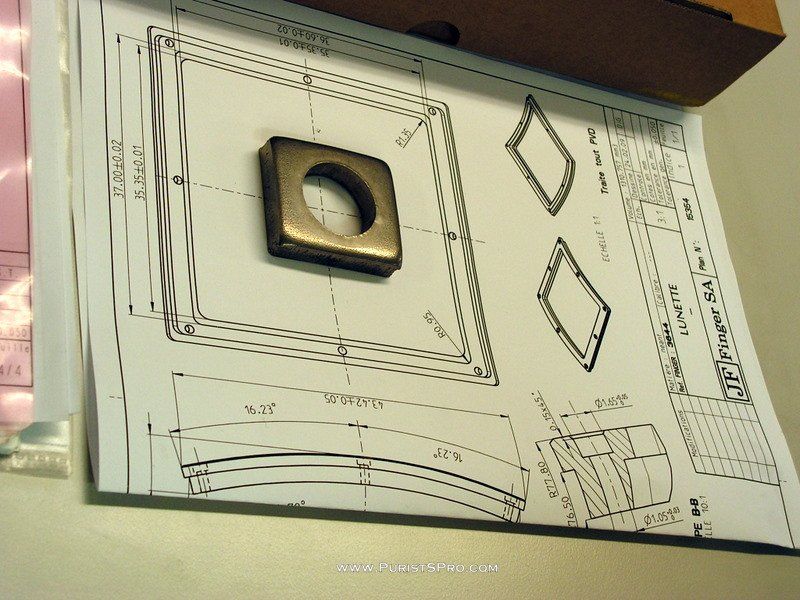
The blank for a square white gold case back.


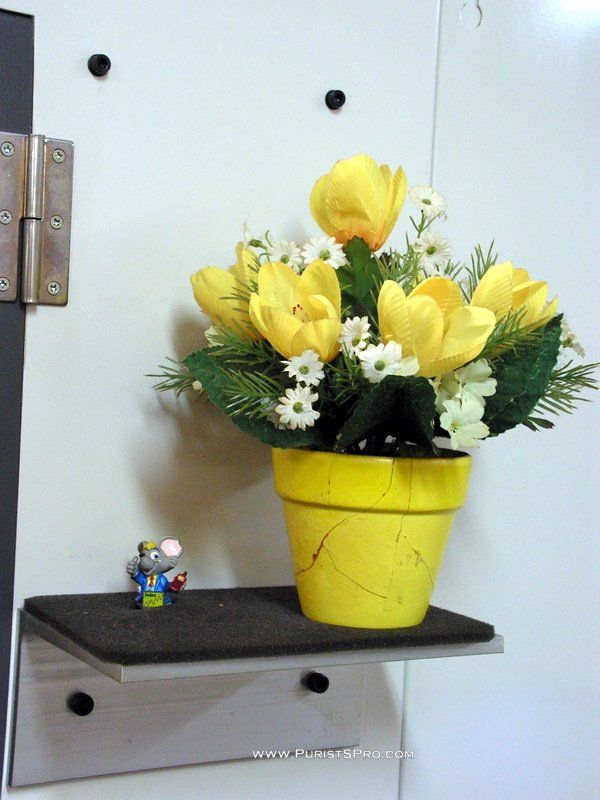
Despite the weather outside telling a different story, here in the shop it is obviously spring!


Tools, tools everywhere...


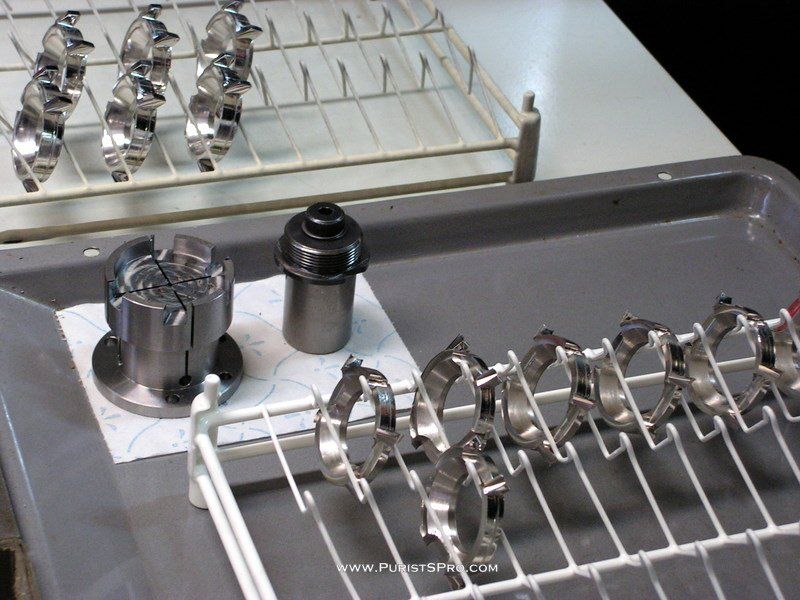
and cases, along with their, in each case, special chucks


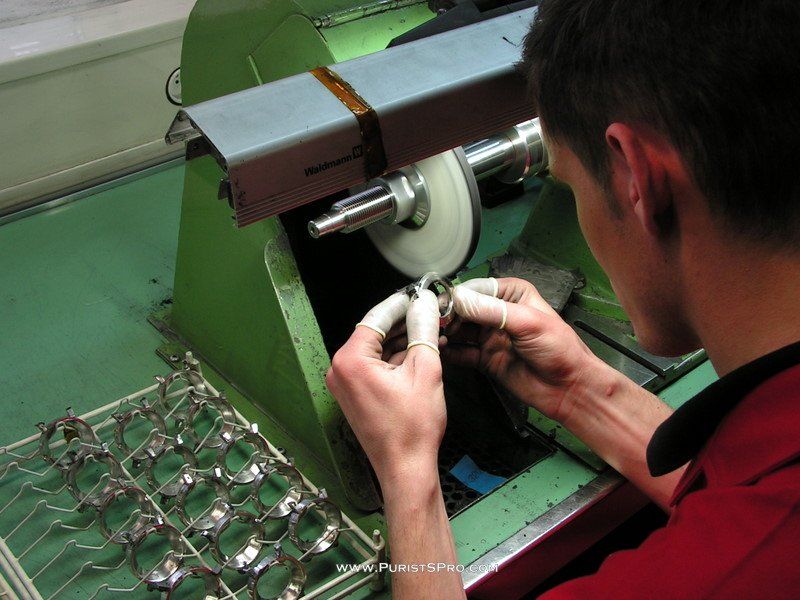
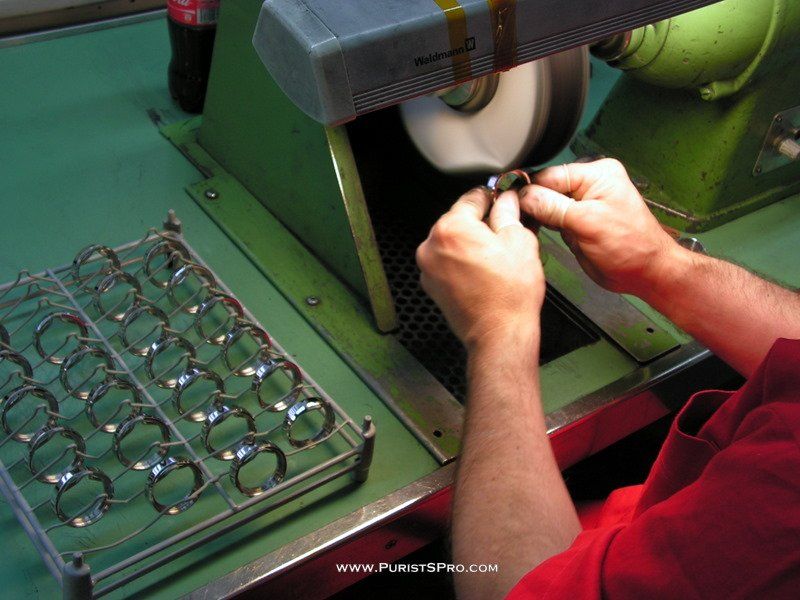
Now we move out of the machine shop and on to the polishing room.


This is all hand work.


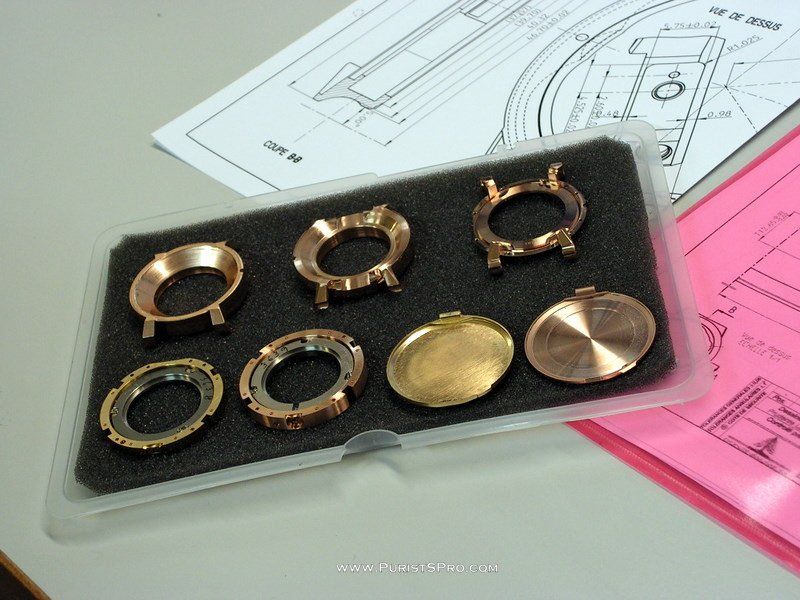
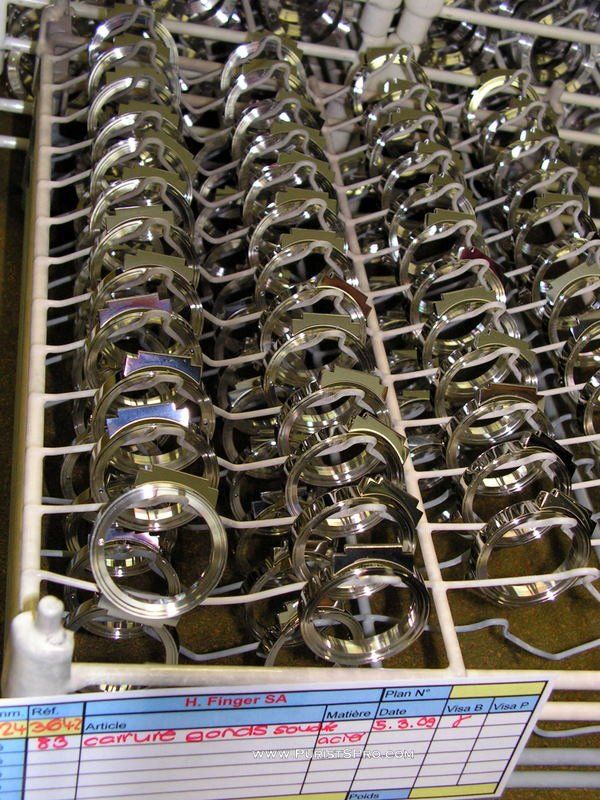
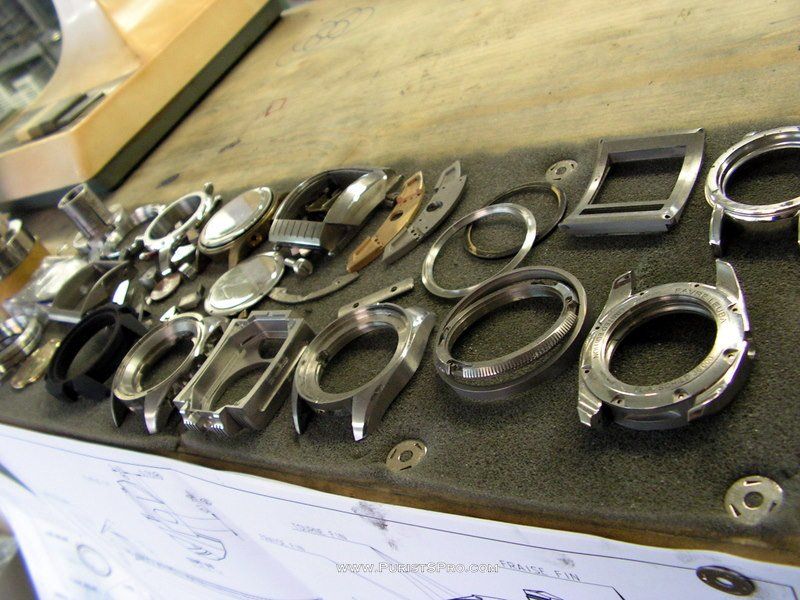
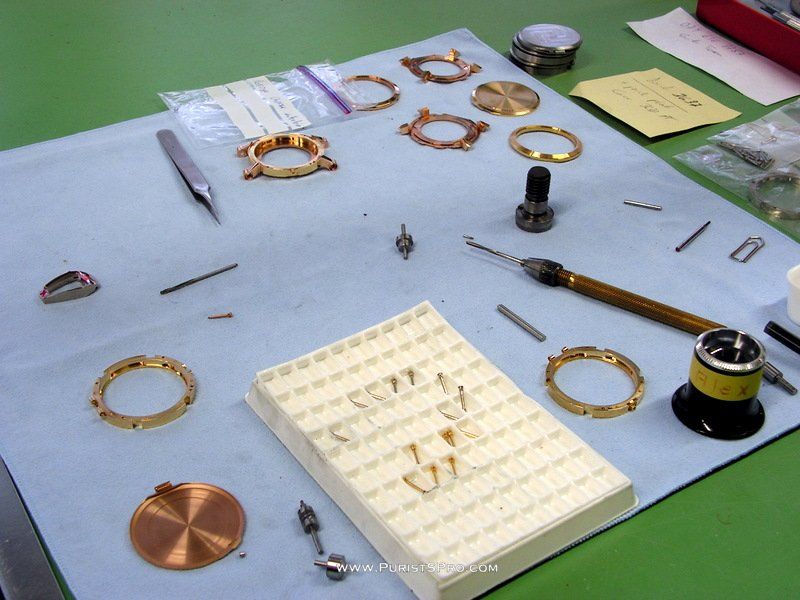
A small assortment of different cases in different states of finishing.


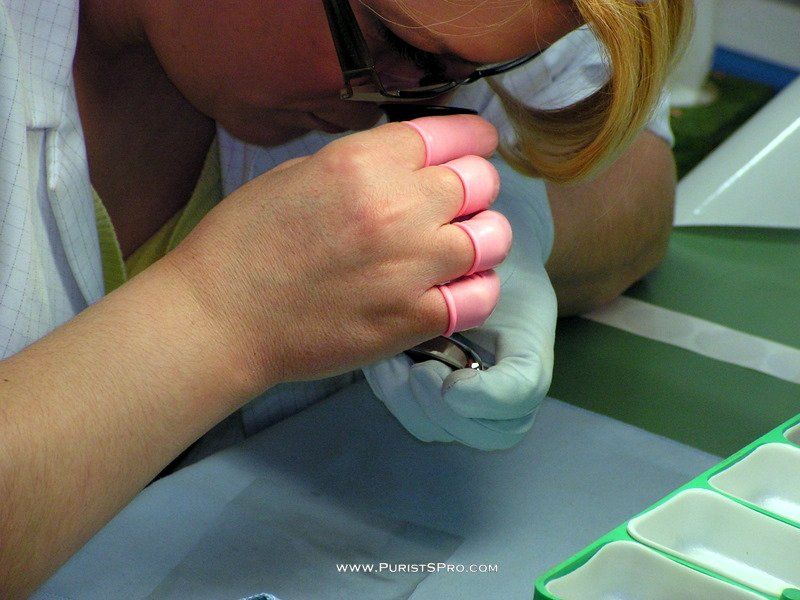
From here we move on to final assembly and control.
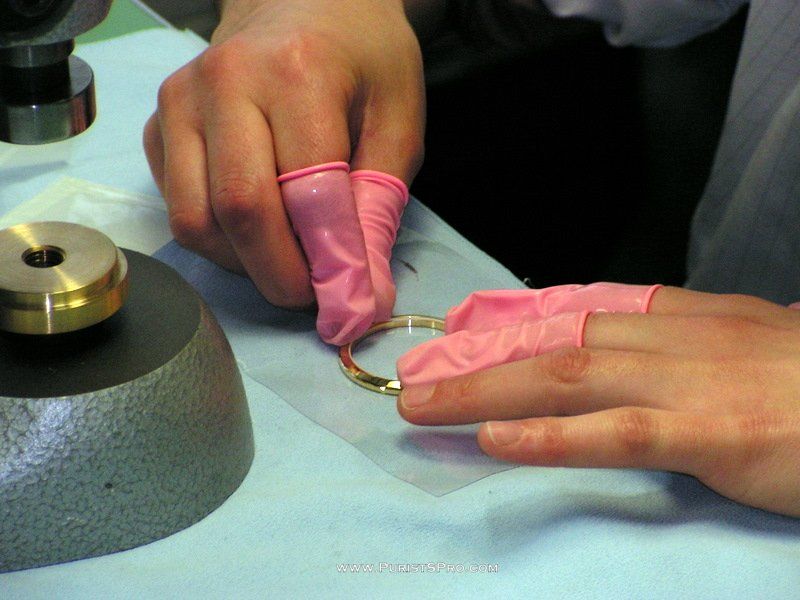
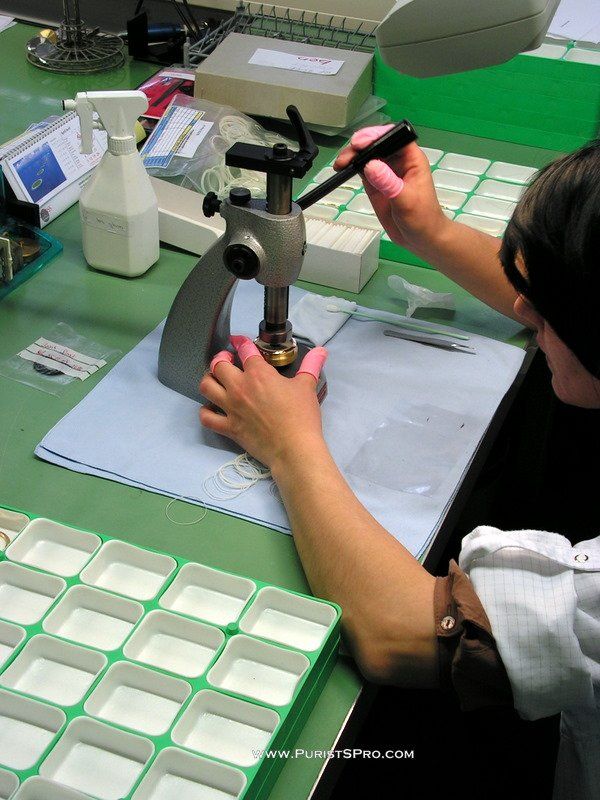
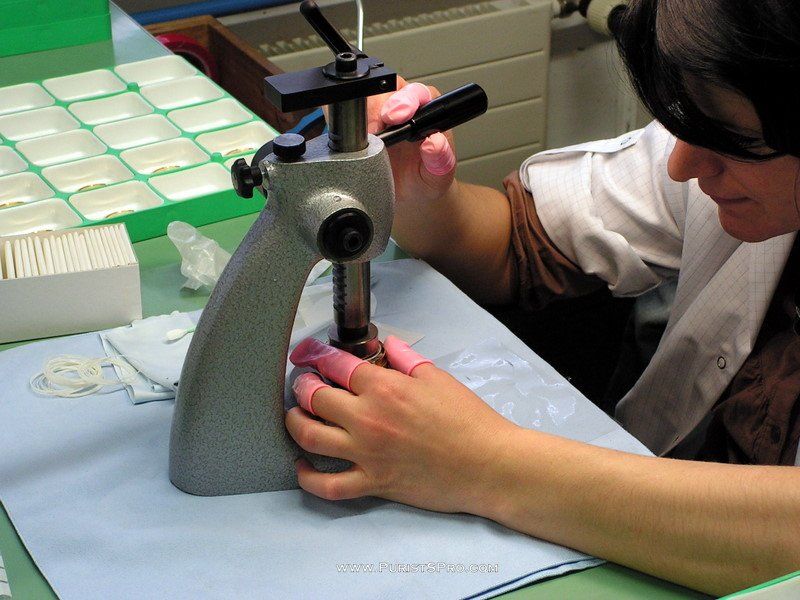
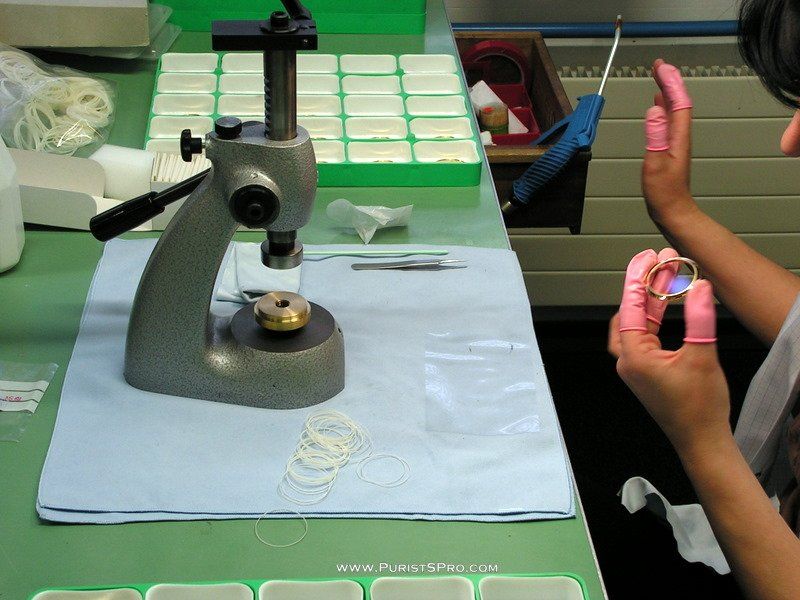
Of course the glasses need to be installed, first the crystal gasket is put in place...


then the glass is pressed in with a small press.


That fixes the crystal in place


More complicated cases consist of many parts that need to be assembled.


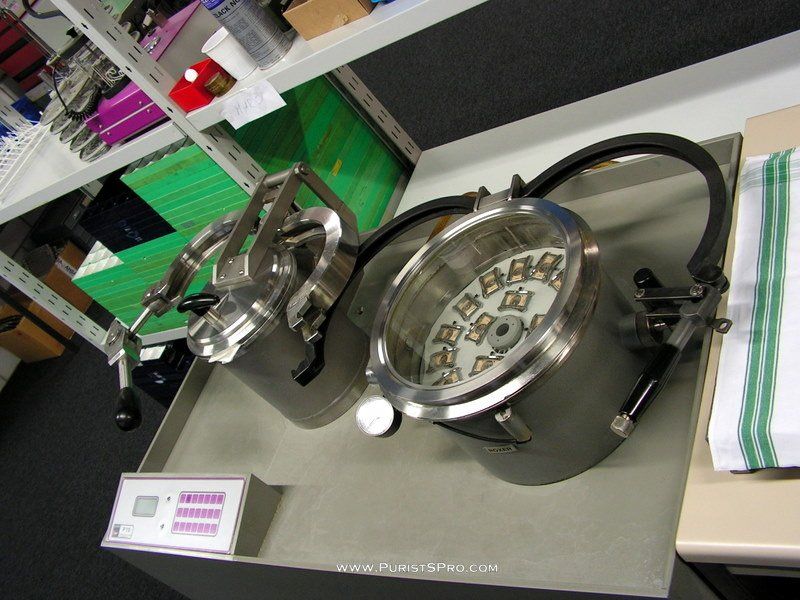
When all is together the cases are tested for water resistance.  The standard tests are for 30meters, the tester in front, and 300 meters, the smaller tester in back.  Actually the cases are tested to 40 and 400 meters and for periods of time of up to 3 hours.


Those cases that pass the waterproofness test are then inspected again and are packed in a soft resilient plastic.


They then go off to Neuchâtel to the watchmakers shop where we will pass later on this trip.
Next stop, bracelet making at Prestige d'Or.


This message has been edited by Kong on 2009-05-27 03:16:41


This message has been edited by MTF on 2009-05-31 11:02:53

Key Points from the Discussion

Advertisement
The Discussion
KO
Kong
May 27, 2009

Hi BDLJ Write something about it on this sub-post with the rest of the pictures: home.watchprosite.com Hope that helps. Kong

BD
BDLJ
May 28, 2009

The reason I asked was that this was in Don's post: "These Bulgari Bulgari cases are also first stamped in a procedure with 7 stamps with a heat treatment in between each time to create the logo. Then the cases are turned and polished. Finally the lugs will be soldered on." So I was intrigued...

KO
Kong
May 28, 2009

I am eager to see too! From description is like a reflow process with solder-paste in between the joint. I guess it should have a fixture to hold the case and tubular-lugs in place before passing through the reflow oven. Some pics of the before and after soldered. Kong The lugs are individually fabricated, and soldered onto the case-body. After lugs were soldered. Another example of the later Diagono Tourbillon with tubular lugs (after soldered)... This message has been edited by Kong on 2009-05

DX
dxboon
May 28, 2009

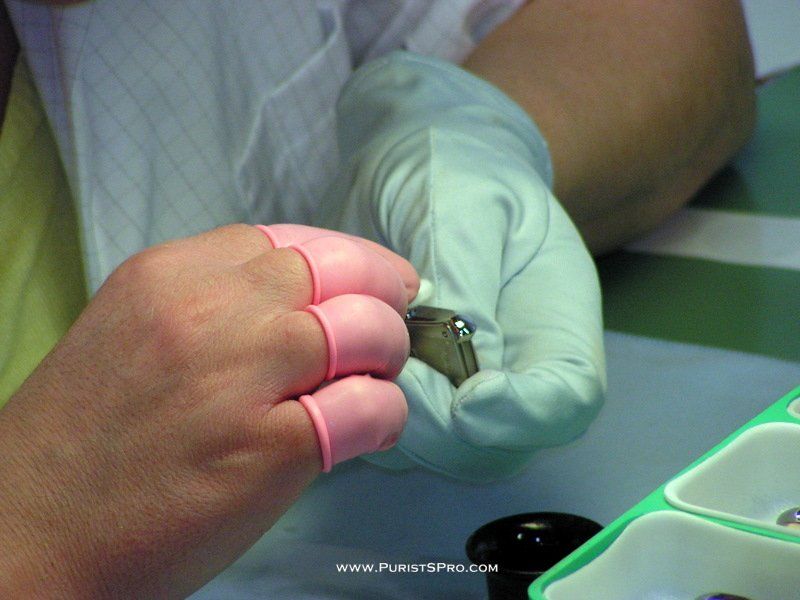
How do they solder on the lugs and get such a seamless case? I confess, I've never inspected a Bulgari watch that closely, but I don't ever remember noticing any remnants of the soldering process. Don't ask me why, but I love to see the watchmakers wearing their tiny latex finger-coverings (there is probably an official name for these items that I am ignorant of). It makes me feel like the watches are going to visit the doctor, or are at the hospital for a check-up. Thanks for another great repo

MA
masterspiece
May 28, 2009

for the in-depth report. Questions: in the polishing room, is it a two step process? It appears that the first photo's polishing wheel is quite thin and the second photo is much larger. Also, is it a cotton buffing wheel and is a polishing compound used? Thanks, Bob

TO
Topcat30093
May 29, 2009

I look forward to reading your further reports.

Advertisement

Continue the conversation

This thread is active on the Bulgari forum with 19 replies. Share your knowledge with fellow collectors.

Join the Discussion →