Kong, on behalf of Don Corson, provides an exclusive look into Cadrans Design, the facility responsible for crafting Bulgari's watch dials. This third installment of a series offers a rare glimpse into the intricate processes and historical machinery involved in high-end dial manufacturing.
Posting on behalf of Don Corson.
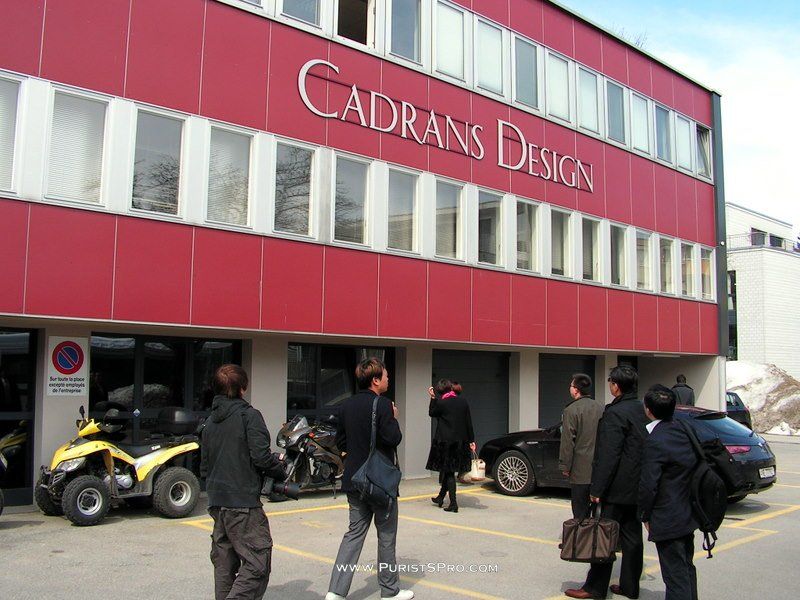
After a relaxing lunch we head on to Cadrans Design in La Chaux-de-Fonds.
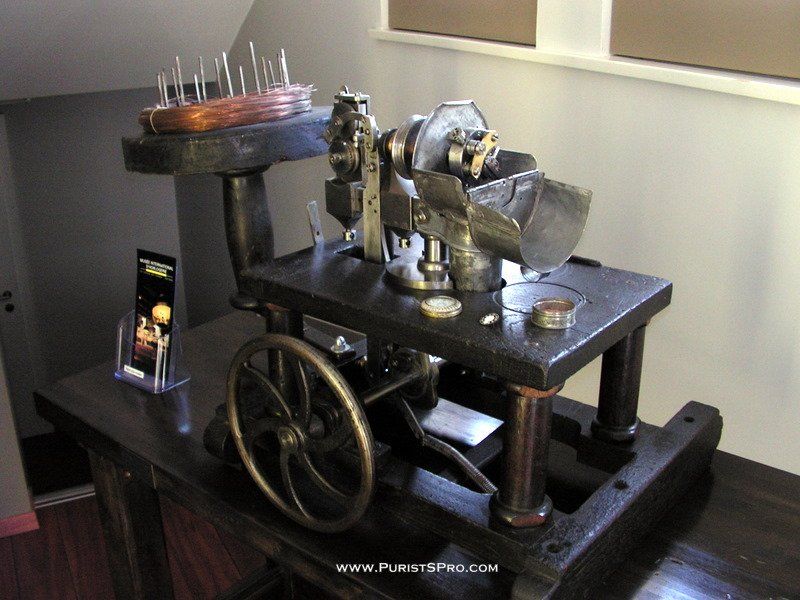
In the entry hall we are already confronted with some history. A machine to make dial feet from the year 1880.
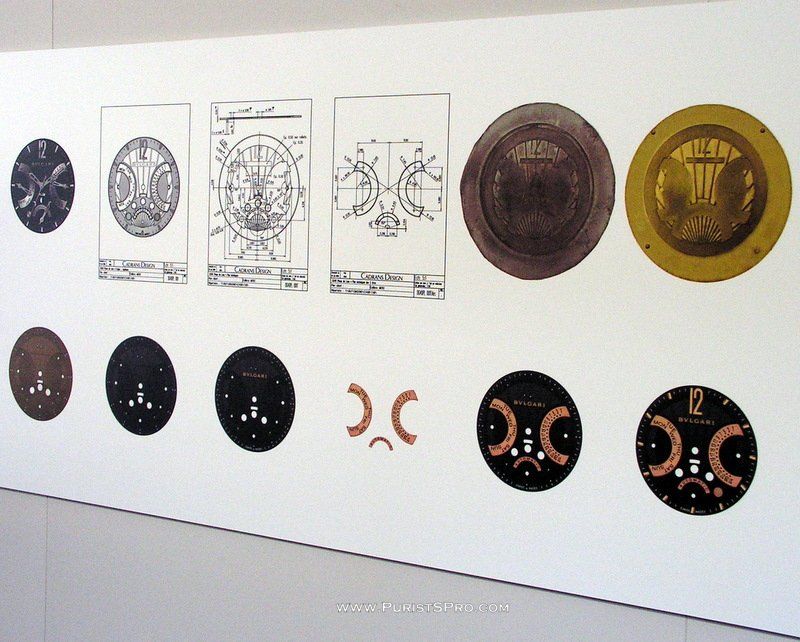
This presentation board tells the whole story of a dial. From the upper left, the idea of the designer, going to the right through the stages of making a final design, the technical drawings, the stamp tested on a lead blank, stamping, drilling, decoration and surface treatment. Finally the inserts are made and assembled on the dial.
The tools are all made in house at Cadrans Design even though the stamping is done externally. For some reason these companies are wary of 150 ton presses. On the ground floor we find the shop with the usual panoply of lathes and milling machines.
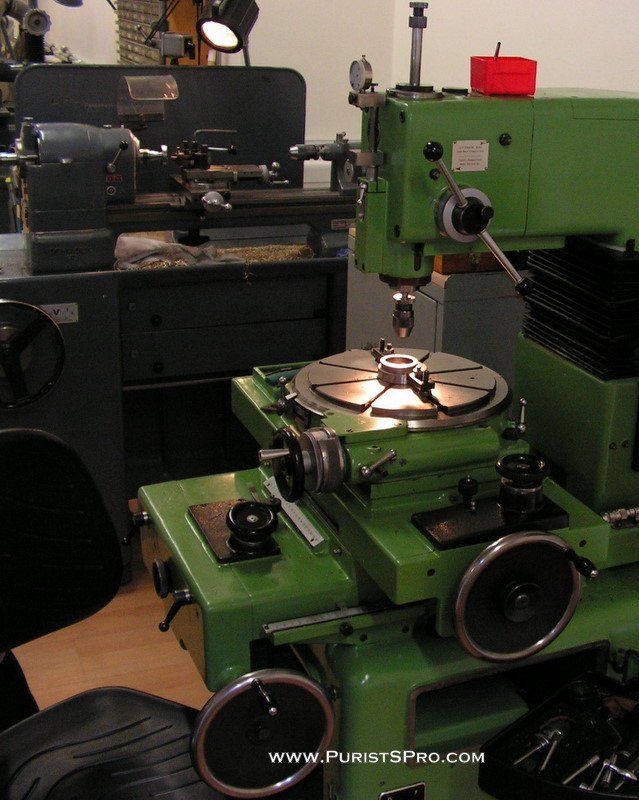
The raw material for the stamps is the steel bar.
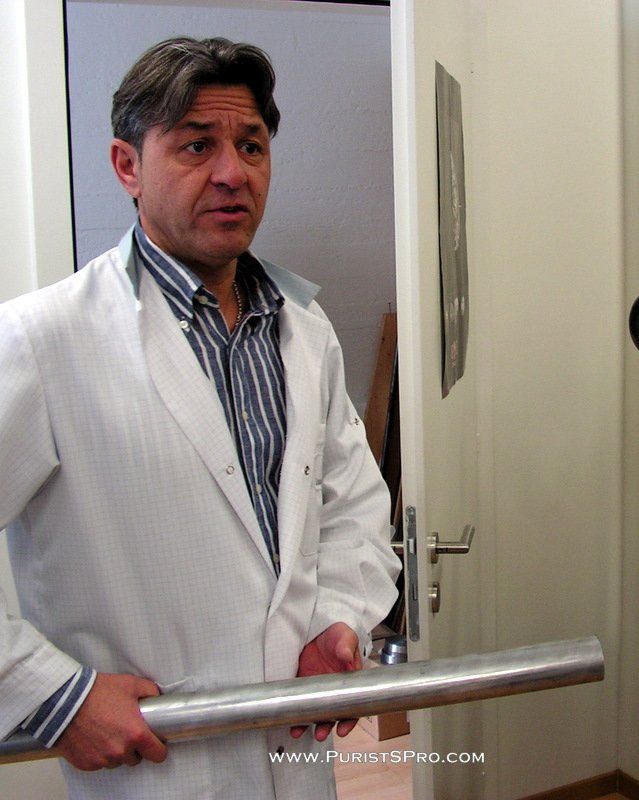
Here we see a fixture for holding a dial for one of the process steps. The fixture has holes to accept the dial feet, which position the dial, vacuum channels to hold the dial to the fixture and extractors which push the dial out from behind so that it is not necessary to touch the dial from the front to get it out. These kind of fixtures and the stamps are all made here in the toolmakers shop.
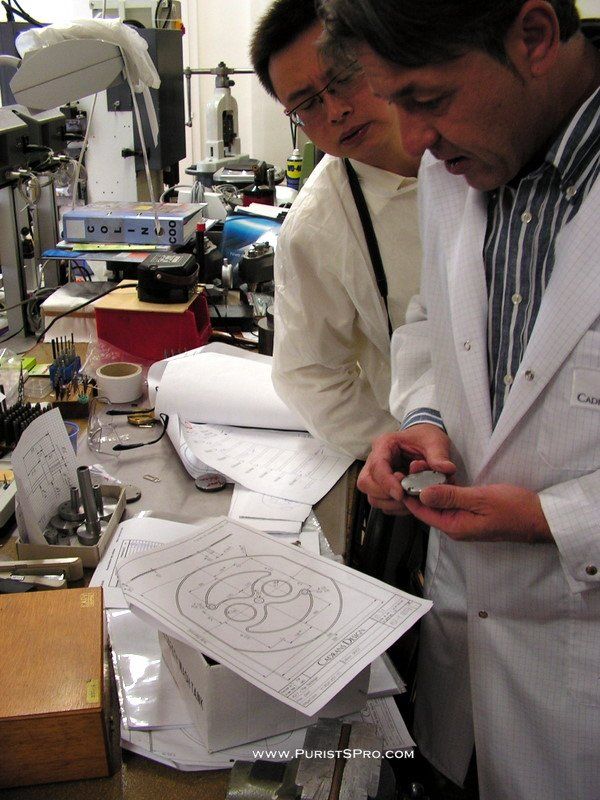
Here on a small press a tool is being tested to cut out the final dial shape from the blank.
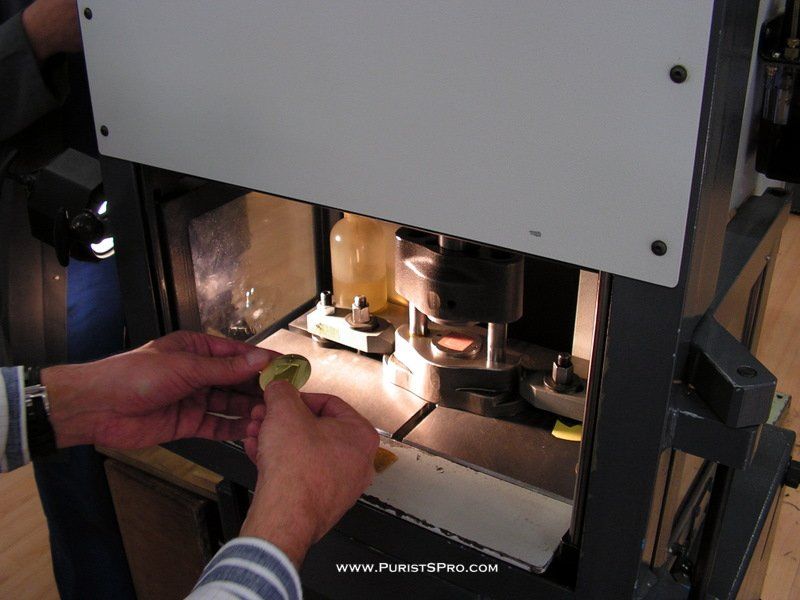
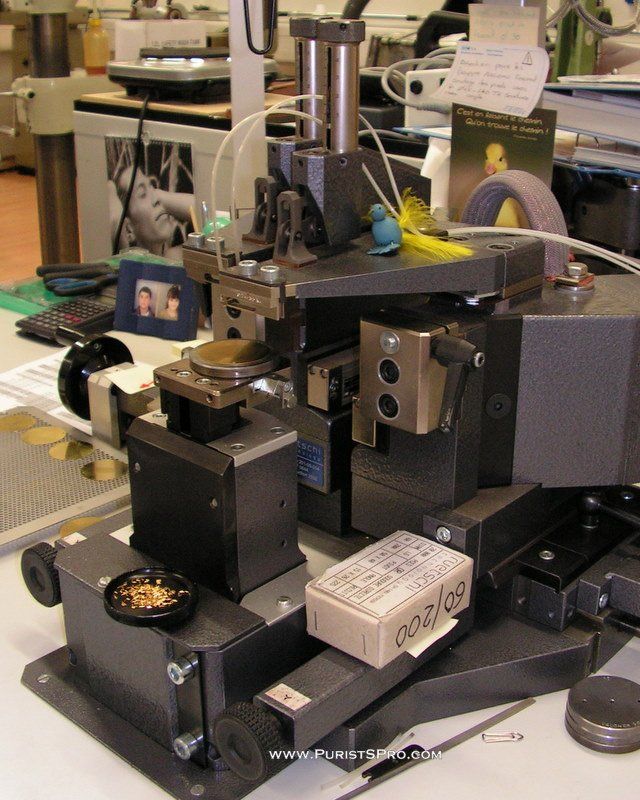
This machine welds the dial feet on the back of a dial by spot welding.
Now we move up a floor to see the surface treatment of the dials.
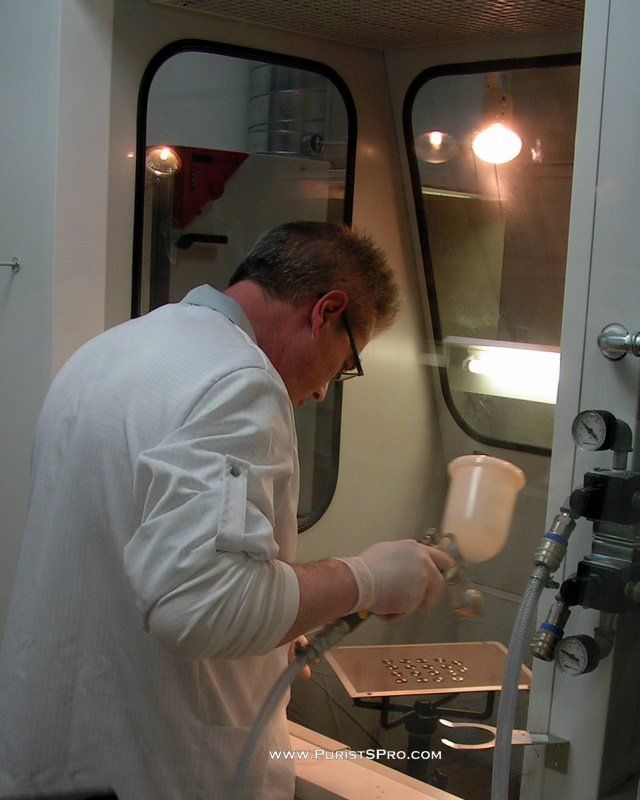
Although this area is not technically a clean room similar precautions are used to prevent the ingress of dust particles that could deface a dial. The shops are under a slight positive pressure with filtered air. Antistatic coats and footware are required.
Here we see dials being painted in a special booth.
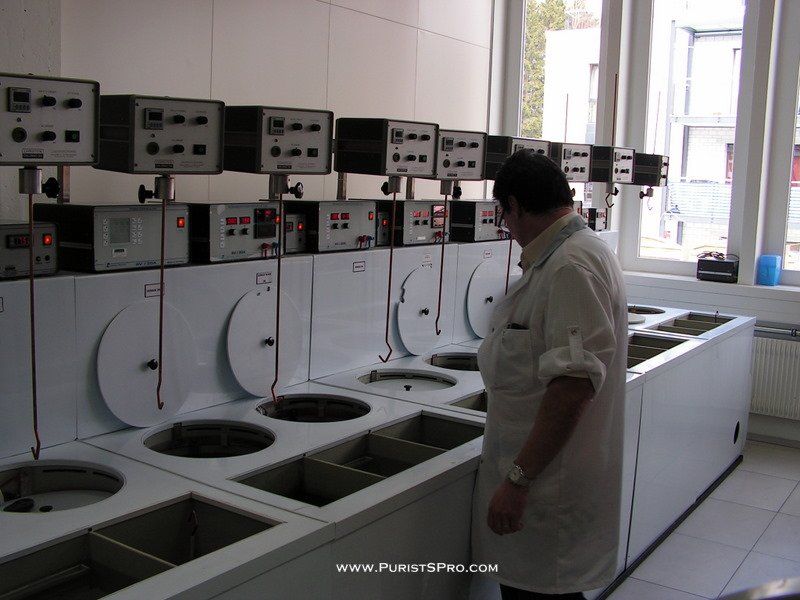
This is the galvanic shop for electroplating. The shop is run by a trained and certified master plater and is equipped for plating silver, gold, rhodium and ruthenium and other metals.
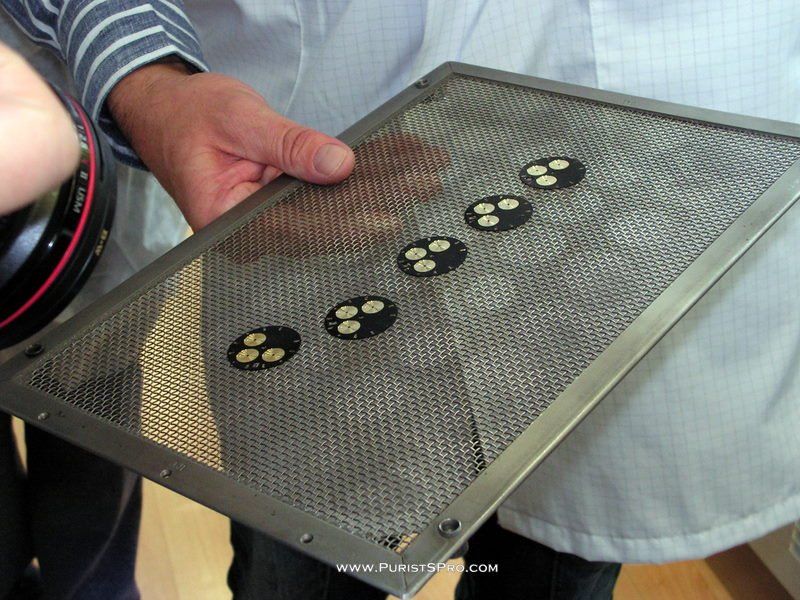
These dials have been silver plated.
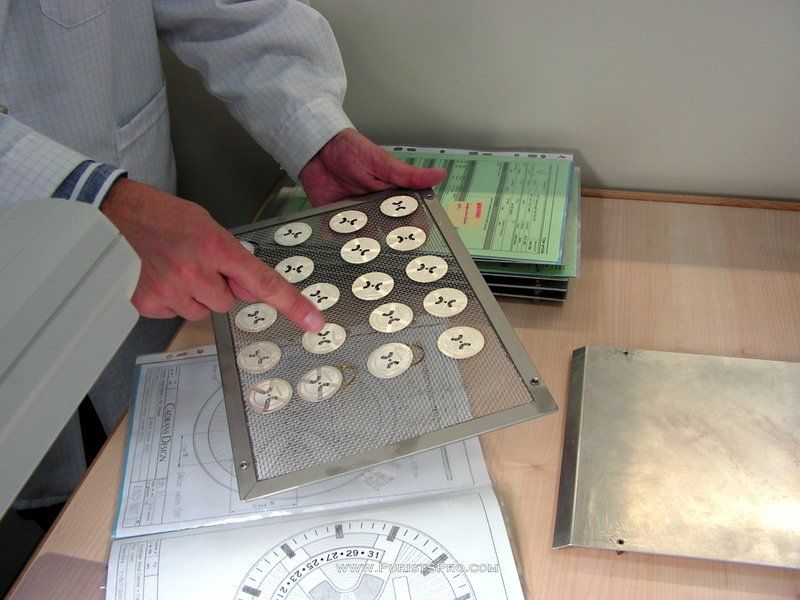
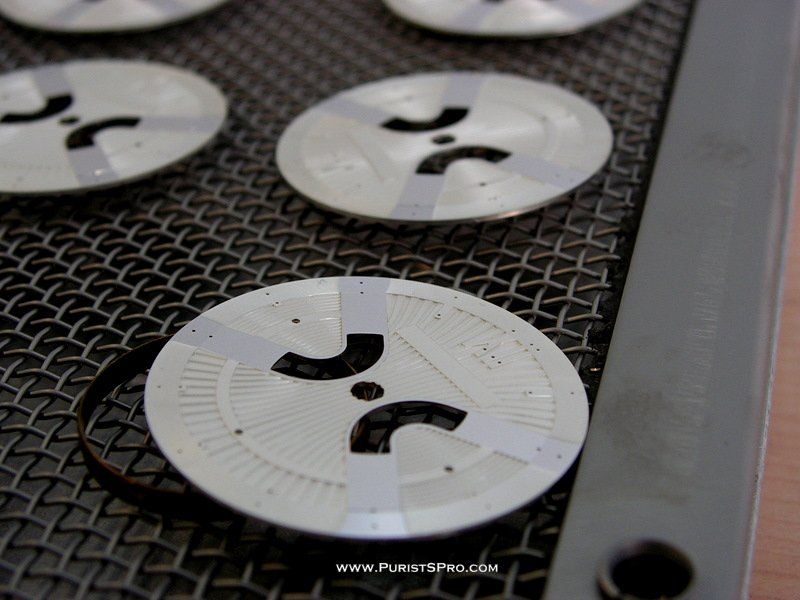
The Sotirio Bulgari Annual Calender dials ...
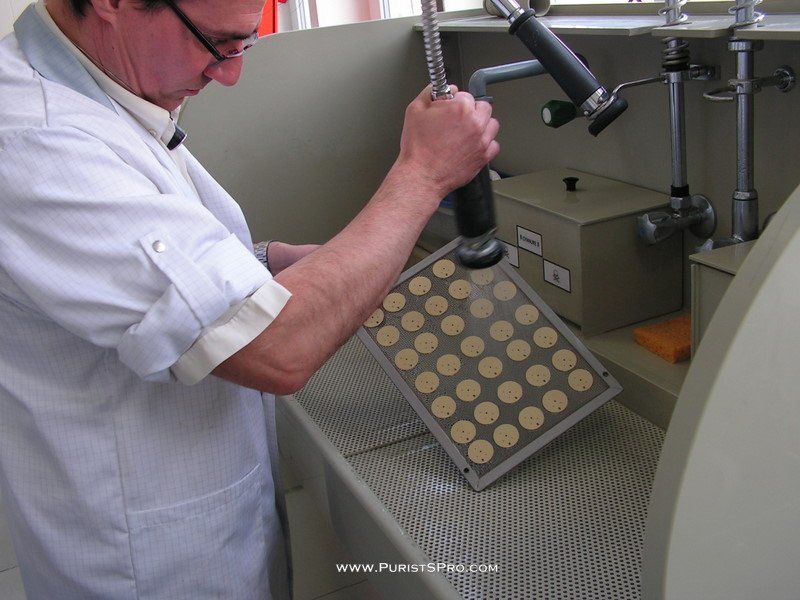
Here the dials are being cleaned after plating
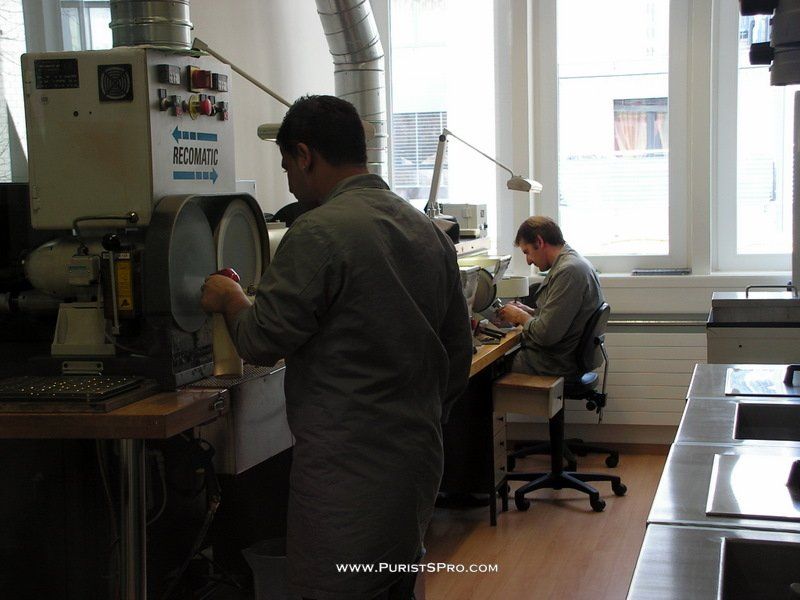
The polishing and grinding shop.
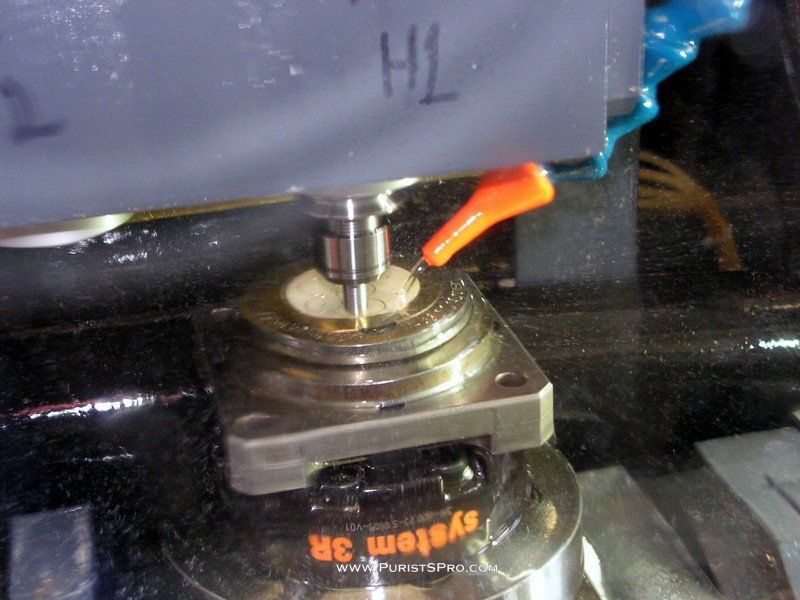
On this machine run under CN control the chrono counter dials are decorated using a diamond-tipped tool.
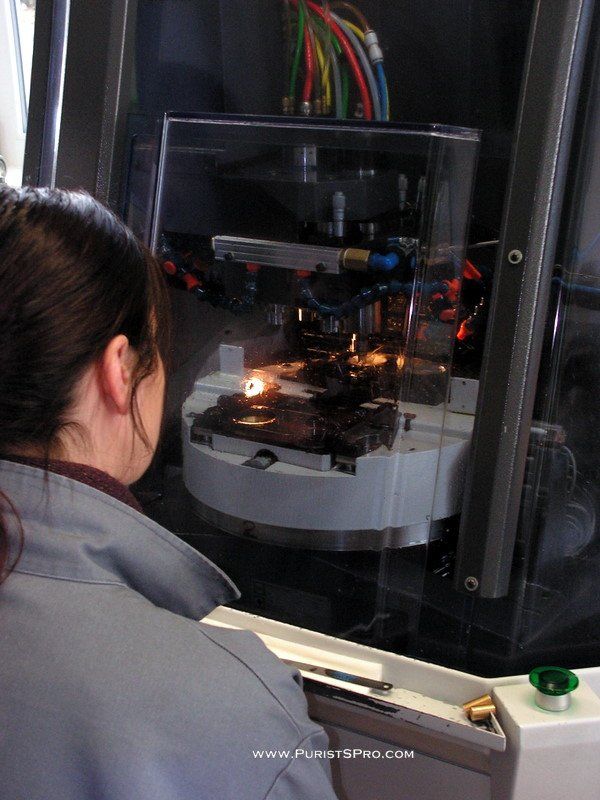
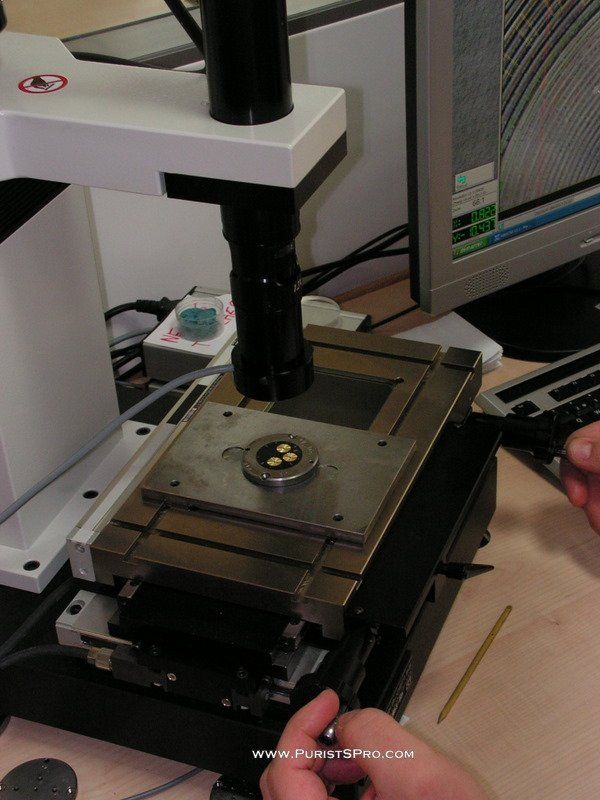
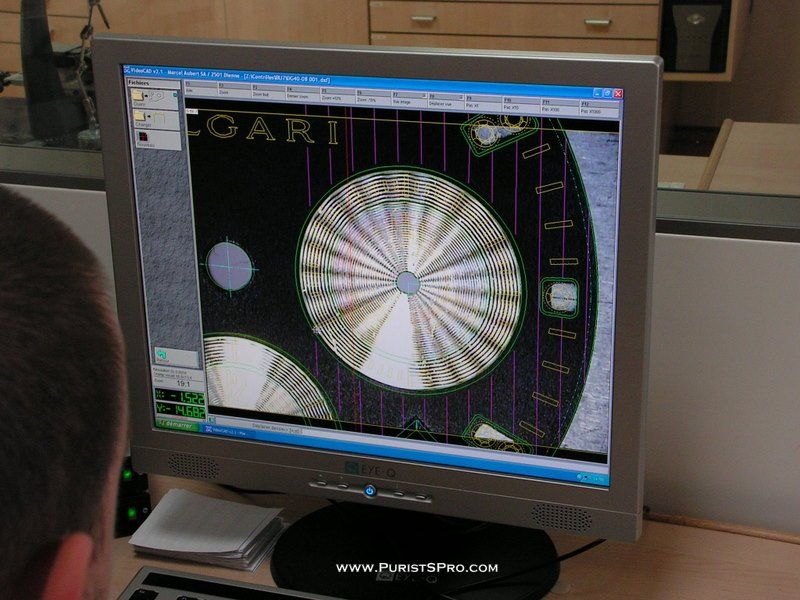
Here we see how the work piece is being controlled on an optical measurement system to be sure that all is perfect.
Here mother-of-pearl dials are being cut. Openings for the chrono counter dials, the hands, the date window and places for diamond settings at the hour markers.
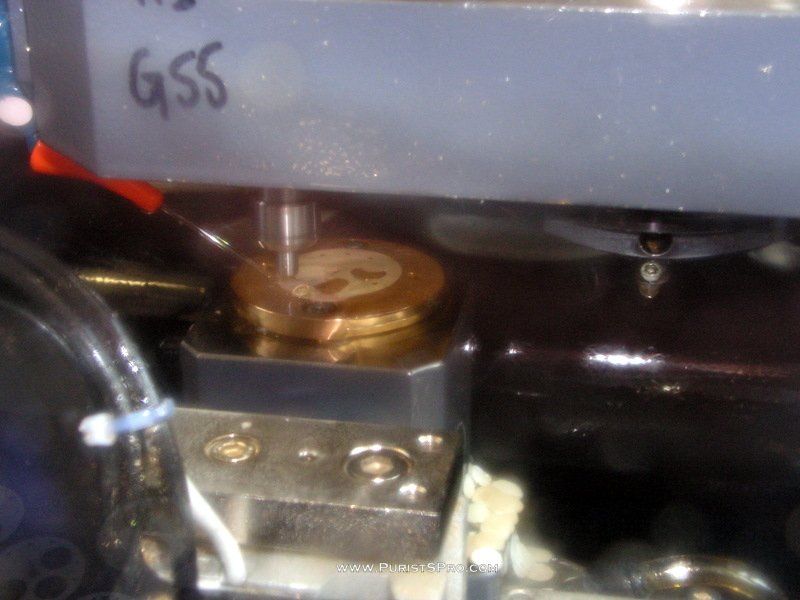
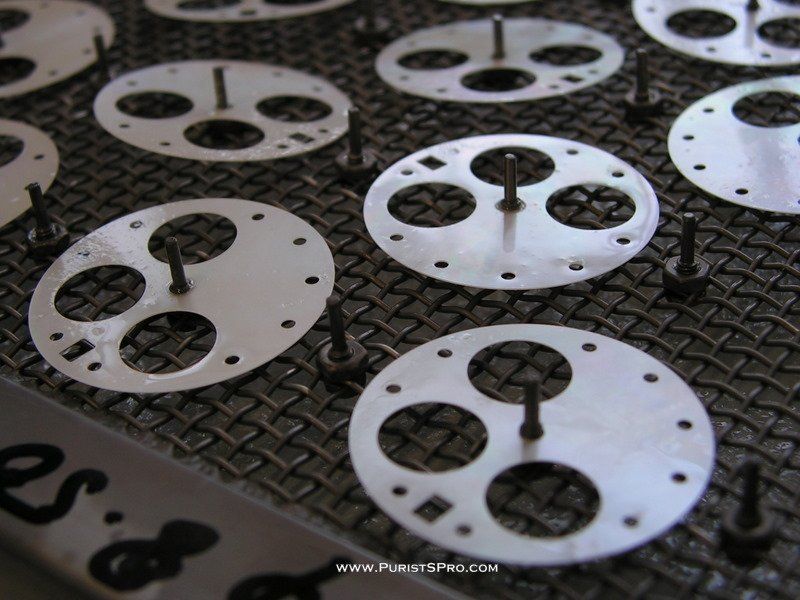
The thinner inserts for the chrono counters are being cut out of a piece of mother of pearl here.
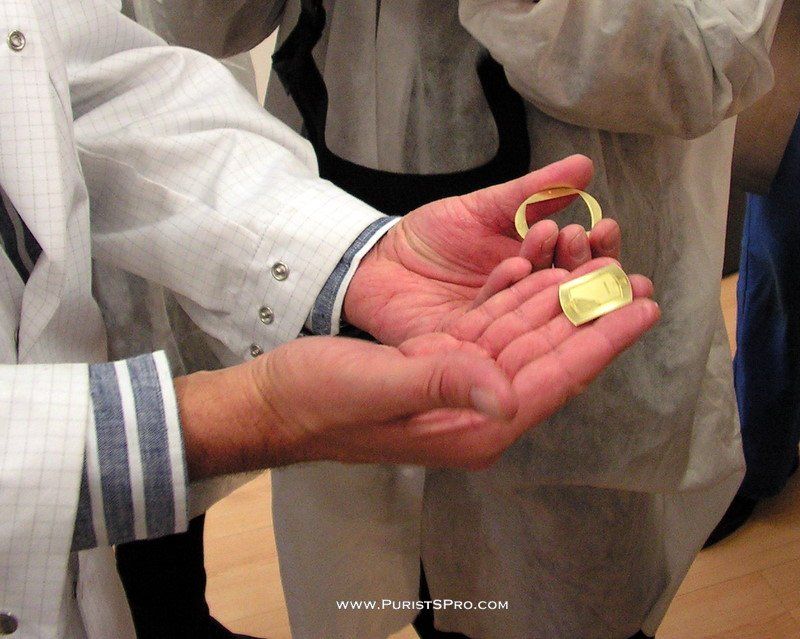
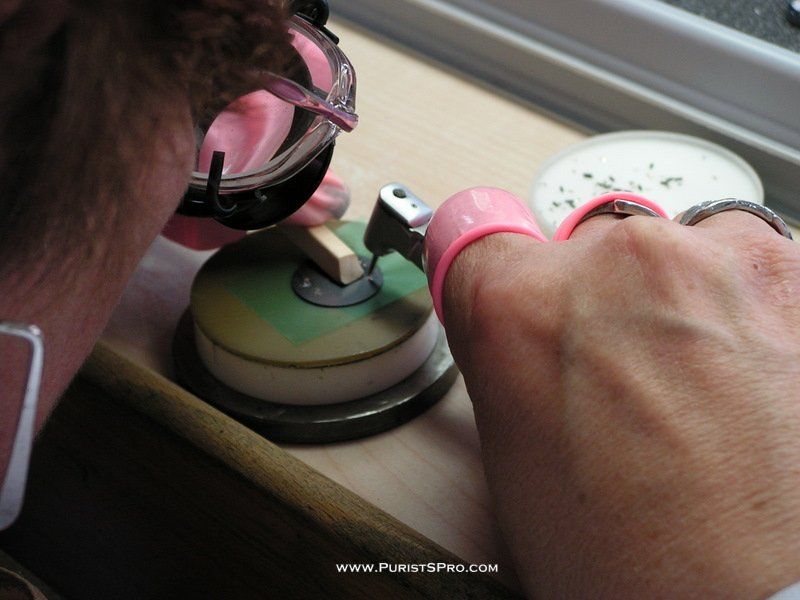
The last step that we see is mounting of indexes and inserts on the dial. The indexes and inserts all have at least 2 feet that hold the insert on the dial. The diameter of the feet is about 0.15mm. In the first picture we see that the insert is held to the dial with a weak sticky tape, then while holding the dial down the insert feet are clipped off at the level of the dial.
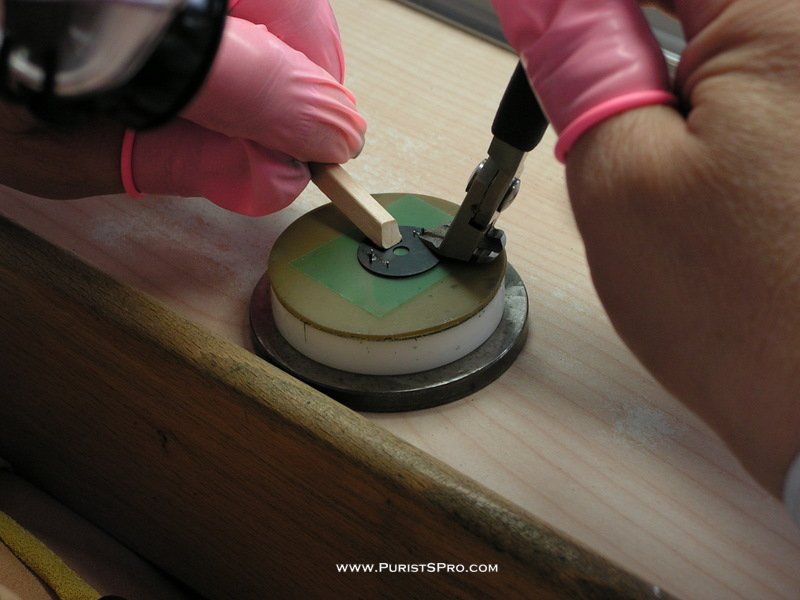
The final step is riveting the feet on the back of the dial, after which the tape can be removed and the piece is finished.
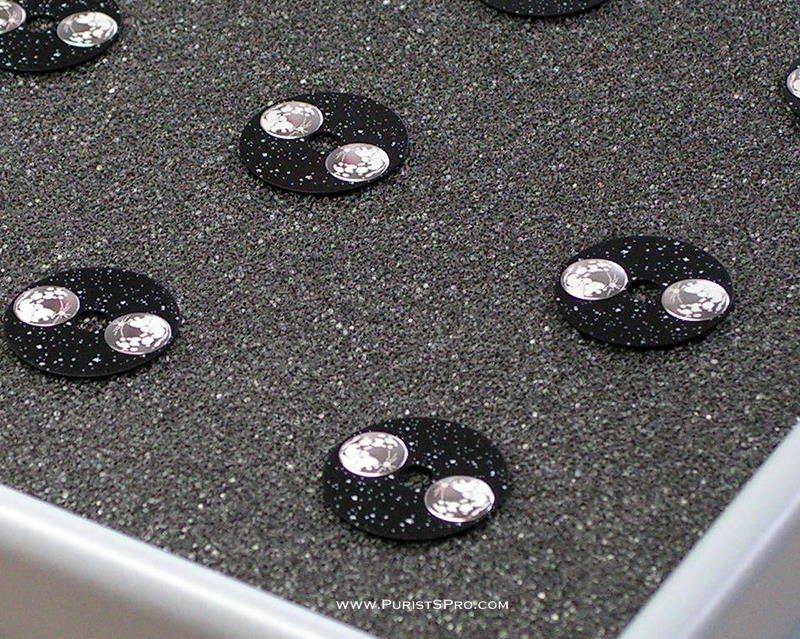
These pieces are moon phase disks, the insert is the moon.
This completes our tour of Cadrans Design, a company which has been making the dials of Bulgari watches for many years and now very recently joined the Bulgari group.
Now we will head back down the mountain to Neuchâtel, to Bulgari Time.
This message has been edited by Kong on 2009-06-09 21:00:56 This message has been edited by MTF on 2009-06-12 11:49:37