Breitling always was the chronograph watch firm. Their reputation in the area is second to none and over the years, while some designs have remained just as they are (for example the Navitimer), others have been added to the range with almost immediate effect (the Chronomat). Breitling always was the instrument for professionals. There is history in the brand; there is a commitment to the chronograph watch as there always has been since the firm’s foundation.
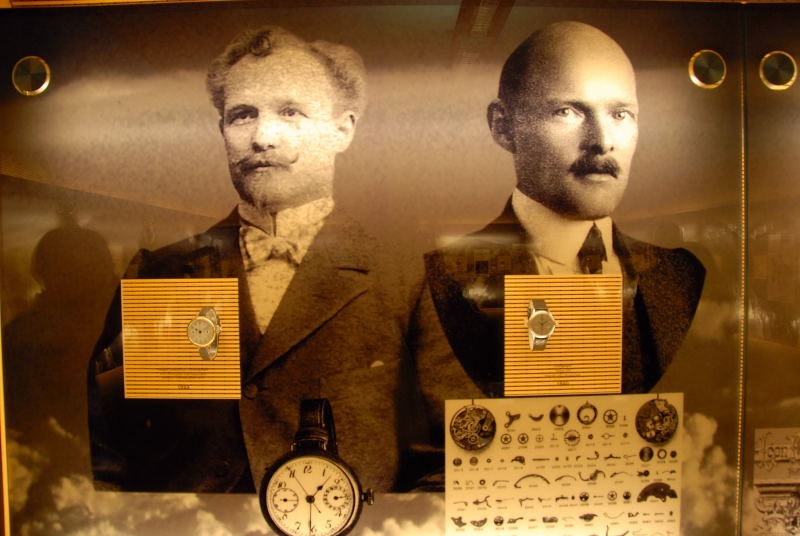
[Photos of Leon and Gaston Breitling with the watches that made their mark in chronographs]
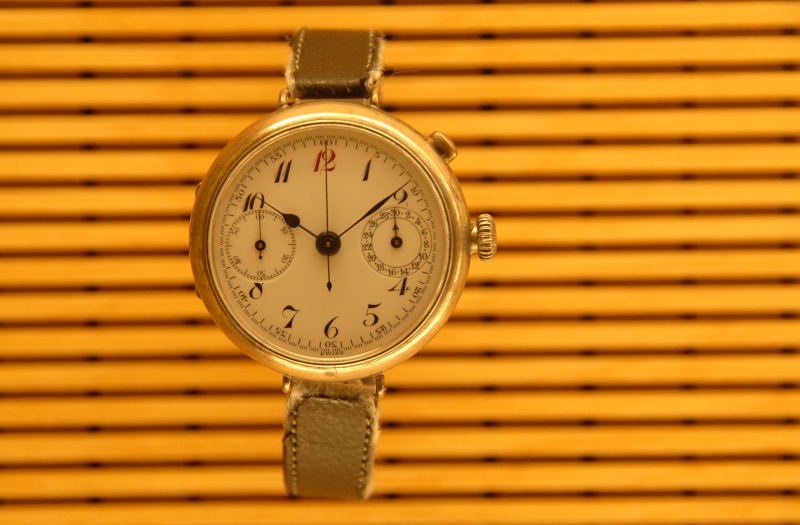
[Breitling single button chronograph: Breitling patent 1923]
As is usually the case in the foundation of any firm it takes the auspicious and audacious first steps by one person to take an idea and realize it. Leon Breitling was that person, who at the age of 24 noticed how new mechanization techniques from the U.S. could be harnessed to traditional Swiss watchmaking skills to produce precise and reliable chronograph movements. Leon Breitling decided to found his own firm and concentrate his efforts on the creation of instruments that measured time: the chronograph. He could see a number of applications in which precise timing would be required. Not only in the increasing number of sporting events that were increasing in number, but in industry and technical trades that required precision timing. Leon Breitling moved beyond using the known state of the art to re-thinking the chronograph movement for ease of use, reliability, and precision.
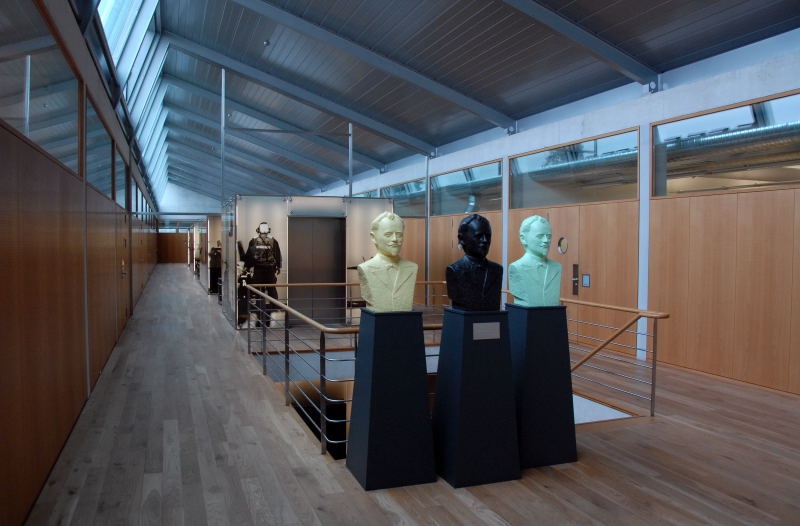
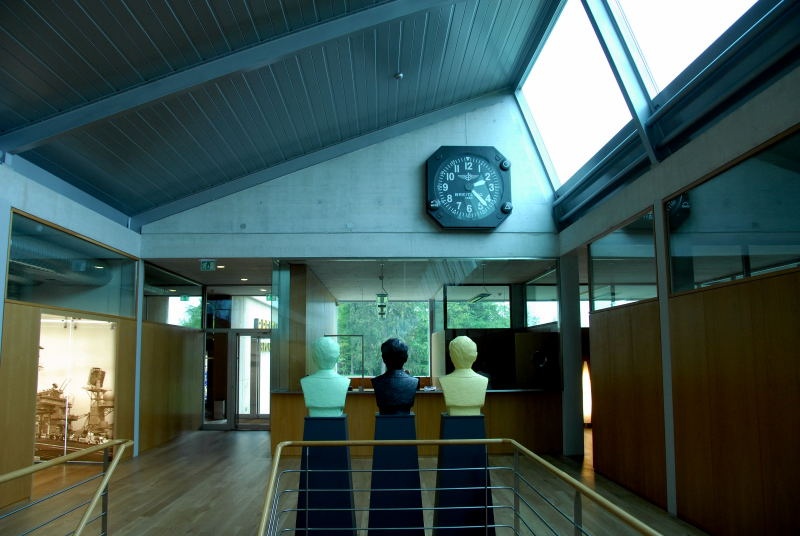
[Multi-coloured statues of Leon Breitling are found everywhere throughout the new manufacture]
Breitling filled their first patent in 1889 for a “simplified chronograph-timer with a single wheel (column) and normal teeth.” Leon Breitling suggested a new mechanism (that would prevail until even now and the construction of their own manufacture): “… differs from existing systems in its simplicity, and its ease of manufacture and especially repair outside the country.” In 1891 Leon Breitling pushed his ideas further and produced the first push button chronograph with a start/stop button at 2 o’clock. The reset button was still attached to the pusher on the crown. Although initially the Breitling atelier had been set up in St.Imier, the move was soon made to La Chaux de Fonds which in 1892 (when the move was made) was the bustling centre of the Swiss watchmaking industry. Leon Breitling set up his new purpose built factory at No 3 Montbrillant . Hence, even in today’s watch line, there is a model named after the address of that first purpose built factory.
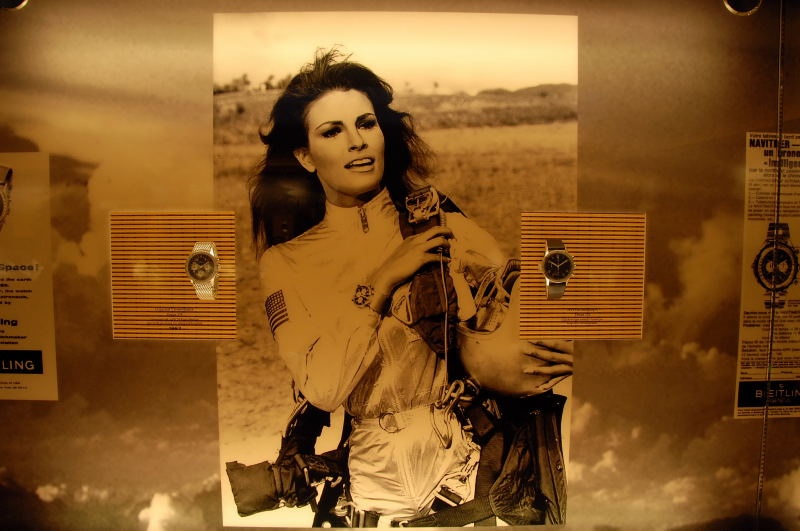
[Raquel Welsh wore a Breitling when starring in the film ‘Fathom’! One of the first watch placements in a movie]
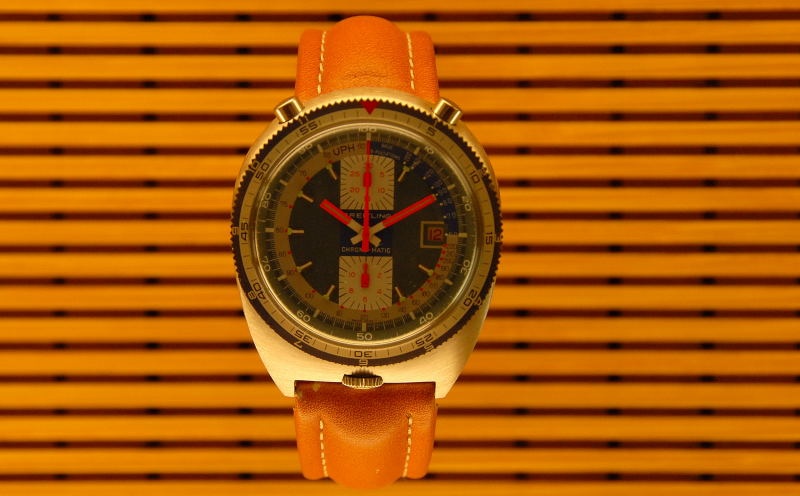
[A Breitling Chrono-matic chronograph with pushers on top of the watch from 1971]
At the death of Leon Breitling, the running of the company passed to his son Gaston (in 1914), and it was with Gaston at the helm that Breitling took off. It was Breitling that put a chronograph on your wrist (in 1915) and that separated out the “start/stop” and “reset” functions into their own pushers (in 1934) as a wristwatch. It was Breitling that gave chronographs their modern look and function. It was Breitling that was THE name in chronographs; as it remains today. Breitling not only produced wristwatches with chronograph movements, but also instruments to measure time for sport, science, engineers, and pilots. It was through this avenue that Breitling became associated with aviation. Breitling’s association with the RAF (Royal Air Force) came about as a historical necessity. The RAF (Royal Air Force) needed accurate chronograph clocks for the fighters and bombers in World War 2. The RAF contacted Breitling who were happy to supply the clocks as required, but the only problem was then getting the order out of Switzerland and into England. And so it was that the small planes would land in fields in Switzerland, with the landing strip no more than a set of torches to indicate a path, and the good people of the town would be carrying bags full of watches.
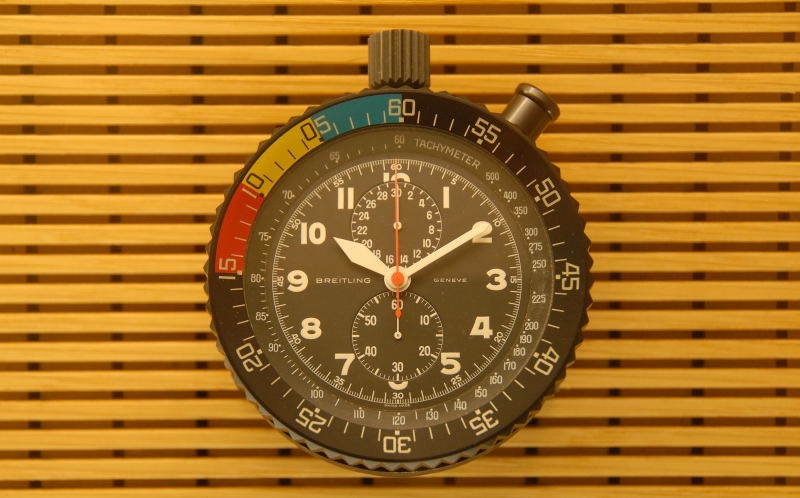
[Purpose made chronograph for rally car racing from 1974]
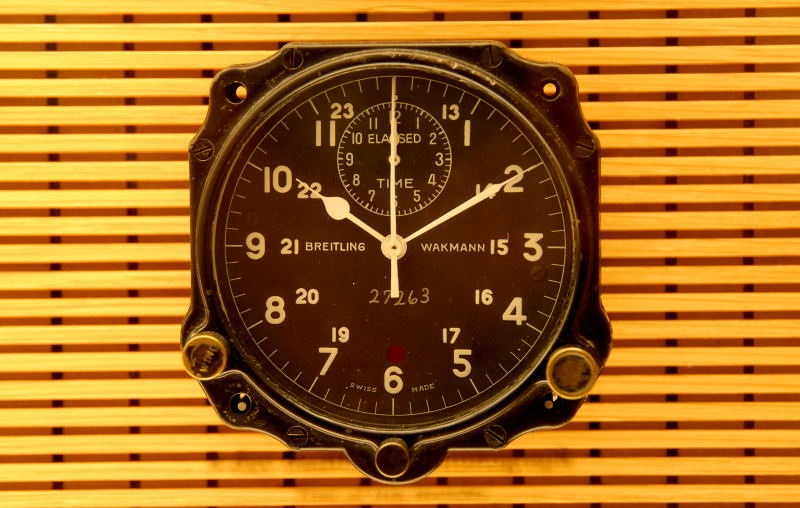
[A Breitling chronograph clock from an aircraft]
What was important about the use of timing instruments for aircraft was that the vibration and impact testing on mechanisms bled through into knowledge on the watch movements. The association with flight would become Breitling’s mainstay over the years and in the 1950’s introduced a watch especially for pilot’s: the Navitimer. It still sold today in much the same design and movement.
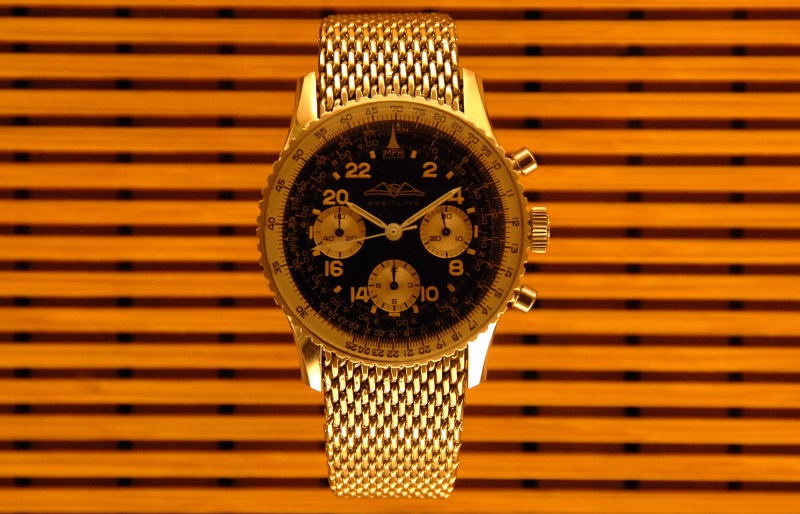
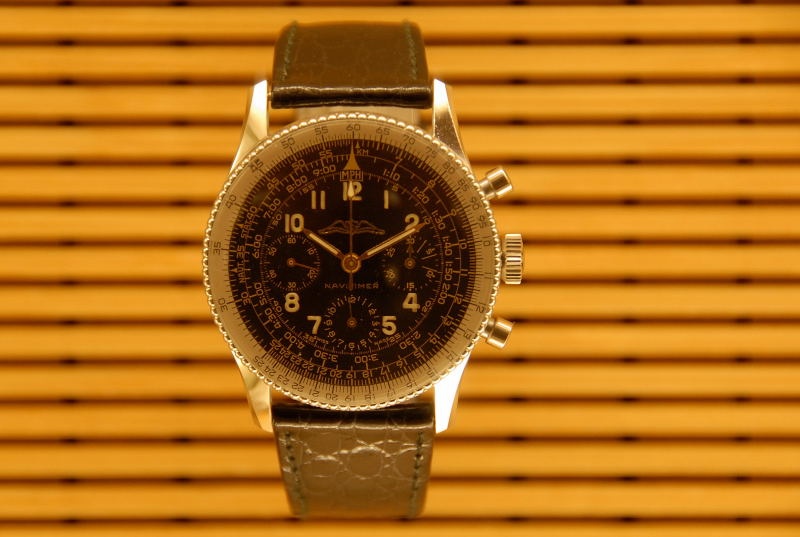
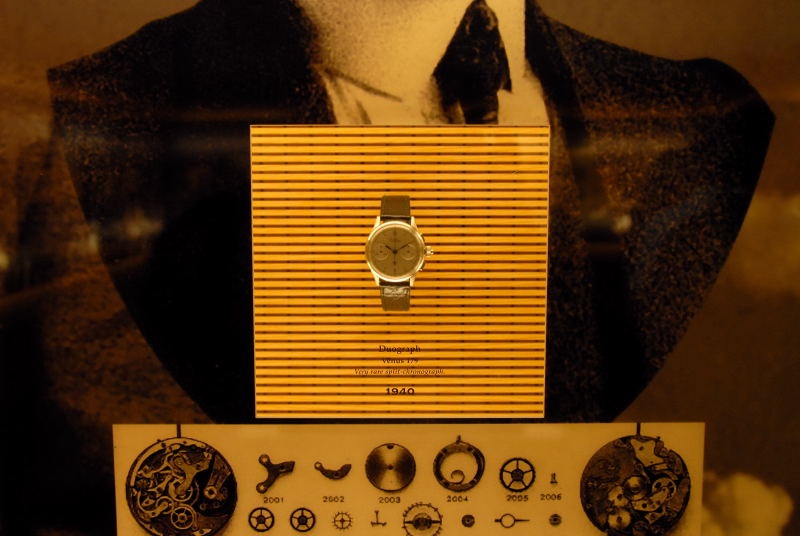
[An original Navitimer from 1952 and an original Cosmonaute from 1962. Both fitted with a Venus 178 movement]
Whether it was timing events on land, sea, or more famously, the sky, Breitling was always the specialized chronograph manufacturer. What separates Breitling from the others is that they are now in the business of making integrated chronograph movements. This is a different step from other manufacturers who look to produce their own movement starting with a basic time only automatic and then producing modules to fit on the basic movement to produce the desired complication. No, Breitling went after the manufacture of the movement for which they were reknowned: the chronograph movement.
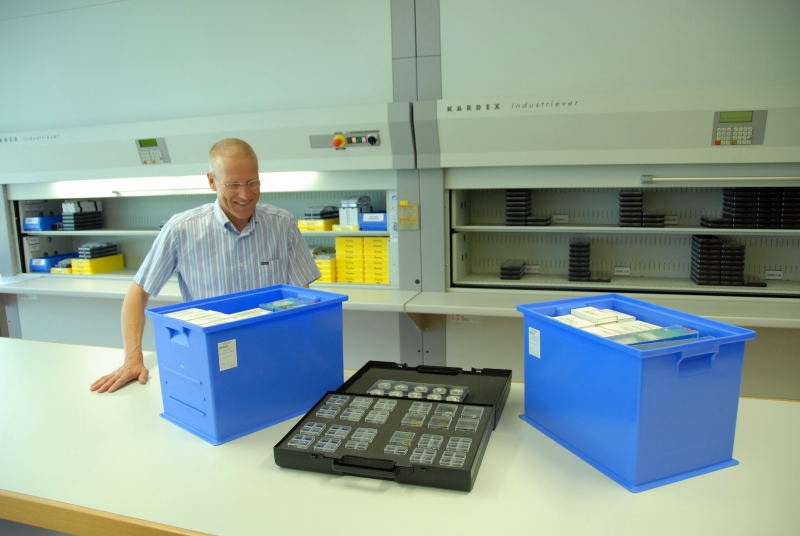
[Vice-President Jean-Paul Girardin displays the boxes of base ebauche: enough to make a 1000 movements, now kept for spare parts and maintenance of existing watches]
The imputeus for change came from the Swatch AG announcement that the supply of base ebauche from the likes of Valjoux were to cease. From that moment on, Breitling decided to commit resources to become a manufacture in its own right. While at the time the decision was taken, in 2002, it took 4 years (until 2006) to get the factory built and a further 3 years after that for the first production movements to be manufactured. As is the case with the Swiss, watchmaking takes time, and manufacturing a complicated movement from the ground up is certainly no exception.
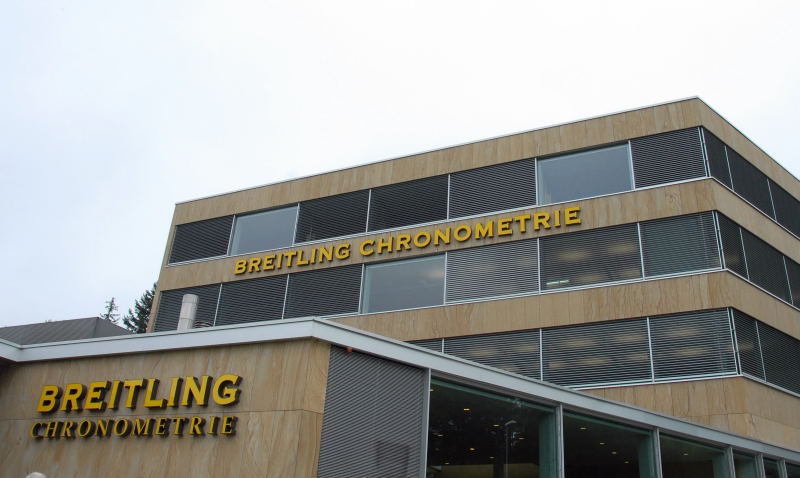
Just a hop and a skip from where the original factory at Montbrillant was opened, the new purpose built facility represents everything that is new about watchmaking at Chaux de Fonds. Bright glass clad rectangular Mondrian-esque buildings that allow the maximum utilization of space and light. The new Breitling manufacture itself is more a cross between a pop-art showcase, turbine engineering research lab, and watchmaking atelier.

Breitling looked to the industry with which were most closely associated: the aerospace industry, and decided that they would use the manufacture ethos and techniques for aerospace engines in the design of their own factory. The one guiding principle for aerospace is that no component can fail – ever! An engine component failing means that a plane will drop out of the sky and that has severe consequences. Such a guiding principle in watch movement manufacture would not have have the same consequences if something went wrong, but would help at the other end of the watch production with a happier consumer!

[Note the areas between workbenches: a sealed conveyor belt and stacking system for partially and fully finished movements]
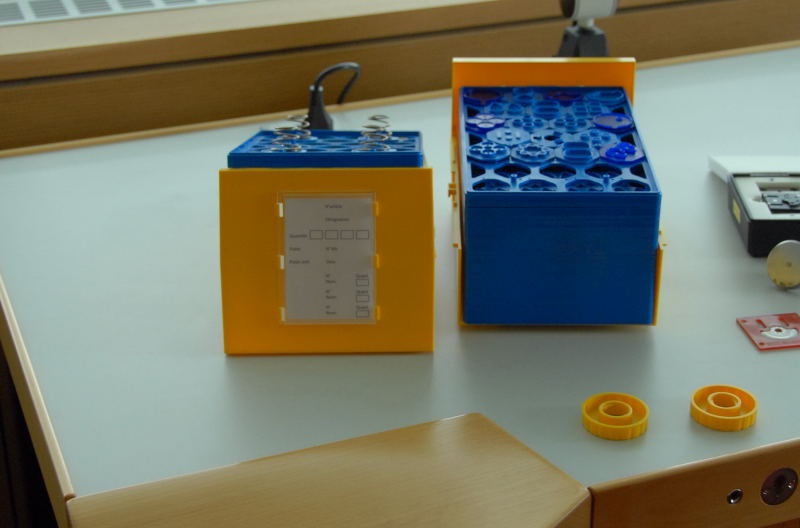
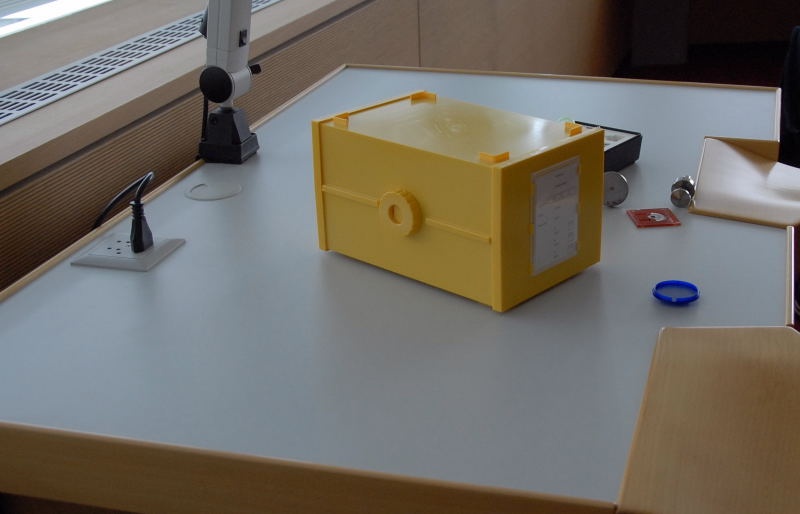
Breitling therefore went about the design of the factory for movement manufacture by borrowing techniques from aerospace. Movements traverse workbenches either in sealed conveyor belts, or in specially designed utilitarian boxes that can be assembled as desired and disassembled to clean and re-use. The boxes that transport movement parts and completed movements are symbolic of the ‘blank sheet of paper’ design that Breitling have employed.
Breitling also teamed with COSC (Contrôle Officiel Suisse des Chronomètres) the official body looking after the testing of movements for the Swiss watch industry. Other well known Swiss brands use COSC, but this was a new avenue for Breitling. As well as now subjecting their movements to testing, Breitling had to invest in a part of the new manufacture that would set up the movements for COSC testing. The movements for COSC testing are fitted with a while dial/black markers and hands so that any changes in the time over each 24 hours can be machine read. After testing, and providing the movements obtain their COSC certificate, the test dials are removed, the designed dials and hands are fitted, the movement cased, and the watch is then tested as a whole by Breitling; both for timing and water resistance (to the specified depth).
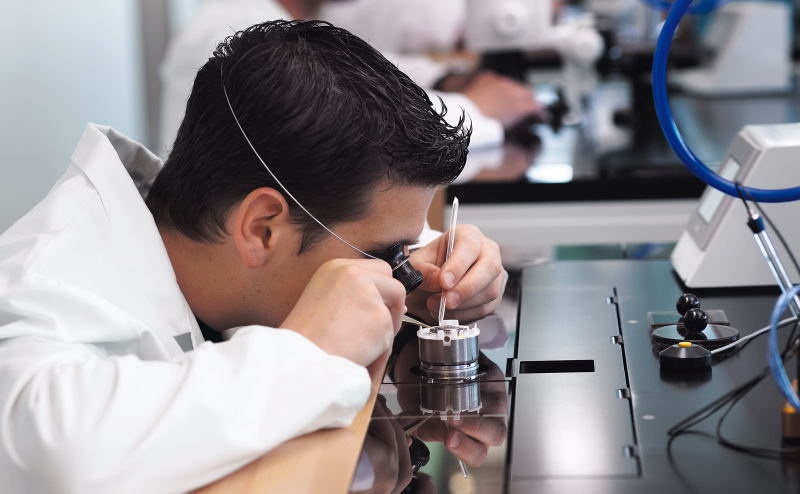
However, the end of the process is that Breitling now have their own movement manufacture that is second to none in design and concept. Tailor made, thought out from a blank sheet of paper, producing movements for their watches to their designs. It is the chronograph manufacturers chronograph movement manufacture. The end result has been that the movements that Breitling now produce have an extended warranty. As their new movements have filtered through to the wrists of consumers, Breitling have noticed a new effect of their own production facility. Far fewer watches are being returned for fault. Being able to control every aspect of movement manufacture, from the metals used, the machining and production of components, and the use of technology and watchmakers’ skill has resulted in a far more reliable product. To the point that Breitling feels confident enough to now offer consumers a 5 year extended warranty on all new Breitling watches. Happier consumer and happier Breitling! The last thing you want to see is your products’ being returned.
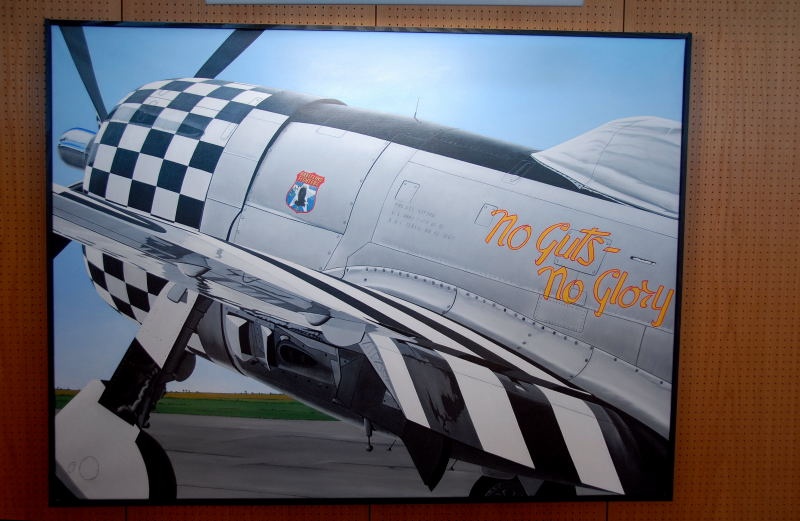

Coupled with the new factory for movement manufacture, Breitling have moved to complete the vertical chain, improve the training of sales representatives at authorized dealers, and even sell watches directly to collectors through their own boutiques. The first one opened up on East 57th Street in New York last year and occupies 3 stories that are open planned. The ground (or first) floor is the retail area that has a complete range of Breitling watches. The second floor has a collectors area that allows watches to be examined at a more leisurely pace, and the third floor contains a collection of Breitling watches from years gone by, a bar area for collector events, and a rather amusing sculpture of a 40’s glamour girl sitting atop an atomic bomb! The factory and the boutique share the same aesthetics, the same ‘pop-art’ aviation graphics with a modern minimalist function to the rooms and working space. A second Breitling boutique will open up in London (on Bond Street) next year.
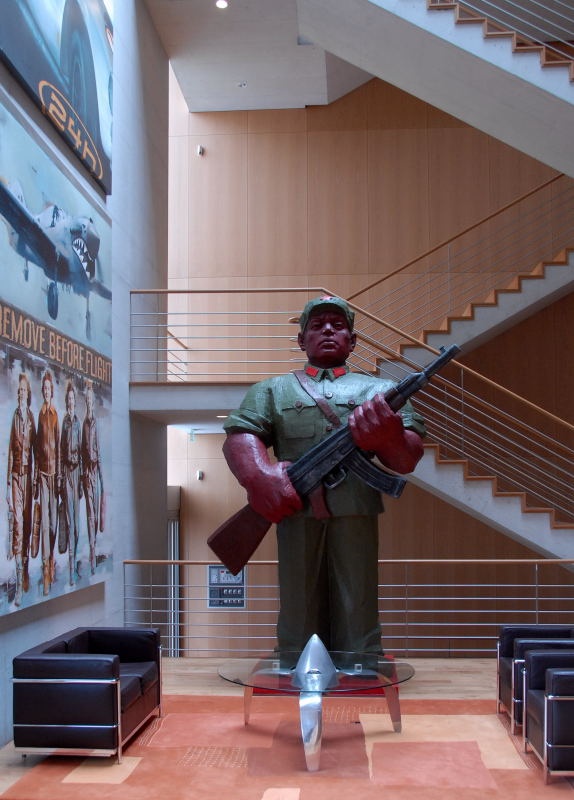
[The new world of watch collectors symbolized by a sculpture by Chinese artist: Jianhua Zhang]
Still a family owned and run independent watch firm although the name on the ownership documents has changed. Gaston Breitling handed over ownership and management to his son Willy Breitling upon his demise. Willy Gaston kept the helm through the Swiss watch crisis in the 1970’s but by the end of the decade, with the firm being beset with financial difficulties, Willy Breitling looked around for a buyer. With the doors shut, employees laid off, and the company closed down Breitling was purchased by an aviation enthusiast and entrepreneur: Ernest Schneider. Schneider re-thought the company from top to bottom, introduced new watch lines (Chronomat and Emergency), and in adopting a new motto: “Instruments for Professionals” brought the company back to its founding ideals: chronographs for timing when precision matters. In 1994 Theodore Schneider (Ernest’s son) was installed as CEO and remains in that position today.
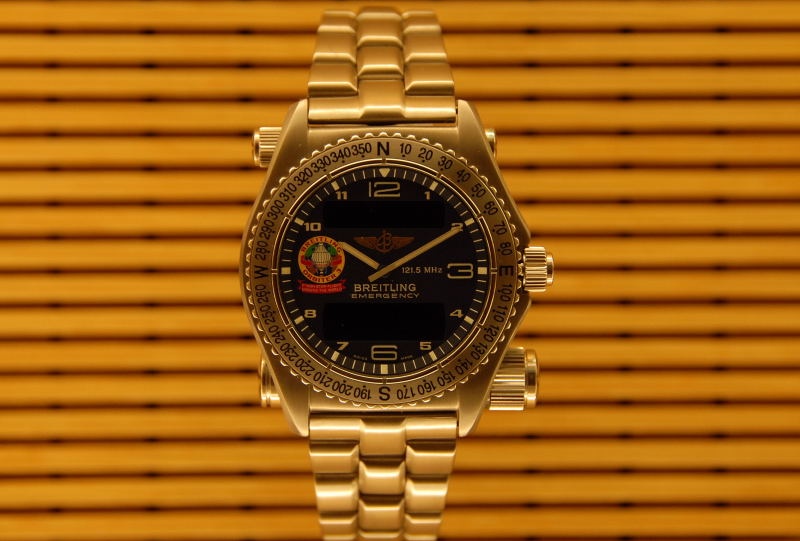
[The new line: Breitling Emergency – in this instance especially made for the Breitling Challenger circumnavigation of the planet around the equator by hot air balloon].
In terms of revenue on non-jeweled watches, Breitling might be the largest watch firm still in family hands and there is no intension to sell in the future. Breitling is certainly one of the largest family owned and run independent watch firms out there. I can only think of a couple of others at the same level of operation.
With the new manufacture, Breitling have returned to Leon Breitling’s original way of thinking and with it, a new direction and creativity have returned to the specialized chronograph watch firm. There are plans in the works for new watches, a re-release of some heritage pieces, and some specialized watches with chronograph movements. Breitling is on its trajectory to reach the heights of haute horologie!
Andrew H
This message has been edited by 219 on 2012-06-06 23:57:37 This message has been edited by 219 on 2012-06-07 00:06:01 This message has been edited by AndrewD on 2012-06-15 17:02:52