Manufacture
Patrick_y's report on the Breguet exhibit at the Legion of Honor Museum in San Francisco offers a rare glimpse into Breguet's historical collection. This event marked the first time over 70 pieces of the brand's horological heritage were displayed outside Europe, providing a unique opportunity for enthusiasts to connect with the legacy of Abraham-Louis Breguet. His personal narrative adds a compelling layer to the historical significance of the exhibition.


Moderator Patrick_y visits the Breguet Exhibit at the Legion
of Honor Museum in San Francisco. Breguet
assembled over 70 pieces of rich horological history that celebrates the brand's illustrious image as one of the original watchmakers for world leaders. This is the first time that this collection has left the European continent. The collection has been shown previously in the Hermitage, Louvre, and the Swiss National Museum.
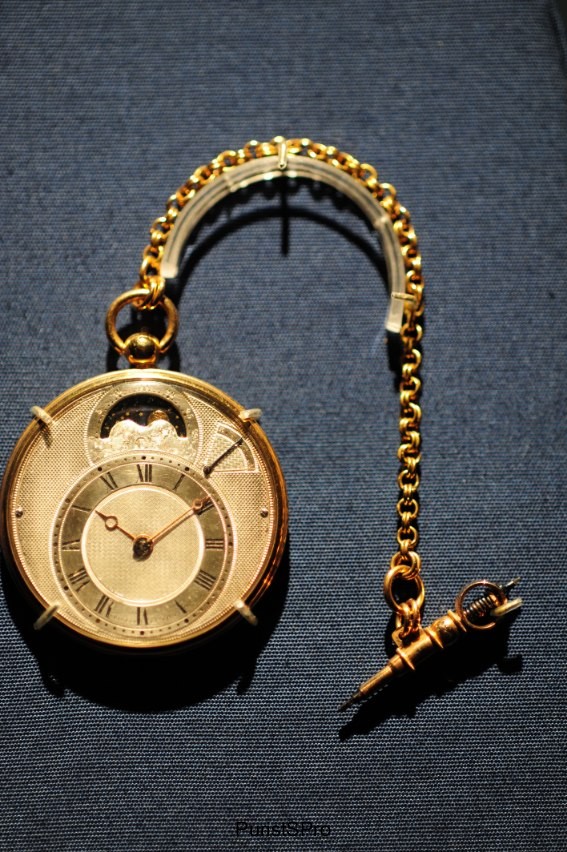
When I was very young, I was first introduced to Breguet in a book. The
Count of Monte Cristo by Alexandre Dumas. The book mentioned
"Breguet" as a watch, and I didn't think much more of it at the time.
A few years later, in my teenage years I saw, held, and briefly wore a Breguet Type
XX at a local watch store. Fast
forward more than a decade later, I’m at The Legion of Honor bearing a watch that Signor Pastrini, Albert De Morcerf, and Danglars would
recognize.
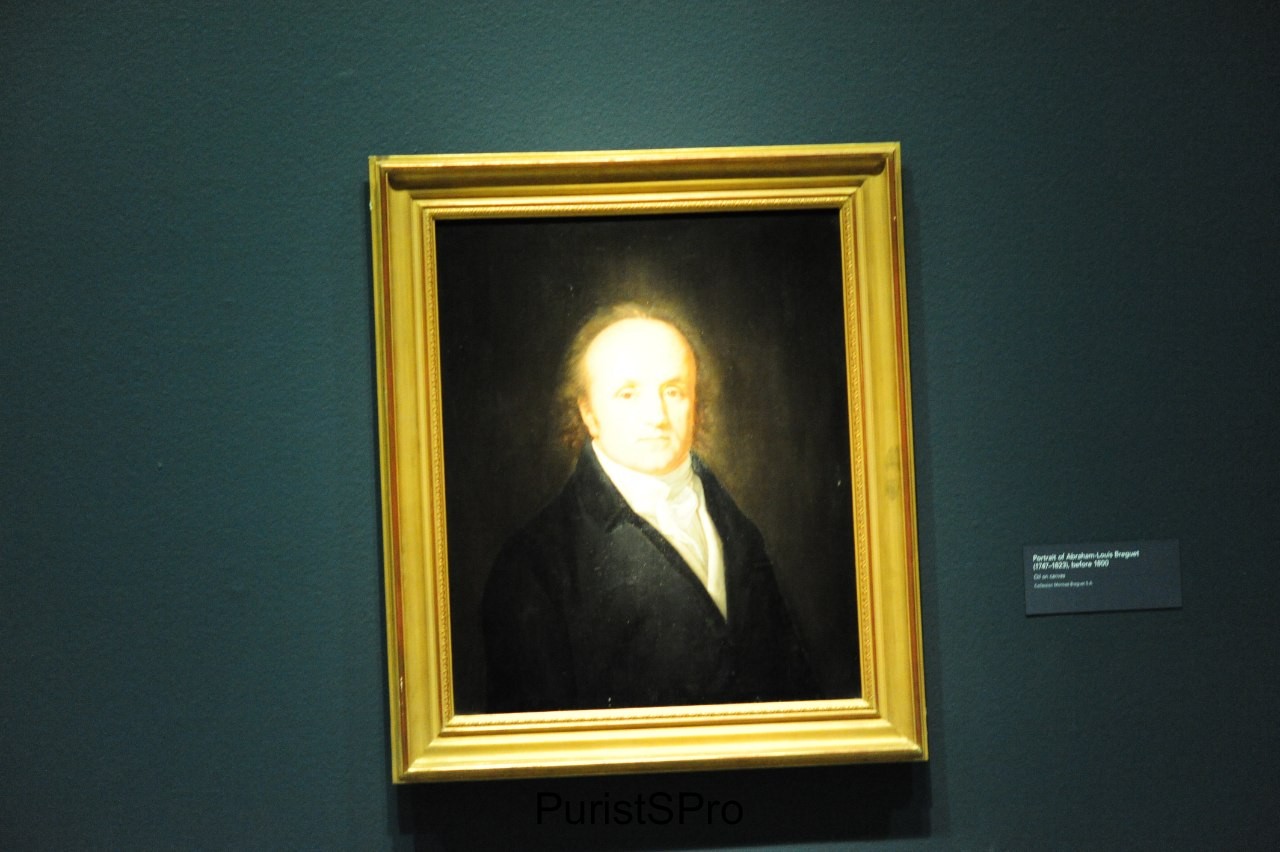
Fast forward to today, the watches that have been made with Abraham Louis Breguet’s own hands stand before the guests at The Legion Of Honor Museum in San Francisco.

Upon entering the French style building that is The Legion
of Honor, The Thinker (Le Penseur) by Rodin greets you. What does he think about the Breguet
exhibit?
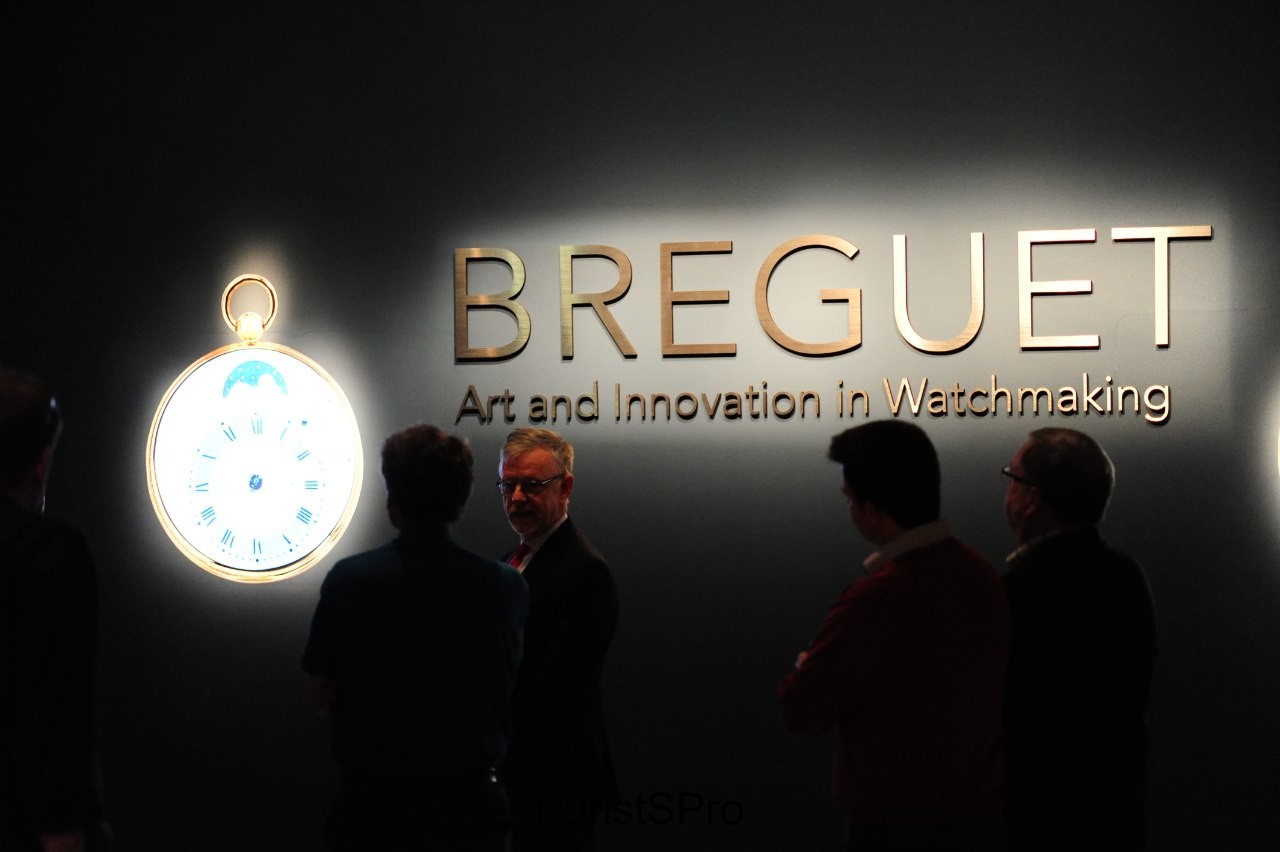
The start of the Breguet exhibit.
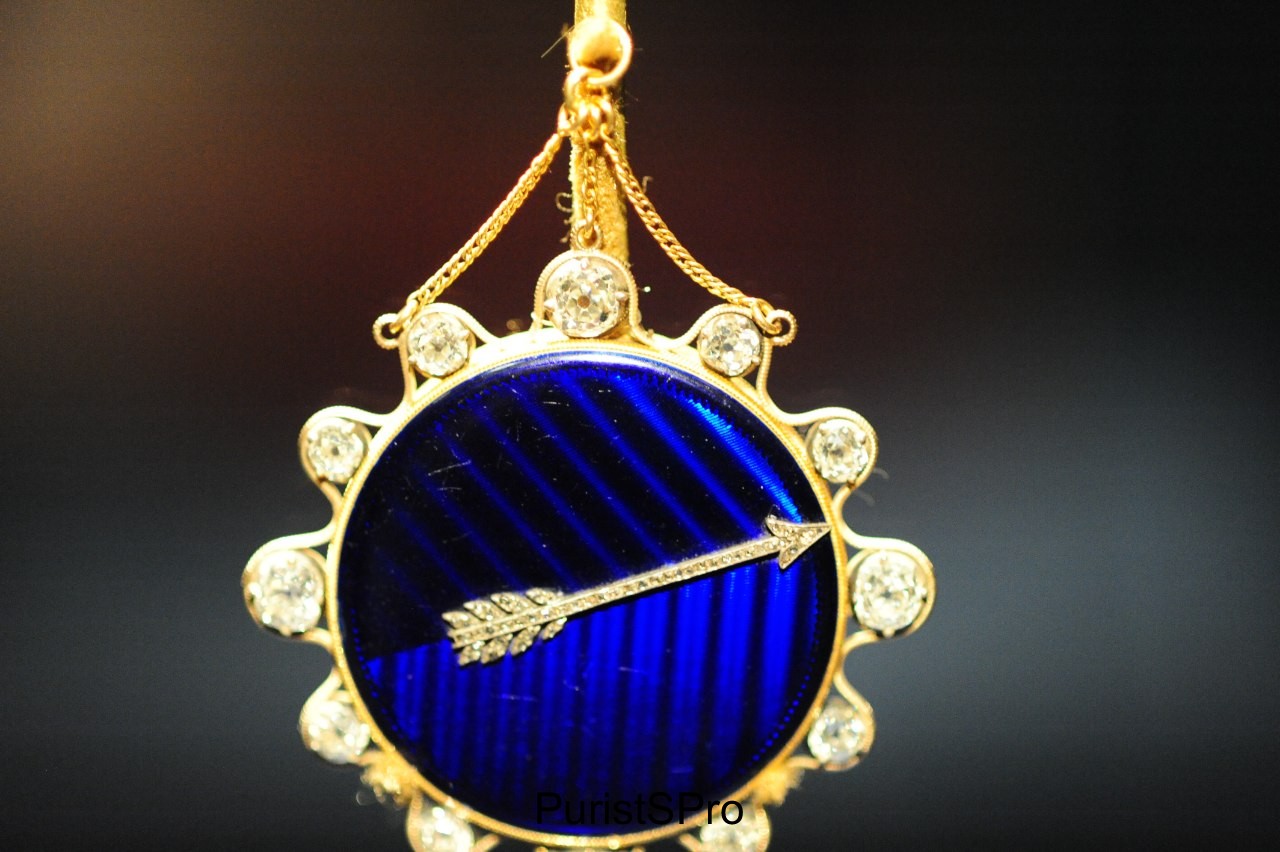
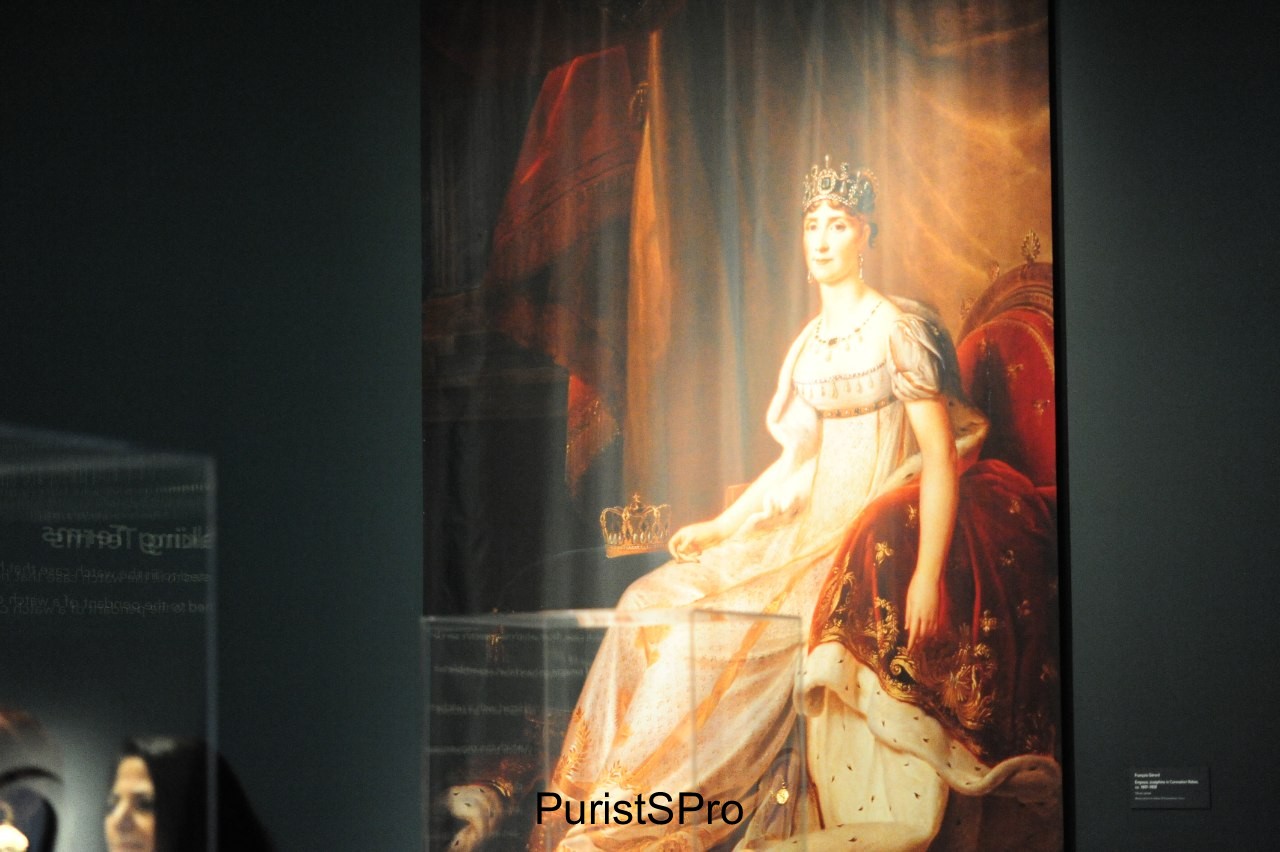
A blue watch that formerly belonged to a French Royal, none other than Josephine Bonaparte. It is a "Montres a tact" timepiece which basically means it was conceived to tell time in the dark by feeling where the hand was. The diamond arrow indicated the hour on this watch relative to the diamonds on the bezel.
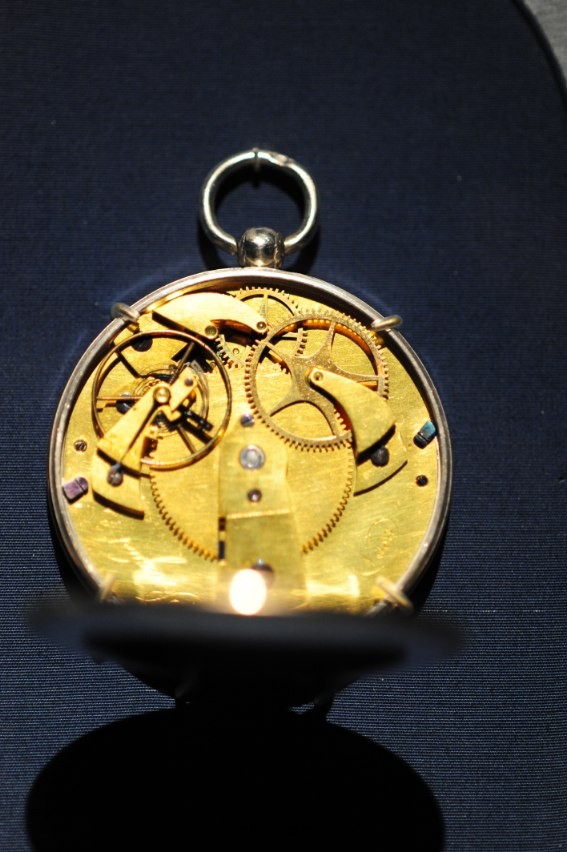
Metal technology back then was not as good as it is today. To get metal of this quality that could be used for gears was definitely a difficult medium back in the day. After the French Revolution, Breguet decided to make watches that were less expensive and that could purchased under a payment plan. This was the precursor to serial production.
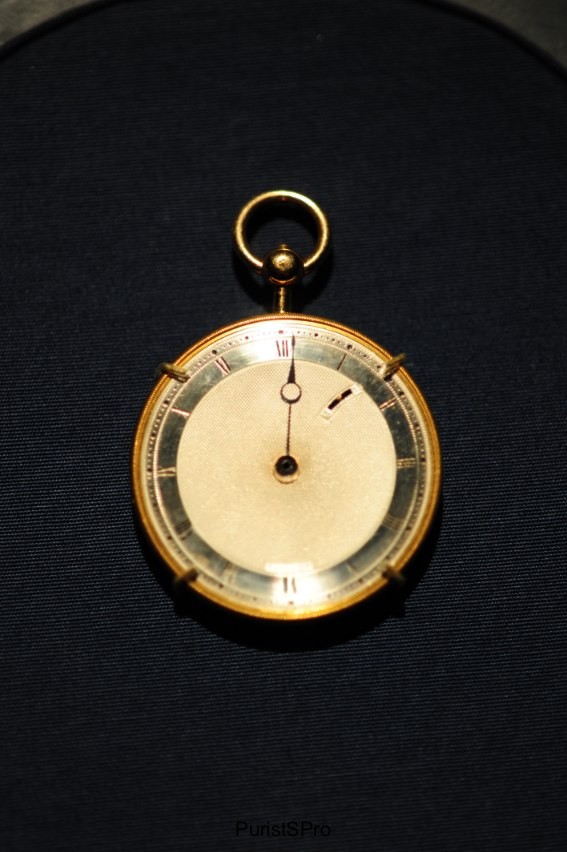
These watches would cost thousands of Francs back in the day. They were so expensive that they were only owned by royalty and extremely wealthy or powerful individuals.
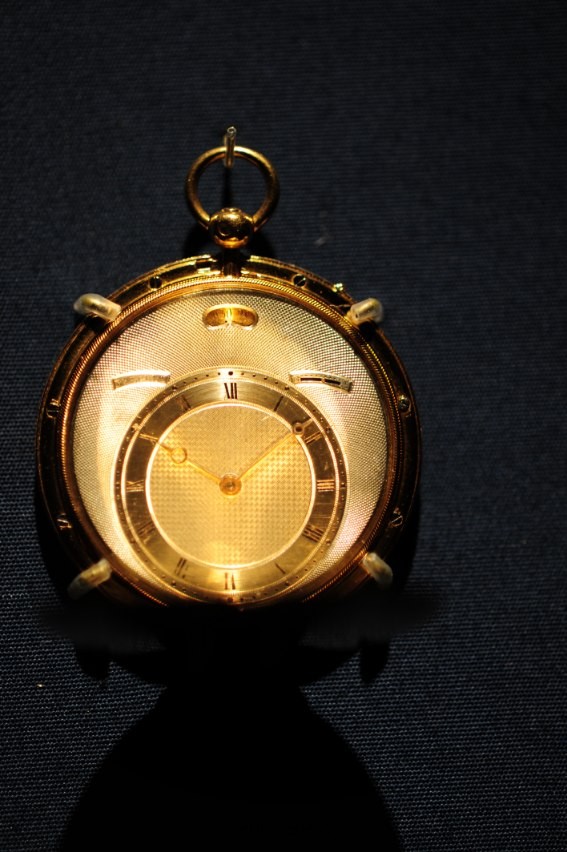
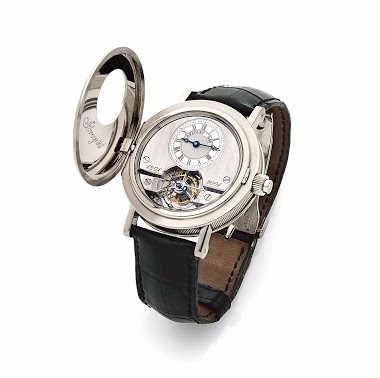
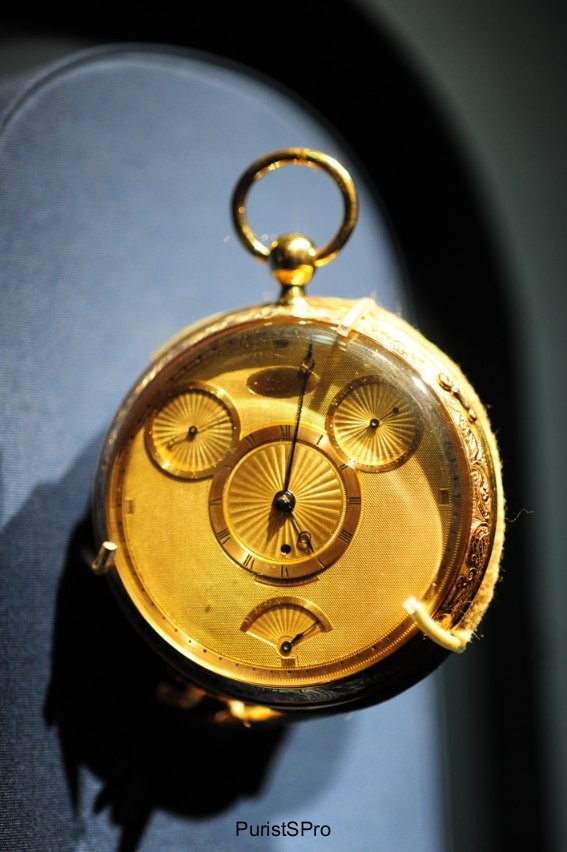
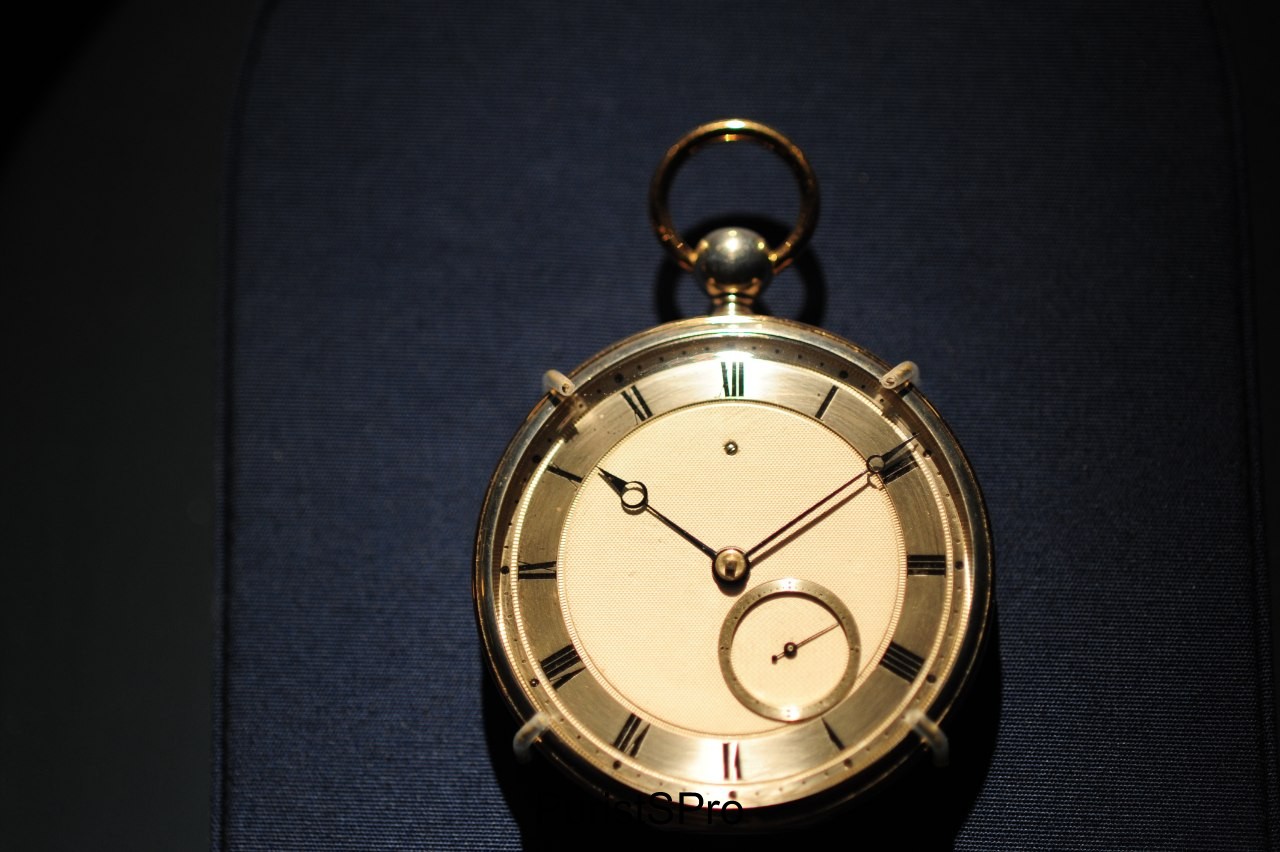
Breguet was the first major watchmaker to pioneer off-center watch dials. The above dial design is so aesthetically pleasing that current Breguet watches still share a similar dial design! Breguet also pioneered the guilloche to the watch dial. The guilloche was not intended as a decoration, in fact it's an anti-glare surface that allows the hands to stand out more.
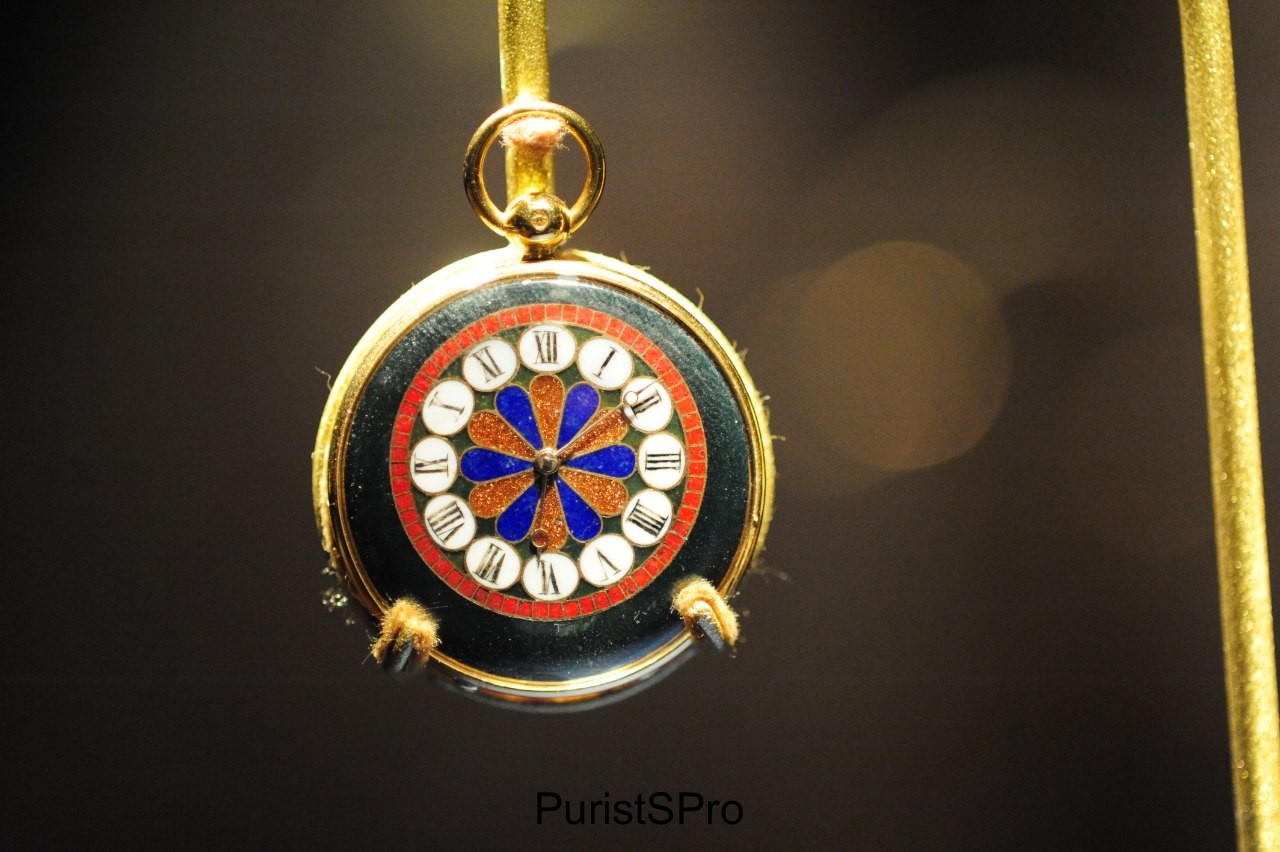
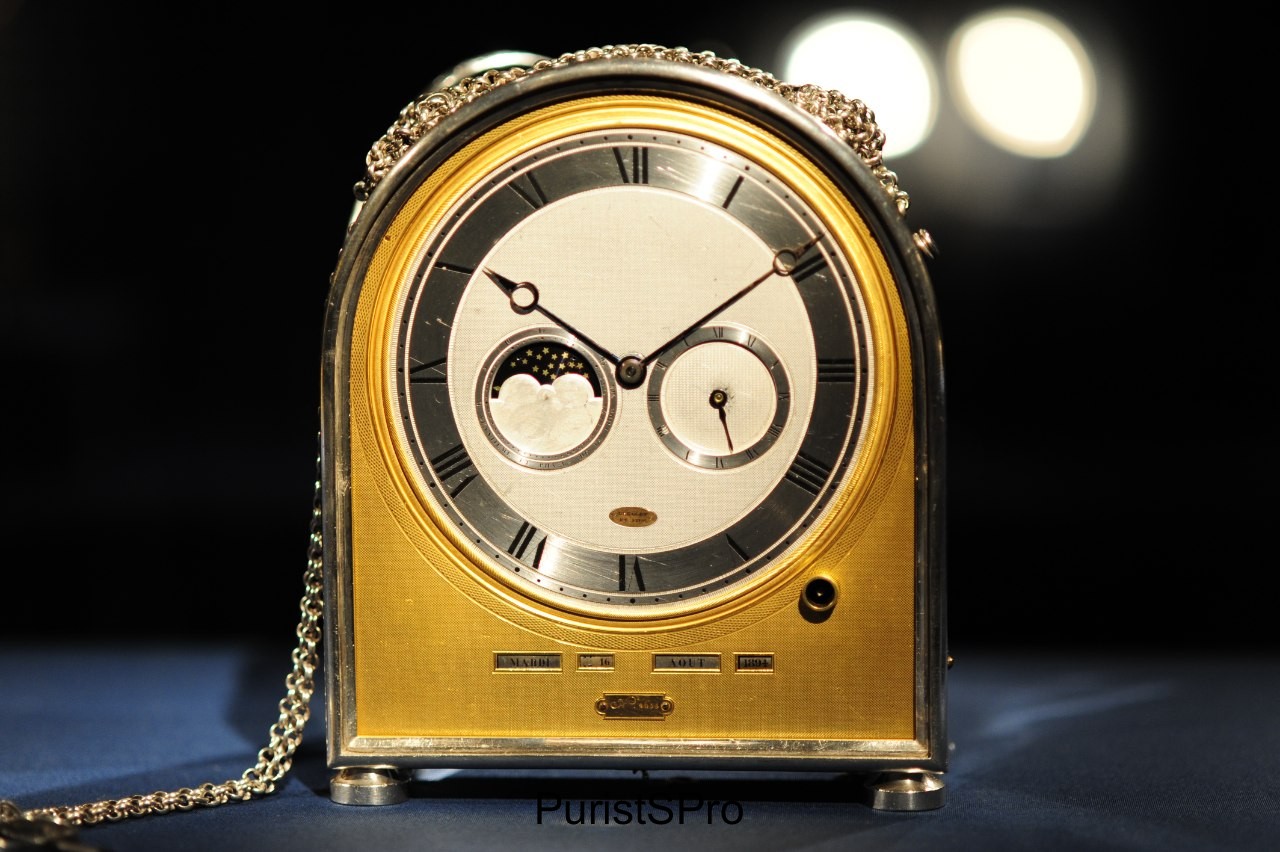
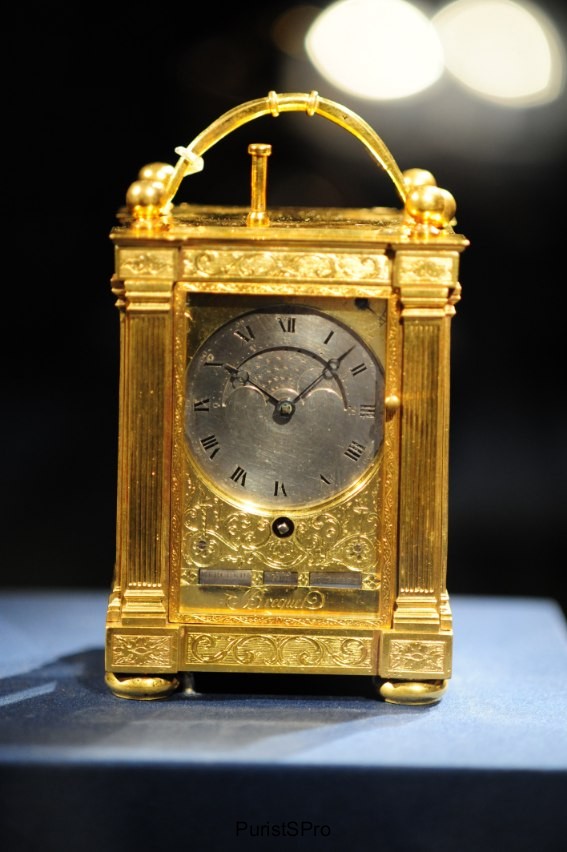
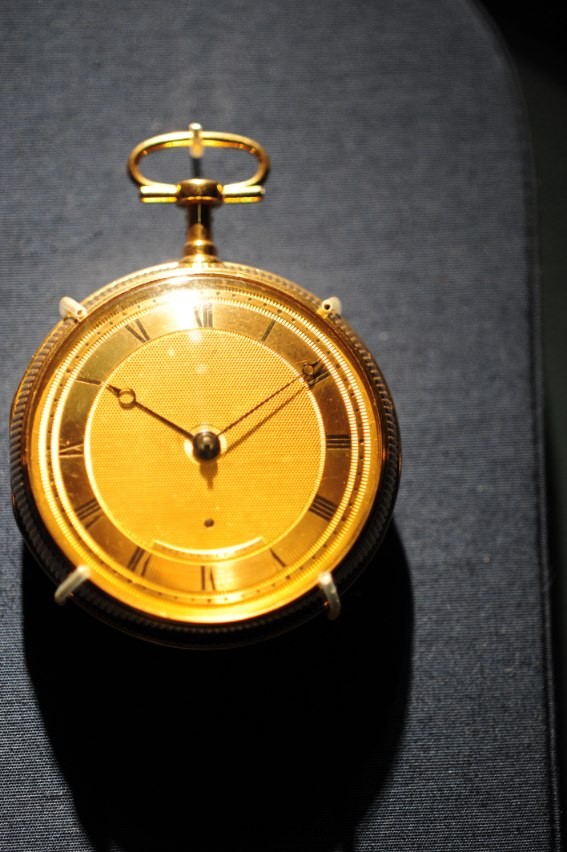
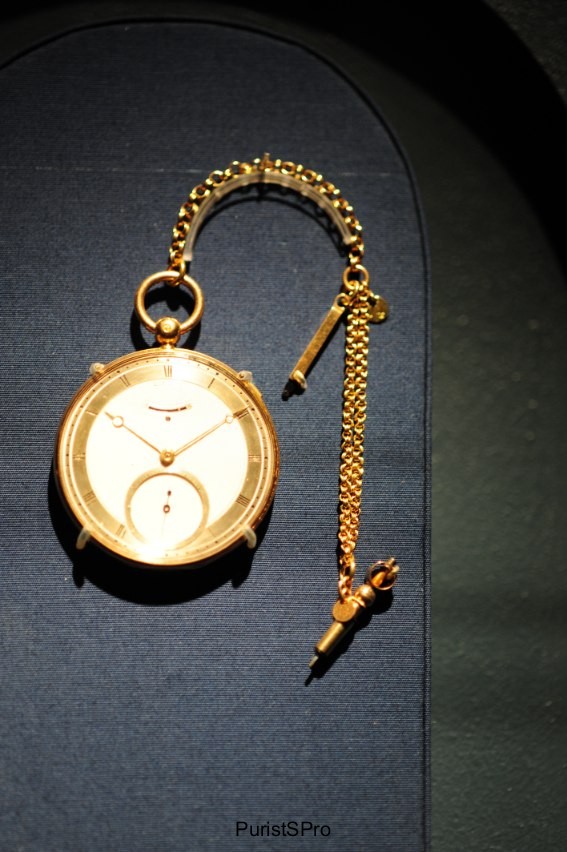
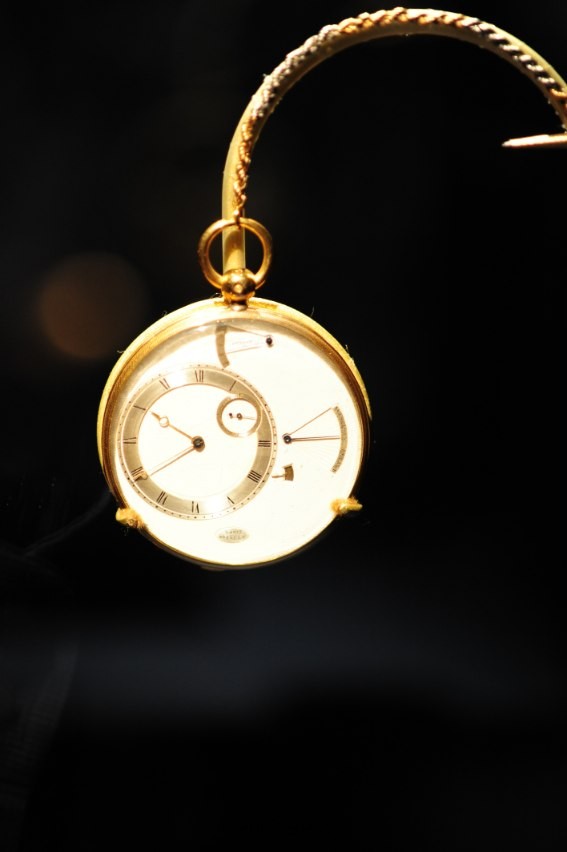
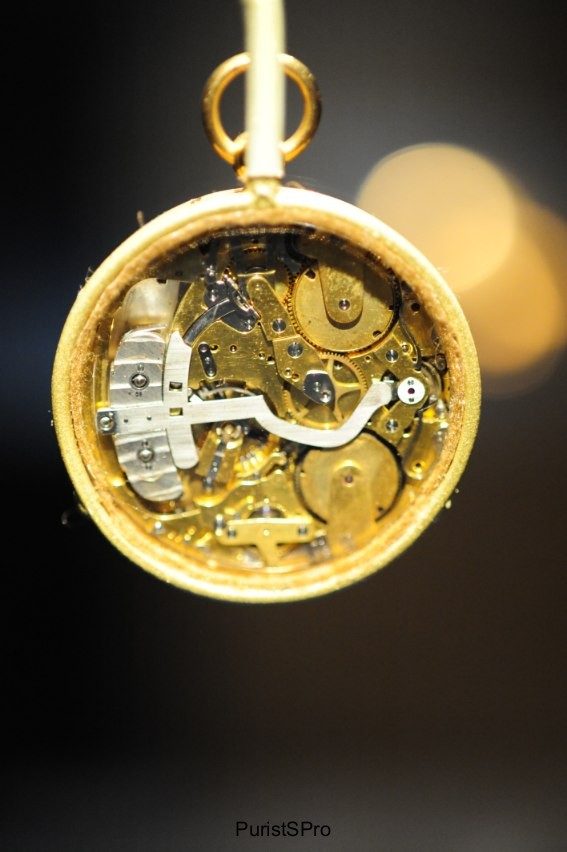
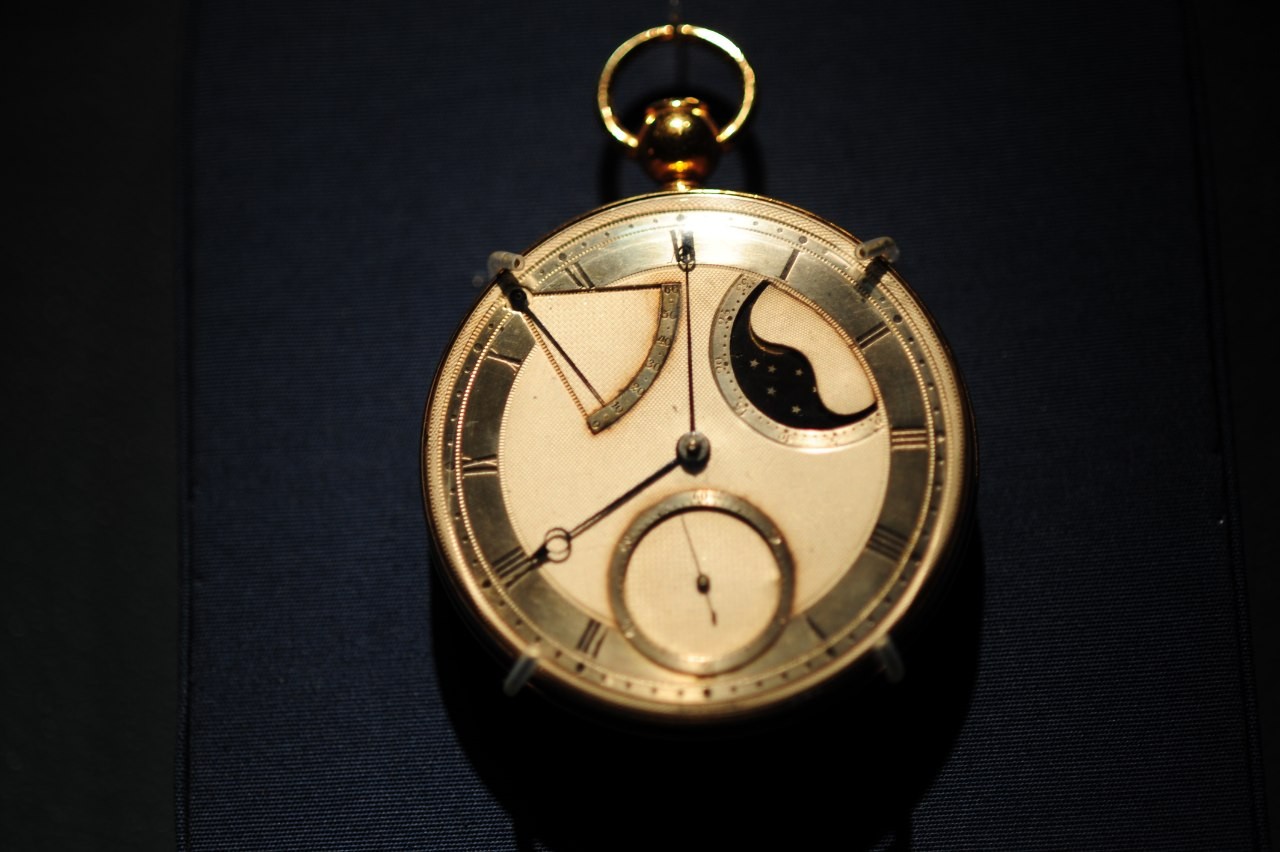
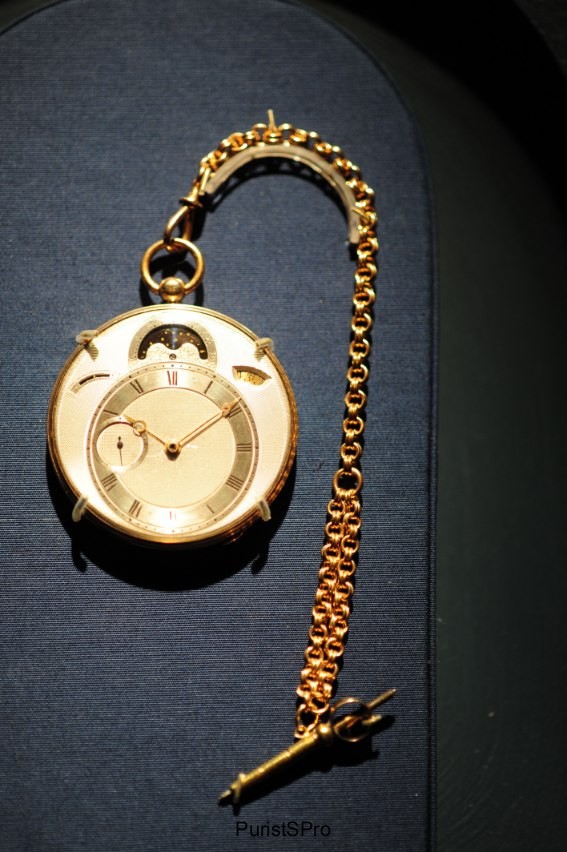
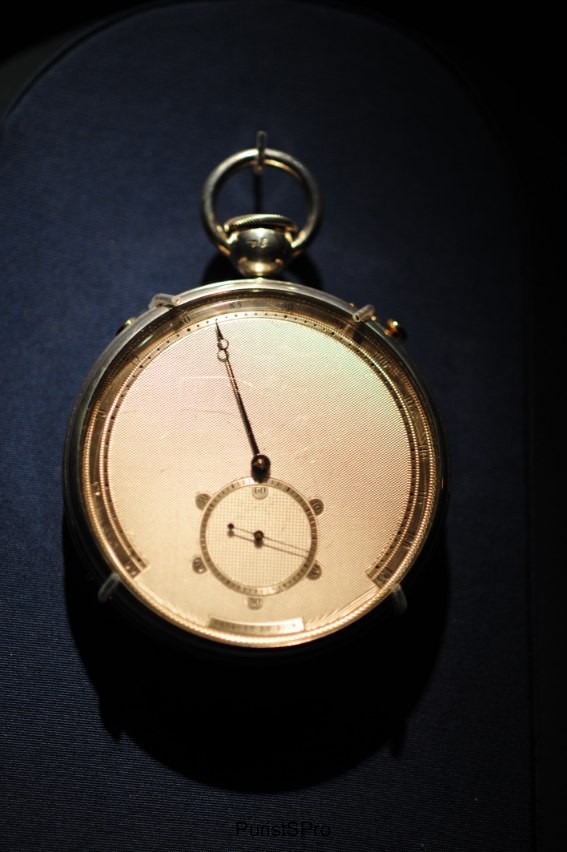
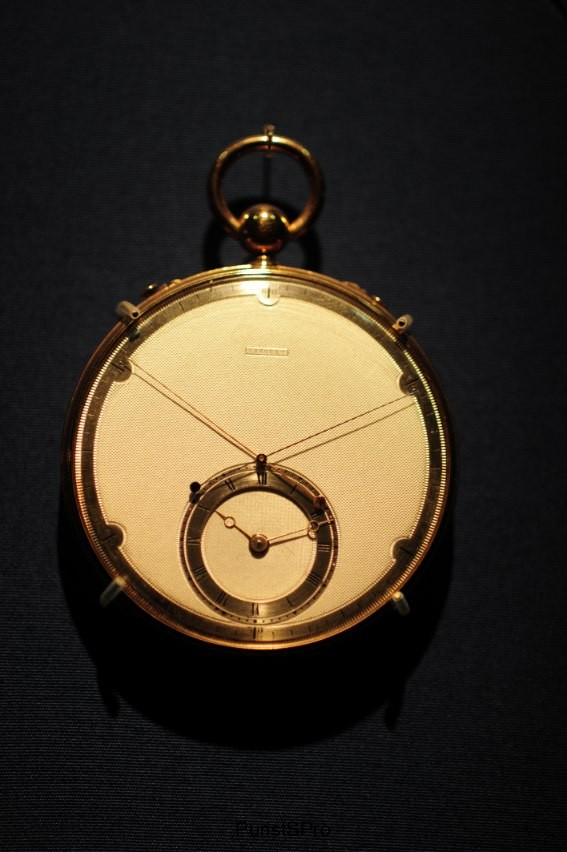
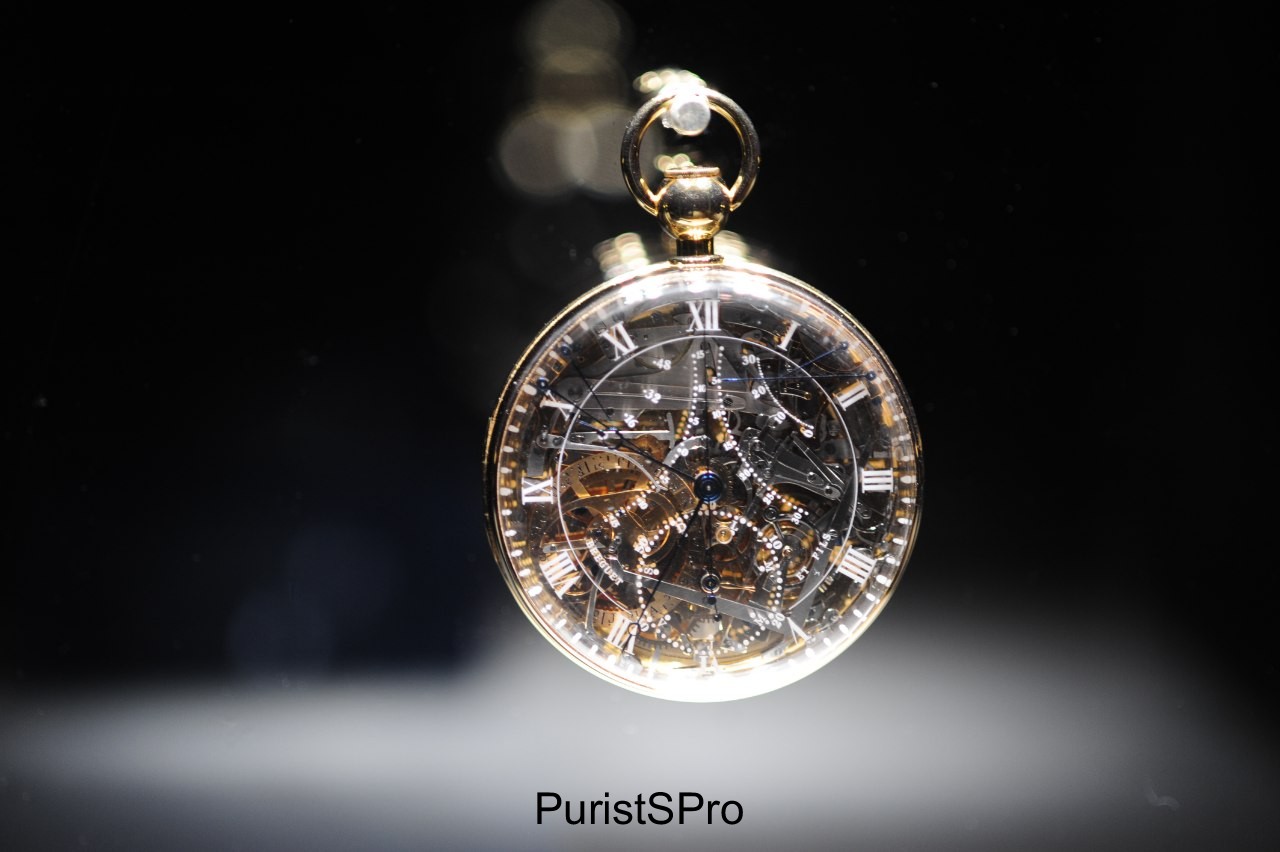
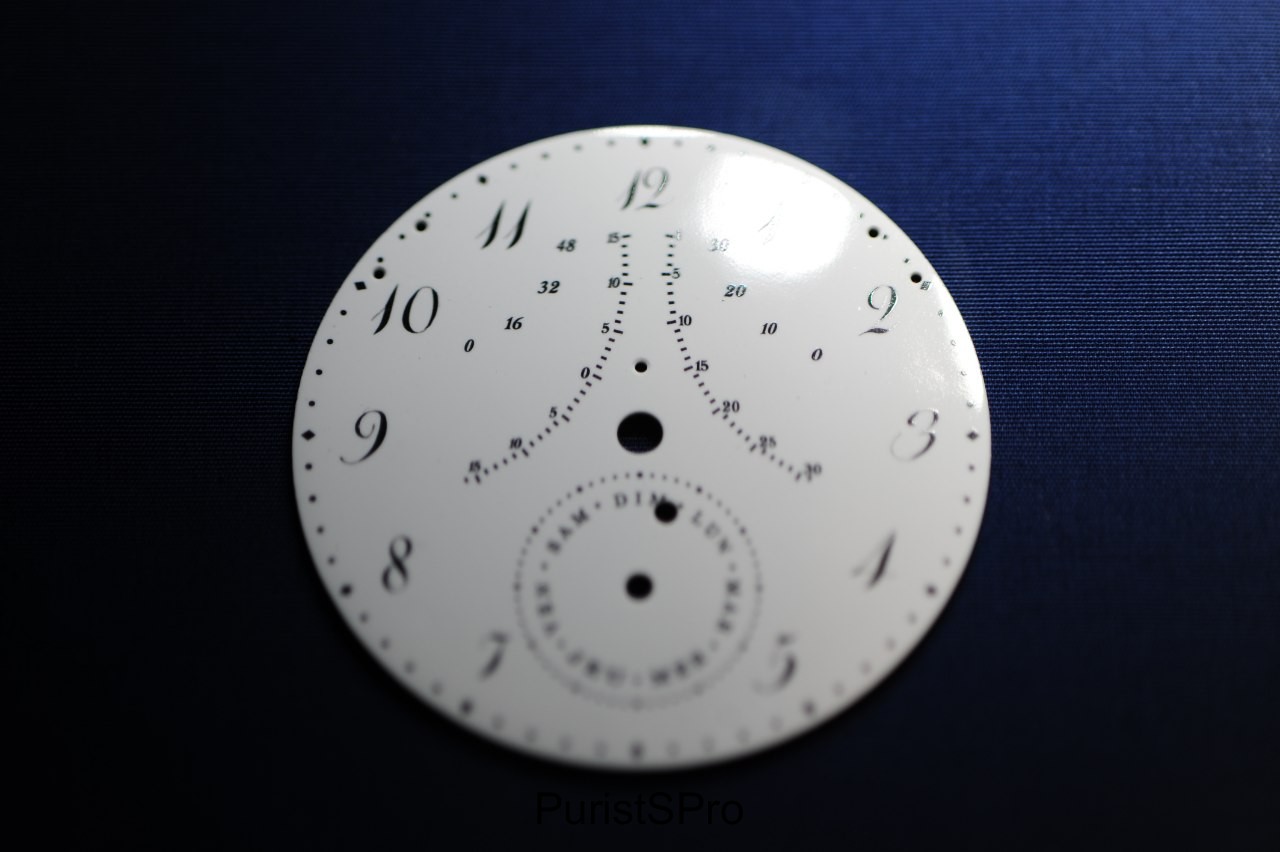
The Marie Antoinette watch was originally commissioned for the Queen by one of the queen’s admirers in 1783. Unfortunately, the queen would never see the watch as she was executed in Paris in 1793. The watch was eventually completed by Abraham Louis Breguet’s son, Antoine Louis Breguet in 1827 over 40 years after it was first commissioned.
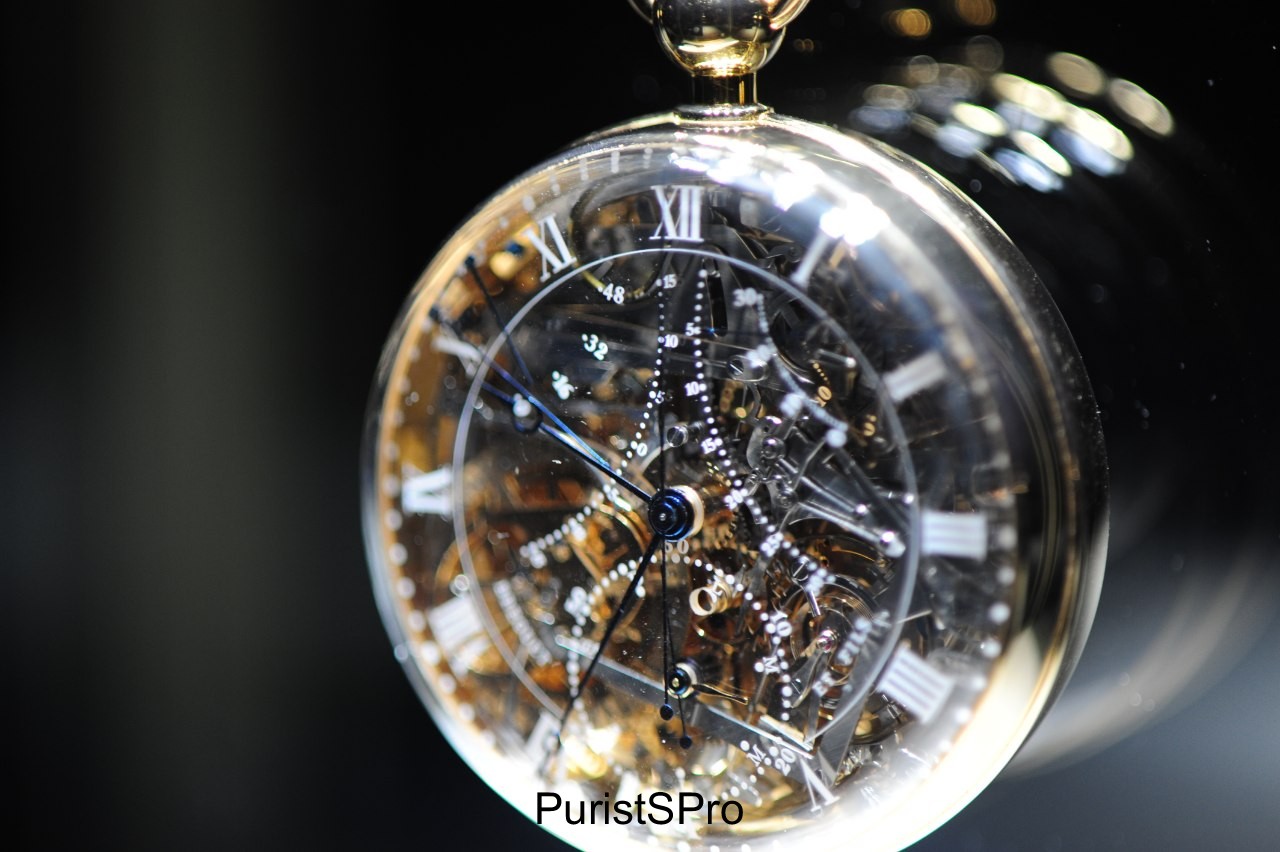
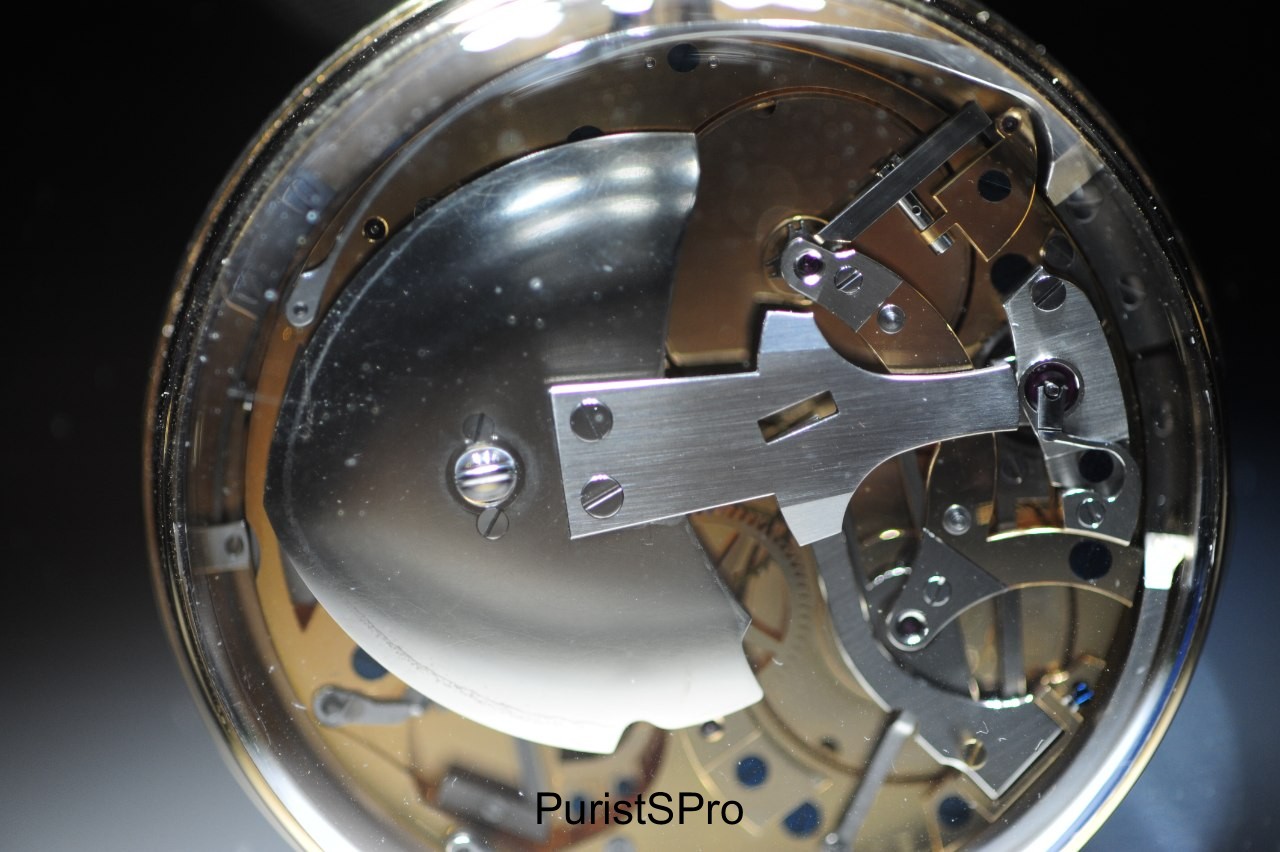
Breguet No.160, aka The Marie Antoinette watch comprises of a perpetual calendar, equation of time, a thermometer, chronograph, and a minute repeater. Virtually all the known complications of the time were in this watch.
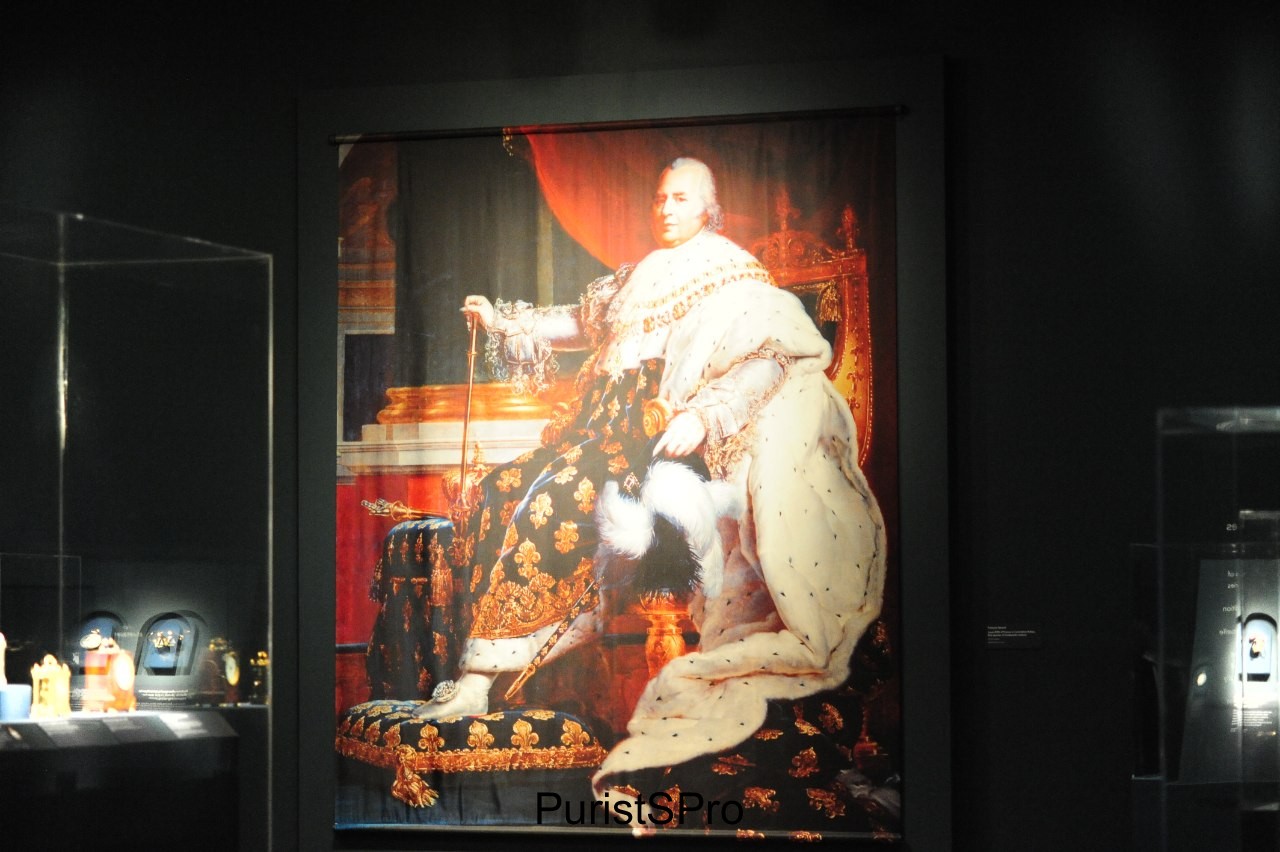
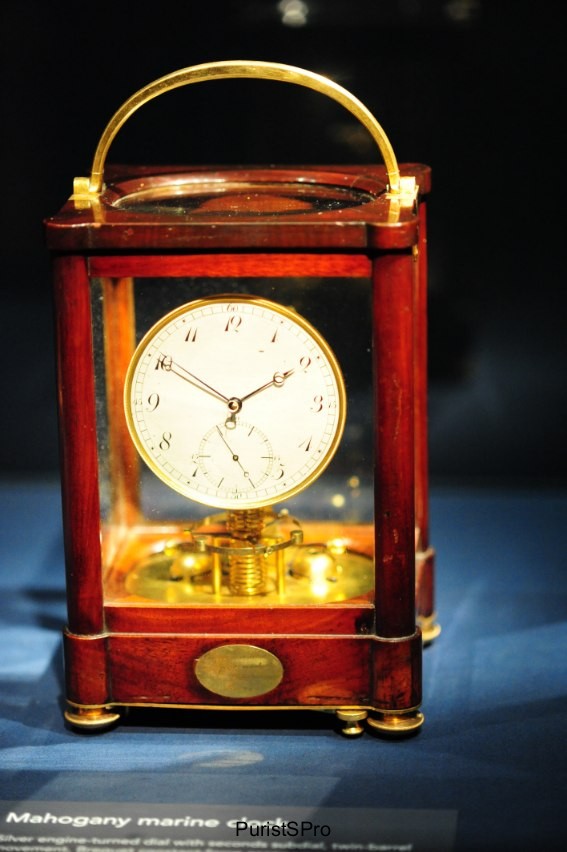
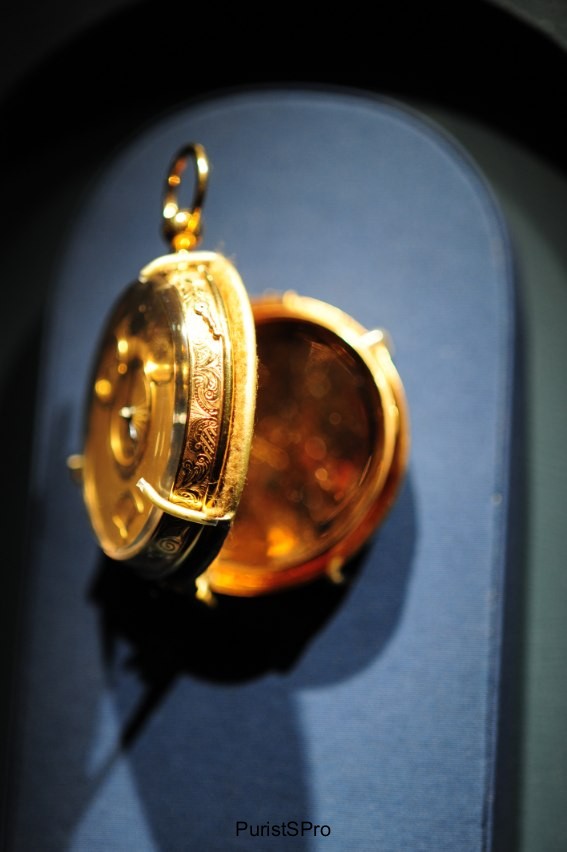
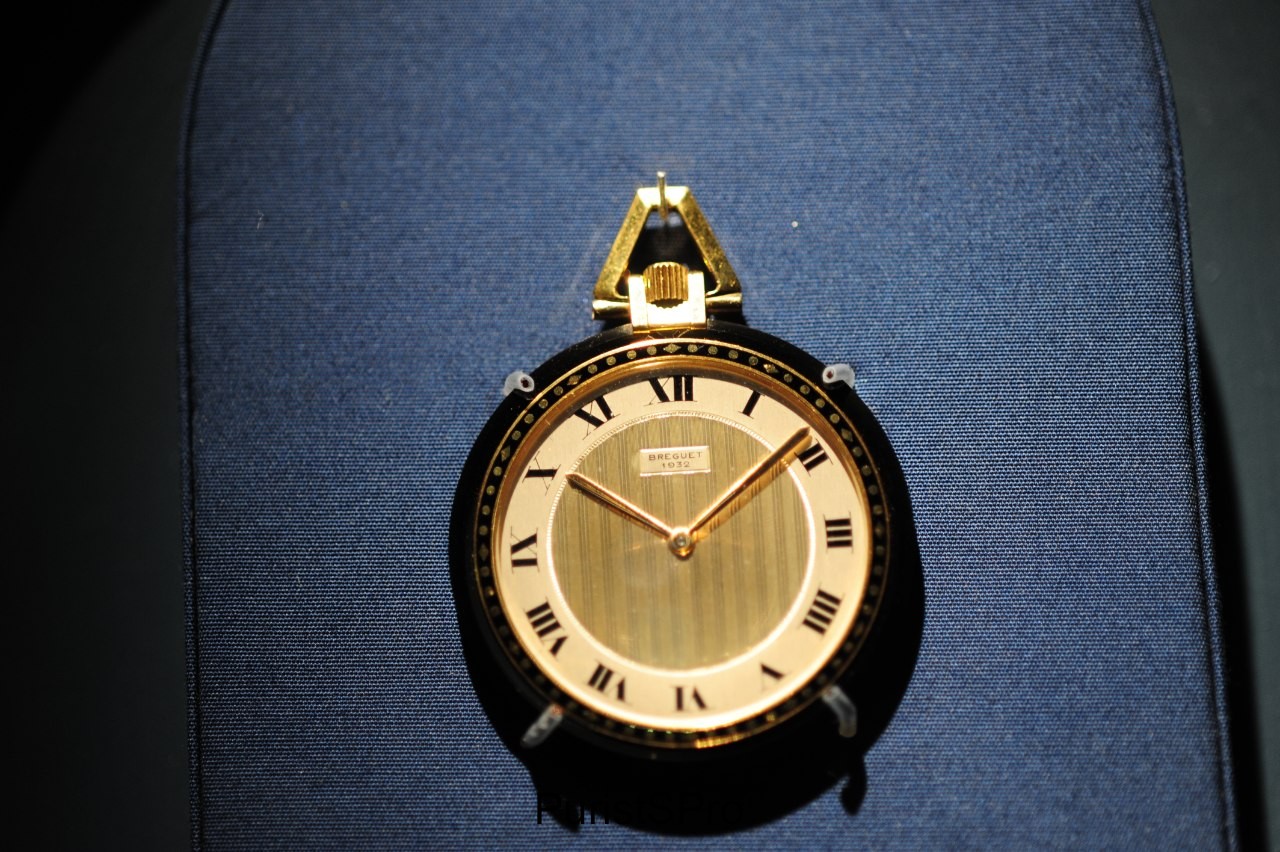
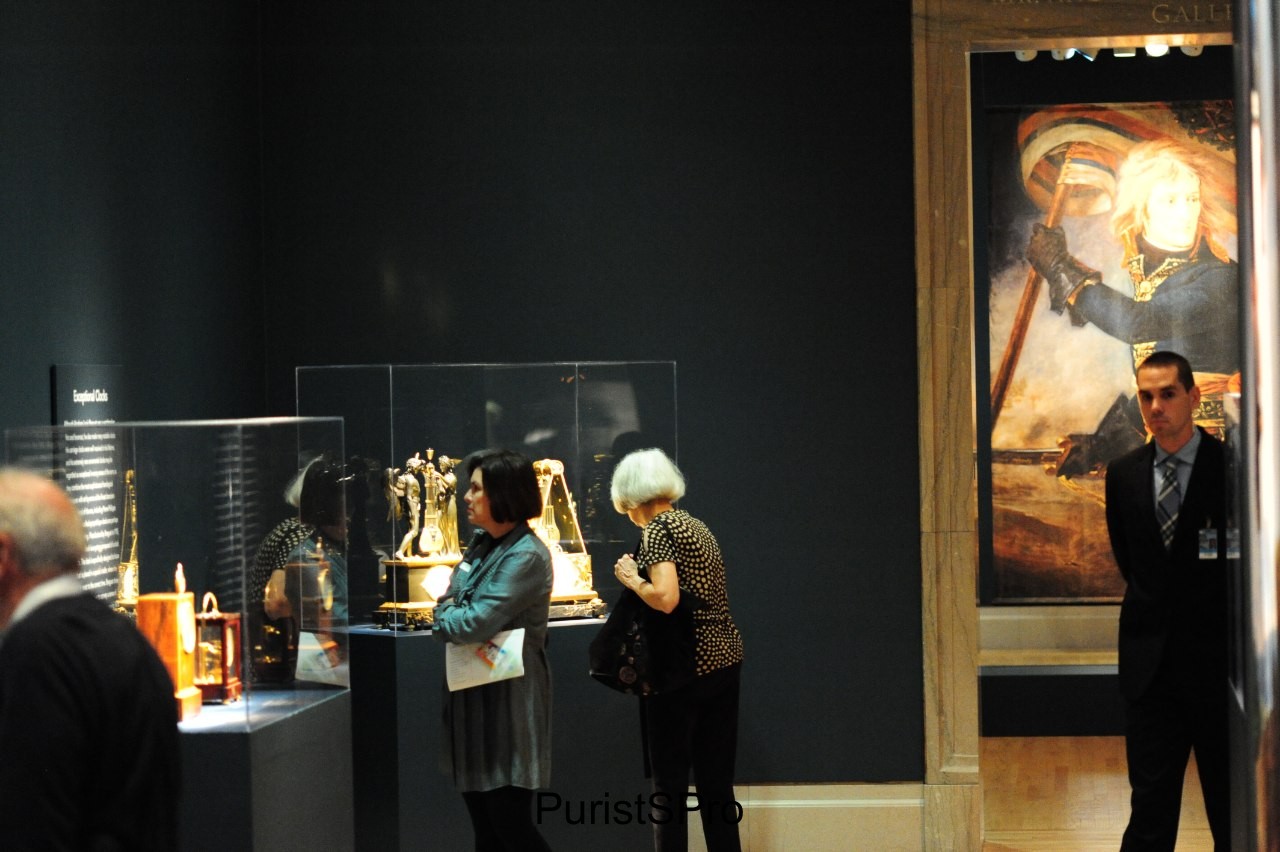
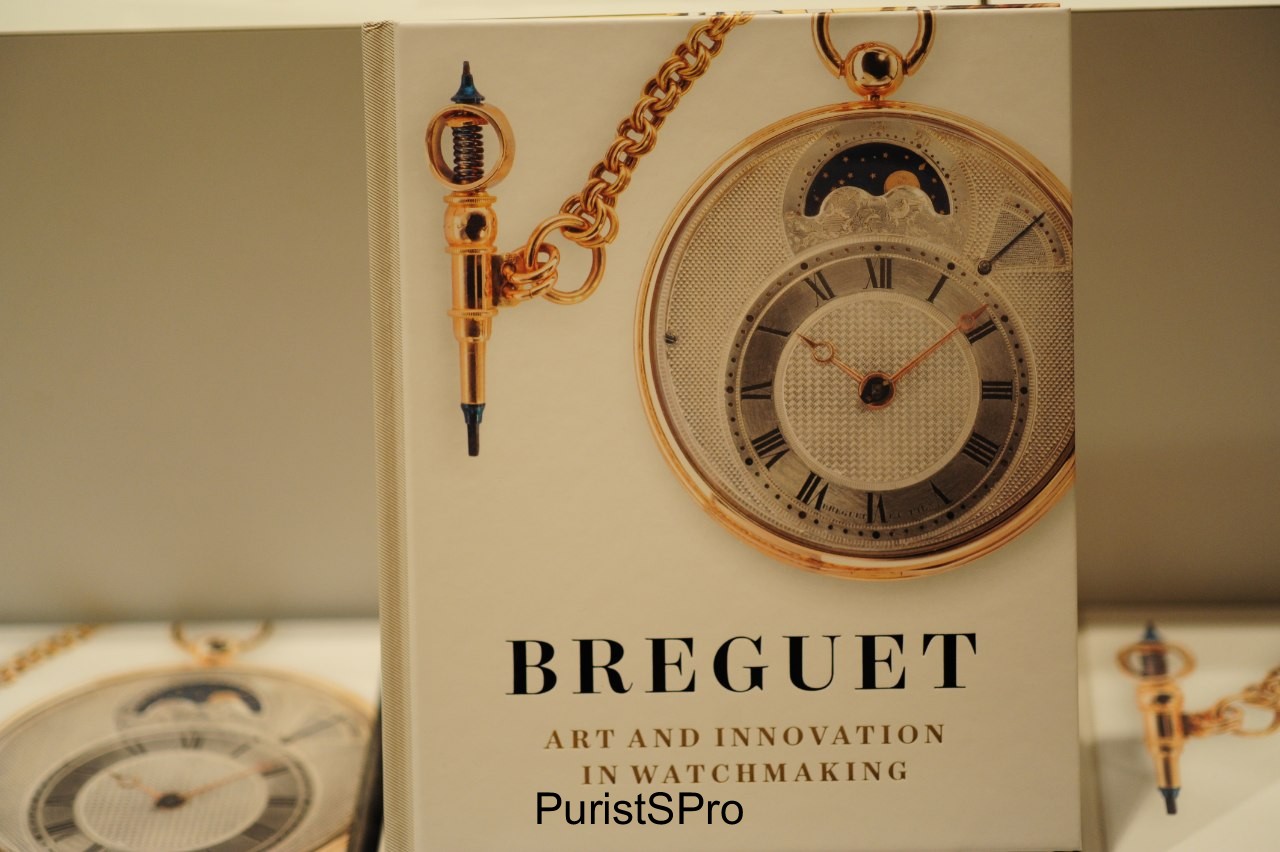
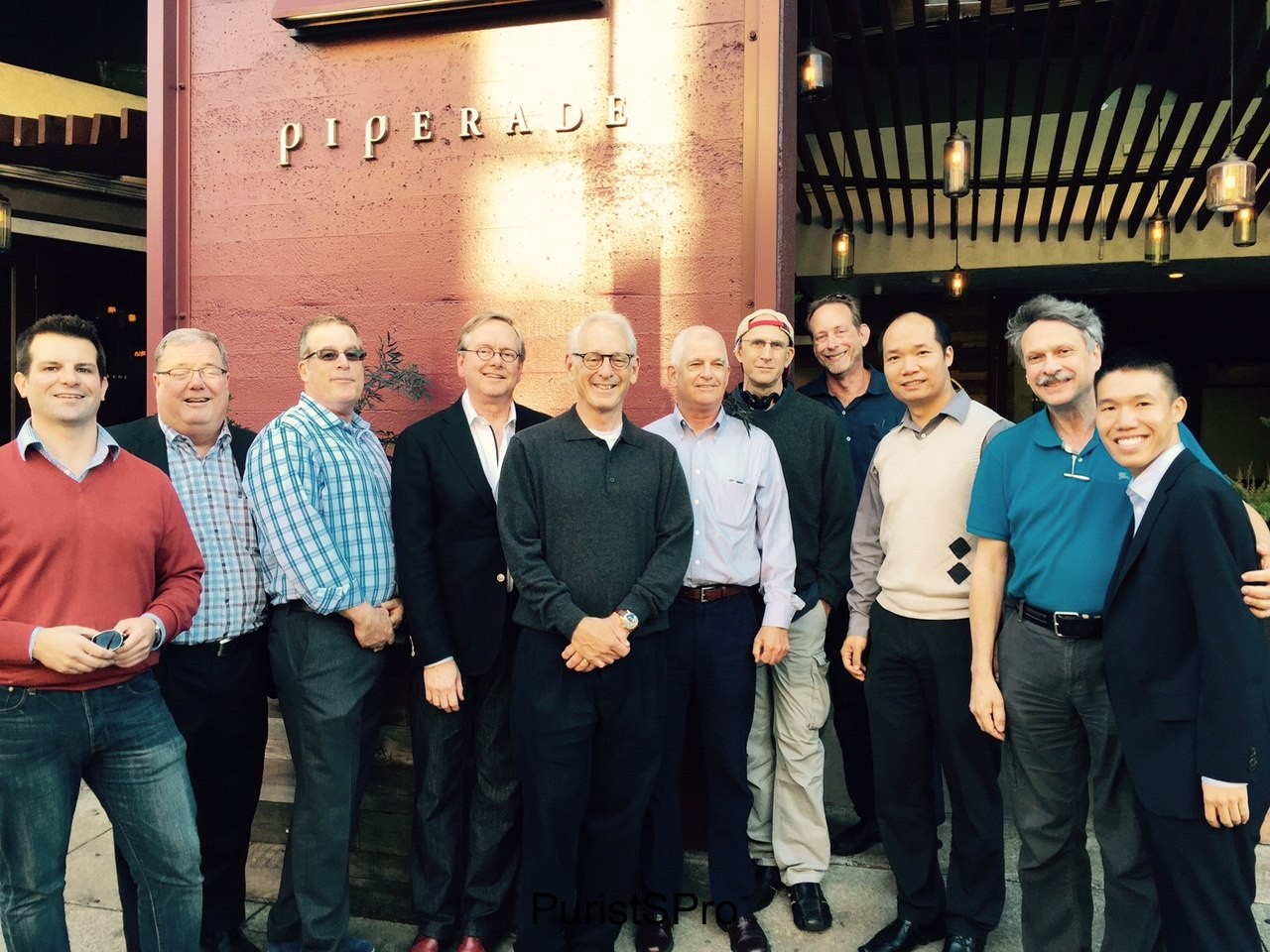 Each one enjoyed the exhibit immensely and would give their unreserved recommendations to any watch savant to attend the exhibit! The group then had a dinner with a protracted discussion about the exhibit and what watches moved them the most.
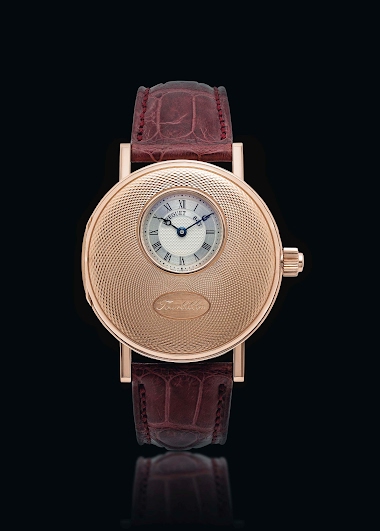
 The Breguet Classique Ref. 1801 is part of the brand's collection celebrating its historical legacy, drawing inspiration from early Breguet designs. This reference is notable for its traditional aesthetic, which emphasizes legibility and classical proportions, aligning with the brand's heritage of horological innovation and design principles. It represents a commitment to the foundational elements of fine watchmaking, presented in a contemporary yet historically resonant package.
This timepiece features an 18k yellow gold case measuring 36 mm in diameter, housing the manual-wind Caliber 558T. The movement provides a power reserve of 50 hours. A sapphire crystal protects the silver dial, which typically features Breguet numerals and hands, enhancing its classic appeal. The watch is water-resistant to 30 meters, suitable for everyday wear but not for immersion.
The Ref. 1801 appeals to collectors who appreciate Breguet's historical contributions to watchmaking and seek a piece that embodies those traditions. Its design, with a focus on understated elegance and mechanical integrity, positions it as a significant offering within the Classique line. The reference is often associated with special anniversary collections, reflecting its role in commemorating key milestones for the brand.
Interesting to see how the current production is so closely linked to the past, aesthetically speaking. I never paid attention to a detail, but the Marie Antoinette dial looks like the Eiffel Tower, these two curved graduations in the middle of the dial. Thanks to Jeff, too! Best, Nicolas
Good observation Nicolas. Gustav Eiffel maybe saw a Breguet watch in his lifetime too!
i wish i could make the journey from the UK....ive just recd the book/catalogue fron the museum, outstanding................you are all very very lucky...
Lots of cool events in London lately. And great museums.
Even though I am so far away in Singapore, I felt I was virtually with you guys there via your pics I love the history of Breguet and am glad Breguet\'s heritage lives on today I only have a Breguet Marine and don\'t know which will be my 2nd Breguet yet but I have a feeling maybe one day I will get a 2nd one, this time probably a more dressy one And of course, thanks to Jeff for inviting fellow PuristS to this event! Cheers Robin
This thread is active on the Breguet forum with 6 replies. Share your knowledge with fellow collectors.
Join the Discussion →