Manufacture
Andrew H (219) offers a rare, intimate look inside the Beyer Museum in Zurich, often described as the world's best-hidden watch museum. His exclusive access allowed for detailed photography of select pieces, providing a unique glimpse into a collection that spans the history of timekeeping. This article highlights the museum's treasures, from early time-measuring devices to significant chronometers and pieces from horological giants like Breguet and Patek Philippe.


If Aladdin had been a WIS, he would have buried his swag here. It is all too easy to miss the Beyer Museum. Located in the slightly less fashionable watch centre that is Zurich, located in the basement of Beyer Chronometrie AG, on Bahnhofstrasse with just a small sign to advertise its existence, and a museum that long ago ran out of space, the Beyer Museum is the result of one family’s enthusiasm for their chosen profession. Several generations of the Beyer family have guarded the cave and its treasure, added to it, and now for a few Swiss francs, let visitors wander around (in the afternoons) and gaze at the wonders therein. It really is the best hidden watch museum in the world. 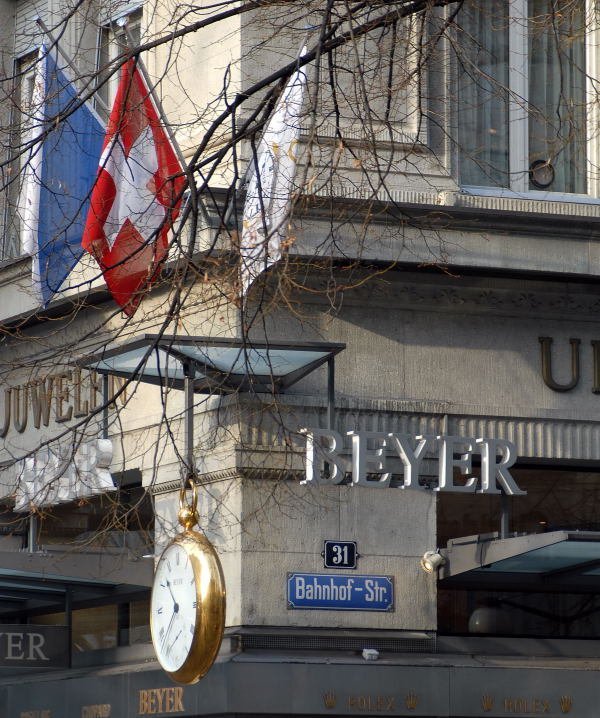

The museum is housed in the basement, in what is effectively a single room. It contains items from human kinds’ first efforts at measuring the time of the day or night, right up to the quartz era and the chronometers that measured with exacting accuracy. 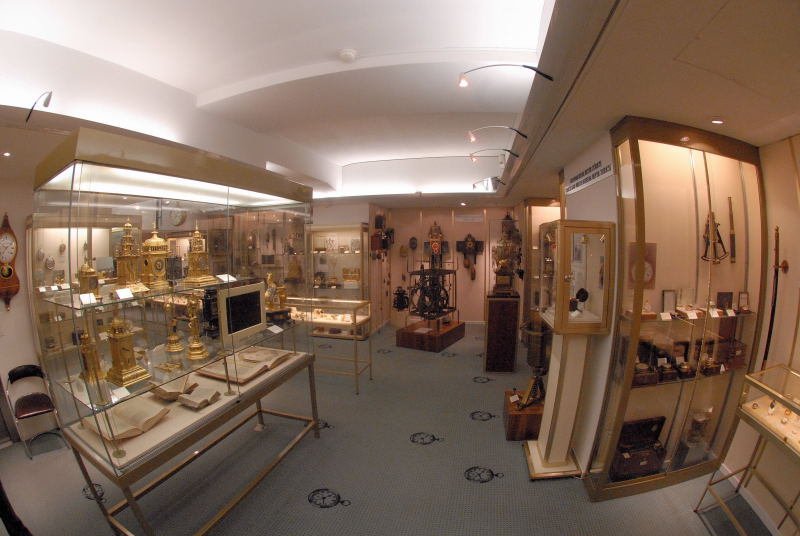
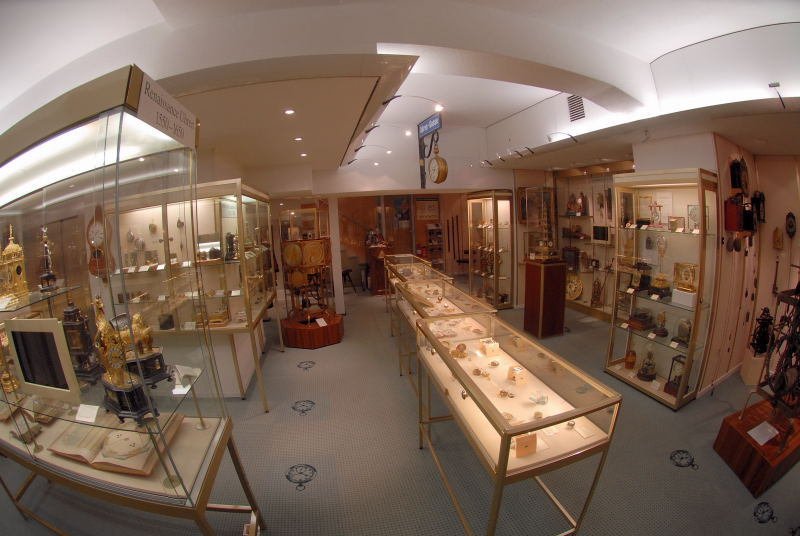
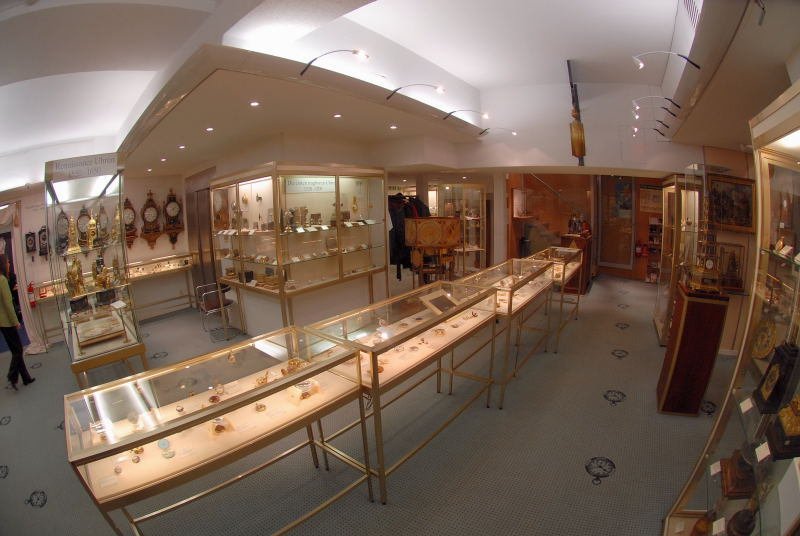
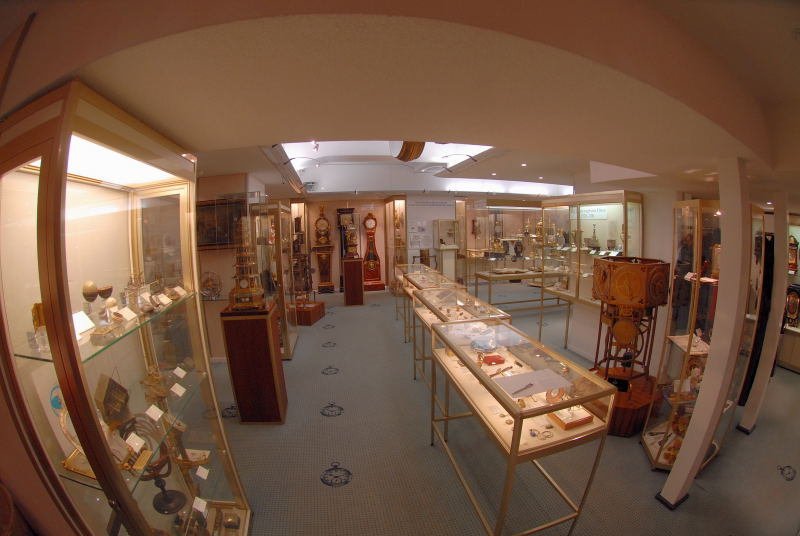
I was afforded a rare opportunity to visit the museum and undertake detailed photographs of some of the collection. I could chose what I wanted to take photos of and my choice was governed (selfishly I suppose) by my own interests. I therefore hope you enjoy the choice. Those who know me will not be surprised by the clocks and watches on display. However, I should point out that this is a small, insignificant amount of the total collection, or the watches on display. The museum really needs to be seen to be appreciated.
As a quick introduction, some pieces from the display cases. First of all, some small and rather basic movements: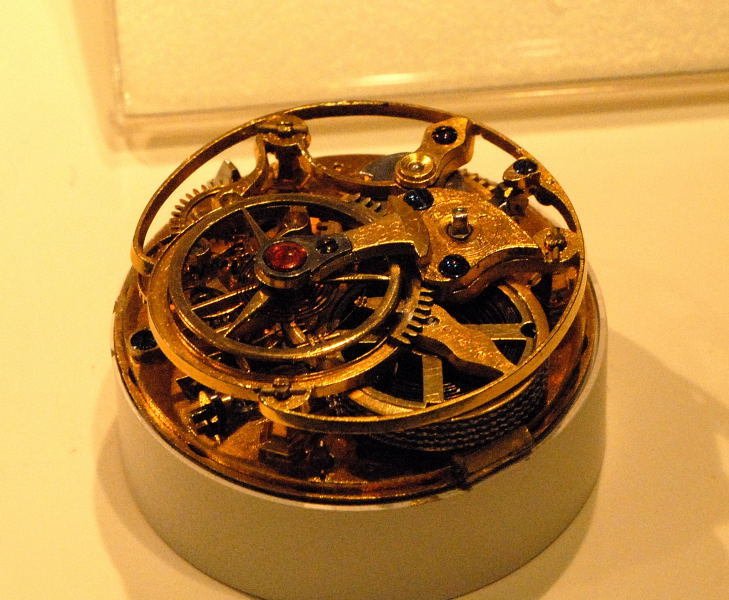
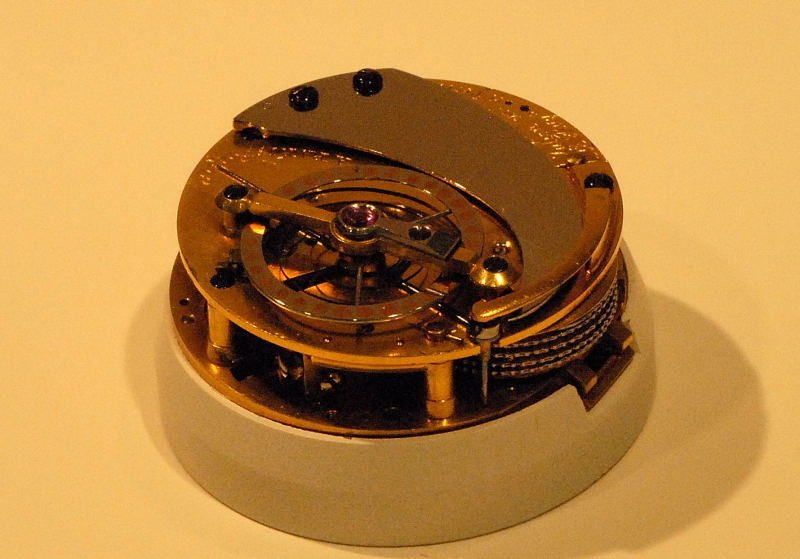
Pierre LeRoy, Skeleton pocket watch mechanisms, Paris 1771
However, a large part of the collection in recent watches and clocks is devoted to two names that prevail even now: Breguet and Patek. Patek features heavily as Theodor Beyer had a close association with the firm, and with Beyer Chronometrie AG being the oldest Patek Philippe retailer worldwide.
For Patek, world times, complications in both pocket watch and wristwatch form (note the grand sonnerie repeater on the right on the third picture):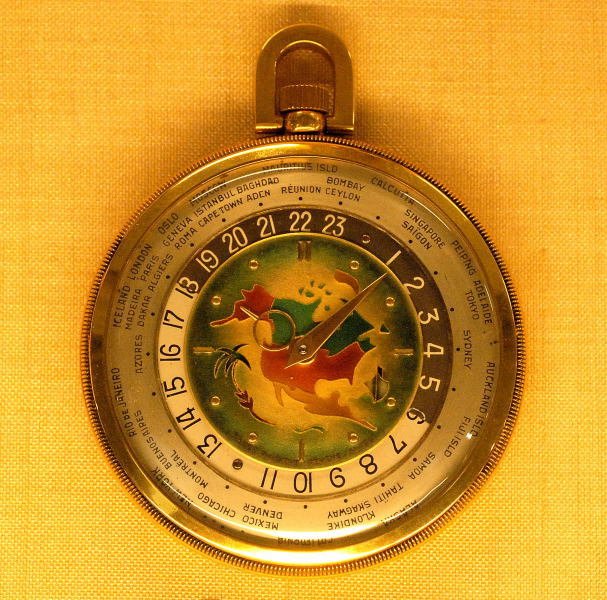
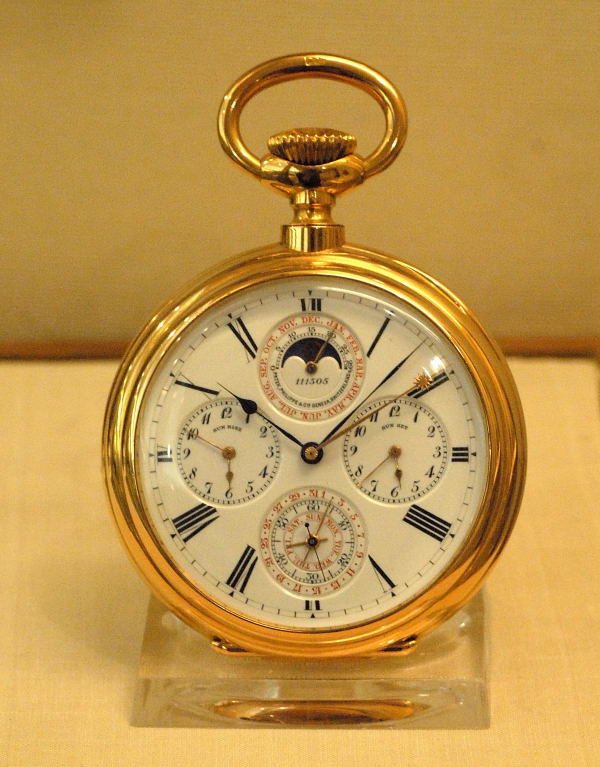
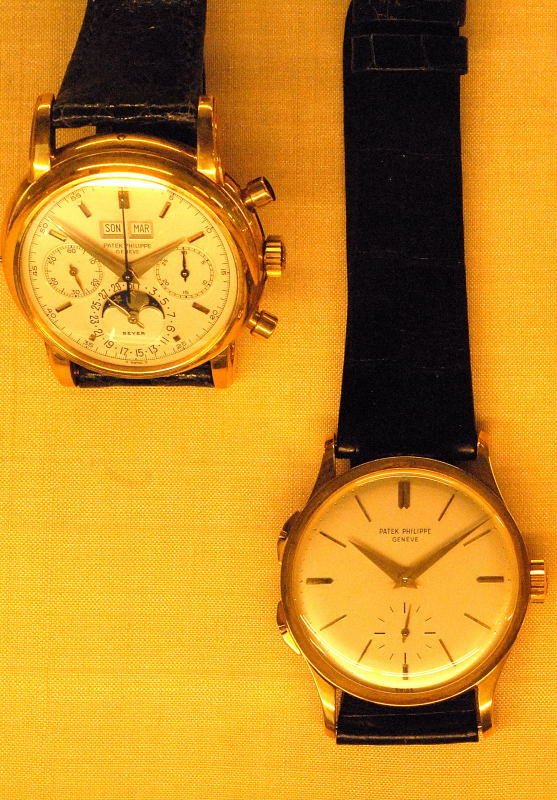
Observatory and prize winning chronometers: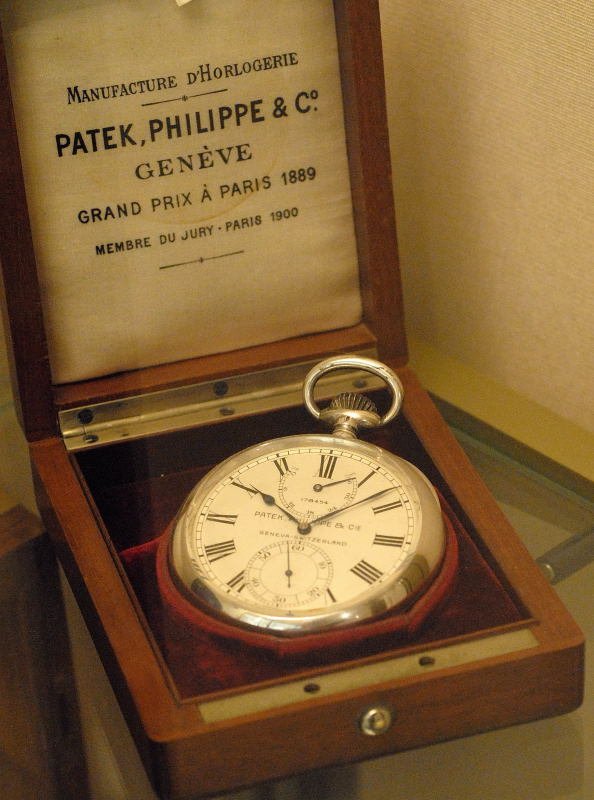
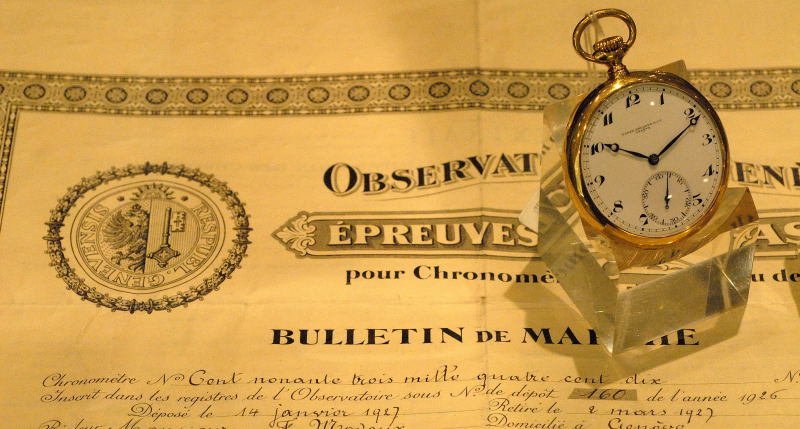
Observatory and experimental tourbillons from other names: A 3-Bridge from the early 20th Century and a Tourbillon Chronometer Watch: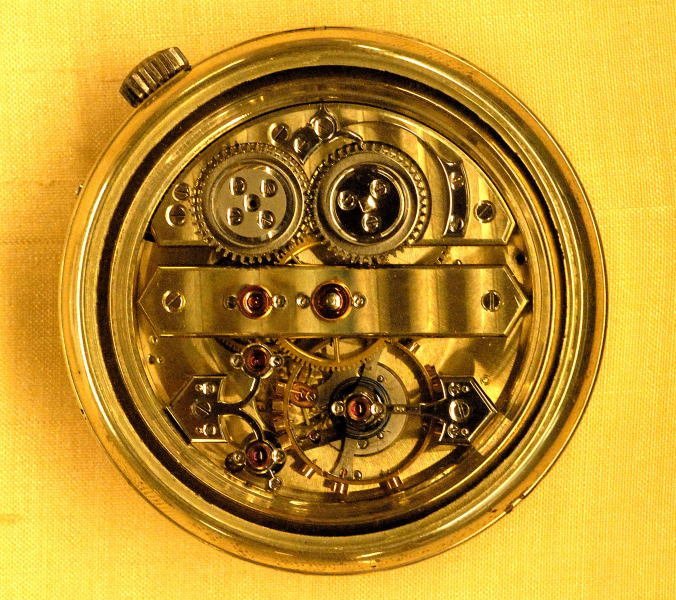
Watch made by Mr. Adelrich, Beyer, Zürich, ca. 1900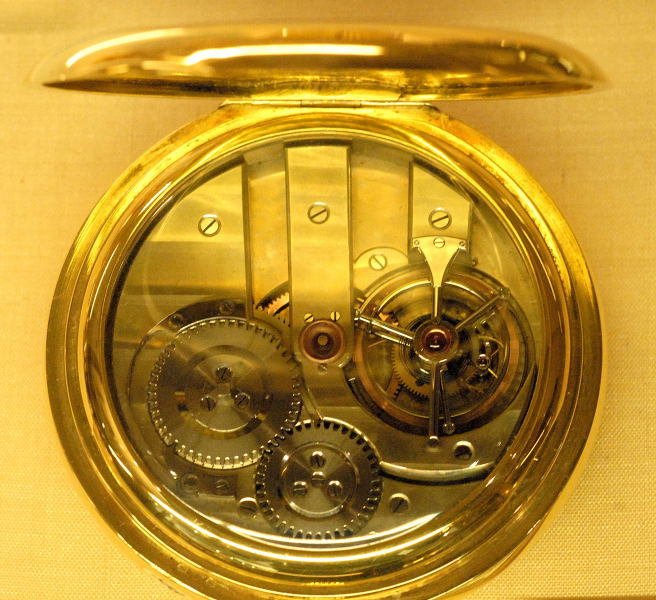
Tourbillon Chronometer Watch by Albert Pellaton-Favre, Le Locle ,1910
And an experimental piece with two mechanisms with the balance wheels set for resonance (sound familiar)?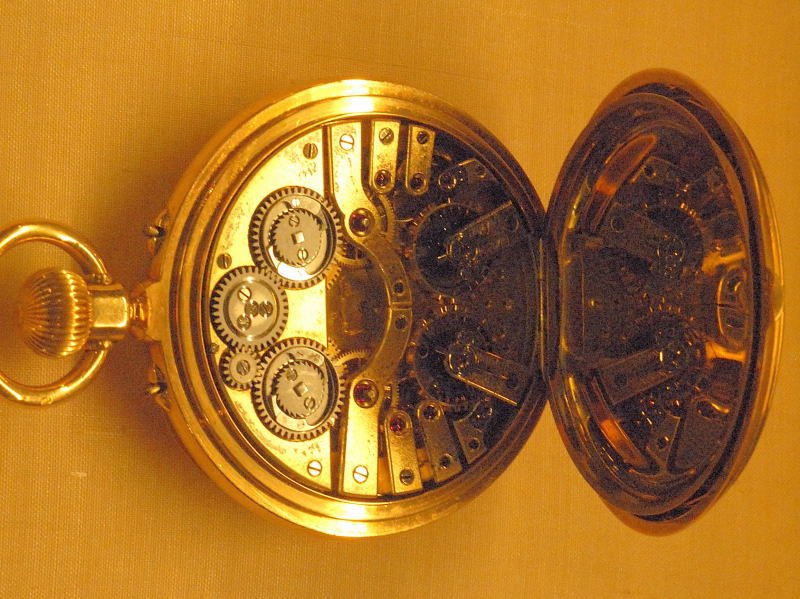
Pocket watch, La Chaux-de-Fonds, circa. 1900
And finally, from the man himself. Breguet: a couple of pocket watches (including a sublime regulator) and a clock that is simply brilliant.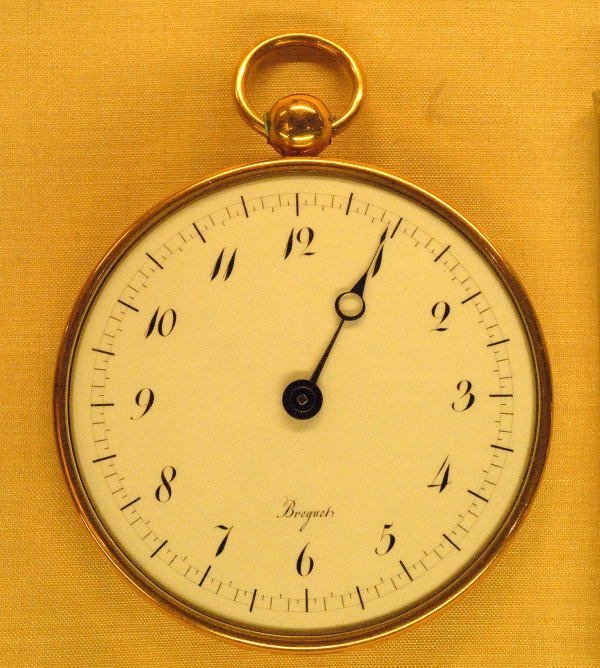
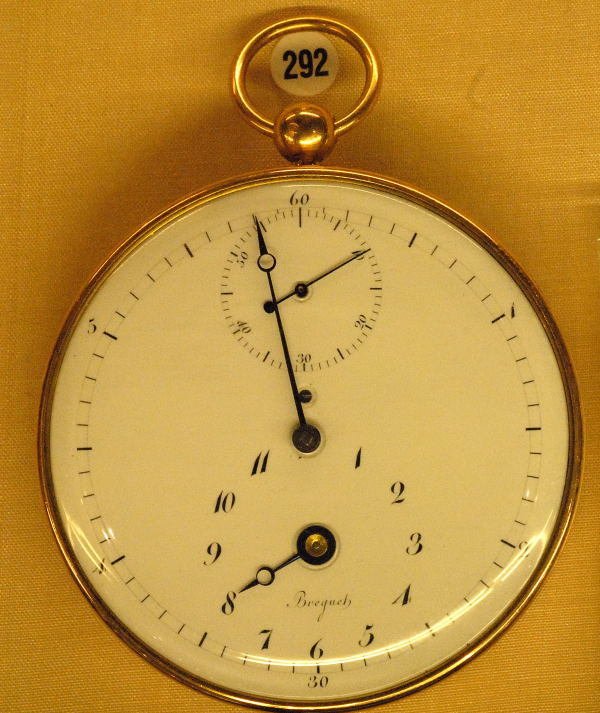
The clock and pocket watch in the cradle at the top of the clock case are synchronized when the pocket watch sits in the cradle. As the mechanism for the clock was considered as more accurate, the pocket watch would be updated (synchronized) to the clock’s time each time the pocket watch was placed in the cradle. Ingenious and brilliantly executed; simply look at the detail: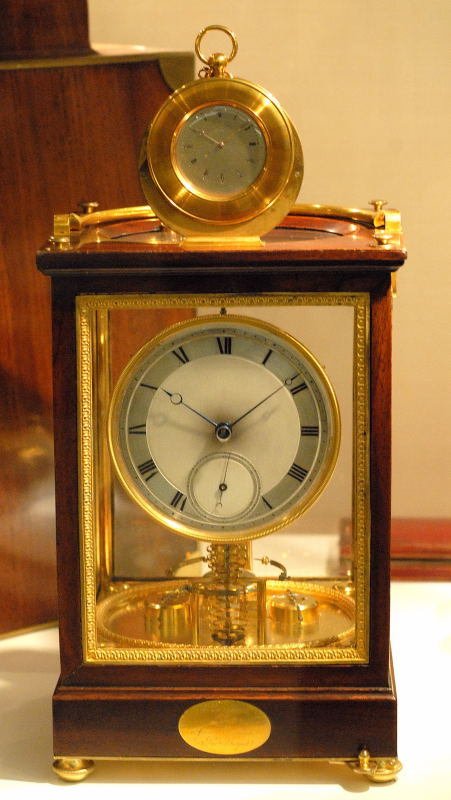
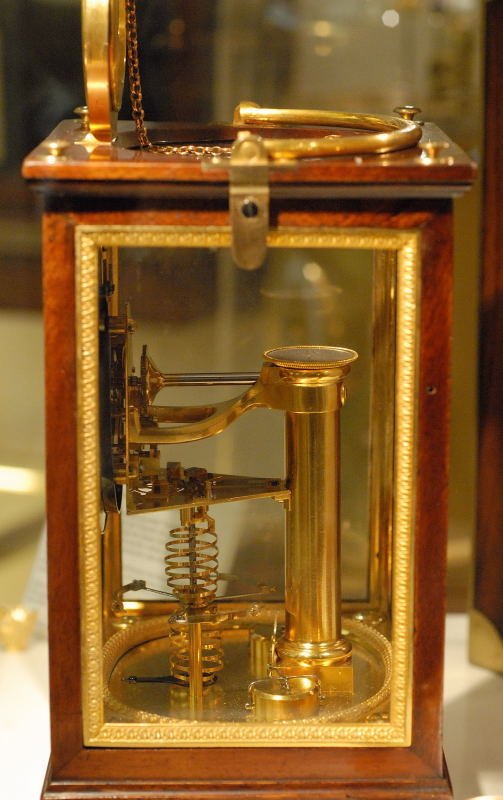
Note the conical shape of the balance spring and the design of the balance wheel: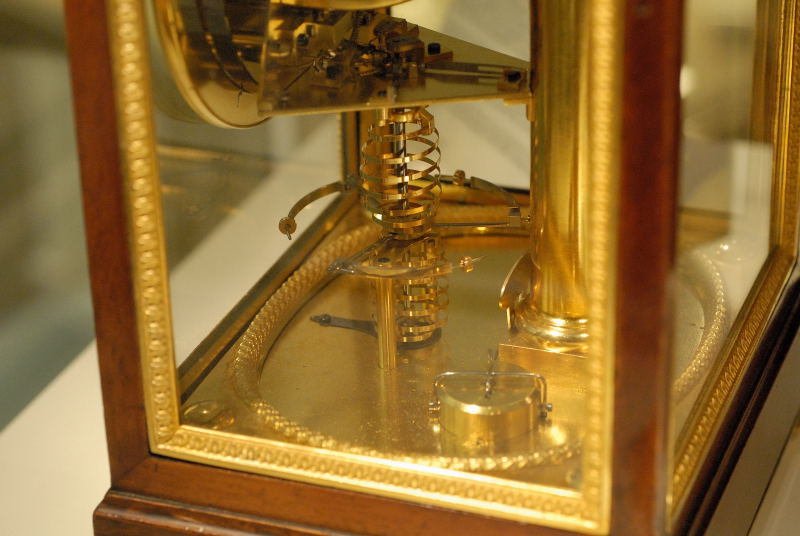
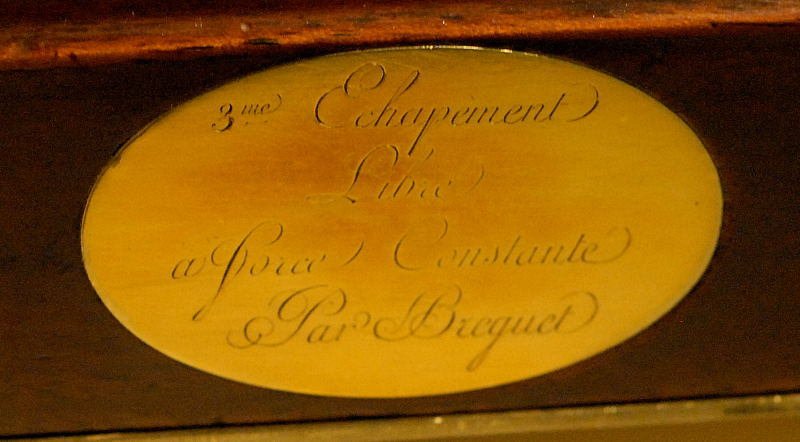
“Pendule Sympathique” by Abraham Louis Breguet, 1808 (clock) / 1830 (pocket watch). This is the same design as the one recovered for the L. A. Mayer Museum in Jerusalem.
My virtual introduction includes unique views of the movements of the watches. I am grateful to Mr. René Beyer and Ms. Monica Leonhardt (Curator of the Museum) for their permission to photograph the movements within some of the watches and clocks providing that the watch or clock could (without too much trouble) be opened up. As such this virtual tour and detailed look at some is a unique view. I hope all enjoy.
So, without further ‘adieu’: my detailed selection:
"What is in a number?"
http://patek.watchprosite.com/show-forumpost/fi-11/pi-3017601/ti-500651/s-0/
"A world of extremes: Rolex has been everywhere you would not think of going to!"
http://rolex.watchprosite.com/show-forumpost/fi-732/pi-3017606/ti-500656/s-0/
"The real English Masters"
http://ahci.watchprosite.com/show-forumpost/fi-16/pi-3017611/ti-500661/s-0/
Enjoy!
Andrew H
I guess they need to have massive insurance coverage for both watches for sale & for viewing purpose only (meant to be put in museum). Thanks for the report!
A really wonderful write-up, Andrew; thank you. I love to discover all these treasures that have been hidden to me. Douglas
Do you just ask and they take you there or you must be invited? alepos
It was smaller than I expected, but lots of treasures if you look closely. I thought it was interesting when it was 5pm and the room was filled with the chiming sounds of dozens of clocks and watches. Being a big fan of skeleton watches, this pocket watch attracted my attention: Thanks for the report, Andrew!
....with a glass mainplate? Because looking at the shape of the fob tip, and scarcely making out the lines of the movement bridges itself, and overall form, I'd swear that's a Breguet, but like one I've never seen or heard of before. It's exquisite! Please, kind sir, I implore you- what IS this thing? I must know. Do you have a better picture of it/details? My god, if this is the kind of stuff in this museum, I must see it. I can't believe they have this, and an original Sympathetique....
This thread is active on the Horological Meandering forum with 37 replies. Share your knowledge with fellow collectors.
Join the Discussion →