Comments:





BaselWorld 2013 : Laurent Ferrier
Laurent Ferrier at BaselWorld 2013
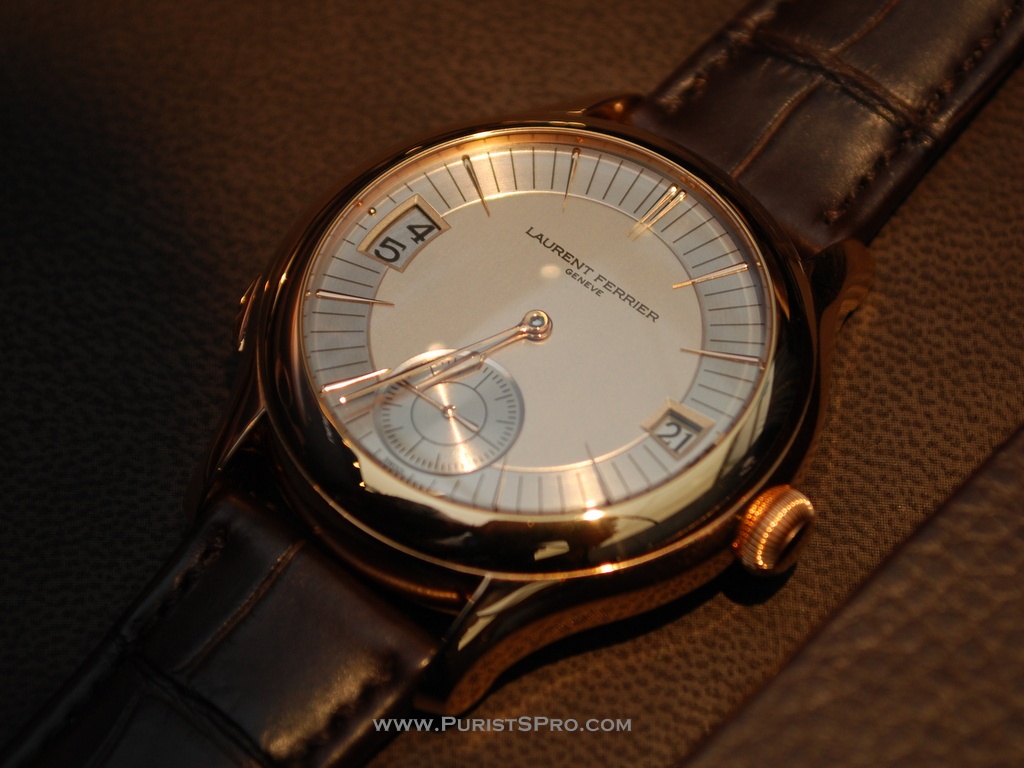
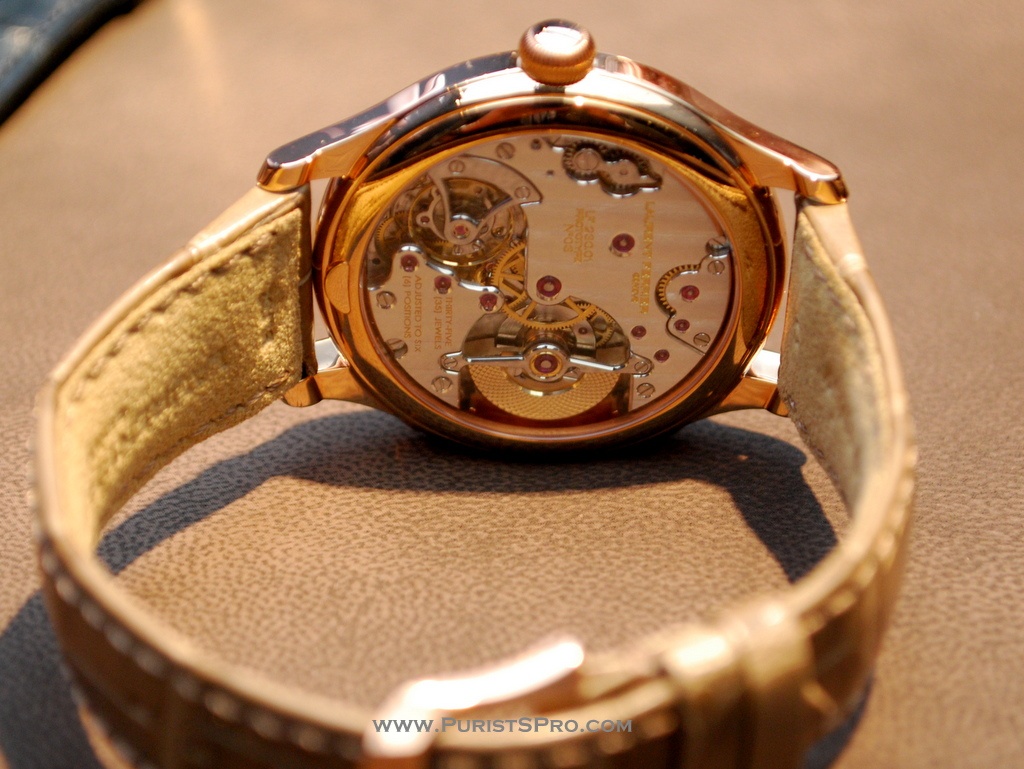
New at Laurent Ferrier this year is the dual time zone Gallet micro-rotor with double direct escapement model. The dual time complication is integrated into the micro-rotor movement and not an added module on top. At the same time LF has made some improvements in the movement as described below.
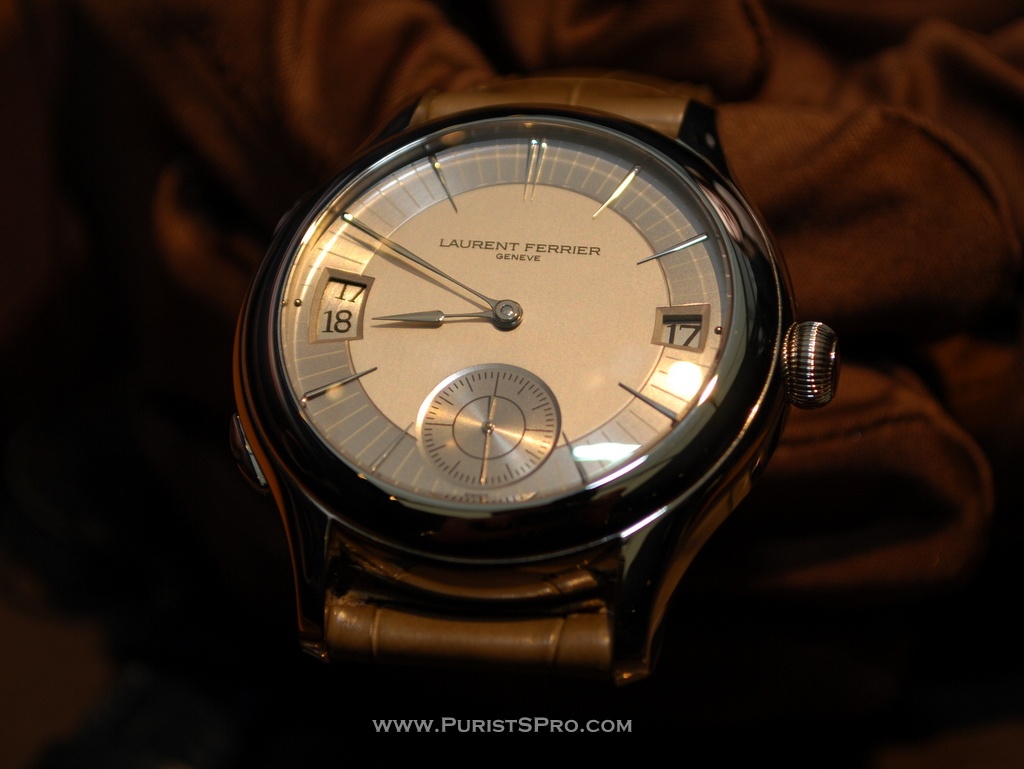
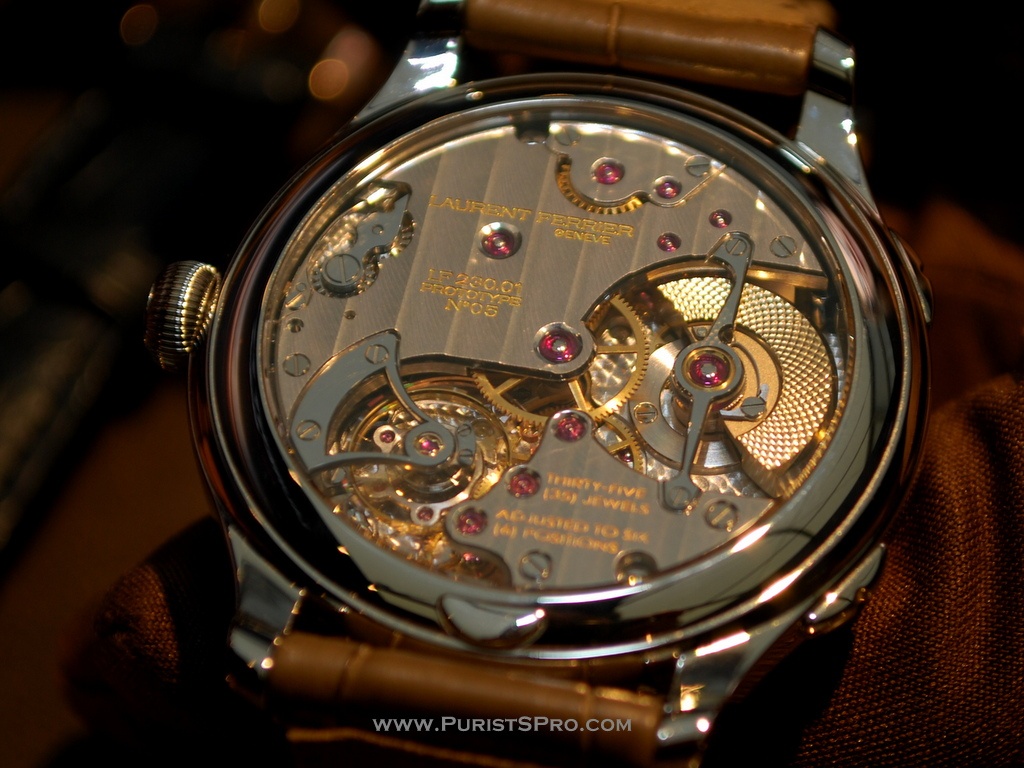
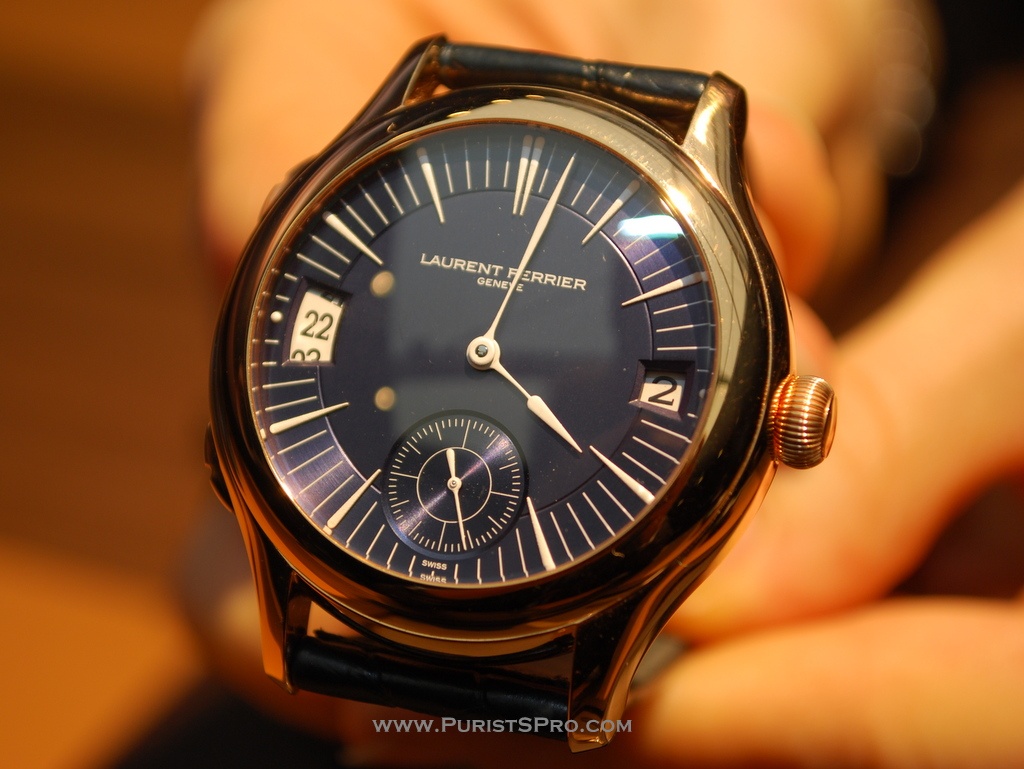
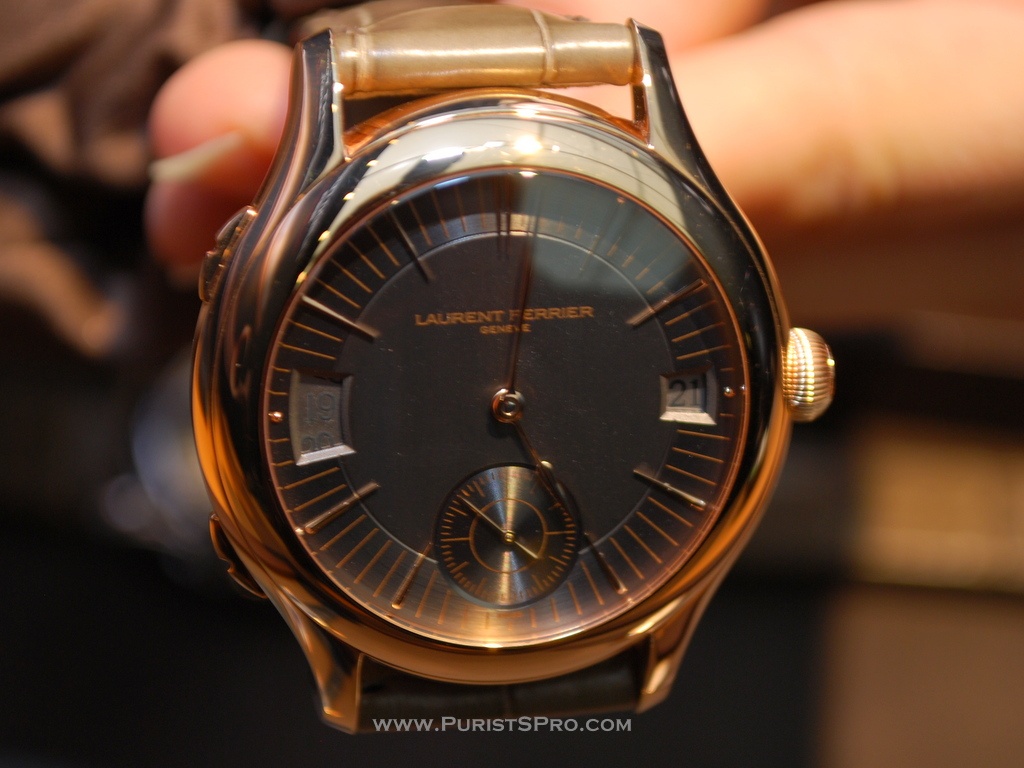
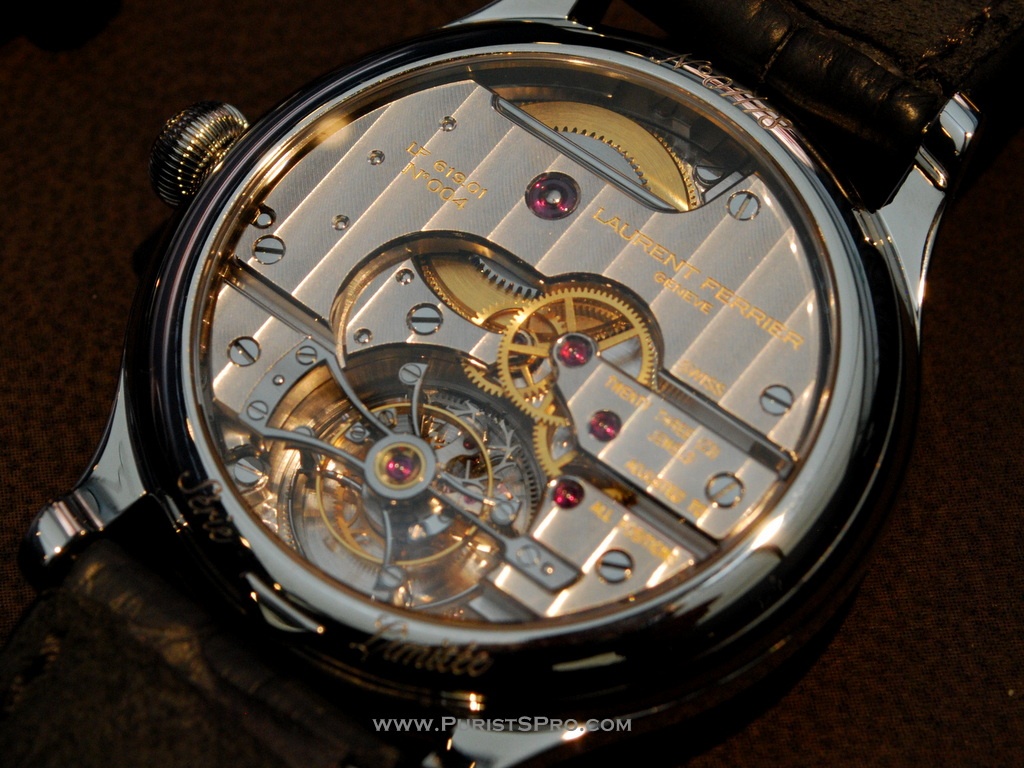
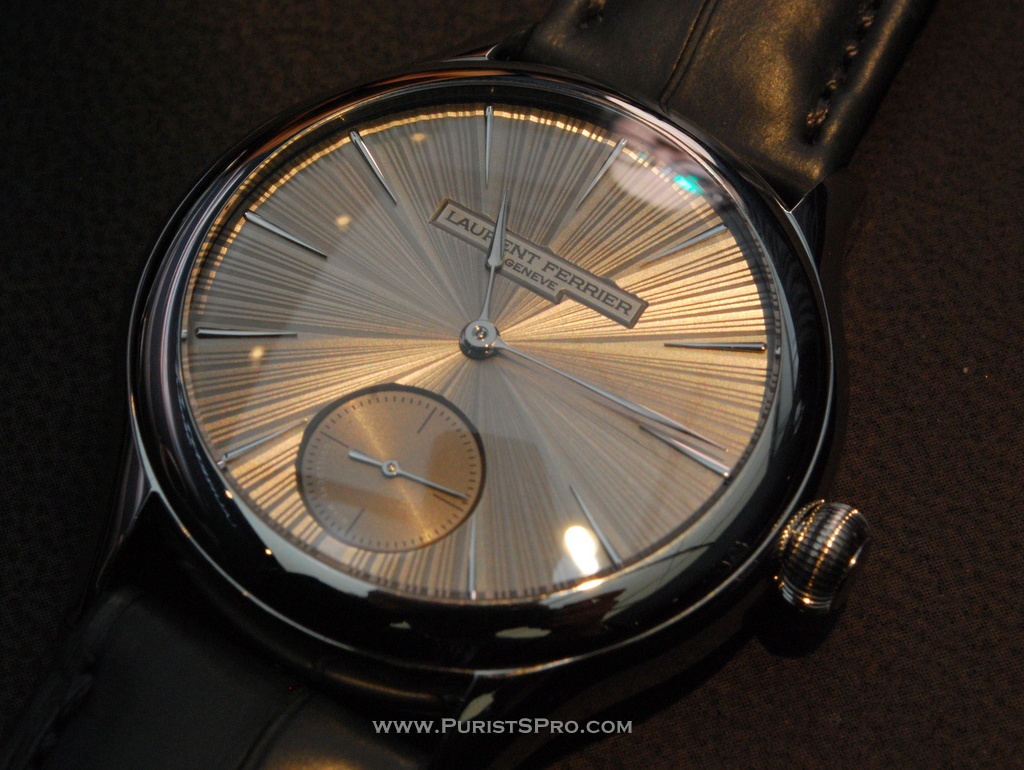
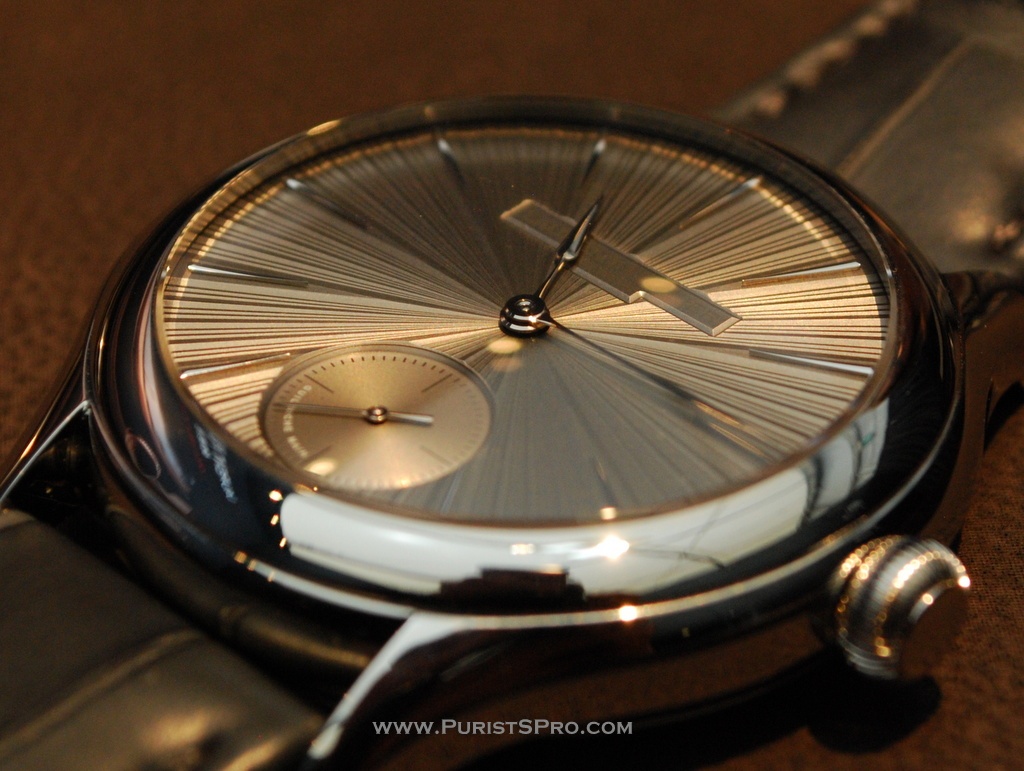
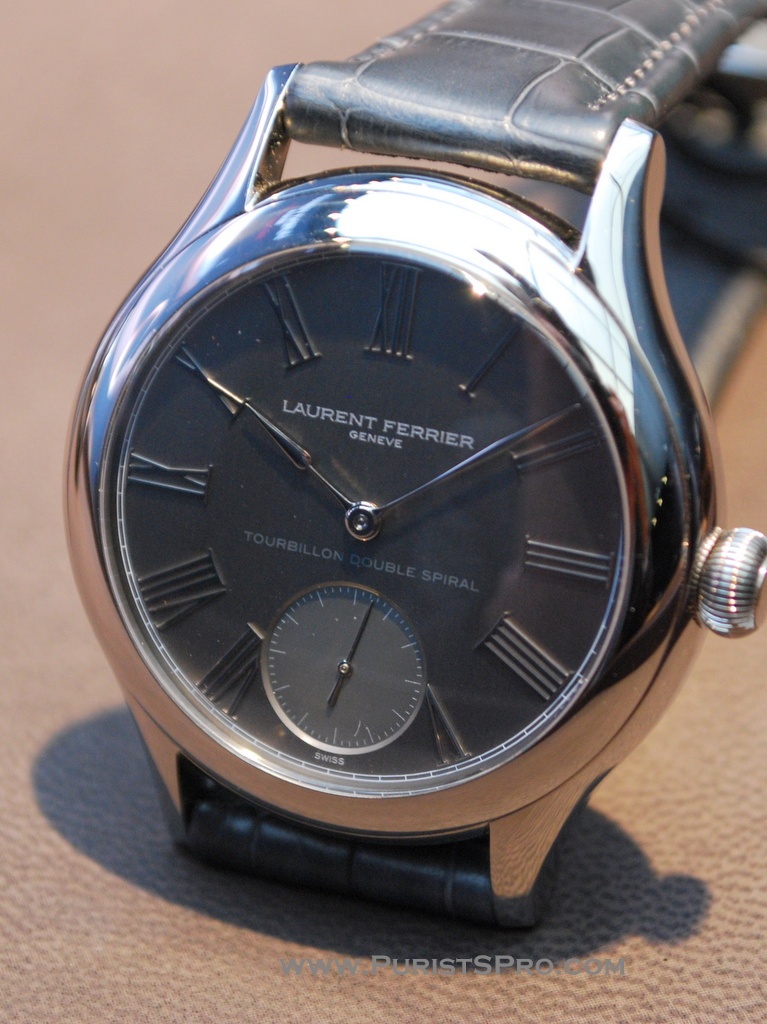
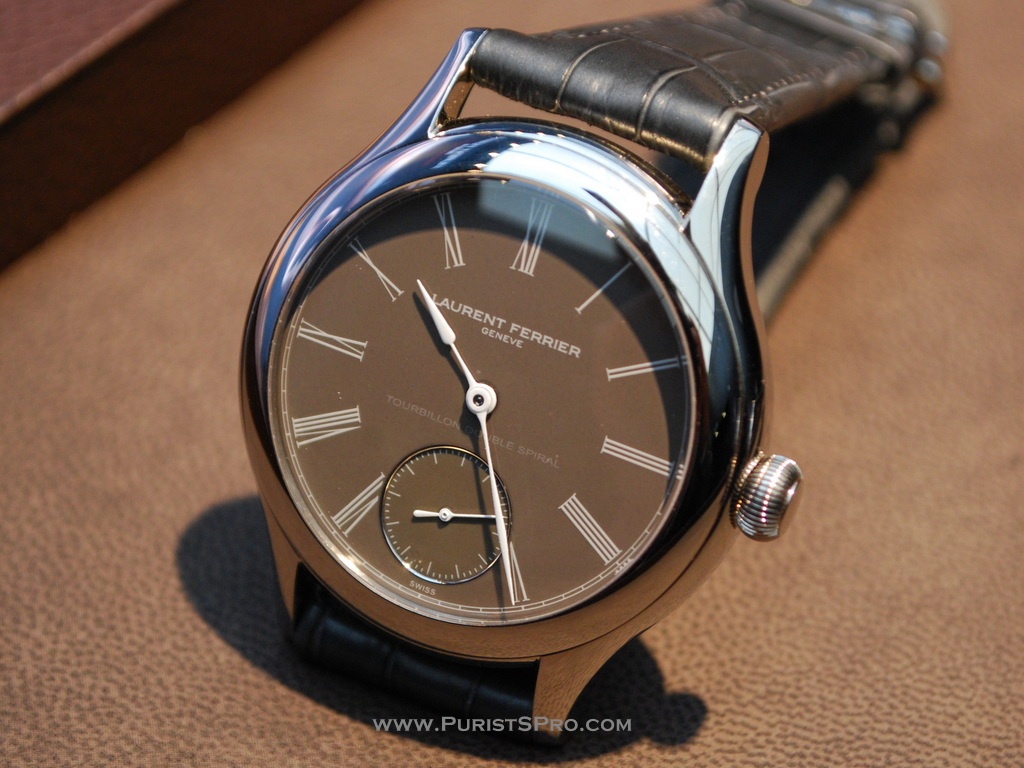
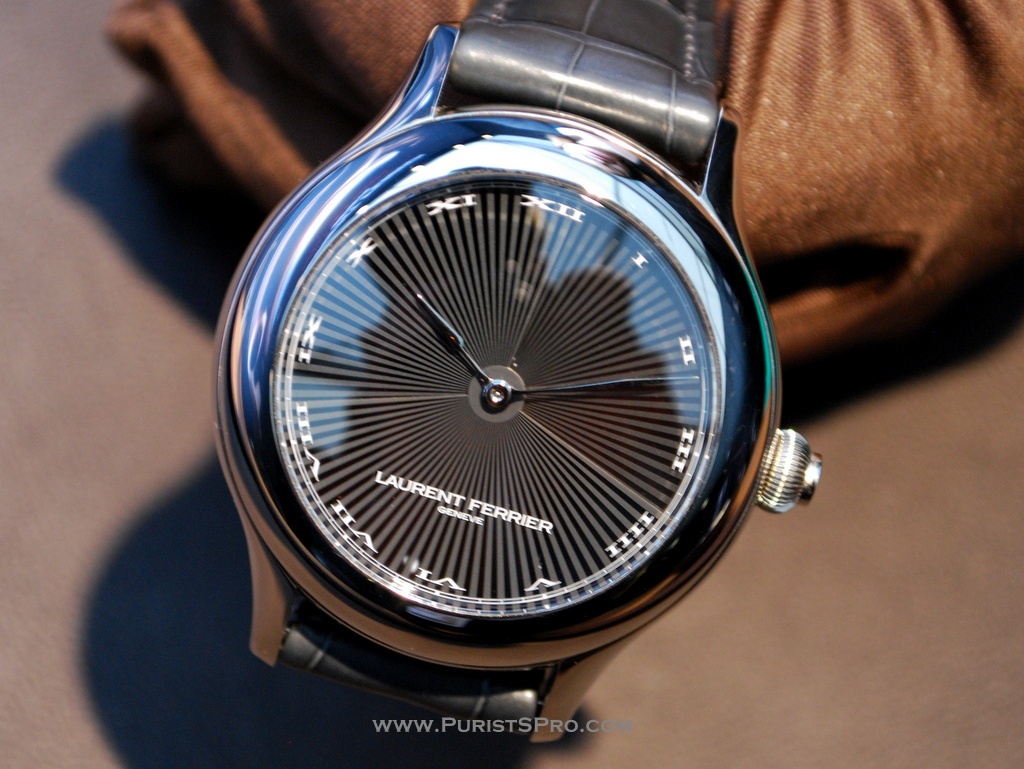
This new double spiral tourbillon with its radial guilloché dial is just magnificent.
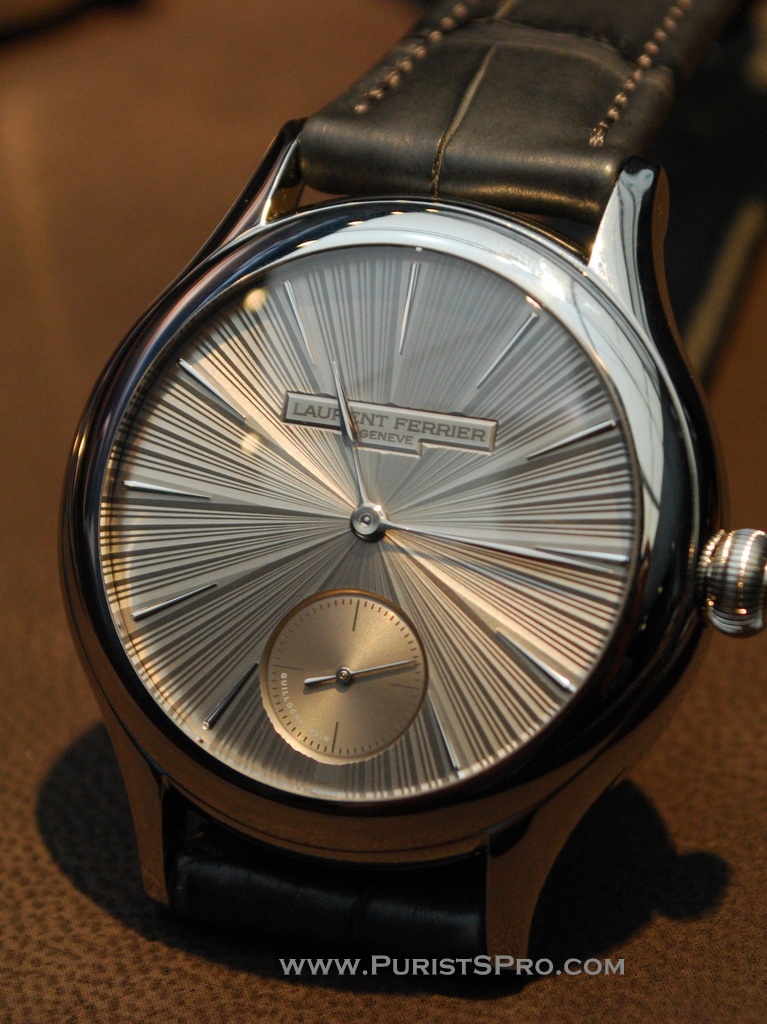
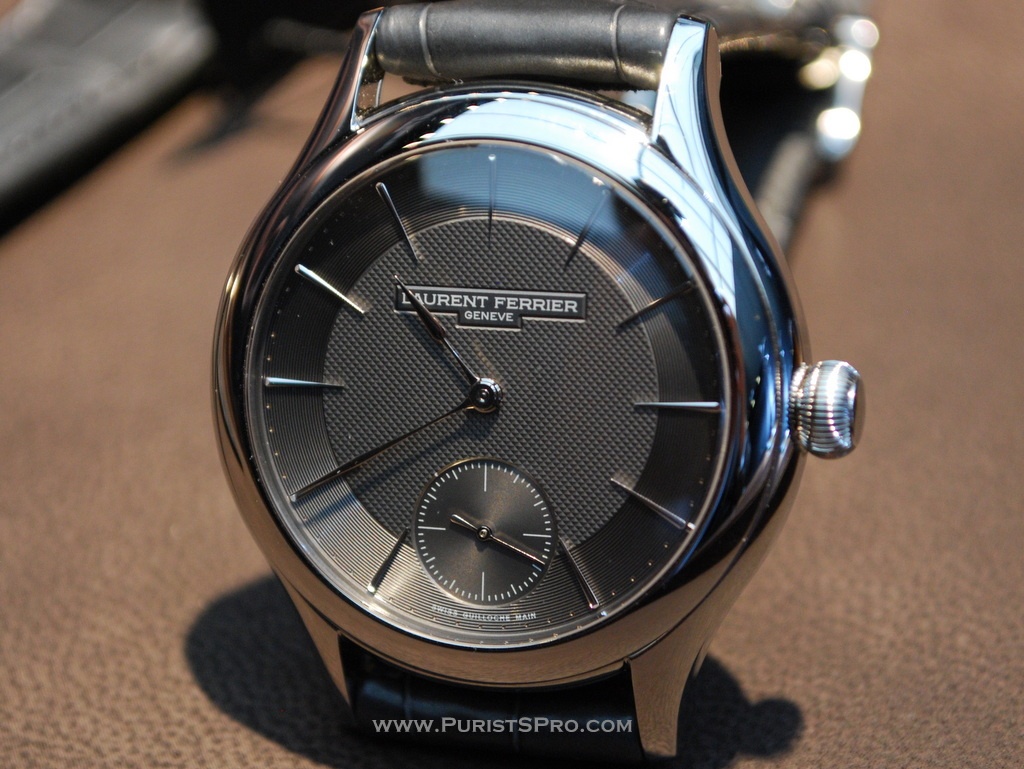
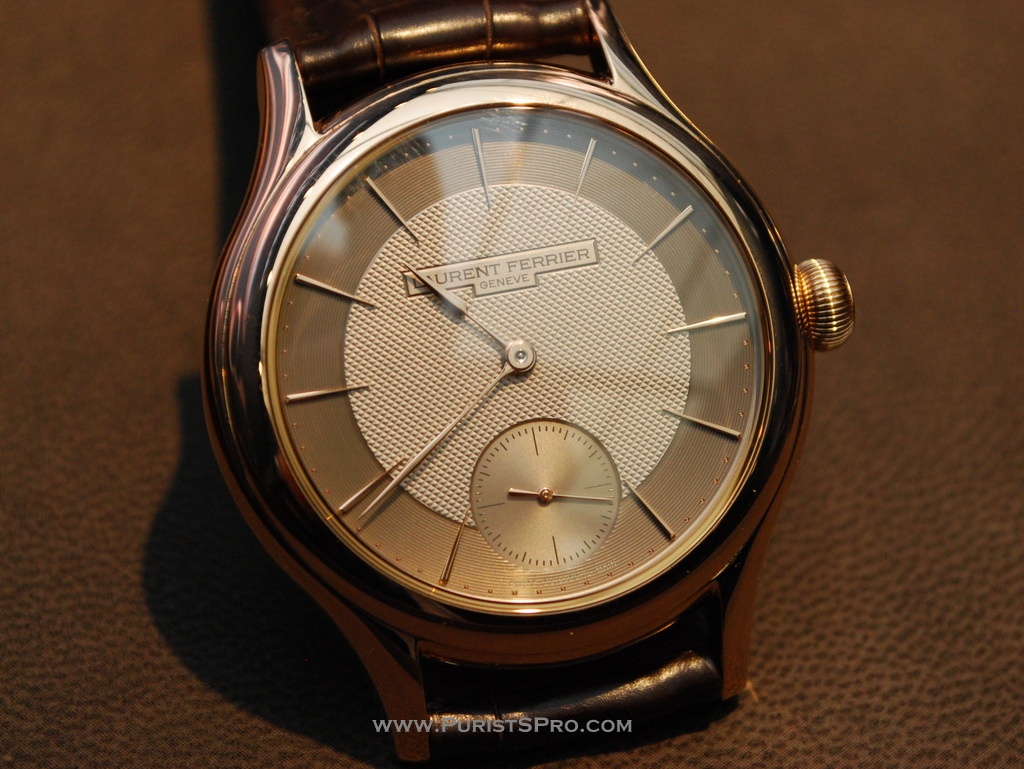
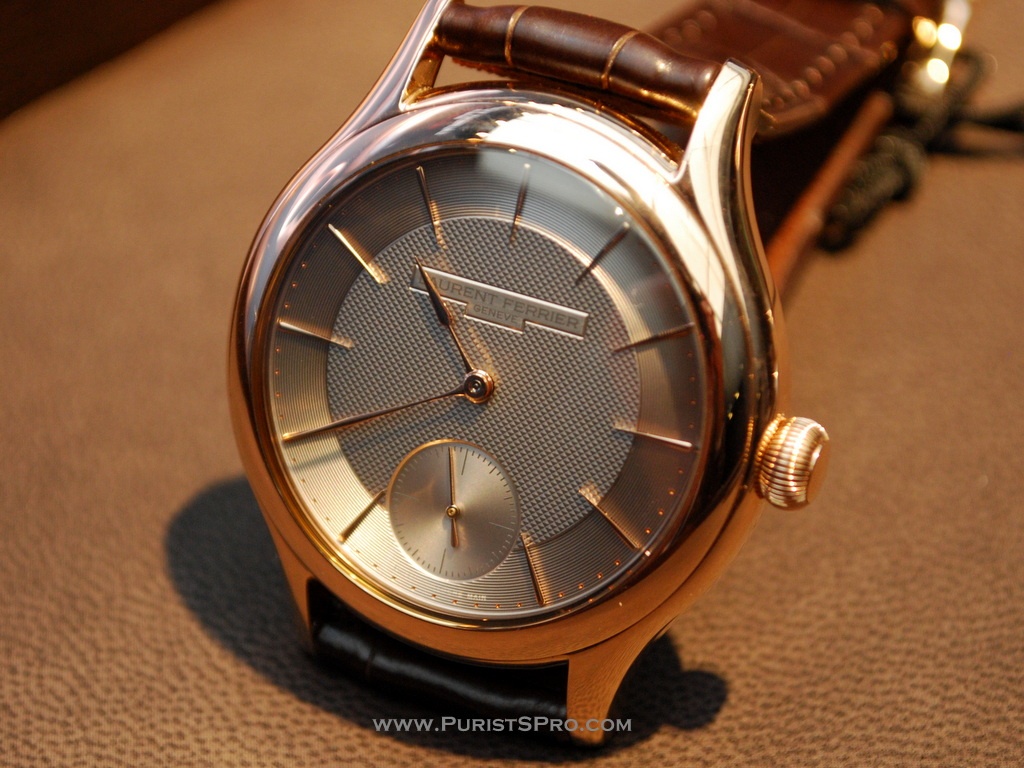
The micro-rotor has some new dial colors.
Double-spiral tourbillon
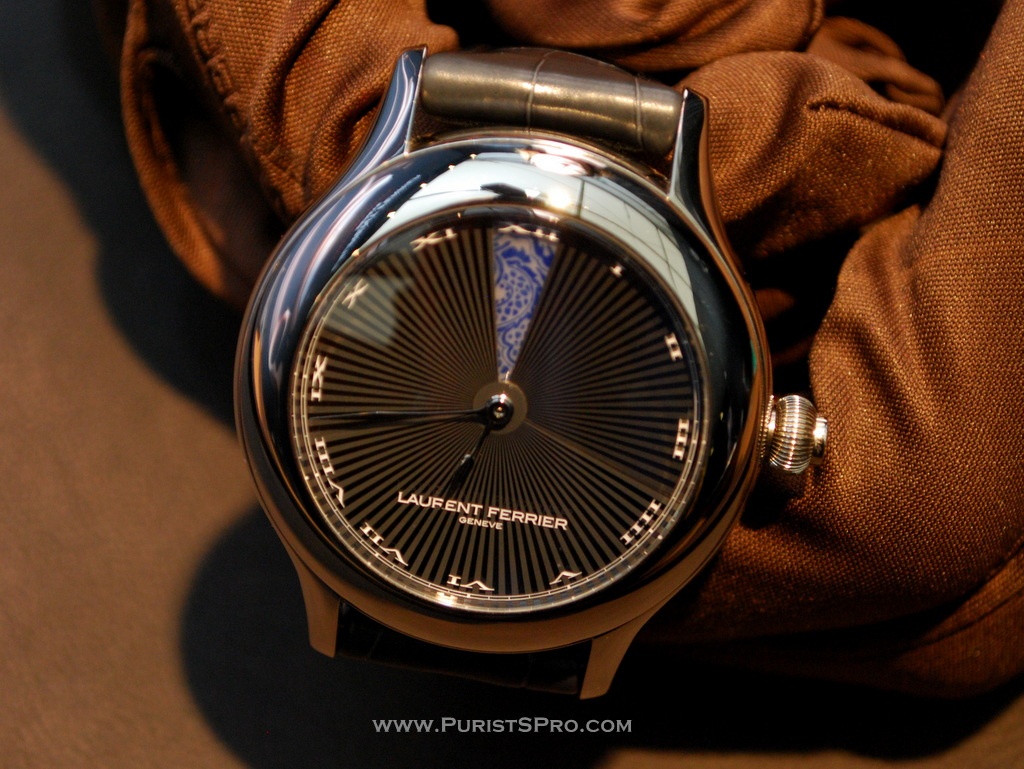
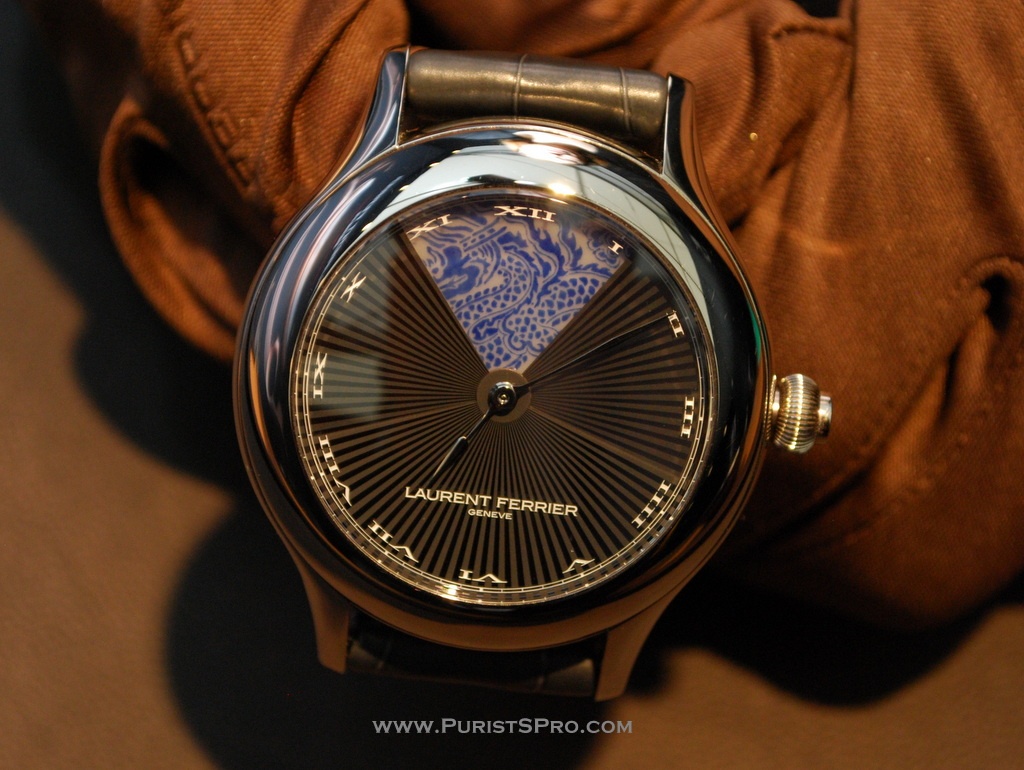
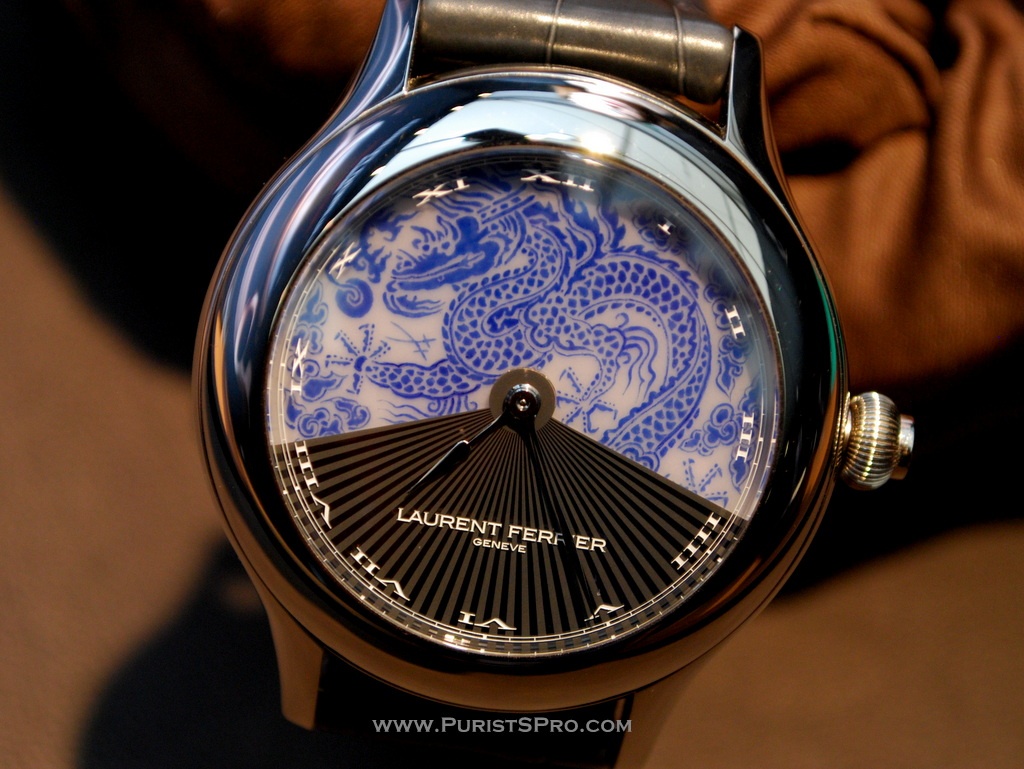
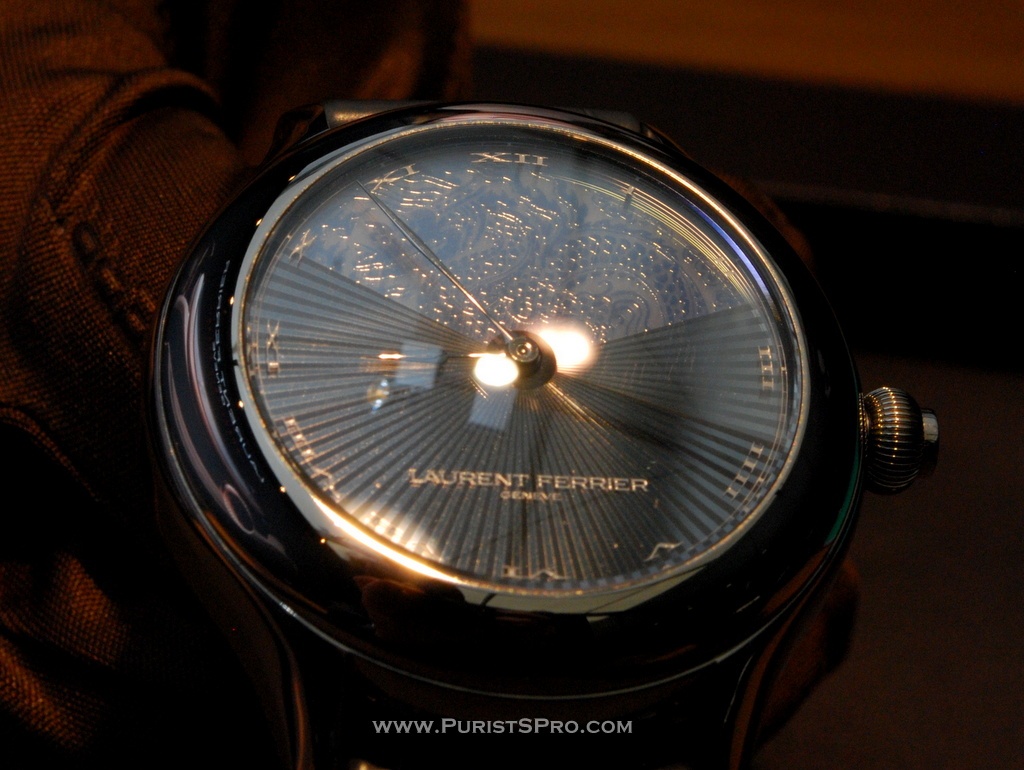
A one of a kind piece this Gallet Secret Dragon has a hand painted porcelain dial which is the fruit of a cooperation with Meissen Porcelain.
LF is constantly working to improve its movements and sent me some drawings to document this.
Here we see the ratchet on the micro-rotor as it has been. The ratchet is mounted on the axle of the micro-rotor, thus the micro-rotor has to be mounted to wind up the watch.
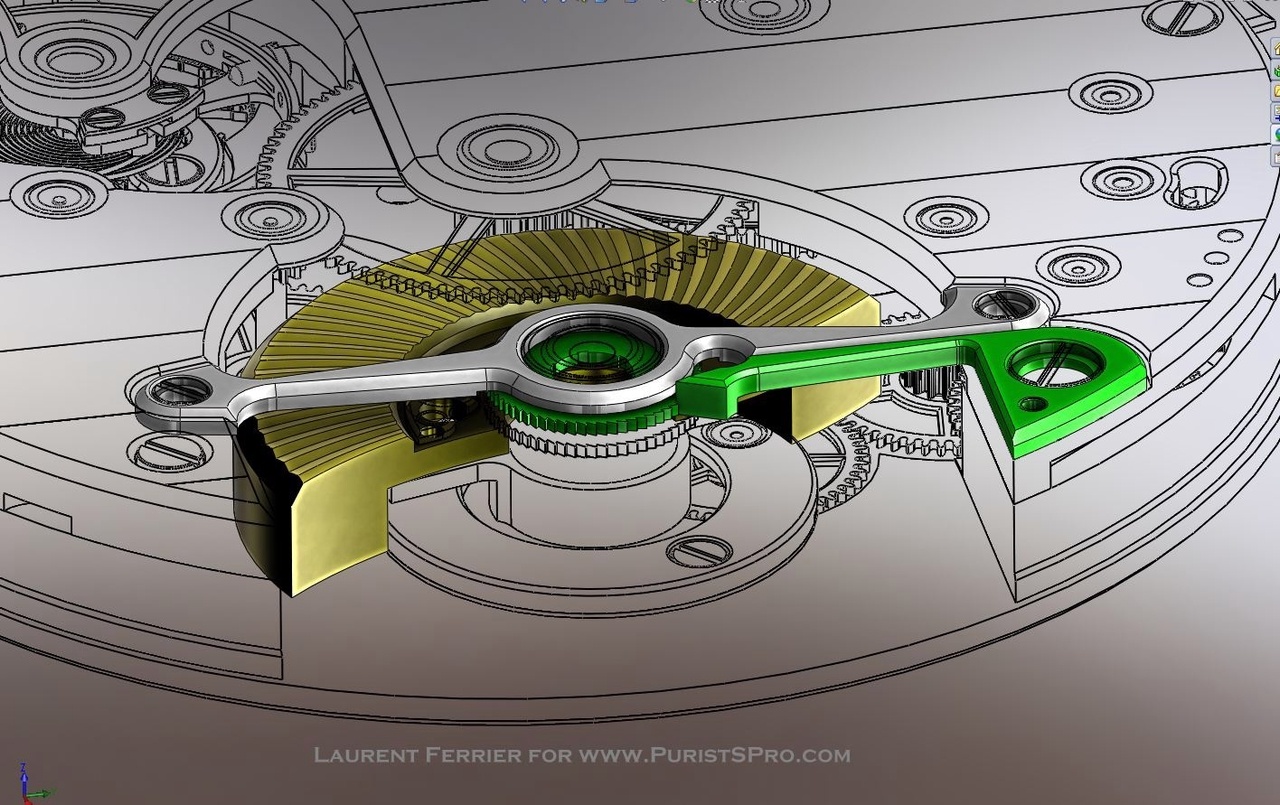
On the new dual-time micro-rotor the ratche is mounted further up the energy train to make life easier for the watchmakers. The movement can be tested without the micro-rotor installed.
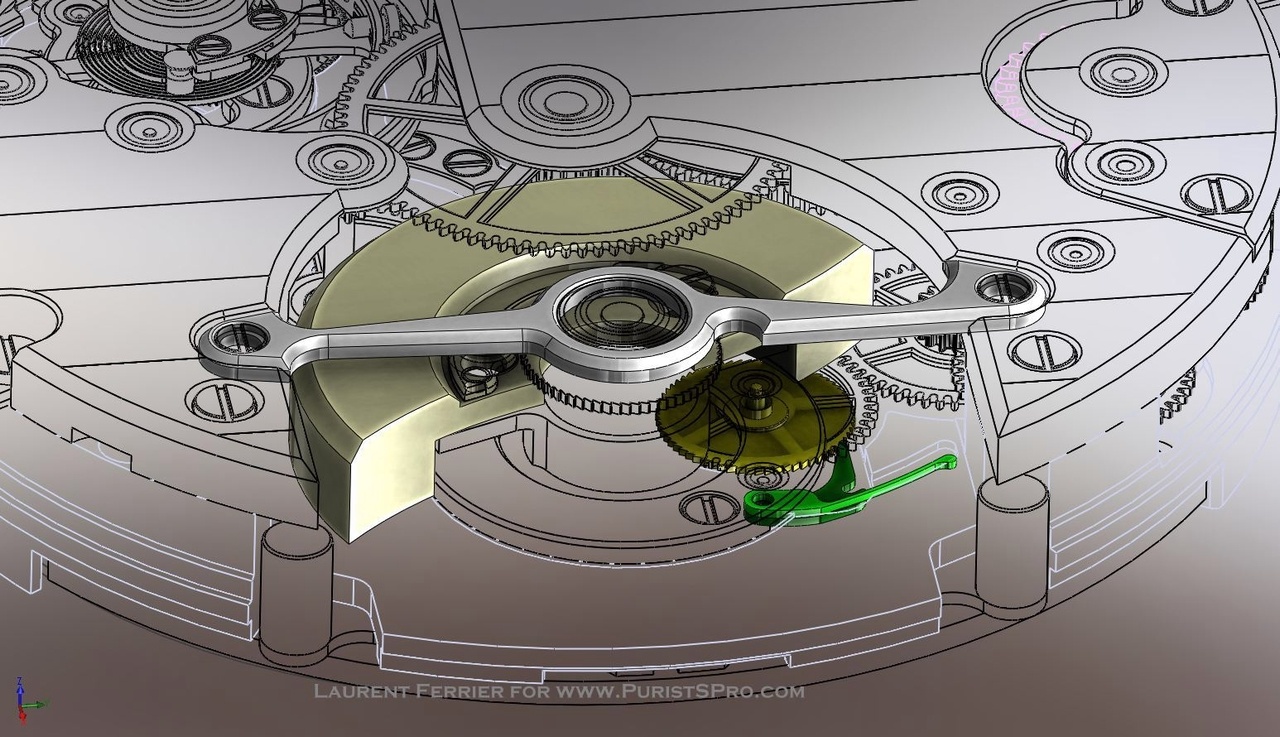
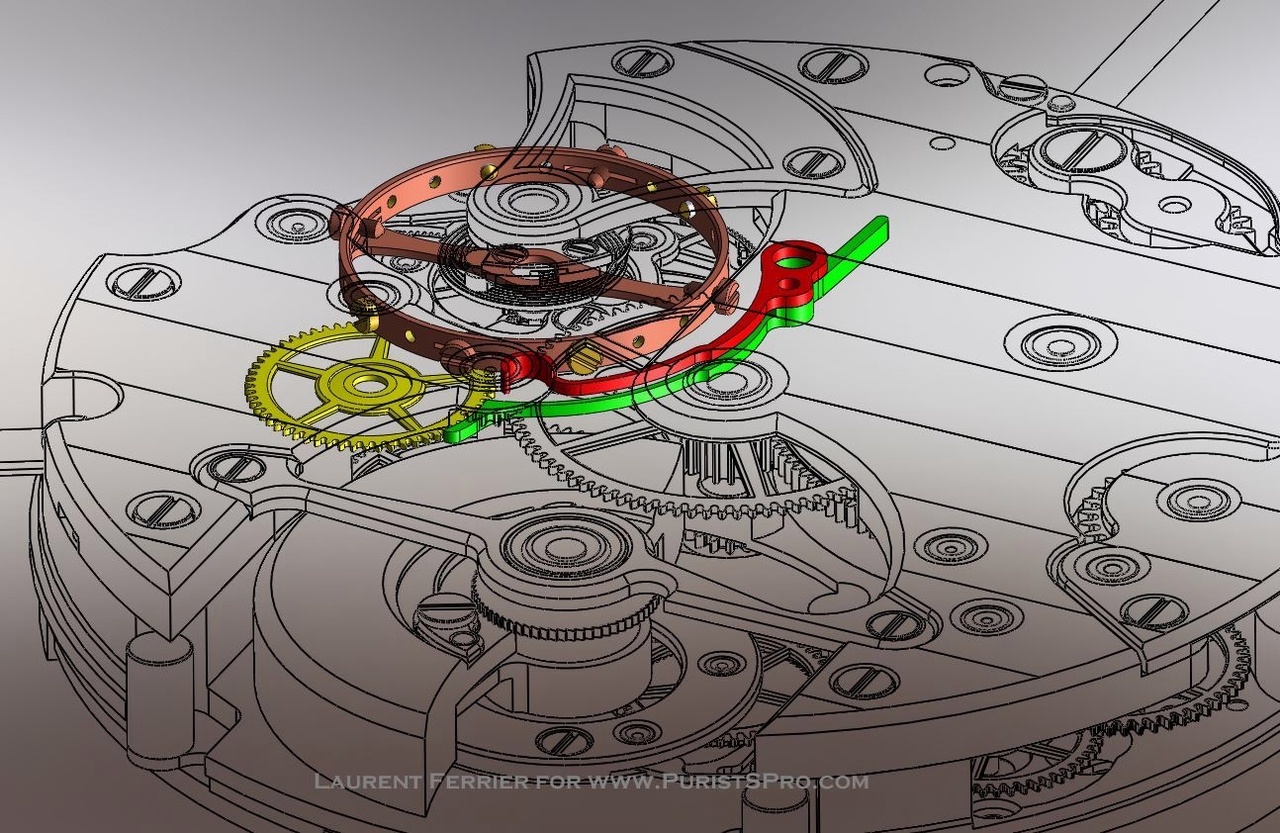
A second stop has also been added the acts both on the balance and on the seconds wheel.
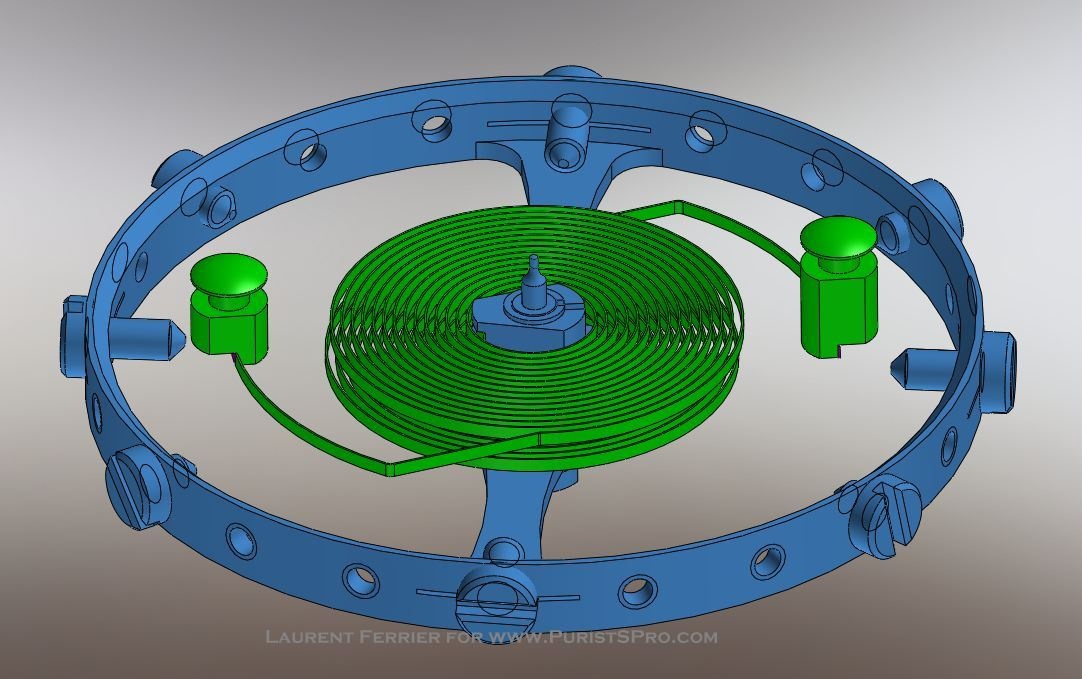
The double spiral tourbillon receives new hairspring studds and a new escapement geometry.
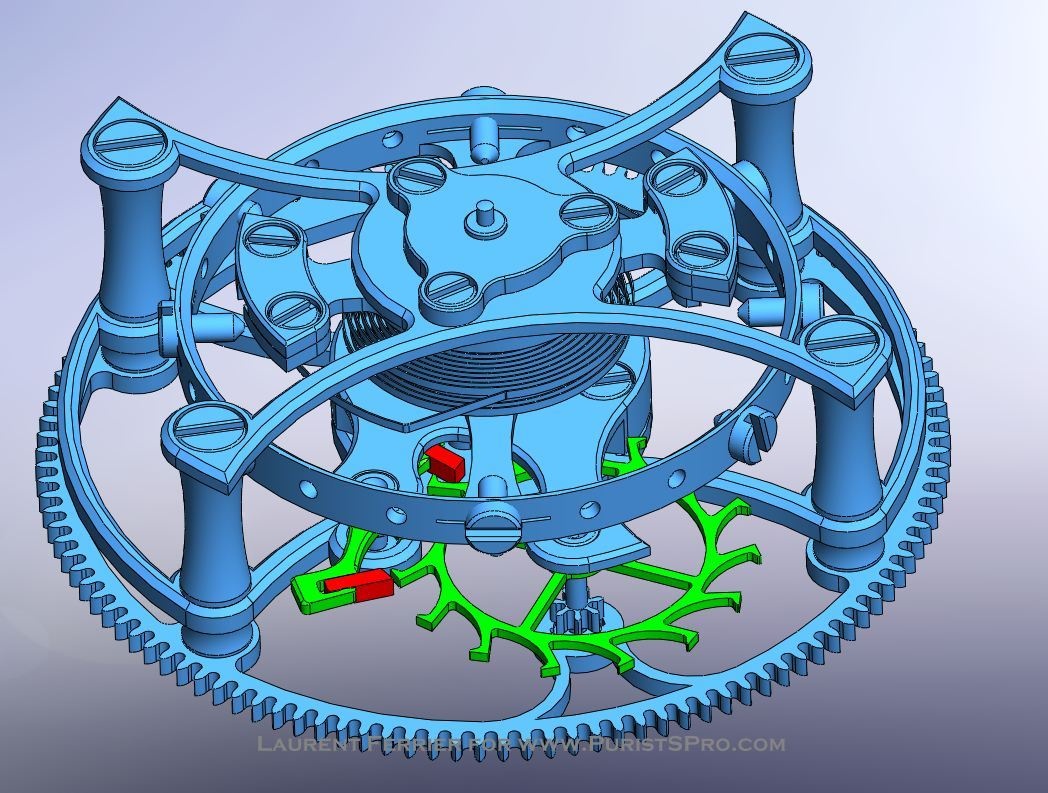
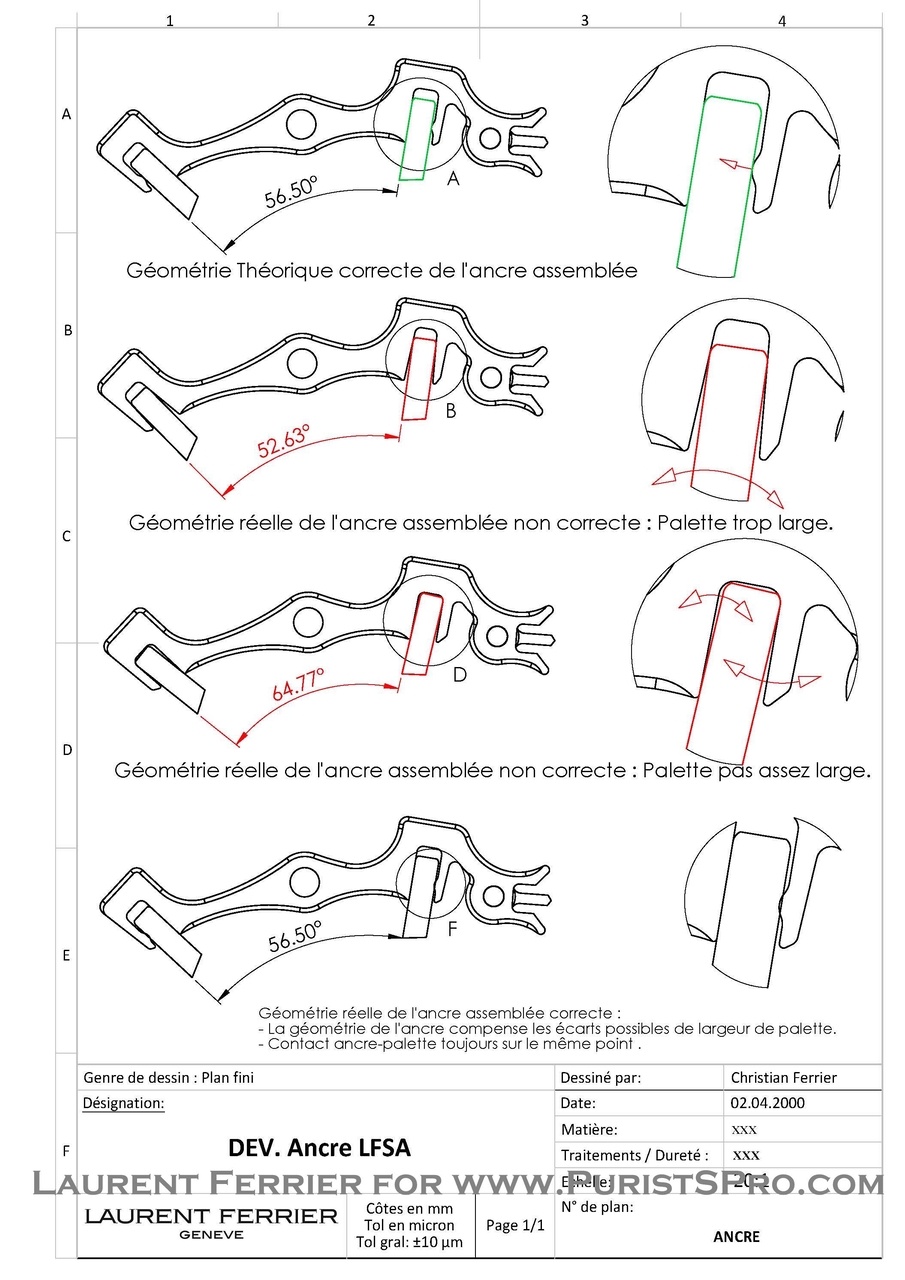
A further improvement that is being introduced is a new patented way of clamping the pallet jewels that guarantees their correct positioning.
A) correct positioning with ideal pallets
B) error on old anchors caused by a pallet that is too thick
D) error on old anchors caused by a pallet that is too thin
F) new anchor has correct geometry even when the pallets are too thick or thin
New at Laurent Ferrier this year is the dual time zone Gallet micro-rotor with double direct escapement model. The dual time complication is integrated into the micro-rotor movement and not an added module on top. At the same time LF has made some improvements in the movement as described below.
This new double spiral tourbillon with its radial guilloché dial is just magnificent.
The micro-rotor has some new dial colors.
Double-spiral tourbillon
A one of a kind piece this Gallet Secret Dragon has a hand painted porcelain dial which is the fruit of a cooperation with Meissen Porcelain.
LF is constantly working to improve its movements and sent me some drawings to document this.
Here we see the ratchet on the micro-rotor as it has been. The ratchet is mounted on the axle of the micro-rotor, thus the micro-rotor has to be mounted to wind up the watch.
On the new dual-time micro-rotor the ratche is mounted further up the energy train to make life easier for the watchmakers. The movement can be tested without the micro-rotor installed.
A second stop has also been added the acts both on the balance and on the seconds wheel.
The double spiral tourbillon receives new hairspring studds and a new escapement geometry.
A further improvement that is being introduced is a new patented way of clamping the pallet jewels that guarantees their correct positioning.
A) correct positioning with ideal pallets
B) error on old anchors caused by a pallet that is too thick
D) error on old anchors caused by a pallet that is too thin
F) new anchor has correct geometry even when the pallets are too thick or thin
I love new dials and improvement on the machine...
.. the new dial of the double tourbillon is simply nice.... the new ones of the micro-rotor as well. Stop second mechanism is good, too. Ah, so nice.....
Thank you, Don!
Ken
Thank you, Don!
Ken
Really appreciating Laurent Ferrier pieces more and more..
Thank you for sharing your findings and experience with us 
I absolutely love the tourbillon, but certainly out of reach for the time being. The galet micro rotor is definitely more achievable and I have my eye on that!
Just a question, is the stop second feature applicable to all the pieces or just the Tourbillon? Apologies, couldn't make out from your post.
Thanks again!
I love those watches
I've met Laurent Ferrier at this year Baselworld. His watches are so beautiful and "sobre". The technique is absolutely perfect.
Love the guilloche line dial! The pallet arrangement..
is atypical for a swiss maker- that's an English style lever arrangement, using swiss lever escape wheel geometry.
An interesting touch, no doubt, to save space inside the tourbillon.
The pallet stone spec sheet confuses me. I understand the purpose of the dimple-like spring, but why use it? Surely
for someone skilled as Laurent grinding a pallet stone to correct width of even thousandths of a millimeter is not
terribly difficult. Plenty of people have hand made escapements with normal simple slots for impulse stones without
this added complexity of the dimple spring. Why? I can see an advantage in leaving more room for shellac to wick
into the stone to pallet setting, but I don't understand why this design feature is needed. Can you educate me Don?
Surely I'm missing something.
The same for the double hack spring. Why engage both the balance and seconds wheel? Why not one or the other?
Hack mechanisms, while nice, inherently do interrupt the isochronism of the oscillator for a time, I have heard as much
as an hour for the balance to fully restore normality to the amplitude. Is there some advantage to a double hack? Or is
it just for show?
I assume that one of the hairspring studs or both are adjustable to set the centering of their breathing exactly 180 degrees
apart somehow, the purpose of the Straussman setup, but it is not clear to me in their design how they adjust this.
If there is no way to do so, it would have to be perfectly machined, and this is doubtful. Without a way to center both springs
180 from each other, and over the dead point of the escapement, it would only create more errors in timing due to unbalanced
hairspring poise error, especially considering they are not concentrically breathing overcoil hairsprings.
Sorry to ask so many questions. I absolutely love Mr. Ferrier's work, I just don't understand it well enough
The technical drawings are wonderful.
-O
An interesting touch, no doubt, to save space inside the tourbillon.
The pallet stone spec sheet confuses me. I understand the purpose of the dimple-like spring, but why use it? Surely
for someone skilled as Laurent grinding a pallet stone to correct width of even thousandths of a millimeter is not
terribly difficult. Plenty of people have hand made escapements with normal simple slots for impulse stones without
this added complexity of the dimple spring. Why? I can see an advantage in leaving more room for shellac to wick
into the stone to pallet setting, but I don't understand why this design feature is needed. Can you educate me Don?
Surely I'm missing something.
The same for the double hack spring. Why engage both the balance and seconds wheel? Why not one or the other?
Hack mechanisms, while nice, inherently do interrupt the isochronism of the oscillator for a time, I have heard as much
as an hour for the balance to fully restore normality to the amplitude. Is there some advantage to a double hack? Or is
it just for show?
I assume that one of the hairspring studs or both are adjustable to set the centering of their breathing exactly 180 degrees
apart somehow, the purpose of the Straussman setup, but it is not clear to me in their design how they adjust this.
If there is no way to do so, it would have to be perfectly machined, and this is doubtful. Without a way to center both springs
180 from each other, and over the dead point of the escapement, it would only create more errors in timing due to unbalanced
hairspring poise error, especially considering they are not concentrically breathing overcoil hairsprings.
Sorry to ask so many questions. I absolutely love Mr. Ferrier's work, I just don't understand it well enough
The technical drawings are wonderful.
-O
An evolution in dials layout
Laurent Ferrier is certainly a brand we are waiting each year for (ok since not long ago).
I 've noticed new dials' decoration this year, especially with the arrival of the new "GMT" model.
I think I prefer much more the pure and simple dials we used to seeing from LF.
Anyway, thanks your very much Don for all these pitcures I was delighted to study
CHeers,
Mark
What a wonderful report Don,thanks..
That radial guillochet dial stole the show though...wow!
Mo
The only thing I don't 'get' about the GMT
is..... why does the GMT-display show the numerals above and below the GMT hour? It makes it look 'wrong' or as if the window is too big--or the wheel crooked or something. Hmmm. Shrug? Strange choice. This message has been edited by Mostel on 2013-05-19 12:52:37