
Manufacture Minerva …
We all recognise that we pay for the finish of our haute horlogerie pieces and, relatively speaking, the more hand finishing the more we expect to pay. Minerva was always considered a ‘value for money’ brand; not high horology, but good design with finishing where it mattered.
I am interested to know what, if anything, has Manufacture Minerva needed to do to increase the quality of the products in line with Montblanc’s vision and pricing structure? Were the skills already there and does it just take a refocus on the product? For example, do they just decide to spend one week instead on one day finishing a movement, or does it take a lot more than this in terms of staffing, training and expertise?
Just interested to know what changes have been required at the manufacture.
Regards
Andrew

Bon092 has a Minerva chronograph from the . . .


I was able to view Minervas from this intermediate period once about four years ago, and was impressed with the level of finishing, which was considerably better than their previous efforts. Mike would know more about any subsequent changes after Richemont took over, but I think the immediate predecessors deserve some recognition for their efforts as well . . . cordially, Art
Thanks Art
Yes, Indeed this Cal 13-20 Chrono is really a beauty and was assembled from new and old parts. It still performs flawless and the pushing chrono buttons is feeling as soft as butter.


Regards Wim

Significant changes were made
Hi Andrew, great question!
I don't think anyone realized how "defunct" Minerva was during the last days of the 1990's before it changed hands.
"Minerva was always considered a ‘value for money’ brand; not high horology, but good design with finishing where it mattered. "
Absolutely true but in the end, Minerva's workmanship was spotty and used old components to craft together new watches for sale. Even Ei8htohm's review of the much acclaimed Pythagore demonstrated this.
A lot of the credit that has gone into the transition from the "old Minerva " to what it is now has to be given to the Italian group. When Magnus Bosse visited and documented his trip (you can read his report on Ornatus Mundi) you can tell that a lot of resources were put into renovating and updating the equipment.
Some key skill people left over during the ownership change were there to continue the manufacturing ( springers, stampers) but alot of young watchmakers were brought in and trained under the watchful eye of Mr. Cabiddu. Some new equipment were purchased to bring the manufacturing aspects up to date so Minerva could do things "in house". Nothing left over from the "old Minerva" could ever produce something as beautiful as this new generation of Minerva watches.
How expensive was this undertaking? Well, the Italian group ran out of money!
Montblanc / Richemont took over and continued the process (think about taking a beautiful old mansion and completing the restoration after an initial owner assumed the project and it was a bigger task than originally concieved)
Every professional knows how time consuming and expensive it is to train one person...imagine now training over a dozen young watchmakers to expertly finish each part to the standards required. To the level where as an expert watchmaker you would feel comfortable engraving your name and be associated with this timepiece forever ( ask the people in line for over 4 years waiting for their Volker Vyskocil...not that MB is at that level of compulsion but I suspect that Mr. Cabiddu is close)
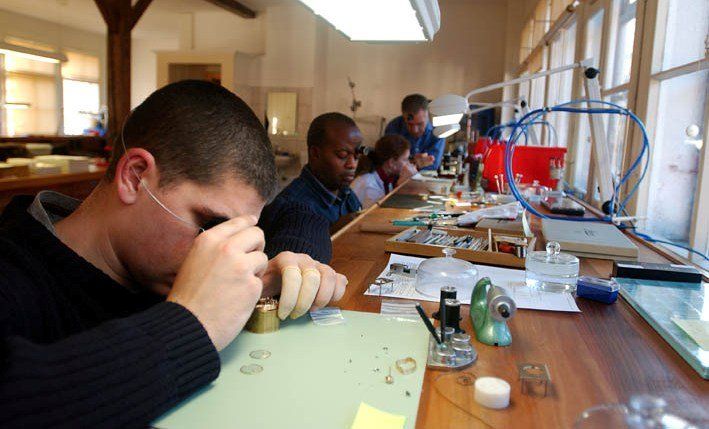
Look at Mr. Cabiddu hovering over one of his pupils ( I love seeing this type of mentoring)
It takes 1 month to complete a watch from scratch to finish...
All the facilities were updated and expanded. The colorful history of Minerva was expertly preserved and kept alive with a new exhibition hall (whether or not this is a wise use of resources is up for debate, I think it was)
For comparison pictures by Dr. Bosse in 2005, 2 years after the Italians took over
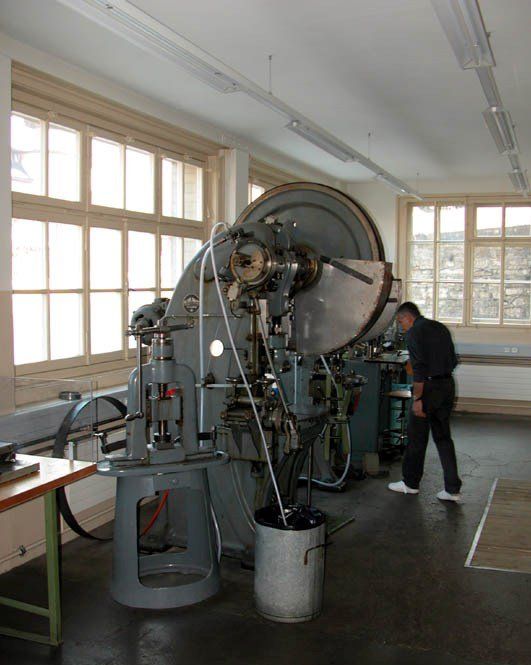
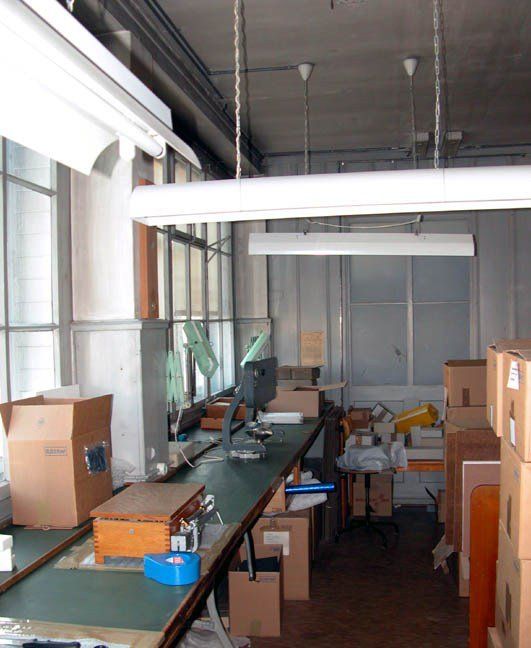
Look at what MB did to build upon this initial work
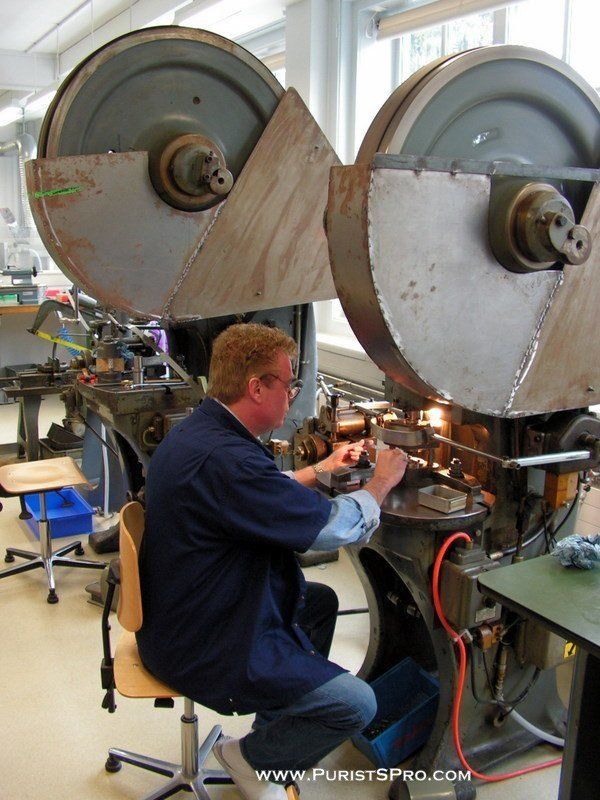
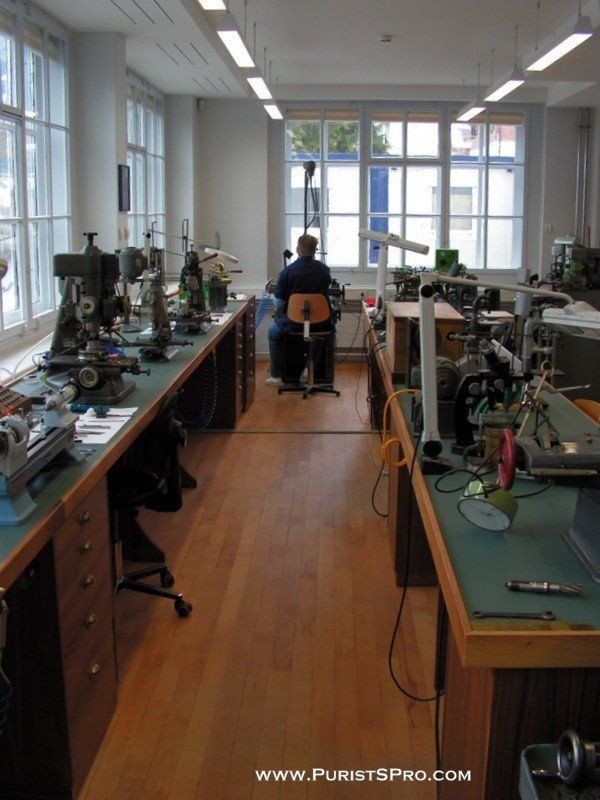
So there is a lot of change at Villeret: updated expanded physical structure, new skilled staffing
There is a lot of change in the Minerva timepieces. I do not think there is much argument: there is a striking difference in quality from "historical/vintage Minerva" timepieces to the current watches. The first generation of watches after the transition from the Italian group to Montblanc were the same except for different dials but now we see new calibers and watches like the Grande Regulateur being released.
There is a lot of change in focus as well. One of Mr. Cabiddu's prime goals is to preserve and ensure the survival of traditional watchmaking. To this effect, money has been spent to support the training of young watchmakers not only at the Institut de Recherche but to support other groups dedicated to the same mission (i.e Time Aeon).
Whether or not all these changes bring "value" to a Montblanc Villeret timepiece is up to the collector.
I can understand and appreciate the price asked for these watches though.
I want one...
Do you? 
Cheers, Mike
Thanks for your detailed answer, Mike.
Very interesting history and progression of the company. It seems to be both an iterative process with jumps in quality when the ‘Italian investment group’ and later Richemont took over as well as continuous improvement under the guidance of Mr. Cabiddu
Like you, I believe the ‘Exhibition Hall’ is an important investment in the future of the company, as is the training of new watchmakers. Kudos to Richemont, Montblanc and Minerva.
Thanks again.
Andrew

Minerva Pythagore
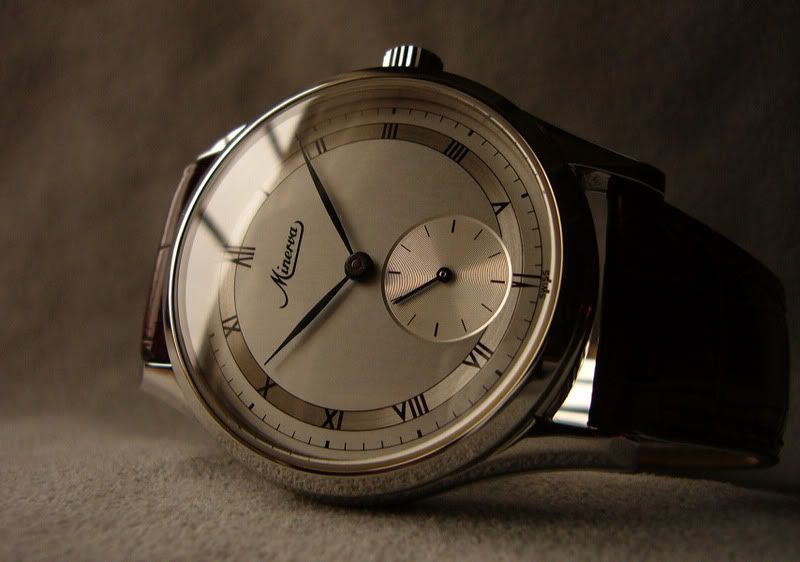
The Minerva Pythagore was never a high end watch, and Minerva never clamed it to be. When I compare the Minerva with my Jaeger-LeCoultre Master Grande Taille, the quality of case, dial and hands are similar! The JLC has a much better movement, but it was also four times more expensive. After nine years of use, I’m very happy with the Minerva, I'm also very happy with the JLC, but if I had to chose one, it would be the Minerva.
The Minerva cal. 48 movement was designed by André Frey in 1943. The cal. 48 is a 50's midrange movement with a nice decoration, similar in quality to the Peseux 7001. You cannot compare the movement with modern high end movements, and it’s not true that Minerva assembled the watches from old parts!
Ei8htohm's review is not about the Minerva watch, but about the “Minerva Myth”. Ei8htohm expected to find Patek Philippe quality, naturally the Pythagore failed to impress. Please name other manufacturers that made a watch of similar quality, for the same price as the Minerva Pythagore.
The Minerva movements today are of very high quality, but the watches are also very expensive.


deBalzac, my post is in reply to Andrew's request to understand the
transition between the Minerva of the 1990s to now.
It is in no way meant to degrade your watch nor those which Minerva produced in the 1990s. I've owned several. They are fine timepieces and I am glad you enjoy yours, I've enjoyed mine and I continue to admire your photos.
However, I think anyone who reads the review will take away from the tear down that Minerva had to compromise in order to achieve the price point that it did. That is just business. I seriously doubt that John (Ei8htohms) or anyone was expecting to find Patek quality in a Minerva. If this was true Minerva would still be in business under the hands of the Frey family, they would be extremely wealthy.
As for my statement regarding the use of "old parts" all I need to do is point to the production of the Minerva 140th anniversary watch where the limited production run could not be completed and at least six samples were movements already encased but removed to complete the series. If Minerva was a fully operational manufacture this subsitution would have never been necessary. There is nothing wrong with using existing ebauches but let's not kid ourselves into believing that Minerva was a thriving producer of even mid-level watches by the 90s.
And why not compare the Cal. 48 to the new movements? In fact one of the new calibres uses similar gear train layout as the famous cal.48 so pretty much I see it as an evolution. But there is no question in my mind that the current movements are better constructed and the overall quality and standards are kept constant throughout the production line. Is this enought to justify the price hike?
Yes the current watches are much more expensive but vintage Minerva owners should be glad that Richemont/Montblanc is willing to even service these watches. Any watchmaker could service a Cal.48 but to get parts? Thankfully you can enjoy your watch for years to come. Is this continuity of service worth the price?
It serves me no purpose to bash "old Minerva". This is not my intent but I'm trying to be fair and honest for those trying to make a "value" argument between the Minerva watches from the 1990s to now.
Minerva has a great history, one which is not only being preserved but perpetuated under the helm of Montblanc.
Best, Mike
Minerva
Minerva was an old factory with old and worn production equipment. They needed new capital to upgrade the factory and to develop new models, this was the main reason for the sale to Emilio Gnutti.
The Italians turned Minerva to a very expensive, high end brand. A watch with a simple handwound movement in steel costed more than a similar Patek Philippe in gold! With Montblanc and Richemont the quality is even higher. You can of course compare the Minerva’s from the 90’s with the Montblanc Villeret Edition, but when you do, don’t forget that the Minerva Pythagore costed $1200 new in 1999. The finish on the movements could have been better, but for what you paid, the quality was not bad!
My watchmaker sold about 25 Minerva Pythagores in the 90’s, he newer got any complaints about the quality, and he got most of the watches back for service, after 5-6 years. He told me that he was a bit disappointed when he opened up the Pythagore for the first time and saw the unfinished dial side of the movement, but he didn’t find any unnormal wear, only the gaskets and service parts were changed. If the quality was low, I think I would have noticed that after nine years of regular use. (For me a low quality movement is what you find in a cheap Chinese made watch, or the awful EB movements you found in Swiss low end watches in the early 70’s.)
Montblanc have a deep respect for the Minerva history and I’m pleased that they also will support and service old Minerva watches.
Minerva made several watches with NOS movements. The Anniversary watch was made to celebrate the 140th anniversary for Minerva in 1998, and they decided to make 140 pieces of the watch. The Anniversary used a NOS Minerva calibre 17-22 movement made between 1921 and 1942, but Minerva only had 134 ebauches. This is what Jean-Jacques Frey said about the six “missing” movements:
"These Six are bit special. Indeed we had not 140 blank movements for the series, but 134. I knew from the beginning that the six missing will use the 17-22 movement, not blank, but already assembled AND decorated. This is the difference from the "standard" model you are used to. Instead of Geneva stripes and rhodinated, these older movements show a decor called 'filets", my present "decor maker" assured me it was made using ivory. This decor is no longer available. They were then silvered which is not good as silver gets tarnished with age. So the movement-blank will have to be cleaned and replated. As this is an ancient execution of decor, rhodinating did not exist then, the rhodium coating of movements started in the mid-sixties only. And as silver-plating will get again tarnished, the choice becomes gold-plating. Also, these six old movements show an interesting feature: a Swan Neck spring on the balance bridge."
I read ei8htohm's review again, this is the conclusion in the addendum to the review:
“The thesis and tone of this review was in some ways the result of my own disillusionment upon having my misconceptions about the quality of Minerva's movements refuted by the evidence of seeing a disassembled movement firsthand. While I do not believe my previous conception of the fineness or quality of Minerva's movements was drastically different from that shared by other watch enthusiasts based on my many discussions with others both online and off, it was perhaps unfair of me to assume that my own perceptions were representative of watch enthusiasts at large and hence constituted a "mythology".
The Minerva cal. 48 powered Pythagore was of course one of the most (if not the most) affordable handwind watches available with an in-house manufactured movement at that time. I believe that the Minerva Pythagore offered an honest value for the money, particularly when compared with the rest of the watch market.”
Best regards
Livius
Yes, now at least 20x
but the watch market was quite different in 1999, thankfully it is beginning to have some sense again.
But this is our passion, our hobby. The other reason why Frey sold was he didn't have the passion to continue his family's business. He had other passions which he wanted to follow. The deteoriation of the manufacture was just a reflection of this. It operated on "life support", no more no less.
1200 dollars may have been a bargin for a Pythagore but most people would think that is an outlandish amount of money to spend on a watch. In fact most people rarely spend over 50 dollars for a watch so for them the ratio would be 24x compared to the Pythagore. It doesn't matter how much you explain the fine points, you will never convince them that it is "worth it". Do I think 1200 dollars is a bargin? yes.
It is difficult for Montblanc to justify the change in price level but to collectors the changes they have initiated is a very good place to start. Most collectors will see some value added so the only question is will they be convinced to purchase a Villeret.
I think they will, if not now soon in the future. Montblanc needs to earn their respect, not just expect it from their acquisition of Minerva. They are on the right track imho.
Best, MIke
Passion
Why are you saying that Jean-Jacques Frey didn't have the passion to continue his family's business?
Have you read the interview on Timezone from 1998? Have you read what Jean-Jacques Frey wrote on the Timezone Minerva forum about the sale to Emilio Gnutti, or what he wrote a month after he left Minerva?
Have you ever met or been in touch with André or Jean-Jacques Frey?
My watchmaker met both André and Jean-Jacques Frey in Basel in 1998. Many Minerva collectors got in touch with them, either personally, by phone or by letter. They were all met by a great passion and enthusiasm for watchmaking and the Minerva brand, by both André and Jean-Jacques Frey!
I wrote to Minerva after I bought the Pythagore and I received a very personal letter from Jean-Jacques Frey. The letter was sent a week before the he left Minerva. He also sent me the Minerva catalogue, with a personal regard from André Frey under a drawing of the calibre 48 movement.
Jean-Jacques Frey had no intention to leave Minerva. When he sold to Emilio Gnutti, the agreement was that he should continue as Managing Director for Minerva. Mr. Gnutti sent Guiseppe Menaldo to Villeret to get an overview of what he had bought. Two month after the sale, the Frey’s were told by Menaldo that “the cooperation of the Frey’s was no longer requested”. Jean-Jacques Frey wrote on the Minerva forum: “I got quickly the feeling that he “wanted my skin” – was may name Trosky in anther life…?” He described the conflict as a radical cultural difference between the Swiss and the Italians.
After the Frey’s left Minerva, the Minerva collectors were met by a wall of silence from Minerva and the Italian owners, no information at all! They didn’t answer phones, letters or mails. A lot of bad things were written about them on the forum, they never answered anything, and they even tried to close down the Minerva Forum. The Frey’s got all the sympathy.
In Magnus Bosse’s review and interview with Guiseppe Menaldo you find a very different story about what happened. Menaldo told a lot of bullshit in this interview!
Btw: Jean-Jacques Frey was involved in the establishment of a new watchbrand called Hora in 2004.
Best regards
Livius
Livius, you obviously have a lot of passion for Minerva
Peace brother, let's just let old Minerva be where it belongs. Minerva is in a whole new chapter now. I truly believe all Minerva enthusiasts should be happy where the current brand is...the history continues, the manufacture updated, and the past preserved.
Passions come and pasions go. The two of us share very different views on where Minerva was back in the 90s.
Yes I am/was a member of the other website for about a decade. I recall the interviews when they were first posted and I've owned the limited edition watch which was being promoted. Yes, in the past I did exchange letters/emails with the Freys but not recently and I'm not going to second guess Mr. Menaldo. There are always two sides to every story.
In the end destiny had Minerva change hands, Jean Jacques-Frey has moved on. I will always wish him good luck on his ventures.
Best, Mike
This message has been edited by mkt33 on 2009-09-19 12:21:01
Passion II
Yes, I have a passion for Minerva, but I also bought a JLC five years ago. I bought the JLC because I wanted a watch with a high quality movement, something the Minerva didn’t have. For what I paid for the Minerva, I don’t think that the quality was bad, but the finish on the movement could have been better. For reasons I cannot explaine, I like the Minerva better than the JLC. Maybe because it's somthing very human about it, the JLC is to perfect?
The Minerva factory needed an upgrade, they didn’t make enough money to do that on their own. I don’t think that Minerva had survived long into the 2000’s without a new partner. The way things turned out, Montblanc probably was the best solution for Minerva.
Best Regards
Livius

Excellent post, Mike. And to think...
Thanks …
Very interesting perspectives on a tumultuous period in Minerva history. You have all given some great information and personal opinions on the changes at Minerva and it is much appreciated. Thankfully the Minerva Forum, despite being closed, is available for future reference and I plan to learn a lot more.
Lets hope that MB and Richemont have brought a period of stability and confidence to Minerva and the company (and watches) will move forward.
Andrew